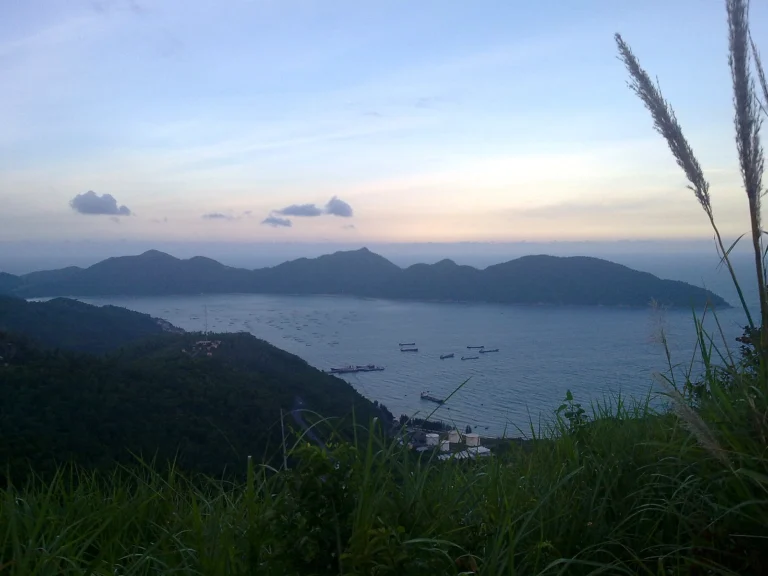
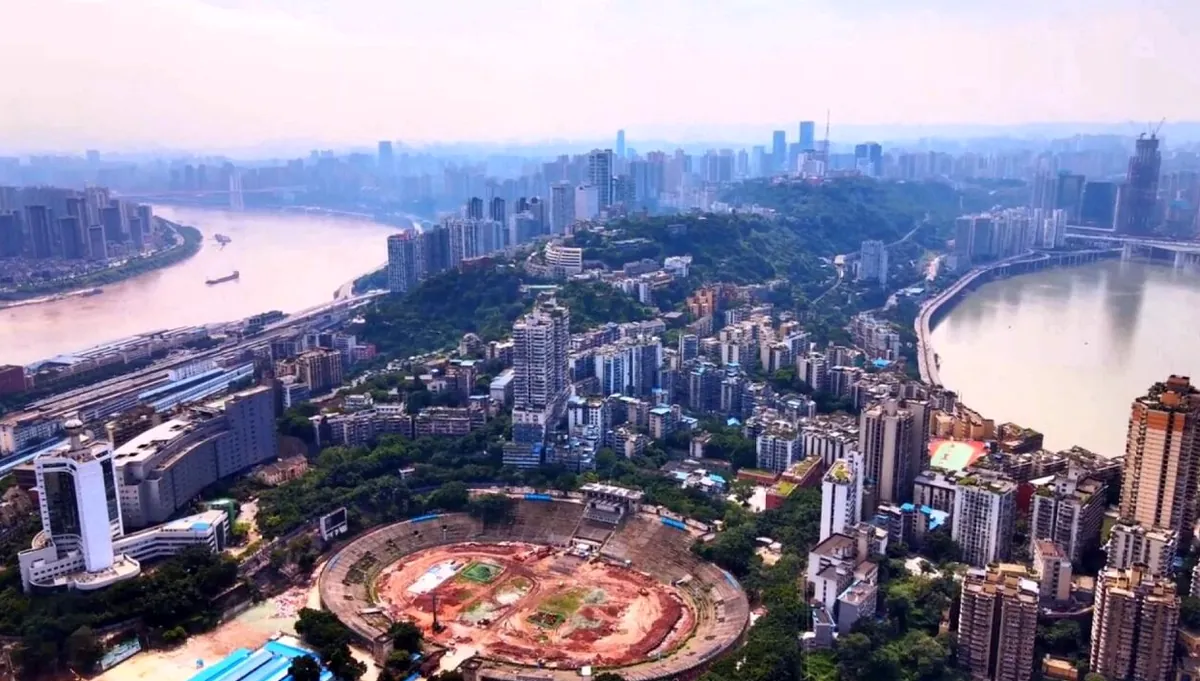
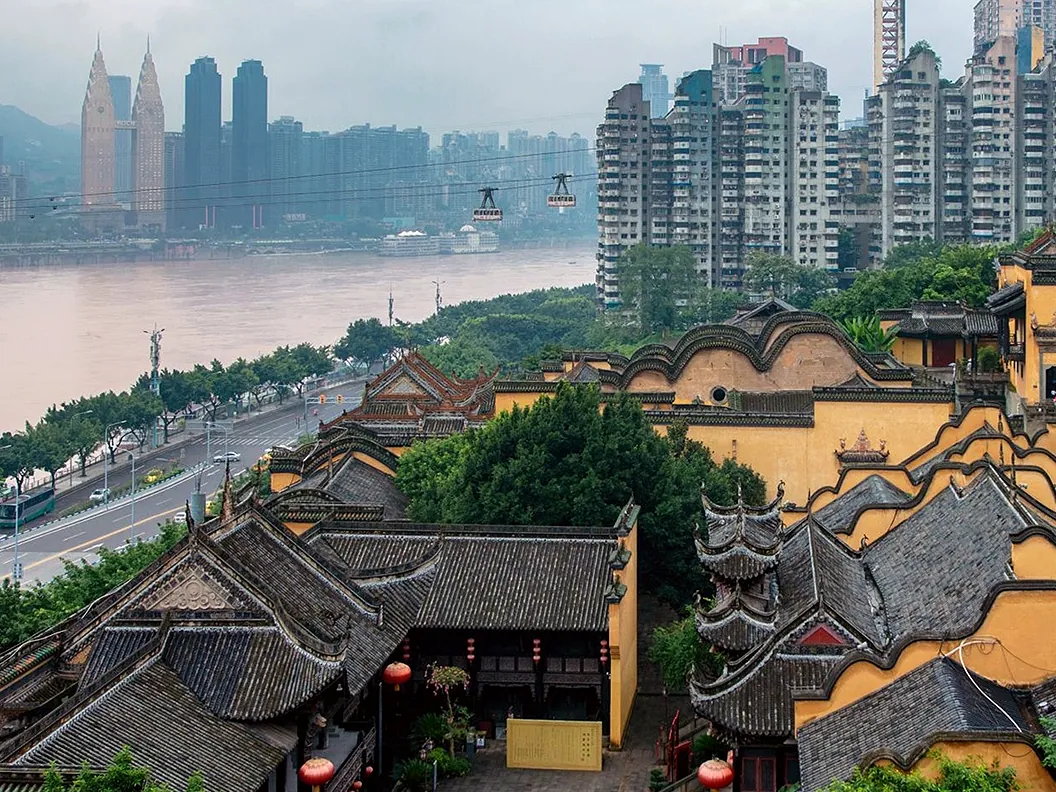
Viewed from above, the urban panorama of Chongqing appears as an impressive architectural marvel, woven between undulating hills and vast, winding rivers. At the heart of the frame lies the open space of a nostalgic stadium, resting quietly amidst a dense encirclement of skyscrapers reaching toward the sky. Embracing this bustling metropolis is the magnificent convergence of two vital rivers, where soaring bridges span the waters to connect the lively banks, opening a gateway for travelers to leave the modern pace of life behind and venture toward the serene, secluded mountains of Nanchuan in the south.
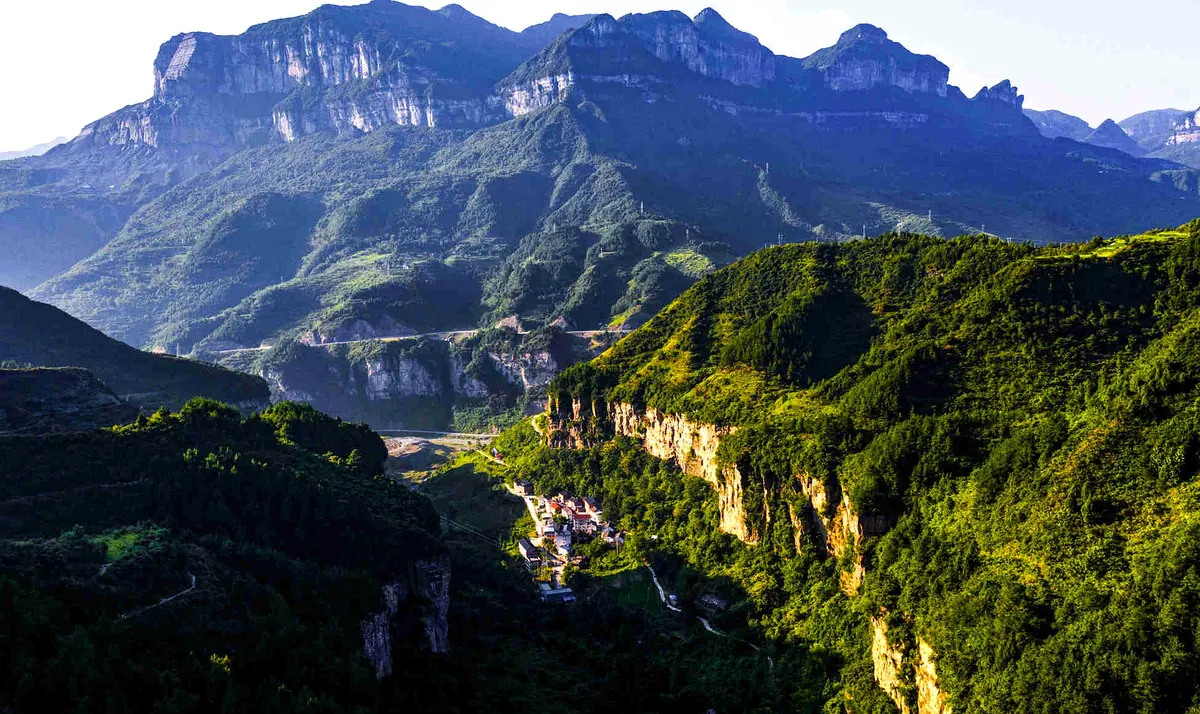
A journey back in time leads the wanderer to the towering Jinfo Mountain, a majestic geological testament that shaped the historical identity of the ancient Nanchuan district. The name “Jinfo” (Golden Buddha) originates from a fascinating natural optical phenomenon: as the sunset fades, the fiery glow sweeps across the vertical limestone cliffs, casting shadows and gilding the rugged slopes in a brilliant golden light, evoking the image of a giant Buddha sitting in serene meditation amidst a sea of floating clouds. This surreal spectacle has awed generations of ancient inhabitants, instilling in humanity a sacred reverence for the wonders of nature.
Spiritual worship in this mountain range flourished during the Tang Dynasty, spanning the golden era from 618 to 907. As Buddhist philosophy integrated deeply into ancient Chinese cultural life, the isolated and tranquil terrain of Nanchuan quickly became an ideal sanctuary for monks seeking seclusion. Not merely a stopover for monastic communities, this place witnessed a rare resonance between the Taoist philosophy of non-action and the Buddhist vow of compassion. Beneath the quiet karst caves and endless pine forests, ancient Taoist temples and Buddhist hermitages were erected, creating a unique space where beliefs intertwined, and the sound of temple bells blended with the pure scent of incense against thousand-year-old cliffs.
Surviving the turbulent shifts of subsequent historical periods, Jinfo Mountain entered its most brilliant phase of development during the Ming and Qing Dynasties. Successive feudal dynasties continuously renovated and expanded the grand temples, transforming this remote mountain retreat into one of the most bustling pilgrimage centers in the Ba-Shu region. Countless scholars, poets, and travelers left their marks through inscriptions and poems meticulously carved into moss-covered cliffs. Every mossy stone step and every curved roof hidden among ancient pines served not only as a vessel for faith but also as a bastion witnessing the rise and fall of dynasties, remaining a spiritual anchor for the people through centuries of change.
The eternal value of the Nanchuan region extends beyond its deep cultural sediments or ancient spiritual legends. With its unique karst geological structure formed over hundreds of millions of years of Earth’s crustal transformation, Jinfo Mountain has transcended national borders to claim global status, honored by UNESCO as a World Natural Heritage site within the South China Karst system. This international recognition serves as a golden milestone, connecting the glorious past of a sacred land with the mission of preserving its magnificent geomorphological and ecological values for generations to come.
Located on the southern edge of the fertile Sichuan Basin, where it meets the rugged steps of the Yunnan-Guizhou Plateau, the Jinfo Mountain range in Nanchuan district rises like a screen guarding the spiritual essence of the entire Ba-Shu region. In ancient geographical records, this mountain range belongs to the rugged Dalou Mountain system and is hailed as the “Number One Famous Mountain South of Chongqing” due to its towering, majestic terrain. In terms of Feng Shui, this place embodies the perfect configuration: mountain ranges rolling in from the south like a dragon descending, then suddenly coming to a halt, lifting a massive plateau into the sky. When the summer sunset descends, the crimson sunlight slants through the mist, reflecting off the towering gray-white limestone cliffs to reveal the silhouette of a giant Buddha sitting in serene meditation, casting a brilliant golden glow across the Nanchuan sky—the very origin of the name Jinfo Mountain, passed down through generations.
The natural layout of Mount Jinfu is a masterpiece of ancient elevated Karst geological formation in the world, shaped over hundreds of millions of years of crustal movement. Unlike the sharp, jagged rock peaks typically found in young Karst regions, the local terrain has evolved into a vast plateau in the clouds with an average altitude exceeding two thousand meters above sea level, with the highest peak, Fengxui Ridge, reaching two thousand two hundred and fifty-one meters. Enrounding the flat plateau at the summit is a system of vertical limestone cliffs stretching tens of kilometers, resembling stone ramparts carved squarely by the hands of nature. Intense tectonic fracturing combined with underground water flows has deeply carved layered caves into the limestone mass, notably the Ancient Buddha Cave—a colossal underground space containing millions of years of sediment, where cool terrestrial air circulates year-round, creating a unique convection microclimate for the entire mountain massif.
Hidden beneath the majestic, towering cliffs is a multi-layered natural landscape painting that changes fantastically with each altitude level. From the deep valleys at the foot of the mountain where mountain streams babble, the humid tropical vegetation gradually gives way to temperate mixed virgin forests covered in thick fog and clouds year-round. Mount Jinfu is celebrated by naturalists as a precious ecological gene bank of the Southwest region with thousands of higher plant species coexisting, prominently featuring the "living fossil" Cathay Silver Fir dating back to the Tertiary period and the endemic Mount Jinfu Rhododendron population. Every transition from late spring to summer, the barren limestone valleys suddenly awaken into a brilliant ocean of flowers, as tens of thousands of ancient rhododendron trees simultaneously burst into vibrant pink, red, and snow-white blossoms, covering the steep rock slopes and deep ravine grooves.
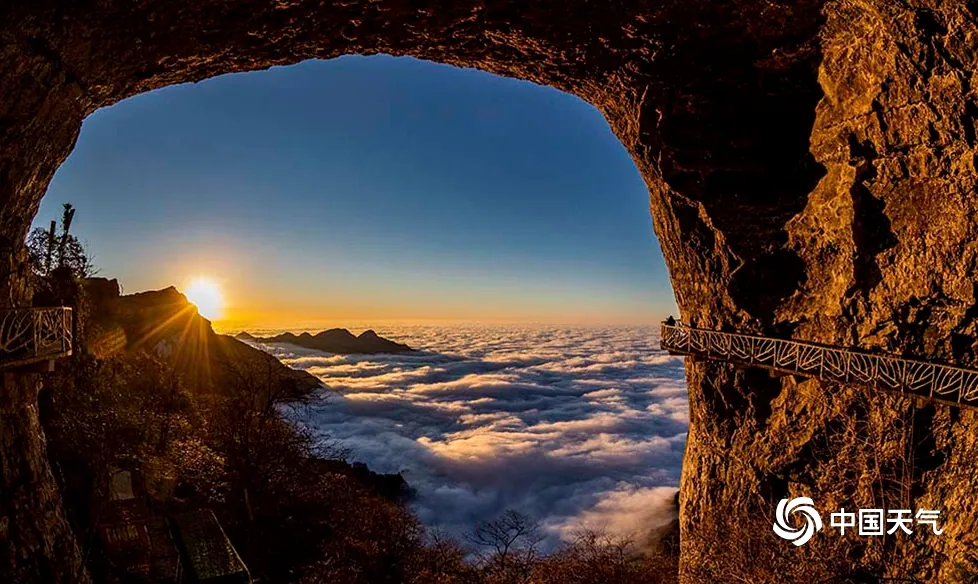
The blend of rugged limestone terrain, abyssal depths, and dense forest canopy has shaped a magical microclimate for Nanchuan. Moisture from the river basins below, when sweeping across the high mountain ranges, meets cold air masses that condense into rolling seas of clouds like cascading waterfalls, spilling over ridge walls and drifting lazily across grassy plateaus. At protruding points amidst the abyss such as the Precipice Cliff, travelers standing on the boundary of earth and sky can occasionally witness the fascinating optical phenomenon where their silhouette is enveloped by a brilliant multi-colored halo imprinted on the white mist, akin to a divine Buddha light manifesting in the magnificent space. All of this creates a geographical-landscape entity that is solemn, serene, yet liberating, transforming the Nanchuan limestone land into an eternal spiritual anchor and scenic wonder of Chongqing.
Hidden among the towering karst cliffs of the Mount Jinfu range in Nanchuan, the spatial structure here is built upon the foundation of profound Eastern philosophical thought, notably the philosophy of "the unity of heaven and man." Instead of subduing the rugged terrain, human hands from ancient times to the present have followed the natural folds of the great forests to arrange architectural complexes that carry both a pristine breath and the depth of millennia-old Ba-Shu culture. Every carving, master planning layout, and functional space distribution demonstrates utmost reverence for nature, turning the mountain scenery into a vibrant architectural space in the mortal world.
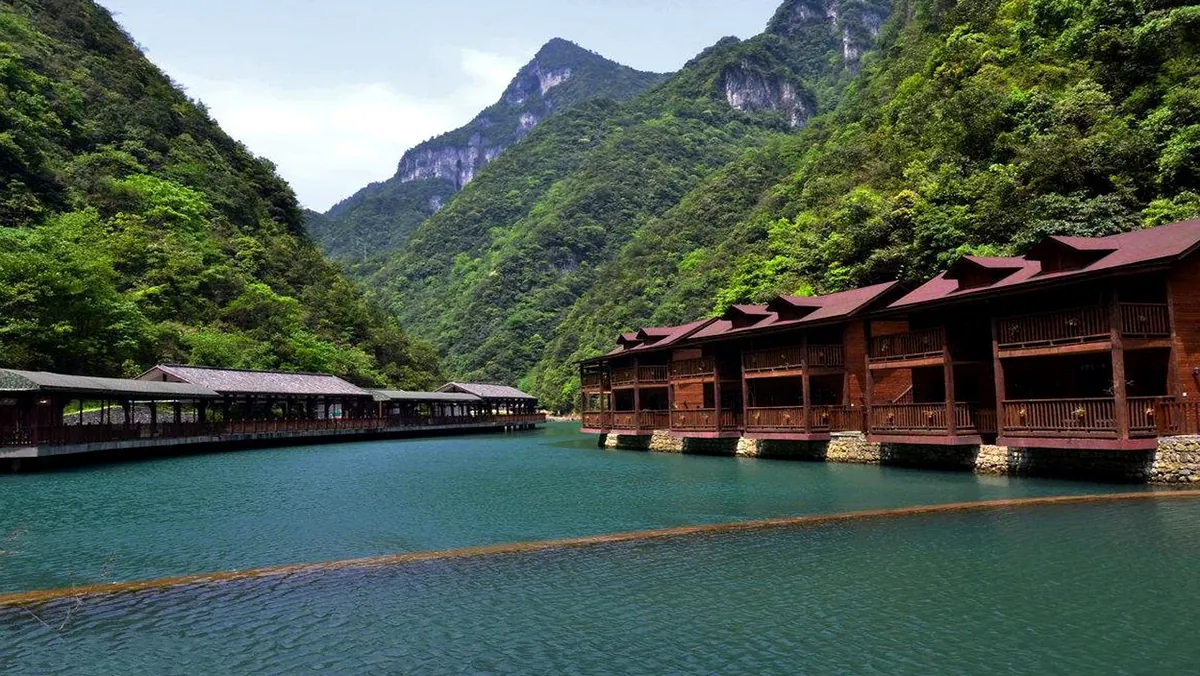
Stopping by the calm waters at the foot of the mountain, visitors will encounter a cluster of indigenous wooden houses charmingly nestled right at the lake’s edge. The structure appears rustic with time-stained precious wood frame and pillar construction, supporting contemplative tile roofs that reflect upon the emerald water. Surrounding the chain of stilt houses are majestic limestone towers standing upright amidst the air, interspersed with endless lush green vegetation. The scenery brings an absolute sense of peace, where human architectural lines blend seamlessly with the supreme primitivity of creation.
Delving deeper into traditional construction language, the architectural essence in Nanchuan lies in the ingenious blending of Ba-Shu stilt house styles and Ming dynasty ancient temple standards. The "diaojiaolou" system makes thorough use of rugged slopes, using round wooden pillars to support house floors extending into open space without the need to cut mountains or blast rocks. Interwoven are ancient temples with multi-tiered dougong systems, and gently upturned eaves resembling birds flapping their wings amidst white clouds. The arrangement of ancestral altars, corridors, and heavenly courtyard spaces not only regulates light and alpine microclimates but also evokes a serene energy field, leading the worshipper’s mind away from worldly dust to return to pure tranquility.
Continuing this heritage, contemporary investment scale in Nanchuan has elevated resort developments to new heights in both aesthetics and ecological functionality. A prime example is the Jinfoshan Resort complex and its high-end resort subdivisions, designed in an architectural style that blends seamlessly into the landscape. The entire construction master plan minimizes the use of raw concrete blocks, prioritizing natural materials such as grey slate, bamboo, and native cedar wood instead. Tranquil meditation halls, open-air yoga decks embracing the mountain winds from all sides, and wooden boardwalks winding beneath ancient forest canopies are meticulously calculated according to wind vectors and sunlight angles. This approach absolutely respects the core natural heritage zone while optimizing the therapeutic and mind-body balancing experience for travelers.
Thus, the architectural spatial harmony of the Mount Jinfu region extends far beyond mere physical structures; it is an epic poem of reliance on and reverence for nature. From moss-covered shrines hidden among millennium-old cliffs to contemporary luxury resorts, Nanchuan asserts a philosophy of sustainable planning: humanity does not build to conquer the mountain, but rather creates a dwelling place to coexist enduringly with the green peaks through the passage of time.
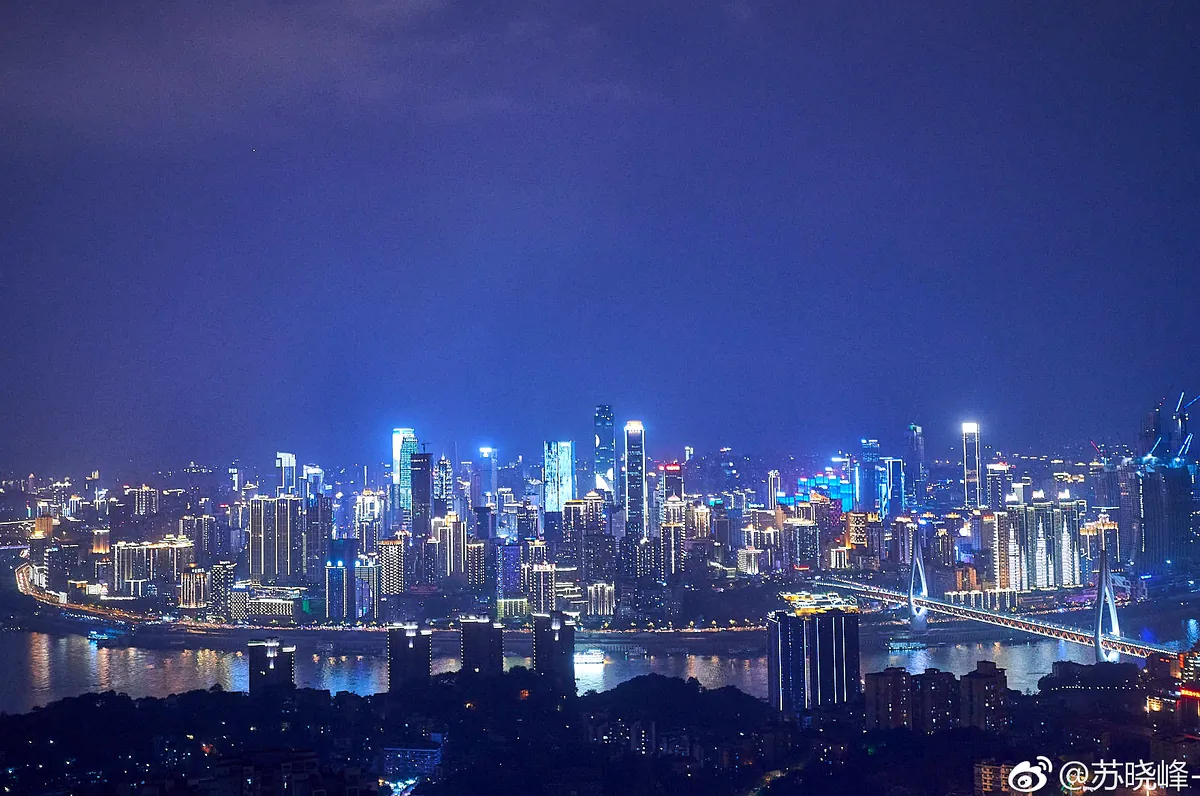
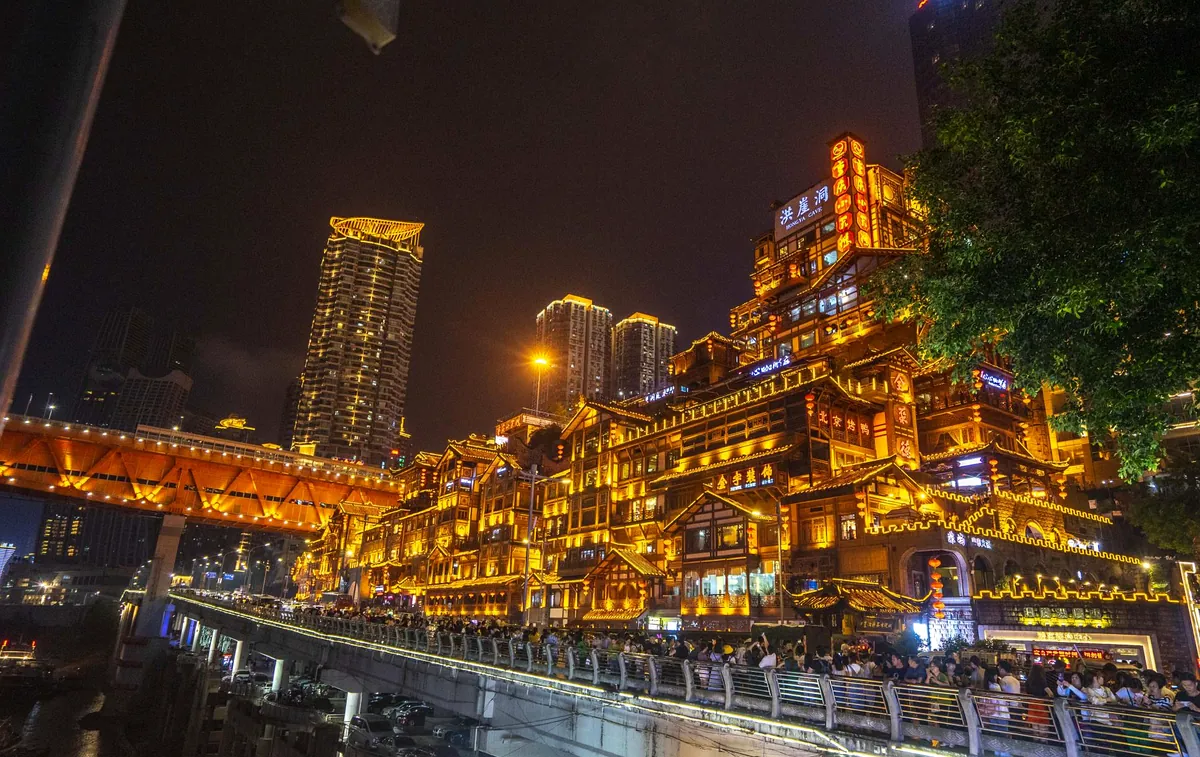
As night falls, the entire Chongqing urban area lights up in a magnificent visual synthesis, epitomized by the golden radiance of the Hongyadong architectural complex. Traditional stilt-style wooden pavilions clinging tightly to sheer cliffs are brilliantly illuminated by tens of thousands of shimmering lights, casting sparkling reflections upon the mystical waters. Right beside this ancient structure, steeped in the Ba-Shu feudal imprint, a modern overpass spanning across and towering skyscrapers rising in the background create a breathtaking intersection between past and future.
Far from the dazzling spectacle of the megacity with its artificial waterfalls of light, Nanchuan unveils a completely contrasting nocturnal dimension, where the philosophy of serene beauty reigns supreme atop the lofty peaks of Mount Jinfu. While many renowned tourist destinations choose to exploit grandiose live-action performances with booming sound effects, Nanchuan steadfastly honors the essence of nature through a healing tourism model. At an average altitude of over 2,000 meters above sea level, the nocturnal rhythm here is untouched by high-intensity floodlights or bustling city noises, immersing instead in the boundless tranquility of the ancient karst wilderness. The night enshrouding the mountains transforms into the perfect backdrop for a mind-body purification pilgrimage, where light is not used for showmanship but acts as a bridge guiding humanity back to inner peace.
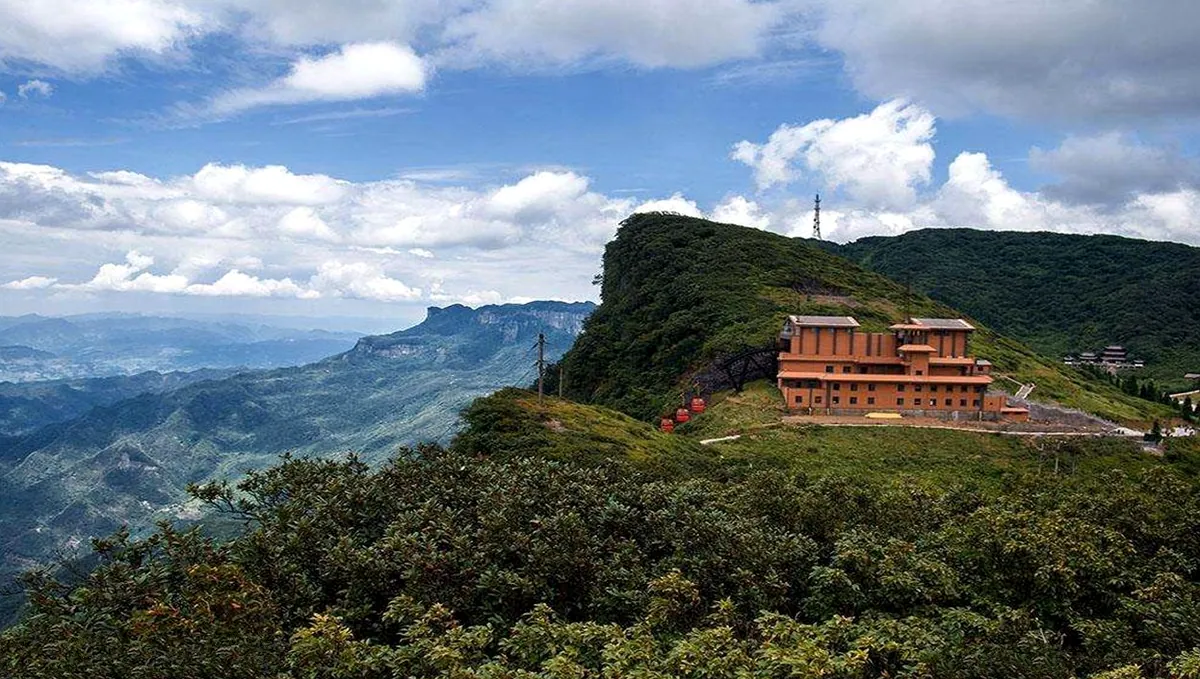
The lighting art at Mount Jinfu is designed with a minimalist and subtle approach, completely harmonizing with the ecological laws of the pristine nature reserve. Along the Juebaixianghang wooden plank road clinging to the sheer cliff, the guiding light system uses warm, gentle tones with just enough luminous flux, simulating the Milky Way winding amidst drifting clouds. The mystical light gently outlines only the subdued contours of Jinfu Temple on the summit, leaving the vast expanse to the brilliant, deep starlit sky. Travelers staying overnight on the high peaks have the opportunity to participate in seated meditation sessions under clear night skies, breathing in the pure air with exceptionally high negative oxygen ion concentrations, and listening to the whispering pines blending with the wind sweeping through millennium-old karst crevices. This serene space creates a miraculous energetic field, helping to soothe all stress and restore vitality after long, busy days in the city.
The Nanchuan nocturnal experience is further elevated through tea-tasting rituals and the contemplation of local cultural flavors in absolute stillness. Under the eaves of wooden tea pavilions nestled against the mountain slopes, a cup of Jinfu Mountain wild tea—ancient tea trees growing naturally on ancient limestone ridges—is brewed from pure mountain spring water, releasing a fragrant aroma and leaving a profound, sweet aftertaste in the throat. Occasionally, the long, resonant toll of a temple bell from a distant ancient monastery breaks through the dense blue mist before dissolving into the void, awakening the meditative depth of Eastern philosophy. By rejecting noisy performance technologies to honor the pristine beauty of majestic nature, Nanchuan’s nightlife resembles a gentle epic poem, positioning this land as a rare sanctuary for healing and soulful purification in the heart of Chongqing’s landscapes.
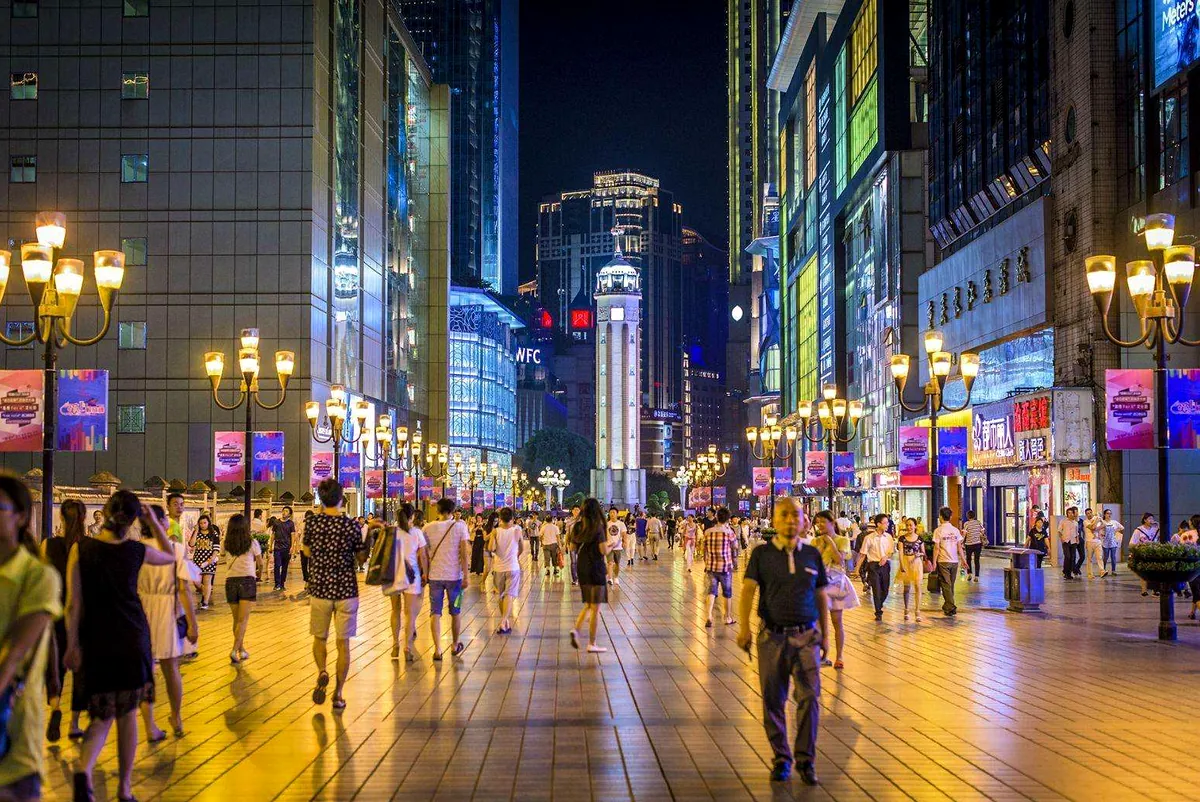
As night falls, the vibrancy of Chongqing’s metropolitan center comes alive through the bustling Jiefangbei pedestrian street, glowing with neon lights. At the foot of the iconic clock tower—a steadfast witness to history amidst a forest of modern skyscrapers—the constant flow of people creates an endless, prosperous pulse. Multicolored lights reflect off contemporary glass architecture, blending with the lively atmosphere of renowned food stalls that spread across every street, highlighting the multi-layered Ba-Shu culinary style, from the signature spicy flavors of the city to the deep, pure essence of the Nanxuan mountains.
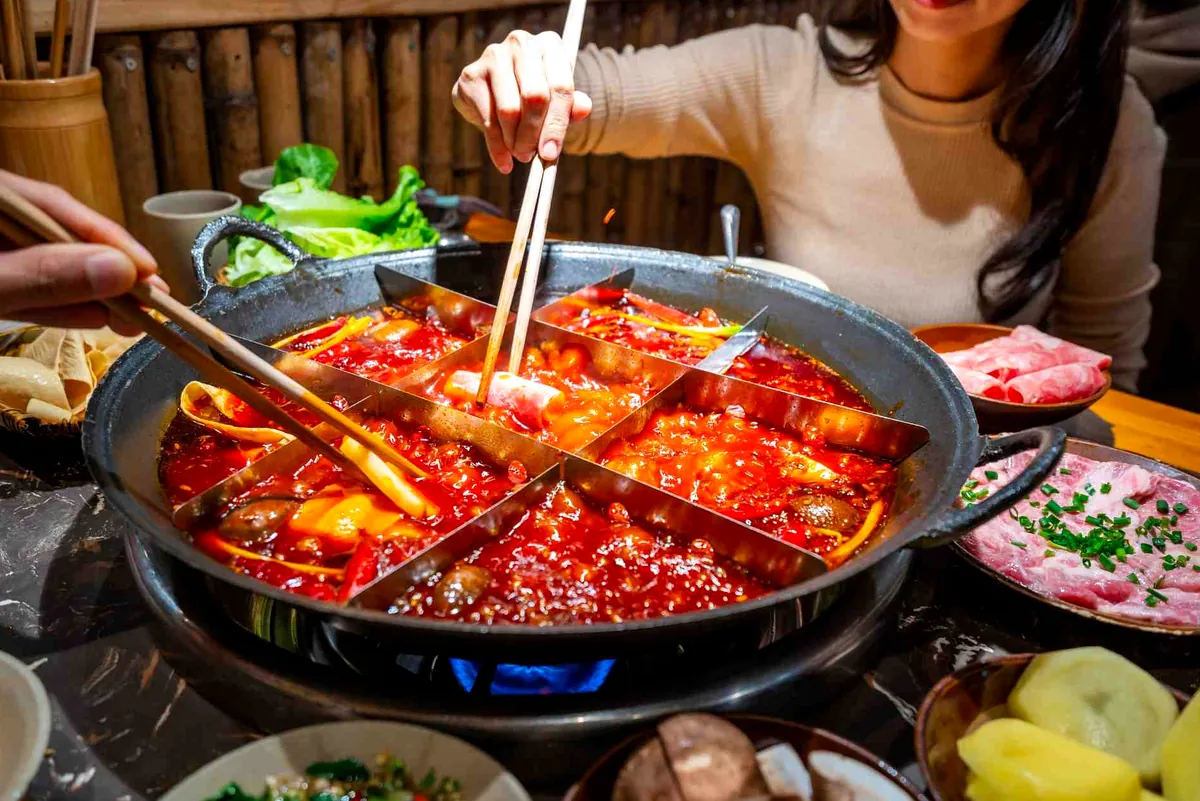
Completely distinct from the fiery heat and rich beef tallow of traditional hot pot in the metropolis, Nanxuan hot pot defines a unique identity by fully absorbing the herbal essence of the Jinfo Mountain region. A Nanxuan hot pot is a magnificent combination of ancient health-preserving philosophy and rare local medicinal herbs harvested from altitudes of over two thousand meters. The broth is meticulously simmered for hours from marrow bones and herbs like Glehnia root, Solomon’s seal, and Codonopsis, which grow naturally on the cliffs, providing a refined sweetness, a neutral nature, and a gentle aroma. When dipping fresh forest mushrooms, crisp square bamboo shoots, and mountain goat meat, diners can clearly feel the delicate balance of yin and yang, which both dispels the cold of the mountain region and naturally restores vitality.
In the treasure trove of ancient imperial cuisine, the Nanxuan region was once famous for its premium products, most notably the “Phuong Thao” dish, also known as “Phang Cao.” Meticulously crafted from the young shoots of primeval forest leaves and herbs that grow in the year-round mist of Jinfo Mountain, Phuong Thao requires a rigorous selection process according to the spring and summer seasons. The locals extract the herbal essence through steaming, drying, and concentrating methods based on secret family recipes to create a clear, jade-green jelly that carries the pure fragrance of mountain flowers and herbs, leaving a lingering scent in the throat. This was not only a precious cooling dessert served to royalty in the past but also a folk remedy to cleanse the body and soothe the mind, passed down through many generations of the local people.
Beyond its rich flora, the aquatic resources in the limestone valleys of Nanxuan also contribute a culinary masterpiece known as Jinfo Mountain stream fish. Growing entirely in natural underground water sources originating from pure karst veins, which maintain a low temperature and are rich in minerals year-round, this stream fish has shimmering scales, soft bones, and firm, sweet flesh without a hint of muddy odor. Nanxuan culinary artisans often prepare the fish in a light, steamed style with a few sprigs of wild ginger, local scallions, and a touch of young green peppercorns pickled in vinegar, or grilled simply on a red-hot stone slab to preserve the natural sweetness of the mountain stream. Each piece of white, firm, and succulent fish creates a poetic symphony of mountain and forest flavors on the palate.
Nanxuan’s culinary culture is ultimately the crystallization of the principle that “food and medicine share the same origin”—viewing food as a nourishing remedy and respecting the ecological rhythm that the nature of Jinfo Mountain generously bestows. From family meals in houses nestled against limestone hillsides to elegant banquets for travelers, every Nanxuan dish contains centuries of preserved folk wisdom. The talented hands of the chef do not overuse harsh spices to mask the original flavors, but skillfully borrow fire, spring water, and the fragrance of herbs to awaken the soul of local produce, turning the culinary experience here into a peaceful and pure gastronomic pilgrimage.
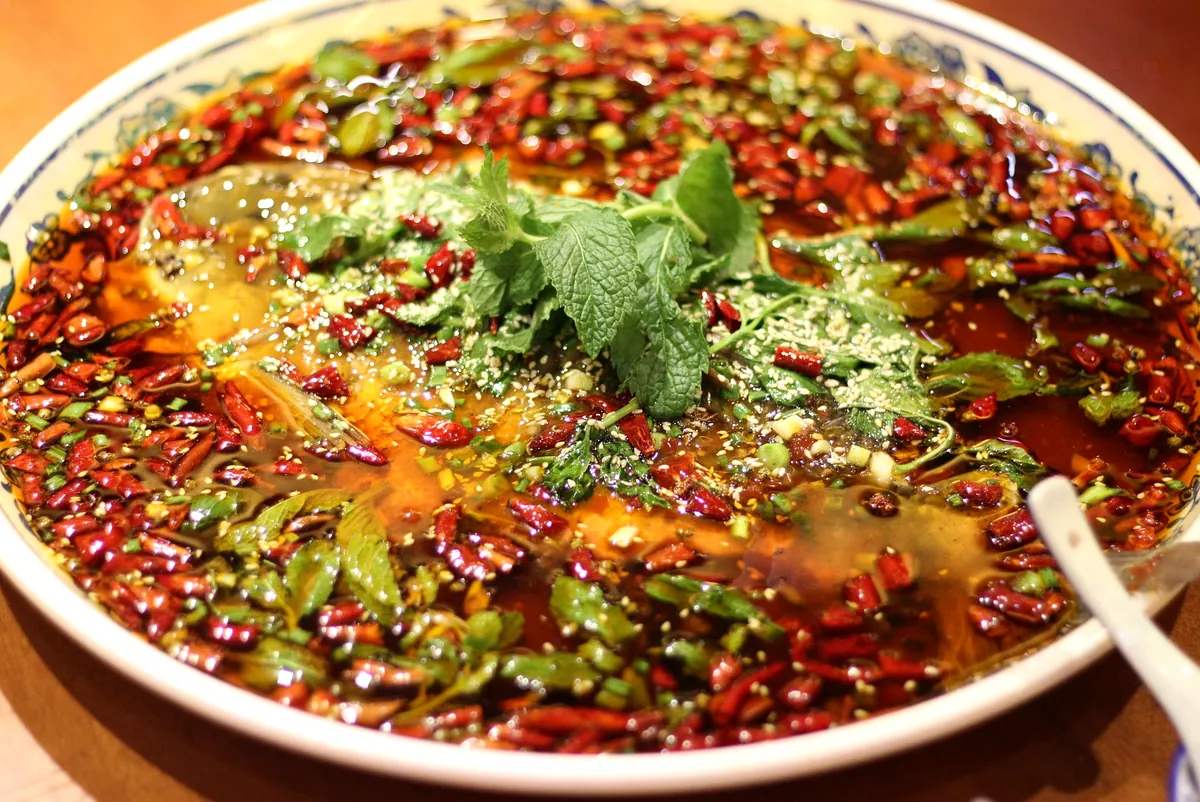
The journey to the fairyland of Jinfo Mountain in Nanxuan is not only filled with emotions through natural scenery but also fully awakened by the famous Ba-Shu cuisine. After a windy mountain pass crossing, nothing is more relaxing than sitting at a steaming table, enjoying a plate of traditional Sichuan-style spicy fish just served. Each white, tender slice of fish is submerged in a vibrant red broth, covered in layers of fragrant dried chilies and Sichuan peppercorns that tingle on the tongue. The dish is garnished with golden toasted sesame seeds and a few sprigs of fresh mint on top, creating a perfect balance of flavors that completely dispels the damp cold characteristic of the limestone plateau.
To realize a trip to the Nanxuan region, travelers can easily choose modern transportation methods from the center of Chongqing. The high-speed rail line departing from Chongqing North Station takes passengers through majestic geological layers to reach Nanxuan in just about 45 to 60 minutes of smooth travel. For those who want to fully admire the undulating mountain scenery through the window, the journey along the G65 Baomao Expressway by private car, taking approximately an hour and a half, is also an expansive visual experience. The Jinfo Mountain scenic area is generally open to visitors from 8:00 AM until late afternoon; however, the West and North cable car systems may stop accepting passengers earlier in the day to ensure absolute safety on the lines spanning the cloud-covered canyons.
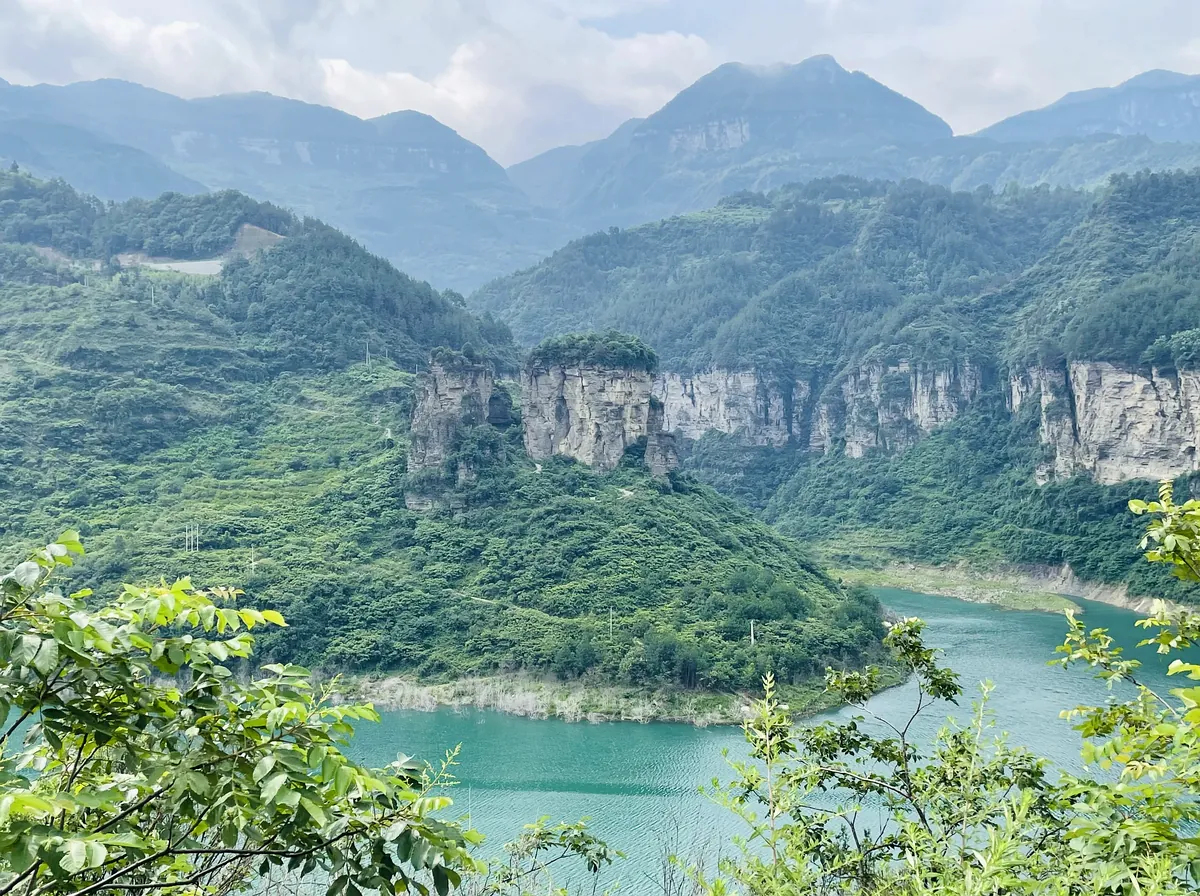
The natural masterpiece of Nanxuan transforms magically with the rhythm of the four seasons, offering golden opportunities for dedicated, in-depth sightseeing. In spring, the ancient rhododendron kingdom awakens across the jagged limestone slopes, blanketing thousands of hectares in brilliant blooms from rare centuries-old trees; meanwhile, winter transforms slopes over two thousand meters high into a pristine skiing paradise amidst floating seas of clouds. Amidst countless modern travel options, discerning travelers must carefully decline low-cost tour programs that harbor hidden traps of forced shopping at commercial stops. Prioritizing a No-Shopping model from reputable tour operators is the key to preserving the purity of your journey, allowing you to dedicate your full attention to listening to the sounds of the grand forests and experiencing the depth of local culture rather than merely skimming through superficially.
Before departure, practical preparations must also be thoroughly handled, from completing proper Chinese entry visa procedures and electronic customs declarations to pre-installing cashless online payment methods that have become standard daily life on the mainland. Additionally, equipping yourself with seamless international network connectivity and flexible thermal layers will give you peace of mind as you stride along cliffside walkways suspended mid-air. For your pilgrimage to the sacred peaks to unfold smoothly and with complete emotional fulfillment, choosing a high-quality all-inclusive tour package will be the optimal solution, allowing you to safely and securely savor every magnificent moment of Nanxuan’s nature.