Nestled in the heart of the Con Dao Prison Special National Historical Relic Complex, Hang Duong Cemetery—and specifically the “Tomb of Co Sau”—occupies a unique geographical coordinate where the spiritual energy of the southern sky and earth converges. From a feng shui perspective, Con Dao rises like a proud emerald gem amidst the vast ocean, encircled by rolling mountain ranges that shield against the winds and waves of the East Sea while opening into sheltered basin valleys. This majestic “mountain-backed, water-facing” terrain endows Hang Duong with a tranquil, solemn atmosphere, where the sorrowful energy of a tragic past has transformed into a source of enduring sanctity, drawing millions of pilgrims from all directions every year.
The historical origin of this landmark is tied to a tragic yet deeply heroic chapter of the Vietnamese nation. From the 19th century onward, under the rule of French colonialism and later American imperialism, Con Lon was infamously dubbed “hell on earth,” a place of exile for steadfast revolutionary fighters and deportees from across the country. The graves here initially took shape spontaneously, harboring the immense grief of prisoners who perished under a brutal penal regime. Within this hallowed ground, the tomb of Hero of the People’s Armed Forces Vo Thi Sau (1933–1952) stands out as an immortal symbol of iron will, ardent patriotism, and an indomitable spirit that endured until the very last breath of the young woman from the red soil of Phuoc Hai.
According to historical records and scientific research archives, Vo Thi Sau’s remains were originally buried in Hang Duong Cemetery in accordance with the anonymous practices of the colonial prison: a simple, crude earthen mound with no headstone, marked only by a prisoner number. It was not until after 1975, when the country achieved complete independence, that the authorities and people of Con Dao District conducted efforts to gather the remains, verify her identity, and erect an official tomb to honor this exemplary daughter of the homeland. Having undergone major restorations in 1990, 2008, and 2017 as part of the comprehensive preservation of the entire relic site, the original grave has since been rebuilt with greater grandeur using monolithic granite—dignified yet preserving the unpretentious warmth deeply cherished in the hearts of the people.
Transcending the boundaries of a conventional historical monument, the “Tomb of Co Sau” has undergone a profound transformation within the spiritual and cultural framework of the Vietnamese people over time. Unlike feudal legends recorded in imperial chronicles, this site exists in contemporary folk belief as a spiritual guardian for coastal residents and travelers from afar. Such reverence stems not from extreme superstition, but from the moral tradition of “When drinking water, remember its source,” profound gratitude for the heroic sacrifices of past generations, and heartfelt faith in blessings for goodness, peace, and national prosperity.
From the perspective of the press and heritage management agencies, the Tomb of Co Sau area alongside the entire Hang Duong landscape serves not merely as a landmark for educating future generations on revolutionary traditions, but also as a special national cultural and historical heritage space. Here, unique island geological values, commemorative architecture, and deep-rooted spiritual traditions blend harmoniously, enriching Vietnam’s heritage tourism map so that every visitor setting foot on Con Dao can fully experience the sacred soul of the land and the heroic echoes of a fiery era.
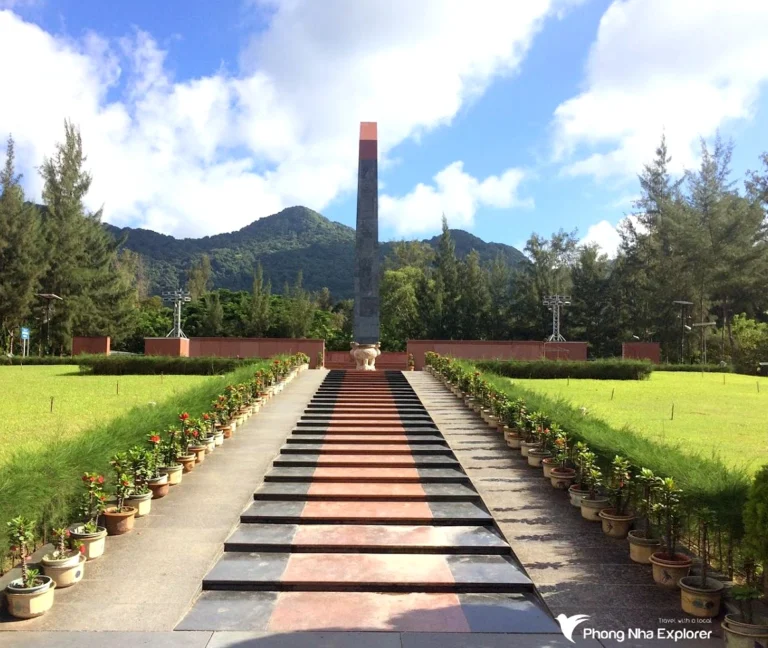
Resting quietly yet reverently within the historic Hang Duong Cemetery, the Tomb of Co Sau area not only carries profound historical significance but also boasts a masterpiece of landscape and spiritual architecture in harmony with Con Dao’s majestic nature. The tomb is situated beneath the cool canopies of ancient trees, caressed year-round by breezes from the East Sea and accompanied by the gentle murmur of waves lapping against Con Son Bay. Feng shui scholars and urban planners regard the site’s terrain as highly auspicious—backed by the rolling Chua Mountain range draped in lush primeval forest and facing the expansive openness of sea and sky, creating an energy field that feels at once serene, majestic, and deeply approachable.
In terms of architecture and sculptural artistry, the original tomb of Heroic Martyr Vo Thi Sau has been refurbished to an imposing scale while retaining its inherent solemnity and simplicity. The entire structure is crafted from polished jet-black monolithic granite, showcasing intricate, razor-sharp carvings executed by master stone artisans. The headstone features deeply engraved Vietnamese inscriptions recording her name and biography, seamlessly paired with bas-reliefs of white pear blossoms—a flower symbolizing the nobility and immortality of the heroine from Dat Do. The surrounding courtyard is paved with natural stone and remains spotless, perpetually ablaze with the vibrant reds of hundreds of fresh floral wreaths, curling incense smoke, and baskets of fruit reverently offered by visitors year-round.
To capture the most moving and artistic moments during a visit here, photographers and travel journalists often recommend two iconic camera angles. The first is a straight-on shot from the main entrance pathway, framing the jet-black granite headstone reflecting the flickering glow of candles, backed by layers of ancient tropical almond trees and golden sunbeams filtering through the leaves to evoke a sacred, contemplative mood. The second is a wide artistic shot of the tomb area at dusk, when Con Dao’s sky turns an enchanting shade of pinkish-orange, silhouetting rows of trees and rising incense smoke against the twilight to stir an indescribable sense of stillness and emotion.
The ideal lighting windows for capturing stunning, spiritually resonant photographs at the Tomb of Co Sau are between 4:30 PM and 6:00 PM in the afternoon, or early in the morning from 6:00 AM to 7:30 AM. At sunset, the gentle late-afternoon rays wash over Hang Duong Cemetery, accentuating the quiet beauty of the granite architecture and adding remarkable spatial depth to frames paying tribute to history. Conversely, dawn brings fresh vitality, as crisp morning light filters through the foliage, highlighting the lush greenery of Con Dao’s nature intertwined with the solemnity of this sacred sanctuary.

Arriving on Con Dao after an ocean voyage aboard a high-speed ferry slicing through white-capped waves, travelers are captivated not only by turquoise waters and boundless primeval forests, but also by a deeply moving spiritual journey at Hang Duong Cemetery, home to the original tomb of Heroic Martyr Vo Thi Sau. The on-site experience begins with slow, quiet footsteps beneath towering casuarina trees in the stillness of the cemetery at night. Far removed from urban clamor, the atmosphere here exudes an extraordinary tranquility where the boundary between a heroic past and the present seems to dissolve, leaving visitors choked with emotion before the sacred spirit of the heroine of Dat Do.
Pilgrimages to pay respects at the “Tomb of Co Sau” typically take place during the special hours from midnight toward dawn, when long lines of visitors silently and reverently offer flowers and incense. Beneath flickering candlelight and swirling incense smoke, the resonant tolling of bells mingling with the distant echo of ocean waves inspires an indescribable stillness of the soul. Travelers come not only to honor the sacrifices of those who came before, but also to seek inner peace and entrust wishes for a tranquil, virtuous life. Any initial awe at the large crowds quickly gives way to deep emotion upon witnessing the unified reverence shared even by young travelers setting foot on this sacred island for the very first time.
Stepping away from this poignant memorial space, Con Dao unveils extraordinary natural wonders and vibrant local culture. Early morning is the ideal time to embark on a gentle trek through Con Dao National Park, breathing in crisp air scented with forest flora, or to charter a small boat out to neighboring islets such as Hon Tai and Hon Tre to admire vibrant coral reefs and schools of fish darting through crystal-clear waters. Looking down from elevated viewpoints, the entire town of Con Dao nestles beneath lush green canopies along a crescent-shaped bay, unfolding like a serene masterpiece of nature.
Exploring local culture here would be incomplete without savoring the island’s renowned culinary specialties brimming with distinct ocean flavors. Travelers can discover unforgettable dishes at rustic beachfront eateries, including crisp, chewy moon snails, freshly steamed red grouper in sweet soy sauce, or candied tropical almond nuts—a rich, nutty local delicacy handcrafted from the very ancient almond trees shading the island’s historic roads. Together, these spiritual, natural, and humble gastronomic experiences intertwine to weave a journey to Con Dao filled with indelible memories for everyone who visits.

Hang Duong Cemetery and the tomb of Heroic Martyr Vo Thi Sau stand among the foremost spiritual destinations in the Con Dao special zone, welcoming large numbers of citizens and travelers from far and wide whenever they visit the pearl island. To ensure a smooth, respectful, and deeply meaningful pilgrimage, understanding practical details regarding visiting hours, transportation, and etiquette is essential.
Regarding operating hours, the Hang Duong Cemetery relic site remains open to visitors every day of the week, including public holidays and Tet. In particular, the Tomb of Co Sau area welcomes pilgrims from early morning until midnight, as the hours from 10:00 PM onward are widely regarded as the most sacred and bustling time of day. As for admission fees, the entire Con Dao Prison relic complex and Hang Duong Cemetery currently offer completely free entry to all visitors coming to tour the grounds and offer incense.
The best time of year to visit Con Dao and pay respects at the tomb is from March to September annually. This marks the dry season, bringing calm seas and favorable weather ideal for travel by both sea and air. Conversely, the period from October to February of the following year brings the northeast monsoon and rough seas, so travelers should closely monitor weather forecasts if planning to reach the island via high-speed ferry.
To travel from central Con Dao town to the cemetery, visitors can walk if staying at hotels near the town center, or rent a motorbike, electric cart, or taxi to save time. The route is smooth, freshly paved, and shaded by lush greenery, taking only about 5 to 10 minutes by vehicle from the central market to the gates of Hang Duong Cemetery.
Because this is a special national historical site of high solemnity, visitors coming to pay respects at the Tomb of Co Sau must strictly observe dress code regulations. Specifically, everyone is required to wear modest, respectful attire such as long-sleeved tops and full-length trousers or skirts extending below the knee; shorts, sheer fabrics, or revealing outfits are strictly prohibited. Traditional offerings typically include white flowers (symbolizing purity and nobility), a mirror and comb set, candles, and agarwood incense. Additionally, visitors should maintain public order, avoid pushing or crowding, speak in quiet tones, and clean up their offering area afterward to preserve the dignified landscape of this sacred sanctuary.

To enjoy a seamless getaway and experience the full beauty of the Tomb of Co Sau without worrying about arranging transportation, booking attraction tickets, or planning itineraries, travelers can choose VDS Travel’s premium all-inclusive Con Dao tour packages. Each itinerary is thoughtfully designed to optimize photo opportunities when the scenery is at its most radiant, accompanied by knowledgeable local guides and top-tier hotel and dining standards.