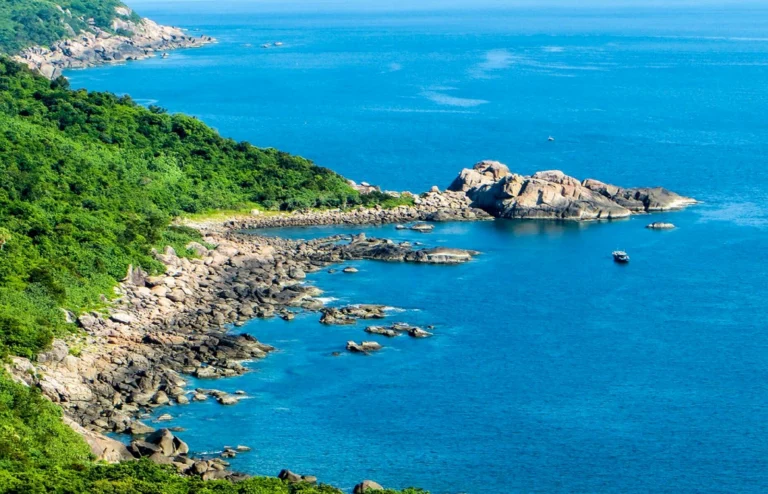
Situated along Vietnam’s sun-drenched and windswept central coast, Eo Gio lies in Hai Bac Hamlet, Nhon Ly Commune, roughly 20 kilometers northeast of Quy Nhon city center in Binh Dinh Province, emerging as a magnificent geomorphological masterpiece bestowed by nature. Nestled in a secluded spot on the Phuong Mai Peninsula, this landmark occupies a commanding position where sedimentary mother earth meets the salty breath of the vast ocean. Through a geological lens, Eo Gio is a distinctive topographic depression sculpted over millions of years by tectonic faulting and the erosive weathering of sea waves upon ancient sandstone schist and granite bedrock. Two bow-shaped rocky mountain ranges stretch right down to the water’s edge, flanking a narrow, saddle-shaped gorge that forms a colossal natural funnel welcoming bracing sea breezes blowing directly in from Mai Huong Bay day and night.
Viewed through the principles of traditional feng shui, Eo Gio’s terrain embodies all the classic hallmarks of an auspicious site holding strategic significance for both defense and spirituality. With its back resting against the rolling Phuong Mai mountain range—acting as a steadfast Black Tortoise (Huyen Vu) rampart guarding the rear—it shields against fierce oceanic gales while gathering spiritual energy flowing from the mainland. Its front faces directly out toward the boundless East Sea, creating a water-gathering “bright hall” (Minh Duong) where ocean currents converge, bringing vitality and abundance. Notably, the elongated mountain ridges embrace the Nhon Ly cove like the protective arms of the Azure Dragon (Thanh Long) on the left and the White Tiger (Bach Ho) on the right. This rare wind-sheltering, energy-gathering topography has transformed what was once a tumultuous stretch of sea into a peaceful haven for generations of local fishermen.
Turning back the pages of historical records and local cultural memory, Eo Gio’s timeline is intertwined with the flow of history dating back to the golden age of the ancient Champa Kingdom across the land of Vijaya. These waters once witnessed bustling trade among international merchant vessels, serving as a strategic lookout post and vital maritime gateway. Through shifting dynasties—from the southward expansion under the Nguyen Lords to the heroic ups and downs of the Tay Son movement—the land of Nhon Ly has quietly cradled folk legends of sea deities and the courage of settlers who braved raging waves to establish their villages. The rustic yet evocative name “Eo Gio” (Windy Strait) is a testament to the ancestors’ keen distillation of the area’s climate and terrain, where humanity lives in complete harmony with nature at its fiercest and most majestic.
Today, backed by academic research and recognition from the press and heritage management authorities, Eo Gio has transcended the bounds of a mere scenic spot to become a distinctive geological and cultural tourism icon of Binh Dinh. Beyond preserving invaluable scientific records of the Earth’s crust formation, it serves as a sacred space that nurtures the soul—a place travelers return to in order to listen to echoes of history and admire the untamed beauty of an enduring Vietnamese coastal and island heritage.

Blessed by nature with a one-of-a-kind silhouette, Eo Gio stands as a sculptural architectural marvel of creation, where wind and waves carve stone together beneath the central Vietnamese sky. The moment visitors arrive, they are immediately captivated by towering cliffs millions of years old, polished smooth through countless high tides. Shaped by natural erosion, the rock faces reveal sharp, fantastical striations in a rich palette ranging from deep brown and ash gray to antique moss green. Winding through the heart of the narrow gorge, a coastal walkway hugs the mountainside like a ribbon of white silk draped across mid-air, leading travelers into an untamed world of boundless grandeur.
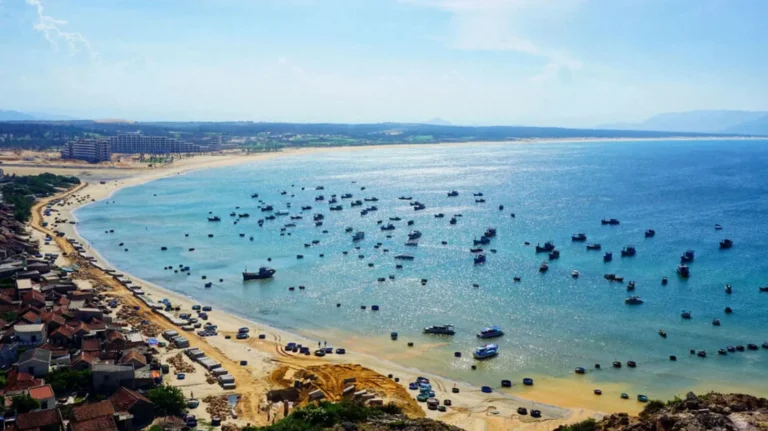
The defining highlight that has built this landmark’s fame and reputation is the heart-stirring harmony between the open expanse of the sea and the steadfastness of the mountains. Below the rocky ledges, white-capped waves crash relentlessly against the shore, sending up plumes of white foam as the rustling of brisk winds merges with the roar of the ocean into a resonant, majestic symphony. Gazing out from the summit, the entire expanse of Mai Huong Bay with its crystal-clear jade waters unfolds before the eyes, dotted with the bobbing basket boats of local fishermen that add a touch of rustic tranquility to this picturesque seascape.
To capture that breathtaking beauty in full, professional photographers and travel journalists often share insider tips on the most prized vantage points. First is the hairpin bend along the stone mountainside path, where a wide-angle lens can frame the entire ribbon-like walkway clinging to the sheer cliffside against the vast ocean backdrop, creating infinite depth in every shot. The second spot, dubbed the “million-view coordinate,” sits on a rocky outcrop jutting right up to the surf, allowing visitors to capture waves crashing into frothy white spray against the fairytale-like rocks. The ideal times to chase the light here are at sunrise (from 5:00 AM to 6:00 AM) or sunset (from 4:30 PM to 5:30 PM), when gentle golden rays or brilliant orange-red sunlight shine directly onto the sedimentary cliffs, accentuating the ethereal, awe-inspiring beauty of Binh Dinh, the fabled land of “blazing sun and howling winds.”

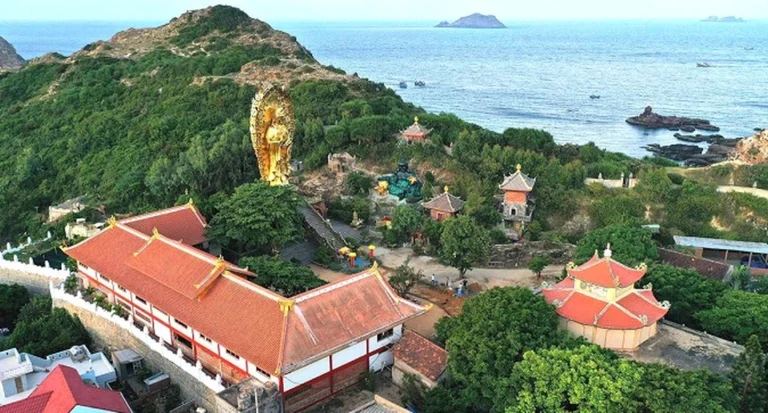
Stepping foot into Eo Gio, travelers are instantly swept into a vibrant, multi-sensory journey where raw nature and local culture merge as one. Kicking off the exploration is the winding trail built along the mountainside, lined with pristine white railings that guide visitors into a magnificent realm of earth and sky. Climbing the precipitous stone steps suspended mid-slope is not merely a light physical challenge, but an opportunity to take in a breathtaking natural panorama. The exhilarating sensation of standing poised between sheer, imposing cliffs on one side and a roaring, boundless ocean on the other evokes an indescribable sense of awe. Brisk sea breezes rush against your face, sweeping away everyday worries and leaving behind pure invigoration as quickened breaths blend into the song of a thousand waves.
Stepping off the stepped trail, visitors can hire basket boats or speedboats from local fishermen to embark on a sea excursion exploring fascinating caves around the Phuong Mai Peninsula, such as Ky Co Cave and Ba Ngo Cave. Gliding over crystal-clear waters where shimmering coral reefs are visible on the seabed, listening to waves lapping gently against the hull, and hearing fishermen recount legends of how perilous waters turned benevolent, one truly comes to appreciate the deep-rooted bond between the local people and the sea. Eo Gio’s spiritual spaces also leave a lasting resonance in every visitor’s heart. At ancient coastal shrines and quiet sanctuaries tucked into the cliffs, the distant chime of temple bells mingles with the serene aroma of incense, bringing a sense of inner peace and inspiring reverence for one’s roots and the majesty of nature.
The most unforgettable moment for anyone visiting Eo Gio arrives at dusk. As the sun shifts from brilliant gold to an enchanting fiery orange-red, painting the vast sea and sky in hues of rose, time itself seems to stand still. Standing atop the observation deck and taking in the sweeping view of Nhon Ly Bay shimmering through a light mist, travelers feel the humbleness of humanity before the infinite universe while swelling with an indescribable pride in the beauty of the homeland.
No journey to Eo Gio is complete without indulging in local culinary delights bursting with the rich flavors of the sea. The moment you step back ashore, the mouthwatering aroma of fresh seafood grilling over glowing charcoal awakens every sense. Visitors can savor renowned regional specialties such as crispy jumping-squid pancakes (banh xeo muc nhay), rich grilled sea urchin with scallion oil, tangy sour hotpot with ta ma fish, or crunchy jellyfish salad served with savory broth. Every dish carries the briny essence of the ocean alongside the warm, genuine hospitality of Nhon Ly’s fishing villagers. Together, these scenic, spiritual, and culinary experiences compose a vivid symphony, etching unforgettable memories of this auspicious sanctuary by the roaring surf into every traveler’s mind.
To ensure your journey to Eo Gio on the Phuong Mai Peninsula goes smoothly and rewardingly, it helps to prepare essential practical details regarding timing, costs, and transportation. For the best time to visit, the months from March to September each year bring dry weather, golden sunshine, crystal-clear turquoise waters, and calm seas to Quy Nhon—ideal conditions for photography and outdoor sightseeing. Travelers should avoid the stormy rainy months toward the end of the year, as the steep cliffside terrain can become slippery and hazardous when strong sea winds blow.
The Eo Gio scenic area welcomes visitors daily from early morning until late afternoon, making it easy to catch either a radiant sunrise or a romantic sunset over the water. As for admission, the site currently charges a very modest listed entrance fee to support landscape conservation and environmental upkeep, typically costing just a few tens of thousands of Vietnamese dong per entry.
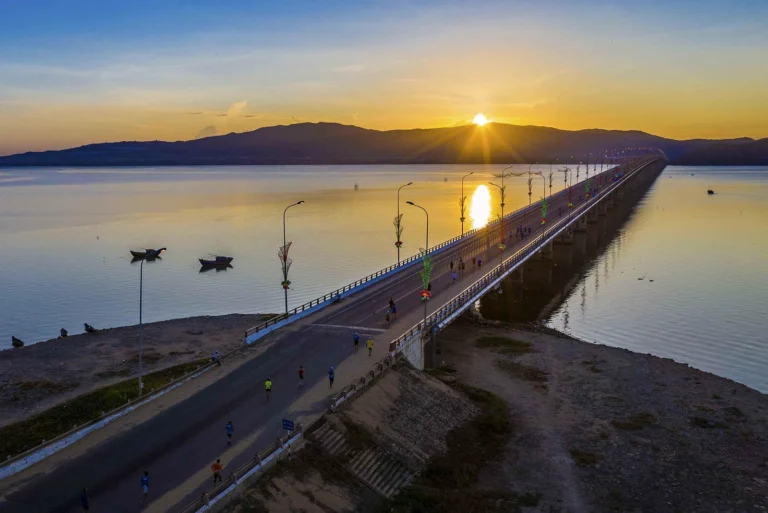
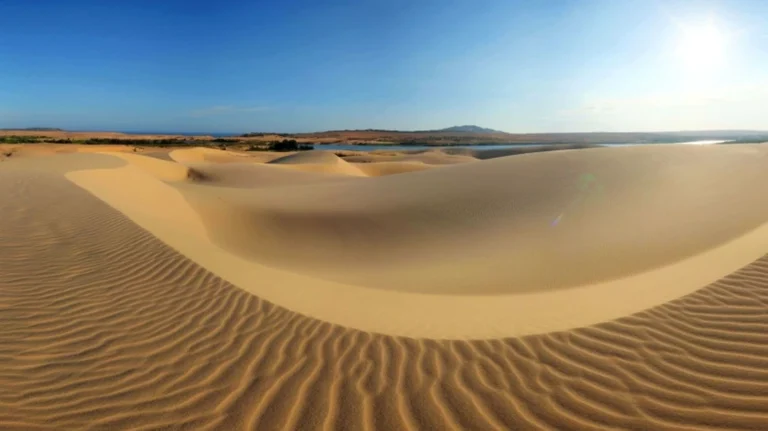
The most convenient route from Quy Nhon city center to Eo Gio stretches roughly 20 km to the northeast. Visitors can travel by motorbike, private car, or tourist bus via Thi Nai Bridge—the long sea-crossing bridge linking the city to the Phuong Mai Peninsula. After crossing the bridge, continue along the national highway and turn onto the provincial road leading straight to the coastal commune of Nhon Ly. This open, uncongested route is flanked by sweeping white sand dunes and expansive ocean vistas, offering a wonderful scenic drive along the way.
Because Eo Gio is characterized by steep cliffs, cliffside pathways, and strong sea breezes, visitors should opt for neat, comfortable activewear. Prioritize sneakers or non-slip flat shoes to ensure safety when navigating the stone steps. Additionally, the area lies close to sacred cultural landmarks deeply rooted in coastal traditions, such as the Nam Hai Whale Temple (Lang Ong Nam Hai); therefore, visitors should dress respectfully, maintain cleanliness, and refrain from littering to help preserve the pristine, enduring beauty of this magnificent natural wonder.
To enjoy a seamless getaway and take in the full splendor of Eo Gio without worrying about arranging transportation, booking entrance tickets, or planning itineraries, travelers can choose VDS Travel’s premium all-inclusive Quy Nhon tour packages. Every itinerary is thoughtfully timed for photo stops when the scenery is at its most vibrant, accompanied by knowledgeable local guides and top-tier hotel and dining standards.