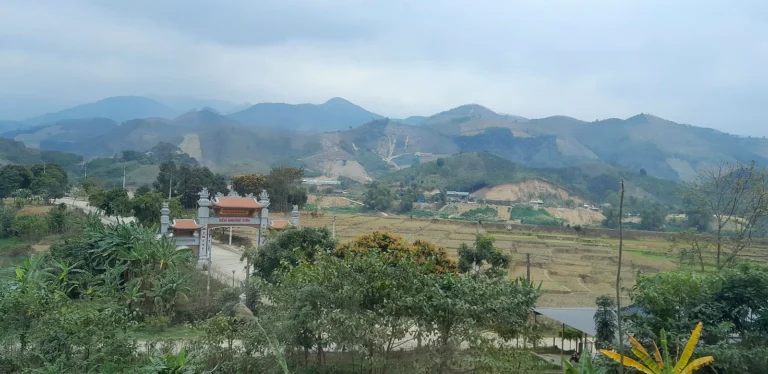
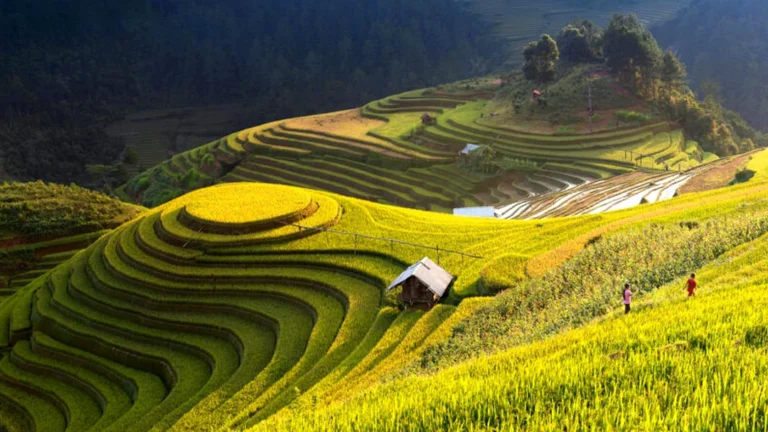
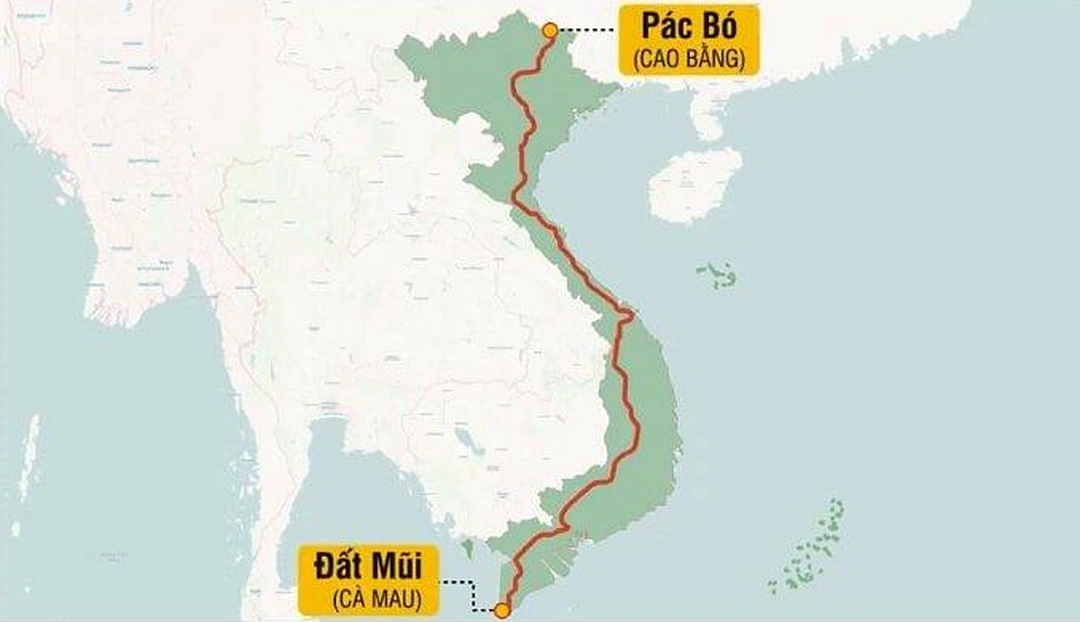
Stretching along the northern borderlands, where the Red River (Thao River) rolls its heavy silt from neighboring countries into Vietnam’s S-shaped land, Bao Yen district in Lao Cai province emerges as a quiet yet sacred heritage region. Situated right on the left bank of this great river, Bao Ha Temple—a sacred sanctuary dedicated to the renowned general Nguyen Hoang Bay—possesses a uniquely advantageous geographical position, embracing an exceptional “back to the mountains, facing the water” geomantic terrain. According to traditional toponymic and geomantic records, the temple nestles harmoniously within a breathtaking landscape where majestic mountains meet expansive waterways. Directly in front of the temple lies a majestic river junction, where rushing currents form treacherous banks, while behind it stands a multi-layered system of hills enveloping and shielding the site like a sturdy natural screen. This rugged yet picturesque terrain once turned Bao Ha into a strategic bottleneck and a vital waterway trade gateway connecting the lowlands with the northern frontier outposts since the feudal dynasties.
The historical memory and cultural flow of this land are closely tied to the shifting fortunes from the late Revival Le Dynasty through the Nguyen Dynasty. Based on field studies and local myths, the temple originally began as a small shrine erected by residents along the riverbank to pray for peace, honoring local deities and national heroes around the 18th century. Through numerous historical upheavals under the Nguyen Dynasty (particularly during the reigns of Emperors Minh Mang and Tu Duc), when the Hue imperial court heavily focused on reinforcing border defense systems and administrative management in Van Ban prefecture under Hung Hoa province, the modest shrine was systematically planned, restored, and grandly upgraded into a majestic temple. It served not merely as a spiritual gathering place for local inhabitants but also as a spiritual pit stop for merchants and soldiers journeying up and down the banks of the Thao River.
The sacred essence that imparts eternal value to this historical relic is the revered historical figure enshrined within: General Nguyen Hoang Bay—praised by the imperial court and citizens alike as the Guardian Deity of Bao Ha or Ông Hoàng Bảy. According to official imperial edicts and surviving legends, he was a brilliant general belonging to the royal lineage or a noble family of the Le Dynasty, entrusted by the court to lead troops to guard the treacherous border region, suppress rebel forces, and protect the peace of the people in Van Ban prefecture. During an unequal battle against northern foreign invaders, he heroically sacrificed his life, preserving the steadfast integrity of a general devoted to the state. His body floated down the Thao River and washed ashore at the Bao Ha riverbank, where local residents discovered him, recovered his remains, and erected a temple to worship him with boundless reverence. The feudal court subsequently issued multiple royal edicts, officially acknowledging his tremendous contributions.
Today, under the lens of heritage management agencies and the press, Bao Ha Ong Hoang Bay Temple holds not only the status of one of the largest Mother Goddess and deity worship centers in the Northwest, but also serves as a treasury preserving priceless tangible and intangible cultural heritage values. The system of artifacts, antiques, stone steles, and ancient imperial edicts preserved at the temple stands as vivid testimony to its historical depth, reflecting the unbreakable bond between the national philosophy of remembering the source when drinking water and the heroic spirit of patriotism and devotion to the people. The subdued beauty of traditional architecture harmonizing with the ecological landscape along the Red River has turned Bao Ha into an exceptional cultural-spiritual tourism destination, where every visitor stepping foot here can feel the heroic spirit of their ancestors and the serene, sacred ambiance of a timeless heritage realm.
Majestically situated on the left bank of the rolling Red River, Bao Ha Ong Hoang Bay Temple features an exceptionally auspicious and sacred “back to the mountains, facing the water” landscape. Behind the temple stands a rolling mountain range embracing the ancient architectural layout, while the front looks out over the vast Thao River heavy with red silt, creating a picturesque landscape that is both majestic and imbued with mystical spiritual colors. Viewed from above, the temple resembles a tranquil brushstroke amidst the borderland sky, clouds, and waters, where heaven and earth converge and intertwine with the heroic history of a guarded frontier era.
Having undergone multiple restorations, the temple still preserves the pristine artistic values of traditional architecture carrying distinct Nguyen Dynasty imprints. Passing through the grand triple-gate adorned with delicate dragon and phoenix carvings, visitors enter a solemn interior space comprising the front ceremonial hall, intermediate hall, and rear sanctuary. The structural tie beams and massive ironwood columns are meticulously carved with familiar motifs such as the four sacred animals, flowers, leaves, and swirling clouds. Every grain of wood and chisel stroke demonstrates the supreme artistry of ancient craftsmen. In particular, the gilded red lacquer art on the horizontal lacquered boards, parallel couplets, and idol statues here is not only vibrant and solemn, but also radiates the majestic and sacred aura of a sanctuary dedicated to a border-defending military hero.
Beyond serving as a spiritual destination attracting tens of thousands of visitors each year, the site also boasts stunning check-in spots that captivate the heart. For photography enthusiasts and travel lovers, there are two magnificent shooting angles that should not be missed when visiting Bao Ha. The first angle is located at the festival courtyard area facing directly toward the Red River dock. The most ideal time to capture this moment is at sunset, when the glowing red sun descends over the Thao River waters, casting the day’s final rays upon the mossy tile roofs of the temple, creating a scenery that is both nostalgic and mesmerizingly magical.
The second valuable photography angle is located in the left and right corridors (ta vu and huu vu) of the temple, offering oblique views through ancient carved wooden windows looking inward toward the serene incense-burning space within. The ideal lighting time for this angle is early morning (dawn), when the day’s first rays filter through the ancient trees surrounding the temple, illuminating the quiet space and allowing photographers to easily capture frames steeped in historical depth and the sacred atmosphere of the Bao Ha sanctuary.
Stepping into Bao Ha Ong Hoang Bay Temple amidst a misty morning, visitors are immediately drawn into a mystical spiritual atmosphere and a vibrant yet solemn local lifestyle. The exploration journey does not stop merely at learning about heroic history through ancient texts; it also unlocks a series of invaluable practical experiences that awaken every sense of the distant traveler.
In the morning, when a thin mist still lingers on tree branches, travelers often choose to leisurely climb the mossy stone steps leading to the relic site located right beside the bank of the rushing red Red River. The echoing temple bell harmonizes with the forest wind blowing from upstream, creating an extraordinarily tranquil and peaceful feeling. Standing from the temple grounds and gazing into the distance, a charming landscape featuring the “back to the mountains, facing the water” layout unfolds majestically like a breathtaking masterpiece of nature. In front lies the winding Thao River embracing the borderlands, while behind stands a protective high mountain range, creating a sacred, expansive space overflowing with the vital energy of the frontier sky and earth.
The spiritual ambiance at Bao Ha Temple is perpetually immersed in drifting agarwood smoke and the radiant yellow hues of devout offering trays. Visitors participating in worship rituals often bring sincere devotion toward the heroic general who guarded the frontier, praying for a year of peace, prosperity, and good fortune. The rhythm of traditional hau dong (spirit possession) rituals, accompanied by the sounds of musical instruments, clappers, drumbeats, and brilliantly colored costumes, further enriches the spiritual cultural life here, making it one of the most fascinating intangible heritages in the Northwest.
Departing from the quiet sanctuary, the experiential journey continues by immersing visitors in the colorful local life at the market area around the temple. Countless rich local produce items are sold here, ranging from aromatic plums and wild mac mat fruits to precious medicinal herbs of the Lao Cai mountains. In particular, the trip would not be complete if travelers skipped the opportunity to taste famous specialties of the Bao Yen region, such as Red River fish grilled with aromatic mac khen pepper, five-color sticky rice fragrant with terraced paddy aroma, or smoked village pork infused with the spicy kick of mountain ginger and doi seeds.
Every footprint in Bao Ha is a chance for travelers to touch the soul of local history and culture. The blend of untamed natural scenery, the sacredness of the historical figure’s temple, and flavorful culinary highlights leaves unforgettable echoes in everyone’s heart, fostering a profound pride in the nation-building and defending traditions of our ancestors along the borderland.
Bao Ha Ong Hoang Bay Temple is one of the most renowned spiritual and historical destinations in the Northwest, attracting numerous pilgrims and tourists year-round. To make your journey complete, smooth, and solemn, the pocket guide below provides the most detailed and useful information regarding timing, transportation, and practical tips when visiting this sacred temple.
Regarding operating hours, Bao Ha Temple opens continuously every day of the week, from early morning until late evening (typically from 6:00 to 21:00) to facilitate worship for locals and visitors. Notably, according to general regulations, sightseeing and worship at the temple are completely free of admission fees. Visitors coming here only need to prepare a sincere heart to offer tributes and may contribute voluntary donations into the official charity boxes managed by the relic management board.
The most ideal time of year to visit Ong Hoang Bay Temple is during the main festival held annually on the 17th day of the 7th lunar month (his death anniversary), or during the early spring months of the new year (from the 1st to the 3rd lunar month). However, if you prefer a quieter, more serene atmosphere for easier worship, regular weekdays throughout the year are also an exceptionally wonderful choice.
Regarding transportation and travel routes from city centers (Hanoi or Lao Cai city), traffic is currently extremely convenient thanks to the Noi Bai – Lao Cai expressway. Departing from Hanoi, you can travel by private car, sleeper bus operating on the Hanoi – Lao Cai route, or take the train to Bao Ha station. Upon disembarking at the expressway interchange or Bao Ha station, you only need to take a short motorbike taxi or regular taxi directly to the temple gate situated right beside the Red River bank.
When entering a sacred place, choosing appropriate attire is extremely important to show respect and align with spiritual culture. Visitors should wear modest, respectful clothing, shirts with sleeves, and pants or skirts falling below the knees. Avoid wearing overly short, revealing, or tight-fitting garments when entering the inner sanctuary area. Additionally, because the temple grounds feature numerous steps and an open riverside terrain that can occasionally get crowded, you should prioritize wearing comfortable sneakers or flat shoes to facilitate easy movement.
To enjoy a complete vacation and fully admire the beauty of Bao Ha Ong Hoang Bay Temple without worrying about arranging transportation, booking admission tickets, or transit schedules, visitors can choose premium all-inclusive Bao Yen, Lao Cai tour packages from VDS Travel. Each tour is optimized for check-in timing when the scenery is at its most vibrant, accompanied by a team of knowledgeable tour guides well-versed in local culture and top-tier hotel and dining service standards.