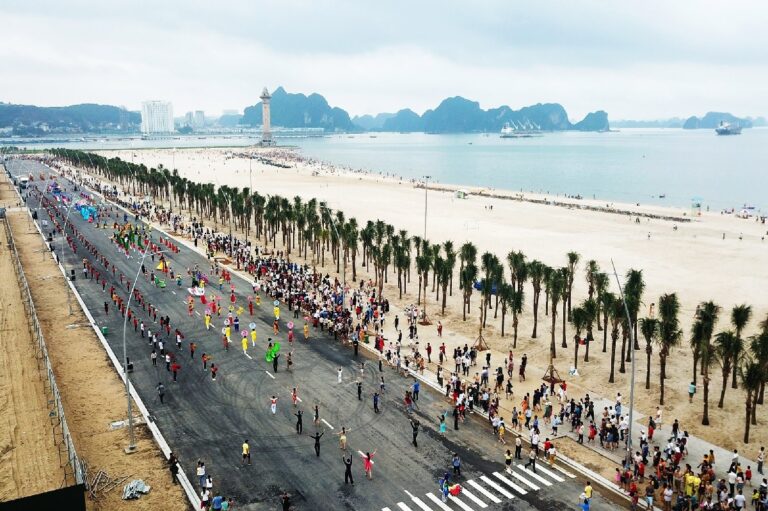
Cua Ong Temple is one of Quang Ninh Province’s best-known historical and cultural landmarks, dedicated to Hung Nhuong Great King Tran Quoc Tang along with figures from the Tran Dynasty. It also hosts the annual Cua Ong Temple Festival, drawing thousands of visitors and locals. Read on to explore Cua Ong Temple in detail.
See also: Top 9 Sacred Pagodas in Quang Ninh
History of Cua Ong Temple
Located in Cua Ong Ward, Cam Pha City, Quang Ninh Province, Cua Ong Temple is a sacred site with roughly 700 years of history tracing back to the Tran Dynasty. Originally it was Hoang Tiet Che Shrine, built to honor national hero Hoang Can for his service defending the northeastern borderland. Skilled in both administration and diplomacy, Hoang Can received the court title *Kham Sai Dong Dao Tiet Che*, a prominent office of the era.
By the early twentieth century, the shrine was elevated into Cua Ong Temple, becoming the primary place of worship for Hung Nhuong Great King Tran Quoc Tang—revered as *Duc Ong De Tam* (“Third Lord”). The third son of Hung Dao Great King Tran Quoc Tuan and Princess Thien Thanh, he was a distinguished commander during resistance against Yuan–Mongol invasions. Entrusted by the Tran court with guarding the northeast—then known as *Cua Suot* (now part of Quang Ninh)—Tran Quoc Tang achieved notable victories contributing to triumphs such as Bach Dang and Van Kiep, helping safeguard the realm. After his passing in 1313, locals built a small shrine in his memory; over time, with support from local residents and neighboring communities, the temple grew into the spacious complex seen today.
From 1313 to the present day, Cua Ong Temple has stood for over 711 years. Attention from cultural ministries, provincial authorities, and local leaders has supported ongoing restoration and conservation of its intangible heritage. Beyond Tran Quoc Tang and Hoang Can, the temple also honors key historical figures including Hung Dao Great King Tran Quoc Tuan, Tran Khanh Du, Tran Nhat Duat, and Tran Quang Khai, alongside Ba Chua Thuong Ngan (“Lady of the Upper Forests”), underscoring the site’s spiritual and historical depth.
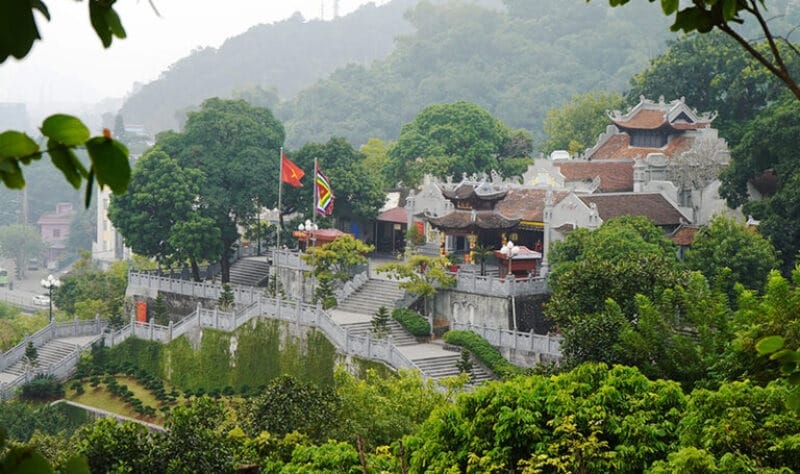
Setting and terrain of Cua Ong Temple
Today, Cua Ong Temple serves both as a place of worship and as a popular destination, especially during festival seasons. In 2016, the Ministry of Culture, Sports and Tourism recognized the Cua Ong Temple Festival as National Intangible Cultural Heritage, affirming its cultural value. In late 2017, the government designated Cua Ong Temple as a Special National Historic Site, recognizing its role in honoring figures who defended the country. From a modest shrine over seven centuries ago, it has become a dignified landmark preserving historical memory and gratitude.
Architectural Structures Within Cua Ong Temple
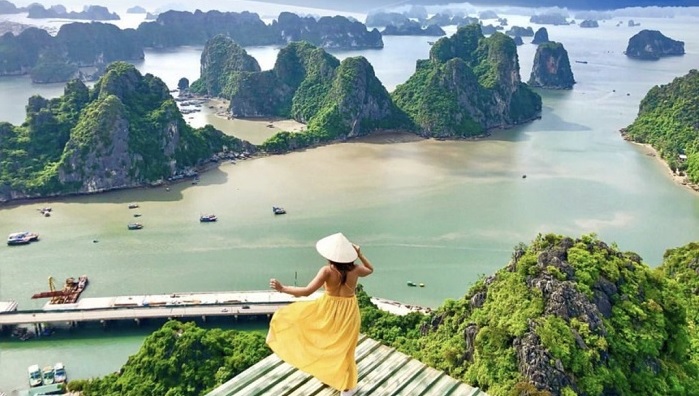
The Cua Ong Temple complex occupies a distinctive hillside setting overlooking Bai Tu Long Bay—where hills meet the sea in a scenic, sacred corner of northeastern Vietnam. The site is organized into three main sections—Upper Temple (*Den Thuong*), Middle Temple (*Den Trung*), and Lower Temple (*Den Ha*)—together with supporting structures such as Hoang Tiet Che Shrine, Ba Chua Thuong Ngan Shrine, Quan Chau Temple, offering preparation and votive-paper burning areas, and a small pagoda, arranged along an ascending axis that guides visitors through distinct spiritual spaces.
1. Upper Temple
Set at the highest point of the grounds, Upper Temple honors Hung Nhuong Great King Tran Quoc Tang—third son of Hung Dao Great King Tran Quoc Tuan and Princess Thien Thanh—a prominent Tran commander who guarded the Hai Ninh–An Bang region (present-day Quang Ninh) and played a vital role in key campaigns against Yuan–Mongol forces including Bach Dang and Van Kiep.
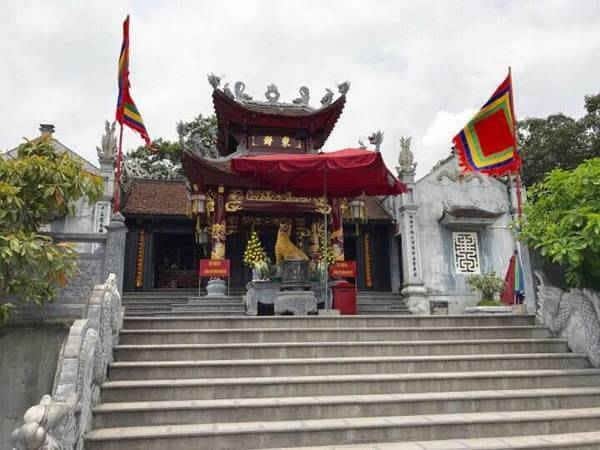
Cua Ong Upper Temple
Built in a *Cong* (“工”) layout with three ceremonial bays, it houses more than thirty statues arranged across ten rows, with twenty-three identified as guardian or attendant figures tied to Tran Quoc Tang’s household and retinue, and his tomb set behind the temple. Looking uphill, Quan Chau Temple and offering/votive structures stand to the left, while a Buddhist shrine to Shakyamuni Buddha, Buddhist figures, celestial deities, and Zen master Tue Trung Thuong Si stands to the right—reflecting harmony between folk belief and Buddhism.
2. Middle Temple
Positioned partway up the hillside on Cam Son Ridge facing the East Sea (South China Sea), Middle Temple honors *Kham Sai Dong Dao Tiet Che* Hoang Can for defending the northeast during the Tran era, while also venerating Mountain and Water deities sought by coastal villagers and passing boats for safe passage.
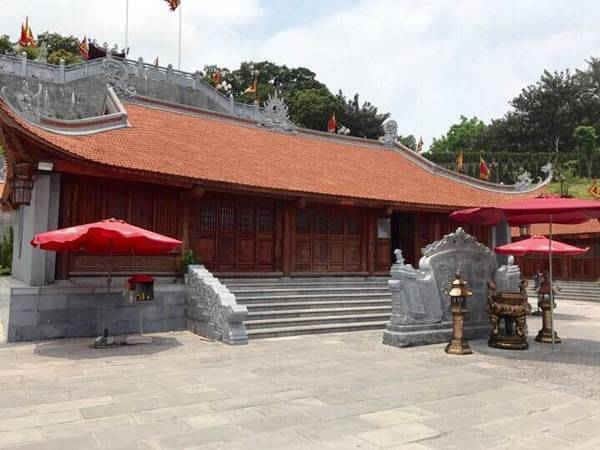
Middle Temple – linking Upper Temple and Lower Temple
3. Lower Temple
Set lowest on the hill facing Bai Tu Long Bay and rebuilt on historic foundations in a *Nhi* (“二”) layout across six bays divided into a front hall and inner sanctuary, Lower Temple bears the gate inscription “Bong Lai Tien Canh” (“Fairy Isle of Penglai”). It centers on *Dao Mau* (Mother Goddess) veneration—notably Trung Thien Long Mau, a key water deity, alongside Van Huong Thanh Mau, the Mother Goddesses of Sky, Forests, and Waters, and Lord Princes (*Ong Hoang*) such as Hoang Bo, Hoang Bay, and Hoang Muoi, near shrines to Tuan Tranh, Chanh, and Giam Sat—and preserves historic artifacts including royal decrees (*sac phong*) from Emperor Khai Dinh’s reign.
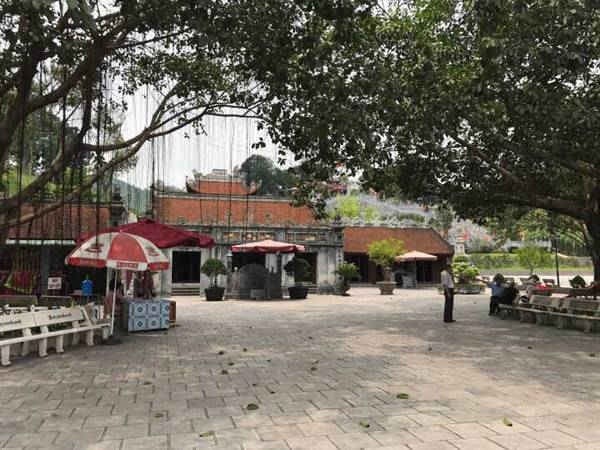
Lower Temple Mother Goddess shrine beneath an ancient banyan tree
During wartime bombing campaigns against northern Vietnam, the Cua Ong sorting-plant self-defense unit built a command bunker and a 37mm anti-aircraft position on a 35-meter hill beside Lower Temple; while Lower and Middle temples suffered heavy bomb damage and only Upper Temple remained standing, modern masonry techniques and local support in the early twentieth century rebuilt the complex in brick and tile. Today the site preserves thirty-four carved statues seated in niches, pairing scenic coastal views with cultural and artistic craft.
Culture and Festivals at Cua Ong Temple
Cua Ong Temple is not only a prominent historical and spiritual site in northeastern Vietnam, but also a deep-rooted cultural and religious gathering place for Quang Ninh residents—preserving intangible heritage honoring Tran-era figures who protected the land and drawing visitors for worship and traditional festivals each year.
Spiritual Culture
Cua Ong Temple connects closely with *Tho Mau Tam Phu* (Three-Realm Mother Goddess worship), a distinctive Vietnamese tradition inscribed on UNESCO’s Representative List of the Intangible Cultural Heritage of Humanity in 2019. At Lower Temple, Mother Goddess devotion honors Trung Thien Long Mau alongside the Mother Goddesses of Sky, Forests, and Waters and Lord Princes such as Hoang Bo, Hoang Bay, and Hoang Muoi—reflecting harmony with nature and gratitude toward historical heroes rather than superstition, reinforced through clear signage, announcements, and community education.
Festivals
Cua Ong Temple Festival takes place twice a year in the second and eighth lunar months. The second-lunar-month festival—typically running from the 2nd to the 10th day—is the main event drawing tens of thousands of visitors, while the eighth-lunar-month festival around the full moon (15th of the eighth lunar month) centers on peace and remembrance. Recognized as National Intangible Cultural Heritage in 2016, the festival blends solemn rites with lively folk activities.
Ceremonial rituals follow *Tho Mai Gia Le* traditions, with male and female ritual teams offering incense and carrying Tran Quoc Tang’s spirit tablet in a procession around Cua Ong Ward as residents set out offerings of sticky rice, chicken, sweets, and *oan* cakes in tribute to ancestors and hopes for national prosperity.
Festive activities bring lively community energy through northeastern folk games such as boat racing, blindfolded pot breaking, tug-of-war, and human chess (*co nguoi*)—especially appealing in early spring alongside nearby coastal park roses, *hoa ban* blossoms, and cherry blossoms.
Management and Conservation
The Cua Ong Temple Management Board places strong emphasis on conservation and cultural stewardship. Trained security staff maintain order and help prevent touting or theft even during busy festival crowds, while weekly Monday briefings and monthly reviews keep operations organized so domestic visitors and overseas Vietnamese alike can enjoy a respectful, welcoming visit celebrating heritage and pride of place.
Bringing together belief, festival traditions, and coastal scenery, Cua Ong Temple leaves a lasting impression as a place honoring past valor and carrying enduring cultural values forward across centuries.

Gợi ý Dịch vụ Du Thuyền & Tour Vịnh nổi bật
Đặt trực tiếp VDS TravelKhám phá hệ sinh thái tour du thuyền cao cấp giá tốt nhất vịnh Hạ Long & Lan Hạ: