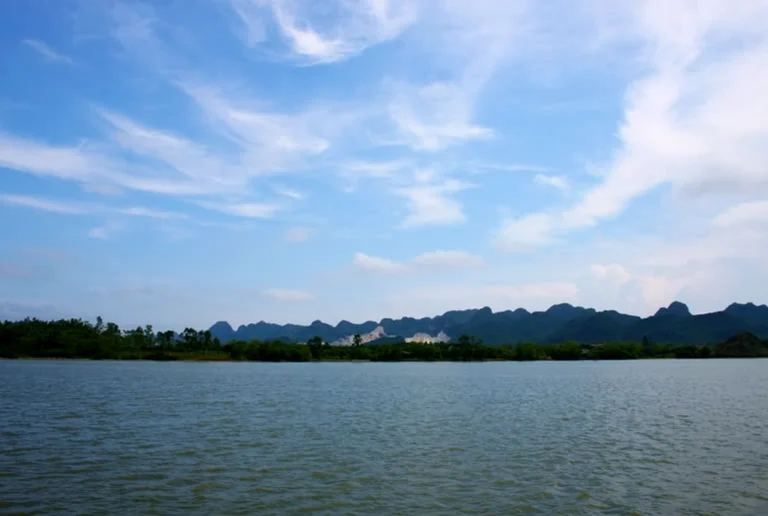
Nestled amidst the majestic mountains and forests of the Northwest, Chua Thac Bo Temple is situated in Da Bac, Hoa Binh Province—a place where unique geological values converge with a rich spiritual and cultural space blending Muong and Kinh identities. In terms of geographic coordinates and feng shui topography, the temple occupies one of the most auspicious positions along the vast waters of the Da River reservoir. Before the Hoa Binh Hydropower Plant dammed the river to harness national energy, this stretch was a treacherous passage marked by the fierce Ghenh Bo waterfall, once known as a “death trap” that challenged every merchant boat and raft traveling up and down between the upper Northwest and the lowlands. The shifts of historical currents and geological formations have sculpted a magnificent landscape: today, the temple perches majestically on steep, high hillsides, enveloped by mountain clouds, highland breezes, and calm emerald waters, painting a picturesque mountain-and-water tableau steeped in legendary depth. The historical origins of this sacred shrine are intertwined with centuries of ups and downs in the Muong land of Hoa Binh. According to historical records and handed-down sacred legends, the temple’s original foundation dates back to the Early Le Dynasty (around the 15th century), beginning as a small shrine erected by local residents and merchants to pray for divine protection before navigating the perilous rapids. Through the Revival Le, Tay Son, and Nguyen dynasties, the temple was continuously renovated and granted royal decrees by feudal courts and local communities, affirming its strategic importance along a vital waterway trade route. During the 1980s and 1990s, when the rising reservoir waters submerged the old relic site, Thac Bo Temple was relocated and grandly reconstructed on higher ground within Da Bac District and Hoa Binh City, standing as a testament to the enduring vitality of a spiritual symbol that has transcended the profound upheavals of time and space. Beyond its commanding setting and antiquity, Chua Thac Bo Temple is a focal point of deeply humane legends, dedicated primarily to the Second Lady of Thac Bo (De Nhi Ba Chua Thac Bo) – Lady Dinh Thi Van. According to legend, she was the beloved daughter of a Muong chieftain from the Bo region who rendered immense service by recruiting troops and assisting King Le Loi in transporting provisions and boats across the treacherous Ghenh Bo rapids during his 15th-century campaign to quell rebellions in the Northwest. The figure of Lady Chua Thac Bo harmoniously unites history and myth, embodying courage, intimate mastery of local waterways, and boundless compassion for the people. Reverence for her extends far beyond a local belief, serving as a sacred spiritual anchor for generations of travelers and merchants whenever they make a pilgrimage to the Muong heartland. From the perspective of the press and heritage management authorities, Chua Thac Bo Temple is not merely a spiritual destination, but also an invaluable cultural and geological heritage site of Hoa Binh Province. It preserves authentic values of traditional architectural artistry and the Vietnamese Tam Phu (Three Palaces) Mother Goddess worship seamlessly blended with ancient Muong indigenous beliefs. Preserving and embellishing the Thac Bo Temple relic complex today not only fulfills the spiritual needs of people nationwide on roots-seeking pilgrimages, but also helps safeguard the rich cultural strata of the historic Da River, further adorning Vietnam’s diverse and vibrant tapestry of cultural heritage.
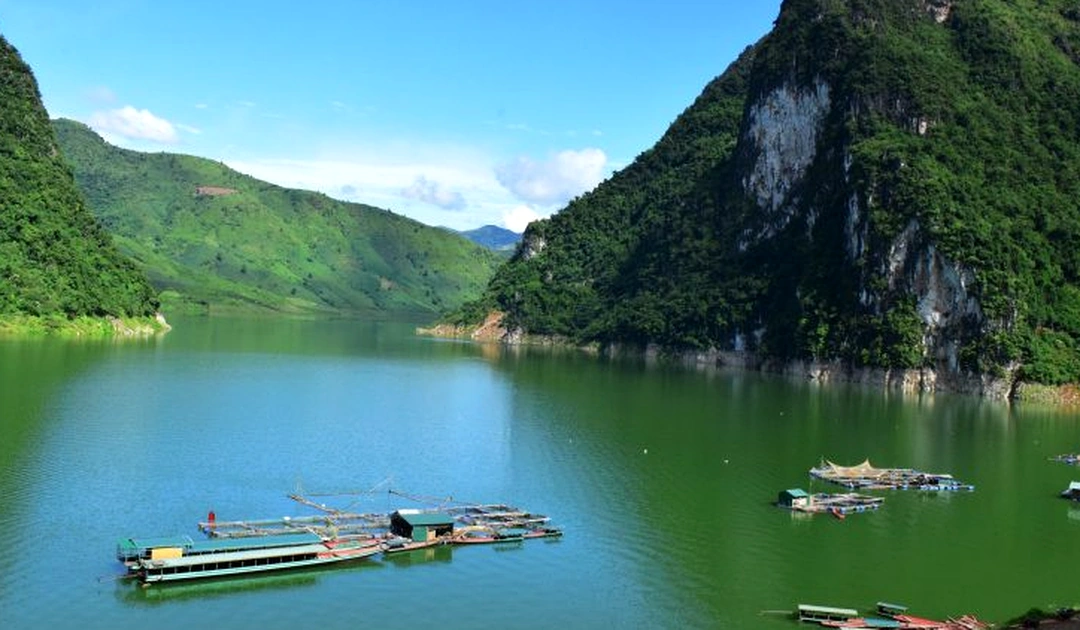
Standing majestically amidst the vast expanse of the Hoa Binh Hydropower Reservoir, Chua Thac Bo Temple emerges as a marvel crystallized from a thousand years of heroic spirit and the wonders of nature. Feng shui experts and landscape researchers regard the temple’s terrain as extraordinarily auspicious, embodying the classic philosophy of “leaning against the mountain, facing the water.” Behind the temple rise undulating limestone mountain ranges blanketed in the lush green of the Northwest primeval forest, forming a sturdy natural rampart sheltering the sacred ground. Before it stretches the open, mirror-calm expanse of the Da River waters, reflecting the boundless sky and drifting clouds. The harmony between rugged mountain formations and the ethereal beauty of the lake creates a breathtakingly picturesque natural setting—one that radiates both the solemn sanctity of a temple sanctuary and the untamed, majestic breath of the Northwest highlands.
Stepping through the imposing ceremonial gate, visitors are immediately captivated by the temple’s exquisite architecture and intricate carvings. The overall architectural ensemble of Thac Bo Temple is a seamless fusion of traditional Vietnamese temple style and indigenous Muong-Kinh cultural imprints. The primary structures—from the Front Hall (Tien Te) and Central Sanctuary (Trung Cung) to the Inner Sanctum (Hau Cung)—are built with sturdy ironwood frames adorned with painstakingly detailed motifs. Carvings of the four sacred creatures (dragon, unicorn, tortoise, and phoenix), stylized foliage, and classical allegories across every truss and crossbeam showcase the supreme craftsmanship of folk artisans. The roof is tiled with moss-covered nose-shaped tiles, curving like a boat hull or sweeping gracefully upward at the eaves, evoking the dugout canoes that once braved the Ghenh Bo rapids. Panel doors, horizontal lacquered boards, and parallel sentences gilded in red and gold shimmer in the flickering candlelight, mingling incense smoke with mountain breezes to evoke a profound sense of serenity, reverence, and mystique for all who visit.
For photographers and travel enthusiasts eager to explore, Chua Thac Bo Temple offers countless “million-view” vantage points that stir the soul. The foremost photo spot praised by photography experts is the vista captured from the main courtyard looking out across Thac Bo Lake. At dawn, while ethereal mist still lingers over the water, the first golden rays of sunlight pierce through the clouds, illuminating the moss-covered tiled roofs and rippling lake surface to create an enchanting, majestic scene. The second iconic angle is from the high mountain slopes overlooking the entire temple nestled beside the deep blue Da River, capturing its solemn grandeur embraced by boundless nature. The ideal lighting windows to capture these extraordinary shots are at sunrise (from 5:30 AM to 6:30 AM) or at sunset (from 5:00 PM to 6:00 PM), when the twilight glow paints a corner of the Northwest sky crimson and casts a magical shimmer across the vast waters.
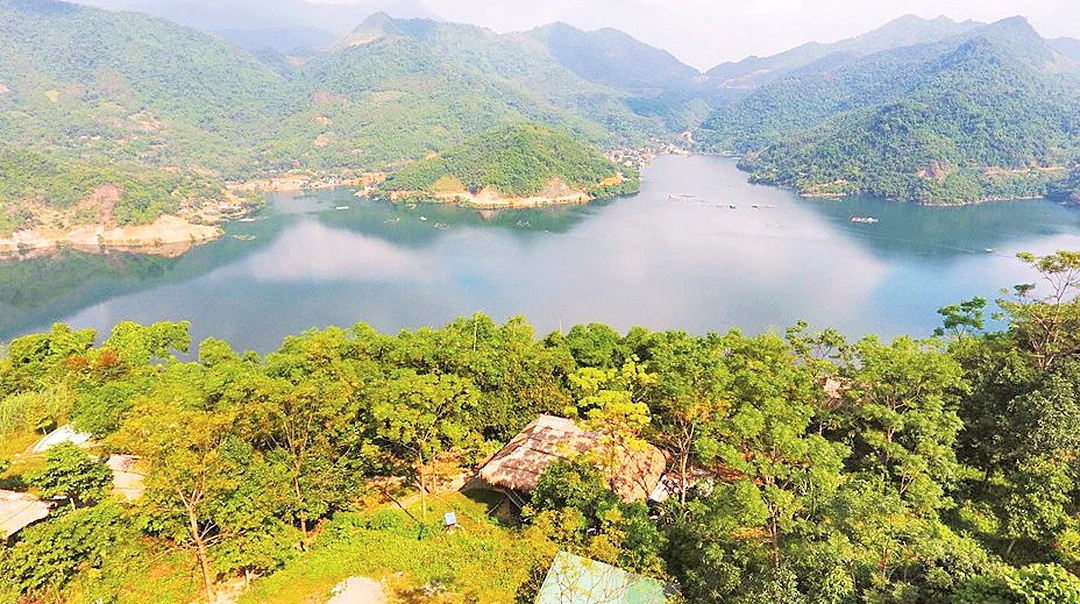
A journey to Chua Thac Bo Temple consistently delivers rewarding, deeply moving real-world experiences for any traveler seeking the majestic Northwest. From the very first moments, visitors experience the sensation of cruising aboard motorboats cutting through the emerald-green waves of the Hoa Binh Hydropower Reservoir. Looking out from the middle of the vast water, the surrounding scenery unfolds into a breathtaking natural panorama of rolling limestone peaks and drifting clouds overhead, creating an atmosphere that is at once awe-inspiring and soul-stirringly tranquil.
Once the boat docks, reaching the main temple complex requires climbing hundreds of stone steps winding along the mountainside. Beneath the cool shade of ancient forest trees, the whisper of mountain winds mingles with the distant resonance of temple bells, naturally slowing one’s footsteps. Any fatigue from the long journey quickly melts away, giving way to awe before a sacred, majestic spiritual sanctuary nestled between sky, clouds, and water. Here, visitors sincerely pay homage, offer fragrant incense in tribute to the merits of the deities, pray for peace, prosperity, and good fortune for their families, and find inner stillness and purification amidst the solemn sacred grounds.
Standing at the highest vantage point of the temple and gazing out over the panorama, travelers cannot help but marvel at the spectacular beauty of this Northwest version of “Ha Long Bay on land.” The mirror-calm lake reflects the expansive sky, dotted with tiny boats slicing through the water and leaving crisp white wakes behind. That moment imparts an indescribable sense of freedom and openness, making one feel completely at one with untamed, generous nature.
Concluding the spiritual and sightseeing journey, visitors should not miss the opportunity to savor the renowned culinary specialties of the ethnic communities living around Hoa Binh Lake. Highlights include the fragrant, chewy flavor of bamboo-tube sticky rice (com lam) served with sesame salt, and butterflied grilled Da River fish (ca nuong pa pinh top) infused with the signature aroma of mac khen (wild forest pepper) and hat doi seeds—quintessential spices of the Northwest mountains. The rich sweetness of fresh river fish paired with the warm kick of mountain spices, sipped alongside a comforting drink of traditional jar wine (ruou can), is guaranteed to leave an unforgettable aftertaste for every diner recalling Da Bac, Hoa Binh.
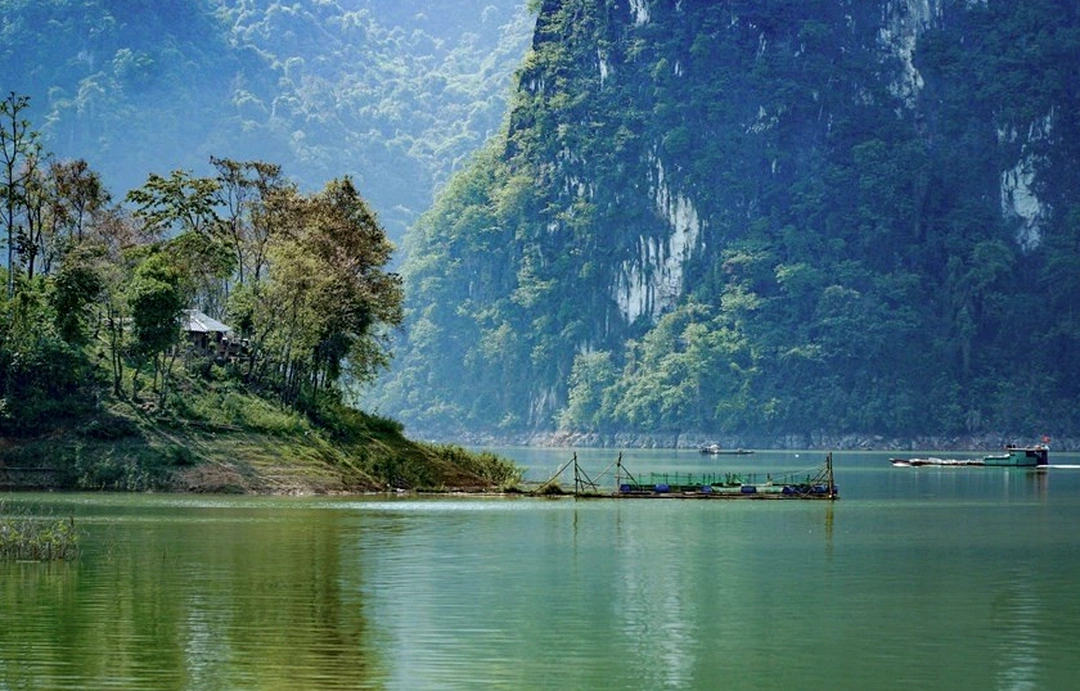
Chua Thac Bo Temple stands as one of the premier spiritual and scenic destinations in Hoa Binh Province, drawing throngs of visitors from near and far to pay their respects. To ensure a seamless and fulfilling trip, it is helpful to keep in mind essential tips regarding opening hours, transportation, and proper etiquette at this sacred site.
Regarding operating hours, the Chua Thac Bo Temple complex welcomes visitors and worshippers every day of the week, typically from early morning until late afternoon. Notably, during the early spring festival season (from the first through the third lunar month) or on the 1st and 15th days of each lunar month, the temple adjusts its opening hours flexibly based on visitor volume to accommodate religious observances. As for admission costs, the management board currently charges no entrance fee to the temple relic site—entry is completely free for visitors coming to offer incense. However, if traveling by water, you will need to pay for renting a boat, ferry, or speedboat across the Hoa Binh Reservoir in accordance with the posted service rates of boat operators at the pier.
The most optimal route from downtown Hanoi follows Thang Long Boulevard or National Highway 6 to Hoa Binh City. From there, travelers continue to an inland waterway port (such as Bich Ha Port) to board a boat across the Da River reservoir, taking in the picturesque mountain-and-water scenery before docking directly at the temple. Traveling by waterway is not only safe and time-saving, but also offers a splendid sightseeing experience across the vast hydropower lake.
The best time of year to visit Thac Bo Temple is during spring, from the first to the third lunar month, when the weather is pleasantly cool and coincides with New Year festivities. Additionally, the period from May to September is ideal for cruising the Da River reservoir to escape the summer heat, admire lush green landscapes, and breathe in the crisp air of the Northwest highlands.
Because this is a sacred site combining river and mountain terrain, visitors should wear respectful, modest, and neat attire when entering the temple to offer incense—such as collared shirts, long trousers, or skirts below the knee. Prioritize athletic shoes or footwear with strong grip and slip resistance, as the temple grounds feature numerous steep mountain staircases and damp boat landings. Thoughtful preparation in both attire and reverent mindset will make your pilgrimage to the heritage waters of the Da River all the more complete and meaningful.
To enjoy a worry-free getaway and soak in the full beauty of Chua Thac Bo Temple without the hassle of arranging transportation, booking tickets, or planning itineraries, travelers can opt for VDS Travel’s premium all-inclusive Da Bac, Hoa Binh tour packages. Every itinerary is thoughtfully timed to capture photo spots at their most radiant moments, accompanied by knowledgeable local guides and top-tier hotel and dining standards.