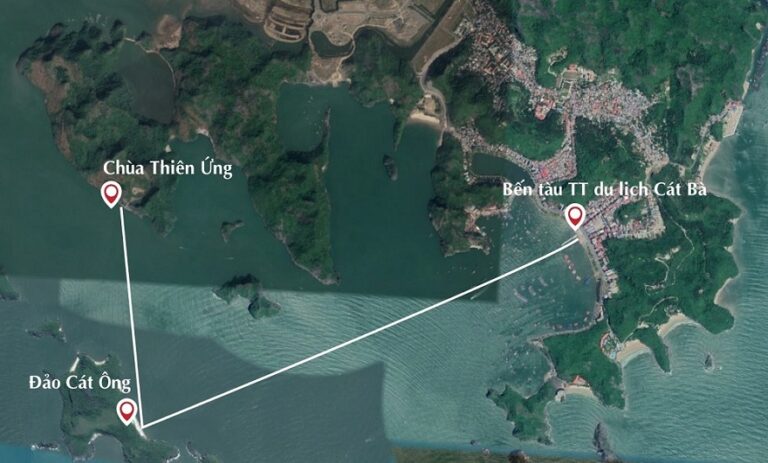
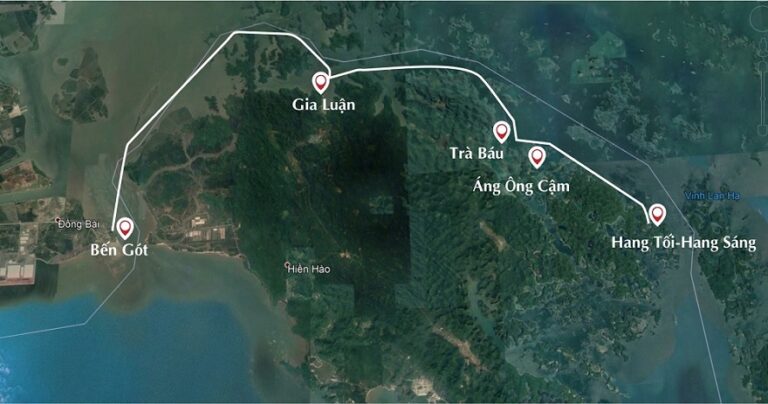
Have you ever dreamed of a small, charming island where the pristine beauty of nature blends with the adorable mischief of friendly monkey troops? If so, Cat Ba Monkey Island, also known by its ancient name Cat Dua Island, is an unmissable destination on your journey to explore the majestic Lan Ha Bay. Nestled in the heart of the world natural heritage site, this island enchants travelers not only with its smooth white sand beaches and turquoise waters but also with its unique four-legged “residents” who have become an inseparable symbol of the place.
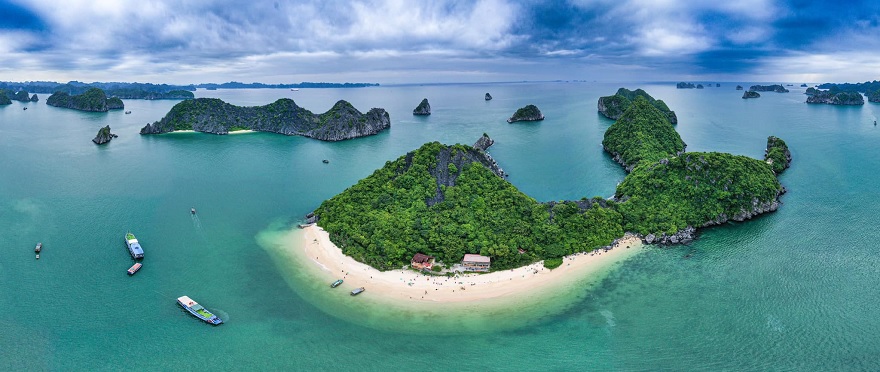
This article serves as your most detailed handbook, accompanying you on your adventurous journey to Monkey Island. We will thoroughly explore the most convenient transportation options, update the latest ticket prices, and discover exciting unmissable activities such as immersing yourself in cool waters at stunning beaches, feeling the thrill and delight of watching and interacting safely with the monkey troop, or challenging yourself with a mountain hike for panoramic bay views. All essential Cat Ba Monkey Island travel tips will be revealed right here, ensuring you have a truly memorable trip!
Introduction to Cat Ba Monkey Island
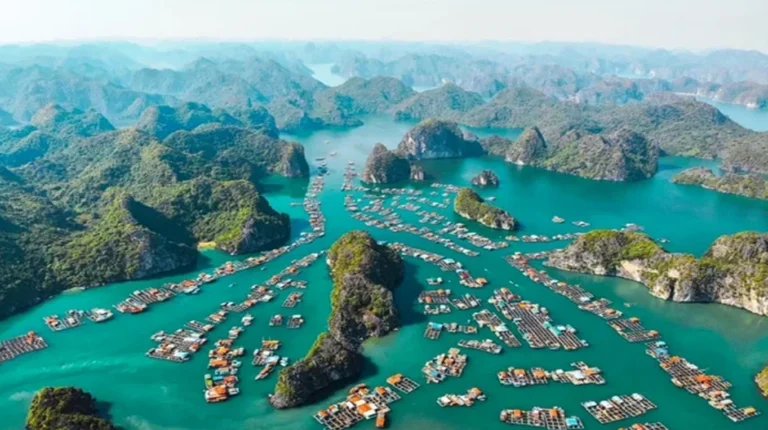
Tucked away amidst the stunningly majestic natural scenery of Lan Ha Bay—a “forgotten paradise” belonging to the Cat Ba archipelago, Hai Phong—lies a tiny island possessing an unusual allure: Monkey Island. Originally named Cat Dua Island, it has long remained an unmissable destination for those who love pristine beauty and desire unique experiences with nature.
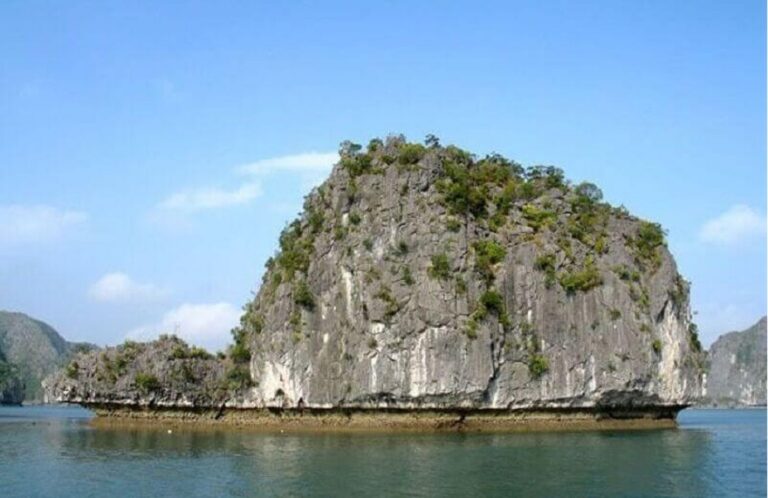
Despite possessing a modest area of about 0.2 km² and a perimeter of roughly 3 km, Cat Ba Monkey Island harbors a captivating, breathtaking beauty. Majestic limestone mountain ranges, shaped by millions of years of geological formation, rise up to form sheer cliffs enclosing pristine, smooth white sand beaches. Then, like a flawless finishing touch, the jade-green seawater, crystal-clear down to the seabed, gently laps at the shore, inviting visitors to dive in and explore.
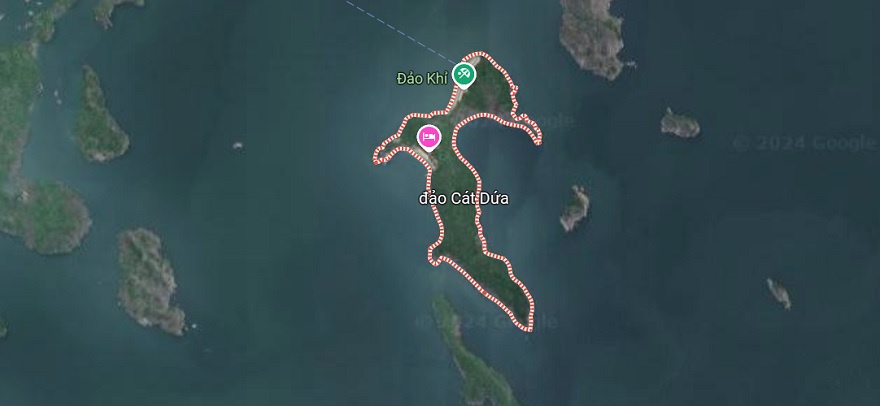
Few know that before achieving fame under the name “Monkey Island,” this island bore a more rustic moniker – Cat Dua Island (Wild Pineapple Island). The name originated from the wild pineapple bushes (a plant belonging to the Pandanus genus) that once grew densely across the island. These plants not only contributed to the unique landscape but were also closely tied to the lives of local fishermen; although the wild pineapple fruits were not directly edible, locals harvested them to soak in water for a refreshing drink or dried them for medicinal use.
The island’s “transformation” story began in 1993. Wishing to “enhance visitor appeal,” the Forest Protection Department decided to introduce new “residents” to the island. About 10 monkeys were “rescued” from the Hanoi Wildlife Rescue Center and released into a semi-natural environment here. Since then, the name Monkey Island has gradually become familiar, closely associated with playful, agile primates swinging through branches or frolicking on the sand.
Today, Cat Ba Monkey Island captivates visitors not only with its poetic mountain-and-sea scenery and dreamlike beaches, but also with the very presence of these special “hosts.” The harmonious combination of pristine, peaceful beauty and exciting encounters with the monkey troop has made Monkey Island one of the most famous and beloved destinations during voyages exploring the majestic Lan Ha Bay and Cat Ba archipelago.
Transportation Guide and Sightseeing Costs for Cat Ba Monkey Island
The journey to Cat Ba Monkey Island is not overly complex, but to ensure a smooth and proactive trip, grasping transportation options and related costs is essential. Below are detailed guidelines to help you easily set foot on this beautiful island.
How to get to Cat Ba Monkey Island:
- Traveling to Cat Ba town From Hanoi or other provinces, you can choose various vehicles such as coaches, limousine buses, or motorbikes (if you love adventure riding) to reach Hai Phong city, then take a ferry or speedboat to Cat Ba Island. Another option is direct bus routes running from Hanoi straight to the center of Cat Ba town.
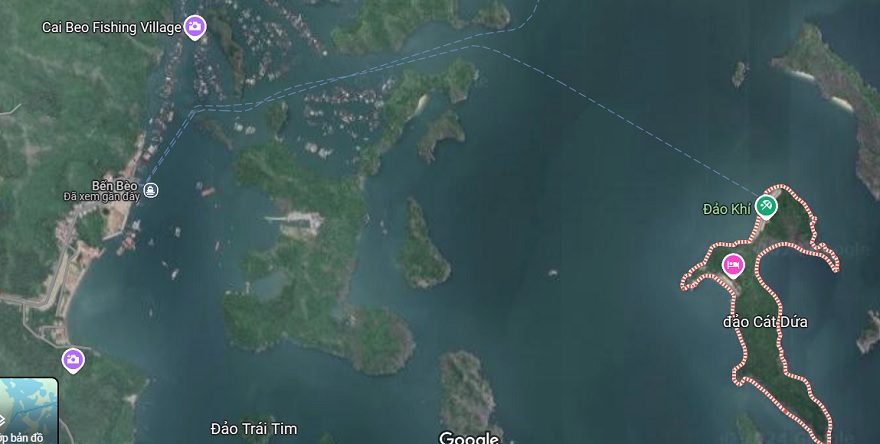
- From Cat Ba town to Ben Beo Wharf Once in Cat Ba town, you need to travel to Ben Beo Wharf. This pier sits about 2 km from the town center, and you can easily take a taxi or motorbike taxi.
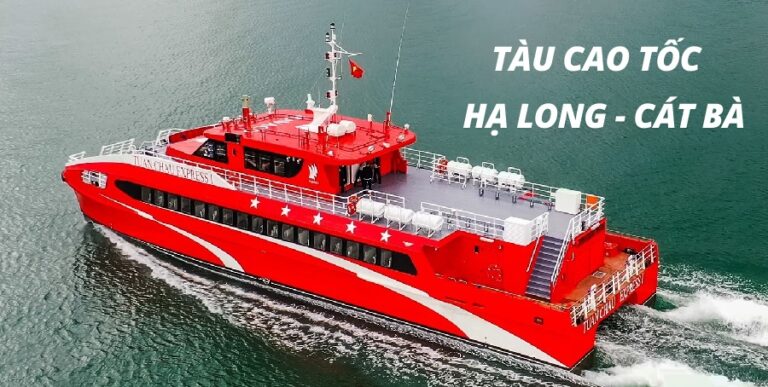
- From Ben Beo Wharf taking a boat to Monkey Island: This is the final leg to reach the island. From Ben Beo, you will board a boat traversing part of Lan Ha Bay to Monkey Island:
- Travel time: Typically, this journey takes about 10 to 15 minutes depending on the boat type and weather conditions.
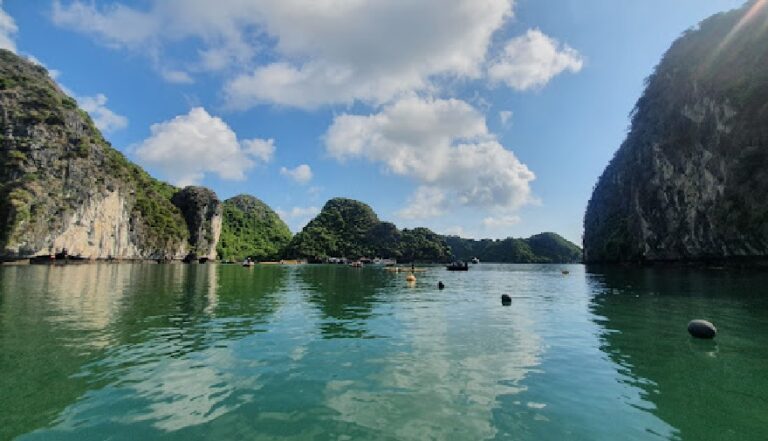
- Experiences along the way: Even the transit route is an enjoyable part of the trip. You will admire stunning views of Lan Ha Bay featuring hundreds of large and small limestone islands in various shapes. The boat may also glide past the ancient Cai Beo floating village, one of Vietnam’s oldest floating fishing villages, offering authentic glimpses into local sea-based livelihoods.
Cat Ba Monkey Island Ticket Prices and Related Costs
- Boat rental for transit:
-
- Shared boat (joining other guests): Costs fluctuate around 150,000 VND/person (reference price).
- Private boat charter: If traveling with a large group or desiring privacy, you can charter a private boat priced from 1,600,000 VND to 2,300,000 VND/boat depending on boat size and type.
-
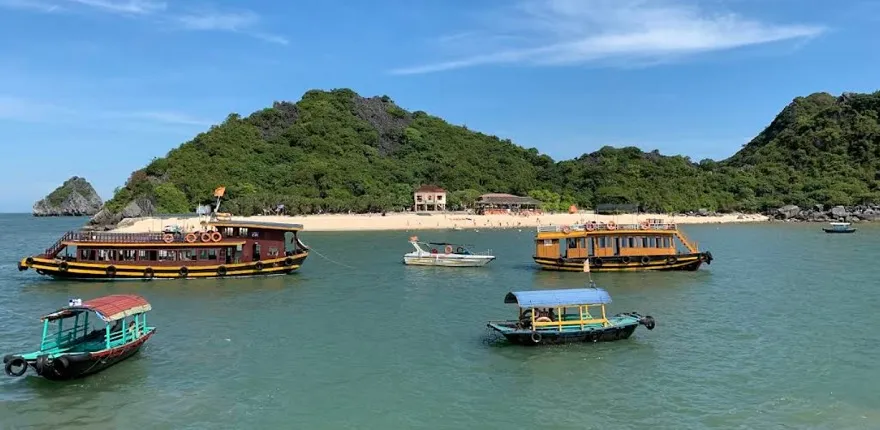
Visitors can travel by boat to Monkey Island
- Monkey Island entrance fee (not included in boat ticket): 80,000 VND/person, children under 1.2m usually free.
- Transfer boat to the island: In case low tide prevents large boats from docking directly at the island’s pier, you may need to use small boats (basket boats, kayaks) for transfer to the island at an extra cost of about 10,000 VND/person.
III. Meeting the Special “Hosts”: Playful Monkeys on the Island
The unique highlight and primary reason attracting numerous visitors to Cat Ba Monkey Island is the rare opportunity to directly observe and interact (very cautiously) with the troop of monkeys living entirely in the wild on the island. These playful four-legged “residents” have truly become living symbols, an inseparable part creating the distinctive allure of the island.
The monkey “family” here primarily belongs to the Long-tailed Macaque species (scientific name: Macaca fascicularis). This is a common and familiar monkey species in Southeast Asia, known for superior intelligence, agility, and remarkable adaptability to living environments. The story of their presence on the island began in 1993, when the Forest Protection Department brought about 10 initial monkeys, “rescued” from the Hanoi Wildlife Rescue Center, to the island with the goal of enriching experiences and enhancing tourist appeal for Cat Ba.
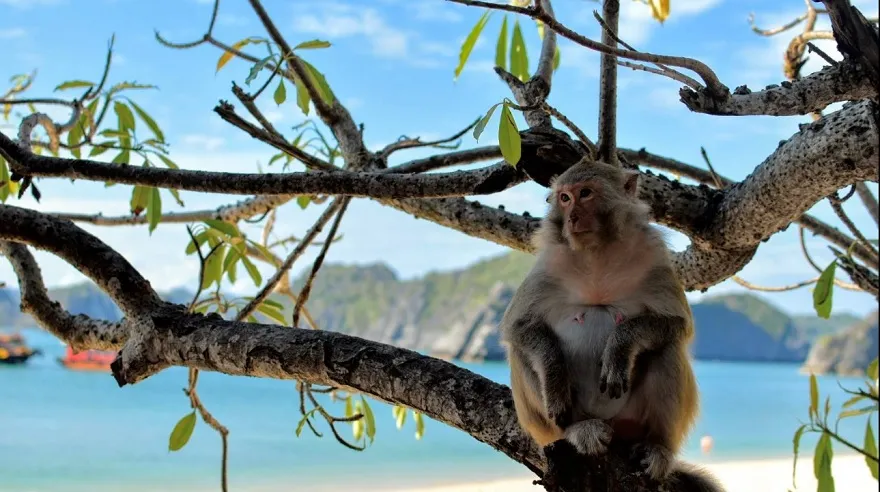
Long-tailed Macaque (Macaca fascicularis) at Cat Dua Island (Monkey Island)
Through nearly three decades of living and thriving, from the initial individuals, the long-tailed macaque troop on Monkey Island is currently estimated at around 20 members, forming a small yet extremely dynamic and vibrant community. Visitors will easily notice that the long-tailed macaques here are quite accustomed to humans; they prove clever, crafty, immensely playful, and always full of curiosity about their surroundings, especially toward newcomers. They typically do not hesitate to approach humans, particularly in the Cat Dua Beach 1 area—where many activities concentrate and where they hope to “beg” for food. The image of monkeys nimbly swinging through tree branches on steep cliffs, frolicking noisily on white sand beaches, or even performing impressive “rope-swinging” displays on tree branches has become an unforgettable memory for many people visiting this island.
Golden Rules When Interacting with Cat Ba Monkey Island Monkeys
Even though the monkeys appear friendly and adorable, it is crucially important for visitors to remember that they remain wild animals and their behavior can be unpredictable. To ensure safety for yourself, those around you, and the monkey troop itself, strictly adhering to the following codes of conduct is mandatory:
- ABSOLUTELY DO NOT FEED THE MONKEYS: This is the most important rule. Human food (sweets, inappropriate fruits, processed foods, etc.) is not only harmful to the monkeys’ digestive systems and health but also alters natural foraging habits, making them dependent and more aggressive when demanding food. Monkeys rummaging through trash for leftovers also causes unsanitary conditions and negatively impacts the island’s environment.
- Maintain a Safe Distance: Always maintain a respectful distance from the monkey troop. Do not attempt to approach too closely, touch, or cuddle them, even if they appear tame.
- Do Not Tease or Provoke Monkeys: Avoid any actions that might make monkeys feel threatened or taunted, such as shouting, staring directly into their eyes, or making sudden movements. These actions can agitate monkeys and lead to unwanted defensive reactions like biting or scratching.
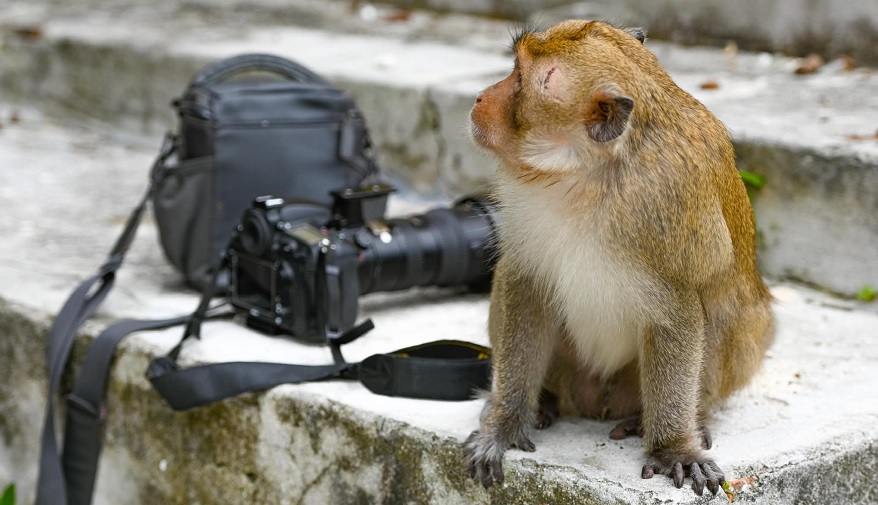
- Carefully Protect Personal Belongings: Monkeys on the island are very agile and possess a “talent” for snatching items. Be especially careful with food, drinks, phones, cameras, glasses, hats, jewelry, and any small, shiny objects. Keep handbags and backpacks securely zipped and firmly fastened.
- Observe Calmly and Quietly: The best way to enjoy their presence is by observing from a distance calmly and keeping silent. This ensures you do not disturb the monkey troop’s natural activities.
- Closely Supervise Children: If traveling with children, parents must pay special attention to watch over them carefully, preventing children from voluntarily approaching closely or handing food to monkeys.
Following these rules not only guarantees you a safe, enjoyable experience but also demonstrates respect for natural life and contributes to protecting the monkey troop – the “living treasures” of Cat Ba Monkey Island.
What to Do on Cat Ba Monkey Island? Unmissable Activities
Cat Ba Monkey Island captivates travelers not merely with its playful monkey troop but also offers countless exciting experiential activities, immersing visitors in Lan Ha Bay’s pristine and majestic nature. Whether you love vibrancy or seek peaceful moments, this island can satisfy you.
1. Swimming and Relaxing at Stunning Beaches: Cat Dua 1 & Cat Dua 2
This beautiful island generously gifts visitors two main beaches: Cat Dua 1 and Cat Dua 2, each carrying its own distinct beauty and atmosphere, promising wonderful moments of relaxation.
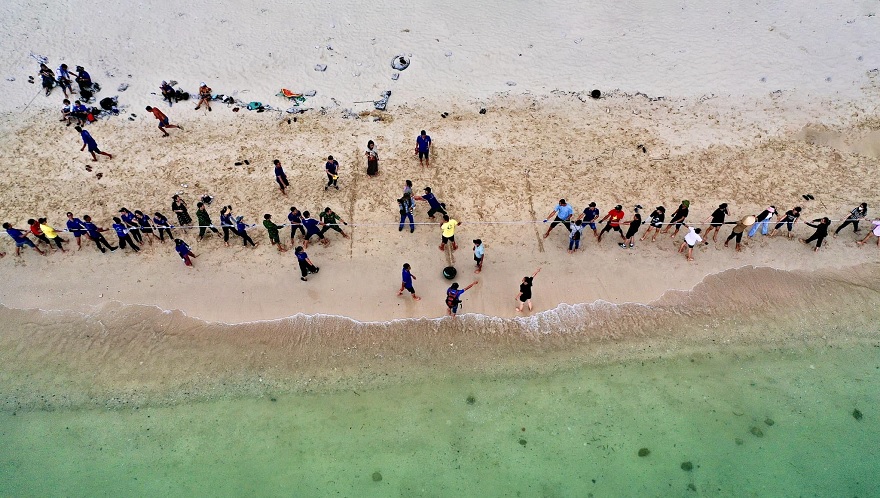
Cat Dua 1 is typically the first stop and also the island’s central beach. Featuring a smooth white sand shoreline curving in a graceful crescent shape, embracing cool turquoise seawater, it emerges like a vibrant natural painting. Along the beach, leaning green coconut palms enhance the poetic charm. The atmosphere at Cat Dua 1 tends to be busier and more vibrant, ideal for activities like wading in cool waters, sunbathing under warm golden sunshine, or participating in team-building games and beach sports. Visitors can also easily find rental services for swimming floats, swimwear, and simple leaf huts serving basic refreshments.
If you seek a more private and tranquil space, Cat Dua 2 will be the perfect choice. Tucked discreetly on the right side of the island, typically accessed past a rocky headland that locals metaphorically call “tiger headland,” this beach carries a much more pristine and quiet beauty. It features a small garden with characteristic island plants like coastal pine, white apple, and wild pineapple, adding green space. Notably, Monkey Island Resort is also located here, offering convenience for those wishing to stay overnight. Cat Dua 2 is an ideal spot to relax with a book, immerse in crystal-clear waters, or try scuba diving and SUP paddleboarding. It is also often the starting point for those wishing to conquer the island’s peak.
2. Observing and Photographing the Monkey Troop
Naturally, one cannot omit the main activity and signature attraction when visiting Monkey Island: observing and capturing adorable moments of the playful long-tailed macaques. You can spend time watching them frolic on the sand, deftly swing through tree branches, or curiously forage for food. This is a wonderful opportunity for unique photographs. However, please always remember and strictly obey the safe conduct rules shared in detail in Section III. This not only guarantees your safety but demonstrates respect for the monkeys’ natural lives, contributing to a joyful and responsible encounter.
3. Hiking to Conquer Cat Ear Mountain Peak – Admire Panoramic Lan Ha Bay from Above
For adventurous souls unafraid of challenges, the hike up to the highest peak on Monkey Island, commonly known as Cat Ear Peak (Dinh Da Tai Meo), is undoubtedly an unforgettable experience. Overcoming winding trails, the well-deserved reward awaiting you ahead is an overwhelmingly majestic panoramic painting of Lan Ha Bay, featuring hundreds of large and small islands in diverse shapes and sizes undulating across azure seas like a masterpiece crafted by nature.

However, to ensure a safe and fulfilling hike, note that the path to the summit is quite steep, featuring sharp cat-ear rocks and potential slipperiness, especially after rain or early mornings with dew. This activity requires good physical stamina, agility, and utmost caution in every step. It is mandatory to wear specialized walking shoes or hiking boots with strong grip; absolutely avoid flip-flops, sandals, or smooth-soled shoes. For enhanced safety, travel with experienced companions or in small groups and bring sufficient drinking water for your trek.
4. Kayaking/SUP Boarding to Explore Island Waters
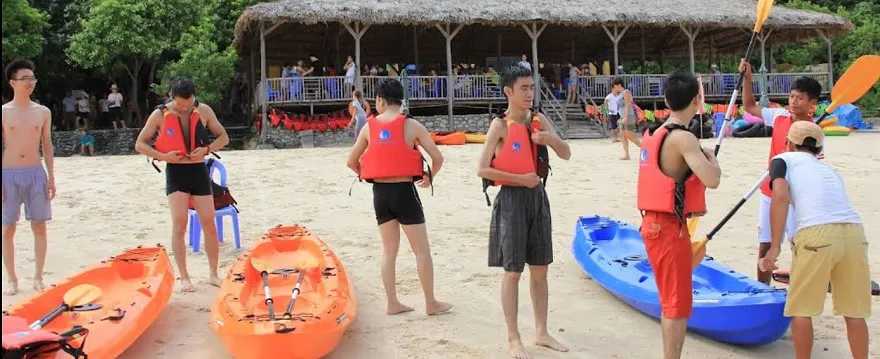
One of the best ways to fully sense the peaceful and majestic beauty of waters around Monkey Island is paddling a small kayak or stylish SUP board yourself. Gently gliding across emerald waters of Lan Ha Bay, you will weave through towering limestone cliffs, discovering hidden corners and small caves inaccessible to large boats. This is not merely an exciting physical activity but a moment to completely immerse in nature’s serenity, listening to rippling waves and gazing at unique landscapes from a very different perspective. Kayak rental services are typically available at Cat Dua 1 Beach, helping you easily start your exploration journey.
Kayaking Experience at Monkey Island
5. Scuba Diving/Snorkeling – Discovering the Underwater World
Besides surface beauty, the magical underwater world around Monkey Island conceals countless fascinating wonders waiting for you. The sea area at Cat Dua 2 Beach is particularly renowned for relatively diverse coral reefs alongside numerous colorful fish species and marine creatures. Participating in diving activities, whether snorkeling (with breathing tubes and goggles on the surface) or diving (deep diving with oxygen tanks), grants chances to admire an entirely different, vibrant, and colorful natural picture.
For deep sea diving with tanks, professional guided tour services are typically available, providing necessary safety equipment to guarantee a secure experience. Reference costs for a 30-minute deep dive fluctuate around 1,000,000 VND/person. This will undoubtedly prove an unforgettable memory for ocean exploration enthusiasts.
Cat Ba Monkey Island – a quintessential heritage hidden amidst Lan Ha Bay, delivering unforgettable experiences featuring pristine sea beauty, adorable monkey mischief, and countless exciting activities. Why hesitate any longer? Plan your exploration of this charming island today!