Nestled alongside the tranquil Wangchu River as it winds through the heart of the Thimphu Valley, the historical tapestry of Bhutan’s capital is woven from threads of spirituality and temporal power spanning more than eight centuries. The origins of Tashichho Dzong—the supreme fortress-monastery—date back to 1216, when Lama Gyalwa Lhanangpa laid the foundations for its predecessor, Dho-Ngon Dzong, meaning the “Blue Stone Fortress,” perched on a steep hillside overlooking what is now Dechen Phodrang. In its earliest days, this stronghold served as a monastic retreat for the Lhapa Kagyu school, standing firm amidst the shifting territorial conflicts of ancient Tibetan Buddhist sects long before Bhutan’s political map entered its era of grand unification.
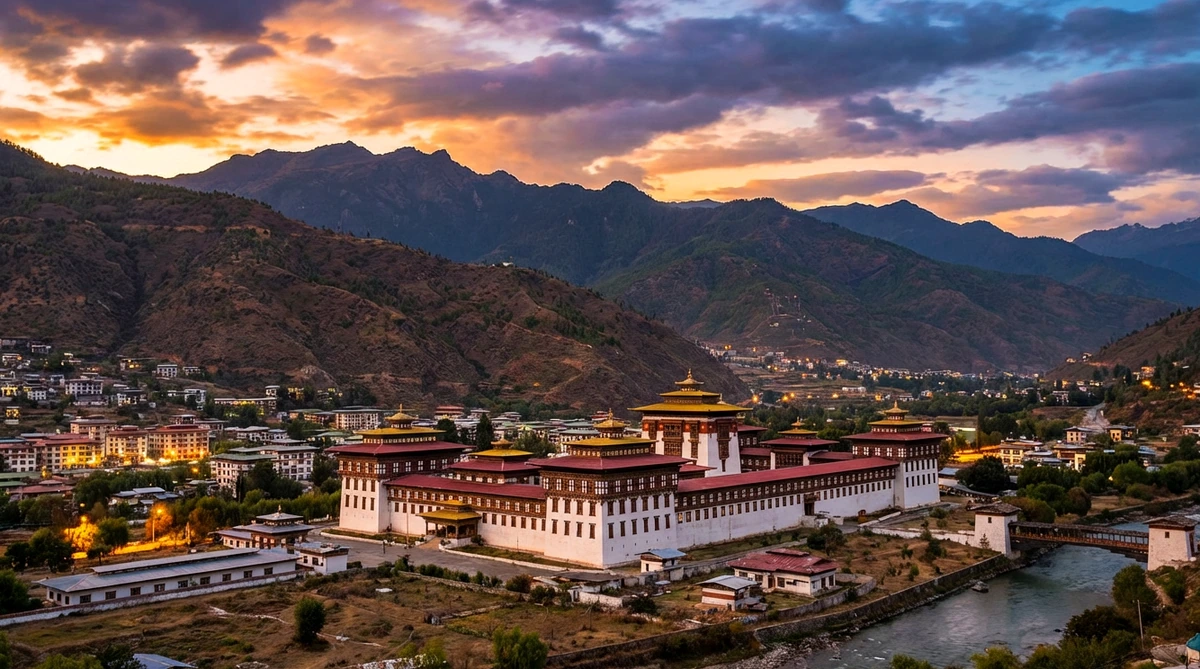
A pivotal turning point arrived in 1641, when Zhabdrung Ngawang Namgyal—the legendary Dharma King credited with unifying the realm and founding the modern nation-state of Bhutan—formally took over the fortress. Recognizing its strategic vantage point, he undertook a major expansion and renamed it Tashichho Dzong, carrying the sacred meaning of “Fortress of the Glorious Religion.” Under the Zhabdrung’s reign, it became the supreme seat of Bhutan’s unique dual system of governance, Chhoe-sith: a harmonious balance between the spiritual leadership of the Chief Abbot (Je Khenpo) and the temporal administrative authority of the Regent (Druk Desi). Despite enduring countless historical trials—including devastating fires in the 18th century and a catastrophic earthquake in 1897 that toppled several tiers of its towers—Tashichho Dzong experienced a miraculous rebirth through meticulous restorations under King Jigme Dorji Wangchuck, rising to become an enduring symbol of the Drukpa Kagyu lineage.
If Tashichho Dzong represents administrative might and the roots of national protection down in the valley, then high atop the windswept hill of Kuenselphodrang, the Great Buddha Dordenma statue stands as a seamless fusion of modern reality and millennia-old mystical prophecies. The creation of this colossal Shakyamuni Buddha statue is intimately tied to ancient predictions by Guru Padmasambhava (the Lotus-Born Master) in the 8th century and the renowned treasure-revealer Terton Pema Lingpa in the 15th century. Within esoteric terma scriptures, Terton Pema Lingpa prophesied that during a turbulent age of decline, a “second Buddha” would manifest impressively atop a mountain peak south of Thimphu, radiating an aura of compassion to dispel the darkness of war, safeguard the peace of the kingdom, and bestow tranquility upon all sentient beings.
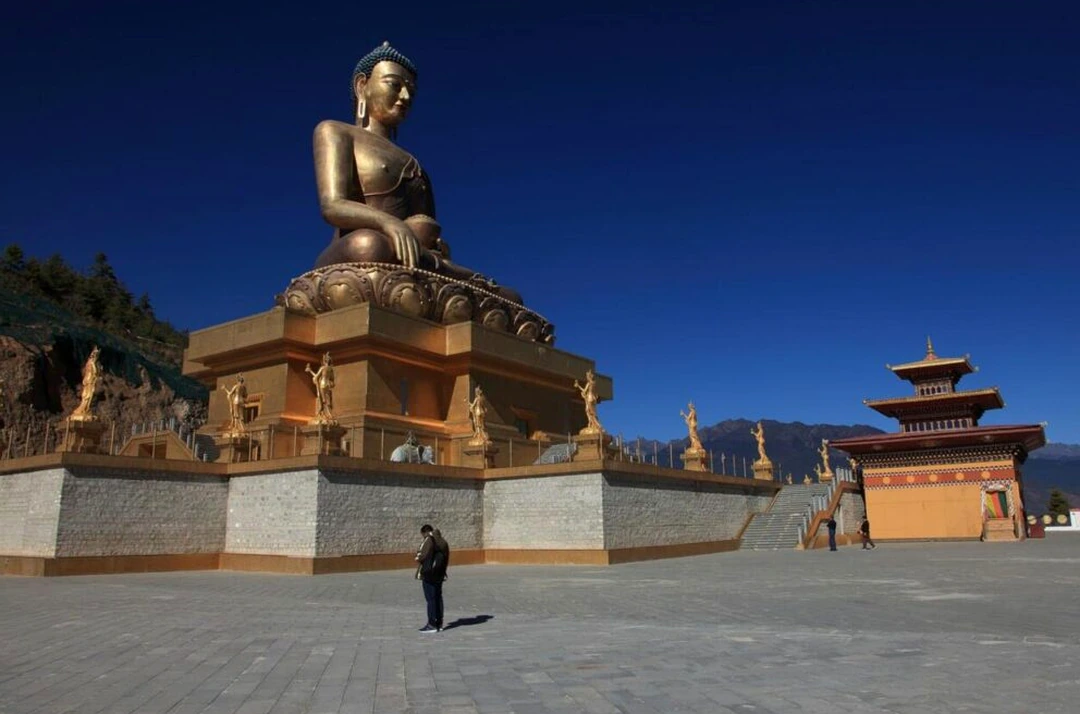
That legend was awakened and given physical form through a monumental project begun in 2006 and officially completed in 2015, commemorating the centenary of the monarchy and honoring the legacy of the Fourth King, Jigme Singye Wangchuck. Towering at 51.5 meters and cast in solid bronze gilded in resplendent gold, the Great Buddha Dordenma not only commands the majestic natural landscape but also houses within its interior an invaluable spiritual treasury of 125,000 smaller gilded Buddha statues. The pairing of the thousand-year-old serenity of Tashichho Dzong with the imposing majesty of Dordenma at Buddha Point creates a singular sacred axis, capturing the proud historical flow of the Land of the Thunder Dragon.
Since antiquity, Tantric masters have ranked the geography of the Thimphu capital among the rarest of sacred sites, where the vital energy lines of the Himalayas converge and transform into an atmosphere of profound stillness. Within this flawless geomantic landscape, Tashichho Dzong and the Great Buddha Dordenma form a sacred dual axis: on one end lies the temporal and religious fortress nestled beside the fertile river in the valley floor, and on the other rises the monumental statue presiding over the mountain heights, gazing out across the boundless four directions.
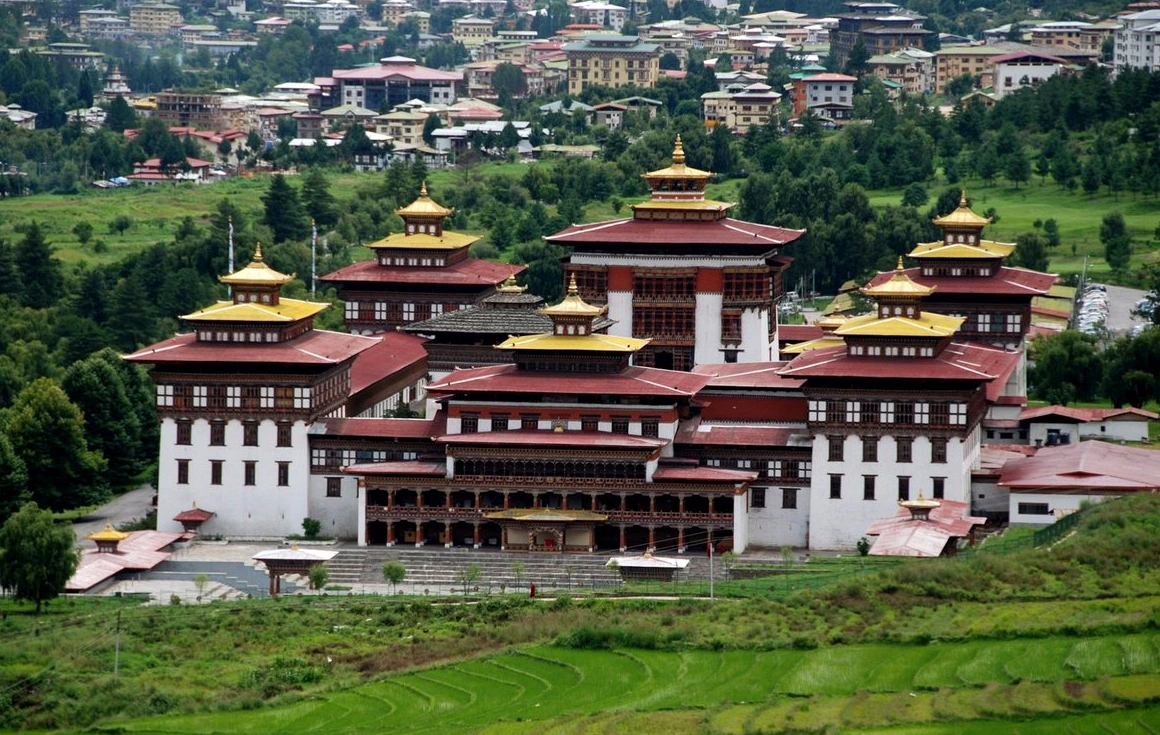
Resting peacefully in quiet dignity along the western bank of the rolling glacial Wang Chhu River, Tashichho Dzong—the Fortress of the Glorious Religion—exemplifies the pinnacle of Bhutanese geomancy and spatial planning. The fortress leans sturdily against the gentle foothills of the Himalayas, shielding it from harsh northern snow winds, while opening its expansive facade toward the valley where the river gracefully embraces its eastern flank. In Vajrayana geomantic tradition, the Wang Chhu acts as a meandering meridian of vital energy that gathers prosperity, purifies distracting thoughts, and prevents negative forces from entering the supreme center of religion and governance. The fortress’s foundations rest upon compacted layers of slate and ancient alluvial soil, providing a steadfast anchor through centuries of geological shifts. Traditional Dzong wall-building techniques showcase master-level craftsmanship: massive stone walls over a meter thick are laid with a subtle inward batter following classical proportions, dispersing seismic forces from the Himalayan belt without using a single iron nail or modern steel reinforcement. Structural load-bearing beams crafted from native cypress and blue pine are joined entirely through intricate mortise-and-tenon joinery, enabling the central utse tower to stand resilient through severe historical fires and earthquakes.
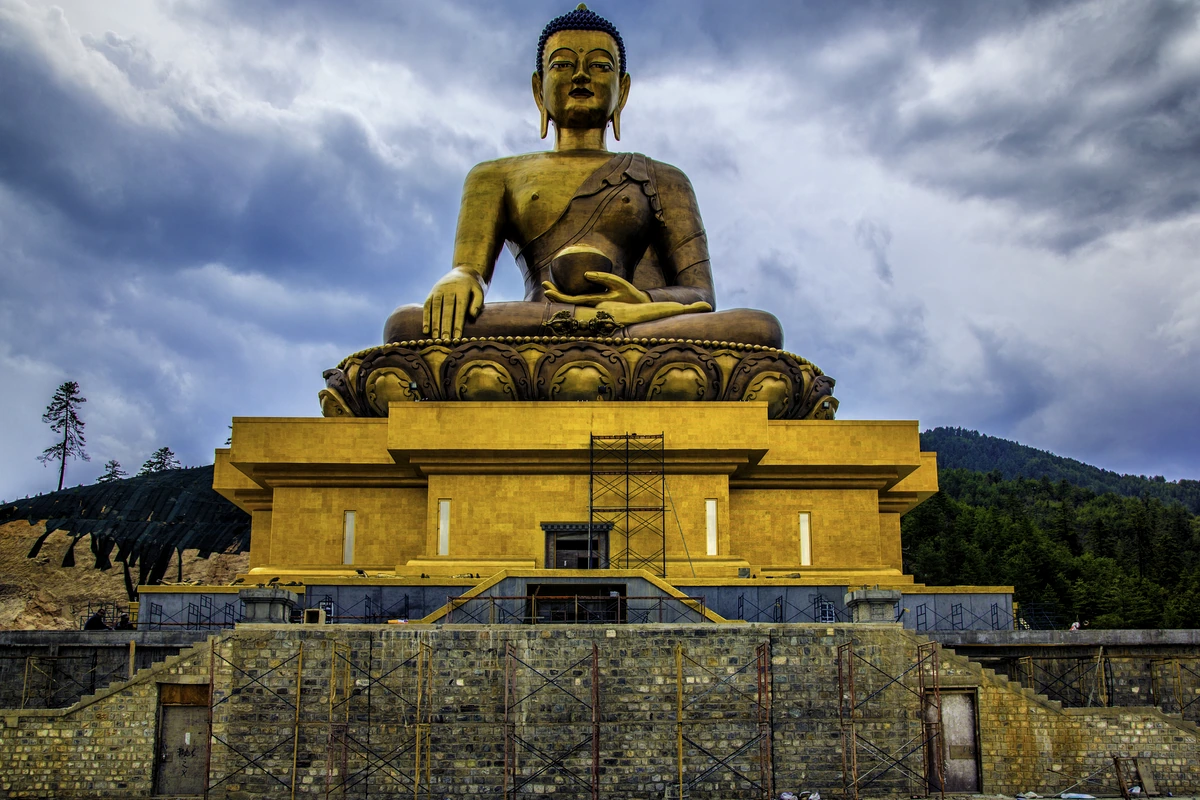
While Tashichho Dzong embodies the nurturing embrace of the earth along the riverside plain, the Great Buddha Dordenma atop Kuenselphodrang Hill—widely known as Buddha Point—represents the pinnacle of landscape integration and cosmic perspective. Rising proudly at a breathtaking elevation of 2,500 meters above sea level, the topography of Kuenselphodrang is likened to the heart of a thousand-petaled lotus blooming midway between heaven and earth. From this naturally gifted vantage point, visitors can take in the entire sweep of the Thimphu basin stretching gently southward, where traditional homes interweave with fertile terraced fields. To bring this 51.5-meter gilded bronze colossus to life atop such a rugged summit, engineers and artisans had to overcome formidable technical challenges. Pre-cast bronze alloy sections and vast quantities of gold leaf were laboriously transported up winding, precipitous mountain slopes before being precision-assembled onto a structural steel core anchored dozens of meters deep into the mountain’s bedrock. Beneath the figure, a three-story meditation hall and pedestal base were engineered to withstand extreme seismic tremors, sheltering more than a hundred thousand smaller gilded bronze Buddhas enshrined within the heart of the great statue.
Enveloping both architectural masterpieces is the pristine primary forest ecosystem of Kuenselphodrang Nature Park. The flora here shifts dramatically across microclimates, from towering stands of blue pine whispering in the crisp mountain breeze to vibrant thickets of rhododendrons bursting into crimson and soft pink blossoms when spring arrives. In the early mornings, as wisps of mist rise from the waters of the Wang Chhu and mingle with aromatic cypress incense drifting from the burners around Tashichho Dzong before ascending toward Buddha Point, geographic boundaries seem to dissolve, leaving only a pure communion between untamed nature and devoted human artistry.
Positioned symmetrically along the sacred spatial axis of the Thimphu Valley—with Tashichho Dzong poised quietly beside the crystal waters of the Wang Chhu and the Great Buddha Dordenma reigning atop windswept Kuenselphodrang ridge—the two landmarks create an awe-inspiring dialogue between ancient architectural tradition and contemporary engineering mastery. Tashichho Dzong represents the absolute zenith of the Dzong fortress-monastery style, a defensive and spiritual architectural archetype unique to the Himalayas. What astounds architects worldwide is that this entire monumental complex was constructed without a single iron nail and without blueprints on paper. Every geometric proportion, from the gentle inward slope of its massive stone walls to the sweeping overhang of its tiered roofs, stems from sacred spatial contemplation and the precise oral traditions passed down through generations of Drukpa master carpenters and artisans skilled in Zorig Chusum, Bhutan’s thirteen traditional arts and crafts.
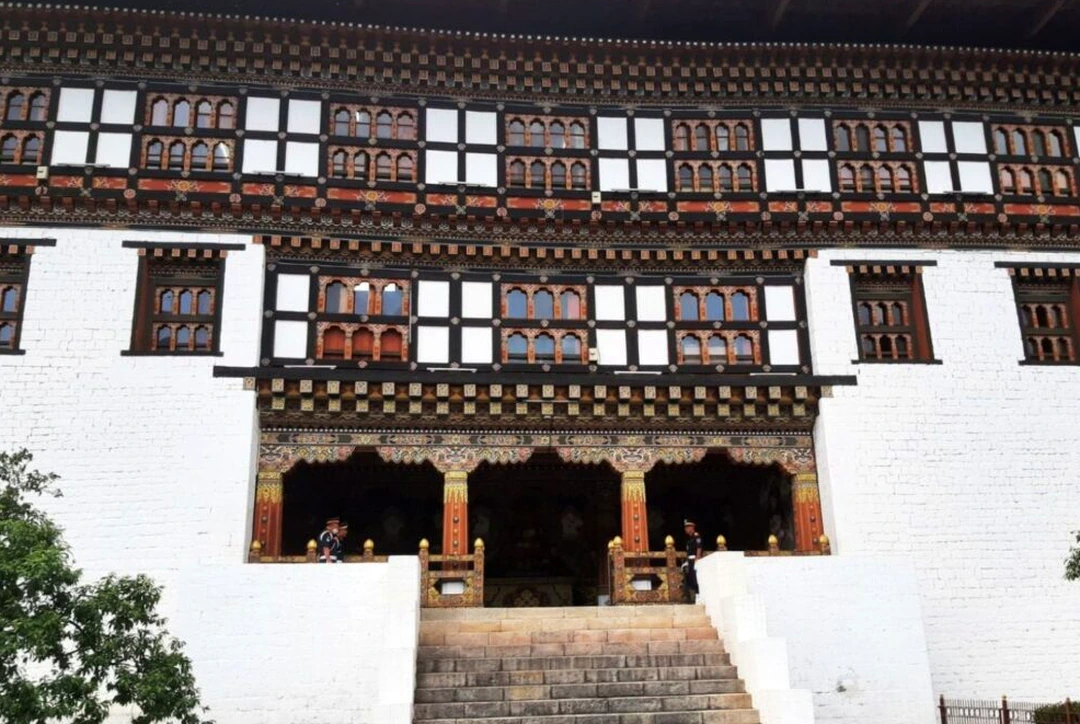
The soul of Tashichho Dzong crystallizes in its intricate timber mortise-and-tenon framework and the traditional artistry of its projecting rabsel windows. Whitewashed natural stone walls over a meter thick taper gracefully upward in a rock-solid stance, simultaneously dissipating seismic energy and projecting an aura of inviolable majesty. Contrasting with the rugged, stoic weight of the stone is the finely joined wooden superstructure jutting out from the wall face to form airy galleries that welcome natural light and mountain breezes. Three-tiered rabsel window frames are elaborately carved with Dharma wheels, five-colored clouds, scrolling vines, and Tibetan lotuses, accented with natural mineral pigments of earth red, indigo, and vermilion gold. At the heart of the fortress rises the soaring central utse tower, marking a serene boundary between the royal administrative offices and the monastic quarters of the Central Monastic Body, where gilded roofs shimmer brilliantly against the valley clouds.
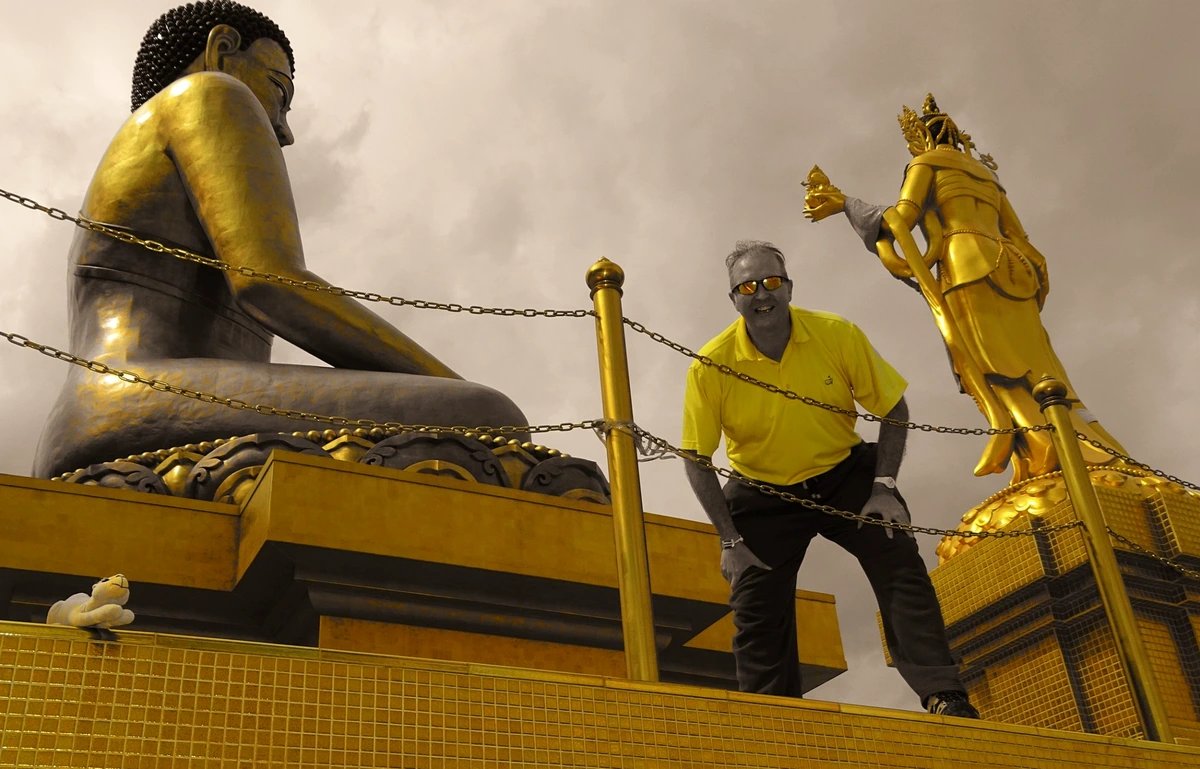
If Tashichho Dzong stands as the summit of traditional timber and stone craftsmanship, the Great Buddha Dordenma atop Kuenselphodrang Hill is a triumph of large-scale bronze casting and modern structural engineering. Standing 51.5 meters tall, it ranks among the largest bronze statues of Shakyamuni Buddha in the world. Cast from hundreds of tons of high-grade bronze alloy and clad entirely in pure gold leaf, its exterior radiates a brilliant metallic luster beneath the deep blue highland sky. The Blessed One sits serenely in the full lotus posture upon a three-tiered lotus throne, his right hand touching the earth in the earth-witnessing gesture (Bhumisparsha mudra) and his left hand resting gently in his lap holding an alms bowl filled with the nectar of Dharma. Behind this boundless tranquility lies an extraordinary feat of mechanical engineering: the statue’s core consists of a complex structural steel truss system specifically engineered to resist the intense tectonic tremors ever-present along the Himalayan fault zone as well as gale-force winds at elevations exceeding 2,500 meters above sea level.
Stepping inside the Dordenma statue reveals a luminous multi-tiered sanctuary, transforming the monument into a colossal three-dimensional Mandala at the heart of Thimphu. The three-story lotus pedestal serves as a magnificent meditation hall housing an unprecedented Vajrayana treasure: a microcosm comprising exactly 125,000 smaller Buddha statues. This sacred assembly includes 100,000 statues measuring 8 inches tall and 25,000 statues measuring 12 inches tall, each cast in solid bronze and gilded in gleaming gold as a miniature replica of the primary figure. Upon entering the interior, visitors and practitioners are immediately surrounded by tier upon tier of golden Buddhas, paired with exquisite murals chronicling the enlightenment of Shakyamuni Buddha and the Bodhisattvas, generating an overwhelming visual field of energy that embodies the infinite interconnectedness at the core of Vajrayana Buddhism.
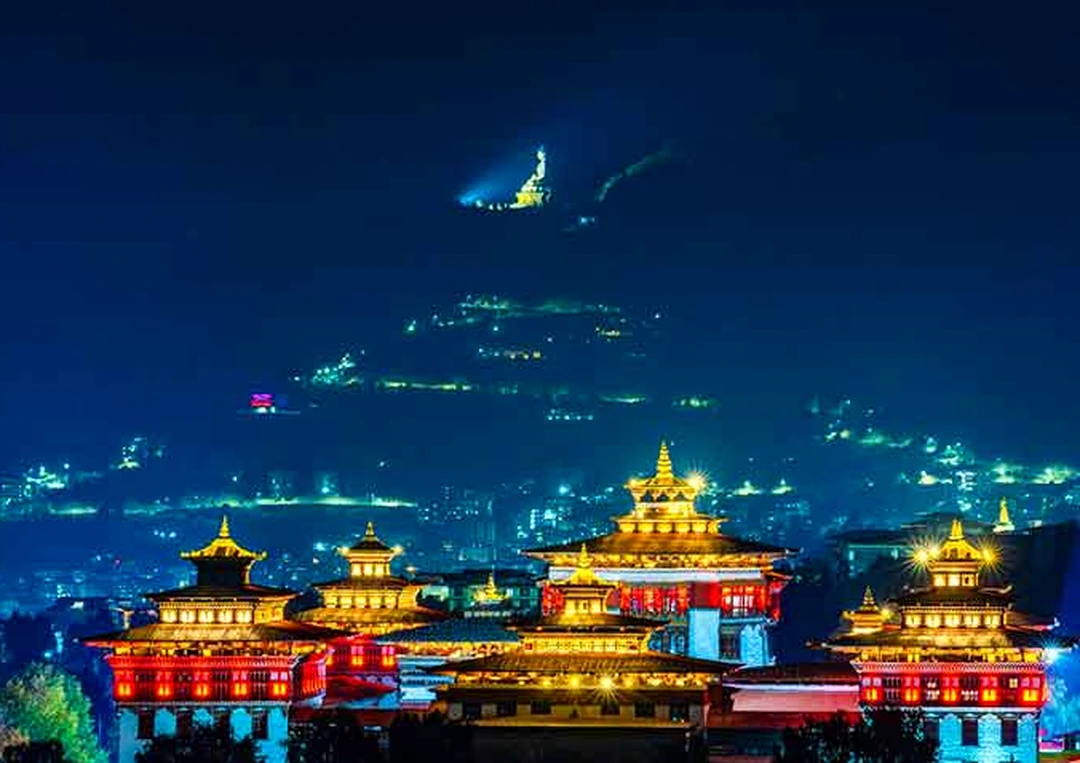
As twilight gradually retreats from the layered pine ridges of the Himalayas and the Thimphu Valley settles beneath a veil of evening mist, the nocturnal face of these two spiritual icons awakens in an enchanting choreography of light. By the banks of the Wang Chhu, Tashichho Dzong sheds its daytime administrative formality to transform into a dazzling visual masterpiece. High-powered architectural floodlights positioned subtly along the outer ramparts cast warm golden and pure white beams across the towering whitewashed stone walls. This ethereal contrast highlights the tiered upswept roofs crowned with gilded serthog finials, making them appear to float against the velvety black night sky. In the stillness of the mountain night, the deep resonance of bronze bells blends with the warm, rhythmic Drukpa Kagyu chanting of the monks, creating an unmatched spiritual tableau where the boundary between the earthly realm and a pure land seems to vanish.
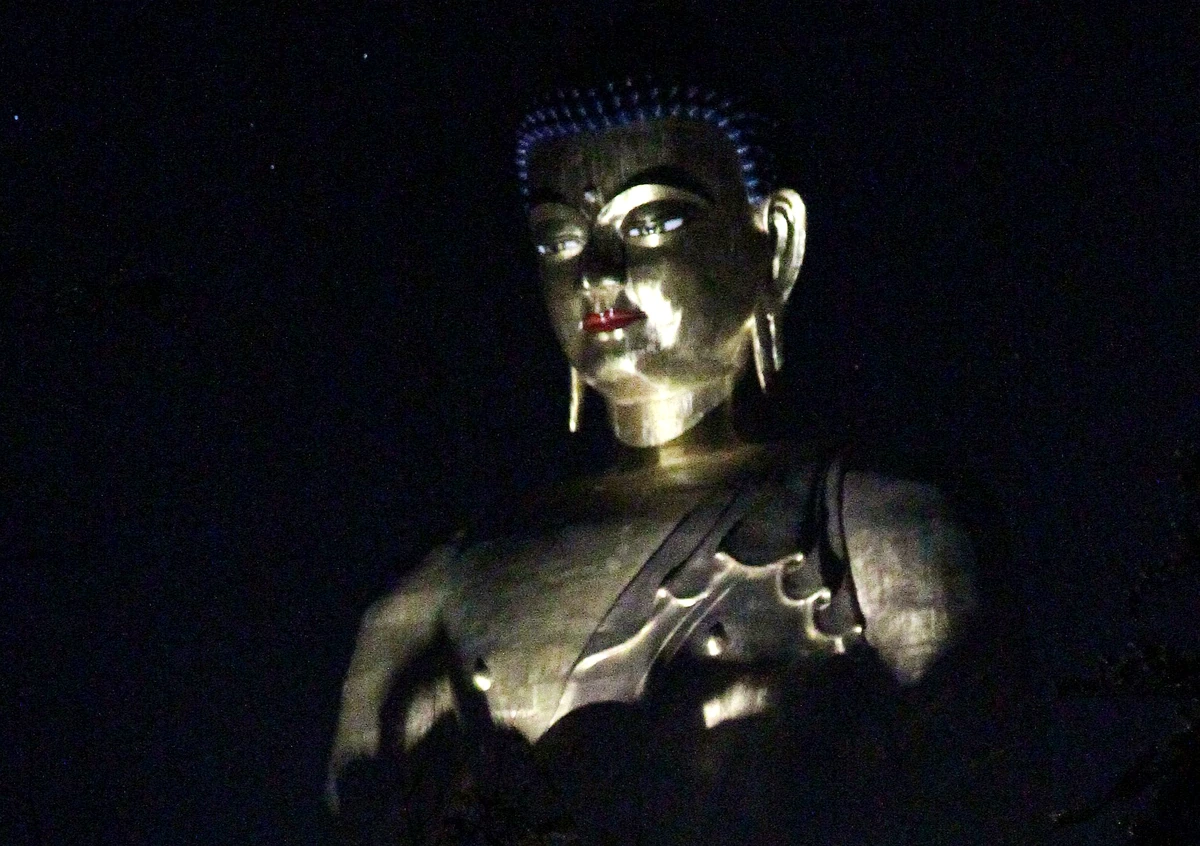
Up on the slopes of Kuenselphodrang at over 2,500 meters above sea level, the 51.5-meter gilded bronze Shakyamuni Buddha Dordenma evokes an entirely different emotional resonance. Surrounded by the near-total silence of the national nature park, the statue is illuminated from the base of its lotus throne, turning the entire monument into a towering spiritual beacon against the night sky. Beneath this monumental lighthouse housing over a hundred thousand smaller Buddhas, mountain winds sweep through rows of Lungta prayer flags, producing a mystical, rustling cadence. Standing on the breezy Kuenselphodrang plaza, visitors can immerse themselves in the serene energy of shamatha meditation while gazing out over the miniature panorama of Thimphu below, where city lights sparkle like a fallen Milky Way beside the gently flowing river.
Nightlife in Thimphu is far removed from noisy bars or flashing neon billboards, preserving instead the quiet, refined grace distinctive to the Land of the Thunder Dragon. Stepping away from the tranquil spaces of worship, an evening stroll leads discerning travelers to rustic timber teahouses tucked along Norzin Lam or nestled at the foot of the hills overlooking the illuminated fortress. Here, hospitality unfolds beside the crackling warmth of a traditional bukhari wood-burning stove, dispelling the biting chill of the high-altitude night. Guests can sip fragrant Suja butter tea, rich with mineral salt and creamy yak butter, nibble on warm buckwheat khuley pancakes, or enjoy a small cup of heated, artisanal Ara rice spirit infused with fresh egg and clarified butter.
This interplay of masterfully illuminated architecture at Tashichho Dzong, surreal hilltop contemplation atop Kuenselphodrang, and comforting local gastronomy creates a deeply resonant, multi-sensory evening experience. It is far more than a simple sightseeing excursion after dark; rather, it is an inward pilgrimage where the visible radiance of modern lighting guides travelers toward the invisible light of inner stillness.
A pilgrimage across these sacred landmarks—from the windswept crest of Kuenselphodrang down to the valley sanctuary of Tashichho Dzong—naturally culminates in an encounter with the pure culinary soul of the Land of the Thunder Dragon. Bhutanese cuisine in Thimphu does not chase the ornate complexity of royal court banquets; instead, it is rooted in a rustic philosophy that honors nature and adapts harmoniously to the demanding climate of the snow-swept Himalayas. Beneath pine-shaded slopes, evening hearth smoke curls upward from family-run eateries, carrying the pungent aroma of fiery chilies, the richness of yak dairy, and the nutty fragrance of prized red rice, painting a culinary portrait that is at once untamed and deeply comforting.
Reigning supreme at the center of every local meal is Ema Datshi, celebrated as Bhutan’s national dish and cherished across generations. Departing completely from culinary traditions that treat chilies merely as a supporting condiment, cooks in Thimphu revere chili peppers as a primary, powerhouse vegetable. Crisp green chilies or sun-dried highland red chilies are sliced lengthwise and simmered with butter and artisanal datshi cheese—a handcrafted farmer’s cheese made from yak or highland cow milk that has been skimmed of excess fat while retaining a clean, tangy fermentation. As the cheese melts into a velvety, glossy sauce coating every fiery chili pod, the dish delivers an exhilarating burst of flavor that awakens the senses and instantly chases away the highland chill. For travelers unaccustomed to intense heat, Kewa Datshi offers a gentle, comforting variation, where tender slices of valley potatoes are stewed in rich melted cheese alongside tomatoes and onions for a warm, soothing embrace.
No hearty datshi stew is complete without Bhutanese Red Rice, the pride of the kingdom’s pristine organic agriculture. Cultivated on fertile terraced fields irrigated by pure glacial meltwater from the Himalayas, this heirloom grain is lightly milled to preserve its mineral-rich, rosy-hued bran layer. When steamed, the red rice releases a subtle aroma reminiscent of roasted chestnuts, yielding grains that are soft and chewy yet firm and distinct—the ideal canvas for soaking up the spicy, creamy cheese sauce of Ema Datshi. Traditional rice and curries are ceremoniously served in dapa bowls—heirloom wooden vessels hand-carved with extraordinary skill from prized tree burls in the Trashiyangtse region. Comprising two tightly fitting interlocking halves, the dapa bowl is not only a testament to indigenous artistry but also serves a practical purpose, keeping meals piping hot against crisp valley breezes.

Alongside steaming meals, Thimphu’s culinary culture is inseparable from a cup of Suja butter tea, steeped in warm hospitality. Brewed by simmering fine black tea leaves over charcoal for hours before churning the decoction in a traditional wooden cylinder with golden yak butter and coarse rock salt, Suja boasts a signature pale rose hue crowned with a shimmering sheen of butter. Taking a warm sip, the brisk astringency of the tea melts effortlessly into a smooth, savory richness, relaxing the body, restoring thermal balance, and serving as a natural local remedy against altitude fatigue. Sitting cross-legged beside a crackling bukhari stove in a cozy eatery near Tashichho Dzong, cradling a warm dapa bowl while listening to distant wind chimes echoing down from the mountain slopes, travelers come to understand that local cuisine is the seamless union of heartfelt human generosity and the timeless spirit of the snow-capped peaks.
Exploring Thimphu’s two foremost cultural and spiritual landmarks requires an appreciation for local rhythms and etiquette, where civic life and monastic devotion coexist in solemn harmony. At Tashichho Dzong—Bhutan’s political heart and principal monastic seat—the public and international visitors are permitted through the gates only after 5:00 PM on weekdays, once the King, government officials, and the Drukpa Monastic Body have concluded their official duties. On weekends (Saturday and Sunday), however, the fortress opens its doors to visitors from morning until late afternoon. Conversely, the Great Buddha Dordenma complex on Kuenselphodrang Hill welcomes visitors daily from 9:00 AM to 5:00 PM, offering ideal daylight hours to admire the sun illuminating the golden countenance of the Buddha amidst drifting mountain clouds.
To reach the summit of Kuenselphodrang Hill at nearly 2,500 meters above sea level, the safest and most convenient option is hiring a private vehicle with an experienced local driver. The paved road winds roughly six kilometers from central Thimphu through the fragrant pine groves of Kuenselphodrang Nature Park, unfolding panoramic vistas over the capital city nestled along the tranquil Wang Chhu River. Visitors can easily pair a serene morning of paying respects at the hilltop Buddha with afternoon stops at traditional handloom weaving workshops or the National Institute for Zorig Chusum before heading to the northern end of the city to watch sunset paint the massive whitewashed walls of Tashichho Dzong in hues of rose and gold.
Upon entering the kingdom’s most revered sanctuaries, Driglam Namzha—Bhutan’s centuries-old code of traditional etiquette and dress—is strictly observed. Visitors are required to dress modestly and respectfully in long-sleeved collared shirts and full-length trousers or ankle-length skirts; sleeveless tops, shorts, and tight-fitting attire are strictly prohibited. Before stepping inside the inner sanctums of the Buddha Dordenma statue or the solemn central Utse shrine of Tashichho Dzong, all guests must remove shoes and hats and maintain complete silence. By unwavering decree of Bhutan’s monastic authorities, photography and filming are strictly forbidden inside all inner temples to preserve the sanctity of ancient statues and centuries-old Mandala murals; cameras may only be used in exterior courtyards and open plazas.
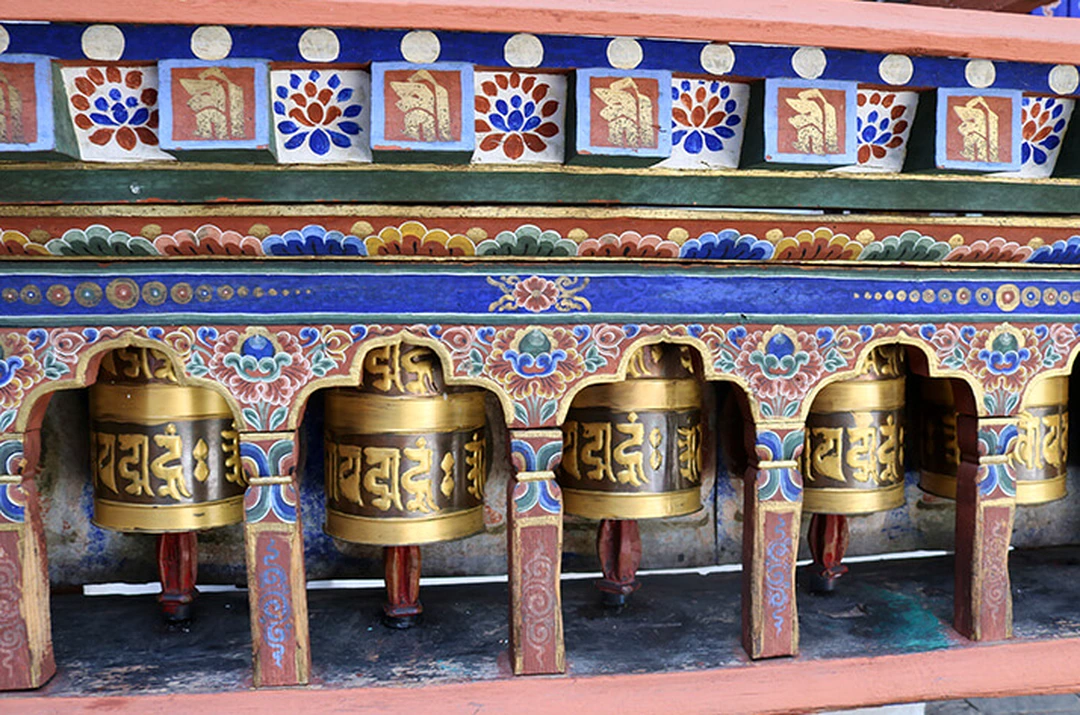
One deeply meaningful spiritual practice that no visitor should miss is performing a ritual circumambulation, known as kora. In accordance with Vajrayana Buddhist tradition, travelers should walk clockwise around the base of the Great Buddha Dordenma as well as the chortens (stupas) at Tashichho Dzong, maintaining mindful composure or gently spinning rows of bronze prayer wheels to cultivate auspicious connections and merit for peace. Carrying small denominations of ngultrum banknotes is also helpful if you wish to light butter lamps or place offerings at the altar of the Triple Gem in keeping with the heartfelt customs of the Land of the Thunder Dragon.
Discovering Bhutan is inherently intertwined with the kingdom’s pioneering sustainable tourism policy, supported through the Sustainable Development Fee (SDF) to safeguard its pristine environment and priceless heritage for generations to come. For a deeply immersive pilgrimage where every moment unfolds seamlessly without the hassle of visa logistics, transport planning, or arranging knowledgeable guides versed in Buddhist philosophy, travelers can embark on an all-inclusive Bhutan Kingdom of Happiness tour package, turning every step through Thimphu into a luminous chapter of culture, history, and profound inner peace.