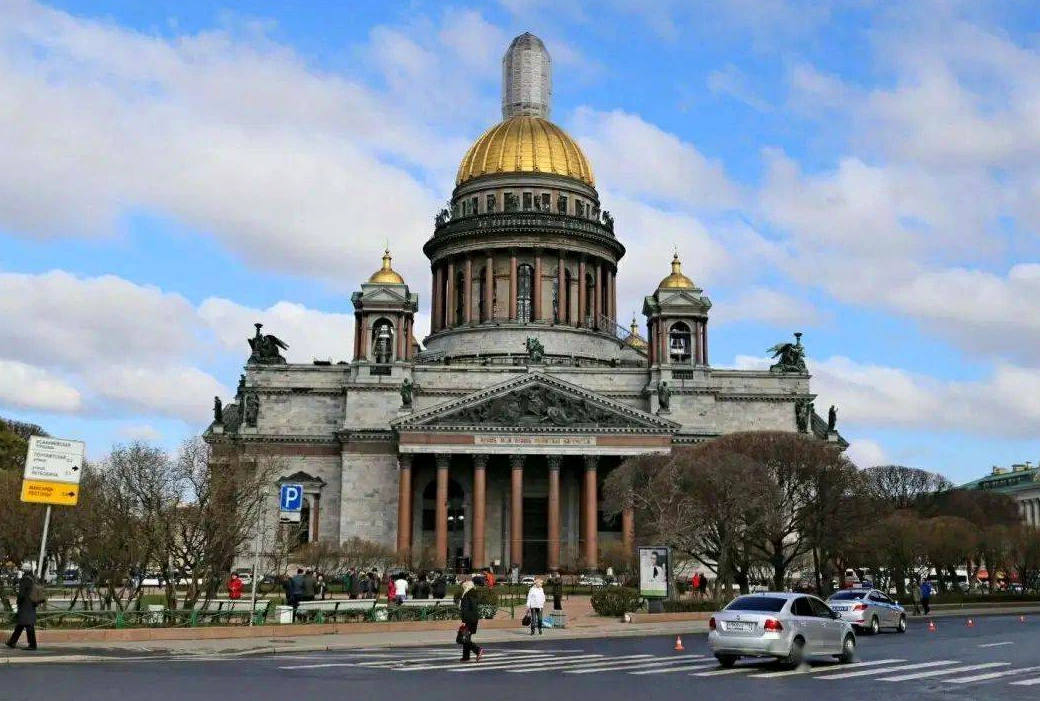
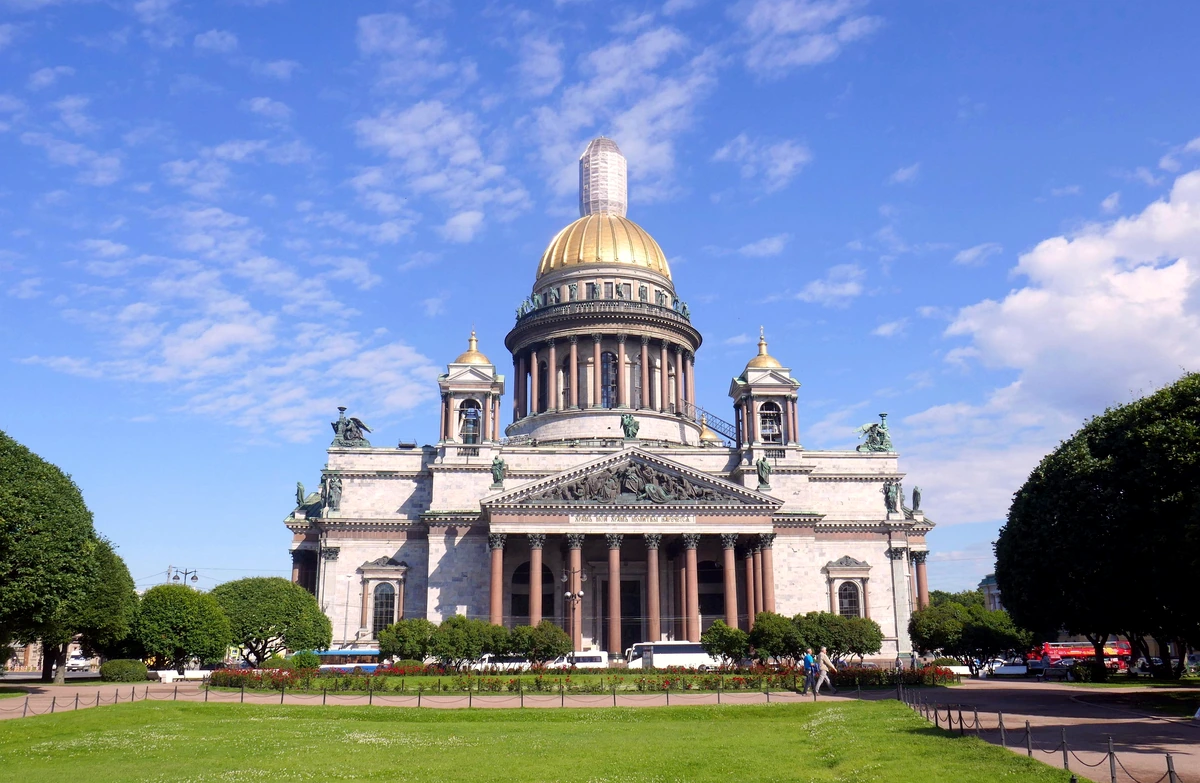
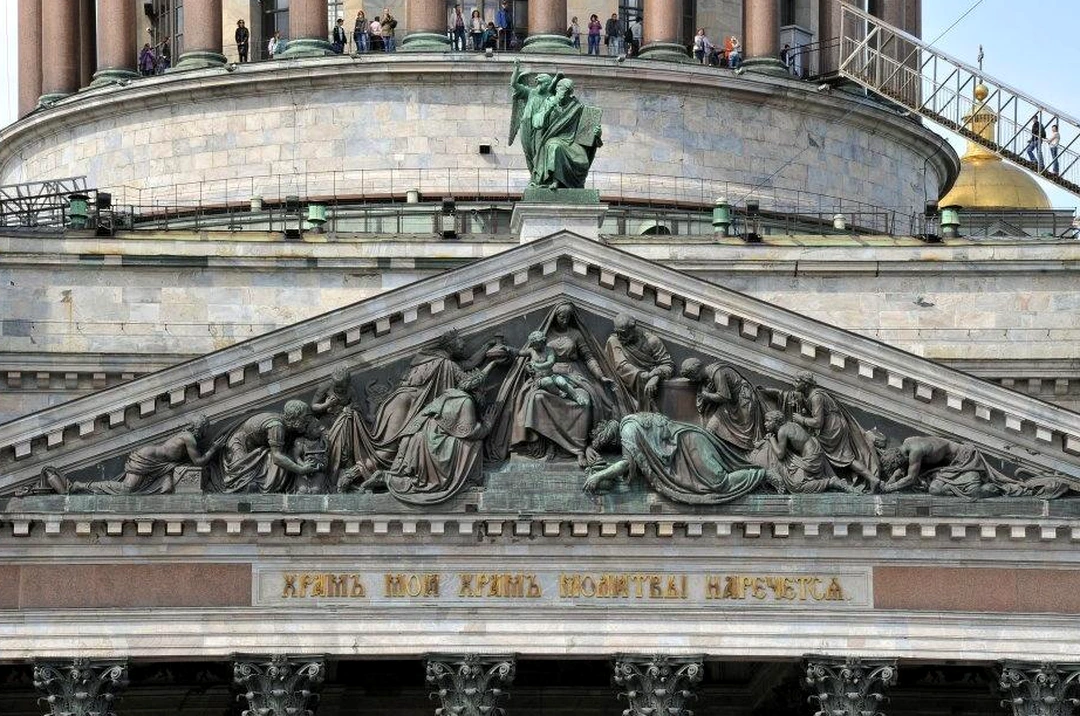
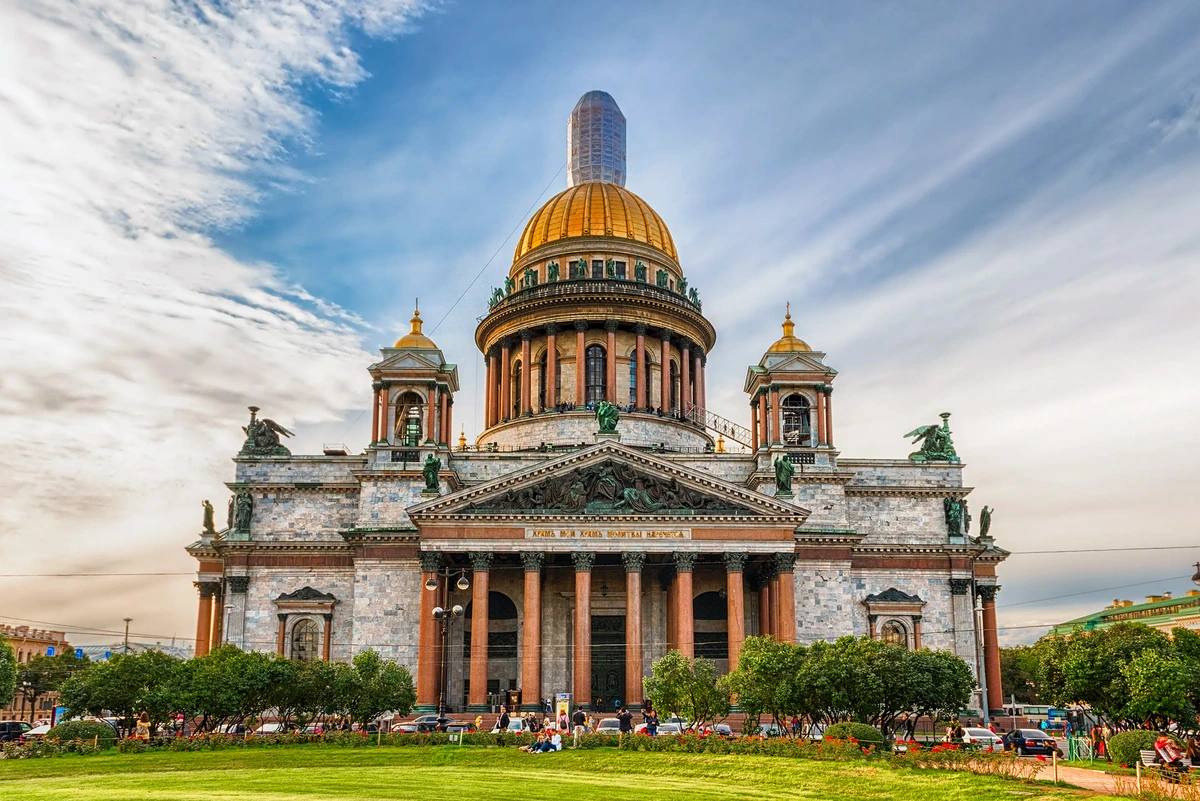
Standing majestically beside the historic Neva River, Saint Isaac’s Cathedral (in Russian: Исаакиевский собор) is not merely a feat of architecture, but also a physical embodiment of divine-right monarchy and the height of Romanov imperial grandeur. Its massive stone facade still bears an inscription in Church Slavonic across the pediment: «Храм Мой храм молитвы наречется» (“My house shall be called a house of prayer”). Across more than three centuries of upheaval in Russian history, the building’s story spans four architectural generations tied to major political events and ruling dynasties of the Russian Empire.
Origins trace back to 1707, when Peter the Great ordered a wooden shipbuilding shed converted into a modest church honoring his patron saint, Saint Isaac of Dalmatia, whose feast day fell on the tsar’s birthday. Inside that first timber church, in 1712, Peter the Great and Empress Catherine I celebrated their royal marriage. Between 1717 and 1727, to match the newly founded capital, architect Georg Johann Mattarnovi built a second stone church east of the current site. Positioned too close to surging Neva waters, however, flood tides eroded its foundation, causing heavy damage and rapid deterioration.
Ambitions for a grand cathedral continued under Empress Catherine the Great. From 1768 to 1802, Italian architect Antonio Rinaldi designed a third version. Yet progress faltered after the Empress’s death; Emperor Paul I later cut key funding, leading builders to use plain brick for upper sections instead of marble, leaving an awkward top-heavy look and structural imbalance. Only in 1818 did Emperor Alexander I launch a broader design competition to replace the earlier building for a fourth generation. Talented French architect Auguste de Montferrand led the project, devoting forty years (1818–1858) and overcoming complex engineering challenges to finish the imposing Neoclassical landmark seen today.
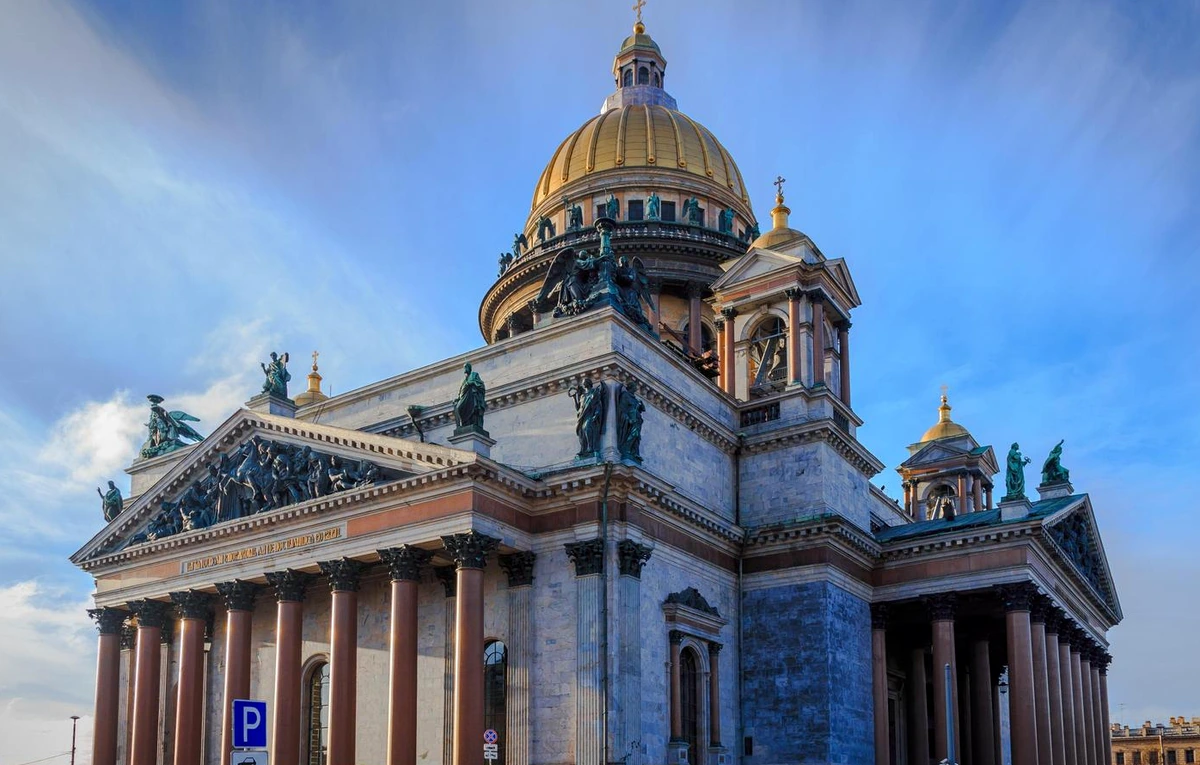
Entering the twentieth century, political shifts brought new roles to the cathedral. In 1931, under Soviet rule, regular worship ended as the building became a museum of anti-religious history. During the nearly 900-day Siege of Leningrad in World War II, it served as a protective shelter safeguarding hundreds of thousands of evacuated palace artworks and treasures from shelling. In 1948 it became a museum of architectural history, and Orthodox services resumed formally in 1990. Today Saint Isaac’s Cathedral operates on a dual footing: both a state museum preserving heritage and an active church of the Russian Orthodox Church.
Sitting right where the Neva River flows into the eastern Gulf of Finland on the Baltic Sea, the site occupies low-lying delta terrain. At roughly 1 to 3 meters above sea level, surroundings once consisted of broad river wetlands shaped by damp maritime air and white-night mist. Choosing this site reflected urban planning ambition alongside careful adaptation to northern conditions, with Saint Isaac’s Square linking smoothly toward Senate Square and Decembrists’ Square open to the Neva.
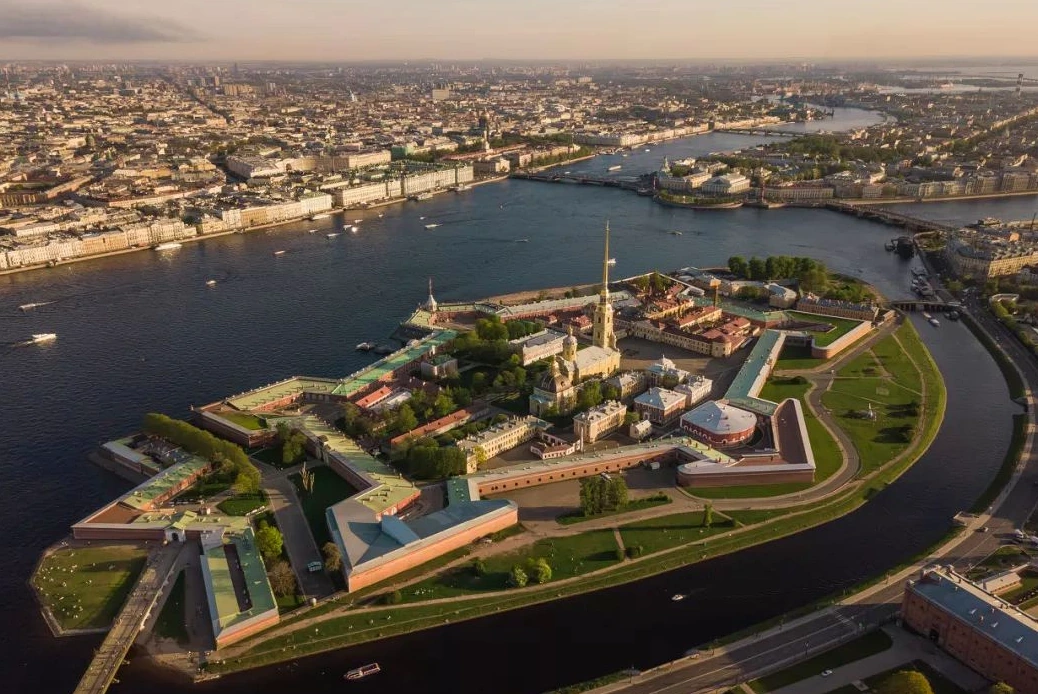
Along the left bank of the Neva, Saint Isaac’s Cathedral holds a prominent position facing the Peter and Paul Fortress across the water. Architectural historians view this layout as a hallmark of imperial city planning. Together with the Winter Palace and the Admiralty building, the cathedral completes a well-known spatial triad in Saint Petersburg’s historic core, pairing Neoclassical lines with river views and pale northern light.
Beneath the grand facade lay a demanding engineering challenge in soft delta ground. High groundwater levels and weak soil layers—soft clay and water-bearing sand—made supporting a structure weighing hundreds of thousands of tons a major task for nineteenth-century builders. Architect Auguste de Montferrand addressed this through an extensive deep-foundation system.
Under Montferrand’s direction, crews drove more than 24,000 selected timber piles, each 6.5 meters long, deep into soft ground to form a dense supporting grid. Above those piles, builders laid and compacted thick granite foundation slabs to spread structural loads evenly. This careful groundwork allowed the roughly 300,000-ton building to stand stably for centuries on delta soil without major settlement or cracking.
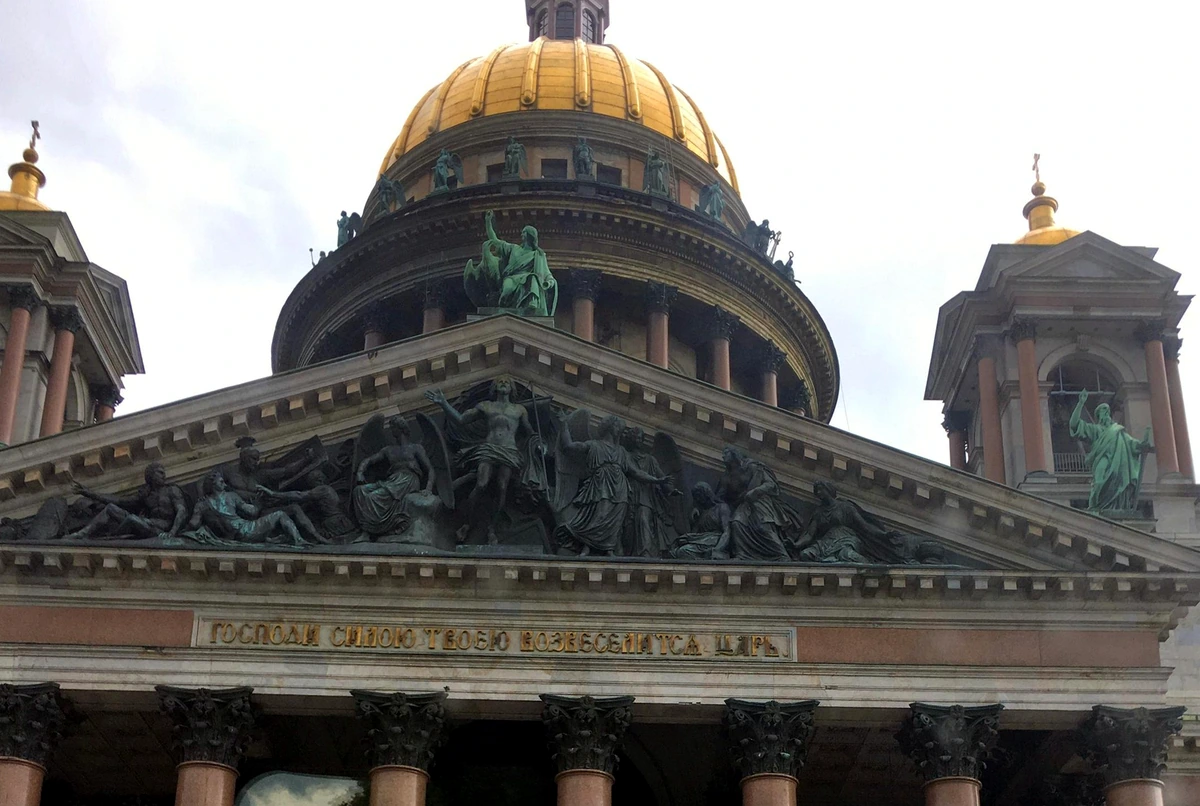
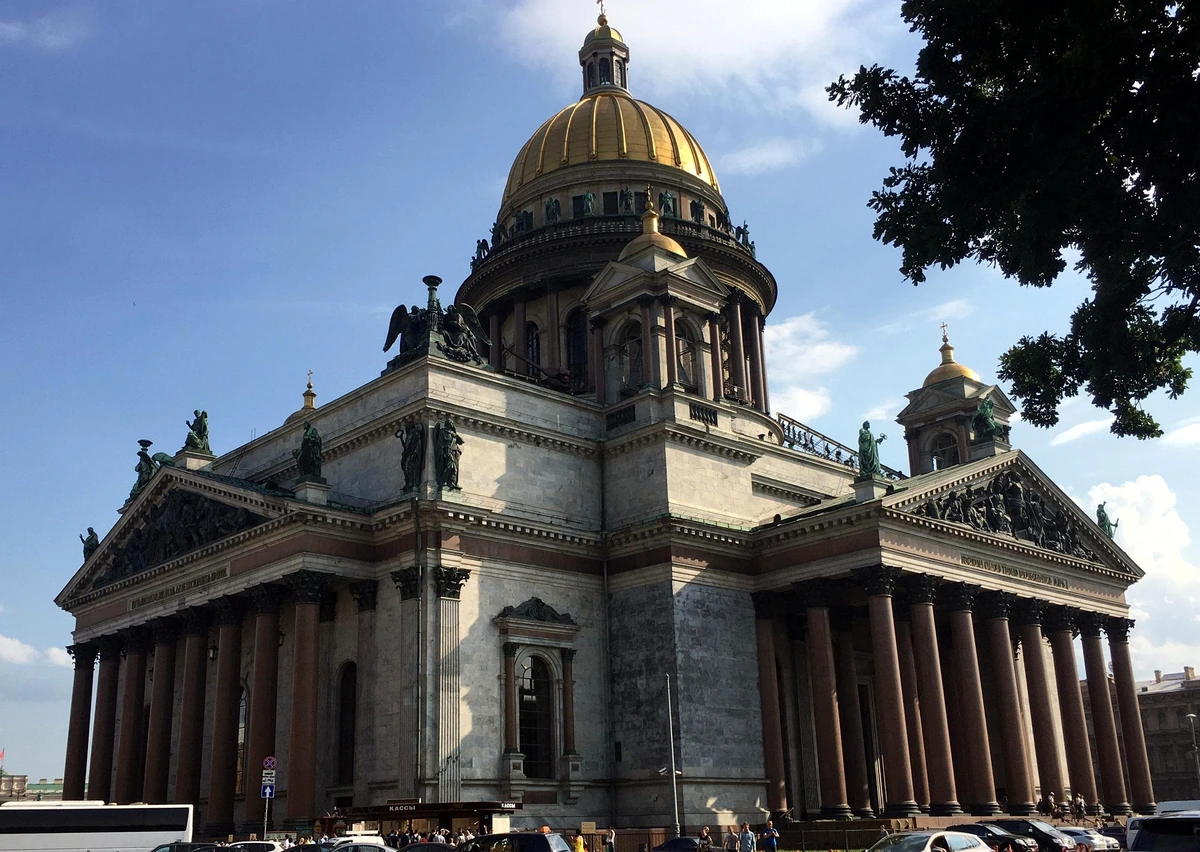
Approaching across tree-lined grounds, visitors encounter a prominent landmark of St. Petersburg. Planned on a symmetrical Greek cross footprint measuring roughly 111 meters long, 97 meters wide, and 101.5 meters high, the cathedral spans about 7,000 square meters and can hold up to nearly 14,000 worshippers. Eye-catching exterior features include monumental Corinthian portico columns: red granite monoliths quarried near Fredrikshamn in Finland, standing about 17 meters tall and weighing roughly 114 to 120 tons each, moved to the Neva site using purpose-built barges, rollers, and winches.
Saint Isaac’s is also noted for its multi-shell dome system combining an inner masonry shell, a cast-iron structural truss framework, and an outer copper cladding. The main dome spans 21.8 meters across and was fire-gilded using roughly 100 kilograms of gold leaf, catching morning sun and northern twilight so it remains visible from afar across the city.
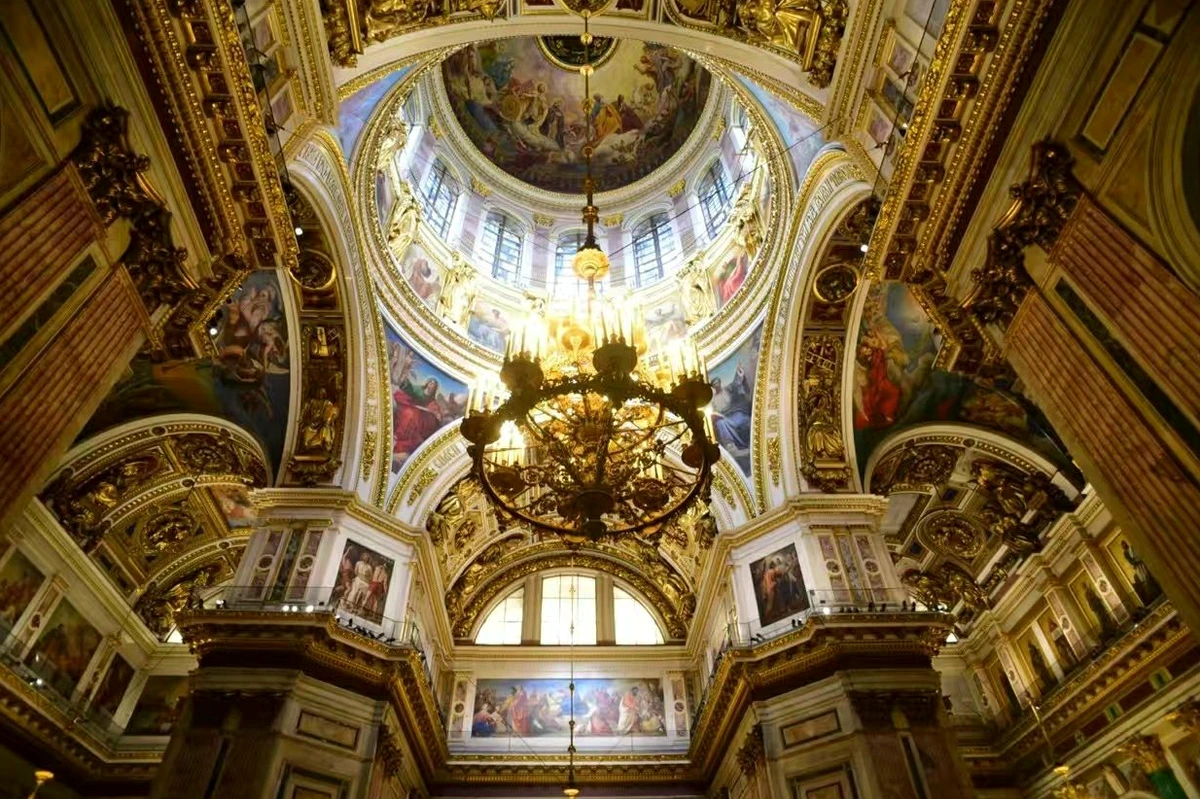
Stepping inside through ornate bronze doors reveals rich stone and mineral decoration across walls and floors—43 varieties of marble, porphyry, and ornamental stone sourced from Italy, France, and Russia. Highlights around the iconostasis include eight malachite columns and lapis lazuli accents crafted using Russian mosaic techniques that piece thin stone veneers over a base to create smooth, richly patterned surfaces.
High overhead inside the dome is a large painted composition of the Virgin in Glory surrounded by saints, directed by painter Karl Bryullov. Soft daylight filtering through dome windows meets warm candlelight below, bringing together monumental scale, metalwork, stone inlay, and painting inside the cathedral.
At dusk—especially during “White Nights” from late May to mid-July—evening lighting gives Saint Isaac’s a dramatic presence across Saint Petersburg. Balanced illumination pairs warm tones highlighting gilded dome curves with cooler light accentuating Corinthian granite columns along the Neva embankment, making the cathedral a striking landmark after sunset.
A popular evening stop is the upper colonnade viewing platform. Looking out from the colonnade as twilight settles, visitors take in views along the Neva River—including seasonal drawbridge openings—as well as nearby squares and lit streets, offering a sweeping evening vantage point over the historic city.
Inside, stone and metal surfaces give the cathedral a long natural reverberation time. That acoustic character lends itself well to occasional choral or sacred vocal performances in the quiet hall, where voices carry cleanly across upper vaults and stone walls.
Around Saint Isaac’s Square and nearby Bolshaya Morskaya Street, diners find classic Saint Petersburg restaurants echoing imperial-era traditions alongside Russian staples. Longstanding spots such as Palkin—open since 1874—have long been associated with Russian literary and musical figures of the past, offering a classic setting to experience traditional hospitality.
Meals around Saint Isaac’s often highlight classic Russian dishes. Borscht—made with beets, beef, cabbage, and root vegetables—is traditionally served with a spoonful of smetana (sour cream) that adds mild tang and richness, especially welcoming in cool northern weather.
Another well-known dish is Beef Stroganoff, originating in nineteenth-century Russian noble households. Thinly sliced beef is seared quickly and simmered in a savory sauce with onions, mushrooms, and sour cream/mustard notes, commonly served with crispy potatoes or sides.
For a richer traditional spread, thin blini pancakes are often paired with caviar and chilled vodka, reflecting classic Russian table customs that round out a meal in Saint Petersburg.
Planning ahead helps make a visit to Saint Isaac’s Cathedral smooth. Main museum hours typically run daily from 10:00 AM to 6:30 PM with a regular weekly closure (often Wednesday), while seasonal White Nights evening openings may extend colonnade access later; checking official schedules before going is always wise. Booking combined tickets for the cathedral and colonnade online in advance can also save time at peak hours.
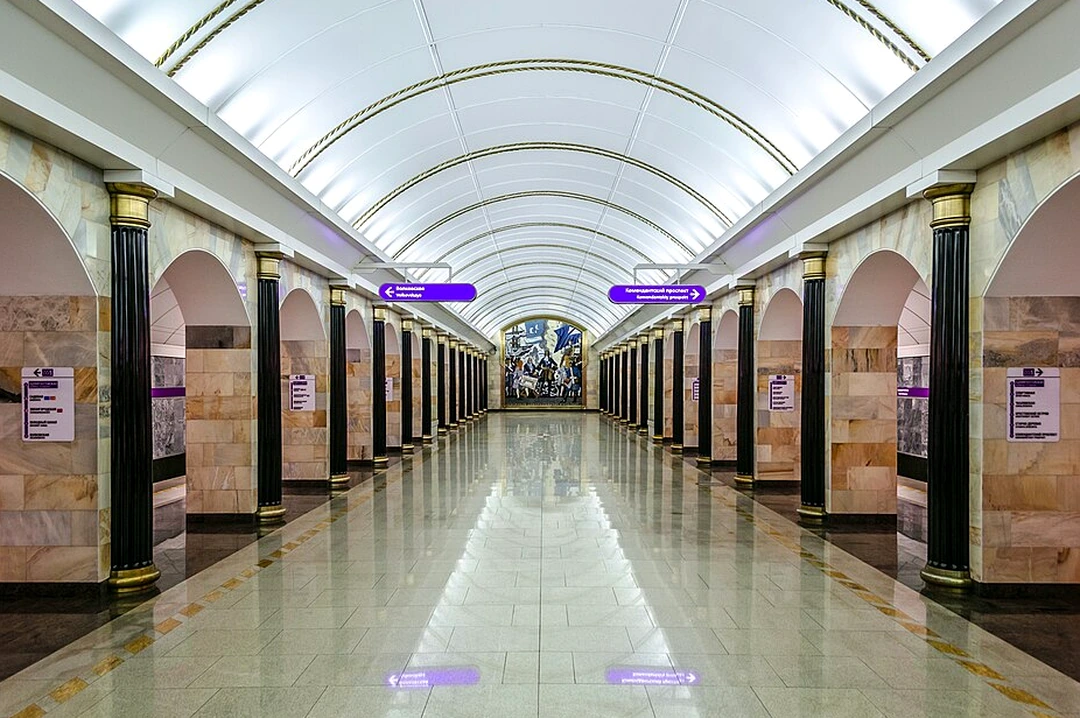
Getting there via the city metro is straightforward: take Line 3 (Green Line) to Admiralteyskaya station, then walk about 5 to 7 minutes to the square. Starting from the Winter Palace or the Hermitage Museum, walking south through Alexander Garden offers a pleasant route directly toward the cathedral.
A sensible visit starts outside near the monument to Emperor Nicholas I to take in the full facade and axis, continues inside to view the main hall, iconostasis, and stone-and-mosaic details, and finishes with a climb up to the colonnade for wide views across the river and rooftops.
Because the cathedral remains an active place of worship alongside its museum role, respectful conduct is expected. Men remove hats indoors, and visitors should keep voices low and wear neat, modest clothing covering shoulders and knees—especially around active worship areas.
Practical travel tips include skipping unofficial street touts or costumed photo solicitors around squares and carrying a windproof layer and warm accessories, as breezes off the Neva and up on the open colonnade can feel brisk even in warmer months. For an organized itinerary with transport and local support, you can explore our 8-Day 7-Night Russia Tour (Moscow – Sergiev Posad – St. Petersburg) to plan your trip with ease.