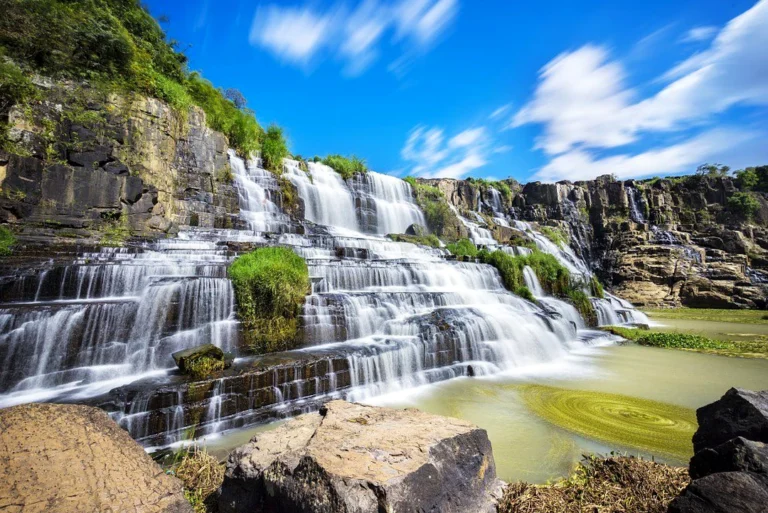
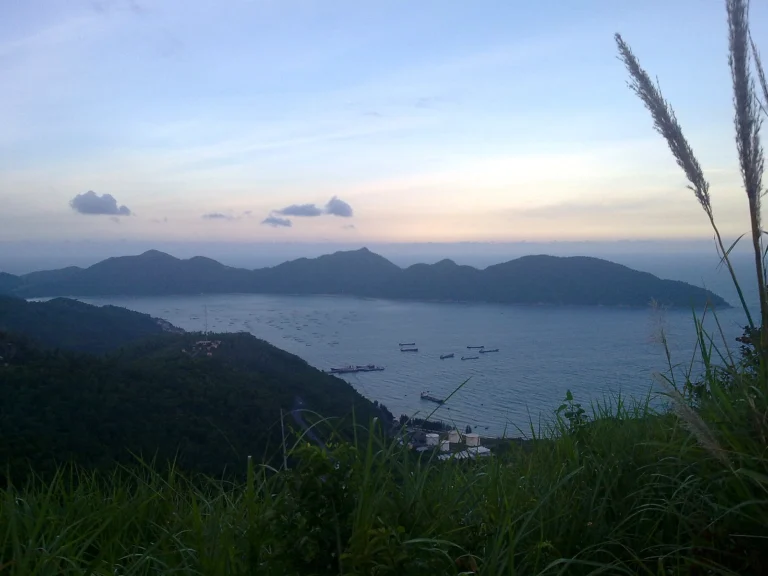
Nestled amid the rugged mountains of Vietnam’s northeastern borderlands, the Tam Thanh Cave and Pagoda complex stands majestically inside an ancient limestone massif known as Tuong Thu (“Elephant Mountain”), located in Tam Thanh Ward at the heart of Lang Son City. In terms of geography and feng shui, Elephant Mountain rises prominently as a guardian landmark watching over the tranquility of Lang Son, where vital natural energy converges among rolling mountain ridges and the gentle Ky Cung River curving around the city. Tam Thanh’s setting is a masterpiece of natural architecture: backed firmly against sheer limestone cliffs and opening out toward expansive vistas, creating an auspicious “backed by mountains, facing water” landscape that combines sacred, mysterious solemnity with the poetic grandeur of borderland peaks.
From a historical and geological standpoint, this monument complex holds priceless layers of cultural sediment. Through the lens of stratigraphic archaeology, the Lang Son region was a vibrant cradle of the prehistoric Bac Son and Mai Pha cultures, where early inhabitants took shelter inside limestone caverns tens of thousands of years ago. Over the course of history, the transformation of a natural cavern into a tranquil monastic sanctuary marked a sophisticated process of localization and religious syncretism uniting Buddhism, Taoism, and indigenous Vietnamese beliefs. Nguyen Dynasty historical chronicles such as Dai Nam Nhat Thong Chi (“Comprehensive Gazetteer of Dai Nam”) praised Tam Thanh Cave as one of the most magnificent landmarks along the northern frontier, attesting to its enduring vitality and cultural depth from the Early Le and Mac dynasties through the Nguyen era.
The name “Tam Thanh” (three Chinese characters: 三清洞) originates in Taoist philosophy, symbolizing the three highest realms of purity—Shangqing (Upper Clarity), Yuqing (Jade Clarity), and Taiqing (Great Clarity)—gracefully adapted into Vietnamese culture to harmonize with Mahayana Buddhism. The site is closely associated with illustrious cultural figures, foremost among them Ngo Thi Si, the accomplished Governor of Lang Son during the Le–Trinh period. He played a pivotal role in discovering, excavating, and naming the scenic landmarks here, turning Tam Thanh into a literary salon that preserved immortal poetic exchanges composed by scholar-officials stationed along the frontier. Following in that tradition, generations of monarchs, celebrated generals, and foreign envoys stopped here to pay homage, immerse themselves in the mountain mist, and leave inscriptions carved into the moss-covered cliff walls.
Today, in the eyes of journalists, heritage authorities, and geologists alike, Tam Thanh Cave and Pagoda are far more than an alluring spiritual destination—they constitute a priceless national “stone library.” Fantastical stalactite caverns blend seamlessly with ancient pagoda architecture to form a heritage space boasting both millions of years of geological value and rich Vietnamese cultural identity. Amid the brisk pace of modern life, the Tam Thanh complex stands as a quiet historical witness, safeguarding the sacred spirit of mountains and rivers while beckoning travelers from near and far to worship, reflect, and take pride in a heroic frontier heritage.
Tucked deep inside the dramatic crouching-elephant limestone massif of ancient Mount Tuong Thu, the Tam Thanh Cave and Pagoda complex unfolds before visitors as a rare natural wonder where nature’s handiwork meets centuries of human artistry. Climbing the moss-carpeted stone steps into the cave mouth, the atmosphere shifts abruptly into a serene, ethereal, yet deeply reverent realm. Worlds apart from the bustle of the city outside, the interior of Tam Thanh Cave exudes an extraordinary tranquility where the cool breath of nature mingles with drifting incense smoke.
The complex’s most distinctive architectural hallmark is its unique “Buddhism in front, Taoism behind” layout, making full use of the natural limestone cavern chambers to arrange altars without disrupting the rock’s original contours. In the main sanctuary, statues of Buddhas and immortals stand solemnly upon natural stone pedestals, retaining intricate carvings characteristic of Le–Nguyen dynasty artistry despite centuries of wind and rain. Stalactites hanging from the cavern ceiling—formed over millions of years—catch shafts of natural daylight streaming through overhead skylights (thien tinh), creating shimmering, otherworldly lighting effects. Every corner of the cave holds priceless natural sculptures, from rock walls polished as smooth as silk to the resonant echo of underground water droplets falling into the crystal-clear pool known as Ho Ngoc (“Jade Lake”).
For photographers and avid travelers, the Tam Thanh complex offers jaw-dropping vantage points sure to captivate anyone who visits. The first premier photo spot is the main cave entrance looking out over the lush greenery of Tam Thanh Ward, where the natural stone archway acts as a giant picture frame enclosing Lang Son’s picturesque mountains and waterways. The ideal window for shooting here is early morning, between 8:00 AM and 9:30 AM, when the first rays of sunlight filter through the tree canopy and slant across thin morning mist in brilliant golden beams that illuminate the moss-draped stone.
A second breathtaking photo spot lies deeper inside around the natural skylight (thien tinh), where sunlight pours straight down from the mountain summit into the cavern heart. Around midday, from 11:30 AM to 1:30 PM, direct sunbeams strike the water surface and stalactites below, forming a mystical vertical column of light inside the shadowy cave that lets photographers capture frames rich in spiritual depth and grandeur. Finally, don’t miss shooting along the outer mountainside path facing Tam Thanh Pagoda at sunset. At dusk, warm amber twilight blankets the ancient cliffs and cliffside stone steles in a nostalgic glow, evoking a profound sense of peace that completes your journey through one of the northeastern frontier’s greatest landmarks.

Stepping into the Tam Thanh Cave and Pagoda complex immediately draws visitors into an enchanting experience where dramatic landscapes merge seamlessly with the deep spiritual life of Lang Son’s borderlands. From your very first steps ascending the mossy stone stairway into Mount Tuong Thu, anticipation builds to the sound of mountain breezes rustling through ancient trees. Moving deeper inside, the air grows suddenly quiet, cool, and lightly scented with sandalwood incense, washing away the heat and hurry of everyday life outside.
Passing through the cave threshold, a genuine sense of awe takes hold before a “wonder within the mountain” sculpted jointly by nature and human devotion. Natural daylight filtering through limestone crevices illuminates stalactites of countless fantastical shapes, blending with warm lantern glow to create an ethereal, sacred ambiance. Visitors walk respectfully along narrow stone paths to venerate finely carved statues of Buddhas and deities reflecting centuries of religious harmony. Each toll of the pagoda bell echoes softly through the quiet chamber, evoking Buddhist compassion and bringing a rare sense of calm and stillness to the mind.
Emerging from the tranquil sanctuary to climb higher vantage points within the complex rewards travelers with a sweeping panorama of Lang Son City from above. Looking out across the horizon, undulating mountain ranges embrace verdant valleys while the gentle Ky Cung River winds like a silver-white silk ribbon. Standing high in the open breeze, gazing across the borderland mountain town from historic cliffs, inspires an unmistakable surge of pride that invites every visitor to linger and soak in the sacred moment.
No trip to Tam Thanh is complete without savoring the rich, mountain-infused local cuisine right around the landmark. After hours of climbing and sightseeing, gather at nearby local eateries for a refreshing bowl of Lang Son sour pho (pho chua), layered with roasted peanuts, crispy shredded sweet potato, and fragrant roast pork. Be sure to try melt-in-your-mouth braised pork belly (khau nhuc), or sip warm local fermented rice wine alongside crispy fried rice cakes (banh ap chao) in the characteristic highland chill. Together, these memorable sights and flavors leave a vivid, lasting impression of Tam Thanh on everyone who visits.
Tam Thanh Cave and Pagoda rank among Lang Son’s most remarkable spiritual and scenic attractions, drawing pilgrims and sightseers from across the country. To ensure your journey through this historic “stone library” goes smoothly, keep in mind a few practical tips on hours, transportation, and site etiquette. The monument welcomes visitors daily, typically from 7:00 AM to 5:00 PM, making it easy to fit into your personal itinerary. Admission fees are very modest—or free depending on the time of year—though it is wise to carry a small amount of cash for any conservation fee posted at the entrance gate.
Getting there from downtown Lang Son City is quick and effortless, covering just over 2 kilometers. You can travel flexibly by motorbike, private car, or taxi. From the Ky Lua Market area or city center, simply follow Tam Thanh Street straight through town until you reach the entrance gate to the Elephant Mountain scenic complex. Thanks to smooth paved roads and clear signage, riding or driving yourself is a popular choice for independent travelers looking to explore at their own pace.
The best times of year to visit Tam Thanh Pagoda are the early spring festival season (the first lunar month) or autumn from September to November. In spring, lively traditional festivities pair with fresh greenery for a richly authentic cultural atmosphere. Meanwhile, autumn in Lang Son brings crisp, dry weather and clear blue skies—ideal for climbing stone steps, taking in panoramic views, and photographing ancient cliffside inscriptions.
Because this is an active place of worship set inside a natural limestone cave, visitors should dress neatly, respectfully, and modestly when entering to pay respects. Opt for comfortable, breathable clothing and be sure to wear sneakers or flat shoes with strong traction. The terrain inside Tam Thanh Cave features numerous stone steps that can be damp and slippery in spots, so sturdy footwear will keep you safe as you explore every corner of this historic landmark.

To enjoy a seamless getaway and take in the full splendor of Tam Thanh Pagoda without worrying about arranging transportation, admission tickets, or daily routes, consider booking one of VDS Travel’s premier all-inclusive Lang Son City, Lang Son tour packages. Every itinerary is timed to capture each landmark at its most photogenic hour, accompanied by knowledgeable local guides and top-tier hotel and dining standards.