Located at the western gateway of the Trang An Scenic Landscape Complex—a UNESCO World Heritage Site—Bai Dinh Pagoda rises amidst a magnificent natural panorama where the spiritual essence of a thousand-year-old civilization converges. Situated in Gia Sinh Commune, Gia Vien District, Ninh Binh Province, this grand scenic landmark lies about 15 kilometers from the city center and roughly 95 kilometers south of Hanoi. Geographically, the pagoda holds a strategic position along the heritage route, serving as a seamless link between the historic Hoa Lu Ancient Capital and the majestic ecological core of Trang An, creating a deeply moving journey across space and time for anyone seeking to reconnect with Vietnam’s cultural roots.
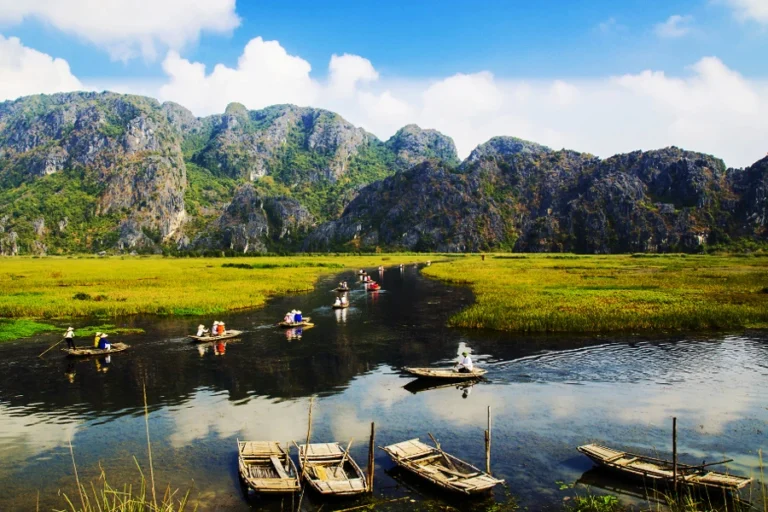
The greatest gift nature has bestowed upon Bai Dinh is its exquisite feng shui setting, fully embodied in the traditional “leaning against the mountain, facing the water” configuration. The pagoda rests firmly against the slopes of the imposing Bai Dinh Mountain while looking out over deep valleys, expansive lakes, and winding rivers. This topography not only provides an airy, tranquil atmosphere befitting a Zen sanctuary, but according to traditional beliefs, it also acts as a focal point of vital energy, absorbing positive currents from the earth. The harmony between solemn limestone peaks, drifting clouds, and mirror-still waters composes a serene natural symphony that leaves every traveler touched by its majestic yet intimate beauty.
The name “Bai Dinh” itself carries a profound layer of cultural and spiritual significance, meaning “worshiping heaven and earth, immortals and Buddhas.” According to historical records and folk legends passed down through generations, this sacred ground was once where King Dinh Tien Hoang erected an altar to worship heaven, praying for national peace, prosperity, and favorable weather for his people. Furthermore, Bai Dinh’s history is divided into two distinct chronicles: the ancient pagoda complex with over 1,000 years of history tied to the golden Ly Dynasty, and the new pagoda complex initiated at the dawn of the 21st century, marking the vibrant revival and flourishing of Vietnamese Buddhism in the modern era.
The ancient Bai Dinh Pagoda lies nestled deep within the quiet of the mountains and forests, closely associated with Zen Master and renowned physician Nguyen Minh Khong, who discovered these mystical caves and transformed them into shrines dedicated to Buddha and revered saints. This site has witnessed the footsteps of many pivotal historical figures, from the Dinh and Le dynasties to the Tay Son peasant army led by Emperor Quang Trung. Meanwhile, the grand new pagoda complex—begun in 2003 and inaugurated in 2010—continues that thousand-year legacy, elevating its heritage value to new heights widely praised by tourism authorities and both domestic and international media.
From a geological and heritage perspective, Bai Dinh sits within the Trang An limestone mountain range, which dates back millions of years and holds priceless geomorphological values recognized by UNESCO. The seamless blend of breathtaking natural scenery, layered history from feudal dynasties, and the virtuous spirit of the Vietnamese people has turned this site into a living open-air museum. Through the passage of time, Bai Dinh Pagoda stands tall as an enduring testament to the resilient vitality of Vietnamese Buddhist culture, beckoning kindred spirits to wash away worldly dust and admire the sacred beauty of the nation.
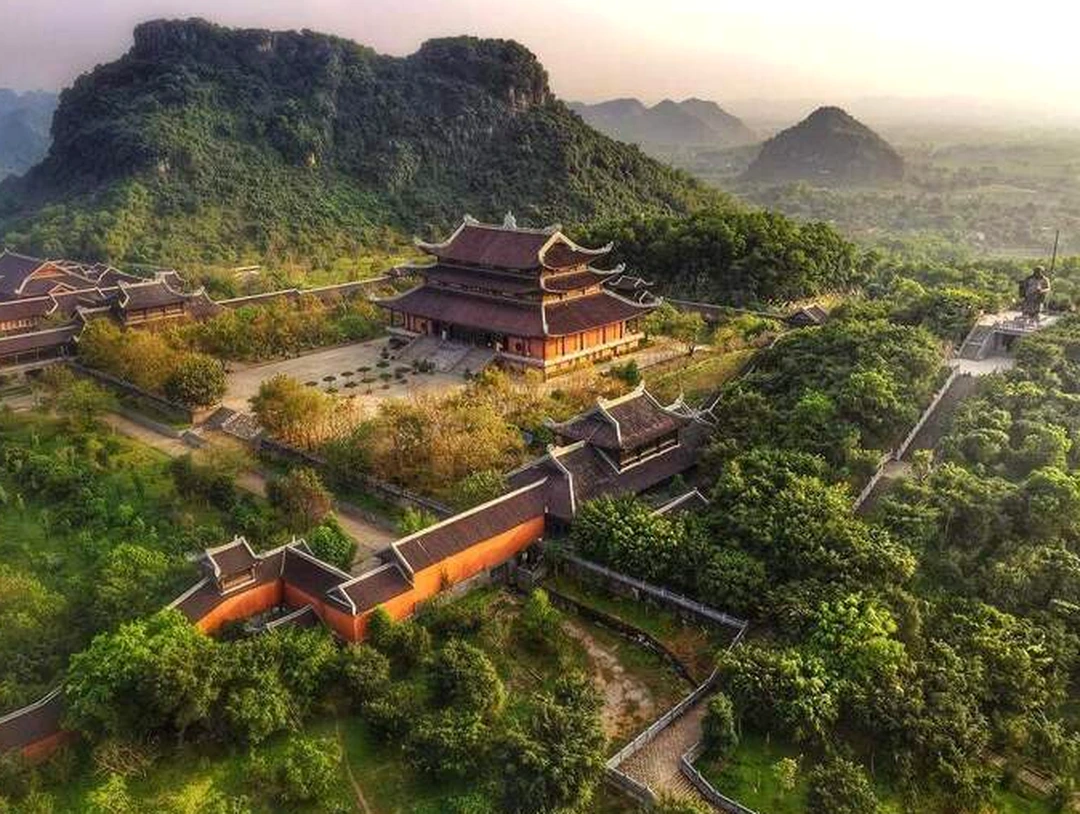
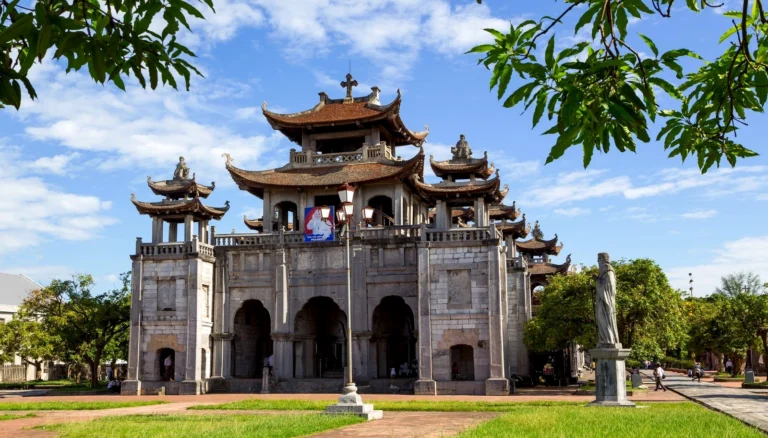
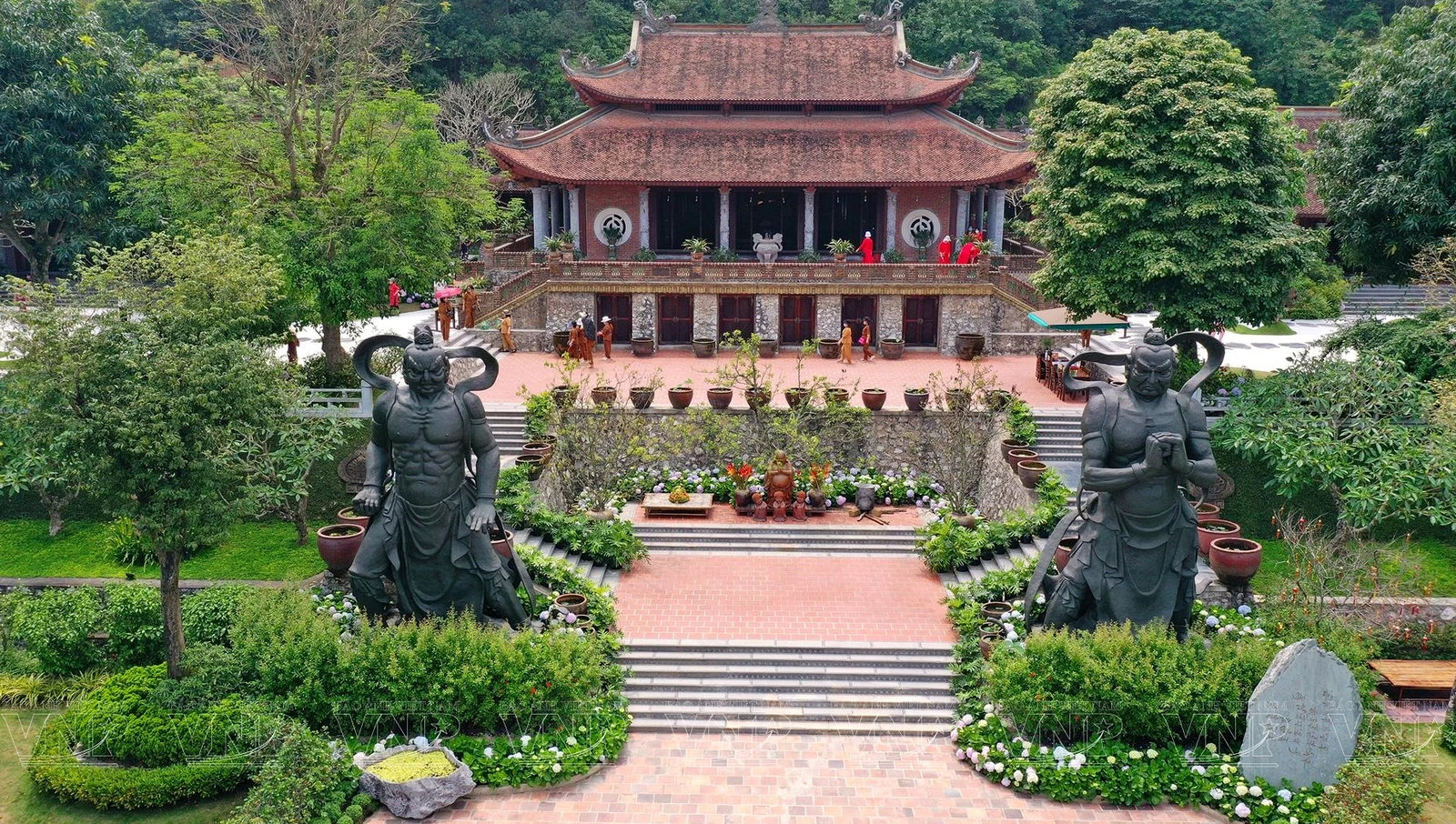
Bai Dinh Pagoda is not merely a pure spiritual center, but also a masterpiece of contemporary architecture where human craftsmanship and nature’s pristine beauty reach perfection. Set on a land celebrated for its sacred energy and remarkable figures, the pagoda sits beside the majestic Bai Dinh Mountain facing the vast Dam Thi Lake, forming an imposing “mountain-backed, water-facing” posture. The entire complex is designed in traditional Vietnamese temple architecture, utilizing natural materials such as precious ironwood, Ninh Binh blue stone, and Bat Trang glazed tiles to create an ensemble that is both monumental and graceful, blending harmoniously with the surrounding landscape.
The first highlight that leaves every visitor in awe is the sheer grandeur of the main prayer halls. Tam The Hall, Phap Chu Hall, and Quan Am Hall are built on a massive scale, featuring sweeping curved roofs shaped like boat prows and covered in somber dark-brown glazed tiles. Colossal ironwood pillars, intricately carved with lotus, dragon, and phoenix motifs, pair with dazzling gilded Buddha statues inside to create a mystical and sacred atmosphere. Notably, the sculptural artistry here merges the traditional techniques of renowned handicraft villages with modern aesthetic sensibilities, infusing every statue and bas-relief with life, historical breath, and profound Buddhist philosophy.
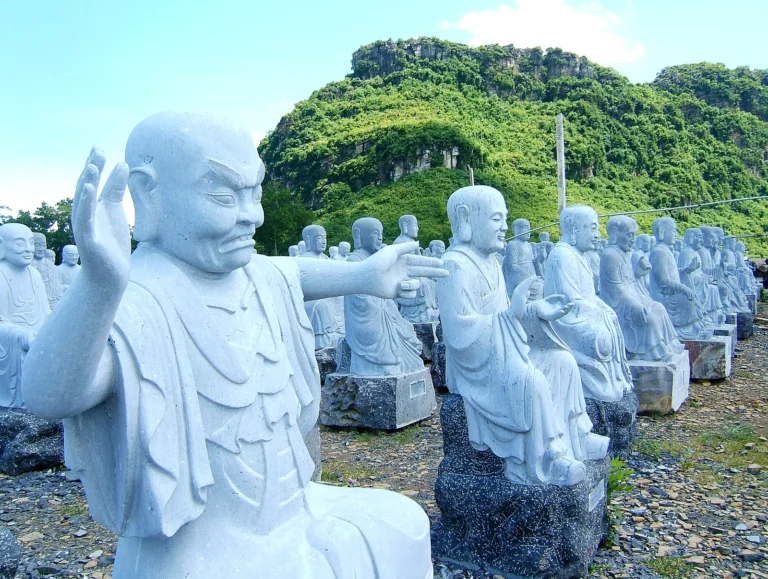
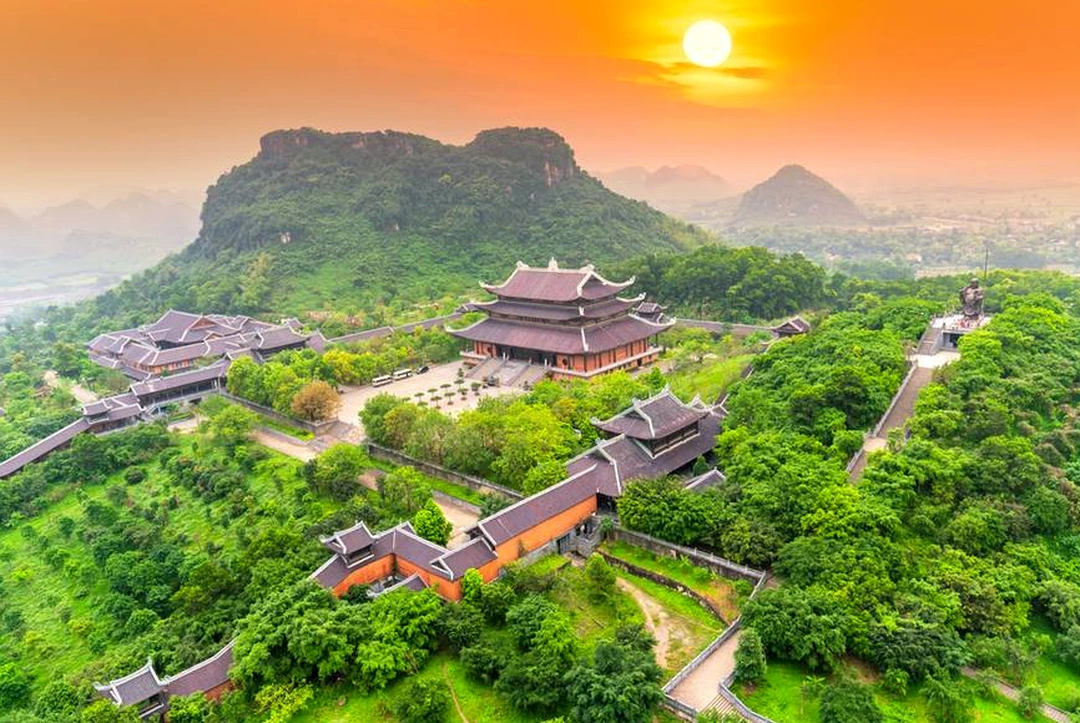
To capture “million-view” shots at Bai Dinh, professional photographers typically favor two classic vantage points. The first is the Arhat Corridor—a walkway stretching over 3 kilometers lined with 500 blue-stone Arhat statues, each carved with distinct facial expressions. The best time to shoot here is early morning, when the first rays of sunlight filter through the eaves, casting alternating bands of light and shadow that accentuate the chiseled details of every statue and create sweeping depth. The second spot is the top floor of the Bao Thap Stupa. From this height, the entire pagoda grounds unfold like a grand natural painting: curved temple roofs peek through lush green mountains, while a tranquil lake mirrors the sky in the distance. At sunset, golden-orange light bathes the complex in a magnificent yet serene glow, enabling anyone behind the lens to capture evocative, timeless scenes.
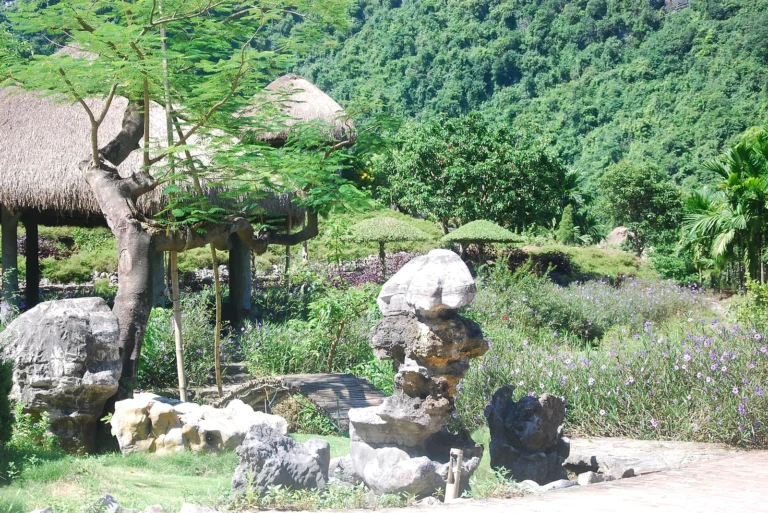
Beyond its architecture, the natural landscape at Bai Dinh is an indispensable part of its allure. Stone-paved pathways wind around mountain slopes, meticulously manicured gardens flourish, and crystal-clear lakes foster a peaceful meditative environment. With every step, visitors feel a deep sense of inner stillness, far removed from urban clamor. The combination of monumental architectural scale and intricate detailing has turned Bai Dinh into a “living museum” of Buddhist culture, where every angle tells a story of the intersection between past and present, nature and humanity. It is truly an unmissable destination for those seeking pure beauty and peace of mind.
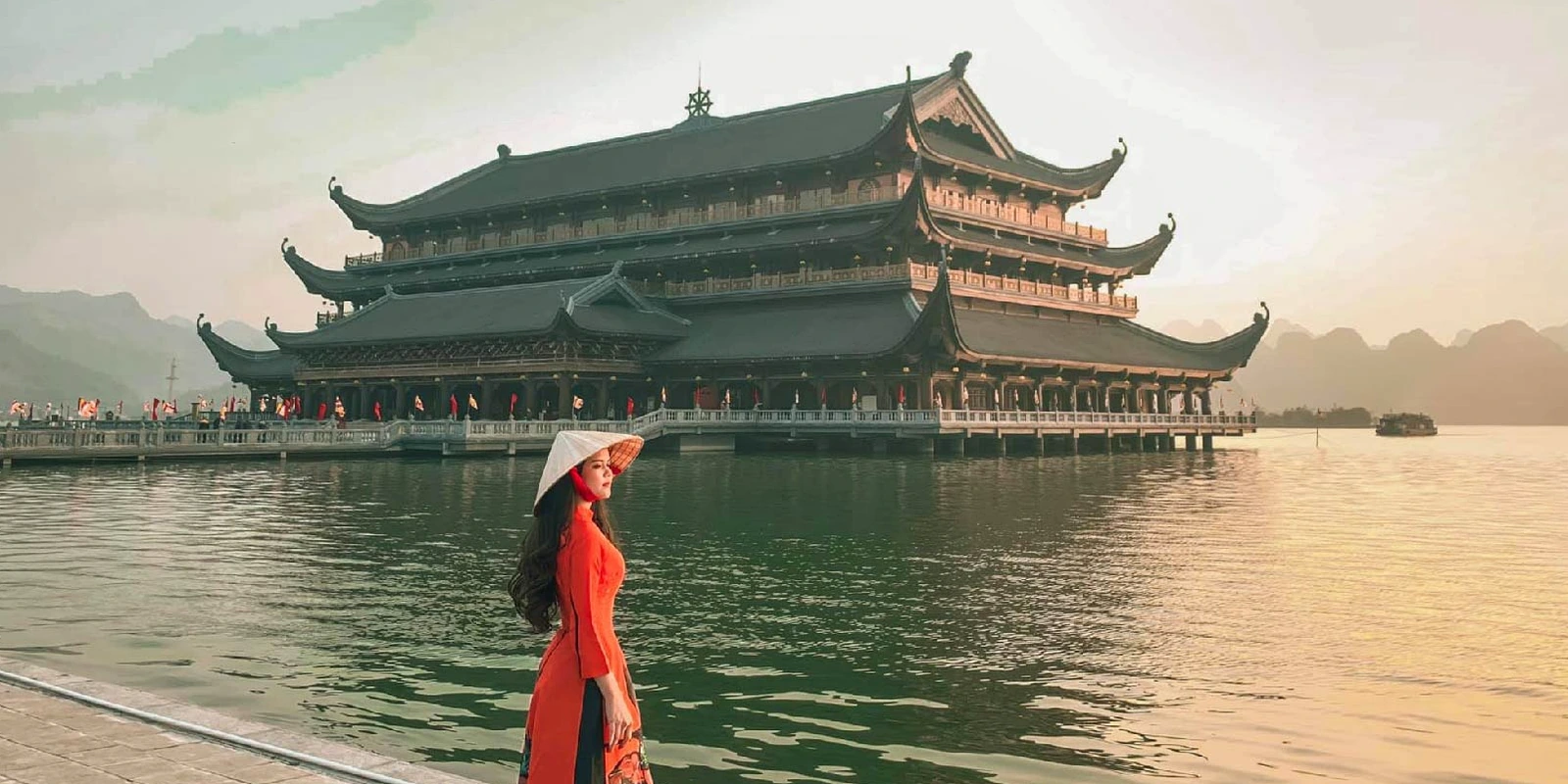
Stepping into Bai Dinh, your first impression goes beyond mere sightseeing—it is an emotional spiritual pilgrimage. Immediately upon passing through the massive Tam Quan Gate, you are greeted by monumental architecture blending seamlessly with Ninh Binh’s rugged mountains and forests. Visitors typically begin their journey aboard an electric shuttle winding along scenic mountain roads, where brisk breezes carry the faint aroma of incense. Once you set foot on the stone steps leading up to the ancient pagoda area, time seems to stand still. Ancient trees cast cool shade, and the deep resonance of temple bells echoes through the quiet air, inspiring profound inner reflection that helps you leave behind daily stress and rediscover serenity within.
Worshiping and sightseeing here are experiences not to be missed. Strolling leisurely down the seemingly endless Arhat Corridor and admiring 500 stone statues—each bearing its own unique expression—allows you to feel a remarkable connection between humanity and the spiritual realm. Be sure to challenge yourself by climbing the towering Bao Thap Stupa. Although your legs may feel a bit tired, standing on the top tier and gazing out over the entire Bai Dinh complex reveals a breathtaking panorama. From here, you can see the rolling limestone peaks of the Trang An heritage zone and emerald lakes reflecting the sky, forming a view that takes your breath away—a moment where everyone marvels at the sublime harmony between human creation and untamed nature.
After hours of spiritual exploration, experiencing local culture through cuisine is the perfect finishing touch to your trip. The area surrounding Bai Dinh is a hub for famous regional specialties that every traveler must try. Nothing beats savoring crispy burnt rice dipped in rich savory sauce, or Ninh Binh mountain goat prepared in diverse styles such as lime-cured goat salad, five-spice grilled goat, or goat steamed with perilla leaves. The tender, sweet flavor of the meat combined with distinct mountain herbs creates an unforgettable culinary experience. Many visitors also combine their Bai Dinh trip with a boat ride along the Sao Khe River or visits to nearby traditional craft villages to gain deeper insight into local cultural life.
This fusion of contemplative spirituality, majestic natural scenery, and flavorful local cuisine makes Bai Dinh a destination meant not just to be seen, but to be deeply felt. Every traveler leaves carrying a sense of lightness, mental tranquility, and vivid memories of a sacred land. Bai Dinh is more than just a pagoda; it is a journey back to one’s roots, where every step, statue, and breeze shares stories of culture, history, and peaceful self-contentment.
Continuing to solidify its status as Vietnam’s premier spiritual destination, Bai Dinh Pagoda welcomes travelers year-round. To ensure your pilgrimage and sightseeing trip goes smoothly, keeping up with the latest practical details below is essential. Regarding opening hours, the pagoda welcomes visitors daily from 06:00 to 21:00, including weekends and public holidays. However, to enjoy a tranquil atmosphere and avoid crowds, it is best to visit early in the morning (before 09:00) or late in the afternoon after 16:00. During these hours, the soft natural light is ideal for photography and appreciating the pagoda’s grand architectural details.
As for admission costs, Bai Dinh Pagoda currently offers free entrance to all visitors. However, because the complex spans over 500 hectares, you will likely want to pay for internal transportation services to conserve energy. Specifically, electric shuttle tickets are officially listed at 30,000 VND per ride per person. For those wishing to admire panoramic views from above, admission to the Bao Thap Stupa costs 50,000 VND per person. Keep in mind that ticket prices may fluctuate slightly depending on the management board’s policies at different times of the year, so double-check the fare board at the main gate before purchasing.
Regarding transportation, the most convenient route from Ninh Binh City center follows Trang An Boulevard or National Highway 1A connecting to Provincial Road DT477. If you are driving a private vehicle, clear road signage makes navigation straightforward. Travelers arriving in Ninh Binh by bus or train can rent a motorbike or take a taxi or private car for the 15-kilometer ride. For visitors coming from Hanoi, taking the Phap Van – Cau Gie – Ninh Binh Expressway cuts travel time down to roughly 1 hour and 30 minutes by car.
Because Bai Dinh is a sacred religious site set across hilly terrain, dressing appropriately is an important rule to follow. Visitors should wear polite, modest clothing, avoiding overly short, revealing, or sheer outfits when entering the prayer halls. Additionally, since you will be walking extensively along stone stairways and the Arhat Corridor, wearing comfortable sneakers or flat walking shoes is key to keeping your energy up throughout the journey. Remember to bring a hat and sunscreen on sunny summer days, or a light jacket if visiting in spring.
Finally, the best time to visit Bai Dinh is from the 1st to the 3rd lunar month. This is the festive season, when spring fills the air, temperatures are cool, and lush greenery creates an ideal backdrop for memorable photos. If you prefer peace and quiet, plan your visit between May and August, when smaller crowds make it easy to capture unobstructed “million-view” photos while fully immersing yourself in the meditative calm of Ninh Binh’s mountains and forests.
To enjoy a seamless holiday and take in the full splendor of Bai Dinh Pagoda without worrying about arranging transportation, booking tickets, or planning itineraries, travelers can choose VDS Travel’s premium all-inclusive Ninh Binh tours. Every itinerary is thoughtfully timed for photo stops when the scenery shines brightest, accompanied by knowledgeable local guides and top-tier hotel and dining standards.