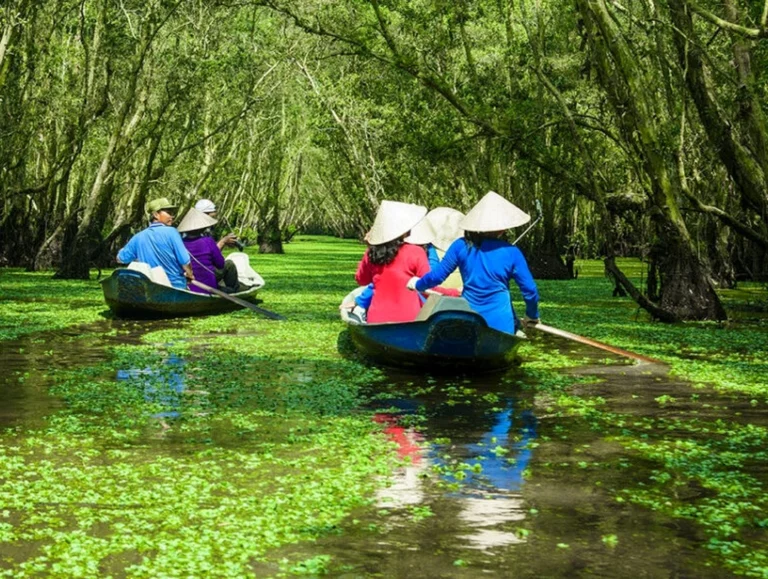
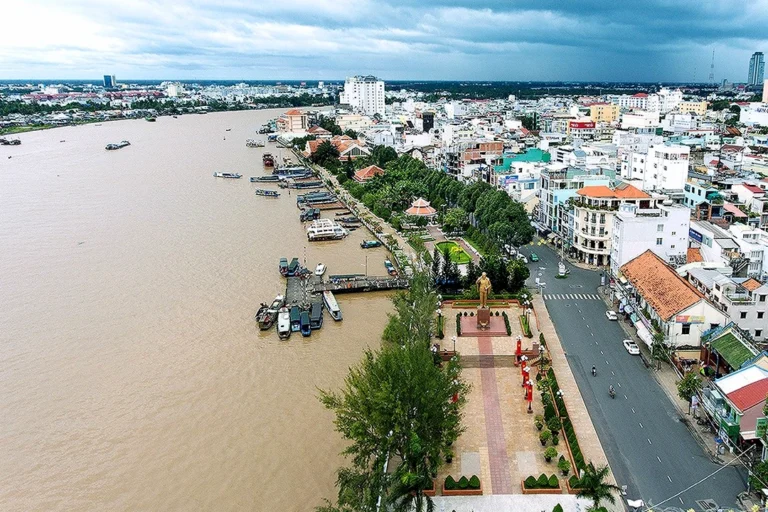
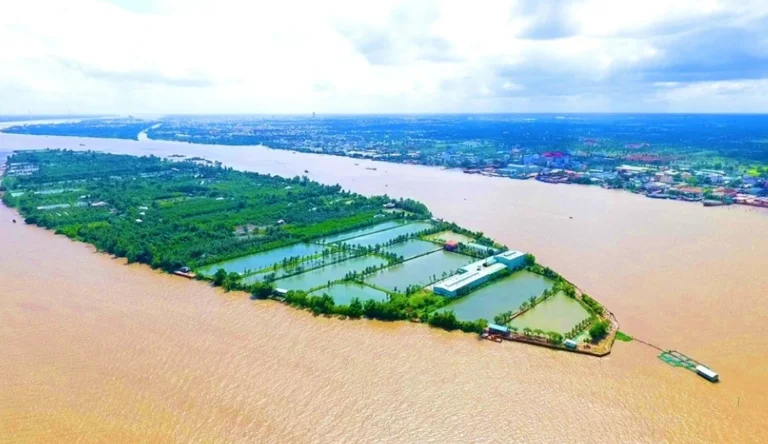
Set in the heart of the fertile Mekong Delta, where an intricate network of canals weaves through the alluvial plains like lifeblood, Cai Rang Floating Market in Can Tho stands as a vibrant, living museum of Southern Vietnam’s riverine trading culture. Free from the honking of traffic and permanent storefronts, Cai Rang Floating Market has bobbed along the gentle ripples of the Mekong River system for over a century, greeting each dawn with the lively chug of boat engines and the warm, genuine smiles of delta locals.
1. A Century-Old History & National Intangible Cultural Heritage Status
Formed in the early 20th century, Cai Rang Floating Market sits on the Can Tho River, roughly 6 kilometers south of downtown Can Tho. Back when road networks were still undeveloped, waterways served as the sole commercial arteries for the entire Mekong Delta. Positioned at the confluence of four river branches (Can Tho, Dau Sau, Cai Rang, and Ba Lang), this spot quickly evolved into the bustling premier hub for agricultural produce and goods in the “Western Capital” (Tay Do).
In 2016, the Culture of Cai Rang Floating Market was officially recognized as a National Intangible Cultural Heritage by the Ministry of Culture, Sports and Tourism. Beyond being a marketplace for sweet orchard fruits and farm produce, the floating market preserves the way of life, generosity, open-heartedness, and strong community spirit of Southern Vietnamese people who have spent generations making their living on the water.
2. The Unique Art of Silent Marketing: The “Cay Beo” Bamboo Pole
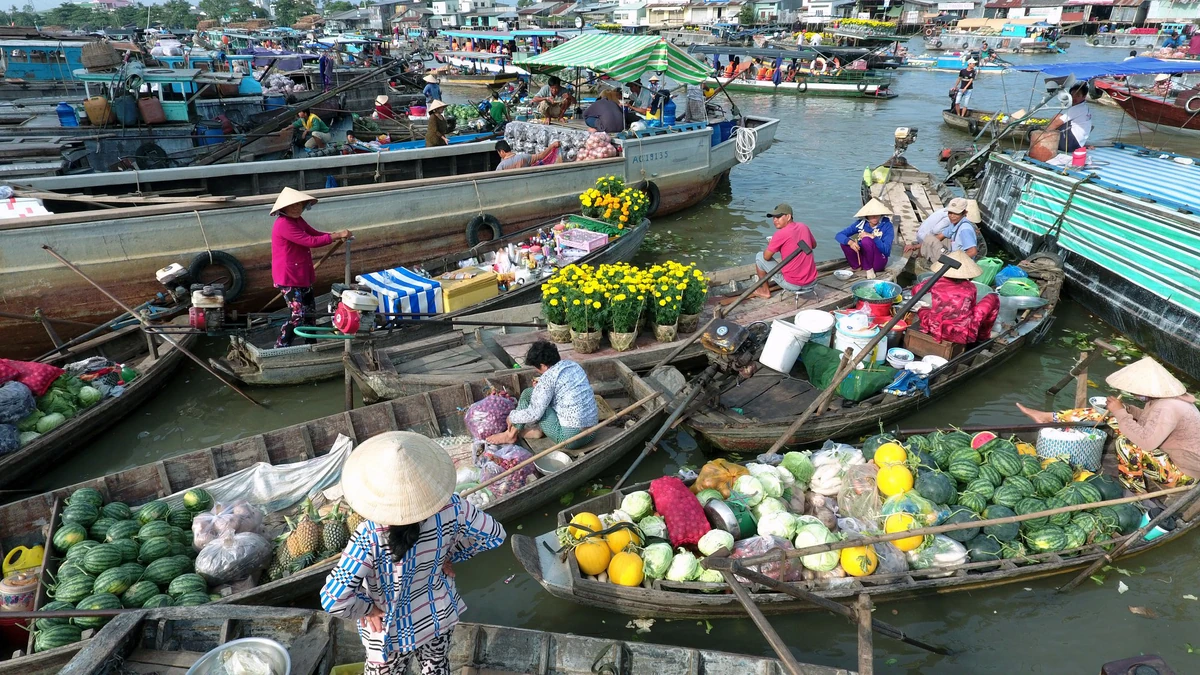
The most fascinating and distinctive hallmark of Cai Rang Floating Market is its method of advertising goods—not with loudspeakers or neon signs, but via the “Cay Beo” (a tall bamboo display pole). Erected upright at the bow of each boat, this long bamboo pole has samples of whatever produce the boat is selling dangling right from its tip.
Amid the vast expanse of water filled with lapping waves and rumbling engines, buyers can scan the horizon from afar and instantly spot which boat is selling watermelons, pineapples, Nam Roi pomelos, Hoa Loc sand mangoes, or sweet potatoes. Even better, Mekong river traders follow four witty, unspoken rules:
- “Hang what you sell”: Hang a daikon radish to sell daikon radishes; hang a bunch of bananas to sell bananas.
- “Hang, yet not for sale”: When a pole is hung with the laundry of an entire family living aboard, it signals that the boat is a residential home—not a clothing stall.
- “Sell without hanging”: Floating food and drink vendors selling hu tieu (noodle soup), coffee, or bun rieu (crab noodle soup) obviously cannot hoist steaming bowls of broth onto a bamboo pole; instead, they announce themselves with billowing steam and mouthwatering aromas drifting across the water.
- “Hang one thing, sell another”: When you spot a thatched nipa palm leaf hanging from the tip of a pole, insiders immediately understand that the owner is actually looking to… sell the boat itself!
3. Floating Culinary Experiences: Early Morning Hu Tieu & Simmered Coffee
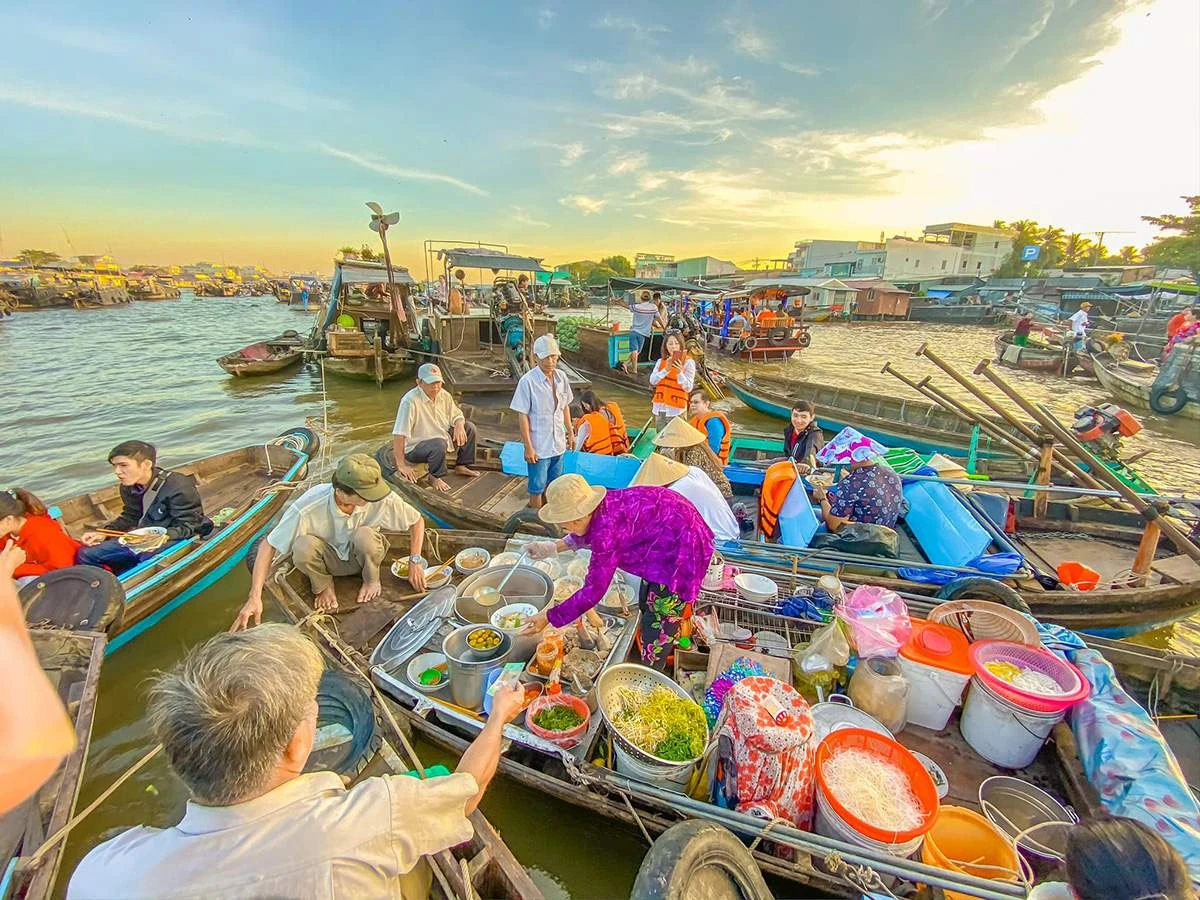
No trip to Can Tho is truly complete without swaying gently aboard a long-tail wooden boat while receiving a piping-hot bowl of hu tieu passed swiftly from a neighboring kitchen boat. Floating market hu tieu—featuring delightfully chewy rice noodles, a rich yet delicate bone broth, slices of lean pork, Vietnamese pork roll (cha lua), and fragrant fried shallots enjoyed in the crisp morning river breeze—leaves an unforgettable impression on every traveler.
Right after your noodle soup, order a glass of iced milk coffee or “ca phe kho” (coffee kept continuously warm in a clay pot over glowing charcoal) for a rich, velvety sweetness. Lively vendor calls and cheerful banter between sellers and travelers from near and far dissolve every boundary, leaving behind only the warmth and down-to-earth hospitality of the Mekong Delta.
4. Visiting Schedule & The Golden Hour for Photography
To immerse yourself fully in the rhythm of the floating market, timing your visit around its daily routine is essential:
- 5:00 AM – 6:30 AM (The Golden Window): This is when the market is at its liveliest and most crowded. Hundreds of large and small boats gather hull-to-hull while a radiant sunrise bathes the Hau River in gold, creating an extraordinary backdrop for candid, everyday photography.
- 7:00 AM – 8:30 AM: Wholesale boats gradually disperse to distribute goods to smaller retail markets, and the atmosphere shifts toward serving visitors breakfast, fresh tropical fruit, and excursions to nearby riverside craft villages.
- Recommended Add-On Stops: After touring the floating market, boats typically take visitors to Chin Cua Traditional Hu Tieu Noodle Workshop to try spreading rice batter, slicing noodles by hand, and tasting crispy “Hu Tieu Pizza,” or stop by lush eco-orchards to pick sweet rambutans and Ha Chau Burmese grapes.
5. Boat Rental Tips & Practical Advice for Visitors
- How to book a boat: Head to Ninh Kieu Pier to buy a shared tour ticket or charter a private boat. If you are traveling with family or a group, hiring a private boat (ranging from 350,000 to 600,000 VND depending on boat size) gives you total freedom to pause for photos and breakfast whenever you wish.
- Water safety: Keep your life jacket fastened throughout the entire boat journey, and watch your footing carefully when stepping between boats rocking on the waves.
- Mindful shopping: When buying fruit on the floating market, feel free to ask the boat owner to peel and slice it for you to enjoy on the spot. Locals in the Mekong Delta are famously honest and welcoming, with none of the aggressive haggling found elsewhere.
6. Warm Riverine Etiquette & Unspoken Codes of the Floating Community
Life for the river traders of Cai Rang Floating Market goes far beyond basic commerce; it embodies a deeply humane code of conduct and mutual affection forged across open waters. To them, a boat is both a livelihood and a cherished family home sheltering three or four generations—from grandparents and parents to children and beloved household pets.
Along the Can Tho River, traders uphold unwritten laws that everyone honors wholeheartedly:
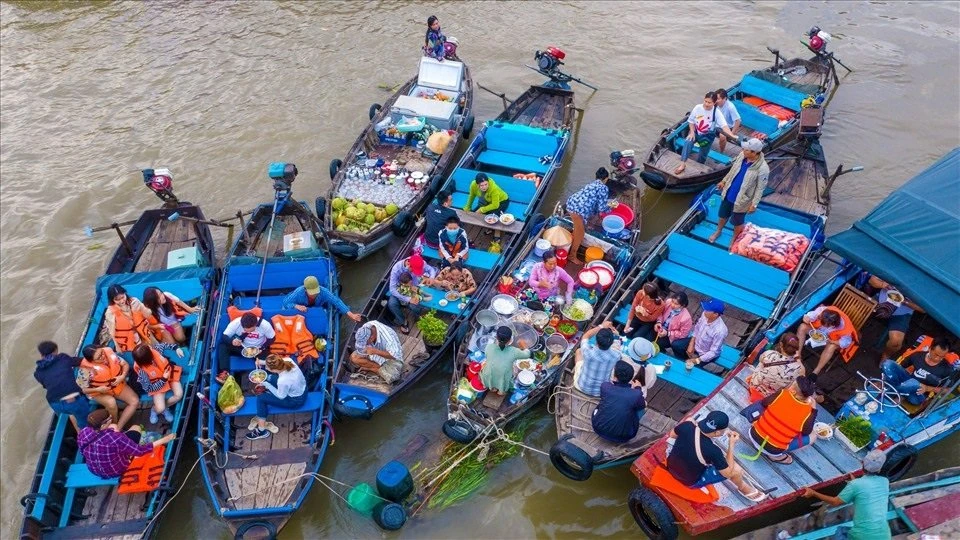
- The spirit of solidarity (“When the water rises, all boats lift”): If a boat suffers engine failure, springs a leak, or struggles in rough wakes, neighboring vessels immediately pull alongside to help—sharing repair tools or towing the boat safely past treacherous stretches without ever asking for payment.
- A word of honor worth more than gold: Wholesale deals involving dozens of tons of watermelons, pomelos, or sand mangoes between depot owners and river traders are routinely sealed with a simple handshake and mutual trust. Southern sincerity shines through in their rule of “selling exactly what you promise”—no rigged scales and no bruised produce hidden at the bottom of the basket.
- Sweet, polite greetings: Despite working tirelessly through sun and rain, floating market vendors always begin and end interactions with warm, respectful phrases like “Da em cam on” (“Thank you kindly”) and “Da moi co bac dung thu” (“Please feel free to have a taste”). The gentle smiles and sparkling eyes of the women rowing these boats have captivated millions of international travelers.
7. Exploring Traditional Noodle-Making & Nearby Orchard Cuisine
Your journey through Cai Rang Floating Market becomes even richer when paired with visits to traditional craft villages lining both riverbanks:
- Chin Cua Traditional Hu Tieu Workshop: Home to a family heirloom recipe for rice noodle sheets passed down for over half a century. Artisans guide visitors step-by-step through the intricate process: milling soaked rice into batter, ladling thin sheets over a bubbling steamer, drying them on bamboo racks in the morning sun, and feeding them through a cutter to create pure white noodles—or vibrant strands naturally tinted with magenta plant leaves, red gac fruit, and blue butterfly pea flowers.
- The Famous “Hu Tieu Pizza”: A creative specialty found only in Can Tho. Seasoned rice noodles are deep-fried into a golden, ultra-crispy round base, then topped with savory braised pork, a sunny-side-up egg, crispy shallots, and a tangy, mildly spicy sweet-and-sour sauce. Every crunchy bite leaves diners delighted.
- Ba Cong / Vam Xang Eco-Orchards: Boats dock to let visitors stroll beneath lush, fruit-laden canopies. Depending on the season, you can hand-pick and savor ripe mangosteens, crisp longan-flavored rambutans, golden-fleshed Ri6 durians with tiny seeds, or juicy, delicately sweet-tart Ha Chau Burmese grapes right in the orchard.
8. Cai Rang Floating Market vs. Phong Dien Floating Market
Many travelers visiting Can Tho wonder how the city’s two famous floating markets compare. Here is a clear breakdown to help you choose the itinerary that suits you best:
- Cai Rang Floating Market (Large-Scale Wholesale Hub): Located closer to the city center (a 30-minute boat ride from Ninh Kieu Pier), this massive wholesale market draws hundreds of heavy cargo boats carrying 5 to 20 tons of produce. It bustles from 5:00 AM to 8:00 AM, offers convenient access, and features well-developed tourism services.
- Phong Dien Floating Market (Rustic Retail Orchard Market): Situated roughly 17 kilometers upstream from the city center along the Can Tho River, this local retail market features charming, hand-rowed three-plank sampans. The atmosphere is quieter and deeply traditional, though trading wraps up earlier (typically winding down after 7:00 AM).
9. Perfect Half-Day Morning Itinerary for Exploring Tay Do
- 5:00 AM: Arrive at Ninh Kieu Pier and board a sightseeing boat heading down the Can Tho River in the cool morning breeze as sunrise shimmers across the water.
- 5:45 AM – 6:45 AM: Dive into the heart of Cai Rang Floating Market—admire the Cay Beo display poles, snap photos amid tightly packed wooden boats, slurp a hot bowl of hu tieu, and sip simmered coffee right on the water.
- 7:00 AM – 8:00 AM: Visit Chin Cua Hu Tieu Workshop to try hands-on noodle making and sample crispy Hu Tieu Pizza.
- 8:15 AM – 9:15 AM: Wander through an eco-fruit orchard, enjoy a platter of freshly picked tropical fruit, and listen to soulful Southern folk music (Don Ca Tai Tu) beside cool, shaded canals.
- 9:30 AM: Return to Ninh Kieu Pier, wrapping up a fulfilling morning brimming with unforgettable memories of Vietnam’s land of white rice and clear waters.