In the heart of Bangkok, where modern currents intersect with cultural deposits, the presence of the 747 Cafe is not merely an entertainment stopover, but a living testament to a proud chapter in Thailand’s aviation history. To understand the soul of this colossal metal mass resting in the Lat Krabang district, one must travel back in time to the early millennium, a period when Southeast Asian skies witnessed the robust rise of private airlines, among which Orient Thai Airlines emerged as a symbol of far-reaching aspirations. The Boeing 747-400 present here stands as a historical “witness,” having once carried the mission of connecting arterial routes and transporting millions of passengers across transcontinental journeys throughout the decade from 2000 to 2010.
In the consciousness of engineering history enthusiasts, the Boeing 747-400 is not merely a transport vehicle, but the pinnacle of the “Jumbo Jet” era—a golden age when aviation luxury and technology reached full maturity. When Orient Thai Airlines operated this aircraft, it represented Thailand’s stature as a regional aviation hub where “Queens of the Sky” were national prides. Vicissitudes of times, shifts in economic strategies, and the decline of four-engine aircraft types under fuel efficiency pressures eventually caused this airliner to depart from runways. However, rather than ending its lifecycle in cold scrap yards, it was reborn through the philosophy of “Adaptive Reuse”—heritage functional conversion, a humane approach helping preserve technological values instead of erasing them.
Transforming a colossal machine with a nearly 60-meter wingspan and hundreds of tons in weight into a living museum was a feat of engineering and cultural thinking. The project implementers did more than simply place tables and chairs inside the passenger cabin; they endeavored to preserve spatial structures completely intact, from the cockpit with its complex control panels down to business-class seats that witnessed countless stories of distant travelers. Every minute detail, from weather-beaten load-bearing aluminum skins to technical markings on the airframe, recounts an era when aviation was a symbol of luxury and global connectivity. This represents the “regnal year” of an era when humanity conquered the skies using giant steel blocks, an industrial heritage preserved so future generations can touch history.
The transition from a transport vehicle into a Bangkok community cultural space also reflects Thai people’s mindset in cherishing old values. Rather than demolishing things to construct soulless new structures, retaining the Boeing 747-400 as a “static museum” in the urban heart created a unique architectural highlight. It serves not only as a place to enjoy coffee, but an educational space where young people can learn about aviation operating principles, aerodynamic structures, and a historical period when Thai aviation established its standing on the world map. The existence of the 747 Cafe affirms that history never fades; it merely changes form to continue accompanying modern rhythms, becoming an inseparable cultural heritage part of Bangkok where past and present march side by side on an endless runway.
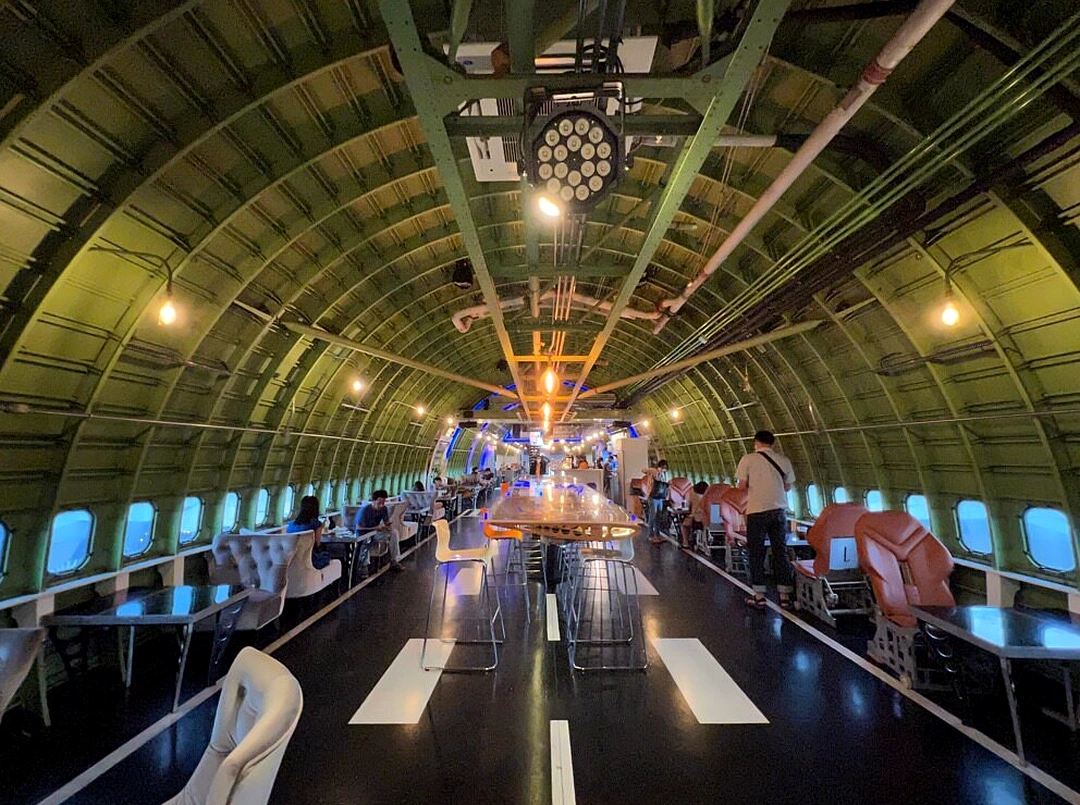
Situated at a strategic coordinate in Lat Krabang district, dubbed Bangkok’s “sky gateway,” the 747 Cafe is not merely an entertainment destination but an iconic architectural work intersecting modern planning thinking with suburban feng shui philosophy. Lat Krabang has historically been low-lying terrain where the intricate canal network of the Chao Phraya River basin retains deposits from the Rattanakosin dynasty era. Placing a heavy metal “giant” weighing hundreds of tons onto this terrain demands rigorous geological processing engineering to balance the static load of the Boeing 747-400 airframe against alluvial soil stability.
Geomantically, experts evaluate this location as “auspicious” due to direct influence from vital energy streams originating at Suvarnabhumi Airport—Thailand’s largest aviation center. In Thai belief, continuous airflow movement and human traffic influxes generate a powerful “wealth current.” The static positioning of the Boeing 747, pointing its nose toward the runway, creates an “eagle holding a jade” posture, symbolizing stability and far-reaching vision. The presence of this colossal metal block amidst open suburban spaces exerts no oppressive feel; conversely, it forms a visual highlight, a spatial positioning milestone amid transitioning urban landscapes and surviving green rice fields of Lat Krabang.
The engineering process of landing this “airliner” onto solid ground represents an engineering miracle. To accurately simulate a real apron, the design team leveled and reinforced foundations using deep load-bearing reinforced concrete pile systems, ensuring structures remain un-sinking under monsoon tropical weather. The aircraft fuselage was detached, transported via oversized heavy transport trucks through narrow Bangkok streets—a logistics campaign demanding millimetric precision. Following assembly, the entire chassis frame was reinforced with load-bearing steel supports, allowing visitors to walk across aircraft floors while experiencing absolute safety alongside a natural tilt of an aircraft parked on a tarmac.
The signature landscape of the 747 Cafe contrasts the rough, industrial airframe skin with soft suburban nature. The surrounding area follows an “open apron” model where pathways feature flat stone paving simulating runway lines, guiding visitors to the airliner’s main entrance. The subtle highlight lies in spatial connection: from inside passenger cabins, through signature oval windows, views open toward boundless rice paddies, creating poetic juxtapositions between modern aviation technology and Thai agricultural lifestyles. Natural daylight is maximized through tempered glass layers, highlighting original interior details like leather-upholstered seats, technical control panels, and overhead luggage bins preserved like a miniature aviation museum.
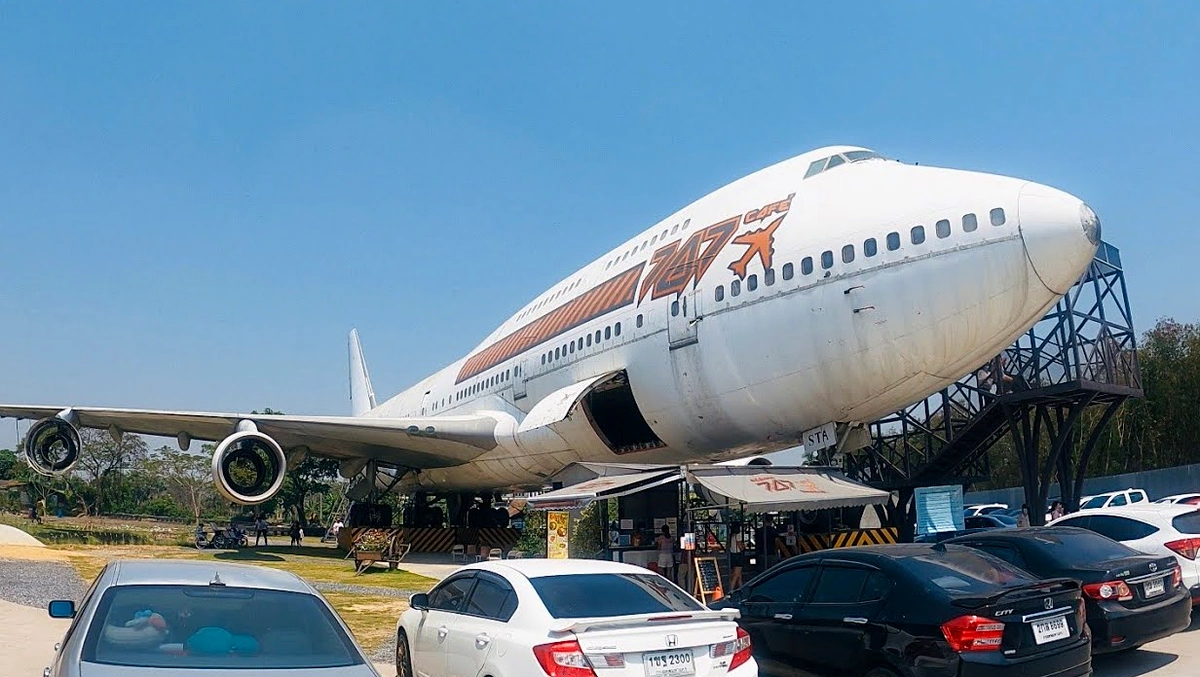
Combining smart land planning and indigenous landscape respect transforms this place into a living entity. Spaces extend beyond coffee service into civil aviation memory retention. Every corner, from the cockpit where visitors experience pilot sensations to aircraft wings utilized as outdoor tea-drinking spaces, is calculated to optimize visual experiences. This demonstrates that when modern engineering “listens” to terrain, it yields structures offering utility alongside rich cultural breath, becoming inseparable components of modern Bangkok’s panoramic panorama.
Stepping onto the grounds of the 747 Cafe in Bangkok, initial impressions extend beyond curiosity regarding an entertainment model into awe before an aviation engineering marvel redefined within serene spaces. This work is neither a replica nor display model, but the embodiment of an authentic Boeing 747-400 preserving legendary aerodynamic structures that once altered global aviation history. The strongest visual highlight is the “Hump”—the signature forward fuselage bulge housing first-class or business cabins on transcontinental flights, now transformed into a contemplative coffee-tasting space.
Material-wise, exterior skins retain high-grade aviation aluminum alloys designed to withstand extreme pressures and sudden temperature shifts at altitudes of tens of thousands of meters. Under Bangkok’s tropical sun, this metallic skin reflects cold light streaks, contrasting intriguingly with surrounding greenery. Transporting and reassembling this giant fuselage on-site was a logistics challenge and true engineering miracle. Engineers meticulously calculated millimeter dimensions to prevent fuselage load structures from deforming atop fixed foundations while handling chassis frameworks to ensure absolute safety for hundreds of daily guests.
Stepping inside, visitors embark on a subtle time-travel journey. Designers executed smart renovations, honoring original details rather than erasing machine traces. Signature oval windows remain intact, welcoming natural daylight and creating cinematic frames. Overhead bins remain to evoke endless journeys, repurposed as nostalgic decorative highlights. Notably, the cockpit—pilots’ sanctuary—is preserved in original conditions with dense buttons, levers, and pressure gauges. This serves as a living museum where minor details narrate golden-era civil aviation stories.
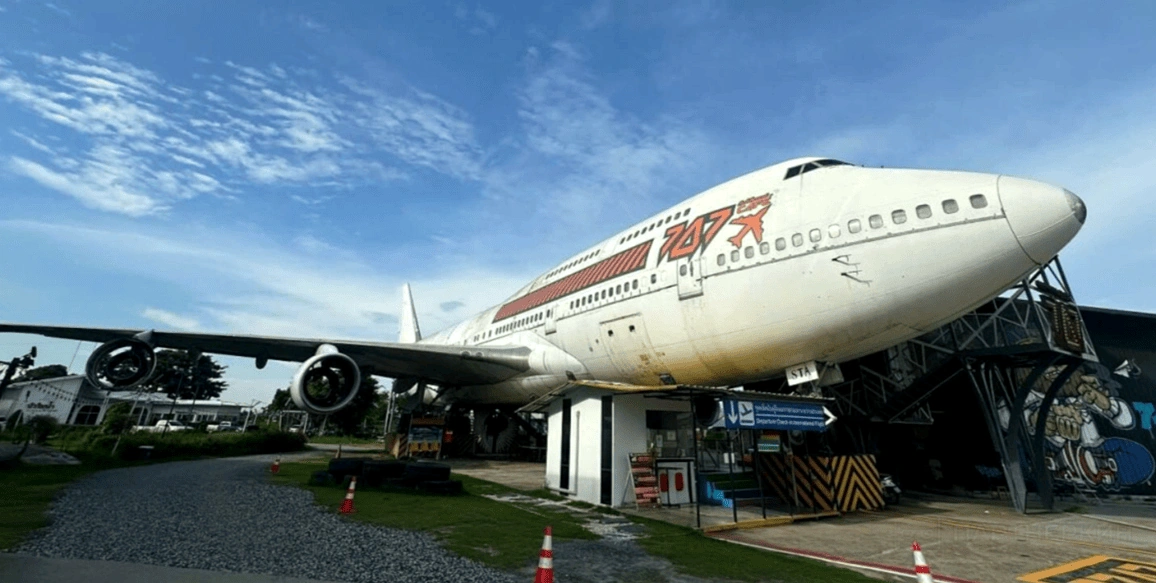
Interior spatial refinement reflects in layout choices. Instead of overcrowding with bulky furniture, interiors retain cabin spaciousness. Seating arrays are organized scientifically, maximizing fuselage length to provide privacy while maintaining overall architectural connection. Warm golden lighting paired with original interior colors delivers luxurious yet intimate atmospheres. Every footstep on cabin floors and touch on metal bulkheads delivers authenticity, making visitors forget ground-level standing and feel prepared for trans-spatial and temporal flight departures.
Actual project scale challenges planners. With fuselages exceeding 70 meters in length and broad wingspans, integrating them into service spaces requires profound landscape architecture understanding. Architects cleverly turned wings into natural roofs, creating cool garden courtyards below where guests enjoy coffee alongside colossal metal bodies rising across urban landscapes. This represents a flawless intersection between precision mechanics and contemporary architecture, turning sky-bound machines into inseparable parts of Bangkok’s appreciation culture.
As final daylight fades across Bangkok skies, yielding to mysterious suburban Lat Krabang night shades, the Boeing 747 Cafe transforms into an enchanting live performance stage. Here, the legendary airliner’s colossal structure is awakened by sophisticated Architectural Lighting, turning it into a living entity in the urban heart. Carefully calculated hot and cold LED strips weave artistically along the fuselage, accentuating aerodynamic lines iconic to golden aviation eras. Lighting illuminates and produces visual illusions, making travelers feel as though this airliner just landed from transcontinental flights, quietly resting for upcoming journeys within serene spaces distinct from Bangkok’s bustle.
Nightlife here carries distinct flavors, fusing modern technology with nostalgic values. Seated in cockpits or along cabin walkways, diners experience shifting time. Interiors optimize dining experiences where soft cabin window lighting creates contrasting dark-bright zones, elevating meticulously crafted beverages. Guests enjoy high-grade Arabica coffee from Chiang Rai while immersing in self-narrative lighting art. Cocktails named after legendary flight routes gleam under LEDs, becoming miniature palm-sized artworks reflecting aircraft skins onto glossy wooden tables.
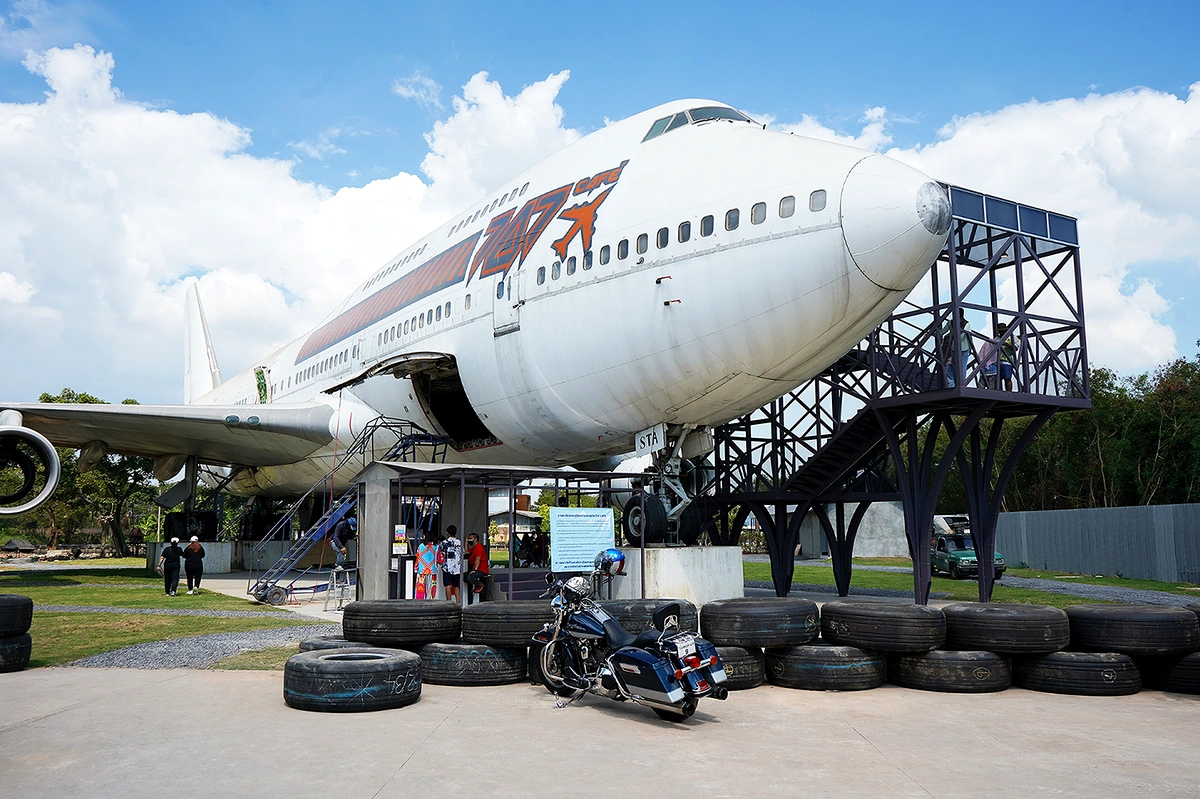
Lighting art at the Boeing 747 Cafe resolves visual puzzles via premier architecture thinking. Wall-washing strips along fuselages blur cold metal and magical night spaces. Viewed from afar, the Boeing 747 resembles a spacecraft floating mid-air, a powerful visual anchor in Bangkok’s night skies. Surrounding tranquility is purposeful, offering personal reflection corners to contemplate past journeys or future plans. Reality and dreams merge as gentle jazz meets shimmering lights.
Seating tiers span luxury first-class leather seats to aircraft wings—ideal for catching cool night breezes. Programmed lighting frames every aircraft corner as artistic backdrops. Visitors seek coffee alongside commanding vast spaces where aviation history and installation art intersect. Old control panels, round windows, and narrow aisles gain prominence, recounting 747 “Queen of the Sky” eras. Deep into night, serene spaces grant peaceful reflections rare in sleepless city centers.
Stepping into the legendary Boeing 747 passenger cabin in Bangkok delivers trans-spatial culinary expeditions. Culinary philosophies rely on intersection: rigorous In-flight Catering standards elevated into Premium Casual Dining. Eschewing dry industrial meal trays at ten thousand meters, chefs recreate aviation menus using contemporary culinary thinking, turning dishes into storytelling artworks connecting cultures.
Highlighting indigenous produce via sustainable coffee is paramount. Premium Arabica beans selected from northern Thai highlands feature tropical fruit acidity and wild honey sweetness. Roasting preserves natural essential oils, rendering cups deep ritual experiences. Local sourcing commits to quality and pays tribute to farmers preserving sustainable cultivation heritages.
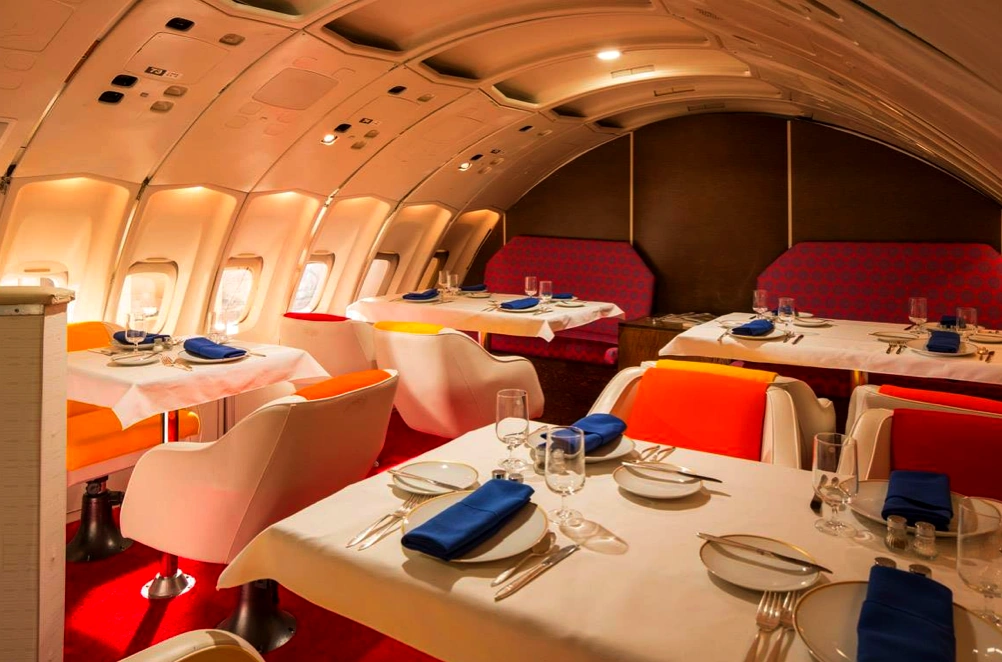
The Boeing 747 Cafe menu maps international styles localized skillfully. French sandwiches infused with Thai herbs or ancient court desserts are meticulously plated on business-class trays. Each dish hides trade integration stories between Thailand and the world, recalling golden eras when Bangkok was a key international aviation stop. Meticulous plating evokes 70s-80s transcontinental luxury flight atmospheres.
Heirloom experiential culture extends to service. Staff in classic flight attendant uniforms act as storytellers, sharing coffee origins, dish philosophies, and Boeing 747 histories. Connection between servers and diners builds cozy atmospheres, bridging cold industrial spaces and Thai warmth. This drives popularity, turning cuisine into soul nourishment.
Finally, enjoying coffee by aircraft windows while watching Bangkok shift from sunset to glowing night is an unparalleled experience. Nostalgic spaces, modern engineering, and indigenous appreciation merge. Departing cabins leaves visitors with flavors and inspiring cultural journeys where past, present, local, and international unite.
Ensuring seamless 747 Cafe exploration requires meticulous logistical preparation. Situated in quiet suburban Lat Krabang near Suvarnabhumi Airport, this landmark functions as an aviation museum. Operating daily, schedules adjust for private events or maintenance. Pre-travel updates via official channels prevent unexpected disruptions.
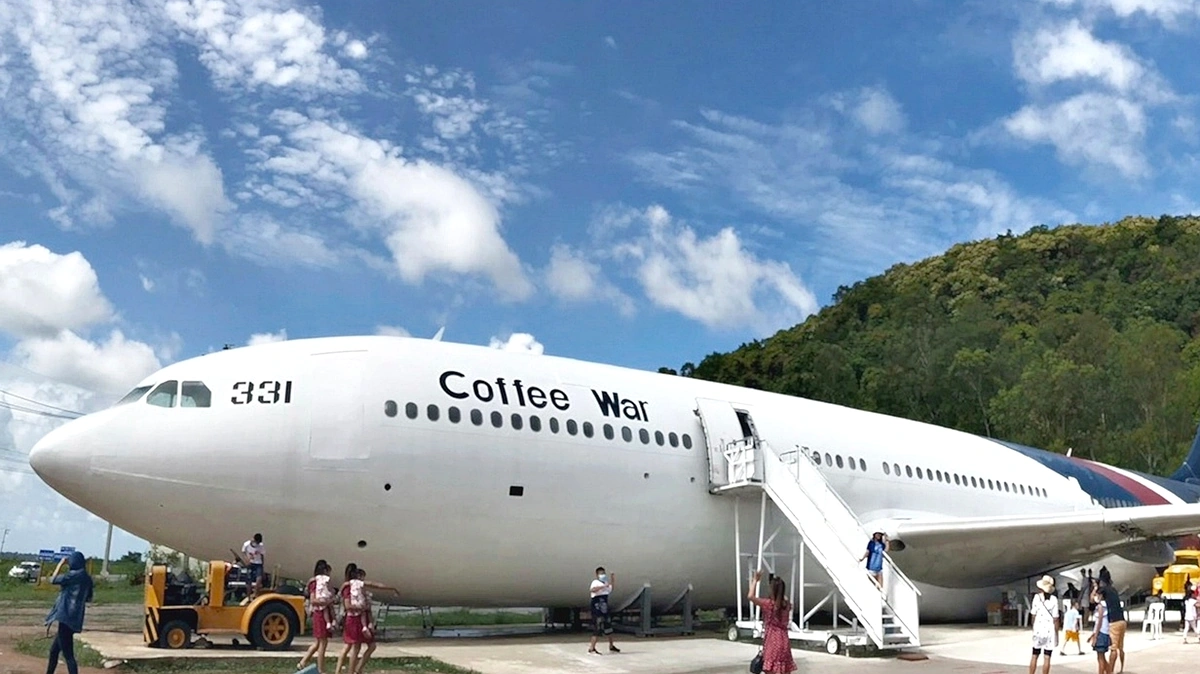
Regarding transit, suburban isolation makes public transit impractical. Personal cars or ride-hailing apps are optimal. Taxis save time and avoid suburban routing hassles. From central city origins, budget 45 to 60 minutes depending on traffic peaks.
Observing preservation rules is vital onboard. Cockpits preserving original 747 controls have visitor quotas. Unauthorized touching of buttons is strictly prohibited without staff supervision, respecting global aviation history.
Pricing reflects standalone experiences. Menus feature specialty coffees, herbal teas, and fusion pastries blending Thai and Western flavors. Prepare cash or electronic payments. Dress neatly; while not strictly temple-bound, polite attire ensures appropriate aesthetics.
Photography tips: target golden hours from 4:00 PM to 5:30 PM for soft sunlight filtering through oval windows. Avoid weekends for quietness. For comprehensive cultural insights, explore the Bangkok – Pattaya 5D4N tour connecting past and present.