Having weathered thousands of years across the chalk upland of Salisbury Plain in Wiltshire, southwestern England, the Stonehenge megalithic complex stands as an enduring testament to prehistoric intellect and belief. Tracing its etymology, the name Stonehenge is deeply rooted in Old English elements, where “stān” means stone and “hencg” refers to a hinge or suspended object—evoking the sight of massive lintel stones resting atop upright pillars as if suspended between earth and windswept sky. Not until the twelfth century did this awe-inspiring monument formally enter Western written chronicles through the cleric Henry of Huntingdon in his celebrated work Historia Anglorum, where he hailed the stone circle as one of the four most mysterious and magnificent wonders of the land of mist at the time.
Modern archaeology has proven that Stonehenge was not built in a single stroke, but rather through a process of accumulation and architectural evolution spanning more than fifteen centuries across three profound phases tied to shifting Neolithic and ancient Bronze Age cultures. The earliest phase began around 3000 BCE, when local inhabitants dug a circular ditch and raised a bank of white chalk roughly one hundred meters in diameter. Inside this sacred perimeter lay a ring of fifty-six earth pits named after seventeenth-century archaeologist John Aubrey—the Aubrey holes. Contrary to early speculation about buried astronomical timber posts, later excavations confirmed this was one of the largest Neolithic cremation cemeteries in Britain, where the cremated remains of tribal leaders and elites were interred with deep reverence for their ancestors.
The pivotal turning point that transformed Stonehenge into a singular megalithic monument began in the second phase, around 2500 BCE. This era witnessed a remarkable movement of massive materials across the length of the island. Bluestones composed of dolerite and volcanic ash, weighing between two and four tons each, were transported in a feat of effort from the Preseli Hills in Pembrokeshire, southwestern Wales—traveling over two hundred and forty kilometers by water and land to converge on Salisbury Plain. Soon after, Sarsen megaliths—an extraordinarily hard siliceous sandstone originating from the Marlborough Downs some thirty kilometers to the north—were hauled to the site. Each Sarsen stone weighed an average of twenty-five tons, with colossal pillars reaching over thirty tons, requiring the coordinated labor of hundreds of skilled workers under a tightly organized prehistoric social order.
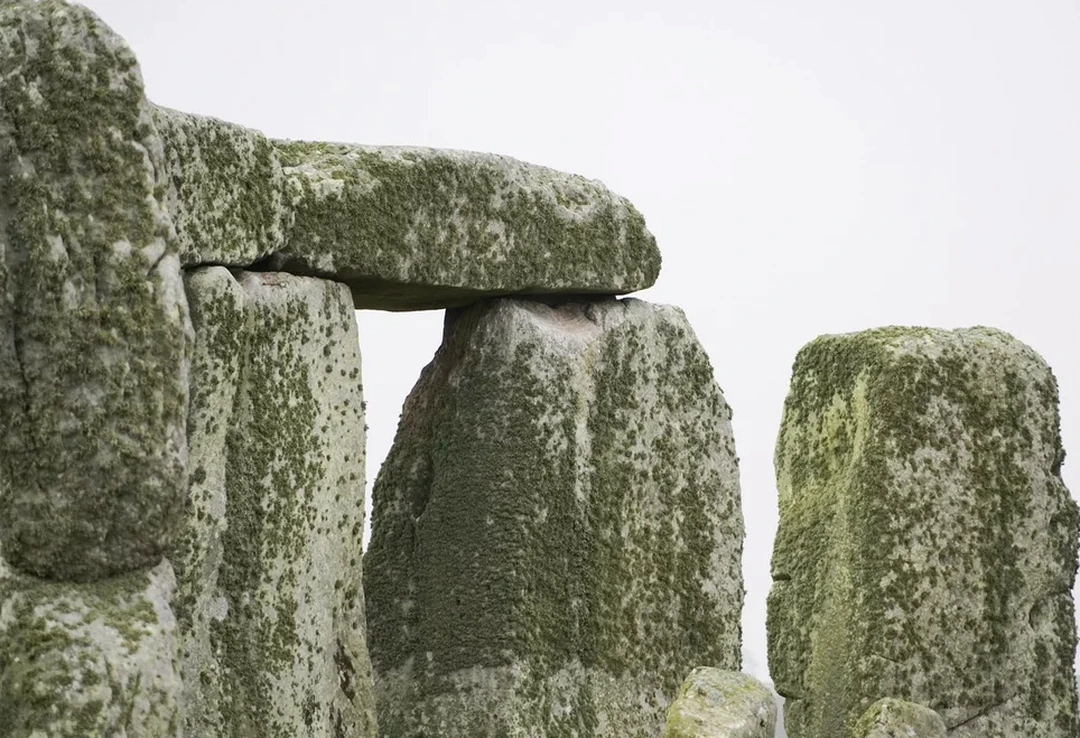
By the third phase around 2000 BCE, amid cultural exchange with the arriving Bell-Beaker people and the flourishing Wessex period, Stonehenge reached its structural peak with the grand trilithon design. Prehistoric engineers carefully shaped raw stone using flint tools and stone mauls, crafting mortise-and-tenon joints—a technique known from traditional woodworking—to lock multi-ton horizontal lintels securely onto the tops of towering uprights. Five trilithon sets arranged in a horseshoe opened toward the northeastern horizon where the sun rises at the summer solstice, turning the entire monument into a supreme astronomical and spiritual stage.
Though later mythologized in medieval writings by Geoffrey of Monmouth as a magical creation moved from Ireland by the wizard Merlin to honor fallen warriors, Stonehenge is in truth a mirror of human history’s ebb and flow. From a modest cremation ground of Neolithic pastoralists, shaped by generations of daring megalith builders, it rose into an enduring ceremonial sanctuary—defying the passage of time and preserving humanity’s primordial longing to read the cosmos.
Resting quietly across the chalk upland of Salisbury Plain in Wiltshire, the Stonehenge megalithic complex occupies a pivotal geographic coordinate within the sacred spatial landscape of prehistoric Britain. The region features rolling hills of gentle slopes stretching endlessly, formed over porous calcium-carbonate chalk bedrock laid down in the Cretaceous period. Thousands of years before the first stones were raised, the local ecology underwent a dramatic transformation: as dense post-glacial oak and pine forests gave way to early farming communities, clearings opened the landscape into a wide, airy expanse welcoming sunlight from every horizon.
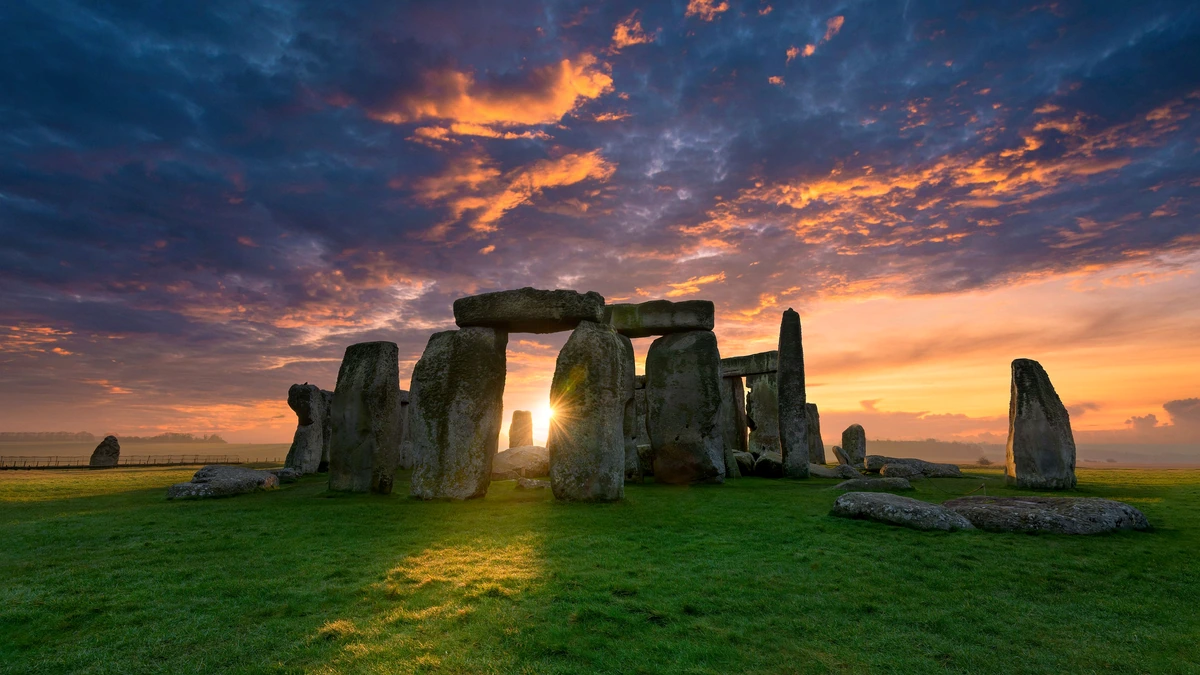
Stonehenge’s layout reveals an astonishingly precise astronomical and geometric vision far removed from natural chance. The monument is aligned along a sacred northeast–southwest axis calibrated closely to the solar cycle. At dawn on the summer solstice, the rising sun appears over the northeastern horizon, casting its first rays through the gap near the Heel Stone straight toward the center of the monument. Conversely, at sunset on the winter solstice, the glowing sun sinks directly between the towering uprights of the Great Trilithon in the southwest. This sighting axis did more than mark seasonal shifts for farming—it stood as a supreme symbol linking cosmic order with the earthly realm, turning a windswept plain into a monumental sky observatory.
To bring this grand architectural plan to life across rolling chalk terrain, the ancients carried out an extraordinary construction process on a scale that tested every limit of the Neolithic age. Beginning with a deep circular ditch and white chalk bank contrasting sharply against green turf, they moved two distinct types of megaliths across formidable routes. Massive silcrete sandstone sarsens weighing up to thirty tons were quarried and slid along timber rollers from Marlborough Downs more than thirty kilometers away. Meanwhile, bluestones weighing a few tons were carried from the Preseli mountain range in Wales hundreds of miles distant, crossing marshy valleys and complex waterways before arriving on Salisbury Plain.
The monument’s positioning and joinery reflect master-level woodworking principles applied to hard stone. Uprights were carefully dressed to form rounded tenons at their tops, fitting snugly into hollowed mortise sockets on the underside of horizontal lintels. At the same time, adjoining lintels were locked together with tongue-and-groove joints, curving into a continuous ring suspended above the ground. Ancient builders accounted for ground slope when dressing stone heights so the lintel ring remained level with the horizon despite the undulating terrain beneath.
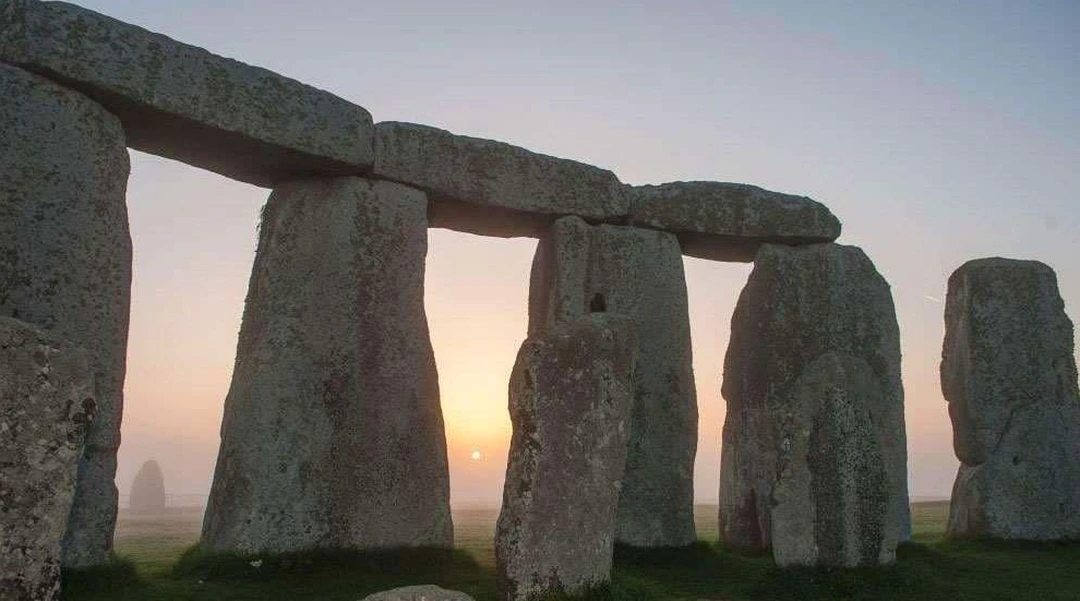
Today, the plain surrounding the monument holds not only priceless archaeological deposits but is also designated a Site of Special Scientific Interest to protect one of Western Europe’s largest semi-natural chalk grasslands. Hardy plant life thrives on thin topsoil, creating an isolated habitat for native wildflowers, bluebells, and rare grassland birds. The open, breezy, mist-kissed scenery of the Wiltshire plain forms a solemn backdrop that honors gray stones standing tall in nature—a grand meeting point of natural geomorphology and human spatial craft.
Across the breezy Salisbury Plain in Wiltshire, the Stonehenge megalithic complex emerges as a breathtakingly precise geometric wonder, challenging assumptions about prehistoric engineering capacity. Stepping toward the center, observers are struck by concentric rings calculated along celestial alignments. The main framework begins with the outer Sarsen Circle, originally a complete ring of 30 upright silcrete sandstone monoliths supporting 30 continuous horizontal lintels. Each Sarsen pillar stands imposing at an average height of around 4 meters, with some monoliths reaching over 7 meters including their foundations set deep into chalky soil, peaking at roughly 25 tons per stone. To create a visually level skyline over uneven ground, prehistoric masons curved each lintel slightly along the circle’s circumference and varied upright thicknesses to offset natural ground slope.
What astonishes modern archaeologists and architects is not merely physical scale, but the unprecedented use of refined joinery directly on ultra-hard stone. Neolithic builders transformed construction practice by using mortise-and-tenon joints to lock stone members together. At the top of each upright Sarsen, masons carved two rounded tenons that slotted accurately to the centimeter into two sockets hollowed into the underside of the lintel above. Going even further, abutting ends of the lintels around the ring were locked together with tongue-and-groove joints. By shaping a projecting tongue on one end and a matching groove on the other, all 30 lintels bound into a seamless stone ring that has endured seismic tremors for five millennia without a drop of mortar.
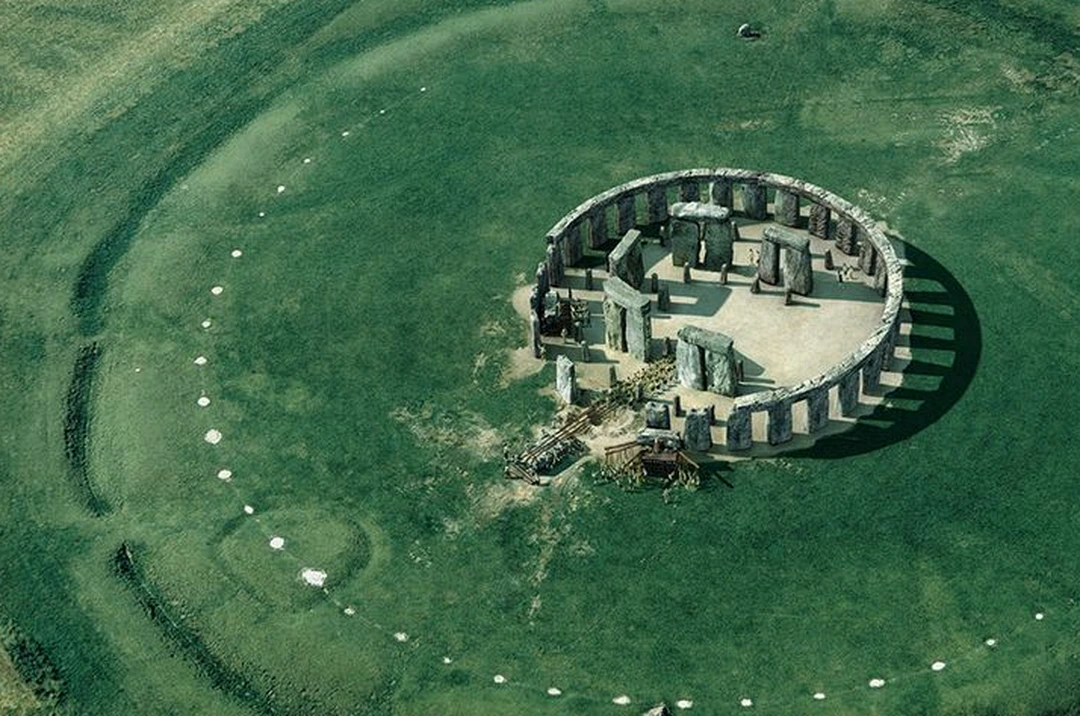
Inside the imposing Sarsen ring stands a horseshoe arrangement opening toward the northeast, formed by 5 towering trilithons—each comprising two parallel uprights topped by a single lintel. Among them, the Great Trilithon at the southwestern center rises highest, commanding absolute visual authority. Nestled at the base of the megalithic horseshoe is the Altar Stone, lying partly buried in the ground. Unlike local ashy-gray Sarsen, this roughly six-ton slab is a green-tinted mica-bearing sandstone with a distinct geological origin transported over hundreds of miles from South Wales. The contrast between the inner greenish stone and outer Sarsen pillars creates a clear spatial hierarchy, drawing light and focus toward a sacred center.
The monument’s true scale is also measured by an extraordinary labor investment in ancient human history. Completing this masterpiece is estimated to have taken more than 20 million hours of manual work with no metal wheels or bronze tools. Thousands of stoneworkers persistently used solid flint mauls to pound, shape, and smooth hundreds of tons of Sarsen quarried from Marlborough Downs over 30 kilometers away. Each stone was then moved on oak-log sledges and pulled with bark-fiber ropes across marshes and slopes by hundreds of strong laborers. Such precision in spatial proportion, intricate mechanical joinery, and immense physical effort elevates Stonehenge far beyond an ordinary archaeological site into a landmark symbol of early social organization and spatial art.
As deep sunset fades beyond the wide horizon of Salisbury Plain in Wiltshire, Stonehenge sheds the bustle of thousands of daytime visitors and enters a quiet, mysterious dimension. Unlike modern landmarks that rely on bright floodlights for visual effect, this prehistoric stone circle embraces a silent “live performance” staged by nature and the night sky. Experiencing dusk and nightfall here is closely managed through the Special Access (or Stone Circle Experience) program overseen by English Heritage. Each session allows only a small group of archaeology and astronomy enthusiasts past the perimeter barrier onto dewy grass inside the stone circle after daylight fades.
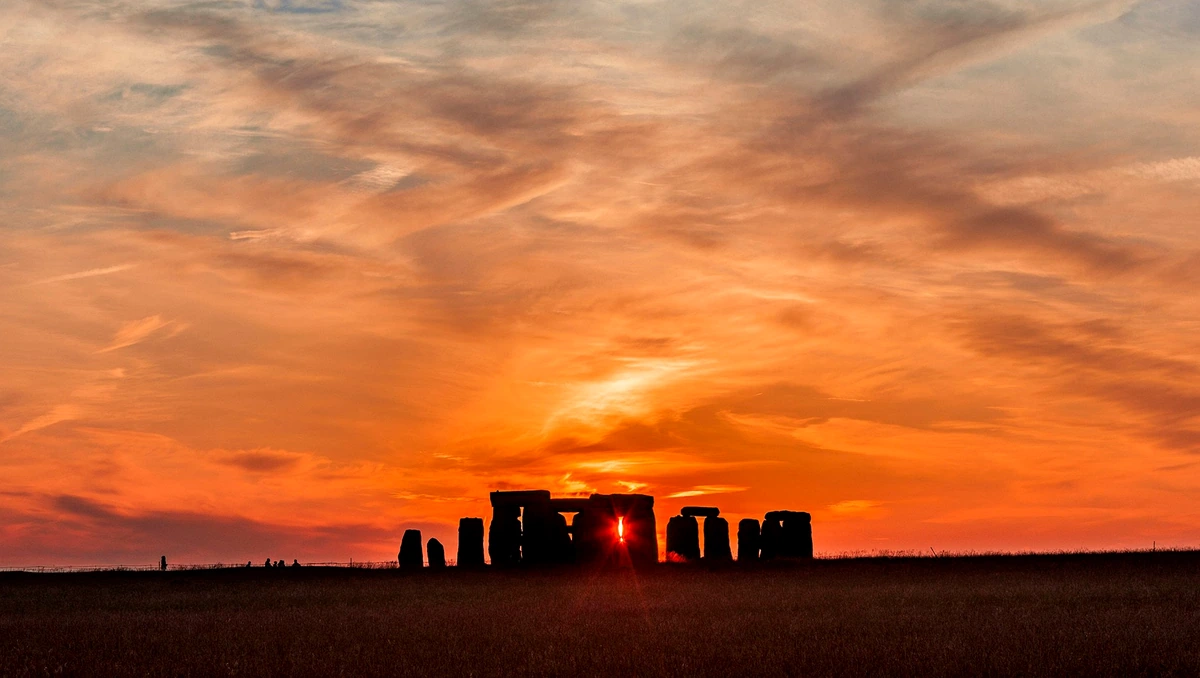
Salisbury Plain has long been treasured by conservationists as one of the rare places preserving darkness in southern England. With urban light pollution virtually absent, night at Stonehenge turns into a grand astronomical amphitheater where a deep sky reveals the Milky Way like diamond dust scattered across black velvet. Under cool moonlight, the towering silhouettes of sarsen sandstones—some up to nine meters tall and weighing tens of tons—alongside mysterious bluestones brought from the distant Preseli Hills stand like silent, contemplative giants. Lighting at Stonehenge is the art of shadow and pure natural contrast, where angled moonbeams passing through trilithon portals trace five thousand years of weathered grain.
Visiting at night vividly echoes the deep connection between Neolithic communities and the mysteries of the sky. Researchers have shown that Stonehenge was not only oriented toward the summer solstice sunrise and winter solstice sunset, but its stone axes also align closely with complex lunar cycles spanning multi-year standstill periods. Standing inside the circle on a moonlit night, visitors can feel drawn into a primeval ceremony as cool wind whistles through narrow stone gaps like the low echo of history. Vast darkness, evening field sounds, and monumental stone forms create a visual and spiritual impact beyond any artificial light show.
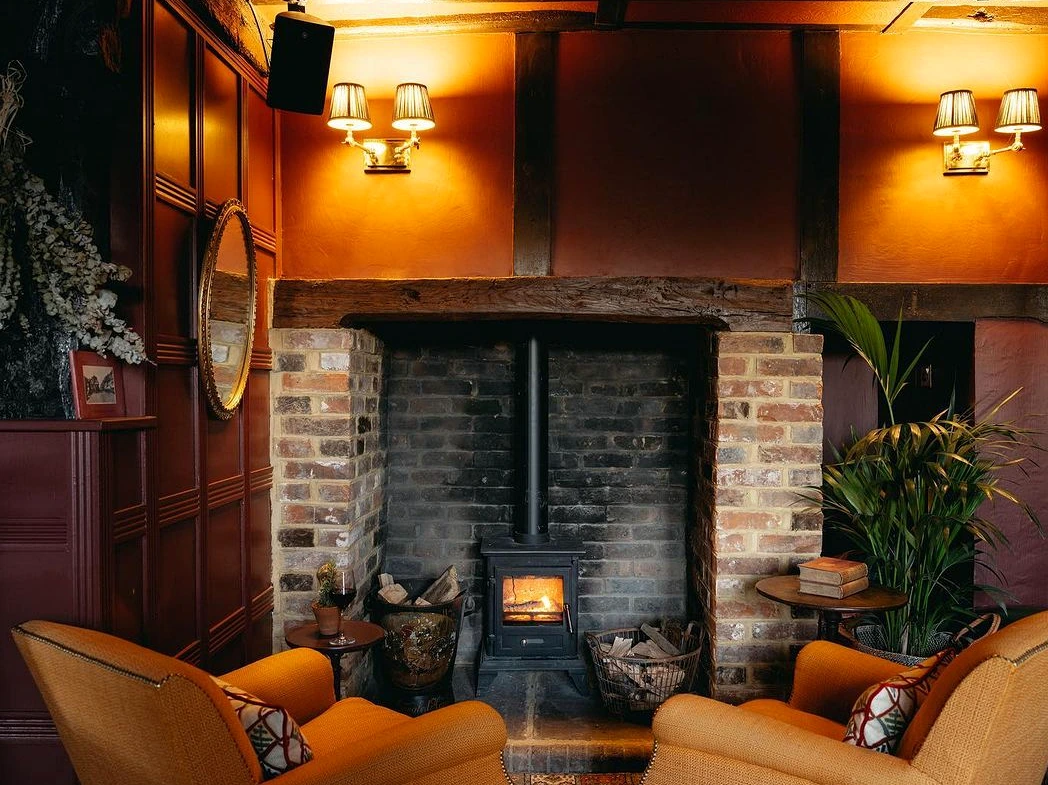
After quiet reflection among ancient stones, a gentle evening rhythm leads travelers back to historic inns along the River Avon in nearby Amesbury or the cathedral city of Salisbury. Beside glowing peat or oak-log hearths in centuries-old pubs, hearty English countryside fare brings warm comfort. Piping-hot roasted meat pies with creamy mashed potato, aged West Country cheddar, and dark malted ales are served warmly—sparking stories of giants, Merlin’s alchemy, or ancient star-watchers beneath Stonehenge’s timeless sky.
Stepping away from the stone circles standing beneath the breezy skies of Salisbury Plain, the Stonehenge experience deepens when exploring the unpretentious food culture of Wiltshire. Shaped over millions of years by chalk deposits, the county supports a distinctive agricultural landscape of lush pastures and grain-heavy fields. Local food here favors no courtly flash; instead, it distills pure, savory character passed down through generations of farmers and artisans.
The region’s most famous culinary emblem is Wiltshire Cure pork—a celebrated curing craft perfected in the eighteenth century in the town of Calne by the renowned Harris family. Unlike mass-produced wet brining, the traditional method rubs prime cuts of pork thoroughly with dry salt, local herbs, and brown sugar before steeping in brine tanks for weeks. The resulting Wiltshire ham and bacon feature naturally tender pink meat, balanced savory-sweet flavor, and a subtle oak-smoke note—a dish once served on noble English tables and protected by strict origin standards.

Alongside savory cured pork comes Lardy Cake, a baked treat carrying the spirit of busy harvest days across ancient Wessex pastures. Born from country thrifty ingenuity using fresh pork lard after winter slaughters, this cake blends naturally leavened dough, rendered lard, dark muscovado sugar, cinnamon, nutmeg, and plump dried currants. Baked in a hot cast-iron oven, lard melts through rolled layers of dough while dark sugar caramelizes into a crisp amber crust outside. Enjoying a warm slice of Lardy Cake in the late afternoon—with a tender, rich crumb and warm spice sweetness—is a simple pleasure that wins over every palate.
Salisbury’s chalk soil not only feeds livestock but also yields two-row barley with ideal starch balance, a key ingredient behind Wiltshire’s craft ales. Across centuries, local breweries have drawn groundwater naturally filtered through pure chalk strata to brew copper-hued Bitters and bright Pale Ales. Creamy white foam, aromatic dry-hop notes, and a soft roasted-malt finish make a refreshing pint after hours exploring archaeological grounds.
Just a few miles east of Stonehenge lies Amesbury, recognized by archaeologists as having the longest continuous settlement record in Britain dating back to the Stone Age. Pausing at centuries-old thatched inns along the gentle River Avon, diners can explore game specialties such as roasted venison with wild berry sauce, herb-wrapped roast pheasant, and cider-braised hare. Alongside game dishes come handmade cheeses crafted from chalk-pasture cow’s milk, matured in natural cellars until rich and supple with hints of forest mushroom and roasted chestnut. A pastoral meal in Amesbury acts like a quiet bridge across time, touching the everyday rhythms that sustained generations around the ancient stones.

To enter the sacred ground across the sweeping expanse of Salisbury Plain in Wiltshire, travelers benefit from a well-planned itinerary to take in the quiet grandeur of the megalithic complex. Managed by English Heritage, the site regulates visitor numbers through timed entry slots. Gates generally open from 09:30 to 17:00 daily, and booking online in advance is strongly recommended—and often essential—to avoid crowding and protect the delicate chalk turf and ancient landscape around the stones.
One of the most straightforward ways to reach the site starts at London Waterloo station on South Western Railway trains bound for historic Salisbury, home to a Gothic cathedral with the tallest spire in Britain. Right outside Salisbury station, the dedicated Stonehenge Tour Bus carries visitors across rolling English countryside past the ancient earthwork fort of Old Sarum before stopping at the Visitor Centre. From this low-impact contemporary building, visitors can walk roughly two kilometers along the ancient Avenue or ride the eco-friendly shuttle toward the central stone circle.
Admission to Stonehenge includes access to one of Europe’s notable archaeological exhibition spaces, which brings Neolithic life to vivid focus through five reconstructed dwellings, knapped flint tools, and the 5,500-year-old remains of the Salisbury Man. Throughout your visit, a firm rule applies to everyone: do not touch, lean on, or climb the stones. Natural skin oils, moisture, and chemical residues transferred over time accelerate surface erosion and damage centuries-old lichen colonies living on sarsen and bluestone surfaces. Protective ropes are positioned to maintain a safe buffer while preserving archaeological integrity and offering clear views.
The most dramatic moments to behold Stonehenge are during golden hour at sunrise or sunset, especially in mild spring and autumn months. Low northern light slants across narrow gaps in the towering trilithon archways, casting long, atmospheric shadows across dewy grass and creating striking contrast for photography without midday crowds. To turn a journey into this legendary landscape into a seamless, deeply engaging cultural trip—complete with smooth logistics and informed commentary—consider joining a complete England – Scotland tour package crafted with care and depth.