Quang Ninh is not only famous for the majestic Ha Long Bay and its long stretches of white sandy beaches, but it also captivates visitors with a rich and diverse culinary scene centered around its seafood. Among these, one cannot overlook the “Ruoc lo” (miniature octopus) – a renowned specialty of the Quang Ninh coastal region.
See more: Ha Long Specialties: What to eat? What to buy?
Introduction to Ruoc lo
Ruoc lo, also known as long-legged octopus or mini octopus, scientifically named Octopus dollfusi, is a tiny cephalopod belonging to the Octopodidae family. While present in many coastal areas of Vietnam, the Ruoc lo found in the waters of Quang Ninh is considered to have the highest nutritional value. This is because the lower salinity of the local seawater, combined with an abundant food source, results in octopus with firm, sweet, and flavorful meat.
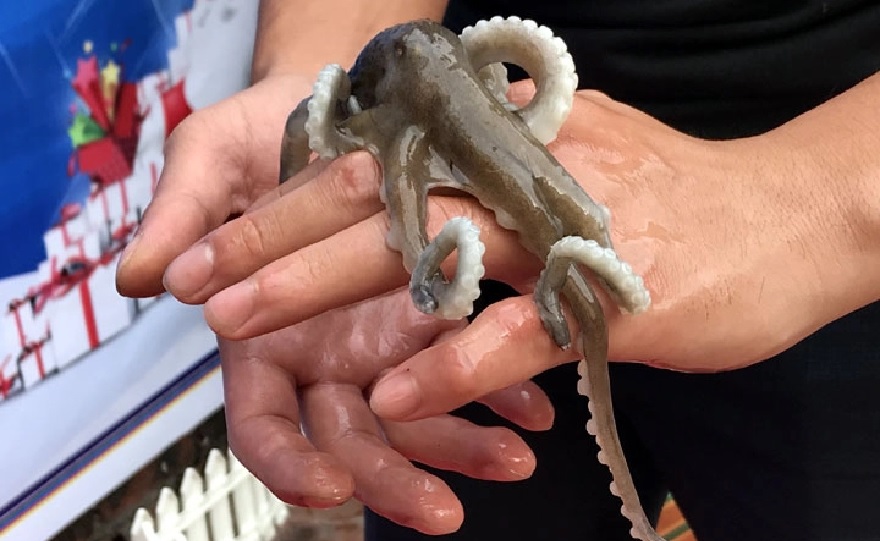
Ruoc lo, a famous specialty of Quang Ninh
Possessing a petite appearance—barely larger than a thumb with a round head like a guava—the larger ones have tentacles reaching over 20 centimeters, hence the name “long-legged octopus” to distinguish them from the short-legged variety. Because they often hide under the mud in mangrove forests and coastal tidal flats, living shyly near the mouths of their burrows, they are called “Ruoc lo” (hole-dwelling octopus).
To catch these long-legged octopuses, fishermen must use special techniques that require skill and experience. One common method is using a “bat quai” (eight-sided) trap or hunting them at night by shining lights into the small coastal holes. Locals call this “going for holes” or “spotlight hunting.” When hunting, fishermen carry lights and patiently scan each small hole. As soon as they spot the octopus, they must grab it quickly, or it will vanish in an instant. Due to their habit of living in burrows and their small size, catching them is much more difficult than other types of seafood.
Ruoc lo are dioecious, meaning there are distinct male and female individuals. There are two ways to distinguish them:
- Observe the tentacles: The male has one tentacle (the third one on the right) modified into a mating organ, which is shorter and spoon-shaped. Therefore, when looking at the tentacles, you will notice that the male’s tentacles are not as uniform as the female’s.
- Check the head: During the breeding season, the female carries eggs in her head. When you press gently on the head, you will see the white color of the eggs, whereas the male does not have this feature.
How to choose when buying Ruoc lo
The peak season for Ruoc lo is from the 7th to the 11th lunar month. In the 7th month, they are still small, sweet, and tender; around the 9th and 10th months, they are at their fattest and most succulent. The females, in particular, are full of eggs—locals call these “sticky rice octopus” (ruoc com xoi)—and are considered tastier than the males. True gourmets often enjoy them as a “specialty dish,” pairing them exclusively with rice wine.
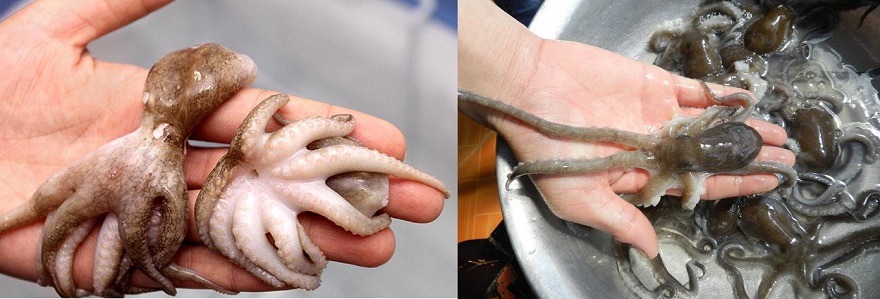
Long-legged octopus (right) is tastier and more nutritious than short-legged octopus (left)
Additionally, when buying, it is important to distinguish between long-legged and short-legged octopus. Short-legged octopus is mushy and not as sweet or fragrant as the long-legged variety. To choose a good one, look for uniform tentacles and avoid pale-colored ones, which indicate they have been sitting for a long time and are no longer fresh. Choose those that are deep black and glossy; if they feel slimy to the touch, they are fresh and delicious. The price of Ruoc lo is quite high and varies depending on the season, size, etc. Currently in Quang Ninh, they are sold at:
- Retail price: Ranges from 700,000 – 800,000 VND/kg (6-10 pieces) at restaurants and seafood markets.
- Wholesale price: Approximately 600,000 VND/kg (6-10 pieces).
Delicious dishes from Ruoc lo
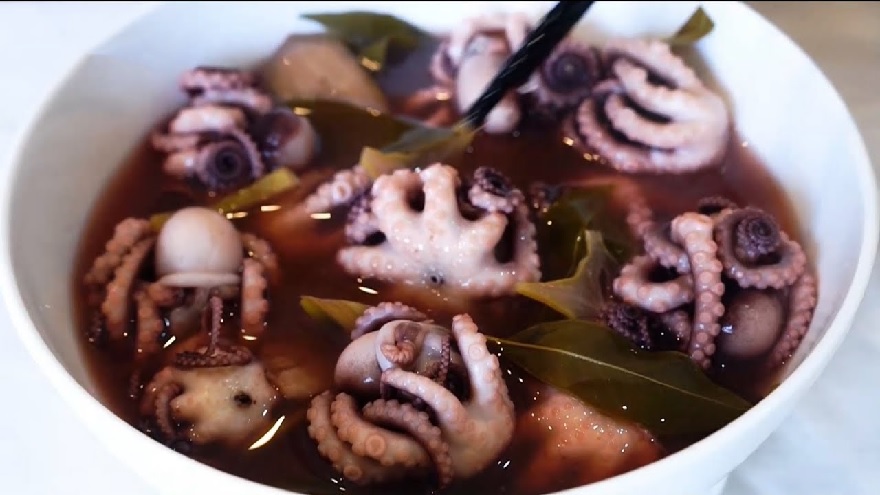
Boiled Ruoc lo with guava leaves is a traditional Quang Ninh dish
After rubbing with salt, put the miniature octopus into a pot to boil; you can boil them with sour starfruit, guava leaves, or lemongrass. Lemongrass adds fragrance, tenderizes, and removes fishy odors. In the past, people used mangrove or *sú* leaves, but later switched to guava leaves because they are easy to find and their astringency firms up and makes the baby octopus crunchy. Any of these methods pairs wonderfully with the *ruốc lỗ*.
One thing to keep in mind when boiling *ruốc lỗ* is not to cook them for too long, just until they are newly cooked through, then remove them immediately. When done, they turn pink, and their tentacles curl around the chest into tiny rings, forming a unique flower-like shape. Once cooked, take them out onto a plate and enjoy them hot with starfruit slices, green banana, and herbs. The special dipping sauce—shrimp paste mixed with sugar, chili, and lime—makes the dish exceptionally crunchy and sweet. Savoring *ruốc lỗ* while sipping a bit of wine is a one-of-a-kind culinary experience in Quang Ninh. Additionally, *ruốc lỗ* can be prepared into other dishes such as: stir-fried *ruốc* with lemongrass and chili, boiled *ruốc* with leaves, and more.
A Food Lover’s Guide to Experiencing Quang Ninh’s Miniature Octopus
After understanding the characteristics and culinary value of Quang Ninh’s baby octopus, many travelers will surely want to taste this famous specialty for themselves. Below are some suggestions for locations and important tips to ensure you have a complete and authentic gastronomic journey in the mining region.
To enjoy Quang Ninh’s *ruốc*, you have a wide range of choices, from rustic local eateries to upscale restaurants. In Ha Long City, several familiar spots frequented by locals and tourists alike include the Fishing Village culinary restaurant located at No. 1 Le Thanh Tong Street, Hong Gai Ward, or the seafood eateries gathered near the Bach Dang Theater area. A bit further away, the Hoanh Bo area (now merged into Ha Long City) is also famous for eateries serving fresh *ruốc lỗ*, including familiar names among locals such as “Chị Mỳ” restaurant. Besides, if you want to handpick the freshest baby octopuses and experience cooking them to your liking, the major seafood markets in Quang Ninh are must-visit destinations. Here, you can not only buy fresh *ruốc* but also have the market stalls prepare them for you on the spot.
For travelers seeking a more upscale dining experience, enjoying *ruốc* aboard luxury cruises exploring Ha Long Bay is an extremely exciting option. Nowadays, many high-end cruises have started featuring local specialties, including the baby octopus, in their menus to enrich the travel experience. A prime and prominent example is the 5-star Sea Octopus cruise. True to its name, the Sea Octopus specially honors the baby octopus (*ruốc lỗ*) as a culinary essence of the Bay. This cruise leaves a strong impression by serving up to five different dishes made from *ruốc*, combining diverse culinary styles from Japan, South Korea, and traditional Vietnam, all crafted by a team of professional chefs. Savoring this famous specialty in a luxurious setting amidst the majestic landscape of the natural world heritage site will undoubtedly be an unforgettable memory.
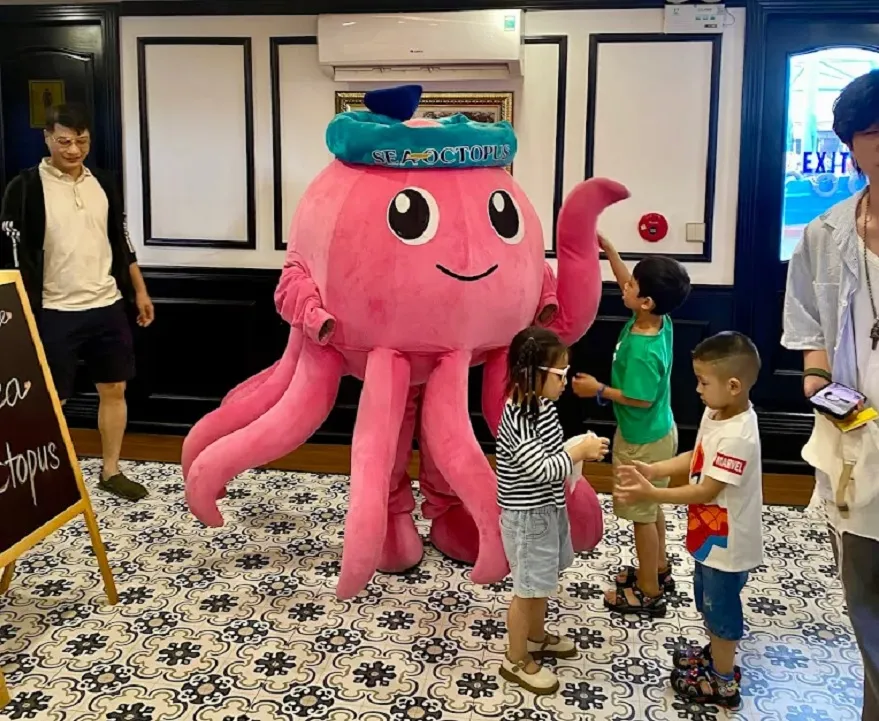
The baby octopus is the symbol of the Sea Octopus cruise