What is a border pass?
Border passes in Vietnam have a long history, deeply rooted in the ancient need for trade and movement between residents on both sides of the border. Previously, these documents were typically issued by local authorities with inconsistent regulations. The standardization of border passes began in 1991 with the Provisional Agreement on the Border Management Regulations between Vietnam and China, which laid the legal foundation for cross-border travel between the two countries. Subsequently, legal documents such as the 2019 Law on Entry and Exit of Vietnamese Citizens, Decree 76/2020/NĐ-CP, and Decree 67/2024/NĐ-CP have continued to refine the regulations regarding eligibility and application procedures for border passes.
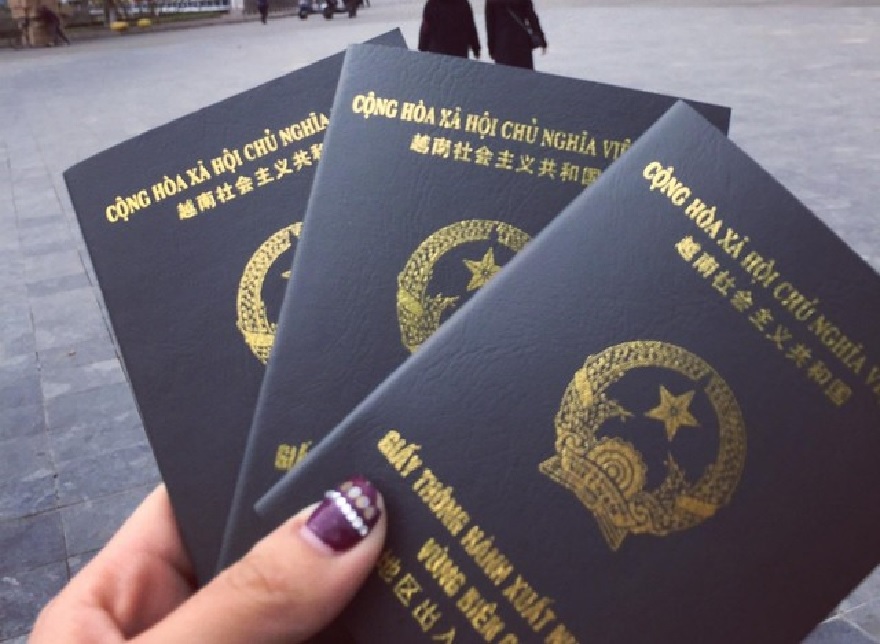
A border pass is an entry/exit document issued by the Immigration Department of the provincial Police or the Police of districts, towns, or cities adjacent to the border to Vietnamese citizens residing in border areas. This document allows them to travel to the neighboring country in accordance with international treaties without the need for a visa. It acts as a “mini-passport,” enabling border residents to conveniently visit relatives, engage in small-scale trade, or participate in labor cooperation.
Under current regulations, border passes have a short validity period, typically 6 – 12 months, are non-renewable, and can be used multiple times within the designated border zones. Travel range is generally limited to the areas specified by the two countries. The primary recipients are Vietnamese citizens permanently residing in communes, wards, and towns bordering China, Laos, and Cambodia.
Regulations for the Quang Ninh – China border pass
Based on the agreement between the People’s Committee of Quang Ninh Province and the People’s Government of the Guangxi Zhuang Autonomous Region (China), and the exchange of letters from the Commerce and Port Management Bureau of Dongxing City (China), as of December 11, 2023, travelers using passports and border travel passes are officially permitted to clear customs through the Mong Cai International Border Gate (Bac Luan II area).
1. Vietnamese citizens permanently residing in communes, wards, and towns within Mong Cai City, Quang Ninh Province:
- Must have had permanent residency in the locality for at least 01 year.
- Must have a legitimate reason to enter China (visiting relatives, small-scale trade, or daily labor cooperation).
- Must not be subject to an exit ban under Vietnamese law.
2. Officials and civil servants working at state agencies headquartered in districts, towns, and cities within Quang Ninh Province:
- Must be assigned to work in the adjacent Chinese border region (Dongxing City, Guangxi Province).
- Must possess official documentation of the work assignment issued by the head of the agency.
Note:
- The border pass is only valid within Dongxing City, Guangxi Province, China, and travel is restricted to within 15km of the Mong Cai border gate (This information is subject to change, so please contact the Quang Ninh Immigration Department for detailed information).
- The border pass is valid for 01 month, allows for 01 entry, and is valid for a 01-day stay.
See more: Dongxing China Tour

BORDER PASS DOCUMENTATION PROCEDURES:
– Adults:
- Portrait photo with a white background, eyes looking straight ahead, no glasses, and ears clearly visible.
- Photo of both sides of the Citizen ID card (CCCD).
– Children:
- Confirmation using form TK8 from the ward/commune police chief where the child resides, with a stamp across the photo and the declaration.
- Copy of birth certificate or notarized photocopy within validity.
- 4×6 photo with a white background, eyes looking straight ahead, no glasses, and ears clearly visible.
- Letter of authorization if not traveling with parents.
Note: The above documents must be submitted at least 3 working days in advance (excluding Saturdays, Sundays, and public holidays).