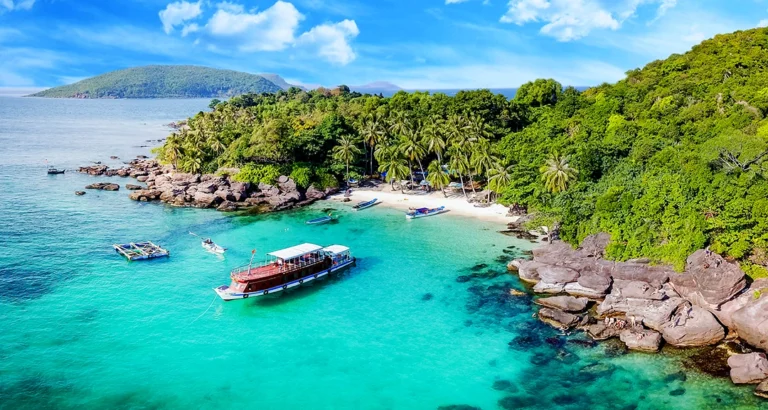
Tucked away amid the windswept Lang Biang Plateau, Tuyen Lam Lake rises as an aquatic masterpiece shaped by the interplay of time, geology, and human ingenuity. Perched at an elevation of roughly 1,000 meters above sea level, about seven kilometers south of Da Lat city center, this landmark enjoys a privileged geographic setting where a mild temperate climate meets expansive primeval pine forests. Viewed from above, the lake unfolds like a vast ink-wash landscape painting, with dozens of lush green peninsulas jutting out into mirror-still waters framed by the rolling peaks of the majestic Phuong Hoang (Phoenix) mountain range—forming an auspicious “water-gathering, mountain-embracing” geomantic sanctuary prized in East Asian tradition.
Long before becoming one of the grandest national scenic areas in Vietnam’s City of Mist, this valley sustained generations of indigenous Mon-Khmer-speaking peoples, including the Chil, Lat, and K’Ho communities. Beneath the ancient pines of the Tia Stream valley, local cultural heritage quietly flowed down through the centuries in oral tales of village elders, terraced upland rice fields, and the resonant cadence of gongs during seasonal festivals. It was not until the late 19th century—when Dr. Alexandre Yersin explored the plateau in 1893 and Governor-General Paul Doumer envisioned Da Lat as a highland resort town—that this basin formally entered French topographical surveys.
The true historical origin of the reservoir and its name, however, dates to a pivotal chapter in the mid-20th century. In 1967, recognizing the region’s water potential for key agricultural zones across the southern plateau, the Directorate of Agricultural Engineering and Irrigation of the Republic of Vietnam collaborated with specialists to draft a project damming the Tia Stream (also known as Tam Bo Stream). In 1971, under the direct supervision of accomplished hydraulic engineer Nguyen Dinh, construction officially broke ground under the original name Tia Lake (Lac des Tias). Following years of historical change, in 1987 the authorities and residents of Lam Dong Province restored and expanded the spillway system, completing the hydraulic infrastructure and officially christening it Tuyen Lam Lake.
The name “Tuyen Lam” carries far more than administrative meaning—it evokes a poetic cultural image of streams (tuyen) and forests (lam) intertwining, where the crystal-clear waters of Tia Stream meet and nourish an eternal old-growth woodland. Geologically, the basin lies along an ancient tectonic fault zone that produced fertile ferralsol soils over weathered granite bedrock, supporting rich biodiversity ranging from three-needle pines to rare medicinal herbs. Heritage scholars and contemporary travel writers alike celebrate Tuyen Lam Lake not merely as an engineering milestone in modern Vietnamese waterworks, but as a living natural and cultural treasure preserving the sacred spirit of Lam Dong’s legendary highlands.
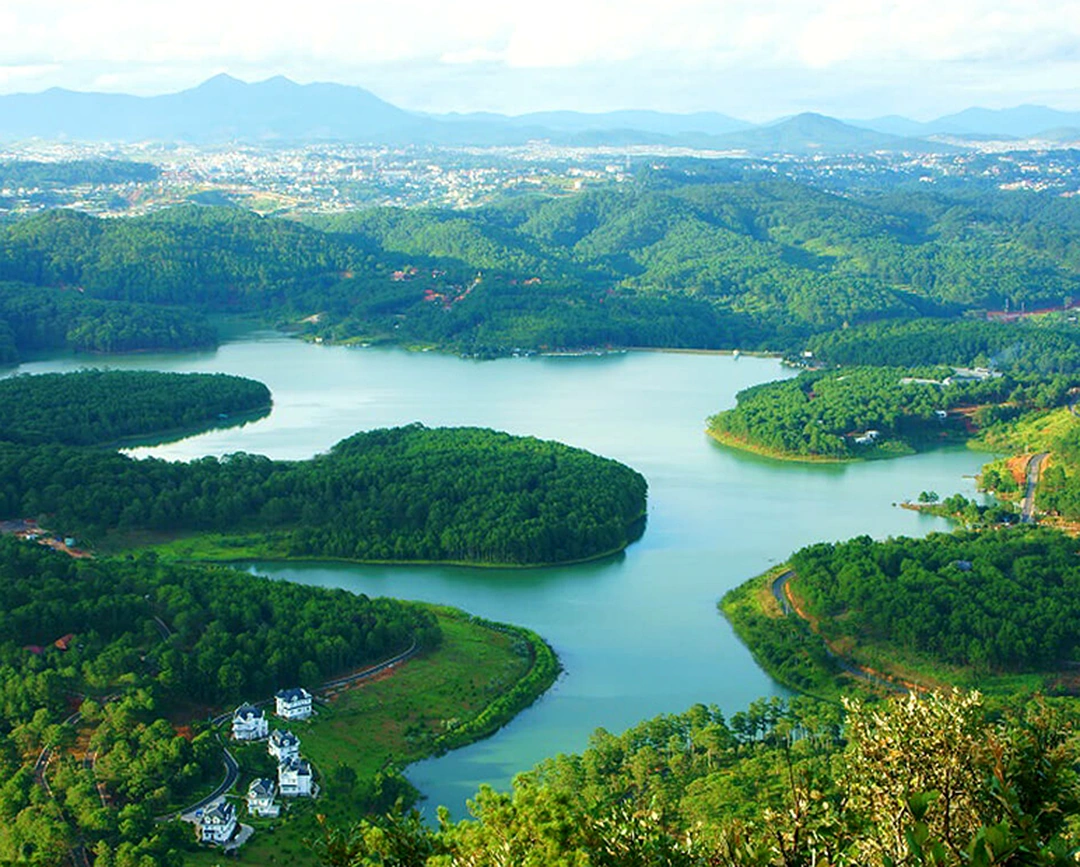
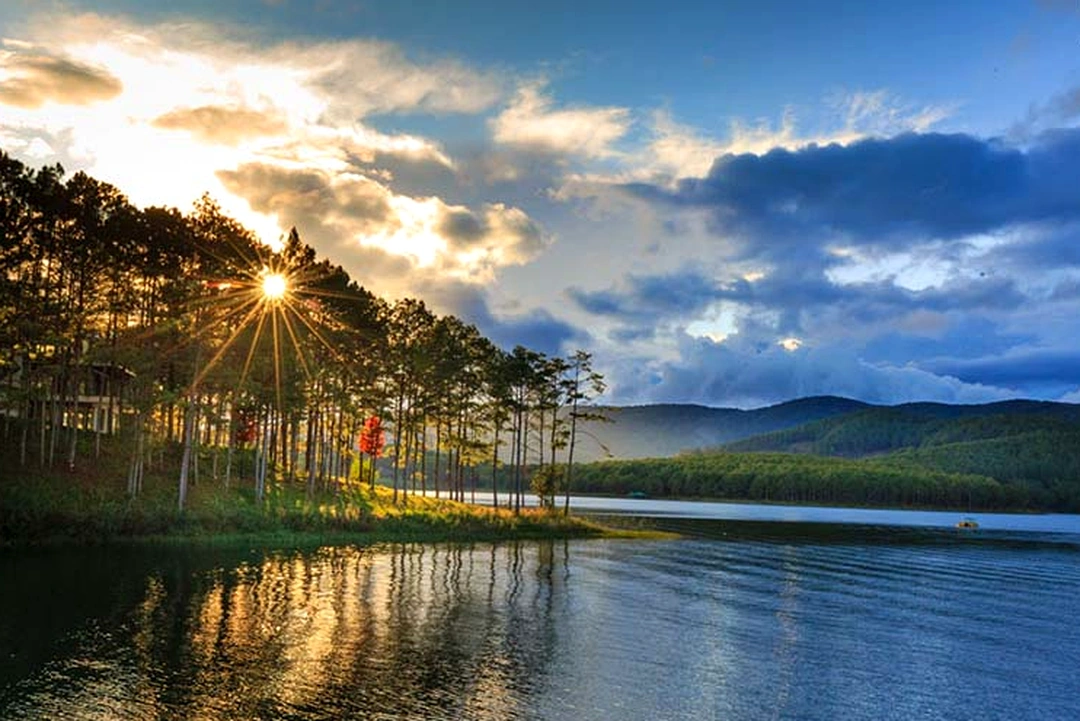
Nestled beneath whispering stands of old-growth pines, Tuyen Lam Lake appears like an immense landscape painting composed in seamless harmony by nature and human craftsmanship. Its distinctive topography features scores of small wooded islets rising from glassy waters, encircled by deep valleys and gently rounded hills. From high above, the lake resembles a giant jade ribbon curving along the foot of Mount Phung Hoang, creating a vista that is at once grand and steeped in the quiet, contemplative serenity characteristic of the Lam Vien Plateau. This union of primeval pine woodland, expansive water, and crisp year-round mountain air makes it an unrivaled scenic gem of Da Lat.
Alongside its natural splendor, the hydraulic architecture of Tuyen Lam Lake stands as a testament to visionary landscape planning. Its spillways and stone embankments were crafted with understated elegance, regulating water levels efficiently while blending gracefully into the wild surroundings. Smoothly paved lakeside roads wind beneath canopies of red-barked pines, offering poetic scenic drives. Here, built infrastructure and nature coexist as one—free of jarring concrete intrusion, instead honoring the original contours of the historic Tia Stream valley and preserving the untamed character of the highlands.
To capture the true soul of this highland masterpiece, seasoned photographers consistently highlight two premier vantage points. The first unmissable, show-stopping photo spot is the spillway area at dawn. While delicate ribbons of mist still hover above the surface, the first rays of morning sunlight slant through the pine groves to produce ethereal optical effects, piercing the haze with golden beams that paint a dreamlike scene. The ideal window to shoot here is between 5:30 AM and 6:30 AM, when the lake lies flat as a giant mirror reflecting the shifting pastel hues of the sky.
The second standout vantage point sits along the slender promontories jutting into the lake near Truc Lam Zen Monastery. Elevated above the shoreline, these headlands allow wide-angle lenses to frame the sweeping expanse of water and forested islets in a single panoramic composition. Sunset (from 5:00 PM to 5:45 PM) is the golden hour for this location, as the evening sky shifts from fiery orange to deep twilight violet, shimmering across the ripples while the dark silhouettes of towering pines lend dramatic emotional depth to every shot. The profound stillness and harmonious meeting of cloud, mountain, and water leave a lasting impression on every traveler.
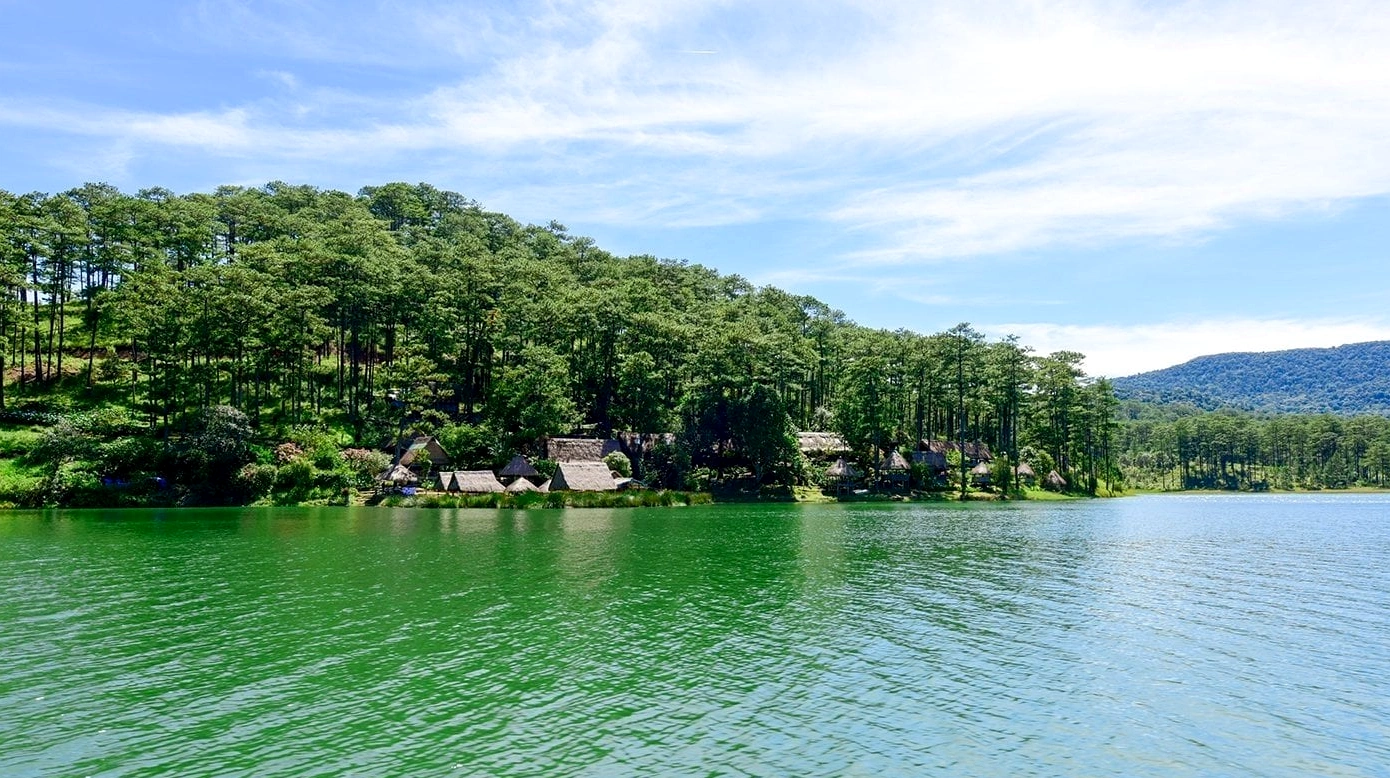
Visiting Tuyen Lam Lake today allows travelers not only to connect with a layered historical landmark, but also to immerse themselves in deeply restorative outdoor experiences. From the very first moments of sunrise, the glassy surface reflecting the clouds drifting over Lang Biang is enough to stir any traveler’s heart. Wisps of morning mist clinging to tall pine crowns conjure an enchanting atmosphere that awakens every sense and whisks you far away from the noise and rush of everyday city life.
To experience the lake’s untamed beauty in full, cruising by boat deep into the upper Tia Stream valley is an essential highlight. Gliding quietly across clear turquoise waters in a small boat, you feel as though you have entered a pristine wilderness where emerald peninsulas curve around dense pine woods. Wrapped in peaceful silence broken only by rustling mountain breezes and crisp birdsong, the journey reveals nature’s artistry in ever greater detail the farther upstream you go.
Beyond scenic relaxation, Tuyen Lam Lake also beckons adventure seekers and those drawn to spiritual reflection. Winding forest trails climbing steep pine-covered hills invite hikers and trekkers to explore one of the plateau’s richest ecosystems. Reaching a hilltop lookout to gaze down at the lake winding like a silk ribbon through endless forest fills you with awe at nature’s grandeur. Just nearby, the tranquil presence of Truc Lam Zen Monastery—partially veiled in mountain mist—offers a serene spiritual sanctuary where visitors can quiet their minds and find peace in every breath.
Rounding out this memorable journey are authentic local culinary experiences brimming with highland warmth. Gathering around a glowing hearth in the crisp mountain air, visitors can savor regional specialties infused with forest flavors—such as aromatic hill chicken grilled alongside bamboo-tube sticky rice (com lam), rich braised stream fish in clay pots, and warming sips of traditional fermented jar wine (ruou can) shared with hospitable K’Ho locals. Every flavor mingles with ancient stories of this primeval land, leaving visitors with unforgettable memories of a Tuyen Lam Lake both storied in history and captivating in the present.
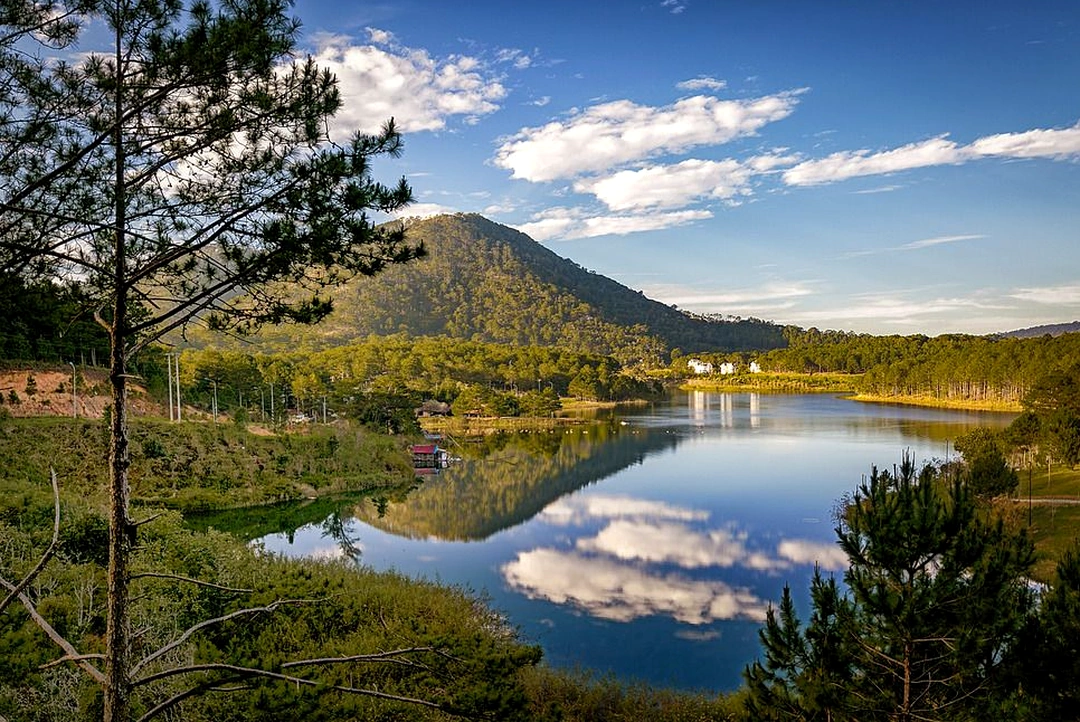
Tuyen Lam Lake welcomes visitors freely every day of the week with no fixed opening or closing hours. However, to ensure safety during water activities and enjoy the finest scenery, the best times of day to visit are early morning, when mist still lingers over the lake, or late afternoon as sunset paints the sky. Best of all, general admission to the scenic area is completely free for independent travelers, making it effortless to explore and admire its natural landscapes.
To reach Tuyen Lam Lake from downtown Da Lat, travelers can go by motorbike, private car, or taxi along a roughly seven-kilometer route heading south. The most direct and convenient itinerary starts from Da Lat Market, following Ho Tung Mau Street and turning onto Ba Thang Hai Street toward Prenn Pass. Upon reaching the Datanla intersection, turn right following the signs for Truc Lam Zen Monastery to enter the lake basin. Because the terrain features winding mountain passes and narrow lakeside roads, steady driving skills and adherence to traffic safety rules are essential.
When visiting Truc Lam Zen Monastery on the lakeshore, please wear modest, respectful attire appropriate for a sacred Buddhist sanctuary. For outdoor adventures such as kayaking, lakeside camping, or trekking through the surrounding primeval pine forests, opt for comfortable, flexible clothing and athletic shoes with good traction to navigate sloped trails and hilly terrain safely.
The best time of year to plan a trip to Tuyen Lam Lake is during the dry season, which runs from November through April of the following year. During these months, Da Lat enjoys minimal rainfall, clear blue skies, and gentle golden sunshine—ideal conditions for photography, outdoor excursions, and experiencing the full mountain-and-water splendor of this national scenic treasure.
To enjoy a seamless getaway and experience the full beauty of Tuyen Lam Lake without worrying about arranging transportation, admission logistics, or itineraries, travelers can choose VDS Travel’s premium all-inclusive Lam Dong tour packages. Each itinerary is thoughtfully timed to put you at top photo spots when the scenery is at its most radiant, accompanied by knowledgeable local guides well-versed in regional culture alongside top-tier hotel accommodations and dining standards.