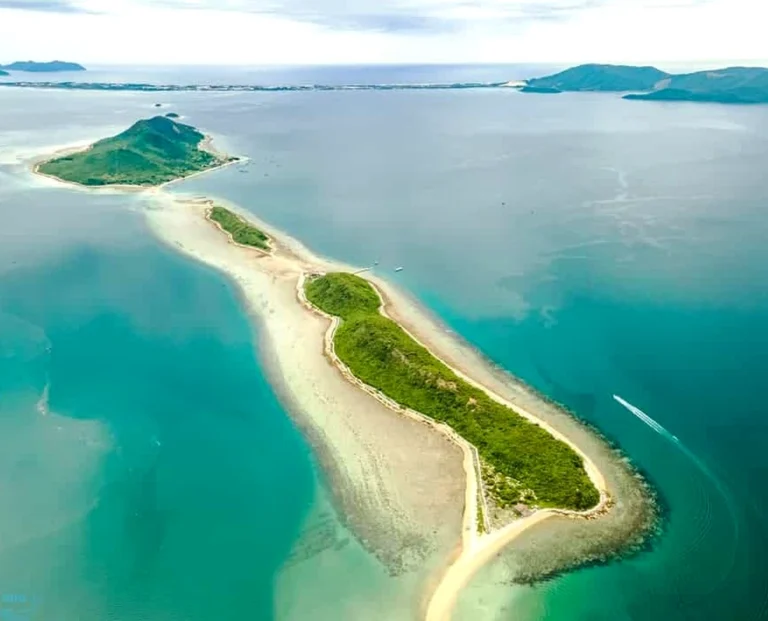
Located at the southernmost tip of the legendary Nha Trang Bay, the Nha Trang Institute of Oceanography stands as a proud bastion of knowledge amidst the land and sky of Khanh Hoa. Geographically, the complex occupies a distinctive position at approximately 12°12’45” North latitude and 109°12’18” East longitude. In terms of traditional feng shui terrain, the Cau Da area in Vinh Nguyen Ward boasts a rare, picturesque landscape where the high peaks of the Truong Son mountain range plunge directly to the water’s edge, forming a sheltered bay that connects straight to the major currents of the East Sea. This topography not only delivers breathtaking scenic value but also harbors an invaluable geological advantage: just a few nautical miles offshore lies a deep ocean trench with a sudden drop in depth, bringing together a rich and complex tropical marine ecosystem and transforming the site into an unprecedented natural laboratory on the Indochina Peninsula during the modern era.
Stepping back in time to the early 20th century under the Nguyen feudal dynasty—specifically during the reign of Emperor Khai Dinh—the Cau Da area belonged to Chi Xuong canton, Vinh Xuong district, Ninh Hoa prefecture, Khanh Hoa province. Amidst a tranquil fishing village steeped in the essence of Vietnam’s agarwood homeland, a historic milestone of Western empirical science unfolded. On September 14, 1922, the Governor-General of Indochina officially signed a decree establishing the Indochina Oceanographic Station, the predecessor of today’s Institute of Oceanography. The birth of this institution was tied not to traditional temples or royal court rituals, but rather marked the dawn of intensive marine scientific research in Southeast Asia. It was spearheaded by Dr. of Biology Armand Krempf, its first director, who dedicated himself to surveying the coastline from the Gulf of Tonkin to the Gulf of Thailand before making a historic decision: choosing Cau Da as the headquarters for ocean research.
Through the vicissitudes of history—evolving from its original name, Station Maritime de Cauda, to bearing the title of the Indochina Institute of Oceanography in 1930—this site has stood not only as a symbol of modern artistic architecture and scientific history, but also as a witness to a proud generational torch-passing. Over the decades, as the nation emerged from the smoke and fire of war to achieve independence and reunification, this scientific home beside Nha Trang Bay continued to welcome and nurture towering figures of national science, including Professor Academician Nguyen Van Chien, Prof. Dr. Sc. Tran Duc Ba, Prof. Dr. Hoang Quoc Mao, and many other illustrious generations of scholars. They are the ones who ignited, safeguarded, and elevated the intellectual heritage of Vietnam’s seas and islands.
Thanks to its harmonious blend of historic French architecture, majestic natural terrain, and profound scientific archives, the Ministry of Culture and Information (now the Ministry of Culture, Sports and Tourism) officially designated the Nha Trang Institute of Oceanography as a National Historical and Cultural Relic on February 20, 1998, under Decision No. 05/1998/QĐ-BVTT. Through the lens of journalists and heritage conservation agencies alike, this institution is far more than a marine life museum housing tens of thousands of precious specimens—it is a unique cultural travel space where the modern past and scientific future converge, inviting all who cherish the sustainable values of the ocean to listen to the millennia-old breath of Khanh Hoa’s waves.
Viewed from above, the Nha Trang Institute of Oceanography sits on a rare, symbolic terrain where the sea and sky of South Central Vietnam merge into a majestic ink-wash painting. Positioned right on Cau Da Cape—adjacent to deep ocean trenches with distinct marine currents—the complex rises as a symbol of solemnity and tranquility beside the crashing waves. The surrounding landscape embraces the pristine yet poetic beauty of Nha Trang Bay, with naturally weathered rocky outcrops stretching out into the open sea and enveloping a campus shaded year-round by centuries-old trees.
Architecturally, the complex bears the unmistakable hallmark of the Indochinese style, seamlessly blending early 20th-century Western construction techniques with thoughtful adaptations to the tropical monsoon climate. The Institute’s main building stands out with its artistic ochre-yellow walls, time-weathered red tile roofs, and a series of tall, wide arched doorways designed to welcome the sweeping ocean breeze. Every molding, column corner, and sweeping corridor is meticulously crafted, exuding a timeless, refined elegance that has endured remarkably well over the decades. The harmonious interplay of stone, terracotta brick, and open, sea-facing spaces creates an architectural ensemble that evokes both romantic nostalgia and sturdy resilience against coastal winds and weather.
For travel enthusiasts and photographers, the Nha Trang Institute of Oceanography offers countless cinematic, picture-perfect angles. The first unmissable photo spot is the historic corridor lined with arched windows looking directly out toward the open sea. At dawn (between 5:30 AM and 6:30 AM), when the earliest rays of sunlight filter through the foliage and stream through the arched frames to cast magical golden beams, you will find the ideal setting for vintage, retro-inspired photography.
The second prized photo location lies along the Cau Da pier area and the waterfront promenade wrapping around the Institute’s grounds. The best time to capture shots here is at sunset (from 4:30 PM to 5:30 PM). During this golden hour, the Nha Trang sky transforms into brilliant shades of pinkish-orange, shimmering across the calm water while framing the historic architecture of the Institute behind it. The scene evokes a serene, almost otherworldly stillness, uniting the grandeur of island and coastal nature with the poetic nostalgia of a richly historic architectural landmark.
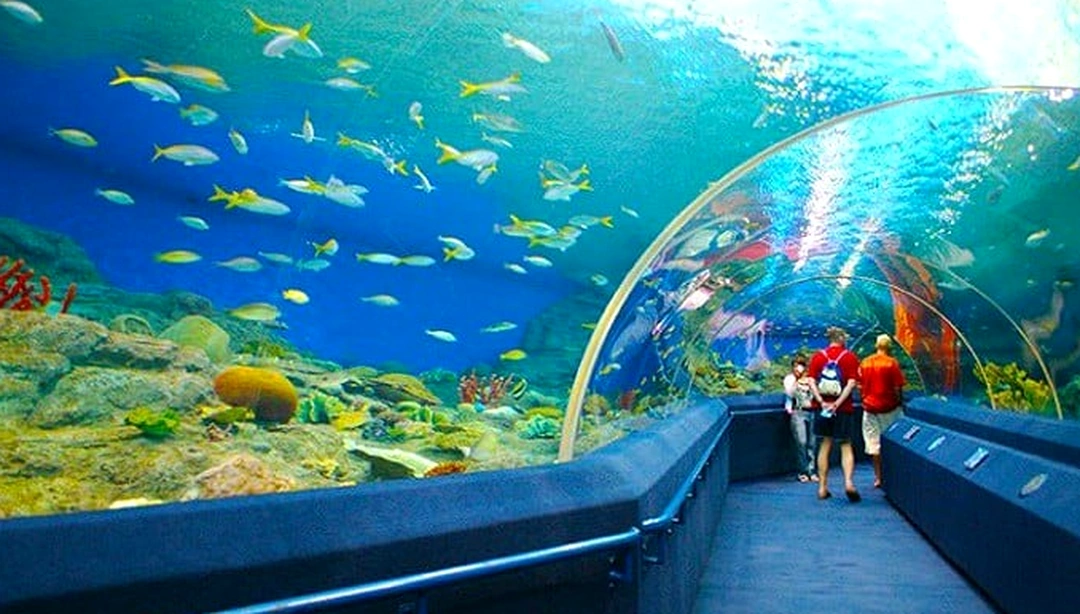
Stepping inside the Nha Trang Institute of Oceanography, visitors do not merely enter a quiet science museum—they embark on a multi-sensory experiential journey where modern history intersects with the vibrant pulse of the ocean. From your very first steps along the pathway leading into the heritage grounds, you are struck by the beauty of historic French architecture, with time-patinated yellow walls nestled beneath the cool canopy of lush, ancient trees. The tranquility of the grounds serves as a gentle counterpoint to the hustle and bustle of downtown Nha Trang, inviting travelers to slow down and listen to the soft whisper of the waves rolling off Cau Da.
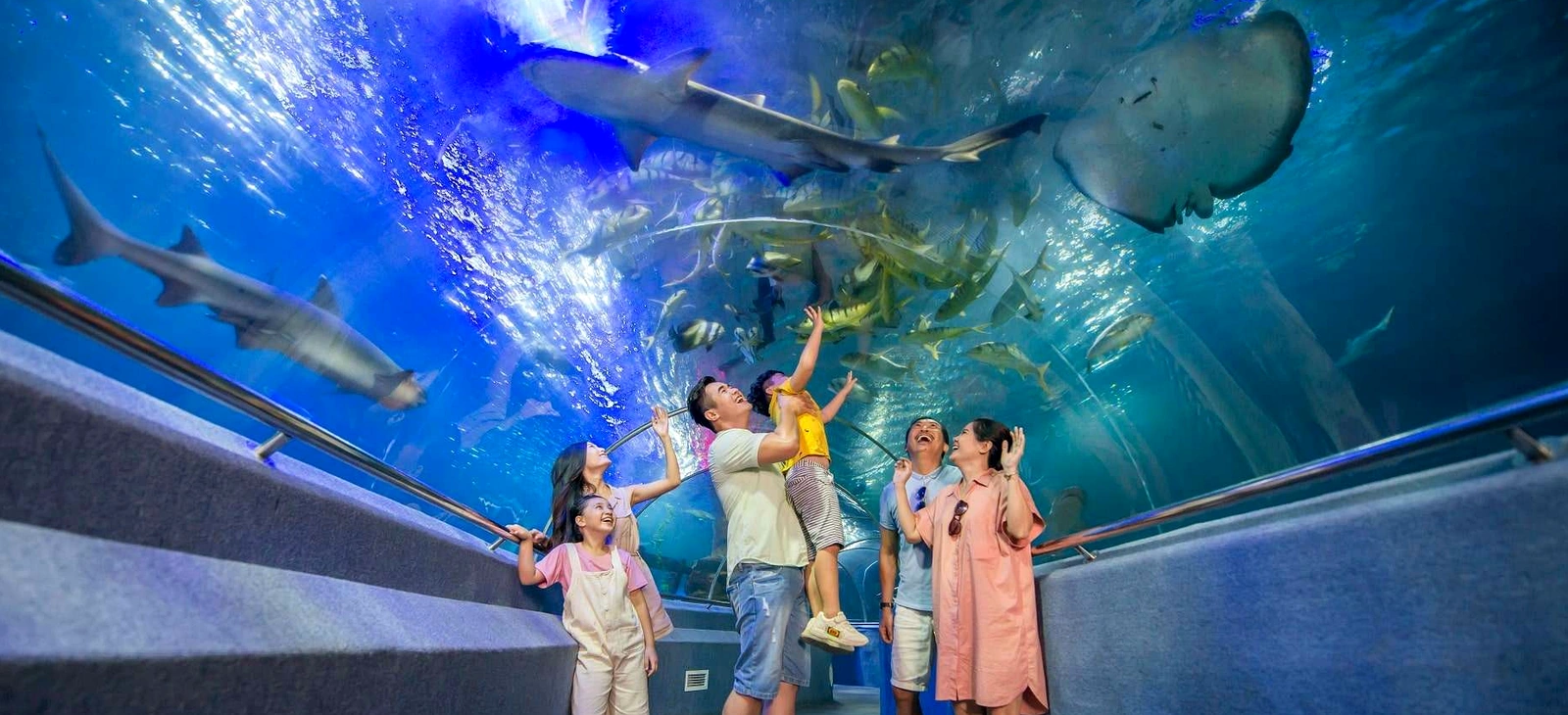
The hands-on experience here goes far beyond admiring thousands of precious marine specimens in glass tanks; it also connects you directly with the surrounding natural grandeur. After touring the indoor galleries, visitors can take a leisurely stroll up the hillside behind the Institute. From this vantage point, the entire panorama of Nha Trang Bay unfolds like a sprawling ink-wash painting, with tiny fishing boats bobbing on deep sapphire waters and distant islands rising like emerald jewels from the sea. It is a profoundly peaceful moment as the salty sea breeze sweeps past, inspiring a sense of freedom and quiet awe before the vastness of nature.
For travelers drawn to spiritual serenity, the area surrounding the Institute of Oceanography also conceals poetic cultural gems. Just a short distance away sit ancient pagodas nestled against the mountainside, where visitors can pause for quiet reflection, offer prayers, and experience the harmony between local traditions and the coastal landscape. The juxtaposition of the Institute’s Western architecture with Eastern spiritual sanctuaries creates a compelling visual and cultural dialogue that vividly reflects the depth of Khanh Hoa’s heritage.
No experiential journey here would be complete without sampling the celebrated local cuisine of the Cau Da – Vinh Nguyen area. Right outside the Institute’s gates, visitors are greeted by enticing aromas wafting from neighborhood eateries. Savoring a steaming bowl of fish cake noodle soup—featuring a naturally sweet broth simmered from fresh fish balanced with the gentle tang of tomatoes—or feasting on freshly caught seafood pulled straight from the waters just offshore allows you to truly taste the essence of the sea. Every dish offers not just culinary delight, but also an intimate glimpse into the warmth, sincerity, and coastal way of life of the local people.
As dusk settles and paints the horizon over the bay in soft shades of rose, visitors depart with an unforgettable sense of wonder—a deep admiration for the generations of scientists who laid the foundations of marine knowledge here, and a lasting appreciation for the natural and cultural treasures this region continues to preserve. The Nha Trang Institute of Oceanography is more than just a sightseeing stop; it is a place to experience, feel, and fall even more deeply in love with the historical and scientific legacy woven seamlessly into everyday coastal life.
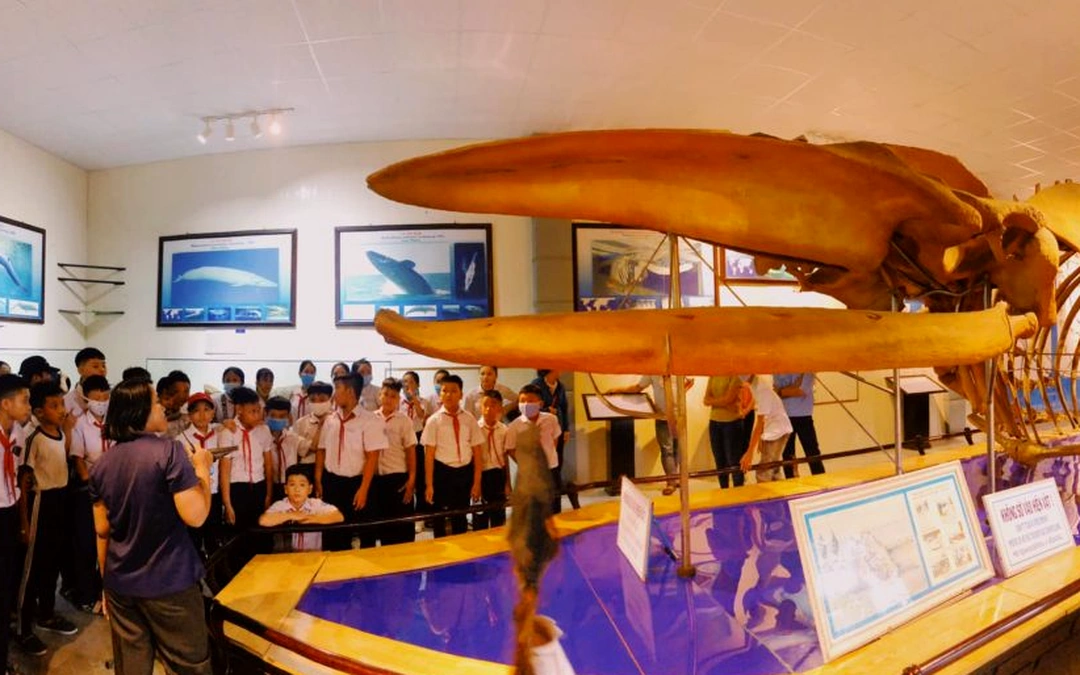
To ensure your journey into the mysterious underwater world at the Nha Trang Institute of Oceanography is smooth and rewarding, having practical details on opening hours, admission fees, and transportation is essential. The Institute welcomes visitors every day of the week, including public holidays and Tet (Lunar New Year), typically operating from 6:00 AM to 5:30 PM. These generous hours allow travelers to plan their itinerary at a relaxed pace without feeling rushed, especially if you wish to spend several hours exploring thousands of fascinating marine species.
In terms of cost, admission tickets are very reasonably priced, making the attraction accessible to everyone from students to families. Currently, standard adult admission is around 40,000 VND, with discounted or complimentary entry available for children below specified height thresholds, student groups, and national revolution contributors. It is a good idea to carry small-denomination cash so purchasing tickets at the counter goes smoothly and helps avoid queues during peak travel seasons.
Reaching the Institute of Oceanography from central Nha Trang is remarkably convenient thanks to the city’s well-connected transport network. Located at No. 1 Cau Da, Vinh Nguyen Ward, the complex sits roughly six to seven kilometers south of the central square. Visitors can rent a self-drive motorbike to enjoy a scenic ride along the picturesque Tran Phu coastal road at their own pace, or hop on public bus route No. 4, which stops right near the Institute’s main entrance. Alternatively, taxis and ride-hailing cars offer a comfortable, hassle-free option for families traveling with elderly relatives or young children.
When visiting an architectural landmark and historic research institution of such cultural depth, guests are encouraged to wear neat, respectful attire suited to both a dignified cultural space and terrain featuring numerous staircases and waterfront piers. Opt for sneakers or comfortable flat shoes so you can move easily between the preserved specimen halls and the live marine aquariums. Additionally, the best time of year to visit Nha Trang and the Institute of Oceanography runs from January to August on the lunar calendar, when dry, sunny weather and calm seas create ideal conditions for combining coastal exploration with scientific discovery.
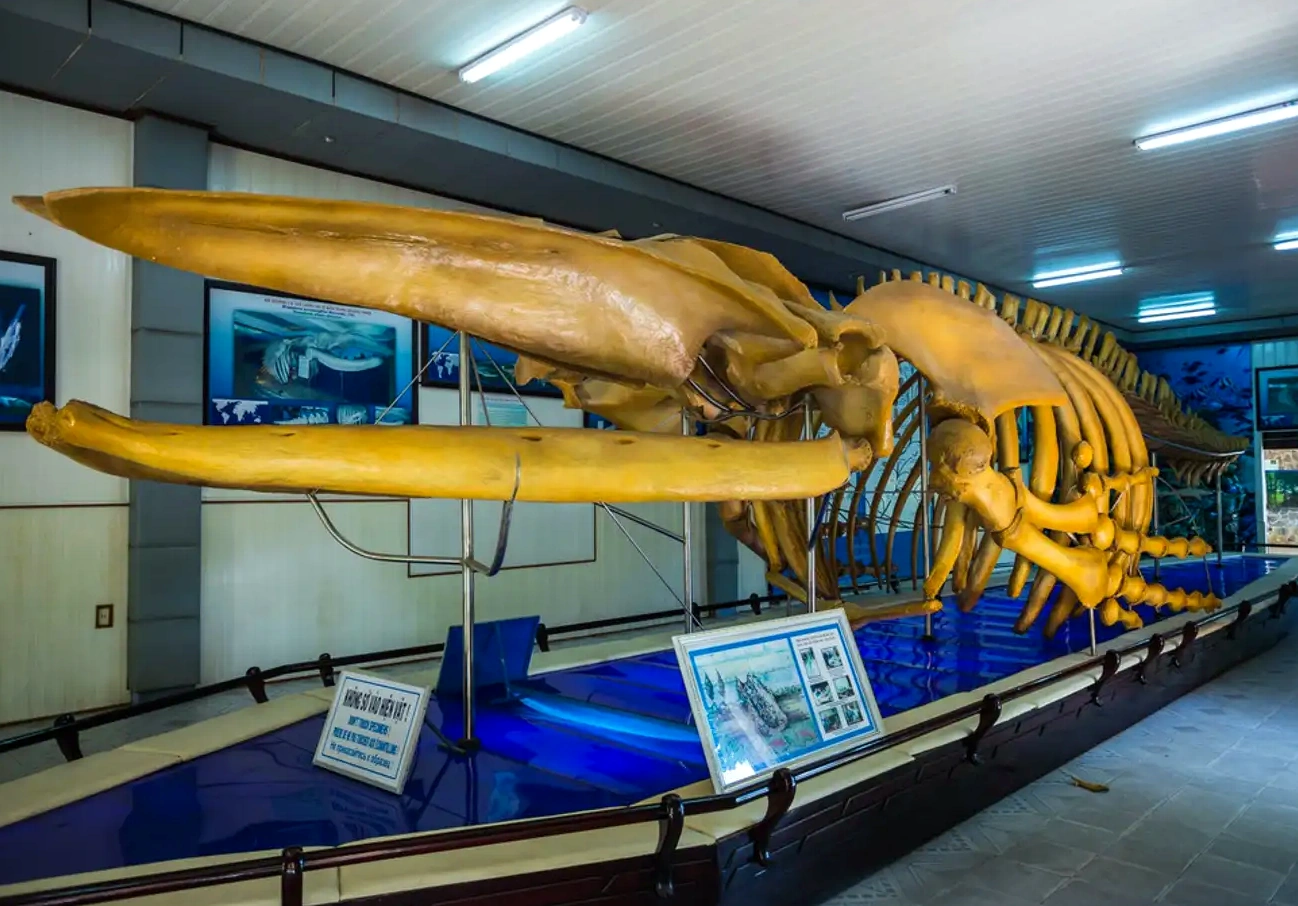
To enjoy a seamless vacation and fully experience the beauty of the Nha Trang Institute of Oceanography without having to worry about arranging transportation, booking admission tickets, or planning itineraries, travelers can choose premium all-inclusive Khanh Hoa tour packages from VDS Travel. Every itinerary is thoughtfully timed to capture check-in spots when the scenery is at its most vibrant, accompanied by knowledgeable local guides and top-tier hotel and dining standards.