When thinking of grand federal capitals built from scratch on the world map, people often picture Washington, D.C. in the United States or Brasília in Brazil, yet few truly grasp the cultural history and shifting tides behind the creation of Canberra—Australia’s capital, dignified in Chinese characters as 堪培拉. Tracing time back to the primordial era before urban planning blueprints ever existed, this land was the ancestral sanctuary and home for millennia to the Indigenous Ngunnawal people. In their poetic native tongue, the name “Nganbirra” was passed down through generations, carrying the sacred meaning of “a meeting place.” It was a space where Aboriginal Australians gathered during seasons of festivals, ceremonies, and trade, binding humanity to Mother Nature through the rhythms of sky and soil. However, the destiny of this serene land turned a completely new page when European colonization arrived and the political structure of the Southern Hemisphere continent entered an era of national institutional formation.
The birth of Canberra as a purpose-built capital was no mere coincidence, but rather the outcome of fierce political power struggles between states during the early federation of Australia. In 1901, when the Commonwealth of Australia was officially established through the union of colonies, the question of where to locate the capital ignited an uncompromising rivalry between the two economic and political heavyweights of the time: New South Wales and Victoria. Both Sydney and Melbourne coveted becoming the supreme seat of power for the fledgling nation. To resolve this thorny dilemma, lawmakers turned to a historic compromise enshrined in Section 125 of the Australian Constitution. Under this provision, the new capital had to be built within the territory of New South Wales yet lie at least one hundred miles from Sydney, while Melbourne would serve as the temporary seat of government during the transition period. Following rigorous geographical surveys, a highland valley boasting a temperate climate and ringed by hills was chosen as the cradle for the future administrative heart.
The turning point that shaped Canberra’s architectural identity and planning philosophy is tied to extraordinary visionaries ahead of their time. Prominent among them was the Minister for Home Affairs, King O’Malley—a shrewd politician who resolutely championed and enforced a perpetual leasehold land tenure system. This philosophy aimed to prevent real estate speculation, ensuring the capital’s urban landscape remained owned by the people and served long-term public interests. To bring that vision to life, an international design competition was launched in 1911, attracting hundreds of entries from around the globe. Ultimately, the revolutionary design by talented American architect Walter Burley Griffin surpassed all rivals to claim top honors. His master plan relied on a system of concentric and angular geometric axes, artfully weaving the valley’s natural topography into a coherent urban fabric. Behind Walter’s resounding success stood none other than his wife and devoted partner—architect Marion Mahony Griffin, whose masterful artistic talent translated abstract spatial philosophies into vivid, poetic visual renderings.
The passage of time records golden milestones in turning a wilderness dream into a national nerve center. On March 12, 1913, a solemn historic ceremony took place: the naming and laying of the foundation stones for the new capital, officially introducing Canberra to the international stage. Even so, construction faced considerable setbacks due to two World Wars and the Great Depression. It was not until 1927 that the Provisional Parliament House was officially opened, marking the formal relocation of the capital from Melbourne to Canberra and transforming it into the functioning hub of the federal government. Over decades of evolution amidst shifting tides, Canberra’s political and social stature continued to rise. On March 9, 1988, a deeply symbolic event unfolded when Queen Elizabeth II personally attended the ribbon-cutting ceremony to declare the contemporary Parliament House open. Nestled into the heart of Capital Hill, this architectural masterpiece stands not only as a pinnacle of 20th-century modernism but also as a testament to Australia’s endurance, independence, and prosperity—completing its remarkable metamorphosis from an Indigenous “meeting place” into the beating heart of a modern nation.
Quietly nestled in a hilly basin on the western foothills of the Great Dividing Range in southeastern Australia, at an elevation of roughly 580 meters above sea level, Canberra emerges as a planning marvel conceived by brilliant early-20th-century urbanists. Viewed through the lens of human geography paired with Eastern spatial wisdom, the site commands an exceptionally auspicious, rare feng shui setting. To the southwest, the city is sheltered by the majestic Brindabella Ranges, rising steadfastly like a natural screen acting as the Black Tortoise anchor, bringing stability and longevity to the expanse below. Meanwhile, to the east and north, Mount Majura and Mount Ainslie rise in harmonious symmetry like a crouching tiger and coiling dragon, serving as the Azure Dragon and White Tiger flanking left and right to nurture converging vital energy. This classic “mountains behind, water in front” configuration became complete when architect Walter Burley Griffin dammed the Molonglo River to create the expansive Lake Burley Griffin right at the center—acting as a vast water courtyard that moderates the microclimate and draws prosperous energy across the entire capital.
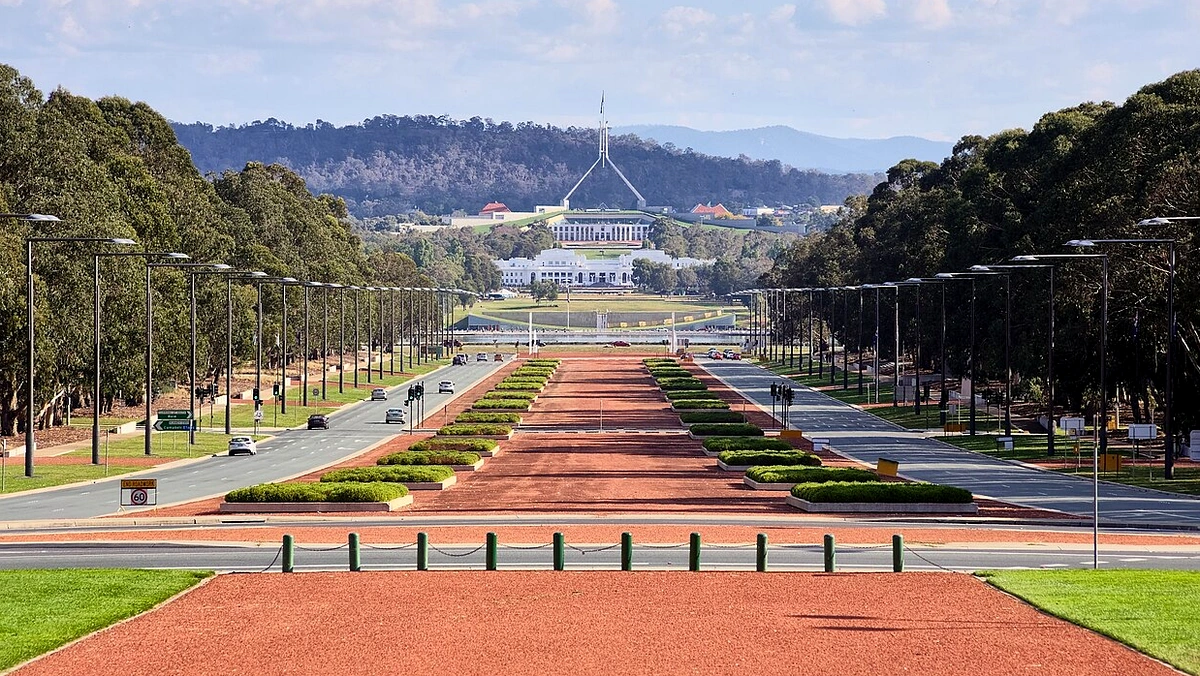
Canberra’s engineering layout and spatial geometry were deeply influenced by the City Beautiful movement prevalent at the time, seamlessly blending classical symmetry with naturalistic landscape artistry. The city’s primary spatial axis is defined by a highly symbolic straight line starting from the summit of Mount Ainslie in the north, stretching across the open expanse of the lake, passing directly through Parliament House, and terminating at Red Hill in the south. This line intersects perpendicularly with the east-west water axis, forming a crisp geometric coordinate grid that divides the city into distinct functional precincts while preserving visual continuity. The most intricate and refined engineering highlight of this master plan is the establishment of the “Parliamentary Triangle,” a geometric structure whose three vertices are anchored by Capital Hill, the Defence administrative precinct, and the central business district. This arrangement not only embodies the transparent separation of powers within the federal political system but also frames breathtaking panoramic vistas from any elevated vantage point down across the tranquil waters of the artificial lake.
Beneath that rigorous geometric exterior lies an infrastructure system engineered down to the finest detail to respect and harmonize with the native ecosystem. Rather than bulldozing natural hills to impose monotonous gridiron blocks like many other world capitals, Walter Burley Griffin and his wife Marion Mahony Griffin deftly followed the contour lines of the undulating terrain to lay out boulevards, ring roads, and garden suburbs. Native flora—from dark-barked eucalyptus groves to temperate grassland meadows—was preserved intact and woven into urban parks large and small, turning Canberra into a true “city in a forest.” The interplay between minimalist modernist landmarks and surrounding untamed nature creates an unmistakable landscape rhythm. As twilight descends, reflecting off the still surface of Lake Burley Griffin while lights flicker across the hillsides, Canberra reveals itself not as a sterile political hub, but as a living work of spatial planning art where topography, feng shui, and modern urban engineering merge into one.
Exploring Australia’s capital Canberra through the prism of architecture and spatial planning reveals a poetic world where contemporary design philosophy deeply intersects with reverence for the wild. Unlike skyscraper metropolises that mushroomed amidst rapid industrialization, Canberra embodies an urban symphony shaped by far-sighted vision. Over time, its architecture has evolved dramatically—moving past classical Federation hallmarks, embracing bold modernism, and reaching the pinnacle of high-tech ecological construction in the modern era. Every structure standing here is more than mere brick or concrete; it is a living page of history etched in massing, line, and material.
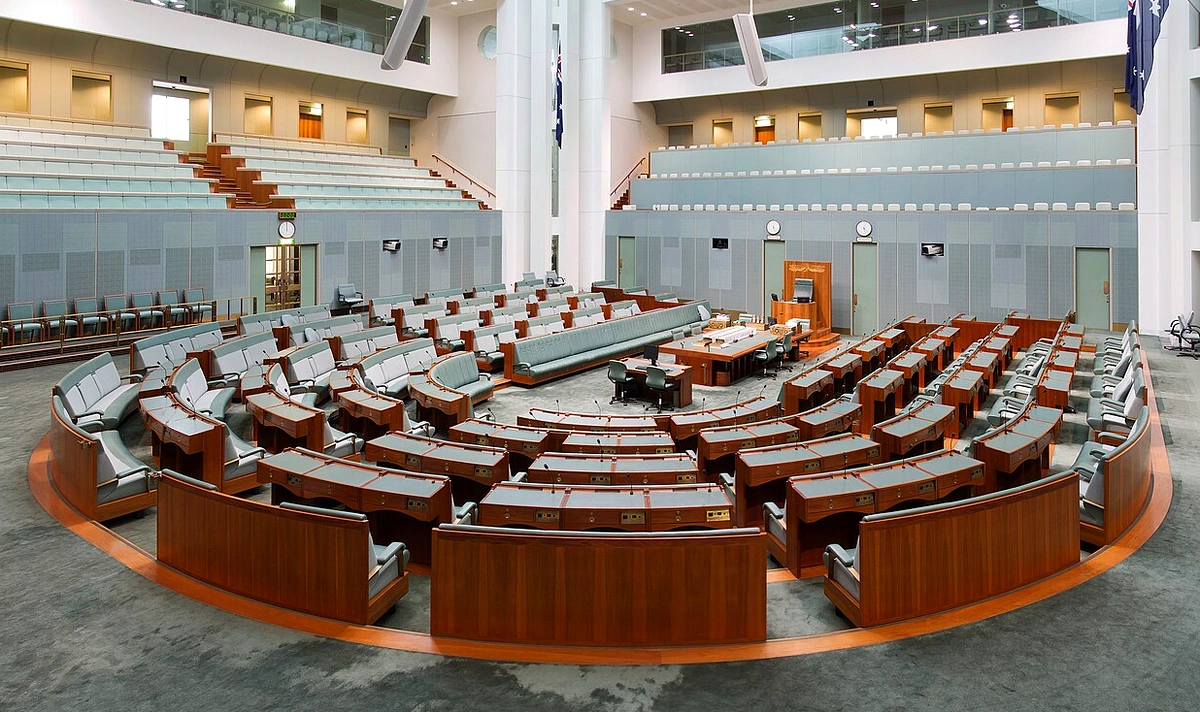
The crowning achievement of craftsmanship and national spatial thinking is the new Australian Parliament House. Conceived and realized under the brilliant design of Italian-American architect Romaldo Giurgola, this monumental structure was built continuously between 1981 and 1988, marking a major historic milestone for the Land Down Under. Spanning a massive floor area of 250,000 square meters, the building is a masterpiece of earth-integrated architecture. To realize this concept, engineers and artisans painstakingly excavated the summit of Capital Hill before artfully blanketing it with lush turf and sweeping lawns. The architectural philosophy behind this natural cloak carries profound symbolism: supreme democratic power must stem from the people and remain intimately bound to the earth. Stepping inside, visitors are captivated by premium materials distilled from Australian soil itself—most notably the rose-tinted Tarana granite cladding the exterior. The grand foyer stands resplendent with 48 finely crafted Walinga hardwood columns, harmonizing with a monumental hand-woven tapestry crafted by Indigenous women to honor ancient Aboriginal cultural heritage.
Alongside that contemporary wonder, Canberra’s architectural memory remains intact at Old Parliament House. Inaugurated in 1927, this landmark bears the hallmark of Stripped Classical Federation architecture, radiating dignified poise and understated authority. Though it stepped back into history to make way for its modern successor, the building meticulously preserves its original interior details—from signature green leather-upholstered benches to the Speaker’s chair carved from rare walnut wood. Every corner of the old building evokes memories of spirited debates among past generations of parliamentarians, creating a nostalgic space rich in cultural and political significance.
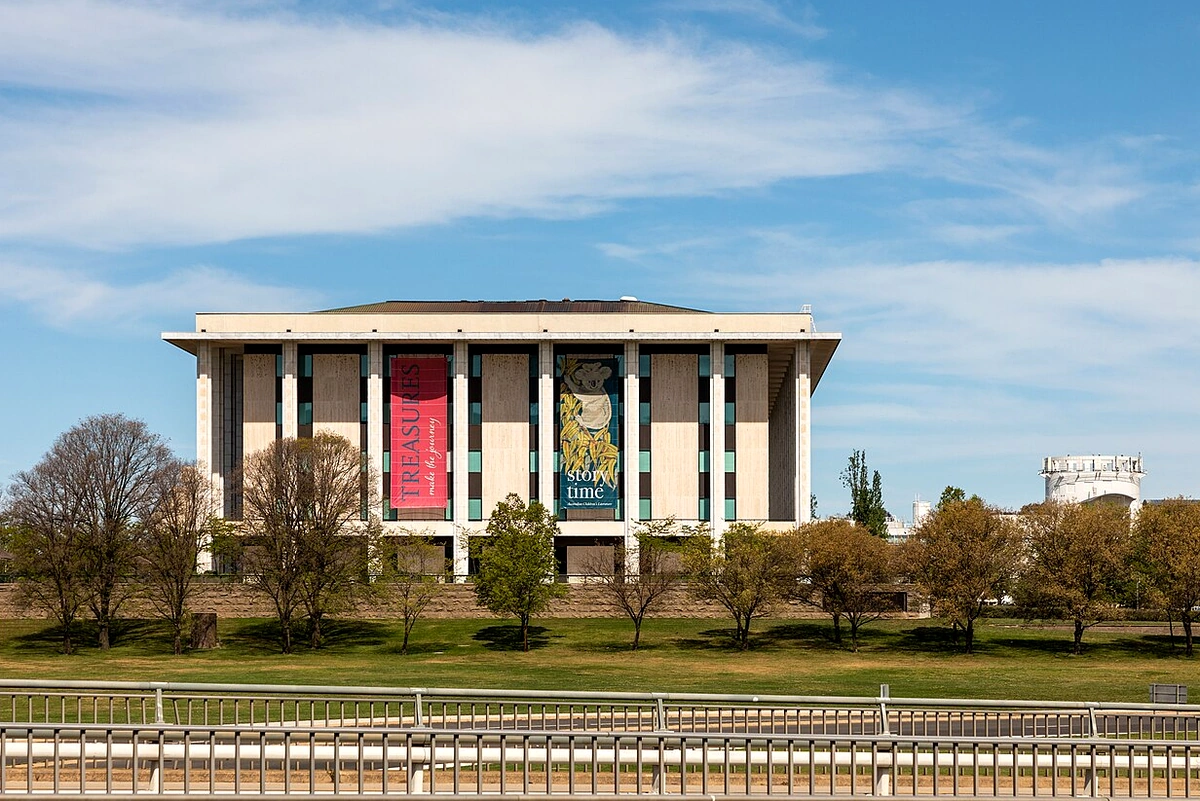
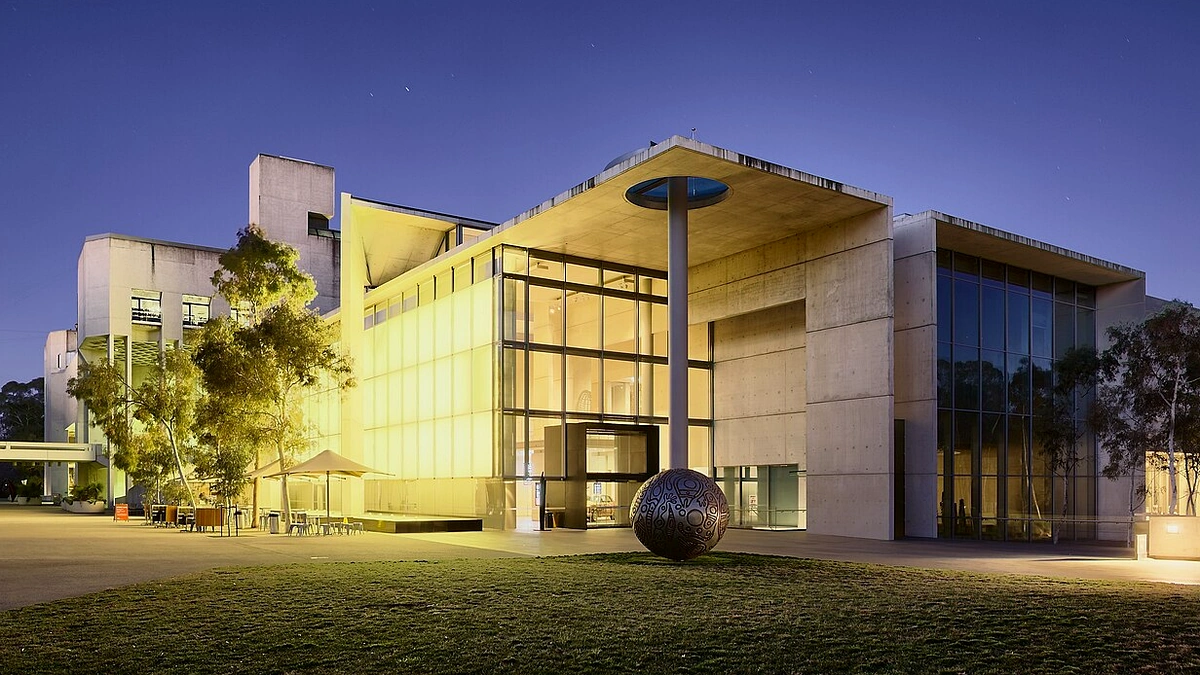
Canberra’s architectural thread extends further to other strategic public institutions such as the National Library of Australia and the High Court of Australia. Both designs adopt the expressive language of Brutalism, making bold use of raw board-marked concrete paired with ancient Roman-inspired travertine colonnades. This daring combination conveys solidity and gravitas, reflecting the transparency and permanence of both the legal system and the nation’s repository of knowledge. Taken as a whole, Canberra is far from a dry administrative center; it is an expansive open-air architectural museum where building art, spatial planning, and Indigenous spirit fuse together, leaving an indelible impression on every traveler who sets foot here.
When night falls, Canberra sheds its formal, administrative cloak as a seat of power to drape itself in enchanting artistry and tranquil illumination. Free of the raucous noise and glaring neon billboards of Sydney or Melbourne, nightlife in this planned city is shaped by a singular visual philosophy: a seamless marriage of national monumentality and the restrained aesthetics of darkness. Nighttime lighting design here does not seek to flood everything with glare, but rather to accentuate architectural heritage and preserve the pristine serenity of native nature.
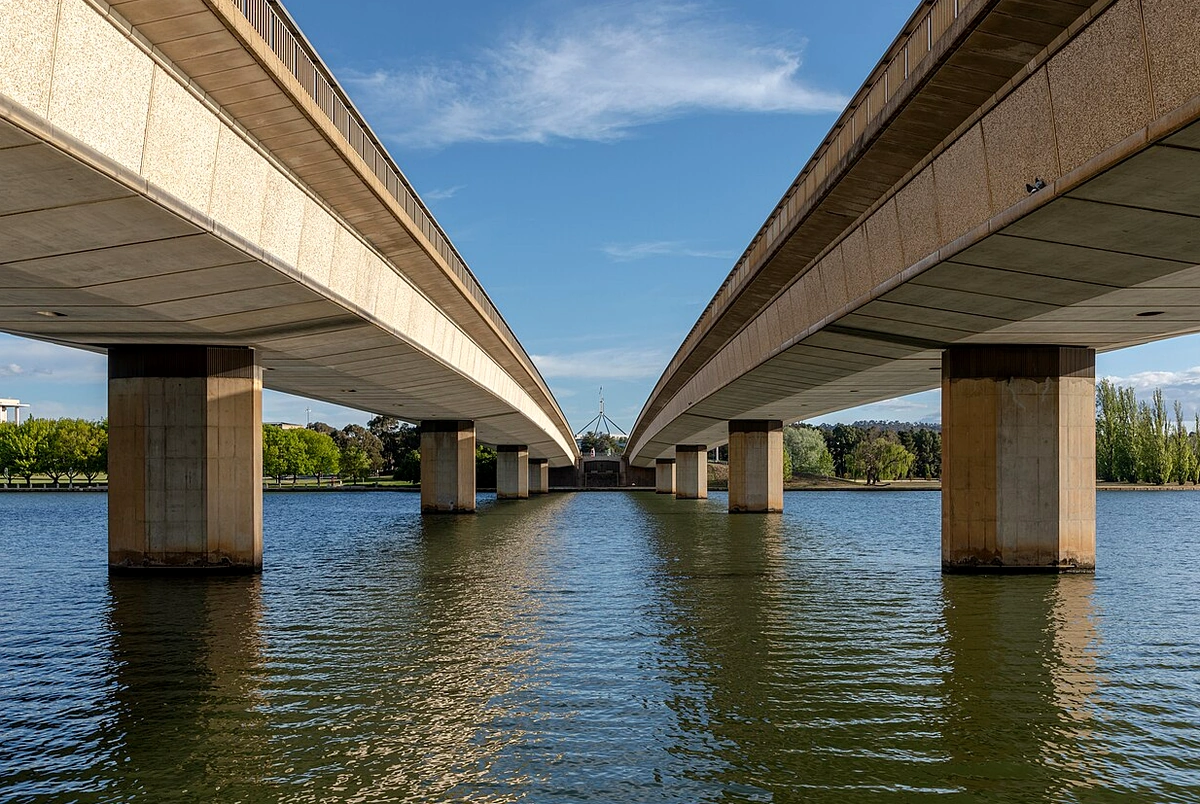
The most commanding visual beacon in Canberra’s night sky is the flagpole crowning Parliament House. Rising 81 meters into the air, the monolithic stainless-steel mast is illuminated by focused high-intensity beams, transforming it into a visual landmark that orients the entire urban landscape from virtually any angle in the city. Just below, the stately Commonwealth Avenue Bridge arching across Lake Burley Griffin opts for a warmer palette with discreetly concealed LED wall-washers, casting soft ribbons of light onto the mirror-still water. Notably, lighting along lakeside walking paths is carefully calibrated, prioritizing low-level, anti-glare landscape fixtures. This thoughtful engineering ensures pedestrian safety while fully safeguarding the natural habitat of black swans and migratory birds nesting around the lake ecosystem.

Canberra’s nocturnal energy reaches a dazzling crescendo every March when the city hosts the Enlighten Festival—Australia’s largest interactive sound and light arts celebration. Throughout the event, cutting-edge 3D projection mapping transforms monumental architectural icons such as Parliament House and the National Library of Australia into giant canvases for mesmerizing digital animations. Stories of history, culture, and First Nations heritage are told through light, electronic soundscapes, and spatial geometry, drawing tens of thousands of art lovers to grand plazas to immerse themselves in an awe-inspiring visual spectacle.
Better yet, during the spring Floriade flower festival later in the year, Canberra treats visitors to Nightfest—a vibrant multi-night after-dark celebration. Garden spaces brimming with daytime color morph into an illuminated wonderland of artistic neon installations, where visitors can stroll among night-lit blooms while enjoying dramatic fire performances and live jazz drifting through the crisp highland air. Here, Canberra’s nightlife is not about all-night clubbing, but rather a refined sensory experience where people, architecture, and nature converge in an intellectual, culturally rich contemporary arts atmosphere.
Mentioning Australia’s capital Canberra often conjures images of an impeccably planned city with cutting-edge landmarks tucked amidst lush greenery. Yet behind the stately facade of this political powerhouse lies a remarkably vibrant, nuanced culinary culture deeply rooted in the highland terroir. The gastronomic philosophy here is nurtured by the farm-to-table movement—a sustainable model of farming and dining that makes full use of fertile soils and a distinct temperate climate. Rather than chasing flashy global food trends, Canberra’s chefs pay utmost reverence to local provenance, turning every meal into an exploration of the capital region’s ecological history and soil.
The brightest star on Canberra’s fine-dining map is its black truffle industry. The region has long been recognized internationally as one of the Southern Hemisphere’s premier capitals for both yield and quality of Canberra Region Black Truffles. When winter’s chill settles across the tablelands, trained scent dogs and local growers head out beneath oak and hazelnut trees to harvest these “black diamonds.” During truffle season, the city’s most acclaimed restaurants roll out exclusive truffle menus. Paper-thin shavings of fresh black truffle draped over hand-kneaded Italian pasta, finished with early-harvest cold-pressed olive oil, compose a rustic yet regal symphony of flavor that awakens every sense.
Alongside European-inspired agricultural produce, Canberra’s dining scene celebrates and elevates native flora through contemporary bush tucker infusions. Modern chefs skillfully weave wild herbs and native berries into refined dishes. One of the clearest expressions of this culinary synthesis is pan-seared kangaroo fillet cooked medium-rare, crusted with fiery native pepperberry and salt, and paired with a sweet-tart compote crafted from Kakadu plum—a fruit boasting one of the highest natural vitamin C concentrations in the world. The interplay of rich, lean red meat, primal peppery warmth, and bright berry acidity creates an unforgettable cultural depth that echoes humanity’s millennia-old bond with the wild.

No culinary portrait of the capital would be complete without the cool-climate Canberra District Wine Region, producer of world-renowned vintages. Thanks to wide diurnal temperature swings and distinctive terroir, local vineyards yield celebrated Shiraz wines marked by signature notes of white pepper layered over deep black cherry aromas. Pairing effortlessly with bold Shiraz are crisp, vibrant Rieslings that bring ideal balance to starter courses. Dining in Canberra is therefore never merely about satisfying hunger—it is a time-honored cultural ritual where every guest feels the pulse of the land, the craft of local artisans, and Australians’ deep pride in their culinary heritage.
Concluding this journey of insight and reflection through the cultural, historical, and architectural layers of Australia’s political heart, the final section of this comprehensive guide equips travelers with practical, nuanced, and accurate advice gleaned from seasoned field researchers. Planning a trip to Canberra calls for an understanding of operating hours, urban rhythms, and unspoken etiquette inside national institutions of power—ensuring your journey runs smoothly while delivering rich intellectual and sightseeing rewards.
First, regarding the opening hours of iconic landmarks, Australian Parliament House welcomes the public daily from 9:00 AM to 5:00 PM. Admission is completely free, though security screening is stringent and mirrors strict international diplomatic standards; visitors should allow ample time for security checks and note that anyone wishing to observe parliamentary debates or Question Time from the public galleries must book tickets in advance online. Nearby, the Australian War Memorial is open daily from 10:00 AM to 5:00 PM, and its most poignant highlight—not to be missed by any researcher or traveler—is the solemn “Last Post” ceremony held prior to closing each day, honoring the thousands of service members who gave their lives for the nation. Meanwhile, the National Gallery of Australia opens its doors with free admission to its permanent collection galleries, offering a panoramic view of both Indigenous Australian art and contemporary global works.
In terms of transport and spatial connectivity, Canberra sits impressively on the tablelands with Canberra Airport located just 8 kilometers from the central business district, offering seamless domestic connections from Melbourne or Brisbane. For travelers departing from Sydney—the major financial hub to the north—the overland journey by intercity train or coach takes roughly 3.5 to 4 hours, winding through scenic rural valleys and rolling hills across New South Wales. Once inside central Canberra—a spacious Garden City characterized by sweeping circular boulevards and relatively sparse traditional public transit—the most convenient and strongly recommended option is renting a car or using rideshare services such as Uber to explore museums, Lake Burley Griffin, and surrounding nature reserves on your own schedule.
Canberra’s semi-arid continental highland climate also requires thoughtful wardrobe preparation. Diurnal temperature swings are dramatic: scorching summer sun calls for high-SPF sunscreen and quality sunglasses, whereas biting winter cold can drive overnight temperatures below 0°C accompanied by crisp morning frost. When stepping inside legislative chambers, the High Court, or national cultural institutions, smart casual attire is the baseline courtesy expected out of respect for these dignified spaces. Conversely, when setting out for bushwalking, exploring native ecosystems in Namadgi National Park, or hiking up Mount Ainslie, sturdy footwear and a waterproof windbreaker are indispensable companions.
To turn these encyclopedic insights into an inspiring real-world adventure, travelers can explore the 7-Day 6-Night Melbourne – Canberra – Sydney tour, thoughtfully designed to seamlessly connect Australia’s historical depth, contemporary art, and breathtaking natural landscapes.