The ecological and spiritual sanctuary of Ubud Monkey Forest—known locally as Mandala Suci Wenara Wana—occupies a unique position within the geocultural fabric of Bali, Indonesia. Situated in the village of Padangtegal at the cultural heart of Ubud, this sacred grove represents an intricate crossroads of primary tropical rainforest ecology, classical Hindu temple architecture, and ancient cosmological philosophy. Its origins and evolution are inseparable from the founding of local villages, the rise of regional noble lineages, and the shaping of Balinese religious thought across centuries. Local historical chronicles reveal that this woodland has long been revered as a consecrated entity where the boundaries between the natural world, the spiritual realm, and human society dissolve through recurring religious ceremonies and strict protection under customary law.
In terms of foundational ethos, Ubud Monkey Forest is deeply rooted in the philosophy of Tri Hita Karana—the ideological cornerstone of Balinese Hinduism, which emphasizes maintaining harmony between humanity and the divine, among fellow human beings, and between humanity and nature. Originally, this woodland functioned as a sacred forest where rare flora was strictly shielded from logging or agricultural clearing. According to local belief, the resident troop of long-tailed macaques acts as spiritual guardians of the grove, while the complex of Hindu temples nestled within its canopy serves as a vital pilgrimage center for the residents of Padangtegal and neighboring communities. The evolution of this site from a secluded sacred woodland into a global cultural icon reflects shifts in Bali’s social and economic landscape under the influence of international tourism, all while safeguarding its core traditional values.
Across historical eras, Ubud Monkey Forest has weathered the political and social transformations of the Gianyar regency and the wider island of Bali. During the pre-colonial feudal period, Ubud flourished as a seat of royal patronage and spiritual scholarship where arts, philosophy, and religious traditions thrived. As part of the Pura Dalem Padangtegal temple precinct, the forest witnessed the rise and fall of local dynasties, the arrival of Dutch colonial administration in the early twentieth century, and the post-independence cultural renaissance of the Republic of Indonesia. Throughout every era, the local community has maintained autonomous stewardship of the sanctuary through the traditional banjar customary council system—a distinctive model of community self-governance that protects both architectural and ecological heritage from unchecked modernization and commercialization.
The temple complex within the forest comprises three principal sanctuaries, exemplifying traditional Balinese Hindu spatial planning. The main temple, Pura Dalem Agung Padangtegal, is dedicated to Lord Shiva in his aspect as transformer and regenerator, hosting pivotal rituals tied to the soul’s transition and the cycle of life and death. The second sanctuary, Pura Beji, sits beside a sacred spring and serves as a place for physical and spiritual purification prior to major religious ceremonies. The third temple, Pura Prajapati, is associated with cremation rites and ancestral reverence. Constructed from local volcanic tuff stone, these sanctuaries are adorned with intricate carvings of deities, demons, and mythological figures from the Ramayana and Mahabharata epics, blanketed in a natural patina of emerald moss nurtured by the humid old-growth canopy—a living testament to centuries of Balinese stone-carving mastery.
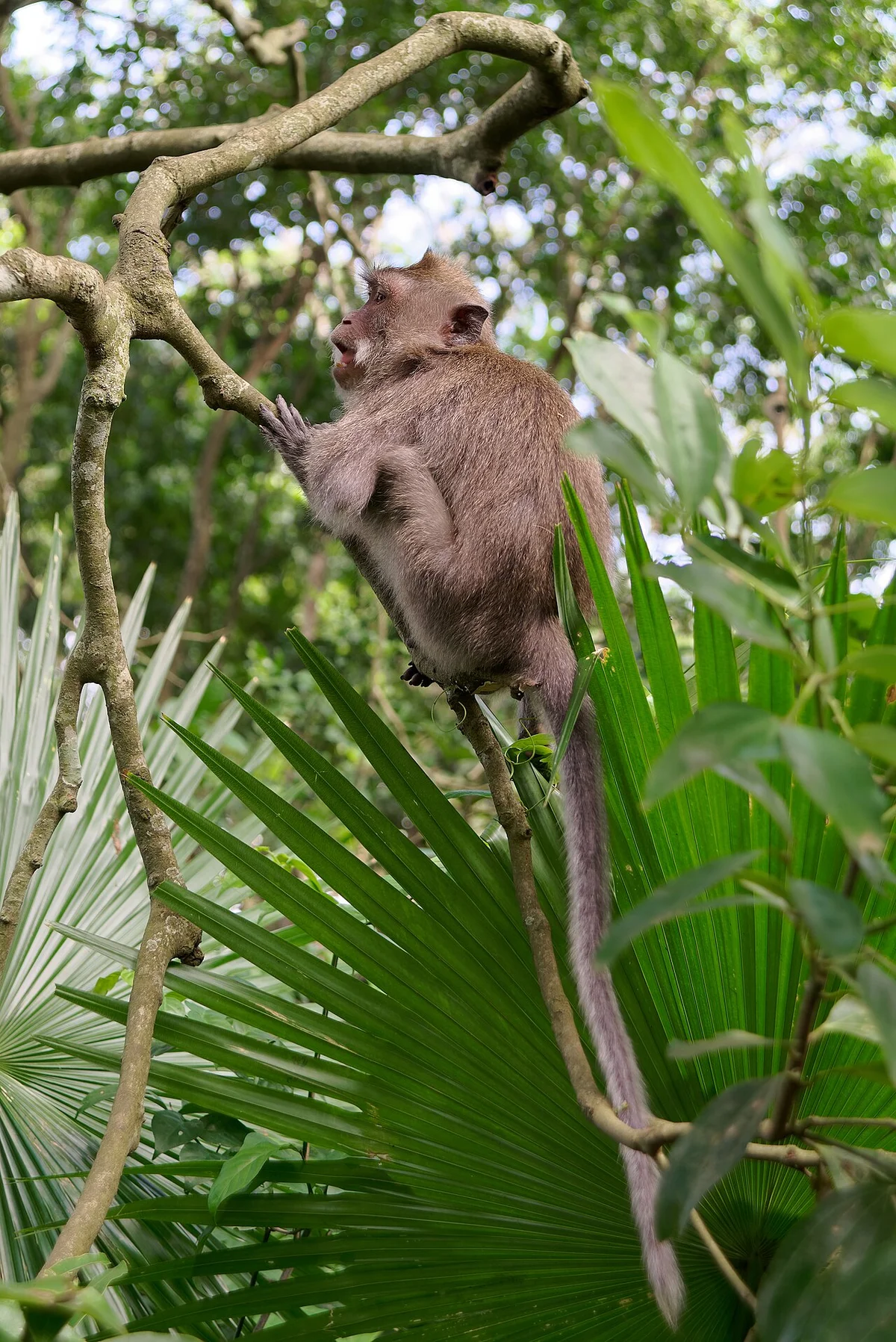
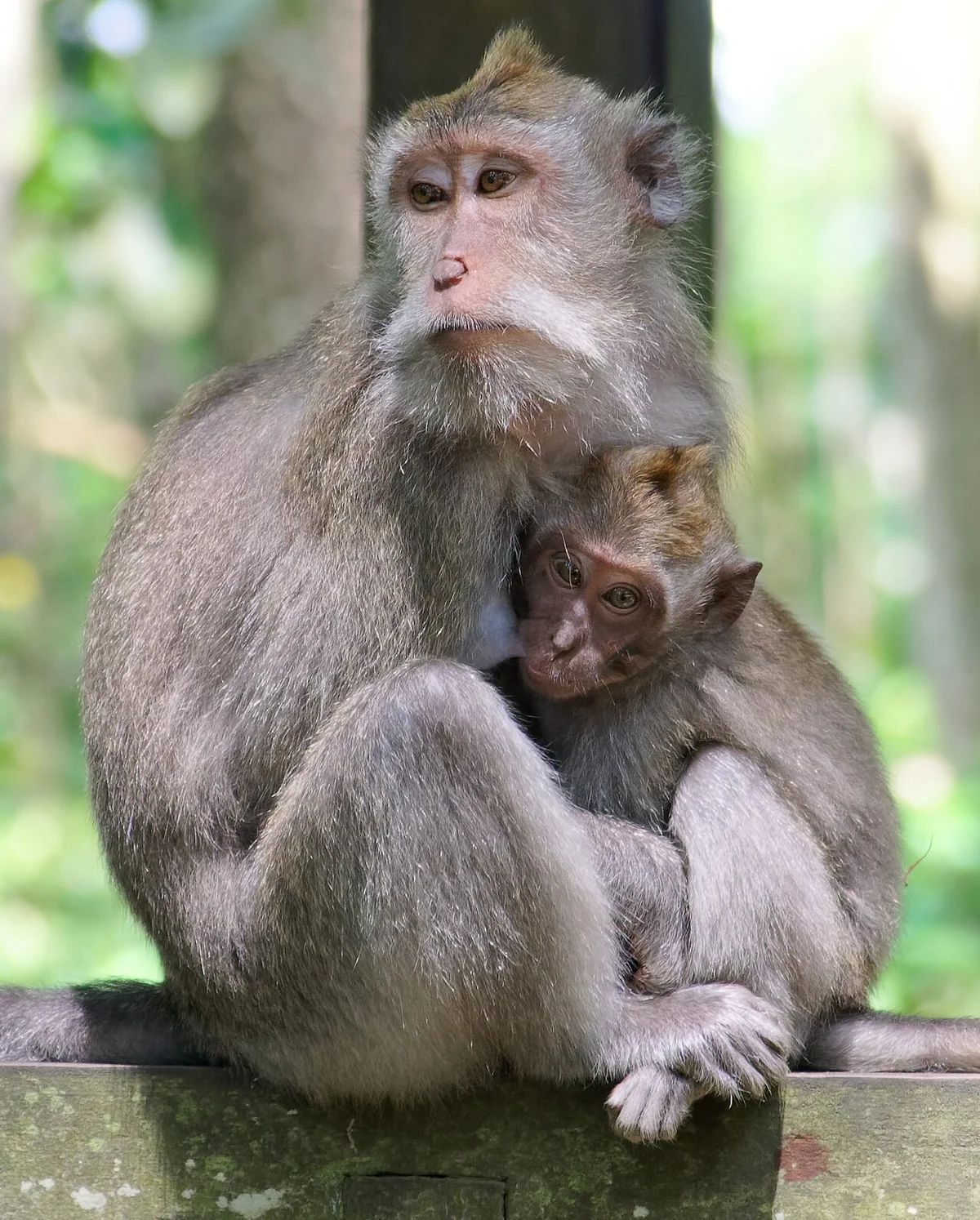
In contemporary Indonesian culture, the symbolic stature of Ubud Monkey Forest rests on its seamless union of natural conservation and living spiritual practice. The resident Balinese long-tailed macaques (Macaca fascicularis) are far more than subjects of biological study or captivating wildlife for visitors; in local religious tradition, they are regarded as companions of Hanuman, the heroic monkey deity of Hindu epic lore. This deep reverence shapes how the community interacts with the troops, fostering a rare symbiotic sanctuary seldom seen elsewhere in the world. Even amid growing international visitor numbers and complex primate behavioral dynamics, park stewards combine scientific management with indigenous wisdom to preserve ecological balance and sacred traditions.
The contribution of Ubud Monkey Forest to the cultural and economic vitality of Ubud—and Bali as a whole—is immeasurable, anchoring the town’s reputation as a premier international hub of art and heritage. Since the early twentieth century, this tranquil sanctuary has inspired generations of visiting painters, writers, and anthropologists who helped share Balinese culture with the world. Scholarly studies on primate behavior, customary community governance, and temple architecture conducted here remain foundational texts in religious anthropology, conservation ecology, and Southeast Asian art history, affirming the forest’s enduring role as a global model of reverence for nature and living heritage.
Situated in Padangtegal village within Bali’s Gianyar regency, the Ubud Monkey Forest conservation sanctuary exemplifies the traditional spatial planning philosophy of Balinese Hinduism. Geomorphologically, the reserve lies inside a tectonic valley deeply carved by stream ravines, where flowing water has eroded ancient volcanic deposits to form a sheltered basin flanked by steep rocky walls. The pronounced elevation drop between the Ubud plateau and the stream-lined valley floor creates a distinct three-dimensional micro-environment in which primary tropical rainforest thrives in high humidity and nutrient-rich humus soil. Geologists and landscape planners note that this enclosed basin generates an independent microclimate buffered from surrounding urban bustle, establishing an inward-focused sacred realm where nature and temple architecture align with ancient cosmological principles.
The master layout of the complex strictly follows Tri Hita Karana, the Balinese Hindu doctrine of threefold harmony between humanity and God, humanity and nature, and humanity and community. The sanctuary is organized into clearly defined functional zones linked seamlessly by volcanic-stone pathways and moss-covered stairways winding along wooded slopes. Anchoring the spiritual layout is Pura Dalem Agung Padangtegal, accompanied by Pura Beji and Pura Prajapati, each positioned at meaningful elevations and auspicious orientations within the woodland. Rather than separating sacred buildings from the jungle, traditional builders integrated them into the heart of the ecosystem using resilient local stone engineered to withstand tropical humidity and the encroaching roots of ancient forest giants.
Internal spatial zoning across the reserve reflects a sophisticated understanding of the ecological balance between visitors, wildlife, and historic architecture. Pedestrian walkways are designed as elevated wooden bridges or stone paths bordered by low balustrades, guiding human foot traffic while protecting exposed tree roots and delicate undergrowth from trampling. Open clearings near the main entrance accommodate visitor reception and crowd management, whereas deeper river gorges and steep ravines are designated as restricted sanctuaries providing undisturbed habitat, breeding grounds, and foraging territory for the macaque troops (Macaca fascicularis). This thoughtful spatial zoning minimizes friction between natural primate behavior and daily cultural and tourism activities.
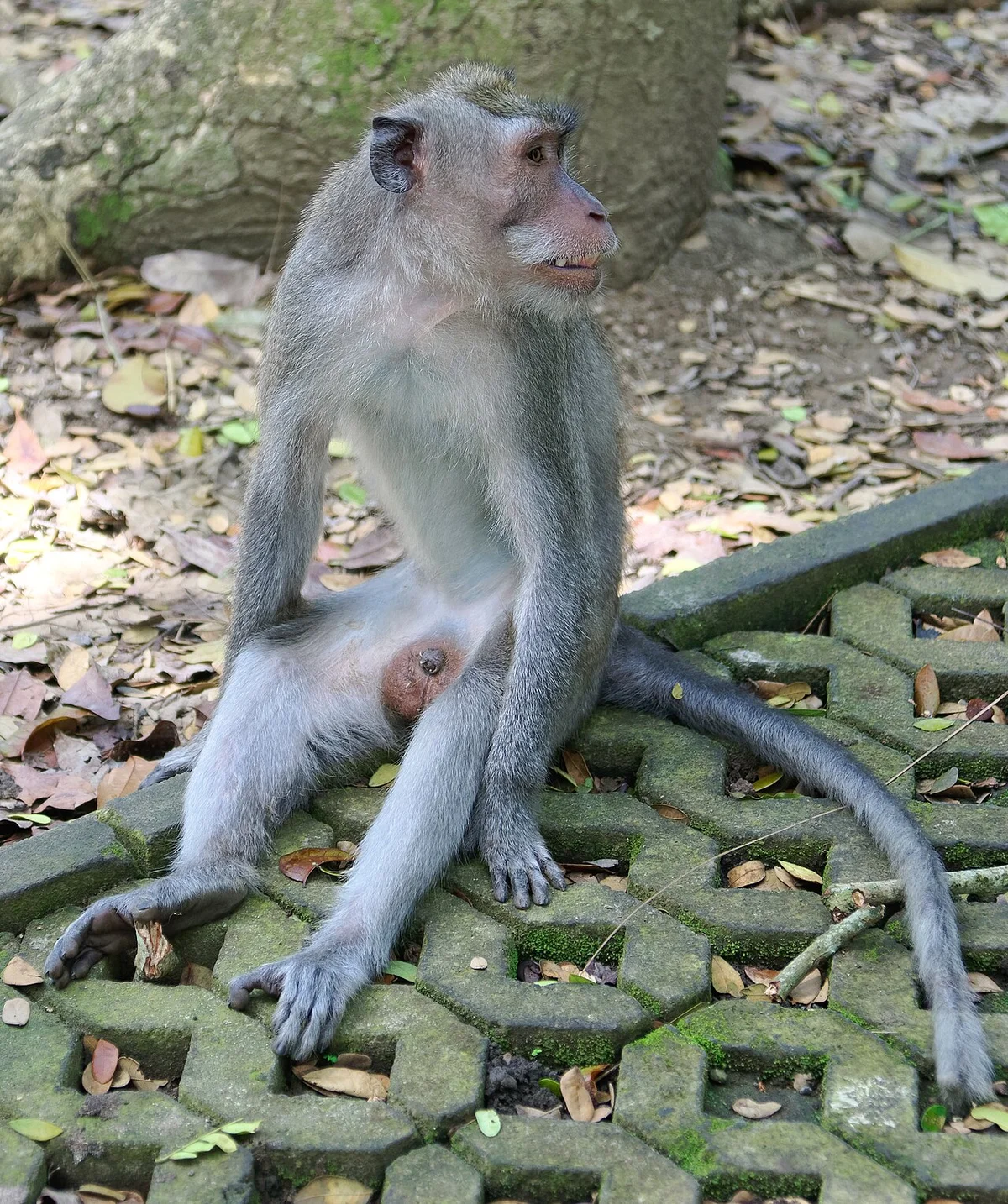
Surrounding the temples is a remarkably diverse botanical ecosystem encompassing well over a hundred tropical tree species, highlighted by towering banyan trees, wild nutmeg, and ancient lianas weaving a continuous multi-layered canopy. Landscape stewardship here avoids heavy artificial intervention, focusing instead on preserving the integrity of the lowland rainforest biotope. Rangers allow fallen leaves to decompose naturally to enrich the soil while safeguarding centuries-old timber trees whose root networks stabilize the steep valley slopes. Carvings of guardian deities and mythical creatures rest beneath gnarled roots and along mossy paths, creating a fluid transition from untamed jungle to consecrated architectural space.
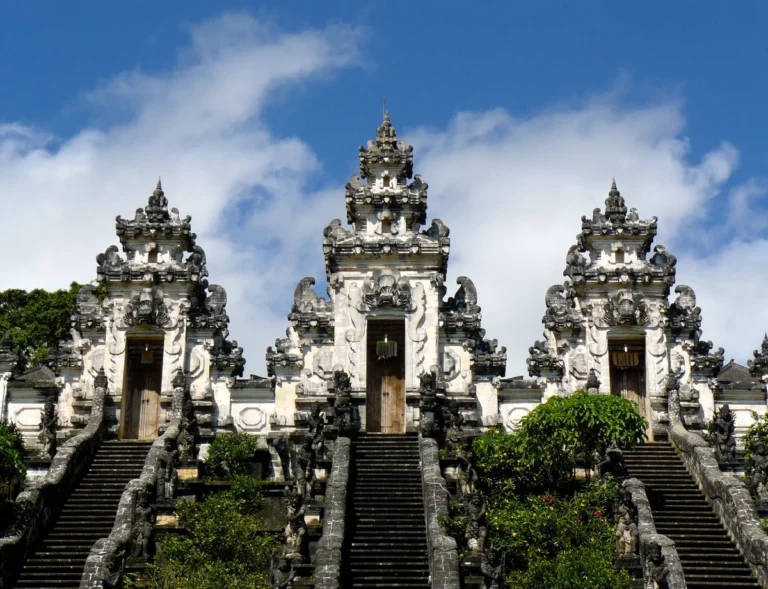
The temples themselves showcase classic Balinese sacred architecture, featuring split Candi Bentar entrance gateways and volcanic-stone walls carved with scenes from the Ramayana and Mahabharata. Over the centuries, lush coats of moss and lichen have grown across the porous stonework, softening architectural edges until the shrines appear to emerge organically from the forest floor. Stone stairways descending into ravines and open temple courtyards are carefully graded for drainage during Bali’s monsoon rains, preventing soil erosion on the steep valley walls.
Ultimately, the spatial design of Ubud Monkey Forest stands as a benchmark model balancing cultural heritage conservation, biodiversity protection, and sustainable management of a world-renowned attraction. Strict limits on built structures, preservation of natural valley contours, and harmonious architectural proportions have safeguarded the sanctuary’s centuries-old aura of serenity—conveying the Balinese cosmological vision in which deities, humanity, and all living beings coexist in sustainable harmony.
The temple complex inside Ubud Monkey Forest represents a crowning achievement of traditional construction and stone sculpture rooted in Indo-Balinese Hinduism. Comprising Pura Dalem Agung Padangtegal alongside the spring temple Pura Beji and cremation temple Pura Prajapati, the ensemble functions as a unified sacred network planned according to ancient cosmology. Dating back to around the fourteenth century under the patronage of local rulers, the architecture blends indigenous nature worship and ancestral veneration with Brahmanical traditions from the Indian subcontinent. Every proportion and layout follows traditional Balinese geomancy and the anthropometric measurement canon known as Asta Kosala Kosali, calibrating dimensions to human scale to establish complete harmony between builders, architecture, and nature.
The primary building materials used throughout the complex are porous gray volcanic tuff stone, handmade fired red brick, and seasoned teak timber. Volcanic stone forms the foundations, stairways, perimeter walls, and intricate relief carvings—soft enough when freshly quarried to permit extraordinary sculptural detail, yet durable enough to endure centuries of tropical humidity and monsoon downpours. Deep red fired bricks bound with traditional lime-and-clay mortar form sturdy courtyard walls, while aged teak supports roofs thatched with black sugar-palm fiber (ijuk), lending structural flexibility to withstand seismic tremors along the Pacific Ring of Fire.
Architectural carvings and joinery across the temples testify to the mastery of traditional Balinese builder guilds (undagi). Surfaces from split gateways (candi bentar) and covered portals (paduraksa) to altars and retaining walls are richly ornamented in a horror vacui aesthetic that leaves scarcely an inch undecorated. Bas-relief and openwork carvings play dramatically with dappled sunlight filtering through the forest canopy. Timber columns rest on carved stone plinths without iron nails, relying instead on precision mortise-and-tenon joinery, wooden pegs, and structural balance. Multi-tiered temple roofs (meru)—always arranged in odd numbers of tiers such as three, five, seven, nine, or eleven—symbolize sacred Mount Meru, the cosmic abode of the gods.
Guiding the entire aesthetic of the sanctuary is Tri Hita Karana, emphasizing equilibrium across spiritual, social, and ecological realms. Nowhere is this clearer than in how the temples coexist with the surrounding primary forest and its hundreds of resident macaques. Rather than dominating the landscape, the shrines become an integral part of the woodland ecology. Sculptures of protective deities, mythical guardians, and fierce fanged spirits flanking entrances and stairways carry deep philosophical symbolism, representing cosmic forces tamed to guard the sacred threshold.
Symbolic hierarchy is further articulated through the Balinese tripartite cosmological model: Bhah Loka (the human realm), Bhuwah Loka (the intermediate spiritual realm), and Swah Loka (the supreme celestial realm). Temple layouts progress across three distinct courtyards of increasing sanctity: the outer courtyard (Jaba Pisan) for community gatherings and offering preparation, the middle courtyard (Jaba Tengah) for ceremonial assemblies and ritual performances, and the innermost sanctum (Jeroan) housing the principal shrines, reserved for devout worship and purification rites.
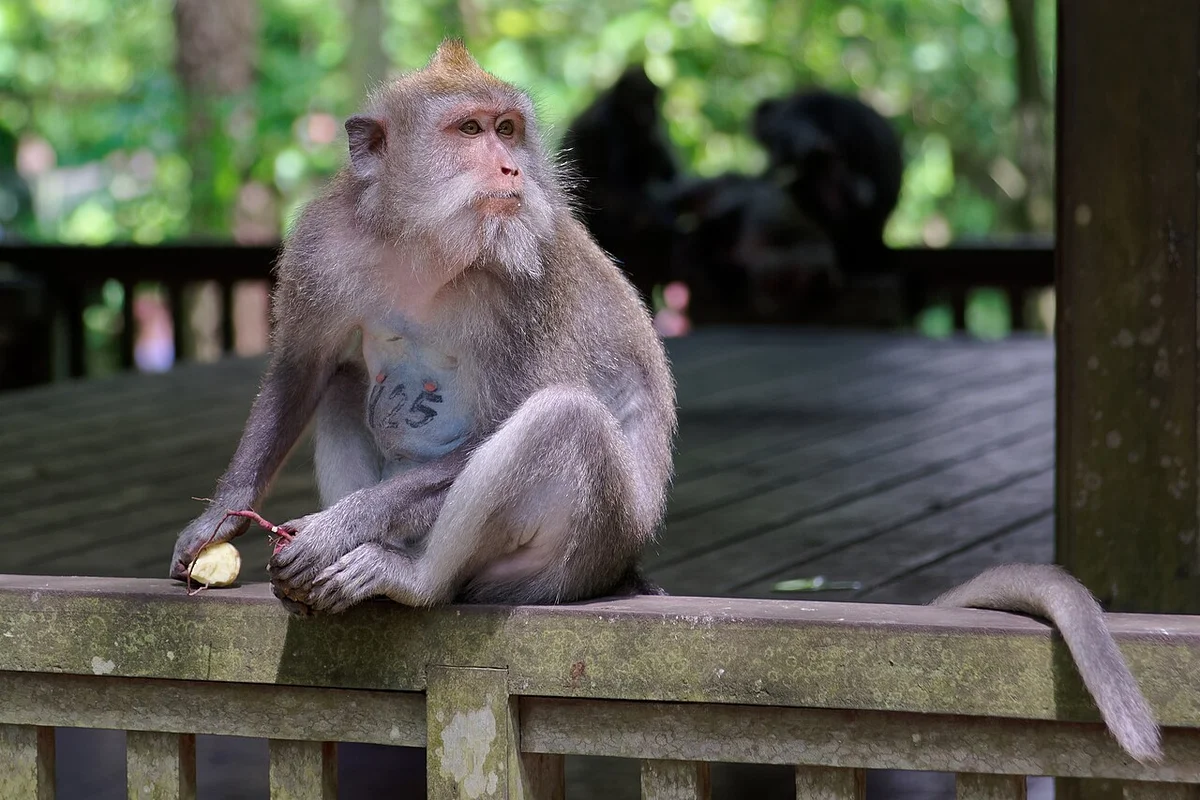
Within this sacred architecture, the resident monkeys hold deep spiritual significance rather than mere ecological curiosity. In Hindu tradition, macaques are closely linked to Hanuman of the Ramayana—the devoted monkey warrior symbolizing loyalty, courage, strength, and guardianship. Consequently, local communities revere the forest’s monkeys as natural temple guardians deserving respect and care. The interplay between moss-draped stone sculptures and living macaques creates a dynamic living tableau where art and wilderness merge, echoed in stone carvings of monkeys perched along altars and perimeter walls.
Across centuries of tropical weathering and encroaching banyan roots, the temples have been painstakingly maintained by the Padangtegal community using traditional restoration methods. Master artisans work with original volcanic stone and heirloom carving techniques passed down through generations, preserving authentic patina and spiritual vitality. This union of climate-adapted craftsmanship, intricate sculpture, and timeless cosmology transforms Ubud Monkey Forest into a living museum of heritage in the heart of Bali.
Spanning roughly twelve hectares of dense woodland in Padangtegal village, Gianyar regency, Ubud Monkey Forest encompasses deep stream ravines, moss-covered cliffs, and over 115 species of native trees that sustain a thriving population of Balinese long-tailed macaques (Macaca fascicularis). The reserve is organized into distinct zones shaped by natural terrain, fourteenth-century Hindu temples, and carefully routed pedestrian trails. Exploring the sanctuary thoughtfully begins with understanding its layout, primate behavior, and sacred etiquette.
Most visits begin at the western main entrance, where stone steps flanked by mythological carvings transition visitors from the lively bustle of Jalan Monkey Forest into the cool shade of the jungle. Near the entrance plaza, visitors encounter troops from the central zone, where controlled feeding stations operated by park rangers keep macaques active and visible. From there, basalt-paved stairways descend deeper into the valley, where humidity rises beneath towering banyan trees and cascading aerial roots.
At the spiritual core of the forest sits Pura Dalem Agung Padangtegal, the mid-fourteenth-century main temple dedicated to Lord Shiva. Set within a shaded woodland hollow framed by ancient tree roots and mossy stone walls, this inner precinct is the sacred heart of the reserve and home to its largest macaque troop. Approaching the temple requires respectful attire and quiet demeanor, as intricate stone reliefs of deities, Barong, and Garuda stand in serene dialogue with the surrounding jungle.
Continuing southwest, trails lead to Pura Beji, the holy spring temple nestled beside a clear forest stream. Cooled by rushing water over volcanic boulders, this area hosts traditional Melukat purification ceremonies and serves as a favorite gathering spot where macaques drink, groom, and socialize. Visitors should tread carefully along damp stone paths while keeping a respectful distance from curious individuals.
In the northeastern sector lies Pura Prajapati, situated adjacent to the community’s traditional cremation grounds. Shaded by towering bamboo groves and dotted with weathered stone shrines, this quieter zone invites contemplative observation of Balinese beliefs surrounding the cycle of rebirth and cosmic harmony, well away from busier central walkways.
Another architectural highlight along the route is the iconic Dragon Bridge spanning a deep wooded ravine, adorned with undulating Naga dragon carvings along its stone balustrades. Linking separate hillside trails, the bridge offers dramatic views down into fern-lined gorges draped in hanging banyan roots—and serves as a prime vantage point for watching macaques travel effortlessly along high canopy branches.
To explore effortlessly alongside an experienced local guide, browse our all-inclusive international tour itineraries featuring thoughtfully curated schedules.
Surrounding Ubud Monkey Forest is a vibrant cultural buffer zone where centuries-old Balinese Hindu traditions meet modern global hospitality. Along Jalan Monkey Forest and Jalan Hanoman, shops, cafés, and boutique stays retain traditional village proportions—featuring volcanic-stone compound walls, east-facing family shrines, and lush tropical courtyards. Decades of international visitors have enriched the Padangtegal community’s economy while transforming Ubud into one of Southeast Asia’s premier centers of cultural exchange.
Local cuisine around Ubud Monkey Forest reflects Bali’s rich gastronomic heritage and Tri Hita Karana philosophy of harmony with the land. From humble family-run warungs to refined garden restaurants, kitchens rely on fresh organic produce harvested from surrounding terraced fields. Regional signatures include bebek betutu (slow-roasted duck marinated in aromatic base genep spice paste of turmeric, galangal, shallots, garlic, chilies, and shrimp paste wrapped in banana leaves) and crisp bebek goreng. Equally iconic is Balinese nasi campur, pairing steamed rice with succulent babi guling (roast suckling pig), crispy crackling, and spiced lawar vegetable-and-coconut salad—celebrating generations of herbal and culinary wisdom.
Community life around the forest is anchored by the banjar village assembly, which coordinates social harmony and cultural preservation. Open-air bale banjar pavilions host regular rehearsals for classical Legong and Barong dances alongside shimmering bronze gamelan ensembles. Visitors can also join hands-on craft workshops in woodcarving, silverwork, or traditional ikat and songket weaving led by local master artisans, keeping Balinese intangible heritage thriving across generations.
Daily life in Padangtegal moves in step with temple rituals at Pura Dalem Agung Padangtegal and neighborhood shrines. Each morning, local women dressed in colorful sarongs, lace kebaya blouses, and waist sashes place delicate woven palm-leaf offerings (canang sari and banten) on altars, thresholds, and ancient tree roots. Many residents work as sanctuary rangers, guides, artisans, and guesthouse hosts, ensuring tourism revenues directly support community welfare, temple upkeep, and local education.
Visitor amenities around the forest are thoughtfully integrated into the lush Petanu River valley landscape. Open-air yoga studios, holistic wellness retreats, and traditional Balinese spas harness natural light and cool valley breezes, while pedestrian-friendly traffic controls along nearby lanes help preserve a peaceful atmosphere. Together, modern hospitality and deep-rooted cultural stewardship make Ubud Monkey Forest an exemplary case study in sustainable cultural tourism.
Planning a smooth and rewarding visit to Ubud Monkey Forest benefits from knowing key practical details on timing, weather, transport, attire, and wildlife etiquette. While the sanctuary is open daily from morning until late afternoon, the optimal visiting window is between 8:00 AM and 10:00 AM. During these early morning hours, the macaques have just awakened and begun foraging calmly with ranger supervision, offering natural wildlife encounters before midday crowds arrive. Between noon and 3:00 PM, rising heat and peak foot traffic can make the monkeys more restless. Across the year, Bali’s dry season from April to October offers the best conditions, keeping mossy stone pathways drier and easier to navigate.
Located in Bali’s central uplands, Ubud enjoys slightly cooler temperatures than southern beaches—typically hovering between 27°C and 30°C—paired with high forest humidity exceeding 80 percent beneath the dense canopy. Passing tropical showers can occur even during the dry season, so packing a compact umbrella or lightweight rain jacket alongside breathable clothing is always wise.
Reaching Ubud Monkey Forest requires accounting for narrow town streets and busy midday traffic. From Ngurah Rai International Airport or southern resort hubs like Kuta, Seminyak, or Canggu, the drive takes roughly 1.5 to 2.5 hours depending on road congestion. Hiring a private car with a local driver or using ride-hailing apps offers maximum comfort, while renting a scooter provides flexibility for solo travelers navigating Ubud’s lanes. Cars drop passengers at designated parking areas a short walk from the main entrance, as roads bordering the sanctuary prioritize pedestrians and minimize noise near the forest.
Appropriate attire and personal preparation are essential for both cultural respect and wildlife safety. Because the forest houses three sacred Hindu temples, visitors should wear modest clothing covering shoulders and knees—avoiding very short shorts or revealing tops—and choose sturdy, non-slip walking shoes for damp, mossy stone steps. Leave shiny jewelry, loose sunglasses, dangling straps, and brightly colored caps tucked securely inside a zipped backpack, as long-tailed macaques are naturally curious about loose or reflective items.
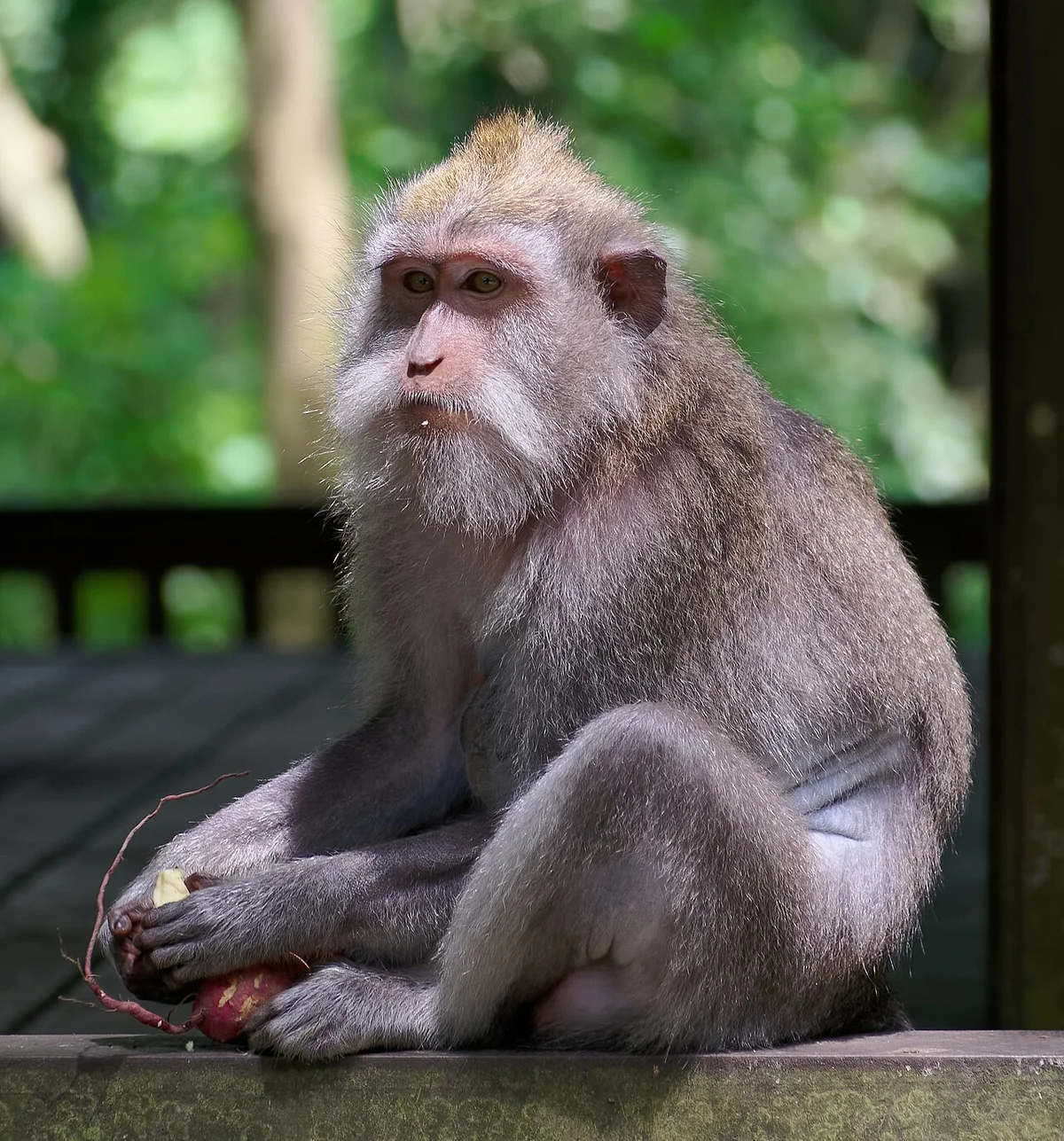
Strict safety and conservation regulations protect both visitors and the resident primate troops. Bringing outside food or feeding the monkeys is strictly prohibited, as unauthorized snacks disrupt natural foraging and trigger aggressive competition among troops. Never make prolonged direct eye contact with a macaque—in primate body language, staring is interpreted as a threat or challenge. If a monkey climbs onto your shoulder or bag, stay calm, avoid sudden movements or shouting, and step slowly toward a uniformed park ranger for assistance. Always disable camera flash when taking photos so bright bursts do not startle the animals, and follow all posted sanctuary guidelines throughout your visit.
To experience this journey seamlessly with a knowledgeable local guide, explore our all-inclusive international tour packages with thoughtfully arranged itineraries.