Welcome to the most comprehensive international travel encyclopedia on Wat Yannawa (The Boat Temple) – one of the most unique and renowned spiritual landmarks featured on Thailand travel itineraries, particularly along the bustling route connecting Bangkok and Pattaya. Compiled by VDS Travel’s team of experts and cultural researchers, this guide walks you through every layer of its history, reveals its magnificent architecture, shares practical on-the-ground tips, and answers every essential question so your journey becomes fulfilling, deeply meaningful, and unforgettable.
Wat Yannawa is far more than a conventional Buddhist temple in the Land of Smiles; it is a living museum of cultural convergence, centuries of history, and profound Thai philosophy. Resting serenely along the flowing Chao Phraya River, the temple draws millions of Buddhist devotees and international travelers each year who come to pay homage, pray for peace, and find inner stillness in the heart of vibrant Bangkok.
Geographically, Wat Yannawa is located at 40 Charoen Krung Road in Bangkok’s Sathon District, right along the eastern bank of the Chao Phraya River—the lifeblood that has nourished Thai civilization for thousands of years. Thanks to its prime location in Sathon, the temple is remarkably easy to reach whether you are departing from the historic Rattanakosin Old Town, the Siam shopping district, or the Riverside area.
Furthermore, its waterfront setting gives Wat Yannawa an open, breezy atmosphere with sweeping views across the wide river, where boats and ferries pass day and night. This creates a distinct identity that separates visitors from the clamor of the modern metropolis, welcoming them into a sacred, ancient, and deeply meditative sanctuary.
To fully appreciate the significance of Wat Yannawa, we must journey back to the 18th century, following the fall of the Ayutthaya Kingdom when King Rama I established the Chakri Dynasty and moved the capital to Bangkok. Originally, the temple was known as Wat Khok Kwai (Buffalo Pen Temple). During the reign of King Rama III (1824–1851), the enlightened monarch ordered the temple’s reconstruction and bestowed upon it its current name, Wat Yannawa.
The historical highlight that earned Wat Yannawa its fame and singular status stems from King Rama III’s visionary architectural concept. In the 19th century, as traditional wooden Chinese trading junks (known as Ruea Samphao Nawa) began to decline and were gradually replaced by modern Western steamships, the king commissioned the construction of a stupa modeled accurately after these ancient Chinese merchant vessels.
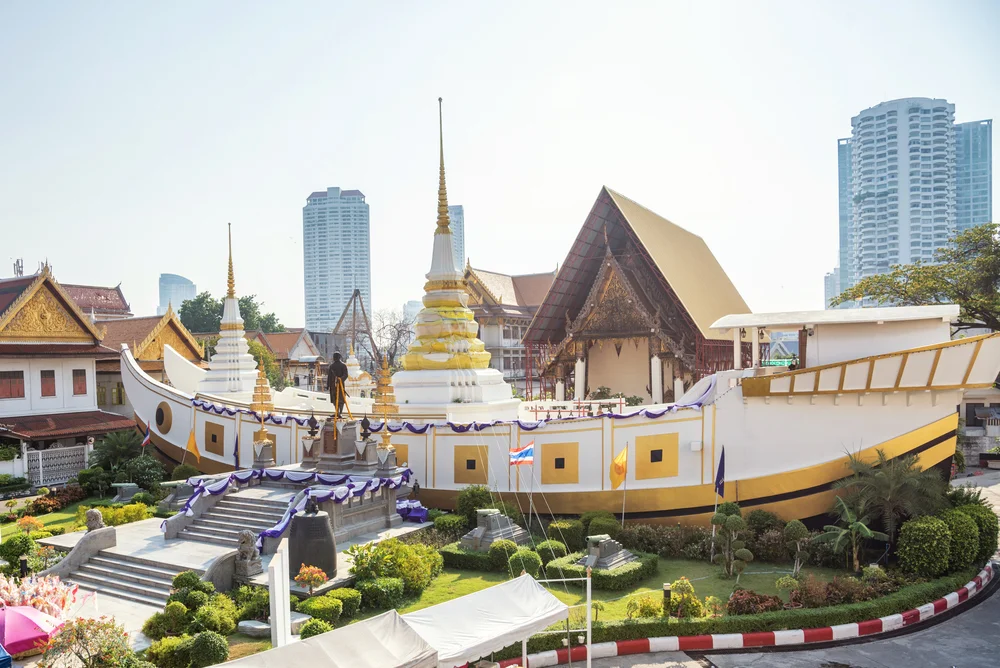
Panoramic view of the unique ship-shaped architecture of Wat Yannawa (The Boat Temple) in Bangkok, Thailand.
The king’s purpose was not only to honor the merchant ships that had played a vital role in advancing Siam’s economy and international trade at the time, but also to remind future generations of the importance of seafaring and cultural exchange. Consequently, Wat Yannawa carries an unrivaled symbolic distinction: it is the only temple in the world built in the likeness of a grand merchant ship.
In Eastern Buddhist thought and traditional Thai culture, the image of a vessel represents far more than water transportation—it embodies profound spiritual philosophy. The boat is revered as the “Ship of Prajna” (Wisdom Boat), carrying sentient beings across the turbulent ocean of samsara (the cycle of rebirth) to the far shore of liberation and enlightenment.
Placing Buddhist stupas atop a solid masonry hull delivers a powerful message about spiritual cultivation: guiding humanity safely through life’s storms by relying on the Dharma and compassion. For local residents and overseas Chinese communities alike, Wat Yannawa also symbolizes smooth sailing in business, peace in daily life, and enduring harmony among East Asian cultures.
Upon stepping onto the grounds of Wat Yannawa, every visitor is captivated by the originality and grandeur of its architectural ensemble. Departing from the conventional pyramid-like or pointed-spire temple layouts typical across Thailand, this sanctuary represents a bold yet harmonious fusion of Thai royal temple artistry and ancient Chinese maritime design.
At the heart of the Wat Yannawa complex stands the merchant ship hull, stretching tens of meters in length and constructed from reinforced concrete with meticulously painted exteriors that faithfully replicate the structure of an ocean-going wooden junk. Its keel curves gracefully while the bow and stern rise proudly, creating the striking impression of a vessel cutting through waves right in the middle of the capital.
What makes the structure truly extraordinary is that atop the deck of this colossal merchant vessel sits neither a cargo hold nor a wheelhouse, but two soaring stupas (Chedis) crafted in classical Theravada Thai Buddhist style. The pairing of a Chinese hull with Thai spires produces an intriguing contrast that blends seamlessly, symbolizing the remarkable cultural synthesis forged during the Siamese Kingdom’s maritime trade era.
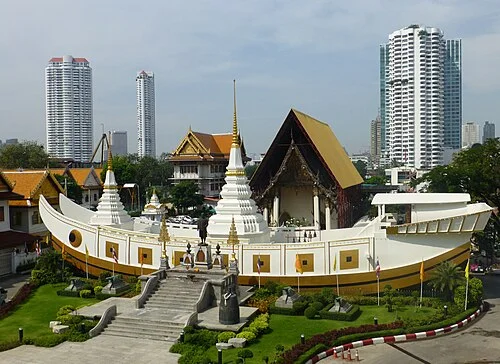
Overview of Wat Yannawa (The Boat Temple) featuring its distinctive ship-shaped structure in Bangkok, Thailand.
Rising majestically from the ship’s deck are two pristine white stupas adorned with intricate gilded motifs that shimmer brilliantly under the tropical sun. The larger stupa at the stern represents the main mast, towering aloft like a spiritual lighthouse illuminating the path forward. A smaller stupa stands near the bow, lending impeccable visual symmetry to the entire structure.
Inside and around these stupas are enshrined numerous sacred Buddha relics alongside ancient bronze and gold Buddha images sculpted in the artistic traditions of the Ayutthaya and Rattanakosin periods. As twilight descends, the golden embellishments on the spires mingle with the whitewashed stucco and glowing temple lights to create an enchanting, breathtaking spectacle.
Beyond its one-of-a-kind ship monument, the Wat Yannawa compound also features a traditional ordination hall (Ubosot) crowned with multi-tiered curved tiled roofs and adorned with murals depicting Buddhist Jataka tales and the life of the Buddha. The interior pillars are lacquered in red and gold leaf and intricately carved with mythical motifs, showcasing the pinnacle of traditional Thai craftsmanship.
Surrounding the courtyard are monastic residences, a shrine dedicated to Avalokiteshvara (Guanyin Bodhisattva), a pavilion honoring the monarchs of the Chakri Dynasty (especially King Rama III), and rows of reverently arranged Buddha statues of varying sizes. Thoughtful, spacious layout combined with centuries-old shade trees creates a serene, breezy ambiance that dispels Bangkok’s tropical heat.
Visiting Wat Yannawa treats travelers not only to architectural wonders, but also to deeply meaningful spiritual practices and unforgettable photography opportunities. From the perspective of VDS Travel’s specialists, we have curated the quintessential experiences you simply should not miss.
Your spiritual journey at Wat Yannawa begins by offering incense, fresh flowers, scented candles, and gold leaf to the deities and Buddhas. You can climb aboard the ship’s deck to pay homage at the stupas and perform the traditional circumambulation ritual—walking clockwise around the stupas three times to pray for peace, prosperity, and good fortune for your family.
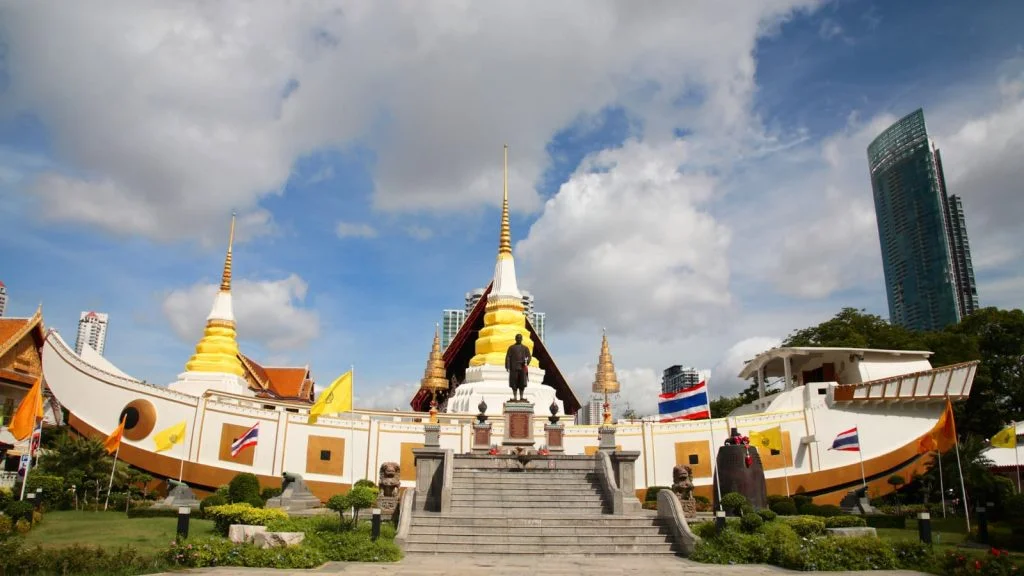
Distinctive ship-shaped architectural detail of Wat Yannawa in Bangkok, Thailand.
In addition, senior monks regularly lead blessing and chanting ceremonies on-site. Visitors may receive sacred holy water sprinkled by the monks or acquire blessed bracelets and protective amulets for auspicious energy. Remember to maintain a respectful demeanor, dress modestly, and strictly observe quietness throughout this sacred space.
For avid travelers and photography enthusiasts, Wat Yannawa offers iconic angles that anyone visiting Bangkok will want to capture:
Panoramic Riverside View: Standing near the temple’s riverside pier, you can frame the entire colossal ship extending toward the water, backed by the Chao Phraya River with passing dinner cruises and express boats creating a dynamic blend of classic heritage and modern city life. Close-Up Shot of the Deck and Stupas: Use a wide-angle lens or Portrait mode on your smartphone while standing on the deck, framing the gilded white stupas against Thailand’s vivid blue sky. This perspective evokes a majestic, timeless feeling—as though you are standing aboard a vessel sailing across history. Golden Hour Sunset: The ideal window for photography is between 5:00 PM and 6:00 PM. When the setting sun casts warm amber and gold light across the gilded spires and the rippling waters of the Chao Phraya River, every frame becomes a masterpiece.
No travel experience is complete without savoring local cuisine and browsing cultural keepsakes. The neighborhood surrounding Wat Yannawa and Sathon District serves as a compact paradise brimming with authentic Bangkok street food flavors.
Just outside the temple gates and along nearby streets such as Charoen Krung, you will find lively food carts and long-standing family eateries serving classic Thai dishes at very budget-friendly prices:
Pad Thai (Thai Stir-Fried Noodles): Thailand’s iconic national dish featuring tender rice noodles stir-fried with fresh shrimp, egg, bean sprouts, crunchy roasted peanuts, and a rich sweet-and-tangy tamarind sauce. Tom Yum Goong (Spicy and Sour Shrimp Soup): A legendary soup that awakens every sense with its balanced harmony of bird’s-eye chili heat, fresh lime tang, aromatic lemongrass, kaffir lime leaves, and creamy coconut milk. Som Tam (Green Papaya Salad): A crisp, refreshing salad pounded with dried shrimp, yardlong beans, tomatoes, lime juice, and chili—especially appetizing in warm weather. Mango Sticky Rice: A quintessential Thai dessert pairing sweet, ripe golden mango slices with fragrant glutinous rice drizzled in silky coconut cream and sprinkled with crispy mung beans.
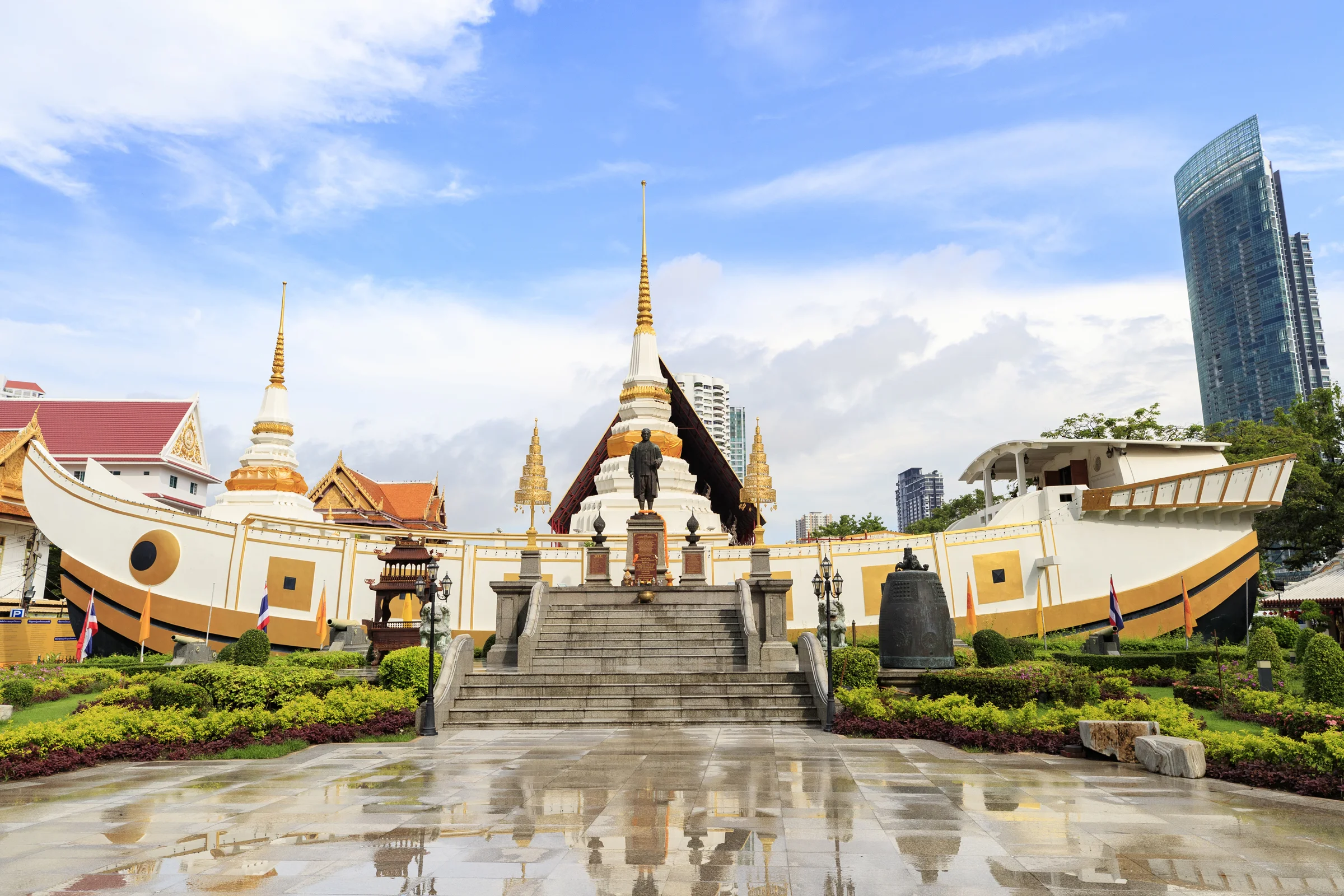
The famous boat-shaped Wat Yannawa Temple in Bangkok, Thailand.
While visiting Wat Yannawa, travelers can also browse meaningful spiritual and cultural souvenirs to bring home for family and friends:
Buddhist Prayer Bead Bracelets: Crafted from precious woods, natural stones, or bodhi seeds and blessed by resident monks for peace and prosperity. Miniature Gold-Plated Buddha Statues: Replicas modeled after the temple’s sacred stupas or revered Buddha images, ideal for display on a work desk or in a family living room. Thai Essential Oils & Herbal Remedies: Wellness balms, herbal inhalers, and premium sandalwood incense sold at souvenir shops around the temple area.
To ensure your visit to Wat Yannawa goes smoothly, safely, and enjoyably, VDS Travel’s travel specialists have assembled the most detailed practical handbook tailored for you.
Thailand has a tropical monsoon climate, so choosing the right season plays a major role in shaping your experience:
Ideal Dry Season (November to February): This is when Bangkok enjoys its coolest, most pleasant weather with minimal rain and clear blue skies—ideal for outdoor sightseeing, riverside strolls, and photography. Rainy Season (June to October): Brief afternoon showers are common during these months. However, crowds are noticeably thinner, and flights, hotels, and tour services are often more affordable. If visiting during this season, pack a compact umbrella and check local weather forecasts. Best Time of Day: Visit Wat Yannawa early in the morning (from 8:00 AM to 10:00 AM) to enjoy peaceful serenity and avoid midday heat, or late in the afternoon (from 4:30 PM to 6:00 PM) to catch a stunning sunset over the Chao Phraya River.
As a staple stop along the popular Bangkok–Pattaya travel corridor, getting to Wat Yannawa is straightforward with several convenient options:
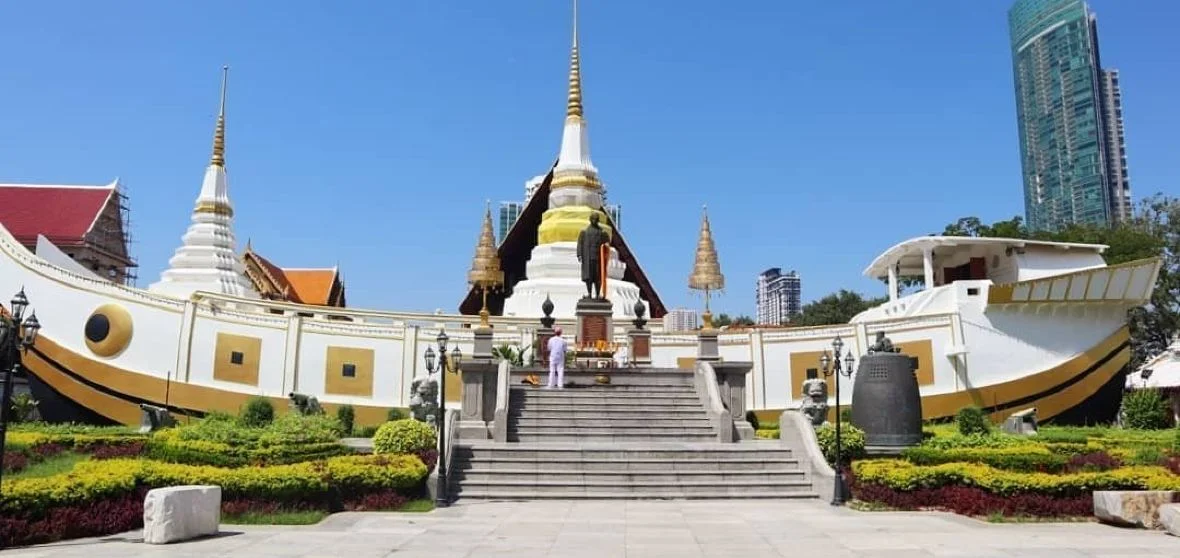
Unique large ship architecture at Wat Yannawa (The Boat Temple) in Bangkok, Thailand.
BTS Skytrain: This is the fastest, easiest, and most economical way to bypass Bangkok’s notorious traffic. Simply take the BTS Silom Line and exit at Saphan Taksin Station (Exit 3). From there, it is just a 2-to-3-minute walk straight to the entrance of Wat Yannawa. Chao Phraya Express Boat: If you are traveling from the Old Town or other riverside attractions, hopping on a public river boat (Green Flag, Orange Flag, or Hop-on Hop-off tourist boat) and disembarking at Sathorn (Taksin) Pier is both scenic and enjoyable. Taxi or Ride-Hailing Apps (Grab / Bolt): Convenient for groups of 3–4 travelers or those carrying luggage. Always ask the driver to use the taximeter or confirm the fare in advance before setting off.
One of the best advantages of visiting Wat Yannawa is that admission is completely free for all domestic and international visitors. You only need to budget a modest amount for the following optional expenses:
LISTED ADMISSION & SERVICE PRICE TABLE
When entering any Buddhist temple in Thailand—especially a revered sanctuary like Wat Yannawa—visitors must strictly observe the following etiquette guidelines:
Modest Dress Code: Both men and women must wear respectful, modest attire. Men should wear long trousers and shirts with sleeves; women should wear skirts or dresses extending below the knee or long trousers, paired with tops that cover the shoulders (no sleeveless tops or sheer fabrics). If you happen to wear shorter clothing, bring a large shawl or sarong to wrap around before entering the main prayer halls. Respectful Conduct: Maintain decorum, speak softly, and avoid loud laughter or disruptive behavior. When taking photographs near Buddha statues, never turn your back directly toward a Buddha image or strike disrespectful poses. Footwear Removal Rule: You must remove your shoes and leave them outside before stepping into the ordination hall (Ubosot) or any sacred shrine room. Respect for Monks: Women must never make physical contact with Buddhist monks. If a woman wishes to present offerings or donations to a monk, she must place them on a receiving cloth or designated tray provided by the monk.
No. Wat Yannawa offers completely free admission to all domestic and international visitors coming to sightsee and pay homage. You do not need to buy an entrance ticket. However, making a voluntary donation into the temple’s merit boxes to support ongoing maintenance and preservation is warmly encouraged.
The temple welcomes visitors daily from 6:00 AM until around 8:00 PM. That said, the ideal window to explore all outdoor architectural areas and offer incense is between 8:00 AM and 6:00 PM.
The fastest, most economical, and traffic-free way to get there is via the BTS Skytrain. Take the Silom Line to Saphan Taksin Station, then walk for less than 3 minutes to reach the temple.
On average, a visit combining prayer, photography, and architectural exploration at Wat Yannawa takes between 45 minutes and 1.5 hours—making it easy to fit into a full-day Bangkok city tour itinerary.
You do not need formal attire—simply follow standard temple dress etiquette by wearing a sleeved top and long pants or a skirt falling below the knee. Avoid shorts, sheer garments, or tank tops when entering the sacred temple grounds.
Wat Yannawa is a classic, indispensable stop on Thailand travel itineraries, particularly on Bangkok – Pattaya overland tours. The temple is typically scheduled on either the first or final day of the trip so travelers can pray for peace, safety, and smooth sailing before concluding their journey.