In the heart of bustling Bangkok, where concrete towers rise without pause, Siam Paragon (暹罗百丽宫) is not merely a shopping mall, but also an entity carrying layers of Thai royal history. To grasp the soul of this landmark, one must trace back to the late nineteenth century, when Pathum Wan was still a tranquil area tied to expansive lotus ponds and refined royal retreats of the Chakri dynasty. The name Pathum Wan, in classical Thai, means “Lotus Pond”—a title recalling the era when King Rama V—the great King Chulalongkorn—often chose this place as a retreat to find stillness amid the demands of national modernization.
During King Chulalongkorn’s reign, Pathum Wan was not just a geographic name, but a symbol of the monarchy’s outward-looking vision. Land here fell under the stewardship of the Crown Property Bureau, an institution holding the economic lifelines and land heritage of the throne. For decades, the area was wrapped in royal solemnity, set apart from the bustle of traditional markets along the Chao Phraya River. This area’s transformation from a quiet courtly setting into one of Southeast Asia’s liveliest commercial hubs was a dramatic shift across eras, reflecting Thailand’s modernization aspirations in an age of global connection.
A formal historical milestone arrived on December 9, 2005, when Siam Paragon opened its doors to the public, marking the close of a traditional market-economy era and ushering in a new chapter of upscale urban retail. Choosing this location to build a “commercial palace” was no accident, but an intentional inheritance. Planners placed Siam Paragon right at the center of a vital transport corridor where royal heritage meets modern pulse. The mall’s presence completely reshaped Pathum Wan, turning it into a showcase of modern consumption where traditional cultural values are reinterpreted through international luxury and convenience.
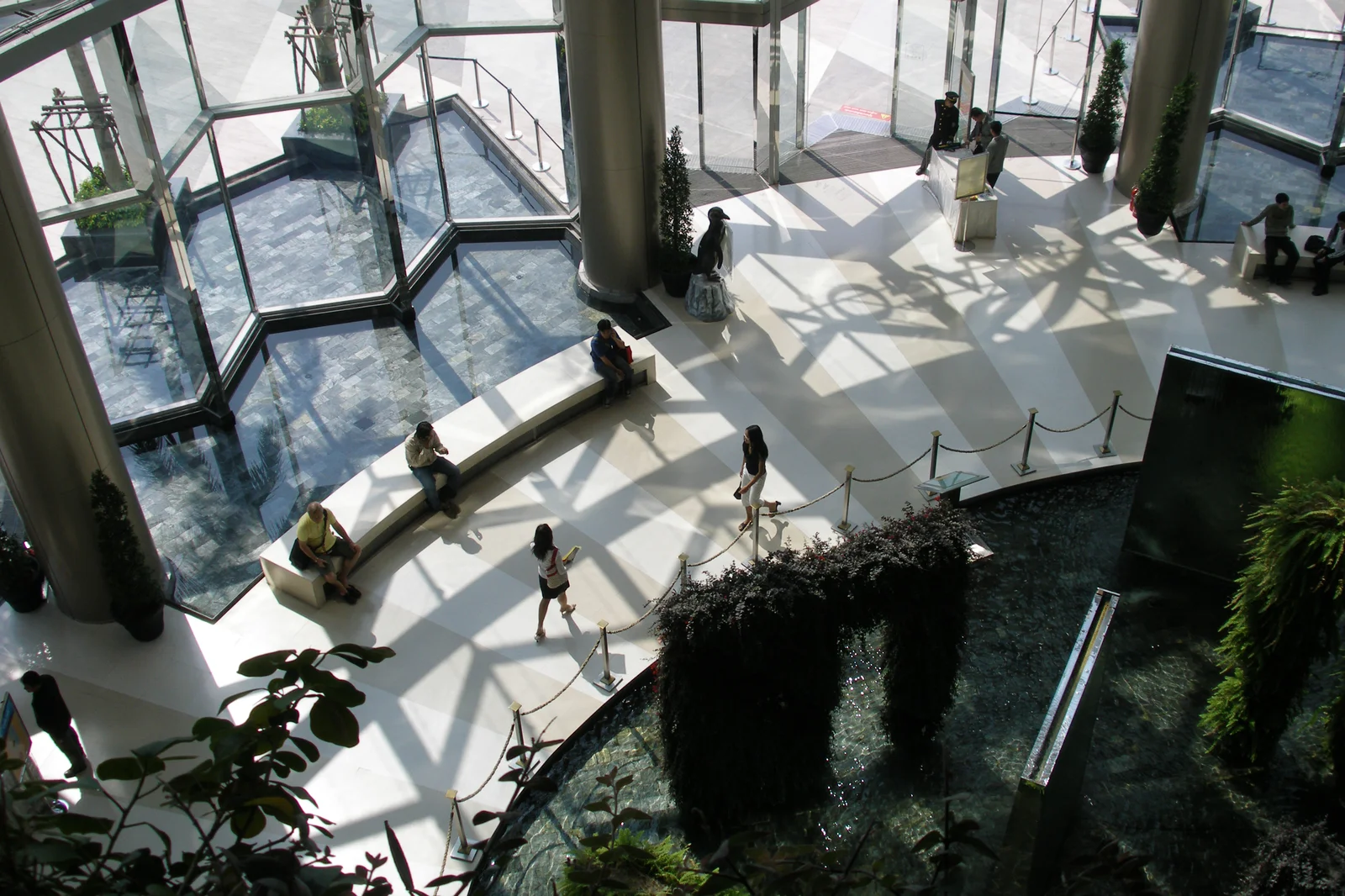
Grand multi-level atrium inside Siam Paragon shopping mall in Bangkok
Looking back across history, Siam Paragon’s emergence testifies to a shift in economic power from floating and riverside markets toward climate-controlled, master-planned spaces. Yet even wearing the guise of modernity, Siam Paragon keeps an invisible thread linking it to the past. The name “Siam”—the historic, proud name of the country of Thailand—was given to the complex as an affirmation of a nation rising strongly while honoring its roots. Built of glass and steel, Siam Paragon’s walls still seem to recount a place once a royal lotus pond where kings once strolled, now welcoming millions of visitors from around the globe.
Shifts across time in this neighborhood go beyond economic growth figures or expansive retail floor space. They represent a change in cultural mindset—from enjoying nature directly to crafting refined lifestyle experiences. Stepping into Siam Paragon’s wide interior, visitors do more than shop; they walk across ground once tied to royalty, where heritage values have been transformed into lasting commercial vitality. That meeting of royal past and urban future creates a distinct identity that makes Siam Paragon an irreplaceable landmark in modern Bangkok’s cultural and historical landscape.
Occupying a prime spot along Rama I Road, Siam Paragon (暹罗百丽宫) is not merely a modern commercial building, but also living proof of urban planning aligned harmoniously with East Asian feng shui thought. Viewed through human geography, the site sits on terrain that feng shui masters call a “wealth-gathering point.” In Bangkok’s history, Pathum Wan was framed by canals acting as “water dragon veins” bringing life force from the Chao Phraya River. Siam Paragon’s striking presence here carries forward an age-old tradition of choosing auspicious ground, where modern city traffic arteries replace old canals to keep energy flowing without pause.
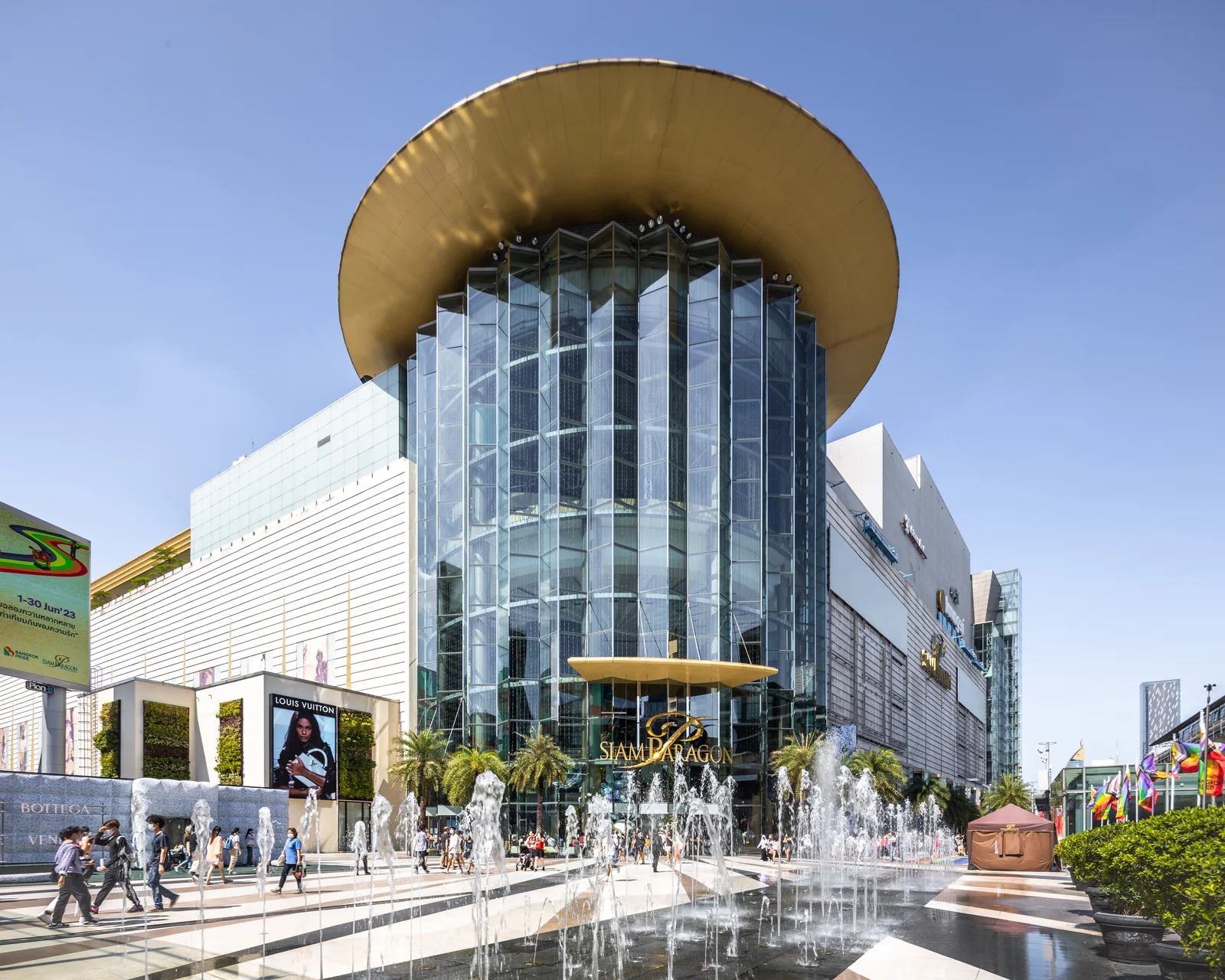
Panorama of Siam Paragon’s iconic glass-and-steel facade along Rama I Road
In massing and form, architects artfully applied the “treasure basin” concept into the overall design. The building’s front curves inward to open a broad plaza like arms held wide to greet foot traffic arriving from Siam BTS station. That layout is not only visually appealing, but also a thoughtful design move meant to “gather” urban vitality. As crowds stream in from different directions, the inward curve helps channel movement and turn bustling footfall into steady commercial energy, making this spot a round-the-clock economic hub of Bangkok.
Constructing Siam Paragon was an infrastructure feat at the time of its opening. With total floor area exceeding 500,000 square meters, the complex required a sturdy foundation able to carry heavy loads—especially while integrating underground levels linked directly to public transit. Engineers addressed Bangkok’s soft alluvial basin soil with deep bored piling to ensure firm stability for the large steel-and-glass structure above. Siam Paragon’s signature spatial character shows not only on the outside, but also inside: tall atriums follow air-convection principles so natural light filters down through levels, bringing balance within a space of concrete and glass.
Looking closer at interior landscaping, pairing “Water” and “Metal” elements appears clearly in artistic fountains and natural stone cladding. In Thai culture, water symbolizes prosperity and renewal. Bringing water features indoors helps moderate tropical warmth while keeping air and movement feeling open rather than stagnant. Gently curving walkways—recalling bends of the Chao Phraya River—guide visitors naturally from zone to zone for an engaging walk. Every corner, from royal-garden-style potted greenery to warm lighting, is arranged to put visitors at ease.
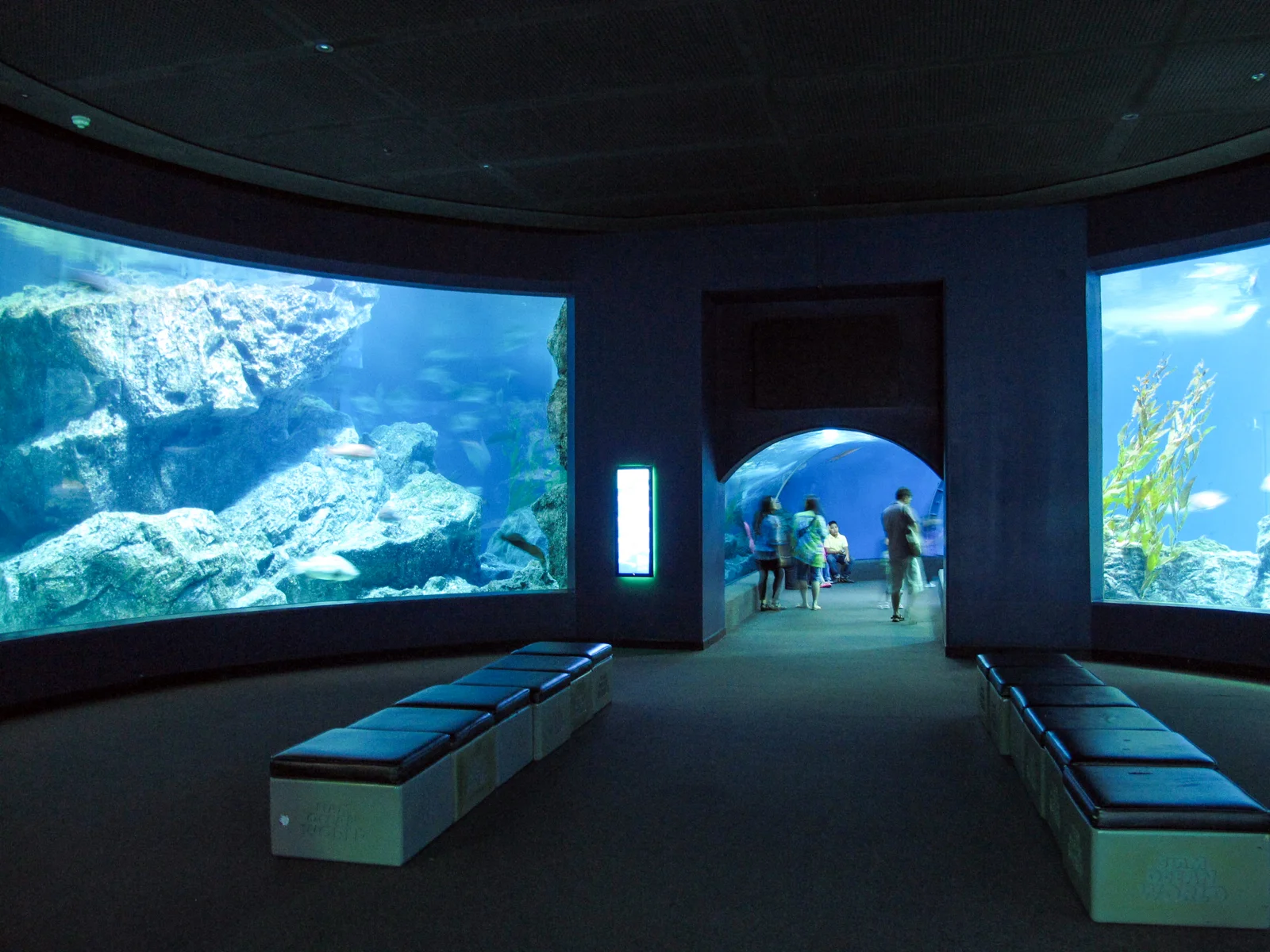
Sea Life Bangkok Ocean World aquarium, among the largest in Southeast Asia, beneath Siam Paragon
Blending modern engineering with traditional feng shui turns Siam Paragon into a dynamic space. Beyond commerce, it is a meeting point of cultural currents where every tile and stair links past with future. When night falls, light glowing from the building shines like a beacon in central Bangkok, affirming an enduring hub where site planning and architecture come together across changing times.
Arriving in central Bangkok where modern and traditional currents meet, Siam Paragon (暹罗百丽宫) stands out as a proud architectural landmark. Spanning 500,000 square meters, it is more than a retail mall—it is a large-scale structure where postmodern design is reinterpreted through a refined Thai aesthetic lens. To build reliably on Bangkok’s soft alluvial soil, engineers used long-span steel framing paired with advanced prestressed concrete. These materials provide lasting structural stability against settlement for a large volume while allowing wide, open interior spans free of dense columns.
The first visual highlight is the tempered-glass facade wrapping the structure. Glass does more than bring in natural light and shift interior lighting across the day; it links indoor spaces visually with the capital’s lively pace. Yet modernity does not sever ties to local identity. Architects wove traditional motifs into fine details—stylized lotus patterns, a symbol of purity in Thai Buddhism, appear on partitions alongside gilded royal accents. Combining gleaming gold tones with clear glass creates a setting that feels contemporary yet subtly recalls Rattanakosin courtly grandeur.
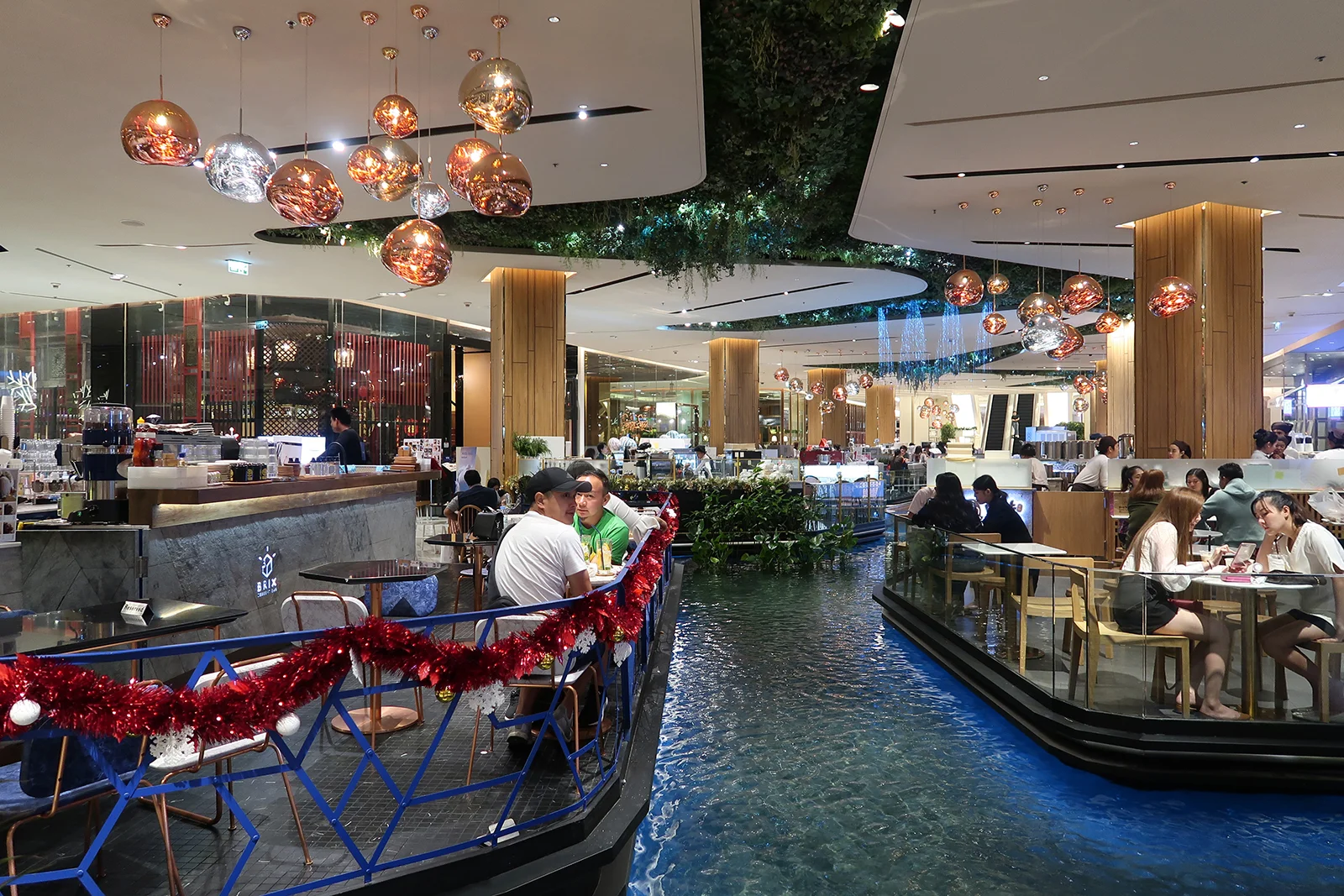
Upscale Gourmet Garden dining zone with lush greenery and refined design
Interior layout at Siam Paragon follows smart functional zoning designed to guide visitors’ moods naturally. Broad atriums aid airflow and daylight while hosting cultural and art events that turn the space into an indoor civic square. Craftsmanship extends down to interior finishes: alloy handrails and carefully chosen natural stone wall panels reflect Thai attention to detail. Warm lighting paired with tropical greenery creates a calm atmosphere that bridges commercial energy with cultural comfort.
Siam Paragon’s scale is further underscored by weaving cultural venues directly into its retail structure. Housing exhibition areas, a large aquarium, and multimedia entertainment inside the building shows forward-looking multi-use design. Moving through Siam Paragon brings smooth transitions—from soaring atriums to cozier dining corners styled after classical Thai architecture. Blending modern building craft with Thai cultural character makes Siam Paragon a notable landmark of contemporary Bangkok.
When evening settles over Rama I Road, Siam Paragon is more than a shopping center—it becomes a lively expression of Bangkok’s “city that never sleeps” energy. That shift begins on the exterior, where programmable LED lighting across the facade displays shifting patterns and colors for major national occasions and Thai royal milestones. Each hue and light rhythm blends into the capital’s evening pulse, turning the building into a glowing landmark where modern flair meets enduring respect for tradition.
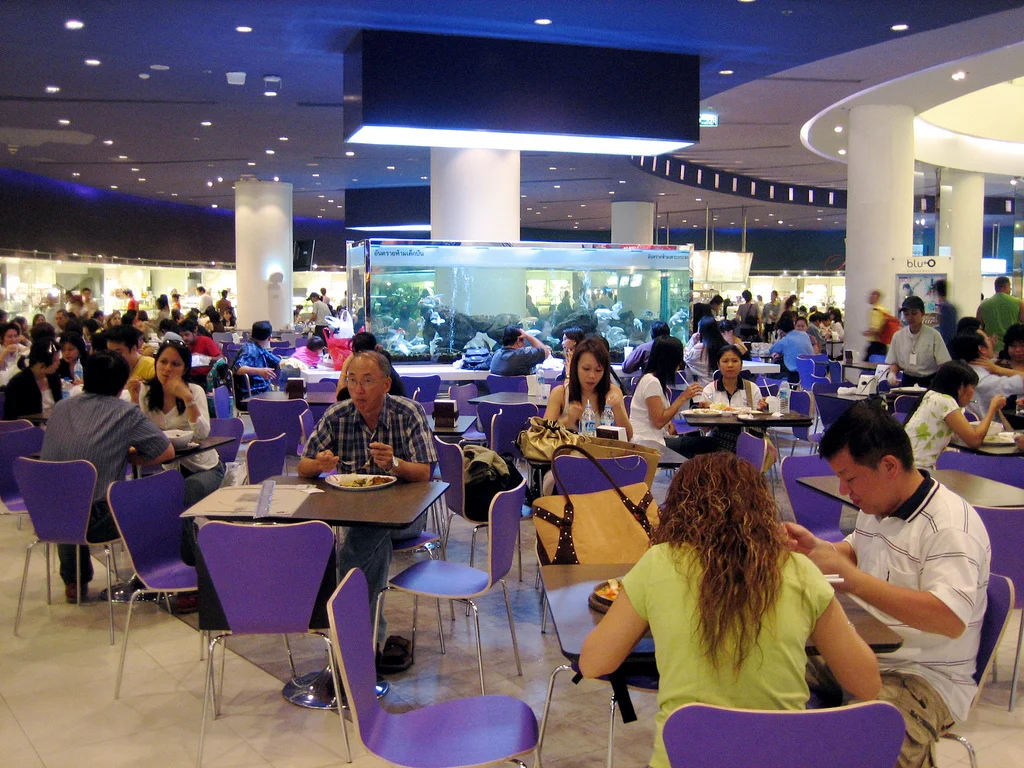
Bustling food court bringing together Thai street food and international flavors at Siam Paragon
Inside, wonder comes not only from luxury labels, but also from immersive exhibits at Sea Life Bangkok Ocean World. Located underground, the aquarium showcases clever engineering and set design. Multi-directional sound and bio-inspired lighting recreate deep ocean habitats so visitors feel surrounded by coral reefs illuminated like sunlight filtering through water. Rather than a simple aquarium, it acts as a living showcase using light and display to highlight marine biodiversity.
Nighttime life at Siam Paragon is also shaped by thoughtful dining. After visiting the aquarium, guests often head to upscale restaurants where family recipes are plated with care. Diners can sample classic Thai cuisine such as Massaman curry rooted in Rattanakosin traditions or mango sticky rice presented cleanly. Minimalist, warm restaurant lighting highlights natural ingredient colors, offering a refined setting rooted in local culinary heritage.
Links between light art and public space appear clearly in main lobbies that host visual displays. These shows pair projection technology with traditional references, turning Ayutthaya-inspired motifs into crisp light patterns that add a distinct touch to Bangkok nights.
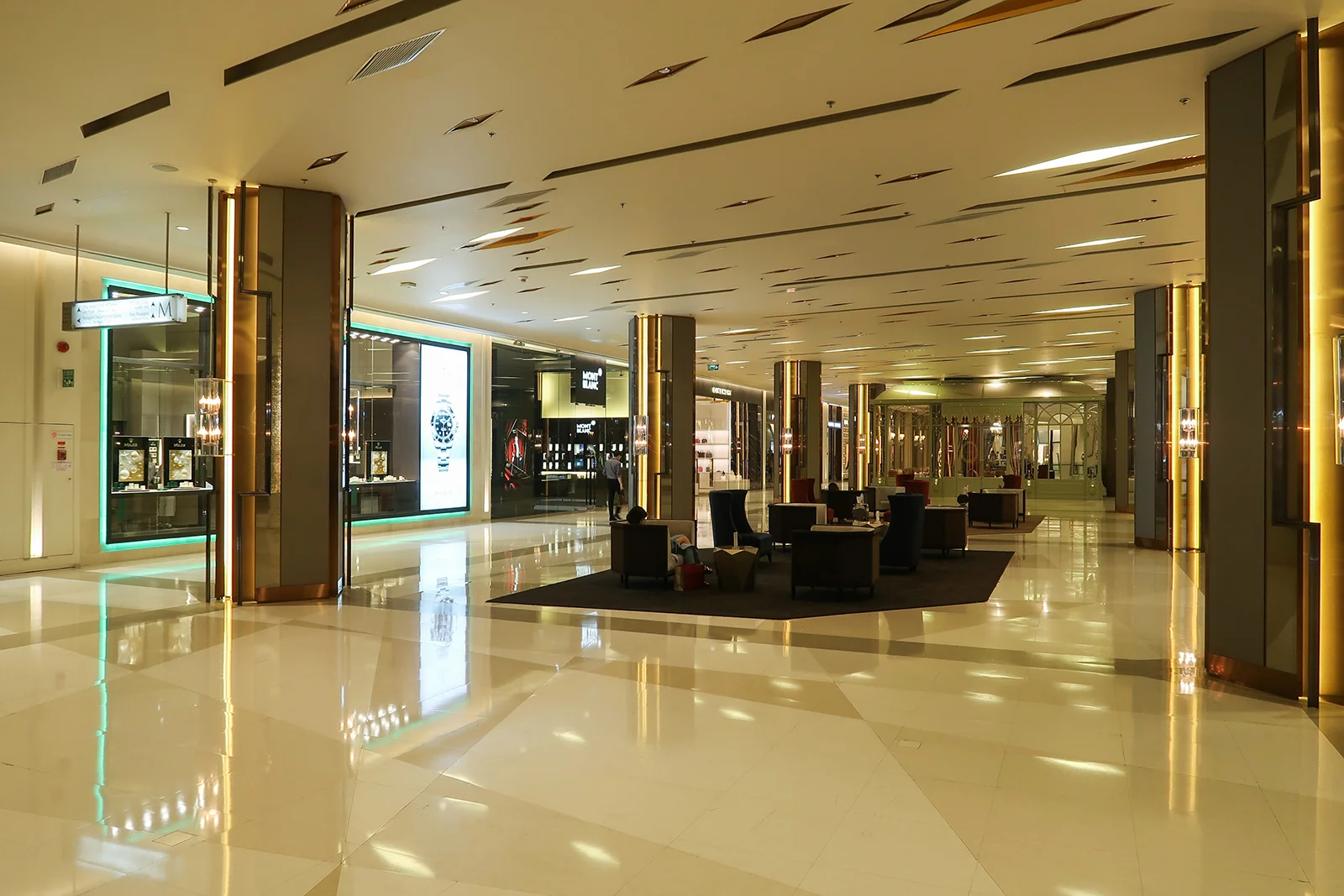
M Level gathering leading global luxury fashion brands at Siam Paragon
After sundown, spaces across Siam Paragon show modern planning that puts visitor comfort first across every level. From softly lit corners to bright lobbies, lighting and layout work together smoothly. For guests seeking a quieter pause, afternoon tea spots overlooking Parc Paragon—which hosts outdoor performances—offer a pleasant perch to watch Bangkok’s lively evening energy unfold.
Stepping into Siam Paragon’s ground-level “Gourmet Garden” feels like taking a culinary tour across Thailand. Inside a modern mall, this lush, airy space brings together specialties from across the country’s regions—a place to sample regional flavors and see how culinary traditions carry local history and everyday customs forward.
A standout highlight here is “Royal Thai Cuisine,” inspired by dishes once served in Rattanakosin court settings. Classics like Tom Yum Goong or Massaman curry receive careful preparation. At open kitchens, cooks still pound spices by hand in traditional stone mortars; rhythmic pounding releases natural essential oils from galangal, lemongrass, kaffir lime leaf, and dried chili for fresh, authentic aroma—linking past culinary craft with today’s dining room.
SEA LIFE BANGKOK AQUARIUM ADMISSION PRICE LIST (SIAM PARAGON BASEMENT)
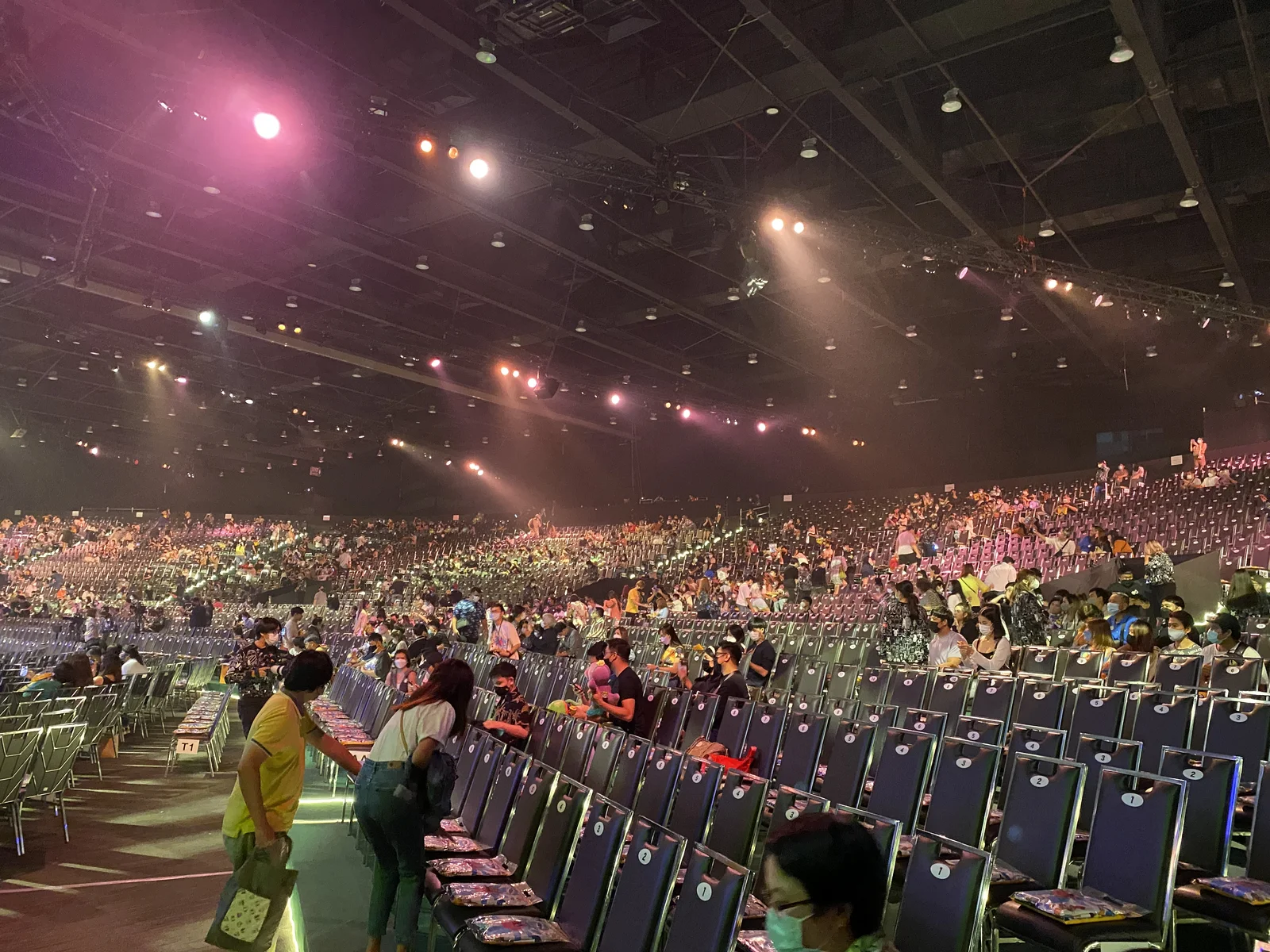
Royal Paragon Hall international conference and exhibition center on upper floor of Siam Paragon
Exploring dining here takes guests across distinct flavors of Thailand’s four regions—from delicate central Thai dishes and careful presentation to bold southern spices shaped by coastal ingredients and coconut, highland northern (Lanna) specialties, and lively northeastern (Isan) dishes like papaya salad and grilled meats. Each plate reflects local geography, climate, and culinary traditions.
Dining here is also shaped by longstanding kitchens where owners take pride in consistent recipes. Enjoying Massaman curry—widely celebrated internationally—lets diners experience creamy coconut milk, tender slow-cooked meat, and warm spices like cinnamon, star anise, and cardamom that speak to centuries of trade and culinary exchange across Thailand.
Gourmet Garden at Siam Paragon is more than a quick meal stop; it is a welcoming setting to enjoy Thai flavors amid Bangkok’s energy. Sitting down to a regional dish amid the city’s glow offers a pleasant break that rounds out a day of shopping and sightseeing.
Siam Paragon (暹罗百丽宫) stands as a well-known landmark in central Bangkok where modern retail blends with Thai hospitality. The mall opens daily from 10:00 AM to 10:00 PM, matching the city’s rhythm. Visiting during weekday off-peak hours generally offers a calmer pace than weekends or major holidays.
For getting around, Bangkok’s public transit connects conveniently to Siam Paragon. Riding the BTS Skytrain is straightforward: take either the Silom or Sukhumvit line to Siam Station and follow the covered walkway directly into the building. Using the Skytrain helps bypass street traffic along Rama I Road while giving an elevated view of central Bangkok along the way.
To pace a visit across the mall’s large floor area, travelers often start on lower levels around G for food—from classic Pad Thai to mango sticky rice—before heading up to fashion floors, exhibition spaces, and the cinema complex above at a comfortable pace.
A practical tip for international visitors is bringing your passport to request a Tourist Card at the information counter, which provides eligible discounts at participating shops and restaurants. Smart casual attire is also a good fit for dining areas and cultural exhibitions.
Daily spending varies widely based on shopping and dining choices, with extra budget handy for optional activities or spa visits. For a guided itinerary covering Bangkok’s key stops and shopping areas with organized transport, you can check out our 5-Day 4-Night Bangkok – Pattaya Tour for a comfortable, well-paced trip.