Amid the majestic wilderness of the Southern Central Highlands, where drifting mist mingles with the timeless murmur of the deep forest, Damb’ri Waterfall rises as a sacred emblem of the land and its indigenous people. Standing proudly in Bao Loc City, Lam Dong Province—roughly one hundred kilometers southwest of central Da Lat—this celebrated natural landmark has long asserted a singular geographic identity completely distinct from the bustle of the misty mountain town. The classic public misconception equating Damb’ri with Da Lat is ultimately a byproduct of late twentieth-century tourism marketing strategies; viewed through the lens of historical science and anthropology, Damb’ri remains an authentic, independent cultural-geographic realm belonging to the indigenous Ma people.
From a feng shui and geological perspective, the Damb’ri Waterfall basin possesses a monumental structure sculpted by millions of years of tectonic movement in the Earth’s crust. Torrential waters plunge from heights exceeding sixty meters into a deep gorge, generating a perpetual curtain of white spray and mist that sends deep, resonant echoes against ancient basalt cliffs. Surrounding the cascade is a lush primeval forest ecosystem filled with centuries-old canopy trees, tangled vines, and diverse highland flora characteristic of fertile basalt plateaus. This auspicious “water-gathering, prosperity-nurturing” terrain not only sustains rich biodiversity, but has also nourished the enduring cultural lifeblood of the Ma De and Ma Krung communities for millennia.
Delving into its cultural-historical depths, the name “Damb’ri” (properly spelled *Dam Bhri* in the indigenous tongue) carries a profound philosophical meaning: “Waiting.” Behind this simple name lies a poignant folk legend passed down across generations by village elders in Bao Loc. It tells the story of a love transcending bitter clan hatred between a young man named K’Dam and a maiden named H’Bi. When K’Dam vanished deep into the forest in search of medicinal herbs to heal the feud between their two families, H’Bi stood waiting faithfully beside the waterfall day and night. Her tears mingled with the rushing waters, and over time she turned into a steadfast stone pillar enduring through the ages. Viewed anthropologically, this legend reflects both the historical transition from matrilineal to patrilineal social structures among indigenous communities and a timeless celebration of unwavering fidelity and communal harmony.
From prehistoric eras through feudal and modern periods, the Damb’ri Waterfall basin has served as a sanctuary and homeland for tribes of the indigenous Southern Central Highlands confederation. This land has witnessed nomadic footsteps and new-rice harvest festivals echoing with gong music around crackling fires steeped in animist philosophy. Today, examined through the lens of heritage conservation, Damb’ri Waterfall is far more than a scenic wonder captivating travelers—it is a living museum preserving the memory, soul, and identity of the Ma people. Through the passage of time, the cascade continues to plunge downward in powerful torrents, like an eternal epic celebrating the faithfulness of humanity and the untamed Central Highlands.

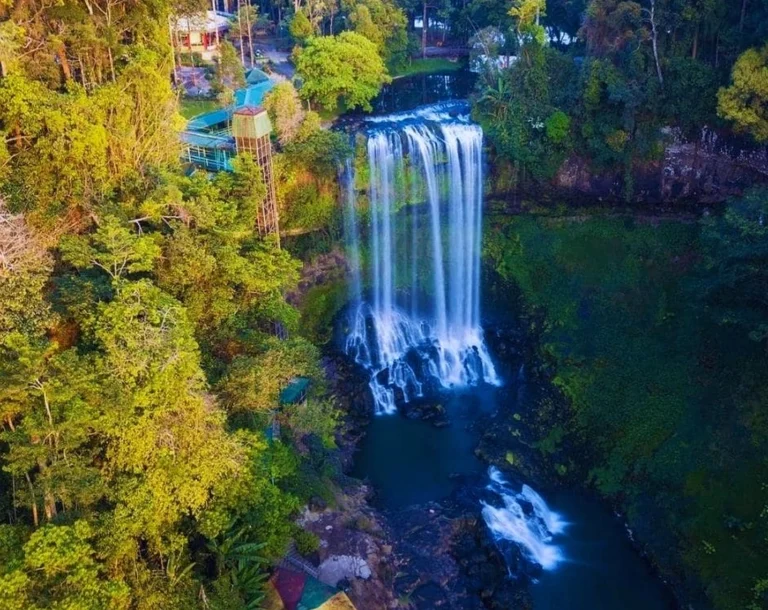
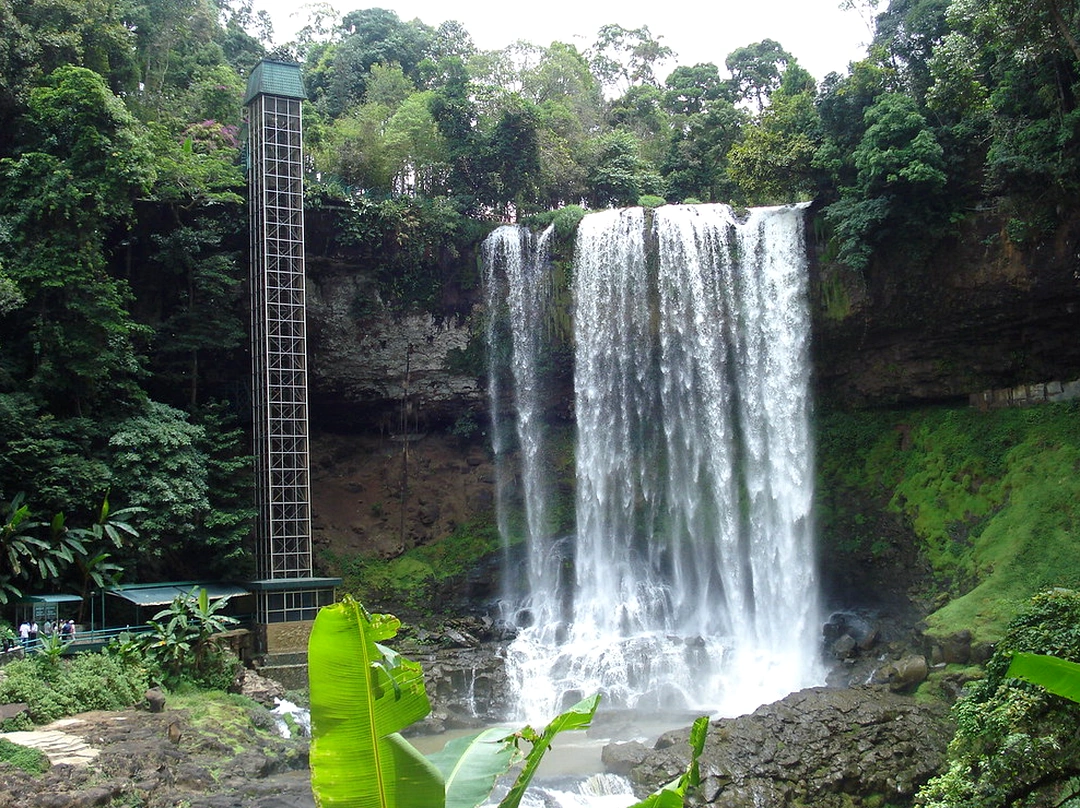
Nested amid the deep emerald forests of the Southern Central Highlands plateau, Damb’ri Waterfall stands as a breathtaking masterpiece sculpted over centuries by Mother Nature and indigenous culture. Plunging from an impressive height of nearly 60 meters, massive torrents surge from upstream into a deep gorge in clouds of white foam, creating a thunderous symphony that echoes across the sky. Its terrain forms a distinctive natural amphitheater framed by ancient moss-covered rock faces and expansive primeval forest, preserving an untamed, awe-inspiring grandeur. Around the main cascade, rich vegetation—ancient tree roots gripping sheer rock walls, vibrant clusters of wild orchids, and year-round drifting mist—weaves a vivid natural tableau that leaves every visitor marveling at nature’s artistry.
Beyond its stunning natural scenery, the site also carries the unmistakable imprint of traditional Ma architecture and sculptural artistry. Along the winding trail descending to the base of the falls, man-made structures are thoughtfully integrated into the environment without disturbing its pristine character. Highlights include rustic wooden bridges curving along the hillside, stone stairways tucked beneath forest foliage, and expressive sculptures bringing to life the love legend of K’Dam and H’Bi. Artisans have breathed soul into every block of wood and stone with carvings inspired by traditional brocade motifs, recounting a story of fidelity and human resilience amid the great forest. This subtle harmony between architecture and dramatic, poetic terrain transforms Damb’ri into an enchanting open-air gallery.
To capture the most memorable frames at this landmark, professional photographers and travel journalists consistently point to two classic, unmissable camera angles. The first is at the upper observation deck near the crest of the waterfall. The ideal window to shoot here is at dawn (from 6:00 AM to 7:30 AM), when the first morning sunbeams pierce the thin mist to create magical light refraction—forming shimmering seven-colored rainbows right inside the gorge. The second vantage point is on the wooden bridge near the foot of the falls, offering a sweeping full-frame view of the colossal water column plunging from the summit. Late afternoon between 3:00 PM and 4:30 PM is golden hour here, as slanting sunlight filters through the forest canopy onto the white spray, highlighting the majestic yet poetic beauty of Damb’ri in the heart of Bao Loc City.
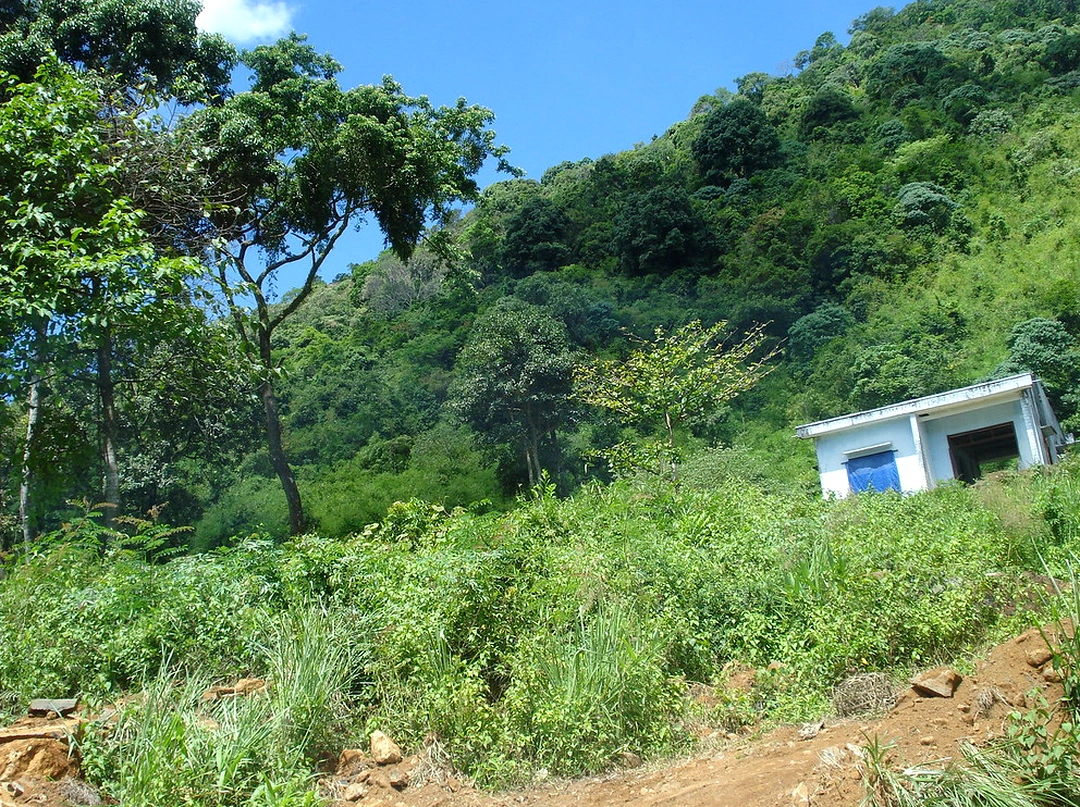
Arriving at this legendary waterfall in the forests of Lam Dong, travelers are immediately drawn into a world of raw, magnificent nature. On-site exploration begins with a trek through primeval woods shaded by towering ancient trees, where the breath of the earth mingles with echoing birdsong. Excitement builds with every step as the distant roar of cascading water grows louder, urging visitors onward to witness nature’s spectacle firsthand.
Directly before you, Damb’ri Waterfall rises in monumental grandeur as a foaming white column thunders down from nearly sixty meters into the chasm below. Rising mist forms delicate veils blanketing the gorge, catching sunlight to shimmer with ethereal rainbows. Standing on cliffside viewing platforms high above the rocks, visitors are left breathless by sweeping panoramas over an endless emerald valley. Any sense of smallness before nature’s might quickly gives way to deep inner peace as you breathe in crisp, cool air scented with the Central Highlands forest.
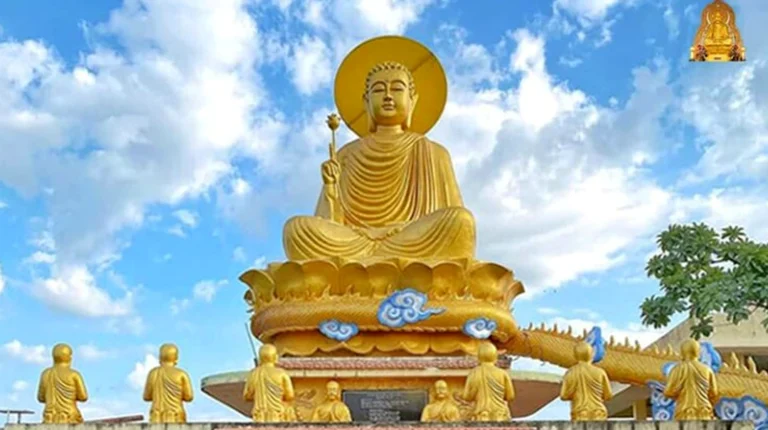
Exploration grows even richer with a boat ride upstream along winding waters above the falls or a ride on the transparent glass elevator suspended mid-air. From this vantage point, the cascade reveals a multidimensional beauty—at once powerful and fierce, yet graceful as a white silk ribbon draped across moss-covered cliffs. Nearby, a sacred spiritual sanctuary featuring a compassionate statue of Bodhisattva Avalokiteshvara facing the waterfall offers travelers quiet moments for worship, reflection, and prayers for family peace.
Stepping away from the roaring cascade, visitors can delight their palates with the distinctive local cuisine of the Ma and Central Highlands ethnic communities. Nothing compares to gathering around a warm hearth in the crisp highland chill to savor aromatic grilled chicken served with fragrant bamboo-tube sticky rice, accompanied by sips of warming local rice wine. These rustic dishes—steeped in love for the land and its people—together with resonant gong music around a crackling campfire bring a visit to Damb’ri to a close with unforgettable memories lingering in every traveler’s heart.
To enjoy a smooth and fulfilling exploration of this epic natural landmark, preparing with practical travel tips is essential. Damb’ri Waterfall welcomes visitors every day of the week, opening at 7:00 AM and concluding admissions around 5:00 PM. This schedule gives travelers ample time to enjoy crisp morning air while ensuring safe movement across forested mountain terrain.
Regarding admission fees, the tourist area offers all-inclusive ticket tiers for adults and children covering access to waterfall viewpoints, optional rides on the glass elevator or forest alpine coaster, and selected traditional games. Children below a specified height threshold generally enjoy free entry. Visitors should purchase tickets directly at the official ticket counter at the main entrance to avoid counterfeit tickets or unauthorized intermediaries.
In terms of transportation and routes, because the site is located in Bao Loc City rather than Da Lat, the most convenient starting point is central Bao Loc. Travelers can go by car, motorbike, or local bus along Tran Phu Street, turn onto Ly Thai To Street, and continue straight for roughly fifteen kilometers following road signs. This scenic drive is easy to navigate, winding past lush green tea hills and sprawling coffee plantations quintessential to the Southern Central Highlands.
The ideal time of year to visit is during the dry season, lasting from November through April of the following year. During these months, dry weather and clear skies provide ideal conditions for photography and nature trekking. Conversely, visiting during the rainy season reveals the waterfall at its most dramatic water volume, though stone pathways can become quite slippery.
Finally, when visiting this spiritual-cultural space and wild natural terrain, guests should wear neat, respectful attire. Opt for comfortable, flexible clothing and athletic shoes with strong grip for climbing stairs and walking near the damp base of the waterfall. Keeping shared spaces clean, avoiding litter, and respecting the traditional culture of the indigenous Ma community are key to preserving the timeless spirit of Damb’ri for generations to come.

To enjoy a seamless getaway and take in the full beauty of Damb’ri Waterfall without worrying about transportation, sightseeing tickets, or itinerary planning, travelers can choose VDS Travel’s premium all-inclusive Da Lat tour packages. Every itinerary is thoughtfully timed to capture photo spots at their most radiant, accompanied by knowledgeable local guides and top-tier hotel and dining standards.