Standing proudly amidst the vast wilderness of the Lam Vien Plateau, Langbiang Peak is far more than a geographical coordinate; it is revered as the legendary “rooftop” that preserves the very soul of Da Lat – Lam Dong. Administratively, the mountain is located in Lac Duong Town, Lac Duong District, Lam Dong Province, approximately 12 km north of Da Lat city center. Featuring a unique geological structure comprising two main summits—Nui Ong (2,124 m) and Nui Ba (2,167 m)—Langbiang rises like a natural fortress, sheltering the fertile valleys below where the Dan Kia – Suoi Vang (Golden Stream) winds like a soft silk ribbon through the deep green forest.
From a geomantic perspective, Langbiang is likened to the “heart” of the plateau, where the spiritual energy of heaven and earth converges. The combination of its ideal elevation and dense primeval forest ecosystem creates a distinctive temperate microclimate that remains cool year-round, with mist draping the winding trails. Geologists and heritage researchers frequently cite Langbiang as living proof of the basaltic region’s geological formation, where ancient rock strata still bear the marks of time, shaping challenging sheer cliffs and winding paths beneath canopies of centuries-old pine trees.
The name “Langbiang” is not merely a toponym; it is an intangible cultural heritage deeply intertwined with the tragic love story of the Lat and Chil ethnic peoples. According to folklore passed down through generations, the name combines those of a young man named K’Lang and a young woman named H’Biang. Their love, which defied harsh tribal taboos and culminated in a noble sacrifice atop the mountain, became an enduring symbol of the yearning for freedom and eternal devotion. This legend transformed Langbiang into the “Mountain of Love,” where every boulder and tree branch seems to breathe the spirit of myth, reminding future generations of the value of tolerance and harmony between humanity and nature.
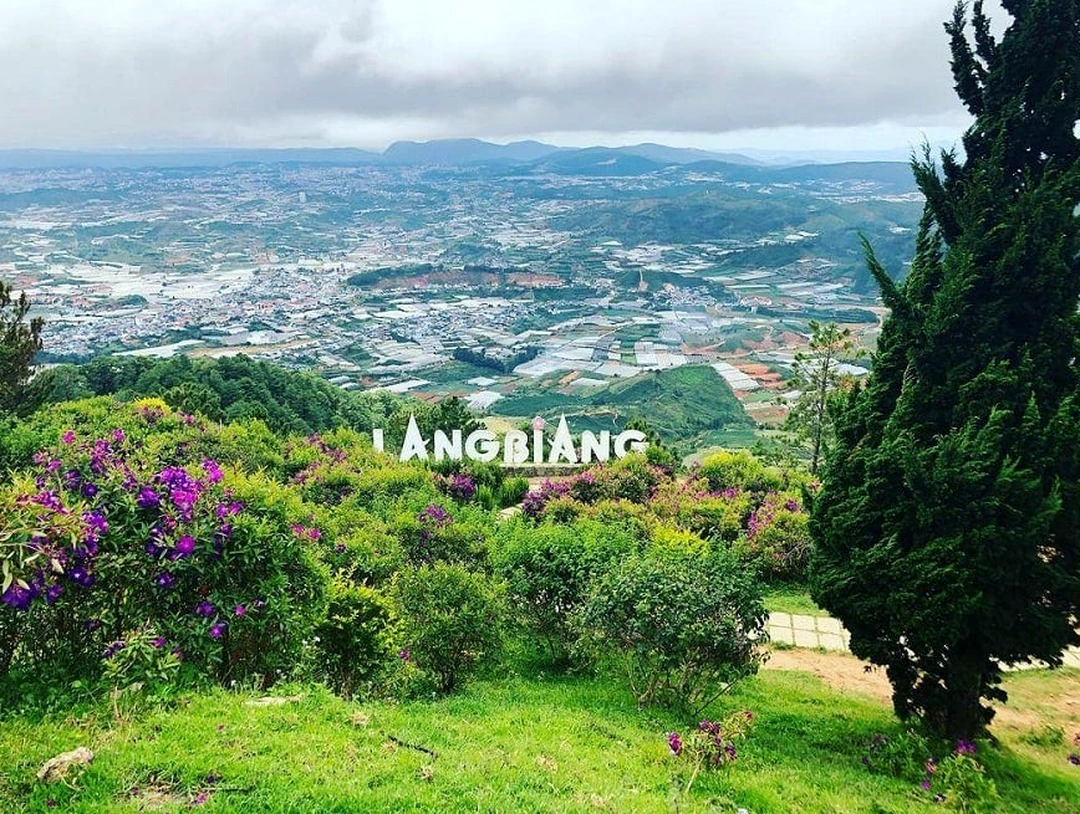
In tourism and heritage management reports, Langbiang is recognized as an area of high biodiversity value and a cornerstone destination on Vietnam’s national ecotourism map. Beyond its scenic beauty, it serves as a living community cultural space where the traditional values of the Central Highlands’ indigenous peoples are preserved and celebrated. Standing atop Radar Peak—one of the highest vantage points in the Langbiang range—to take in the panoramic view of Da Lat shrouded in mist, or gazing down at Dan Kia Lake shimmering in the sunset, is an experience that touches the sacred soul of the highlands. Langbiang is therefore not just a destination, but a vibrant living entity where history, geology, and culture converge to create an eternal icon of Vietnamese tourism.
 n
Langbiang Peak is not merely a spot on the map, but a masterpiece of natural architecture where Da Lat’s earth and sky harmonize in a symphony of mountain winds and drifting clouds. Upon arrival, visitors are immediately captivated by the distinctive topography of this twin-peak massif. Nui Ba, towering at 2,167 m, stands like a gentle mother cradling the plateau, while Nui Ong exudes a contemplative, majestic aura, forming a natural rampart that channels cool breezes sweeping up from the Dan Kia Valley. The landscape seamlessly blends the untamed beauty of endless ancient pine forests with refined architectural accents infused with Central Highlands culture.
The most prominent architectural centerpiece is the monolithic stone statue of K’Lang and H’Biang, placed prominently in the central square. Every sculpted line on the lovers’ faces not only brings their legendary romance to life but also showcases the exceptional craftsmanship of local artisans. The folds of their traditional brocade attire and their distant gazes toward the vast wilderness radiate poignant, epic emotion. Surrounding the monument are terraced flower gardens where wild sunflowers, roses, and signature Da Lat blooms intertwine, weaving vibrant ribbons of color against the deep emerald backdrop of the mountains.
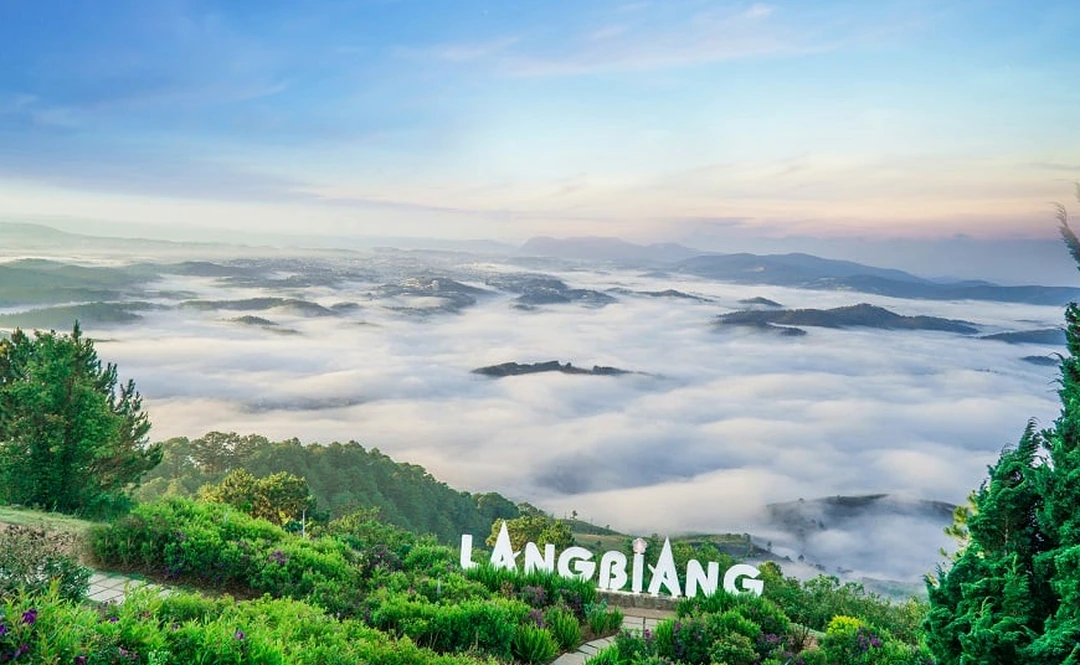
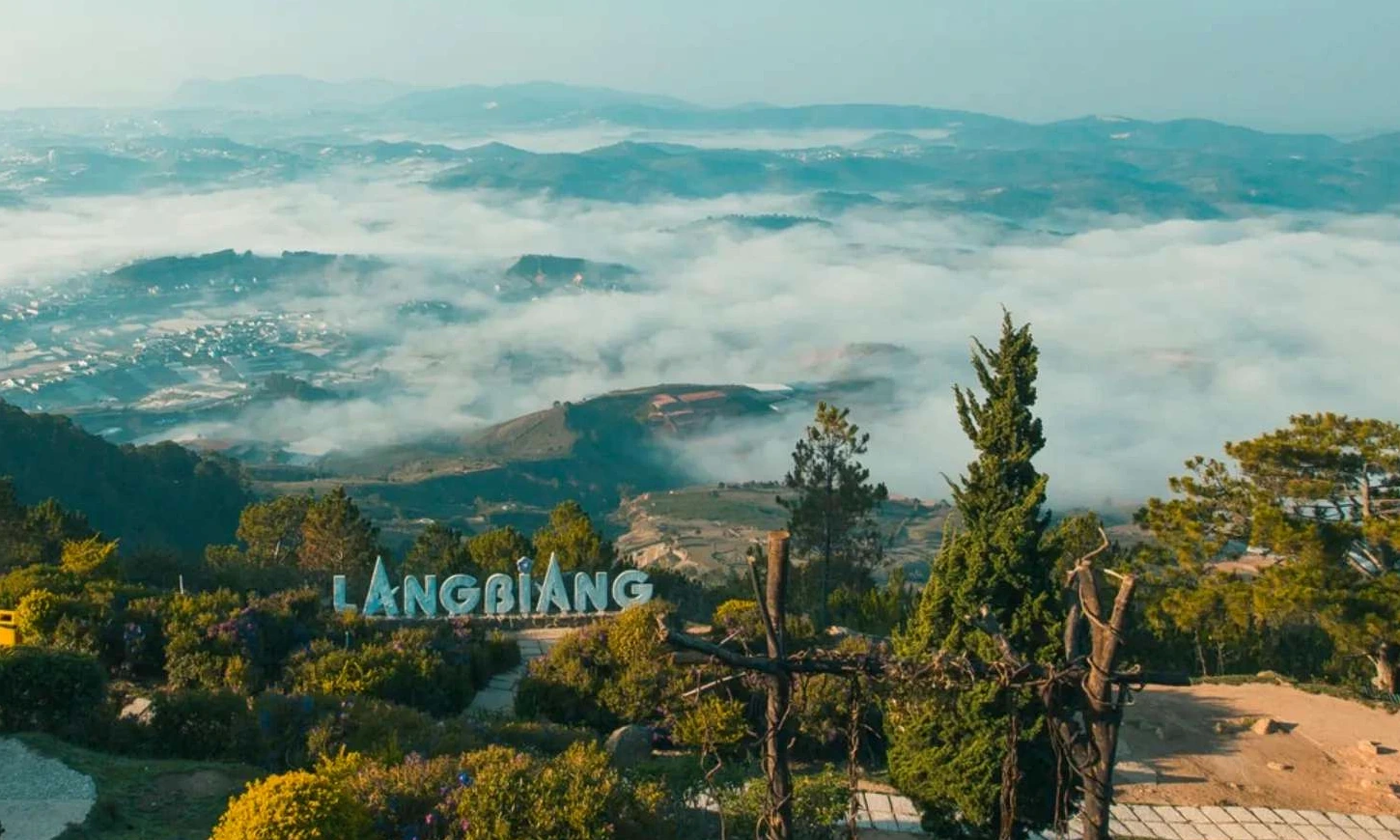
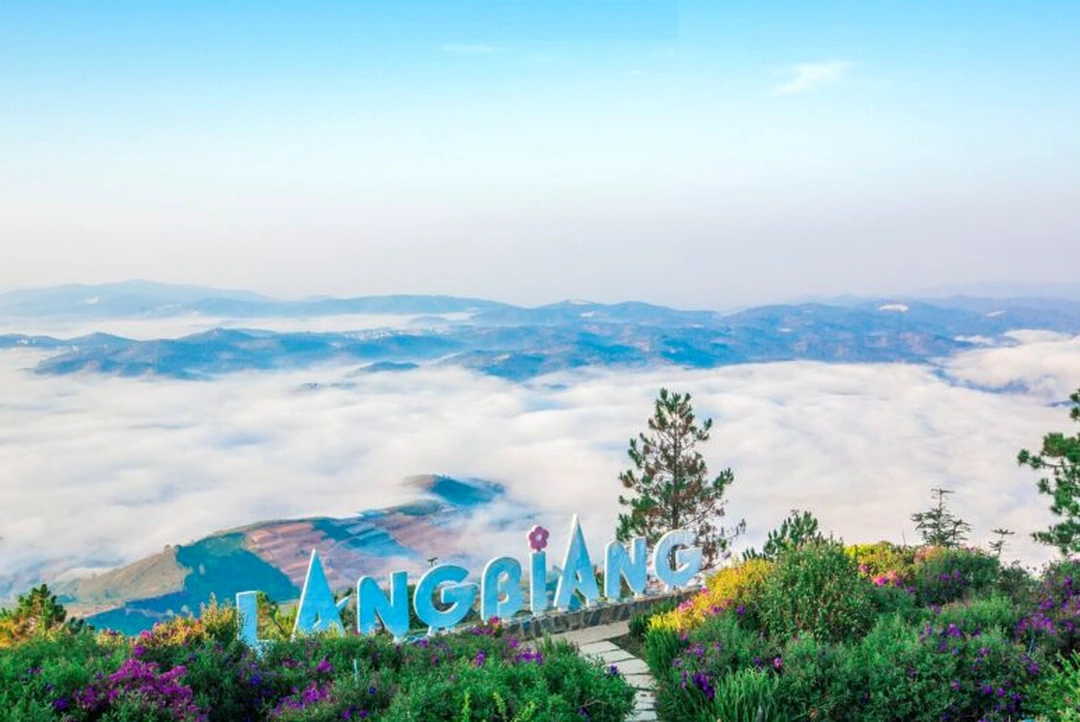
To capture “million-dollar” shots, professional photographers favor Radar Peak—dubbed the “stage” of the clouds and sky. The prime vantage point sits on a rocky outcrop jutting out toward the valley, offering an unobstructed sweep of Dan Kia Lake – Suoi Vang winding like a silver ribbon across the lush green basin. The golden window to capture this magic is at sunrise, between 5:30 AM and 6:30 AM. As the first rays of sunlight pierce the thick veil of mist, the entire landscape appears gilded in gold, creating an ethereal visual effect rarely replicated anywhere else in Vietnam. The soft morning light accentuates every grain of rock and the grandeur of distant pine ridges.
If you prefer a more romantic, contemplative mood, plan your visit for sunset, between 4:30 PM and 5:30 PM. During this hour, the sky gradually shifts into shades of violet and rose, providing an ideal backdrop for silhouette photography around the monument. Shooting from a low angle upward to frame the statue of K’Lang and H’Biang against a fiery sky evokes a sense of grandeur and artistry. Additionally, the observation deck equipped with high-powered binoculars offers an intriguing stop, letting you zoom in on the tiny houses of Lac Duong Town peeking out beneath the clouds—a captivating contrast between nature’s stillness and human life.
 n
Every corner of Langbiang is thoughtfully tended to preserve its authentic charm, from natural stone pathways to rustic wooden fences. This marriage of human craftsmanship and awe-inspiring scenery not only creates world-class photo spots but also stands as a testament to humanity’s reverence for natural heritage. Whether you are a seasoned photographer or simply a traveler with an eye for beauty, Langbiang is bound to leave you deeply moved by a Da Lat that is both regal and poetic.
Visiting Langbiang is about far more than conquering high altitudes—it is an evocative journey through the wild heart of the Central Highlands. For active travelers, trekking through old-growth pine forests is an unforgettable adventure. Beneath whispering needle canopies, the crisp scent of pine resin mingles with damp earth to awaken every sense. As you conquer steep inclines, fatigue melts away as the horizon opens up to reveal the sweeping grandeur of the Lam Vien Plateau. Standing atop Radar Peak brings an overwhelming rush of awe as a snowy sea of clouds drifts effortlessly beneath your feet, blanketing deep valleys and making you feel suspended on the threshold between earth, sky, and dream.
While trekking tests your endurance, hopping into a Jeep delivers an exhilarating, dusty thrill. The vehicle navigates winding trails, bouncing over red basalt earth to carry passengers from one breathtaking vista to the next. Once at the summit, the profound silence becomes a balm for the soul. Many visitors choose to sit quietly beside the statue of K’Lang and H’Biang, listening to the wind whistling through mountain crevices like whispers of an undying love legend. Here, a deep sense of inner stillness awakens, reminding us of the enduring power of fidelity and freedom in love—a humanist message woven into every grain of soil and branch on this mountain.
Your Langbiang adventure becomes even richer when paired with a visit to Dan Kia Lake – Suoi Vang. Gliding across the mirror-like water in a small boat that reflects towering green pines brings an extraordinary sense of tranquility—a chance to immerse yourself in nature and leave urban clamor behind. After spending your energy outdoors, savoring local cuisine is the perfect finale. Nothing rivals gathering around a glowing campfire, sipping rich ruou can (fermented rice wine drunk through bamboo straws), and feasting on bamboo-tube sticky rice (com lam) paired with aromatic grilled chicken or spicy chili-salt roasted wild boar. The savory sweetness of the meat and chewy fragrance of the sticky rice, accompanied by echoing gong music in the highland night, weave an enchanting cultural tapestry.
 n
The sense of wonder stems not only from the elevation, but equally from the cultural depth the Lat and Chil peoples have entrusted to this land. Gong cultural exchanges and origin stories told by indigenous locals allow visitors to step beyond mere sightseeing and become part of the living flow of local history. When dusk falls, painting Da Lat’s skies violet, gazing out from Langbiang Peak toward the twinkling city lights fills your heart with lightness. In that transcendent moment, humanity and nature become one, leaving every traveler with a lingering nostalgia for Da Lat’s “rooftop”—where love and legend endure across time.
To ensure a seamless and safe journey to the “rooftop” of Da Lat, travelers should keep up to date with current visiting procedures and practical tips. The Langbiang Tourist Area is open daily from 7:00 AM to 5:00 PM. However, if you are a devoted “cloud hunter,” the ideal time to arrive at the base of the mountain is around 7:30 AM, when wisps of white cloud still drift at eye level and the morning sun has not yet grown harsh.
Regarding expenses, entrance tickets are currently priced at 50,000 VND for adults and 25,000 VND for children, covering basic access to the foothills area. To reach Radar Peak—which commands panoramic views over Dan Kia Lake and Da Lat City—the dedicated Jeep service is the most convenient option. Chartering a private Jeep costs 720,000 VND for up to six passengers (round-trip). Taking a Jeep not only saves your energy on the steep 5 km ascent but also offers an exhilarating ride along breezy, winding pine-forest roads.
The journey from Da Lat city center to the foot of Langbiang spans roughly 12 km to 15 km, easily accessible by rented motorbike or taxi. If riding a motorbike, follow Phan Dinh Phung Street, continue onto Xo Viet Nghe Tinh, and turn toward Langbiang. While scenic, this route demands confident handling due to sharp hairpin turns and dense fog in the early morning or late afternoon. For fitness enthusiasts, trekking is a rewarding alternative, though you should assess your stamina carefully as the round-trip hike up and down the summit covers up to 10 km across fairly rugged, rocky mountain terrain.
 n
For attire, given the high-altitude terrain and Da Lat’s notoriously changeable weather, dressing in layers is strongly recommended. A lightweight, windproof, water-resistant jacket is essential to stay warm when temperatures drop sharply at the summit. As for footwear, strictly avoid high heels or slippery sandals; instead, opt for athletic shoes with reliable traction to navigate gravel and stone paths safely. Furthermore, because Langbiang holds deep spiritual and legendary significance for the Lat and Chil communities, visitors should wear respectful, modest clothing when visiting cultural displays or the statue of K’Lang and H’Biang to honor local heritage.
Finally, the “golden” window to visit runs from November through March of the following year. During the Central Highlands’ dry season, skies are typically clear and blue with minimal rainfall, offering optimal visibility across the Lam Vien Plateau from above. Pack a few light snacks and drinking water, and always follow environmental guidelines by refraining from littering so the pristine beauty of this iconic landmark endures.
To enjoy a worry-free getaway and experience the full splendor of Langbiang Peak without the hassle of arranging transportation, booking entrance tickets, or planning itineraries, travelers can choose from VDS Travel’s premium all-inclusive Da Lat tour packages. Every itinerary is thoughtfully timed to capture photo spots at their most radiant, accompanied by knowledgeable local guides and top-tier hotel and dining standards.