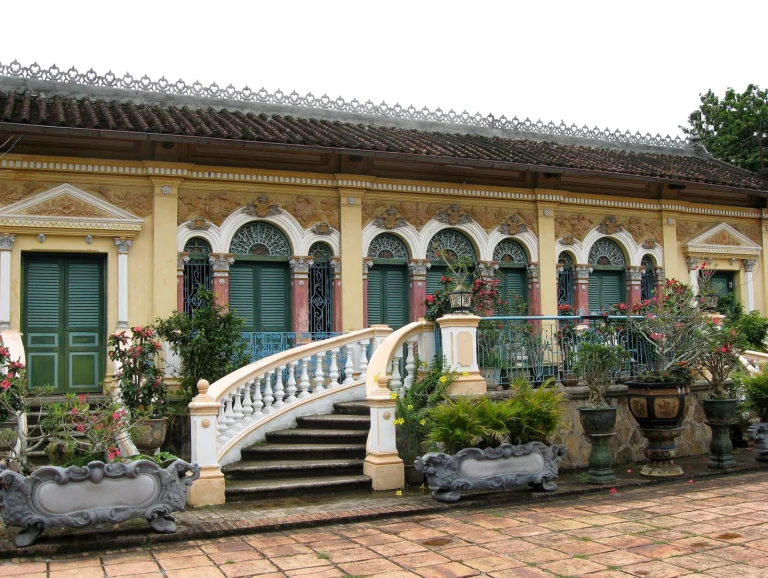
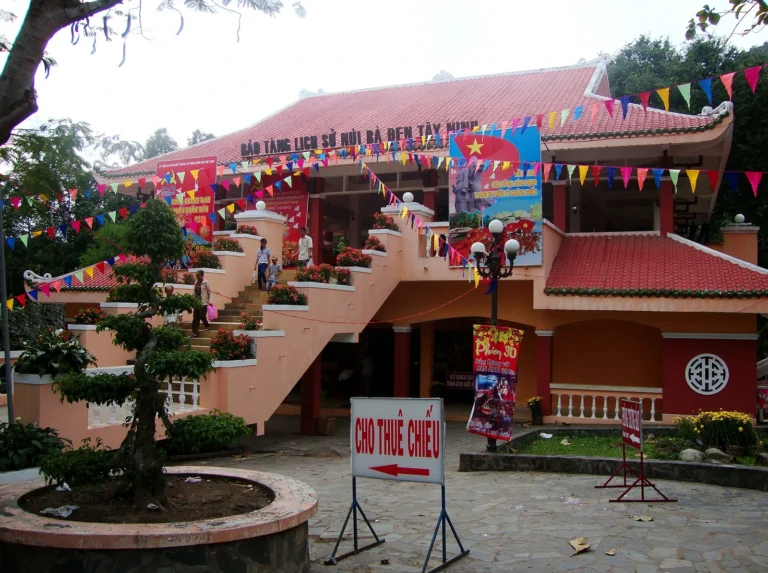
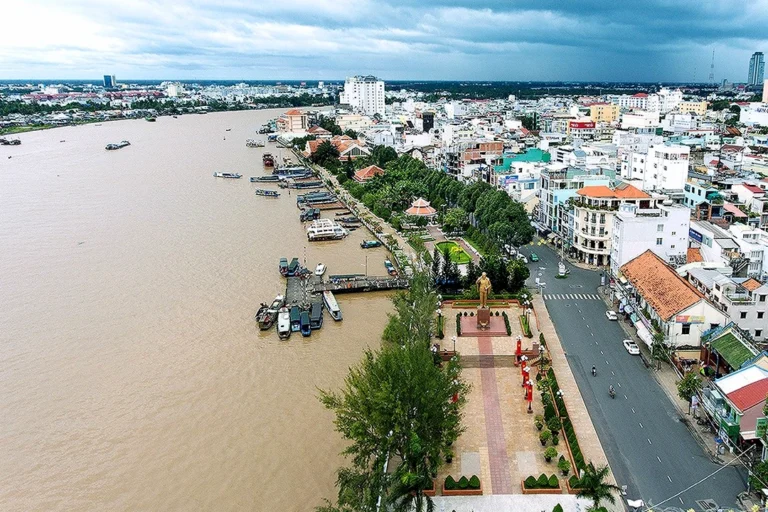
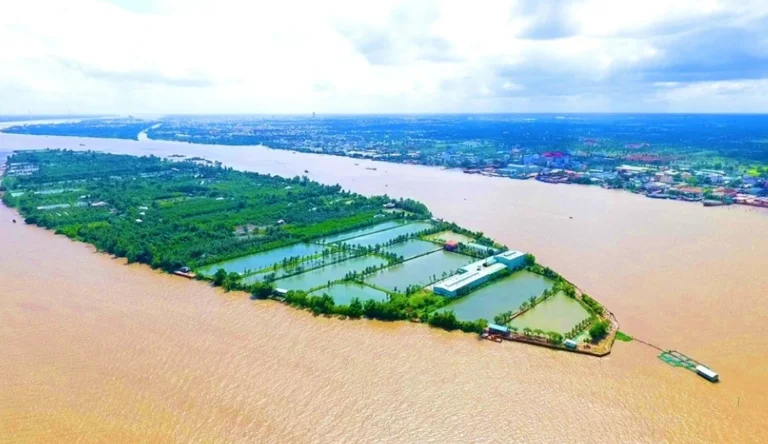
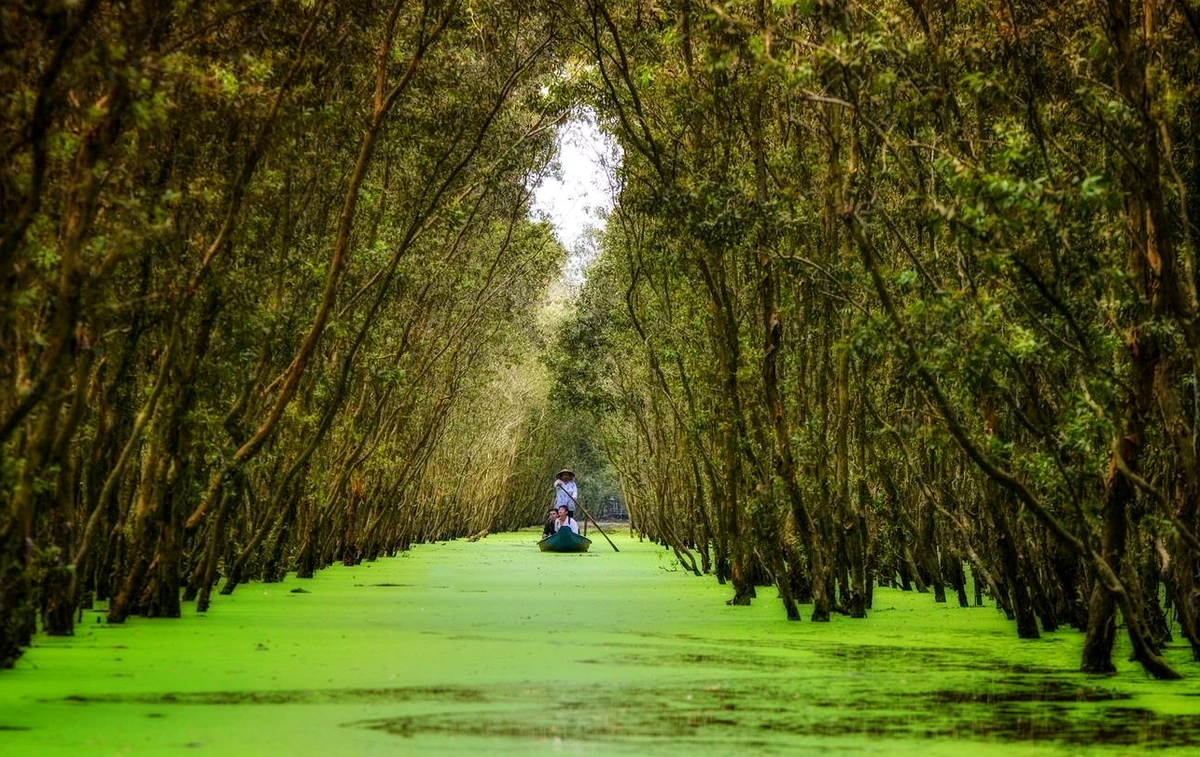
Amid the swirling alluvial currents of Southern Vietnam, where an intricate network of canals and rivers acts as lifelines nourishing the premier metropolis of the Mekong Delta, the worship of Ba Chua Xu (Lady of the Realm) in Can Tho emerges as a sacred offshoot crystallized from the historic southward expansion and land reclamation by Vietnamese pioneers. Situated in prime locations tied to the bustling waterway trade networks dating back to the ancient Tran Giang era—now the central districts of Ninh Kieu and Cai Rang—these religious establishments not only bear the distinct imprint of riverine orchard culture but also serve as a spiritual continuation of the supreme original sanctuary: Ba Chua Xu Temple of Sam Mountain in Chau Doc, An Giang.
In terms of historical origins and geographical setting, while the original temple at Sam Mountain rests against a majestic mountainside where spiritual energy converges along the southwestern frontier, the shrines in Can Tho are anchored within a riverine delta landscape shaped by urban commerce. Though lacking the towering grandeur of rugged mountain peaks, the temples here occupy prized feng shui positions at picturesque river confluences, offering convenient anchorage for merchant boats arriving from far and wide on pilgrimage. Rather than diluting its heritage, this shift in cultural geography has fostered a distinctive harmony between indigenous Mother Goddess worship and the spiritual aspirations of the urban trading community.
Looking back at its historical trajectory, the original temple at the foot of Sam Mountain was founded in the first half of the 19th century under the Nguyen Dynasty, enduring the vicissitudes of time and undergoing major restorations in the 1870s and again between 1972 and 1976 to achieve its imposing architectural form today. Following the footsteps of early settlers, this faith spread to Tay Do (Can Tho) in the early 20th century, closely intertwined with the vibrant rhythm of land reclamation and trade across the dense network of waterways. The establishment of these places of worship in Can Tho reflects the deeply practical spiritual needs of migrants far from home, praying for peace, favorable weather, and divine protection in their livelihoods.
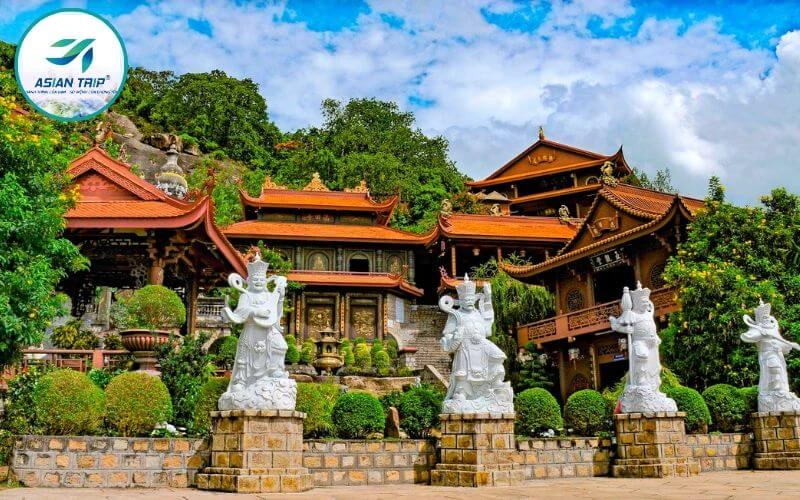
Closely bound to these religious sites is a rich treasury of sacred legends and folklore, highlighted most notably by the Nguyen Dynasty royal decree honoring the miraculous goddess as *”Nuong Nuong”* (Her Imperial Ladyship). From the perspective of cultural researchers and heritage authorities, Ba Chua Xu is far more than a symbol of gratitude toward pioneering ancestors who settled and cultivated the land; she is an enduring spiritual anchor uniting communities across generations. This heritage transcends the boundaries of an ordinary religious site, standing as an inseparable chapter in the cultural chronicles of Southern Vietnam.
Through the passage of time and the rapid surge of urbanization, the Ba Chua Xu sanctuaries in Can Tho have preserved their innate solemnity and sacred aura. These spaces not only safeguard architectural artistry echoing the Nguyen Dynasty era but also keep intact the intangible cultural sediments passed down by forebears. The presence of such heritage at the heart of a modern city serves as living proof of the enduring vitality of tradition, reminding today’s generation of their roots, the timeless moral of remembering the source of the water one drinks, and the soulful beauty of the Vietnamese people on their journey of frontier settlement.
Standing majestically right at the foot of the imposing Sam Mountain in Chau Doc City, An Giang Province, Ba Chua Xu Temple of Sam Mountain rises as a masterpiece of spiritual architecture amid the breathtaking natural scenery of the Mekong Delta. The temple boasts an exceptionally auspicious setting according to traditional feng shui principles, with its back firmly braced against the solemn slopes of Sam Mountain—blanketed year-round in lush ancient trees—and its facade opening onto vast expanses of endless rice paddies and bustling land and water routes. This harmonious union of scenic mountains and waterways creates a landmark that is both deeply sacred and serene, while carrying the unmistakable cultural imprint of Southern Vietnam’s pioneering era.
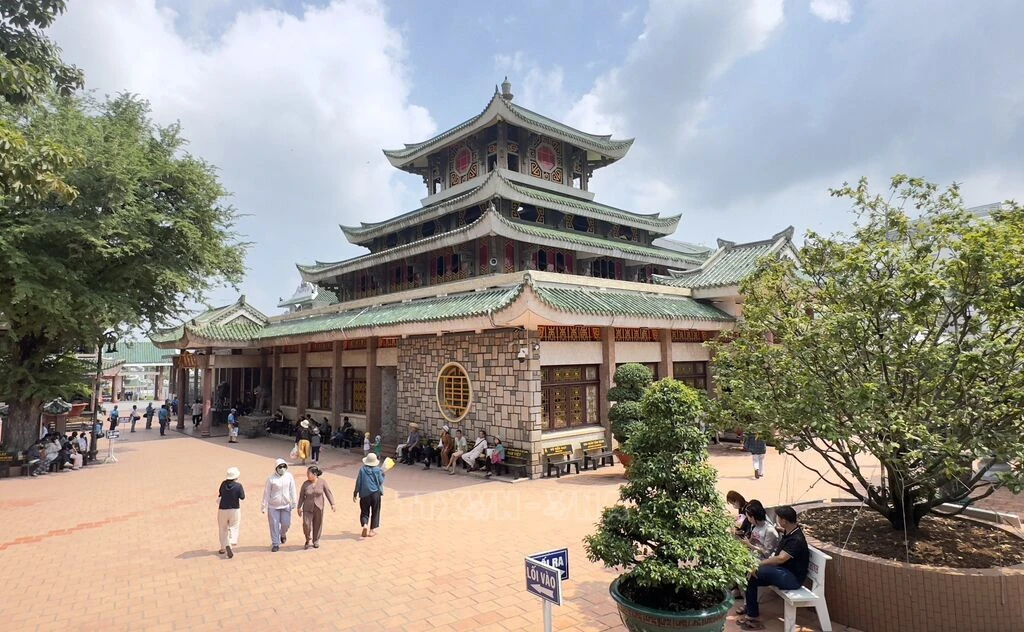
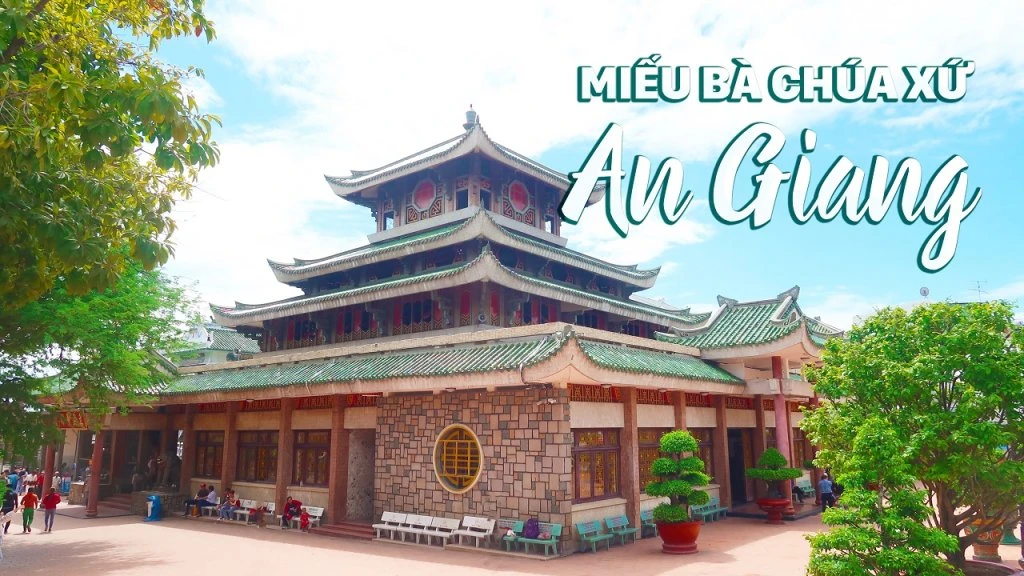
Overall, the temple’s architecture bears the strong artistic hallmarks of the Nguyen Dynasty, restored and expanded on a grand scale in the layout of the Chinese characters “Quoc” (國) or “Dinh” (丁) with exquisitely intricate carvings. The crowning architectural highlight is its three-tiered roof clad in jade-green tubular tiles, sweeping upward like soaring dragons with traditional upturned eaves that evoke both grace and regal authority. The roof ridges and gables are meticulously adorned with ceramic reliefs depicting the Four Sacred Animals, two dragons contesting a pearl, and stylized floral motifs, showcasing the pinnacle of folk craftsmanship by master artisans of old. Massive ironwood pillars and gilded lacquered horizontal boards and parallel sentences inside the main sanctuary further elevate the solemn, time-honored, and sacred majesty of the interior.
To capture the most unforgettable moments during a visit, travelers and photography enthusiasts should not miss two “million-view” vantage points widely praised by travel journalists. The first lies in the forecourt in front of the main hall, where you can frame all three tiers of curving green-tiled roofs soaring into the sky, using a low-angle upward shot to capture the monumental grandeur of the structure against the clouds drifting over Sam Mountain. The second spot is along the hillside pathway behind the temple, revealing a panoramic view of the tranquil tiled roofs nestled amidst lush emerald forest canopy, with peaceful borderland villages sketched across the distant horizon.
For the most flattering natural light to capture stunning photographs, professional photographers recommend visiting the temple at dawn (from 5:00 AM to 6:30 AM) or sunset (from 5:00 PM to 6:00 PM). At daybreak, the first morning rays filter through the gossamer mist clinging to Sam Mountain’s peak, bathing the green-tiled roofs in a shimmering golden glow that imparts a remarkably peaceful and sacred ambiance. Conversely, dusk drapes vibrant ribbons of rose and violet clouds across the horizon, accentuating the ancient, contemplative silhouette of the temple just as evening lights begin to twinkle—creating an enchanting scene that lingers long in the memory of everyone who visits.
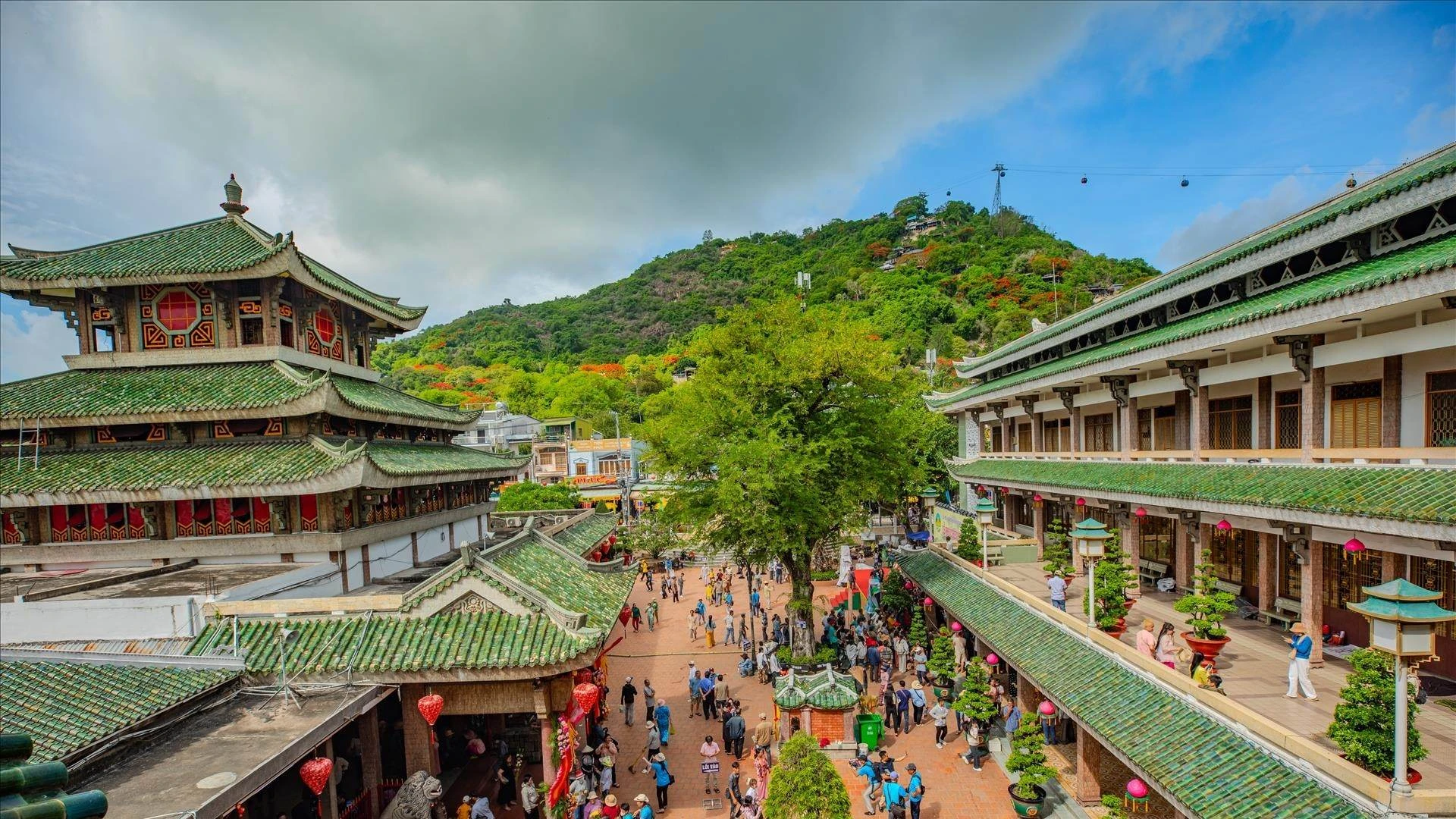
Stepping foot in the sacred land of An Giang, a journey to Ba Chua Xu Temple of Sam Mountain is more than a pilgrimage back to spiritual roots—it is a series of deeply rewarding real-world experiences that awaken every sense. From the very first steps leaving behind the lively bustle of Chau Doc town to enter the Sam Mountain precinct, visitors immediately feel a palpable shift in atmosphere: vibrant urban energy gives way to a profound stillness, serenity, and reverence enveloping every tree canopy and rocky cliff.
One of the most emotionally resonant activities is combining a hike up Sam Mountain with visits to surrounding historical relics. The winding mountain trail meanders beneath the cool shade of centuries-old trees. Along the path, crisp birdsong mingles with the distant chimes of temple bells, creating a tranquil symphony of the borderland hills. Upon reaching halfway up the slope, any fatigue melts away as you gaze out over the horizon—visitors are inevitably captivated by the breathtaking natural panorama of the Mekong Delta. An immense expanse of emerald rice fields stretches as far as the eye can see, interlaced with winding canals like silk ribbons embracing quiet hamlets, while the Vietnam–Cambodia border shimmers faintly in the distant haze. Standing high above, breathing in the crisp mountain air, feeling the brisk breeze fill your lungs, and taking in that sweeping landscape induces a deep sense of calm, leaving the spirit remarkably light and at peace.
Descending from the forested slopes back to the temple’s main sanctuary, visitors become fully immersed in a vibrant living tapestry of local spiritual culture. Cadenced prayers and curling plumes of fragrant incense rising from thousands of joss sticks blend with the crimson glow of lanterns, creating an atmosphere that is both solemn and deeply comforting. Streams of pilgrims from every corner of the country patiently queue for their turn to pay heartfelt homage, offering prayers for peace and good fortune for their families and loved ones. The sincerity etched on every face fosters a powerful sense of community that transcends all regional boundaries.
To round out an exploration of Ba Chua Xu Temple of Sam Mountain, travelers cannot miss the chance to savor An Giang’s celebrated culinary specialties. Surrounding the base of the mountain is a paradise of authentic Mekong Delta delicacies, from richly savory fermented fish hotpot (lau mam) and Chau Doc fish noodle soup (bun ca) fragrant with fresh turmeric and a delicate broth simmered from wild snakehead fish, to chilled glasses of sweet palmyra palm juice that instantly banish the tropical heat. In particular, Sam Mountain’s seven-course beef specialty (bo bay mon)—featuring tender, flavorful beef infused with aromatic lemongrass and chili—is sure to delight even the most discerning palate. Enjoying these rustic dishes amidst such culturally rich surroundings provides the perfect finale, leaving visitors with lasting memories of a sacred, bountiful, and warm-hearted land.
To ensure your worship and pilgrimage at Ba Chua Xu Temple of Sam Mountain unfold smoothly, respectfully, and fulfilling all expectations, this pocket guide provides essential practical details for visitors from near and far. Understanding the rules regarding opening hours, admission fees, dress code, and travel routes will help you plan ahead with ease, uphold the sanctity of this sacred site, and preserve the finest traditions of spiritual heritage.
Regarding opening hours, the temple welcomes visitors continuously every day of the week—including Saturdays, Sundays, and public holidays—from early morning until late at night (typically from around 5:00 AM to 10:00 PM). Notably, during major celebrations such as the annual Via Ba Chua Xu Festival of Sam Mountain held in the fourth lunar month, the temple remains open day and night to accommodate continuous waves of pilgrims. The heritage management board maintains a free admission policy for all locals and visitors coming to worship and sightsee, ensuring inclusive access to the community’s intangible cultural heritage.
When traveling from downtown Can Tho or neighboring provinces to Chau Doc (An Giang), visitors can opt for luxury sleeper buses or self-drive cars along national highways connected by modern bridges and ferry routes. From central Chau Doc to the foot of Sam Mountain—a distance of roughly five kilometers—travelers can easily reach the site by motorbike, taxi, or motorbike taxi in under fifteen minutes. The route is smooth and clearly signposted, enabling pilgrimage groups to arrive quickly and safely.
Because the temple grounds are a sacred sanctuary rooted in traditional beliefs, visitors must strictly observe the dress code. Opt for modest, neat, and respectful attire, avoiding overly short, sheer, or tight-fitting clothing in order to show reverence toward the goddess and the solemnity of the temple. Additionally, since the Sam Mountain area features numerous staircases and rocky slopes, wearing sneakers or sturdy flat sandals with good traction is recommended to ensure safe and comfortable walking, hiking, and sightseeing around the complex.
The ideal time of year to visit the temple is during the dry season, from the twelfth lunar month of the preceding year through the fourth lunar month of the following year, when dry weather makes outdoor travel effortless. If you wish to experience the vibrant festival atmosphere steeped in Southern Vietnamese folk culture, plan your visit during the Lady’s Festival (from the 24th to the 27th day of the fourth lunar month). Conversely, if you seek a tranquil setting for quiet prayer, blessings, and admiring the majestic scenery of the legendary Seven Mountains region, weekdays outside peak festival dates offer the ideal experience.
To enjoy a seamless getaway and take in the full beauty of Ba Chua Xu Temple of Sam Mountain without worrying about transportation, ticketing, or itinerary planning, travelers can choose VDS Travel’s premium all-inclusive Can Tho tour packages. Each itinerary is thoughtfully curated to maximize photo opportunities during the most radiant hours of the day, accompanied by knowledgeable local guides and top-tier hotel and dining standards.