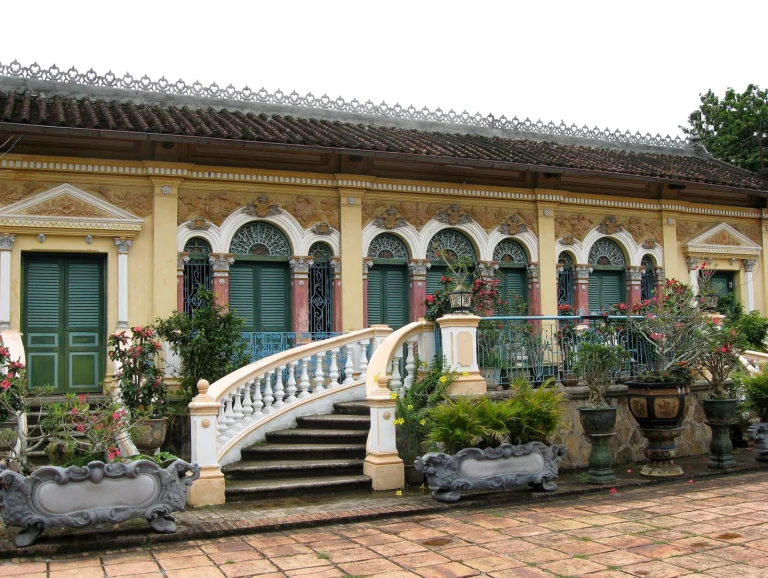
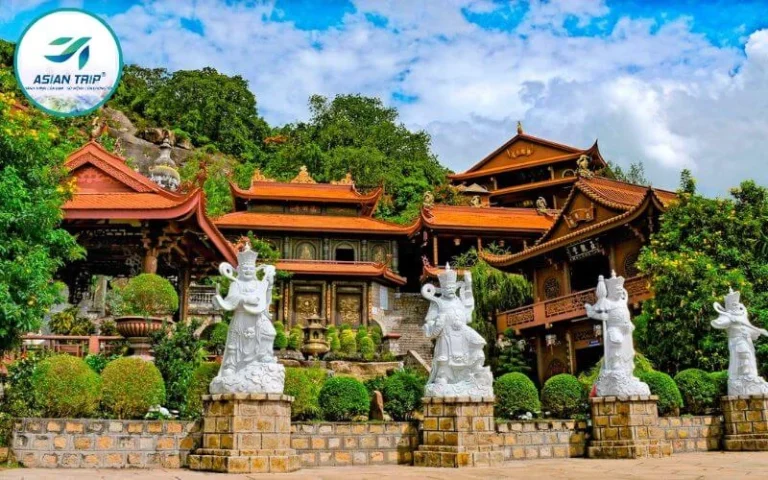
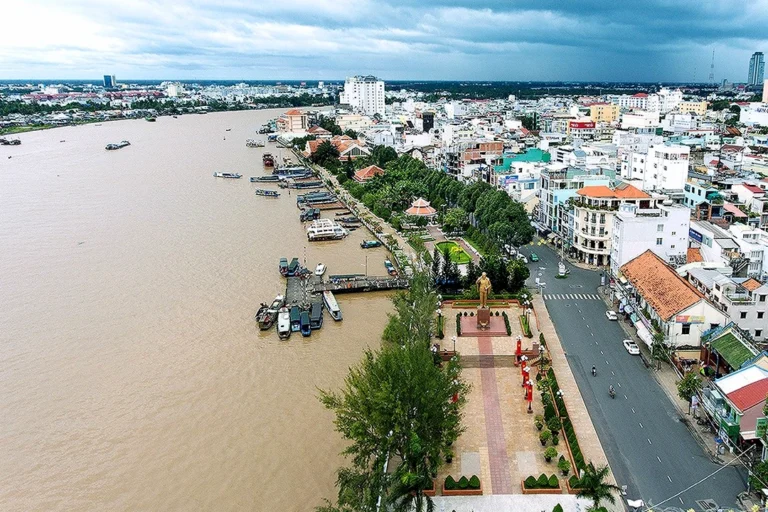
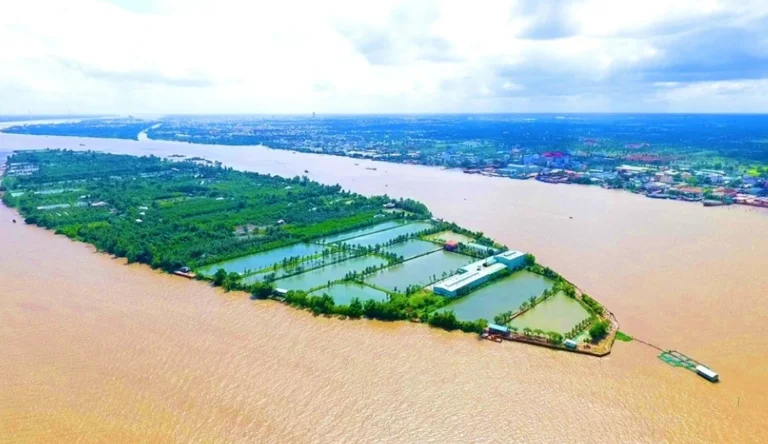
Nestled amidst the lush riverine landscape of Can Tho, Vinh Trang Pagoda stands as an enduring spiritual landmark where the cultural layers of Vietnam’s historic southward expansion (Nam Tien) converge in full. Situated at a strategic geographical coordinate along the lower Hau River, the monastery boasts supreme feng shui positioning known as “gathering the eastern tidal waters” (tu thuy trieu dong)—its back resting against ancient alluvial sand ridges built up over the years, and its facade facing the silt-laden currents infused with the essence of Southern Vietnam’s orchard-lined waterways. This terrain not only creates a secluded, serene microclimate right in the heart of a bustling city, but also reflects the profound geomantic philosophy of early senior monks in selecting land for a sanctuary, turning the site into a solemn Buddhist haven that remains intimately connected to the untamed nature of Tay Do. The origins of the ancient pagoda’s name and history are closely tied to the waves of migration from Dang Ngoai (northern Vietnam) to the south during the late 18th century. Through the vicissitudes of time and widespread misinformation online, independent field research conducted by the Vietnam Institute of Heritage & Cultural History Studies has rectified and accurately established the historical timeline of this religious institution. Originating as humble thatched huts built of bamboo and palm leaves by Vietnamese settlers from the Ngu Quang region to seek spiritual refuge and overcome the hardships of a new frontier, the pagoda was gradually restored and clearly took shape under the Nguyen Dynasty emperors, particularly during the first half of the 19th century under the reigns of Minh Mang and Thieu Tri. The presence of Vinh Trang Pagoda in Can Tho serves as vivid testimony to the remarkable cultural acculturation among the three ethnic traditions: Vietnamese, Khmer, and Chinese. Beneath its moss-covered, ancient yin-yang tiled roofs and intricately carved precious timber framework crafted in the Mahayana Buddhist architectural style of the Lam Te Chanh Tong (Linji Orthodox) sect, the pagoda preserves priceless woodblocks, royal edicts, and stone stelae. The historical figures associated with land reclamation, village establishment, and safeguarding the nation and its people here were the founding Zen masters and the local Buddhist community, who steadfastly kept the flame of compassion alive through turbulent times. From the perspective of heritage conservation and pilgrimage tourism, Vinh Trang Pagoda is not merely a spiritual scenic spot possessing unique geological and landscape value, but also a living museum of ancestral spiritual life. The press and heritage management authorities have recognized the site as a shining example in preserving the original integrity of traditional monastic architecture while resolutely rejecting chaotic commercialization. Returning to Vinh Trang Pagoda (Can Tho) is a journey back to the roots of consciousness, where every inch of soil, tree branch, and ancient brick whispers tales of pioneering spirit and sacred reverence for forebears.
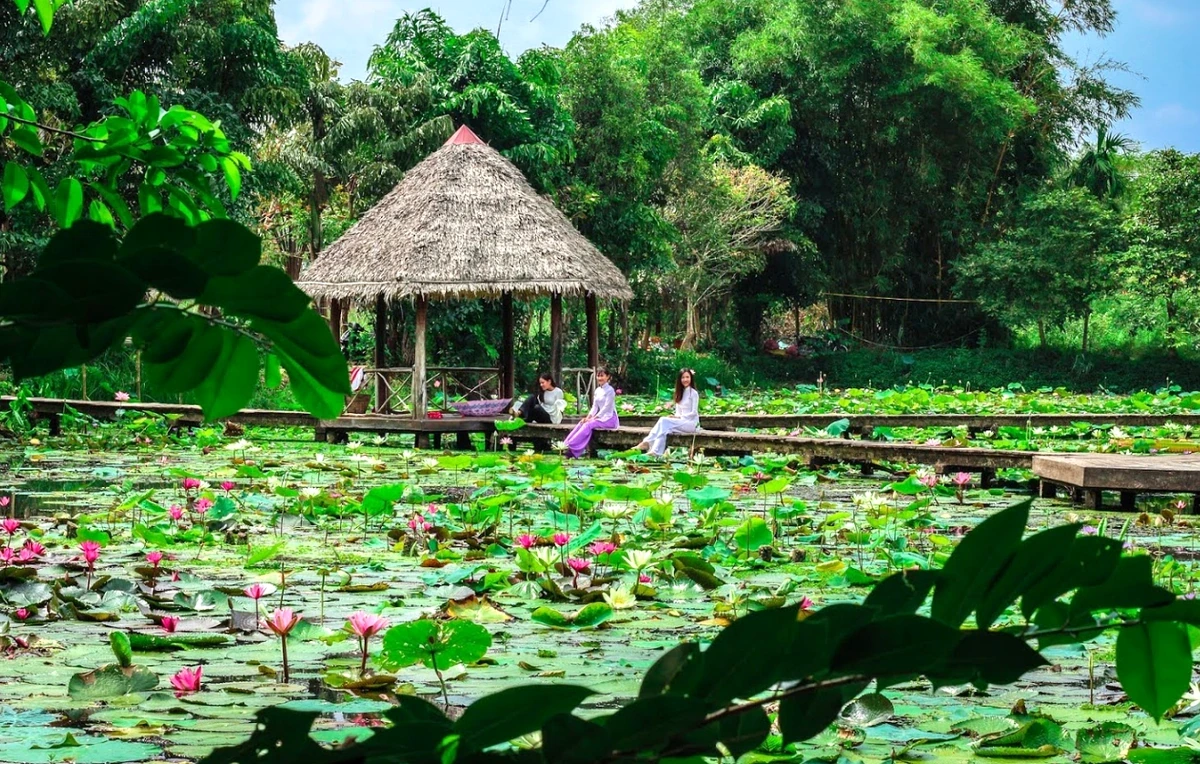
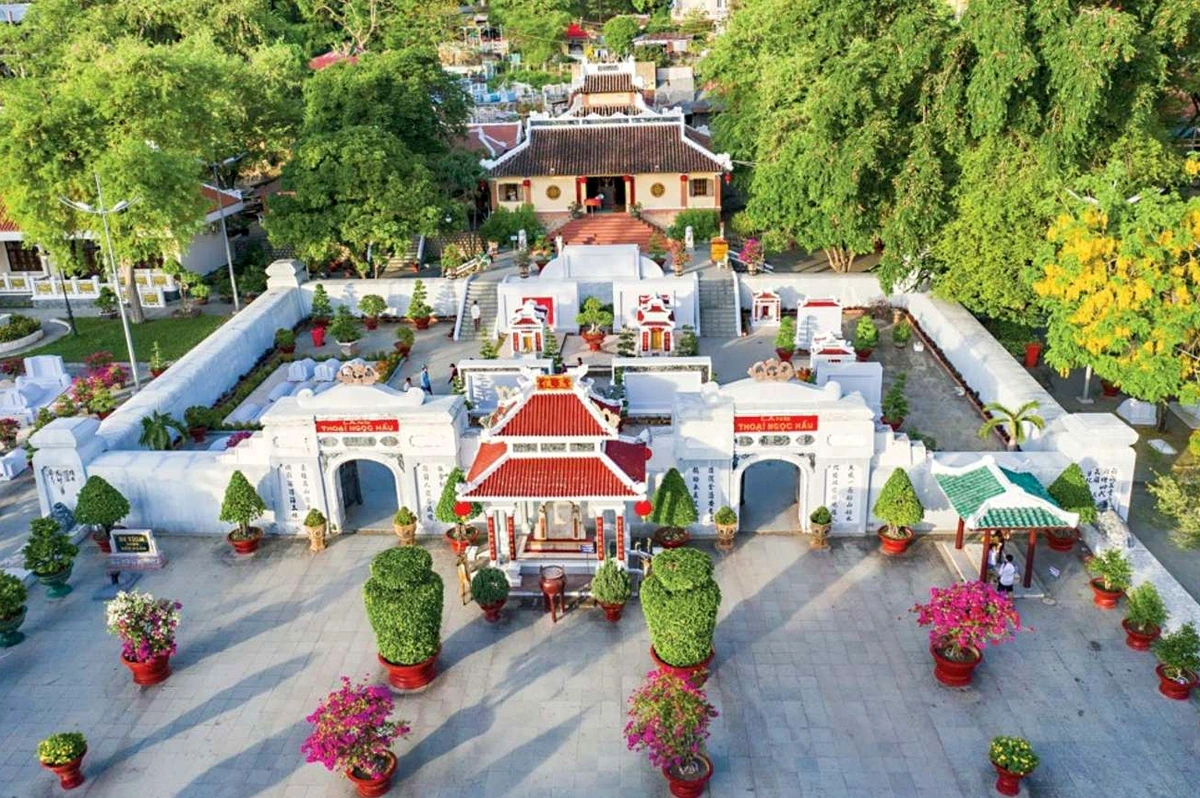
Set within the tranquil ambiance of Tay Do, Vinh Trang Pagoda in Can Tho emerges as a Buddhist architectural masterpiece bearing the unmistakable imprint of unique cultural fusion. Feng shui masters regard the monastery’s terrain as exceptionally auspicious—backed by a solid dragon vein of earth and facing continuously silt-enriched waters, fostering an aura of peace, seclusion, and transcendence. From the very first step through the triple-arched entrance gate (tam quan), visitors seem to shed all worldly dust, immersing themselves in a quintessentially Southern Vietnamese ecological sanctuary shaded by centuries-old trees, fragrant lotus ponds, and the resonant chime of temple bells echoing through the stillness.
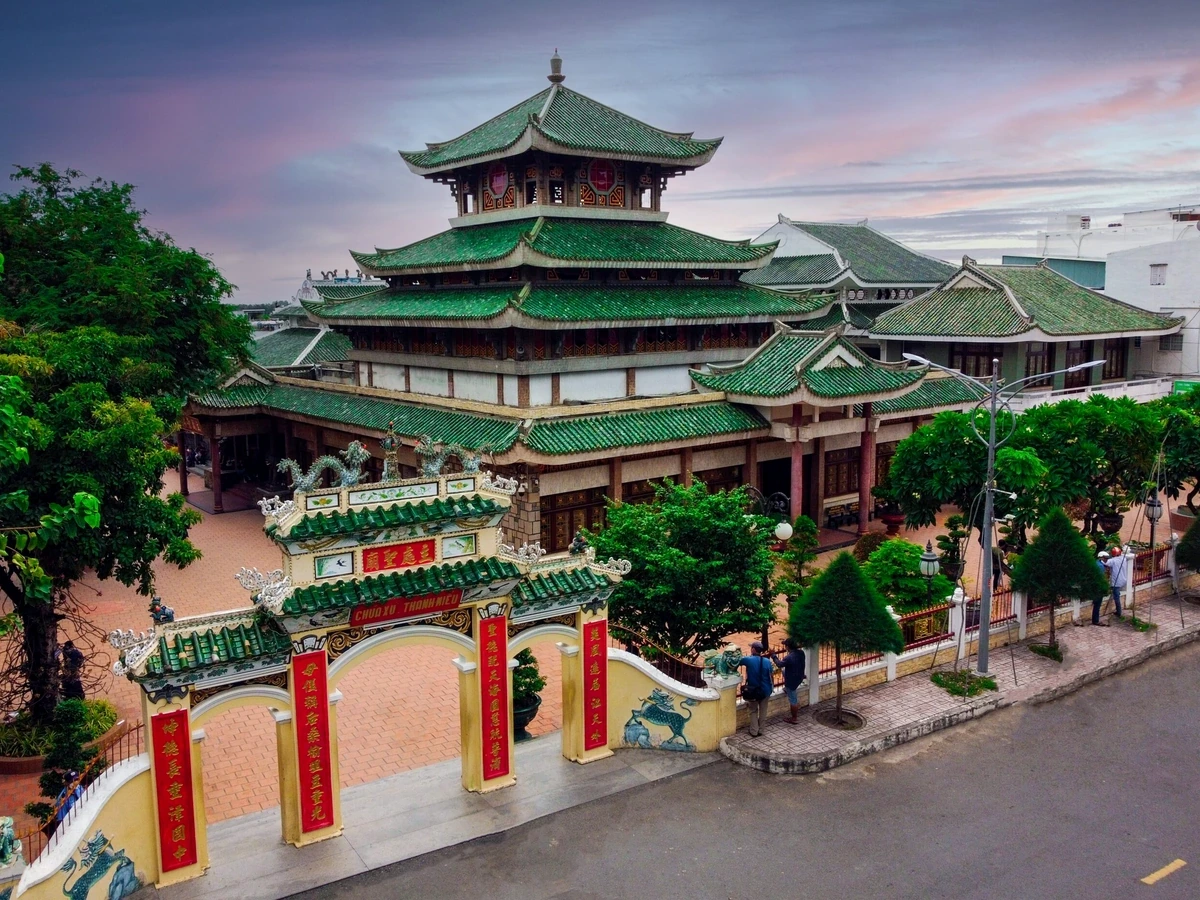
Venturing deeper inside, the ancient temple’s architectural structure reveals a delicate blend of traditional Vietnamese sculptural art, subtle echoes of Nguyen Dynasty royal court architecture, and the meticulous carvings of Chinese and Khmer cultures. The structural framework of the Patriarchs’ Hall and Main Sanctum is constructed from aged precious hardwoods, featuring load-bearing pillars and rafters exquisitely carved with the Four Sacred Creatures: Dragon, Qilin, Tortoise, and Phoenix. Multicolored ceramic mosaic reliefs adorning the upturned roof ridges vividly depict Buddhist parables, lending an air of majesty balanced with grace. Inside the Main Sanctum, ancient Buddha statues crafted from bronze and gilded lacquered jackfruit wood radiate a serene aura, standing as proof of supreme sculptural artistry spanning centuries.
For photographers and travel enthusiasts passionate about heritage discovery, Vinh Trang Pagoda offers “million-view” photography angles rich in artistic and spiritual value. The first prized photo spot is the ancient triple-arched gate, where cascading bougainvillea vines drape gracefully over moss-covered tiled roofs. The most ideal time to capture this scene is at dawn (from 5:30 AM to 6:30 AM), when the first rays of morning sunlight pierce through the foliage and illuminate the misty morning dew, creating a mystical, breathtakingly peaceful tableau.
The second camera angle highly praised by professionals is the central lotus pond courtyard paired with miniature rockery landscapes (hon non bo). Between 4:00 PM and 5:30 PM (sunset), slanting golden-orange light glints across the rippling water and reflects off the sweeping curves of the pagoda roofs. Shooting this moment from the East Corridor allows photographers to capture a seamless harmony between expansive nature and solemn spiritual architecture within a single frame. This is not only a place to admire scenic beauty and reclaim inner peace, but also a repository of priceless cultural nostalgia from Vietnam’s southern land.
Stepping through the moss-grown triple-arched gate of Vinh Trang Pagoda in Can Tho, all the noise and hustle of the Mekong Delta’s urban streets seem to fade behind, giving way to a tranquil, contemplative space steeped in spiritual cultural identity. An on-site field excursion and pilgrimage to this ancient temple rewards visitors with deeply moving experiences, where a heroic past and the vibrant present merge into every breath of nature and humanity.
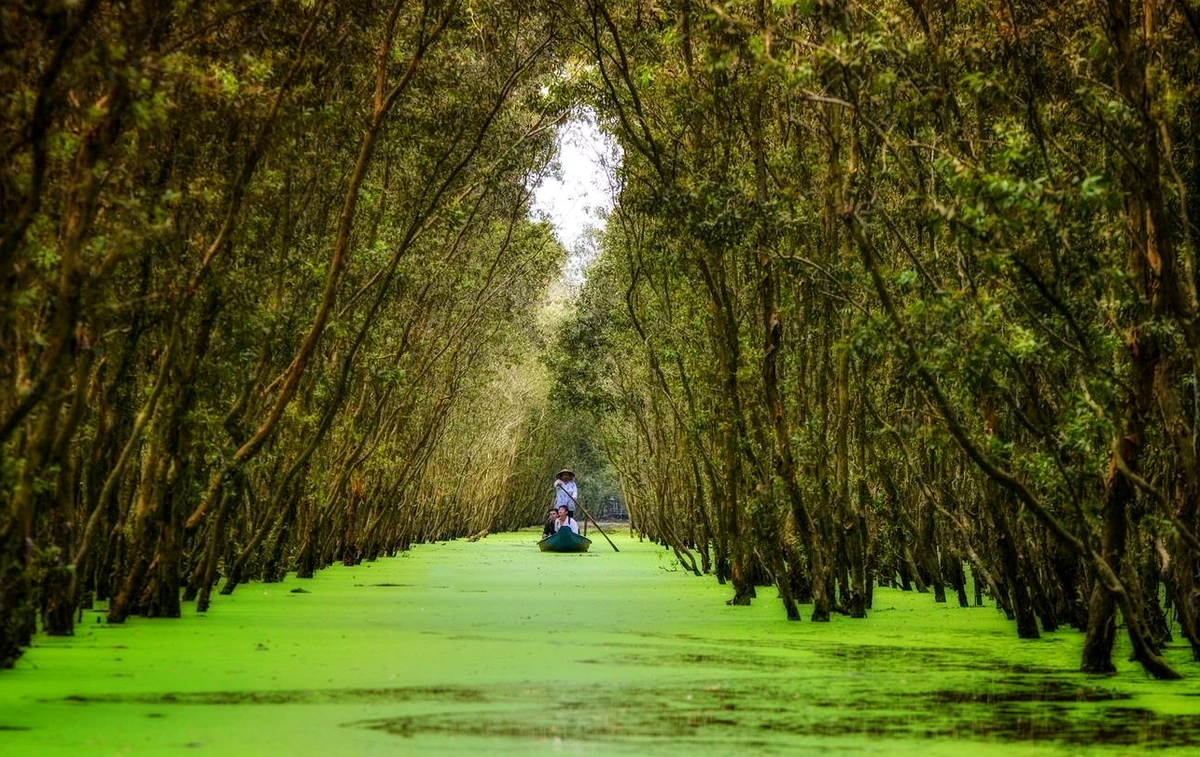
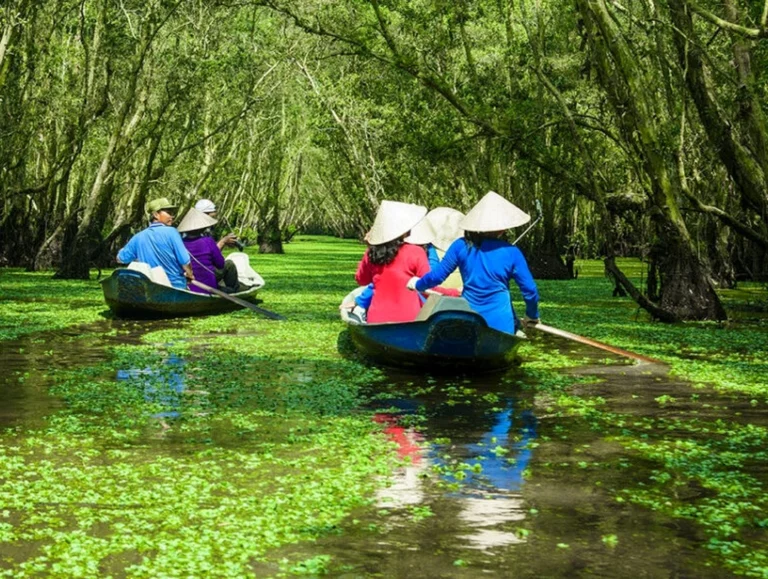
The journey of discovery begins aboard a motorized sampan (tac rang) or small wooden boat gliding through lush nipa palm canals to approach the pagoda grounds from the riverside. The gentle splash of oars and the cool, moisture-laden breeze of Can Tho’s waterways immediately dispel the southern heat. Stepping onto the mossy pier, travelers are captivated by an antique architectural complex where Vietnamese, Khmer, and Chinese cultural synthesis shines through every detail—from the carved yin-yang roof tiles and sturdy, time-worn ironwood columns to the lingering scent of incense permeating the quiet air.
Entering the Main Sanctum, a profound sense of stillness envelops every pilgrim’s soul. The soft golden glow of oil lamps illuminates ancient Buddha statues dating back to the Nguyen Dynasty, radiating a majesty that feels remarkably intimate and warm. The midday tolling of the temple bell not only awakens the senses but also washes away everyday worries and anxieties. Visitors can take time to stroll beneath the cool shade of ancient Bodhi trees, listen to the melodious chirping of birds, and savor a rare moment of inner serenity while turning their hearts toward goodness.
Leaving the quiet sanctuary of the Main Sanctum, the experiential journey continues by immersing travelers in the lively local cultural rhythm of the surrounding neighborhood. Around the heritage area, the enticing aromas of renowned Southern Vietnamese specialties beckon passersby from near and far. Savoring a bowl of richly flavored fermented fish noodle soup (bun mam), a platter of crispy savory pancakes (banh xeo) wrapped in fresh wild herbs, or sipping iced orchard tea alongside sweet coconut candy makes for a fulfilling finale to the excursion. The refined combination of spiritual-historical depth, picturesque river scenery, and distinctive culinary culture turns every step at Vinh Trang Pagoda into a cherished memory etched forever in the hearts of those who visit Tay Do.
When making a pilgrimage to historic spiritual sanctuaries in the land of Tay Do, keeping essential information in mind regarding opening hours, transportation, and cultural etiquette will help ensure your journey is complete, respectful, and deeply meaningful.
Regarding operating hours, the monastery welcomes Buddhist devotees and visitors from near and far from early morning until late evening every day of the week. The most ideal visiting window begins early in the morning, when the air is still kissed by morning dew, the surroundings are peaceful, and the resonant sounds of bells and wooden fish drums calm the mind. Visitors should avoid arriving too late at night to respect the quietude required for the monastic community’s daily spiritual practice.
Regarding admission fees, the entire historical site and spiritual grounds are completely free of charge for everyone coming to worship, study, and admire the scenery. No commercial ticketing of any kind is enforced here. However, if visitors wish to make voluntary offerings or merit donations toward restoration and heritage preservation, the pagoda gratefully accepts contributions via donation boxes placed inside the Main Sanctum.
Regarding transportation and optimal routes, starting from downtown Can Tho City, you can easily reach the heritage site by motorbike, private car, or taxi. The route is highly convenient thanks to a well-connected urban and provincial road network. From the city center, follow the main arterial roads heading toward the outskirts or follow directional signs leading to the historical site; within a short drive, you will arrive at the serene monastic grounds, immersing yourself in lush greenery and traditional Buddhist architecture.
Regarding dress code during your pilgrimage, as this is a sacred site of longstanding historical and religious significance, visitors and devotees are required to dress modestly and respectfully. Choose understated attire with trousers or skirts extending below the knee and sleeved tops, avoiding overly short, tight-fitting, or sheer clothing that may cause offense. Because the pagoda grounds feature predominantly flat paved pathways and airy courtyards without steep rocky inclines, you can comfortably wear lightweight footwear that is easy to slip off before entering the main prayer halls.
The best times of year to visit the site are during major Buddhist festivals such as Vesak (Buddha’s Birthday) and the Vu Lan Filial Piety Festival, or during Southern Vietnam’s dry season when the weather is crisp and sunny. During these periods, the pagoda grounds are vibrantly decorated and host numerous meaningful spiritual and cultural activities, allowing you not only to admire the scenery but also to gain deeper insight into the gracious cultural etiquette and religious traditions passed down through generations in Southern Vietnam.
To enjoy a seamless holiday and fully admire the beauty of Vinh Trang Pagoda without worrying about arranging transportation, booking tickets, or planning itineraries, travelers can choose VDS Travel’s premium all-inclusive Can Tho tour packages. Every itinerary is thoughtfully designed to optimize photo opportunities when the scenery is at its most radiant, accompanied by knowledgeable local guides and top-tier hotel and dining standards.