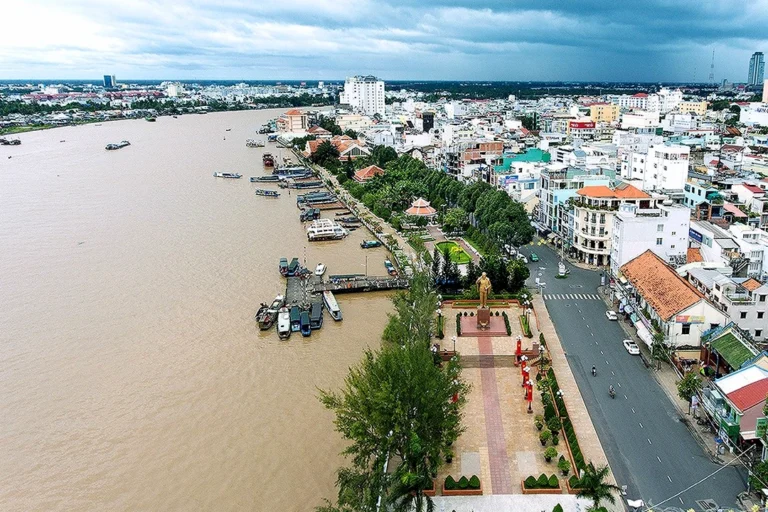
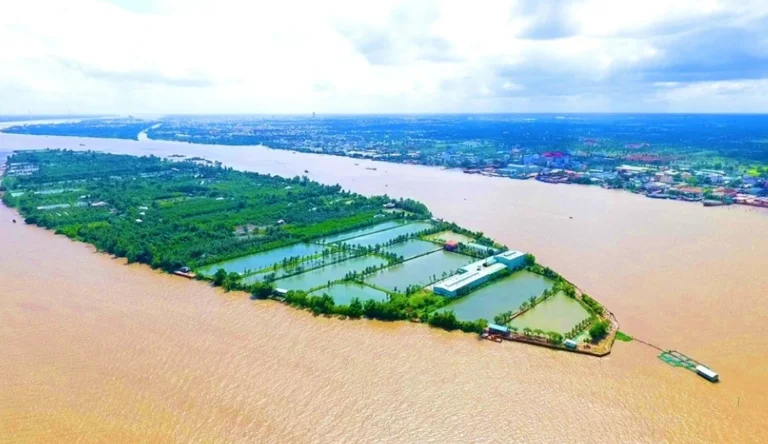
Situated along the gentle, silt-laden Hau River, the heritage site popularly known as the “Bac Lieu Prince’s House” in Can Tho occupies a prime geographical location—a harmonious convergence of feng shui principles and the vibrant commercial port pulse of Tay Do during the French colonial era. Topographically, the estate sits at a street corner where modern urban life meets the charm of the traditional Six Provinces of Southern Vietnam, boasting an auspicious “near the river, close to the market” position. The flowing waters of the Hau River nourish vital energy, bringing wealth and prosperity that once formed a solid launchpad for an expansive network of agricultural estates, rice granaries, and auxiliary residences belonging to Southern Vietnam’s powerful major landlords.
Viewed through a historical and chronological lens, this structure dates back to the period when Cochinchina was a direct French colony, built between 1919 and 1930—a turbulent yet brilliant transitional era of Indochinese architecture spanning the Nguyen dynasty reigns from Thanh Thai and Duy Tan to Khai Dinh and Bao Dai. While the famous original mansion of the legendary dandy Tran Trinh Huy (Ba Huy) stands in Bac Lieu, the Tran family’s real estate holdings and commercial network in Can Tho served a distinct strategic economic mission. It was a hub for Teochew Chinese-Vietnamese landlord capital led by Council Member Tran Trinh Trach—father of the Bac Lieu Prince—who was once dubbed the “King of the Region” for his financial clout across the Six Provinces of Southern Vietnam.
The creation of these mansions cannot be separated from the Tran family’s forward-thinking vision in marrying the rice economy with Western architectural artistry. All high-end construction materials—from reinforced concrete, decorative tiles, and glass window frames to distinctly French-style roof tiles—were imported intact by sea through major ports like Saigon and Can Tho. The involvement of French engineers during design and construction infused the space with a unique hybrid beauty: the stately grandeur of European capital seamlessly blended with the adaptability required for Southern Vietnam’s tropical monsoon climate.
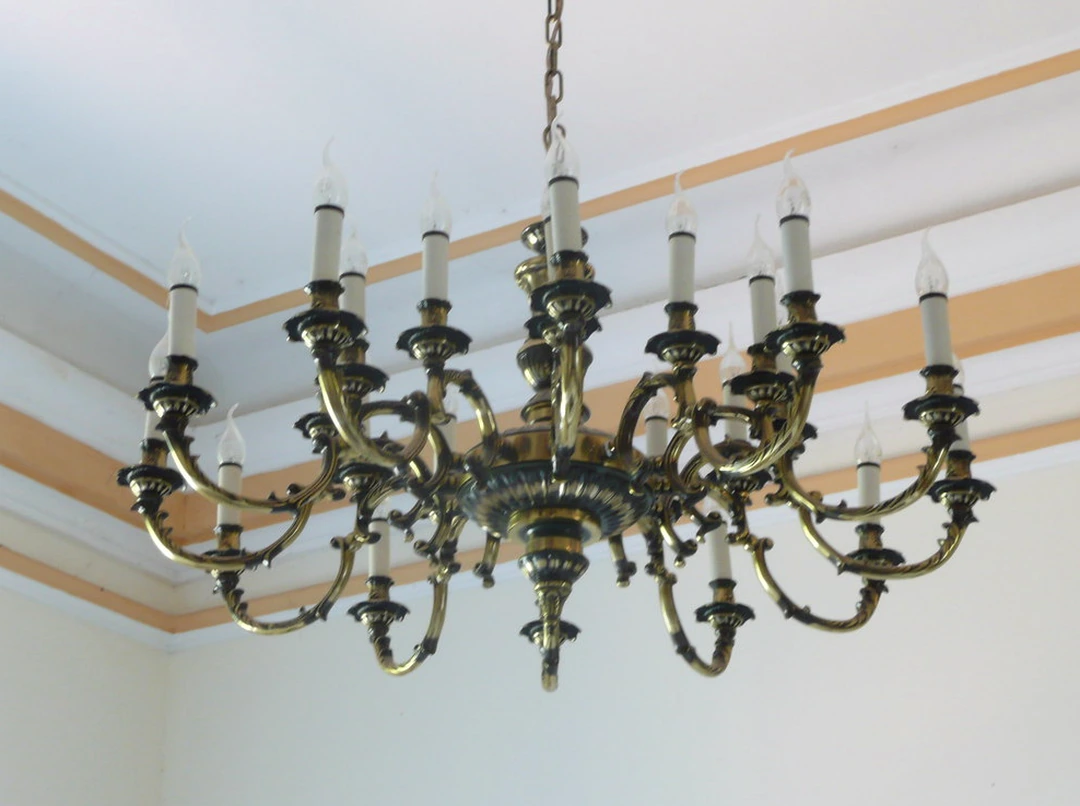
In research archives compiled by the local Council of Science and Archaeology, this heritage space is documented not merely as an architectural relic, but also as a living museum of Southern Vietnam’s upper-class lifestyle during the first half of the 20th century. It preserves legendary tales of the lavish, free-spending lifestyle of Bac Lieu’s famous scion alongside an extensive Mekong Delta trading network. From a modern heritage conservation perspective, authorities and the media alike recognize it as a “golden coordinate” for studying Vietnamese–Chinese–French cultural exchange, as well as a vital piece completing the panoramic portrait of life, architecture, and the spirit of culturally rich Tay Do.
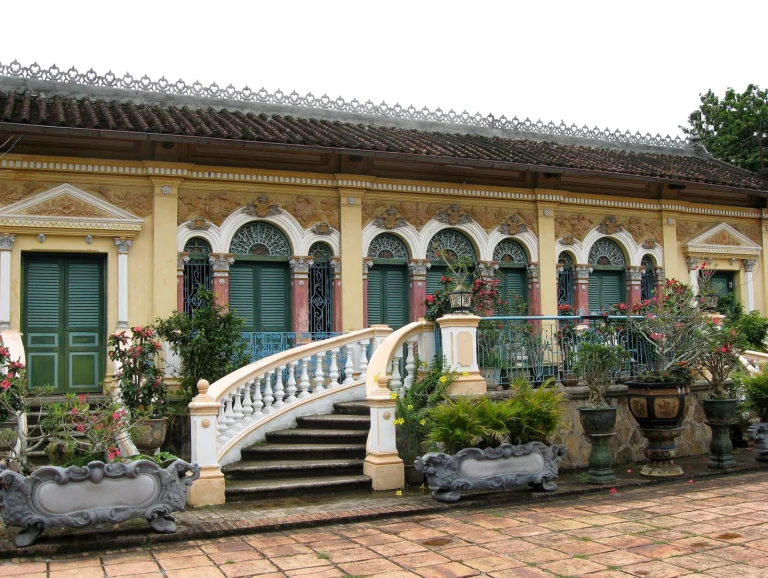
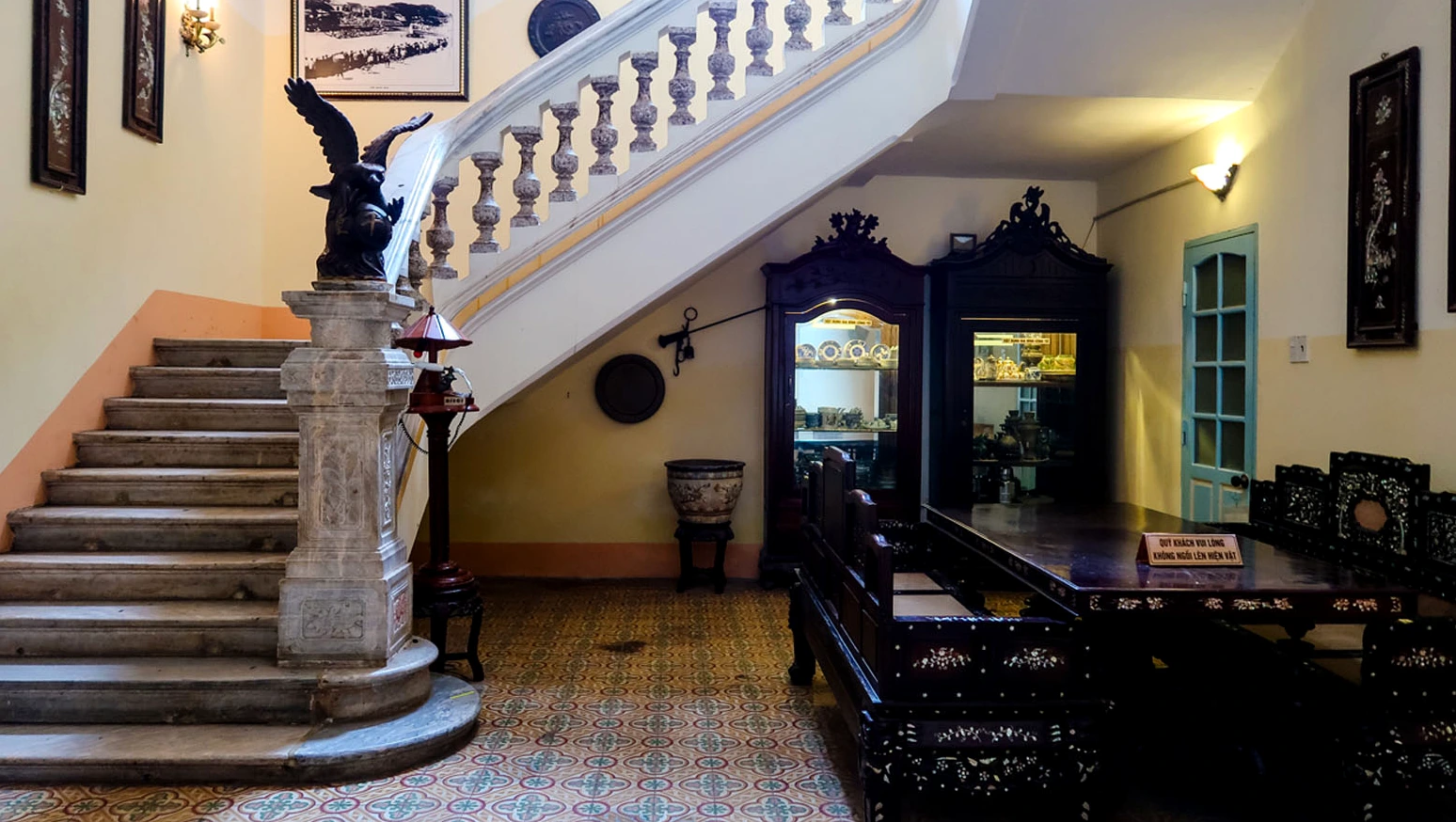
Nestled amid fertile landscapes beside the bustling, boat-filled Hau River, the Tran family’s mansion and estate complex in urban Can Tho stands as a premier symbol of authority and prosperity among Southern Vietnam’s bourgeois landlords during the French colonial period. Traditional feng shui masters praised the site’s layout as “gathering water to generate vitality,” backed by a major thoroughfare and facing flowing waters that continuously usher in energy and fortune for the homeowner. Overall, the grounds represent a remarkable fusion of luxurious, stately French Neoclassical architecture and intricate carvings reflecting indigenous Vietnamese-Chinese heritage. Long, sweeping corridors, high, wide arches, and sturdy round columns sculpted with detailed reliefs clearly showcase the refined aesthetic sensibility of early 20th-century Southern aristocracy.
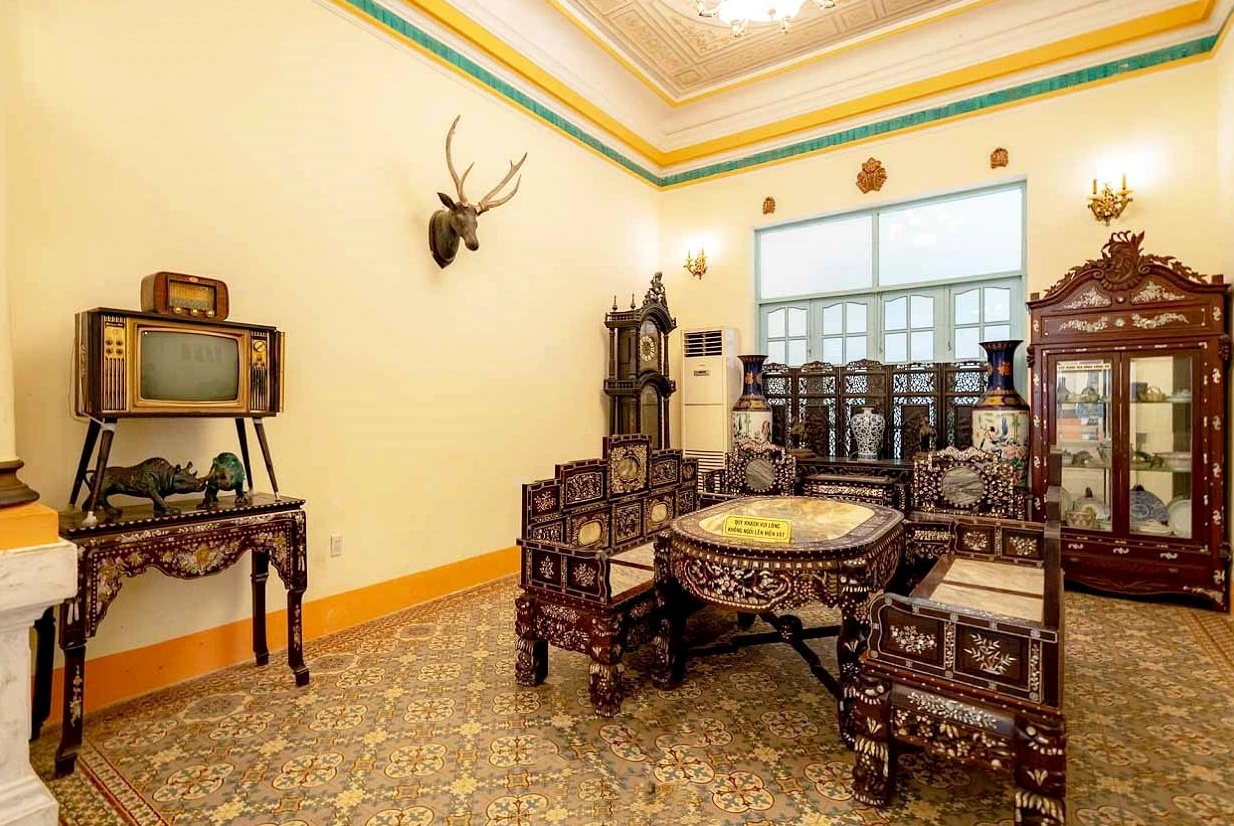
Stepping inside, every material detail testifies to the boundless wealth and extravagance of the Tran Trinh family. All mosaic-patterned floor tiles, artistic stained-glass window frames, and bas-reliefs depicting flora and fauna were custom-commissioned and shipped intact from France via the Port of Saigon. Natural light streams through expansive arched windows into the interior, illuminating the rare, precious hardwoods paneling the walls and ceilings. This masterful pairing of modern Western materials with airy, tropical open-plan spaces produced an architectural masterpiece that feels both imposing and noble yet intimately connected to the natural rhythm of Tay Do’s waterways.
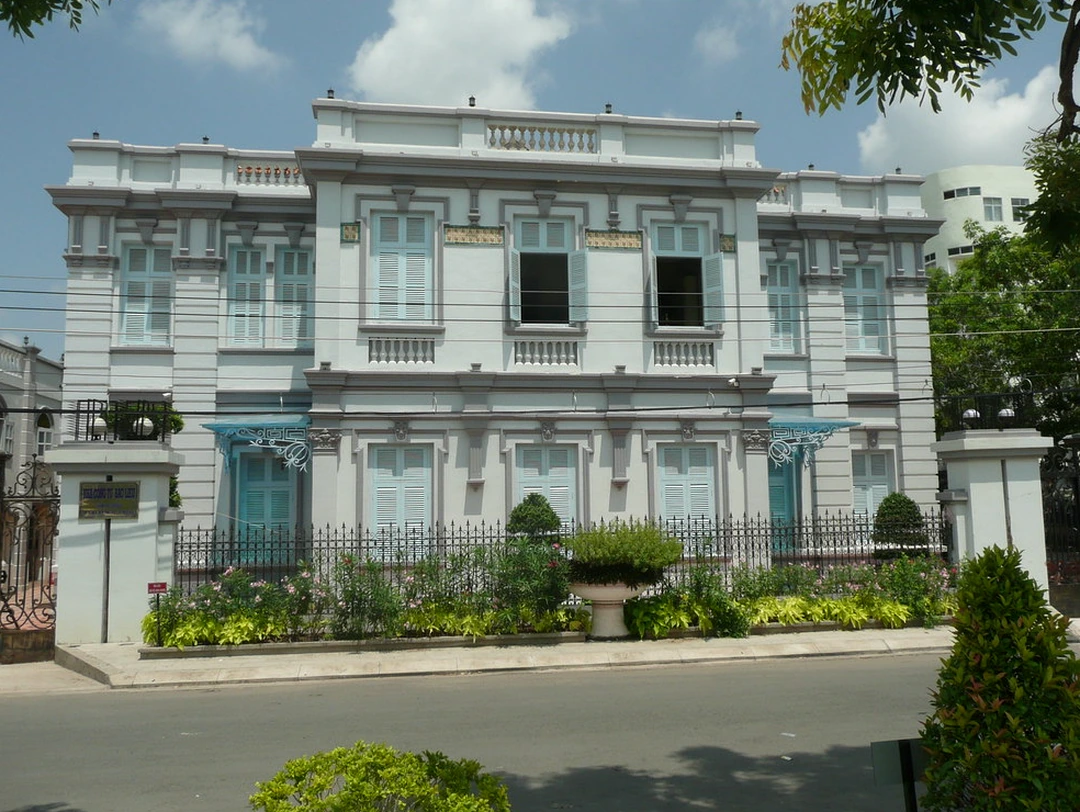
To capture the structure’s nostalgic elegance at its finest, leading photographers and travel magazines often recommend two unmissable “million-dollar” photo spots. The first lies along the main ground-floor colonnade, where rows of towering round pillars create a striking sense of visual depth. The ideal time to shoot here is at dawn (between 7:00 AM and 8:00 AM), when the first rays of morning sunlight filter through the arched openings, casting golden streaks across the antique tile floors and evoking a serene, classic Indochinese cinematic atmosphere.
The second prized vantage point is located in the courtyard facing the mansion’s facade, framing the entire magnificent French edifice amid lush, centuries-old trees. Sunset (from 5:00 PM to 6:00 PM) is the golden hour for this shot. As the sky shifts into dreamy shades of purple and pink, the mansion’s warm interior lights flicker on, reflecting off antique glass panes to create an opulent, nostalgic tableau. Standing here, visitors feel transported back to the glorious era of the Six Provinces of Southern Vietnam, vividly sensing the breath of history and enduring architectural heritage.
Stepping into this mansion stamped with the legacy of Southern Vietnam’s great landlord families in Tay Do, visitors are immediately drawn into a nostalgic dimension where an opulent past and local daily life merge into one. From the very first steps onto the veranda paved with imported patterned tiles, initial awe at the grand scale and subtle synthesis of Vietnamese, Chinese, and French architecture soon gives way to quiet contemplation. Beneath the cool shade of century-old trees, brisk breezes from the Hau River carry fresh, alluvial moisture that dispels the Southern heat, opening up a rich and vivid experiential journey.
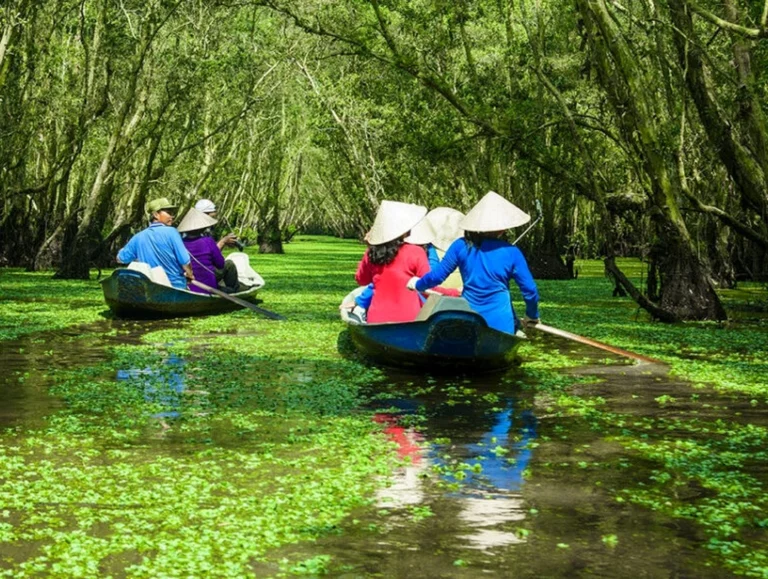
Exploration extends well beyond admiring historical artifacts or listening to anecdotes about the bygone royal lifestyle of the Southern dandy. Visitors can enjoy a truly unique hands-on experience by joining a sightseeing boat tour through the intricate network of canals surrounding the heritage site and old commercial port. Gliding gently across the water aboard a traditional tac rang motorized sampan, gazing at nipa palms drooping along both banks, and listening to the steady hum of the engine alongside the unpretentious rhythm of Mekong Delta life, one palpably feels the space’s remarkable transformation from a bustling rice-estate hub into today’s peaceful riverine city. Though the terrain here offers no steep mountain passes to climb, ascending the antique wooden staircases to the mansion’s upper-floor balconies to take in panoramic views of bustling Can Tho from above delivers an indescribable sense of openness and freedom.
The local cultural landscape also captivates travelers through spiritual visits to nearby ancient communal houses and Chinese assembly halls—sanctuaries preserving the long-standing religious traditions of early pioneering communities. This cultural fusion permeates every breath of Tay Do, and as twilight settles in, sampling renowned local specialties around the site provides the perfect crescendo to the journey. In cozy, authentically Southern settings, visitors can savor rustic yet refined dishes such as rich, countryside-style fermented fish hotpot (lau mam), straw-grilled snakehead fish (ca loc nuong trui) fragrant with smoky aroma, or crispy Vietnamese sizzling crepes (banh xeo) wrapped in fresh wild greens. Every flavor, sound, and warm, gentle smile from the locals etches unforgettable memories into travelers’ hearts, turning a visit to a historical landmark into an expedition into the very soul of Southern culture.
To ensure a smooth and fulfilling journey exploring the cultural and architectural space of this storied Southern landlord mansion, keeping track of practical details such as opening hours, ticket prices, and transportation tips is essential. When planning a visit, travelers should note that the site typically welcomes guests from early morning until late afternoon throughout the week, including weekends and public holidays, easily accommodating any personal itinerary.
Currently, posted admission fees at the heritage site are clearly structured into tiers for adults, children, and students at very affordable rates suitable for all types of visitors. For specialized research delegations or organized school and university student groups, the site’s management board often offers special discounted admission policies to encourage learning about local history.
For the most convenient route from the city center, visitors can travel by motorbike, private car, or taxi along major riverside thoroughfares. The road network connecting to the heritage site is wide, well-integrated, and easy to locate via digital map apps. Within just a short drive from downtown, travelers can step straight into a nostalgic architectural realm steeped in Vietnamese–French cultural fusion.
When entering the mansion grounds, visitors are advised to wear neat, modest, and tasteful attire befitting the historical, cultural, and ancestral spiritual setting. Because the antique floors, wooden staircases, and original interior materials are decades old, guests should opt for lightweight, soft-soled footwear and avoid sharp stiletto heels to protect the wooden flooring and move comfortably while exploring the upper levels.
The ideal time of year to visit is during the dry season, from November to April, when Southwestern Vietnam enjoys sunny, mild weather with minimal rainfall. These pleasant conditions not only make outdoor sightseeing and photography effortless, but also allow visitors to leisurely soak in captivating stories about the legendary lives of the Bac Lieu Princes.
To enjoy a seamless getaway and admire the full beauty of the Bac Lieu Prince’s House without worrying about arranging transportation, booking entrance tickets, or planning itineraries, travelers can choose VDS Travel’s premium all-inclusive Can Tho tour packages. Every itinerary is thoughtfully timed for photo check-ins when the scenery is at its most radiant, accompanied by knowledgeable local guides and top-tier hotel and dining standards.