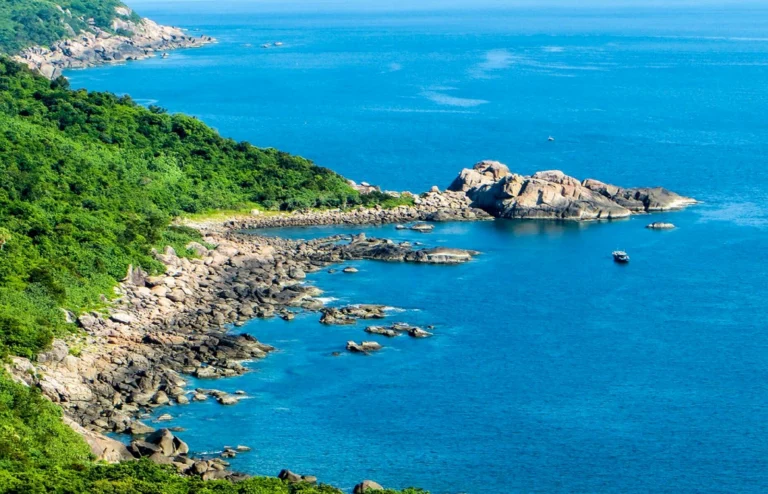
Located along Vietnam’s South Central Coast, the Ghenh Rang Tien Sa Relic and Scenic Complex stretches along the southeastern shoreline of Quy Nhon City, Binh Dinh Province, standing like a magnificent natural outpost sculpted by nature amid vast ocean waves. Viewed through the lens of traditional feng shui, this scenic landmark boasts an auspicious “backed by mountains, facing the sea” posture, where solemn, layered granite ranges plunge straight into the water’s edge to form a one-of-a-kind system of coves, caves, and rocky beaches. This rugged yet deeply poetic terrain has transformed Ghenh Rang into an enduring geological, historical, and cultural emblem of Binh Dinh (“Xu Nau”), where the breath of the ocean meets the sacred spirit of the mountains and rivers.
Tracing history back through Vietnam’s feudal dynasties, the origin of Ghenh Rang’s name and its strategic value are closely tied to the nation’s southward expansion, land reclamation, and border defense. During the Early Le, Ly, and Tran dynasties, this served as a complex frontier of cultural exchange between Dai Viet and the Champa kingdom, falling under the domain of the famed Do Ban – Vijaya citadel. By the Early Le dynasty—most notably following the historic milestone of 1471 when King Le Thanh Tong personally led a campaign to expand the territory and annex the region from Cu Mong Pass to Hai Van Pass—Ghenh Rang officially appeared on ancient nautical charts as a rugged rocky headland serving as a natural harbor that sheltered vessels entering and exiting the strategic Thi Nai Lagoon. Into the Tay Son and Nguyen dynasties, historical geographical records continued to recognize this site as a vital anchor within the coastal military defense network and maritime trade routes.
The name “Ghenh Rang” carries the strong imprint of the local dialect and the livelihoods of coastal fishermen. Here, “ghenh” refers to submerged rocky reefs that break fierce waves, while “rang” denotes jagged rock ledges or the creaking sound of wooden rafts scraping against rocks as seafarers navigated treacherous swirling currents. Later, to honor its breathtaking scenery and lyrical legends, the suffix “Tien Sa” (“Descending Fairy”) was added to administrative documents and literary works, linked to the folklore of Giang Huong—a beautiful, filial maiden who suffered unjust persecution, fell in love with a poor scholar, and eventually ascended as a fairy descending to earth. Layers of folk culture transformed this once-untamed rocky cape into a mythical, deeply poetic sanctuary.
Beyond the geological value of its million-year-old granite formations with fascinating shapes—such as Egg Beach (Queen’s Beach) and Tien Sa Beach—Ghenh Rang is also a convergence point of profound spiritual and humanistic heritage. It once welcomed eminent Zen masters of the Linji (Lam Te) school, who chose its sheer cliffs to establish hermitages at Hang Pagoda (Long Bich Son), blending the resonance of temple bells with the millennial rhythm of crashing waves. Above all, Ghenh Rang’s artistic soul reached its zenith through its bond with the life and career of the gifted yet ill-fated poet Han Mac Tu (1912–1940). Spending his final years battling leprosy at the Quy Hoa leprosarium brought the poet to Thi Nhan Hill atop Ghenh Rang. Here, his intensely passionate poetic spirit soared into masterpieces such as “Tho Dien” (Mad Poetry) and “Tho Ton Trao,” and after his passing, his tomb was laid to rest eternally amid the sky and earth of Quy Nhon, turning Ghenh Rang Tien Sa into a sacred pilgrimage site for lovers of Vietnamese poetry.
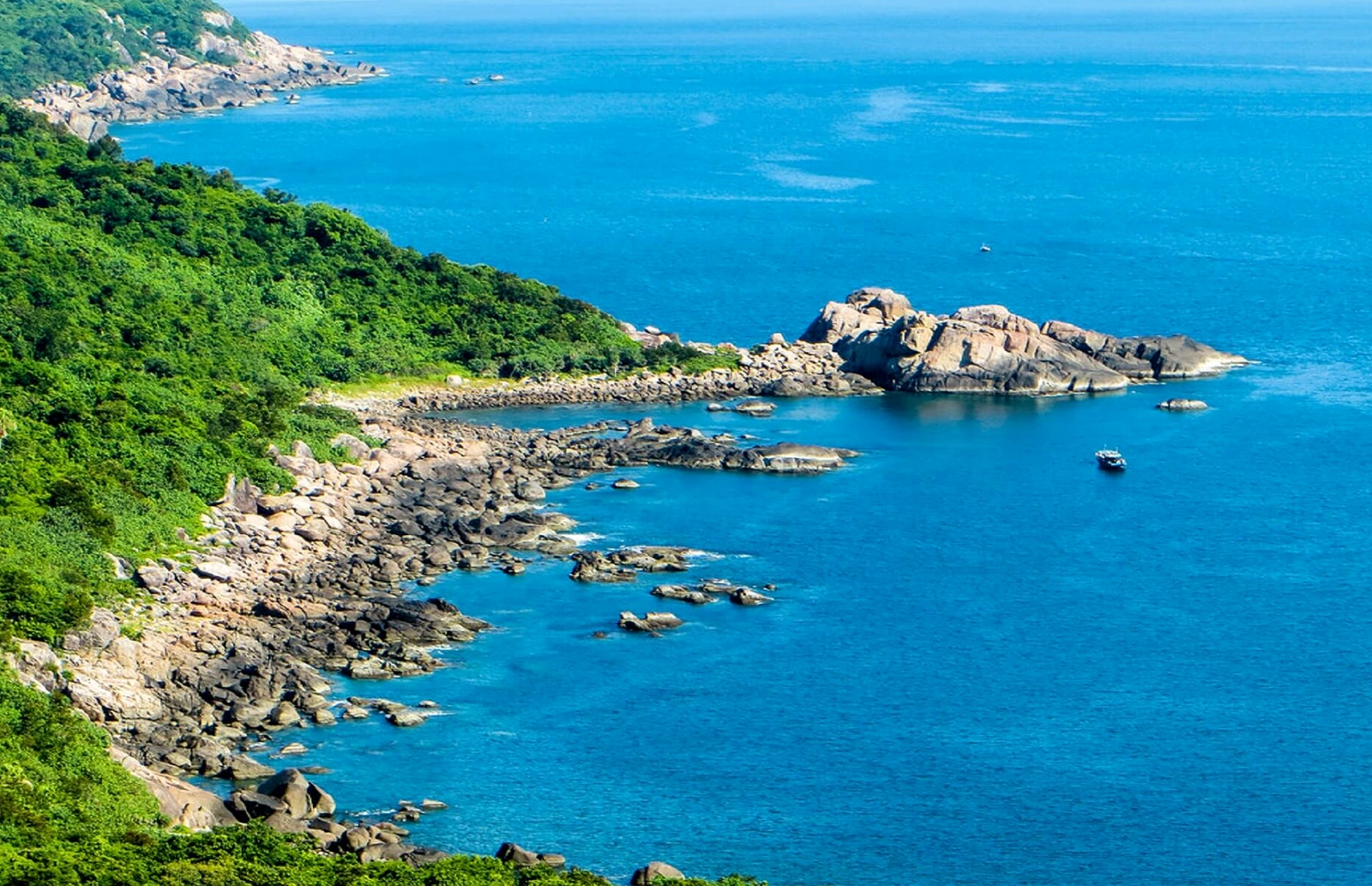
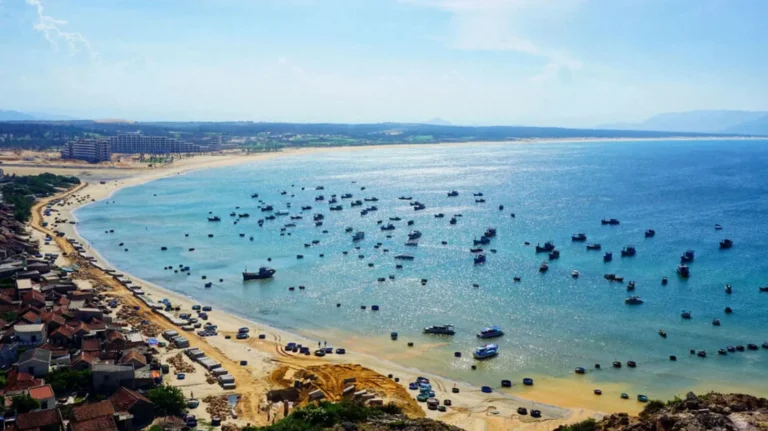
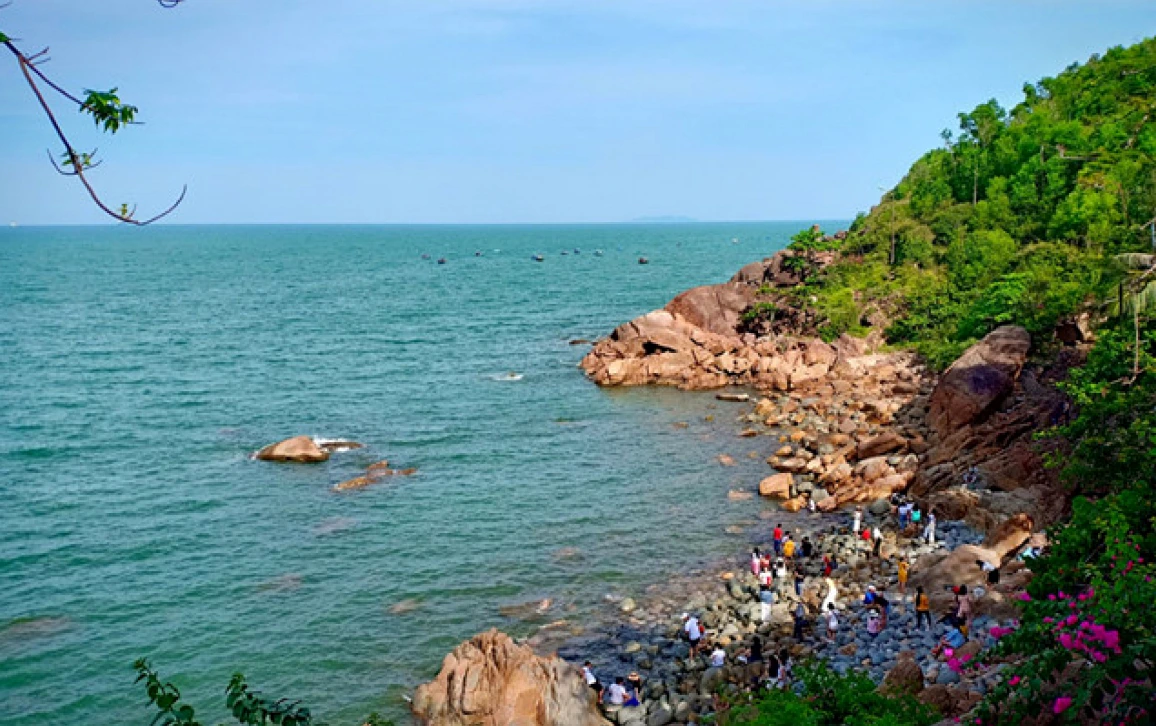
Shaped over centuries by natural forces, the Ghenh Rang Tien Sa complex emerges as one of Central Vietnam’s most breathtaking coastal landscapes, where colossal granite mountains reach out to embrace the deep blue waters of the East Sea. The terrain of this scenic wonder is remarkably unique, featuring a geological structure of tens of thousands of boulders stacked atop one another, curving gracefully along the Quy Nhon coastline. Stretching along the precipitous cliffs are rocky outcrops eroded by ocean waves over millennia, carving out mysterious caves and bizarrely shaped rock fields that resemble intricate sculptures crafted by nature. Intertwined with the raw, rugged character of stone and sea breeze is lush greenery, creating an ecosystem that is both majestic and serene.
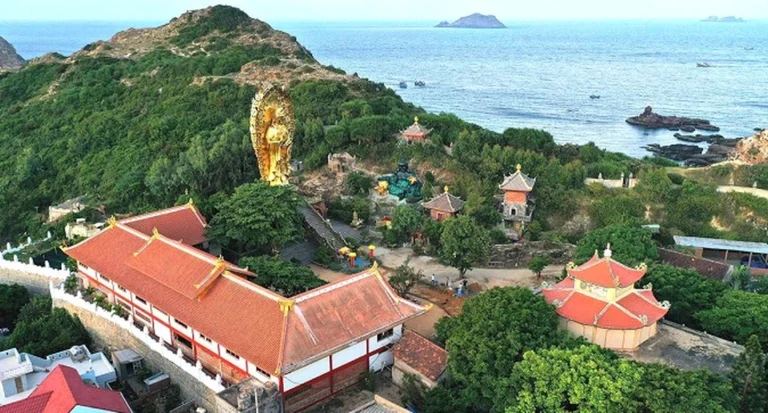
Nestled within the tranquil setting of the Ghenh Rang cliffs is Hang Pagoda (Long Bich Son), a spiritual architectural highlight steeped in the traditions of the Linji Zen sect. Rather than boasting imposing halls and sprawling courtyards, this ancient pagoda is delicately integrated into the hollow of a natural stone cave. Moss-covered stone steps guide visitors into a hushed sanctuary where the sound of wooden fish drums and temple bells harmonizes with the gentle murmur of waves day and night. Its architecture exudes humility yet commands deep reverence, celebrating the art of harmonizing human design with untamed nature.
To capture the most prized moments at this coastal paradise, professional photographers and travel journalists often recommend visiting three unmatched photo spots. First is Egg Rock Beach (also known as Queen’s Beach), where hundreds of smooth, round boulders resembling giant bird eggs lie layered right at the water’s edge. The ideal time to shoot here is at sunrise (from 5:00 AM to 6:00 AM), when soft golden morning rays illuminate the glossy stones, creating an ethereal glow that shimmers across the crystal-clear water.
The second million-dollar check-in spot is Thi Nhan Hill, the eternal resting place of the gifted poet Han Mac Tu. Standing at this vantage point and gazing out into the distance, visitors can capture a panoramic frame of the crescent-shaped Quy Nhon Bay embracing the coastal city. Sunset (from 5:00 PM to 5:30 PM) is the golden hour here, as the sky ignites in vibrant shades of pink and violet, draping the pine hill and the poet’s tomb in a quiet, soul-stirring beauty.
Finally, the dramatic rocky outcrops jutting out toward the sea in the Tien Sa area will delight any wanderlust-driven traveler seeking a photograph of epic proportions. Set against a backdrop of white sea foam crashing against the cliffs and an endless horizon, this spot evokes a sense of awe before the power of nature while capturing the proud, untamed beauty of Ghenh Rang Tien Sa through time.
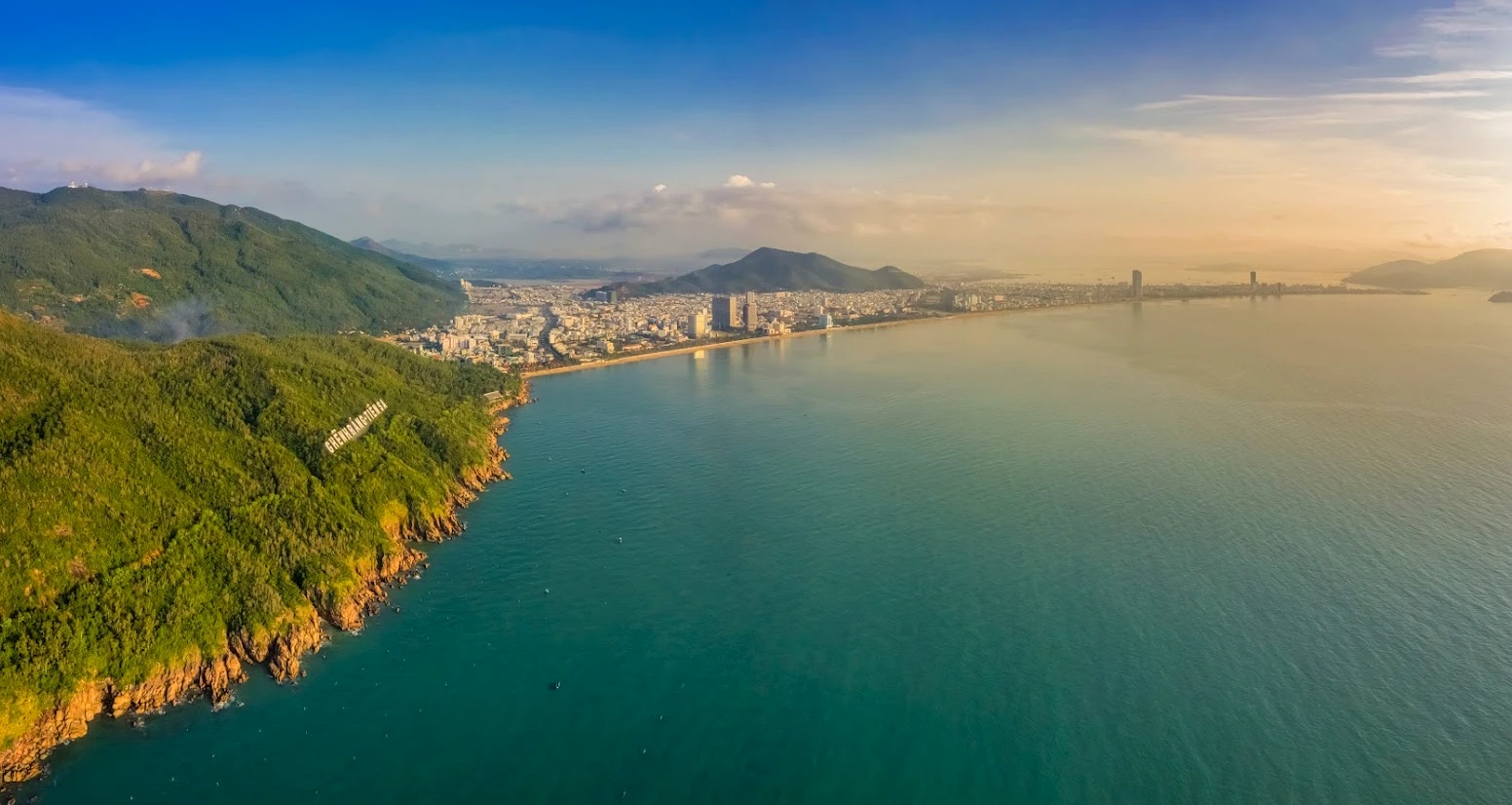
Stepping into the Ghenh Rang Tien Sa relic and scenic complex, visitors enter a world where majestic nature seamlessly intertwines with the deep spiritual and cultural heritage of Quy Nhon, the land of martial arts. From the very first steps up the gently sloping hillside, the rhythmic roar of ocean waves crashing against massive stacked granite boulders awakens every sense. The climb is more than just physical exercise—it is an opportunity to take in a breathtaking panorama of earth and sky: on one side, sheer rocky cliffs stand defiantly against endless swells; on the other, a vast expanse of deep blue sea sparkles beneath the brilliant Central Vietnamese sun.
The emotional peak of the visit arrives atop Thi Nhan Hill, the resting place of the brilliant yet tragic poet Han Mac Tu. The atmosphere here carries a quiet, melancholic beauty yet pulses with intensity—much like the soul and verses of “Tho Dien” that once echoed across the literary world. Visitors can stop by the memorial room, listen to moving anecdotes about the poet’s life, or admire the art of fire-pen poetry carving by Dzu Kha—who has dedicated his entire life to keeping the flame of Han Mac Tu’s memory alive. A deep, poignant stillness washes over you when standing before the tomb facing the open sea, where the poet’s spirit continues to mingle day and night with the mountain winds and the resonant surf of Tien Sa.
Leaving Thi Nhan Hill, the journey continues onward to the serene spiritual sanctuary of Hang Pagoda (Long Bich Son). Tucked against steep cliffs, this ancient temple of the Linji Zen lineage offers a peaceful retreat where aromatic incense smoke blends with crisp bell chimes beneath the open coastal sky. After moments of quiet contemplation and worship, travelers can rent a small boat to glide across the transparent waters and admire Queen’s Beach (Egg Beach) up close—famous for its smooth, giant egg-shaped pebbles polished by Mother Nature over tens of millennia, which once served as the private bathing retreat of Empress Nam Phuong.
A complete experience at Ghenh Rang Tien Sa would not be whole without savoring the region’s rich, widely celebrated local cuisine. Right along the breezy shoreline, visitors can indulge their taste buds with freshly caught seafood such as charcoal-grilled lobster, crisp and sweet vinegar-steamed squid, or tempt their palate with crunchy jumping shrimp pancakes (“banh xeo tom nhay”) bursting with authentic Binh Dinh flavors. Enjoying local delicacies while breathing in the salty sea air and watching the sunset paint the entire sky over Ghenh Rang crimson melts away the stresses of daily life, leaving behind a deep sense of peace and an unforgettable longing for the legendary land of Quy Nhon.
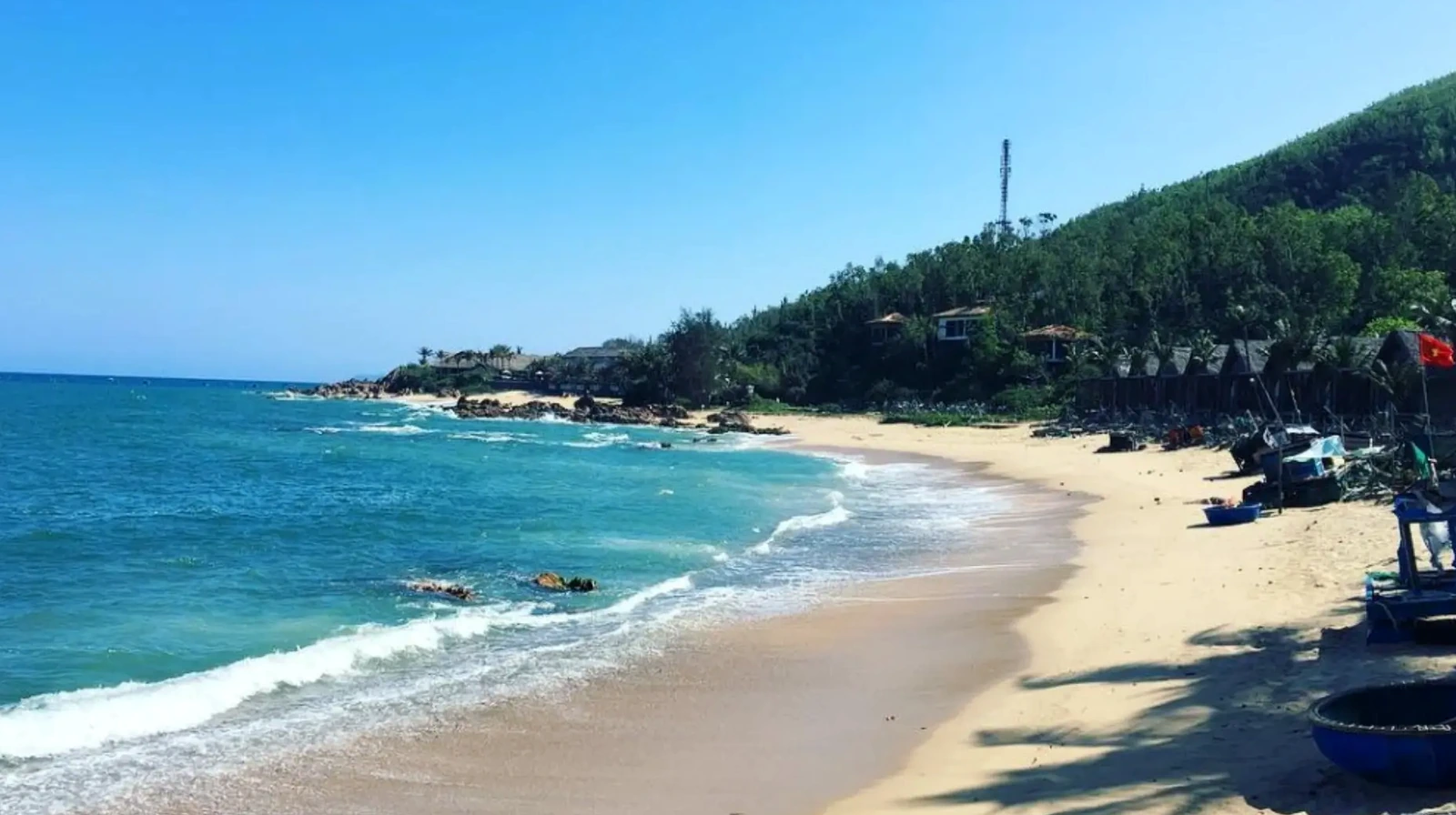
Captivating travelers with the untamed, lyrical charm of coastal Quy Nhon, the Ghenh Rang Tien Sa relic and scenic complex consistently ranks among the must-visit destinations for travel enthusiasts. To ensure a smooth and fulfilling exploration, this essential pocket guide provides up-to-date details on opening hours, ticket prices, and practical transportation tips.
Regarding operating hours, the Ghenh Rang Tien Sa tourist area welcomes visitors from 7:00 AM to 6:00 PM daily, including weekends and public holidays. The best times of day to visit are from 7:30 AM to 9:30 AM or from 3:30 PM to 5:30 PM. During these windows, the sunlight is gentle and never harsh, making it ideal for leisurely scenic walks, taking photos at Egg Rock Beach, or visiting Thi Nhan Hill to pay tribute to the gifted poet Han Mac Tu.
Great news for travelers is that admission to the Ghenh Rang Tien Sa scenic area is currently completely free of charge. You only need to cover minor personal service fees such as motorbike or car parking (around 5,000 to 10,000 VND per entry) or shuttle cart tickets if you opt for electric buggy transport up to the higher hill areas. This open-access policy makes it easy for locals and visitors from near and far to experience this remarkable cultural and natural heritage site.
As for transportation and routes, starting from Quy Nhon city center, it takes only about 10 to 15 minutes to cover the 3-kilometer distance southeast. The most convenient route follows An Duong Vuong Street before turning onto Han Mac Tu Street. You can choose to ride a rented motorbike to enjoy the coastal views along the way at your own pace, book a private car, or hail a taxi or ride-hailing motorbike—all of which are fast and convenient.
Because Ghenh Rang Tien Sa is characterized by steep granite cliffs, uneven rocky shorelines, and elevated hills, visitors should pay attention to choosing appropriate attire. Opt for active, comfortable, breathable clothing, and be sure to wear sneakers or non-slip sandals with good grip to stay safe while climbing hills and exploring the rocky beaches. Additionally, since this area is home to sacred spiritual and cultural sites such as Thi Nhan Hill and Buddhist hermitages, please dress modestly and respectfully, and maintain public cleanliness by not littering so as to preserve the pristine natural scenery and historical value of the landmark.
To enjoy a seamless getaway and take in the full splendor of Ghenh Rang Tien Sa without worrying about arranging transportation, booking tickets, or planning itineraries, travelers can choose from VDS Travel’s premium all-inclusive Quy Nhon tour packages. Every itinerary is thoughtfully timed to capture check-in spots at their most radiant moments, accompanied by knowledgeable local guides and top-tier hotel and dining standards.