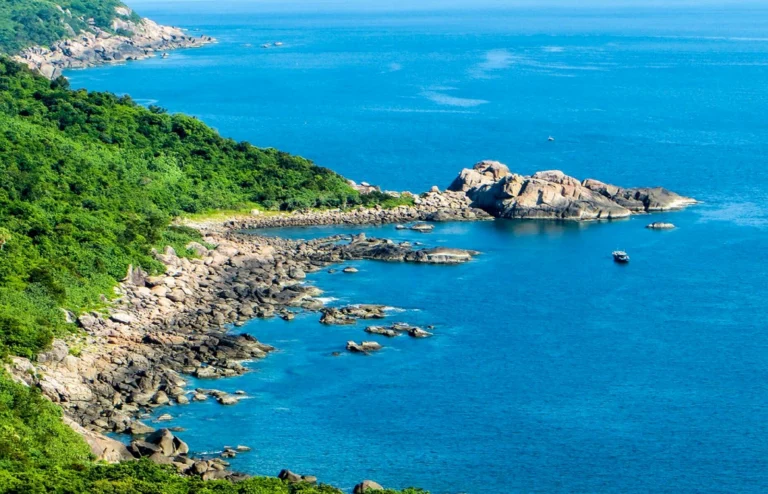
Stretching along the sun-drenched, windswept South Central Coast, Ganh Da Dia rises like a majestic masterpiece of nature, nestled at the crossroads of Quy Nhon’s rich history and the sacred mountain-and-sea spirit of Phu Yen. In terms of modern administrative geography, this scenic landmark belongs to An Ninh Dong Commune, Tuy An District, Phu Yen Province; however, in the chronicles of the inter-regional cultural and historical space, that boundary extends to encompass the strategic vista of ancient Quy Nhon citadel. This one-of-a-kind location not only boasts an auspicious feng shui setting—backed by the mighty Truong Son mountain range and facing the white-capped waves of the East Sea—but also preserves pristine geological sediments spanning tens of millions of years of Earth’s formation.
From a geological perspective, Ganh Da Dia was shaped roughly 30 to 50 million years ago during eras of intense basaltic lava eruptions from deep within the Earth. When the scorching molten lava abruptly met cold seawater, thermal contraction created tens of thousands of remarkably uniform vertical prismatic rock columns in hexagonal, pentagonal, and rectangular shapes. Stacked upon one another like giant piles of plates arranged by divine hands, these formations create a jet-black, glossy rocky promontory jutting straight out into the ocean surf. International geologists and global travel media have long ranked this site alongside the world’s most extraordinary geological wonders, such as the Giant’s Causeway in Ireland and the Jasanek cliffs in the Czech Republic.
Beyond its sheer natural value, the name “Ganh Da Dia” (or “Ghenh Da Dia,” as it is commonly called in local parlance, meaning “Cliff of Stone Plates”) is deeply woven into the local psyche and cultural life across generations. Under the heroic Tay Son Dynasty (1778–1802), the Tuy An – Quy Nhon coastline served as a vital strategic base for the red-clad naval forces. The rugged, sheltered terrain with its coves and layered rock cliffs was utilized by renowned commanders such as Grand Preceptor Nguyen Van Tuyet as observation posts, anchorages, and hideouts for warships, contributing to illustrious victories during the early founding days of the Thai Duc capital. Later, during the Nguyen Dynasty, when emperors such as Minh Mang and Thieu Tri dispatched officials to tour and survey the realm, the breathtaking beauty of Ganh Da Dia began to be vividly chronicled in national historical records.
Through the passage of time, Ganh Da Dia still stands proud today against crashing waves and ocean gales, becoming a symbol of pride for Vietnam’s heritage tourism. It is not merely a captivating destination for wanderlust-driven travelers passionate about cultural journeys, but also a living open-air geological museum. The seamless harmony between millions of years of lithospheric history, the heroic imprint of feudal dynasties, and the unspoiled beauty of the land of “yellow flowers on green grass” has granted Ganh Da Dia a singular place in the Vietnamese consciousness—forever a cherished pride of the nation’s cultural and natural heritage.
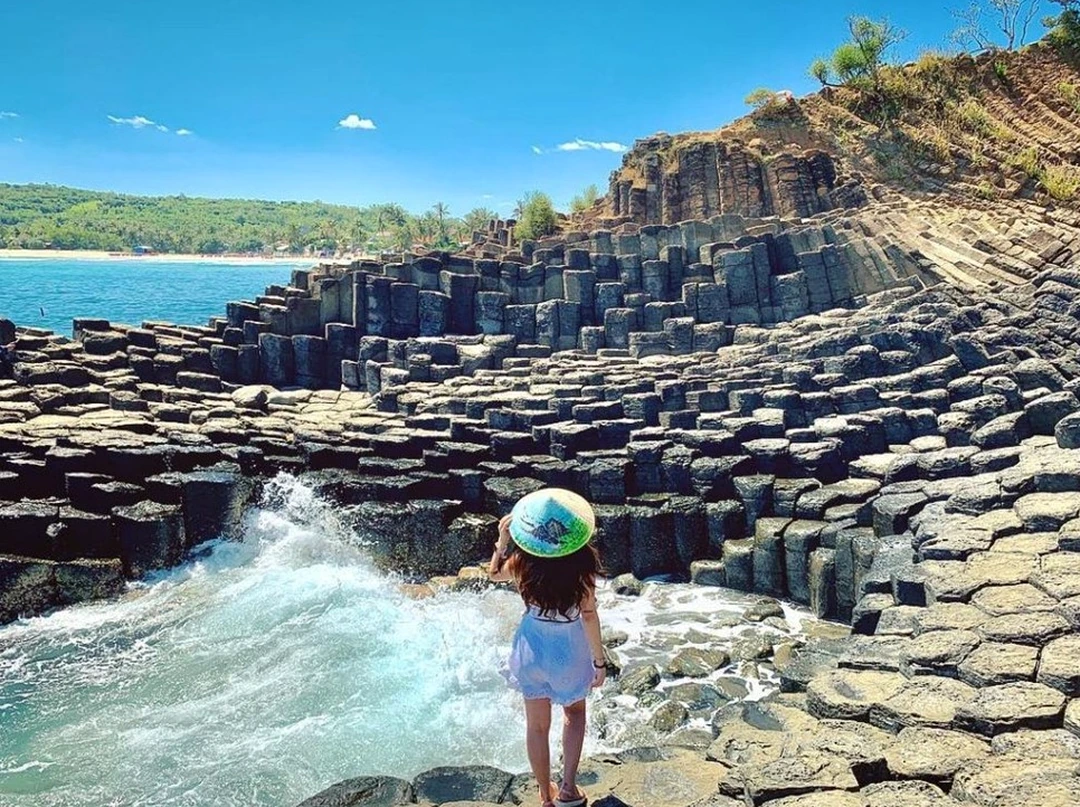
Hailed as a sculptural masterpiece of nature, Ganh Da Dia emerges like a colossal beehive crafted from jet-black and dark golden stone, thrusting boldly out into the deep blue waters of the South Central Coast. Viewed from above, tens of thousands of large and small rock columns with hexagonal, pentagonal, and rectangular cross-sections fit tightly together in miraculous harmony, forming uniform clusters as though meticulously chiseled by a master architect. Over tens of millions of years of relentless erosion by ocean waves, winds, and time, the surfaces of the columns have retained a natural smoothness, flat and neat like giant stone plates stacked in orderly piles. The terrain slopes gently toward the sea, combining with jutting outcrops that meet the incoming surf to form an inimitable geological structure—at once majestic and imposing, yet imbued with an untamed, mystical beauty rarely matched elsewhere.
To capture the full spectacle of this natural wonder, professional photographers and travel journalists often pass along insider tips on two unmatched vantage points. The first spot lies right on the low rocky ledges at the water’s edge, where powerful waves crash ashore in plumes of white foam embracing the base of the jet-black columns. Standing here, using a slight long-exposure technique at dawn captures the water streaming through the rock crevices as silky silver ribbons, creating a striking contrast against the rugged, steadfast ancient basalt. The ideal lighting window is between 5:00 AM and 6:00 AM, when the first rays of morning sunlight pierce through the coastal mist, bathing the entire rock formation in a warm golden glow.
The second prized vantage point sits at the highest elevation of the cliff, offering a sweeping panoramic view across the deep azure sea stretching all the way to the horizon. The best time for this angle is at sunset, from 5:00 PM to 6:00 PM, as the sun sinks slowly behind the inland mountain range, casting an ethereal orange-pink light across the water and the stone shore. At this hour, each tiered hexagonal column stands out in crisp relief against the twilight, creating a serene, cinematic atmosphere. Choosing the right timing and angle not only rewards visitors with breathtaking, show-stopping photographs, but also deepens their appreciation for the natural marvels bestowed upon Central Vietnam.
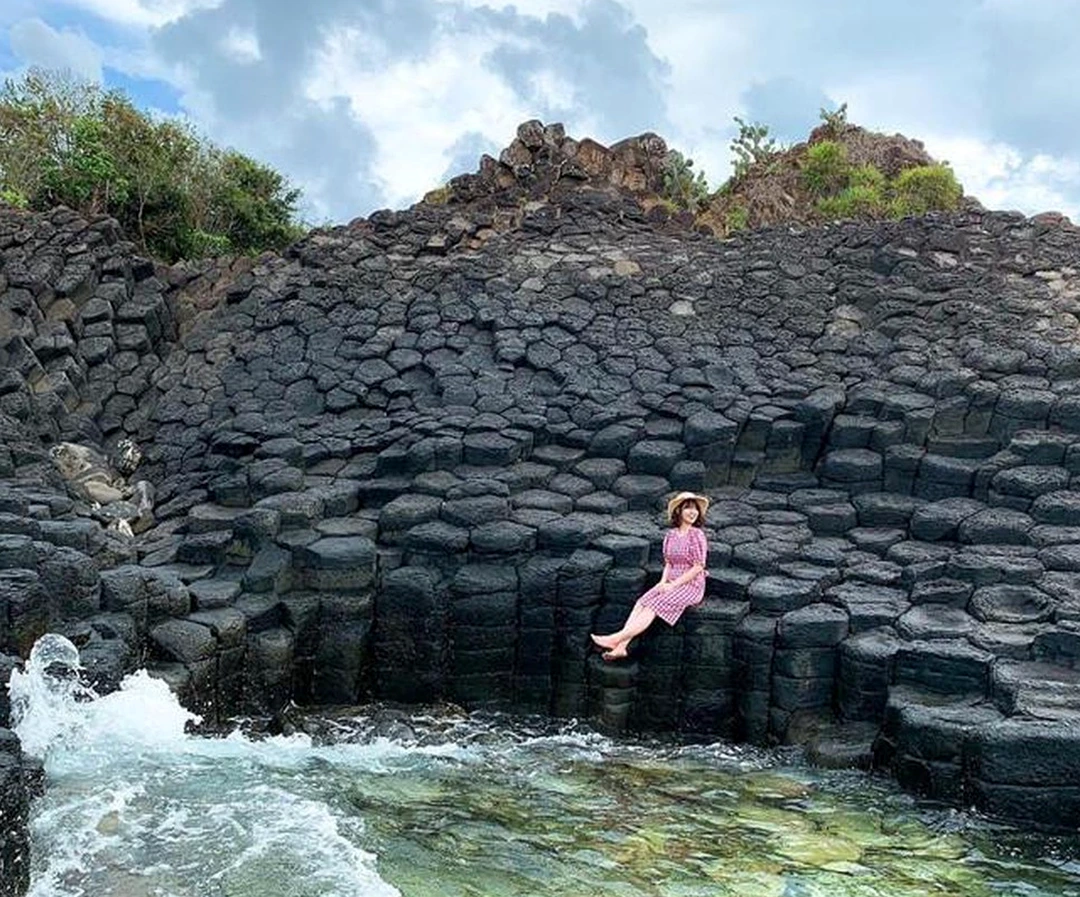
Setting foot at Ganh Da Dia, every traveler is left awestruck by the grandeur of nature. Looking down from above, tens of thousands of layered basalt columns shimmer beneath the golden sunlight of the South Central Coast, resembling a gigantic jet-black stone beehive reaching into the open ocean. An overwhelming sense of wonder washes over you as you listen to the rhythmic crash of waves endlessly sculpting the cliffside, composing a stirring symphony of the sea. To savor this beauty to the fullest, you can begin your journey with a leisurely climb across the rugged yet poetic rock formations, where every footstep touches millions of years of geological history.
Beyond exploring on foot, taking a traditional basket boat ride with local fishermen around the base of the cliffs offers an entirely fresh perspective. Seated in a small boat gently bobbing on crystal-clear deep blue waters and gazing upward at the towering vertical rock formations standing like abstract sculptures of the gods, you truly feel how small humanity is before the universe. That wild, mysterious beauty, paired with the brisk, salt-laden sea breeze, sweeps away all the worries and hustle of daily life, bringing the mind to a state of remarkable stillness and peace.
Stepping away from the vast expanse of sea and sky, a journey into local culture also brings travelers closer to the profound spiritual life of the Tuy An coastal fishermen. Visiting ancient seaside shrines or paying respects at the Whale Temple (Lang Ong)—dedicated to the guardian deity of seafarers—offers deeper insight into the Vietnamese ethos of honoring one’s roots and the enduring bond between humanity and nature. Fascinating legends recounted by village elders over cups of strong green tea further enrich the vibrant cultural tapestry surrounding this heritage site.
And no trip here would be complete without indulging in the celebrated culinary specialties of the Quy Nhon – Phu Yen region. Right by the seashore, visitors can savor sweet chargrilled grouper, rich sea urchin grilled with scallion oil, or firm, meaty O Loan Lagoon blood cockles and crabs harvested fresh the very same day. The natural sweetness of fresh seafood paired with the zesty kick of green chili-lime salt, enjoyed alongside a glass of local rice wine steeped in the warmth of the land and its people, leaves an unforgettable lingering taste that draws travelers back time and again to this magnificent coastal wonder.
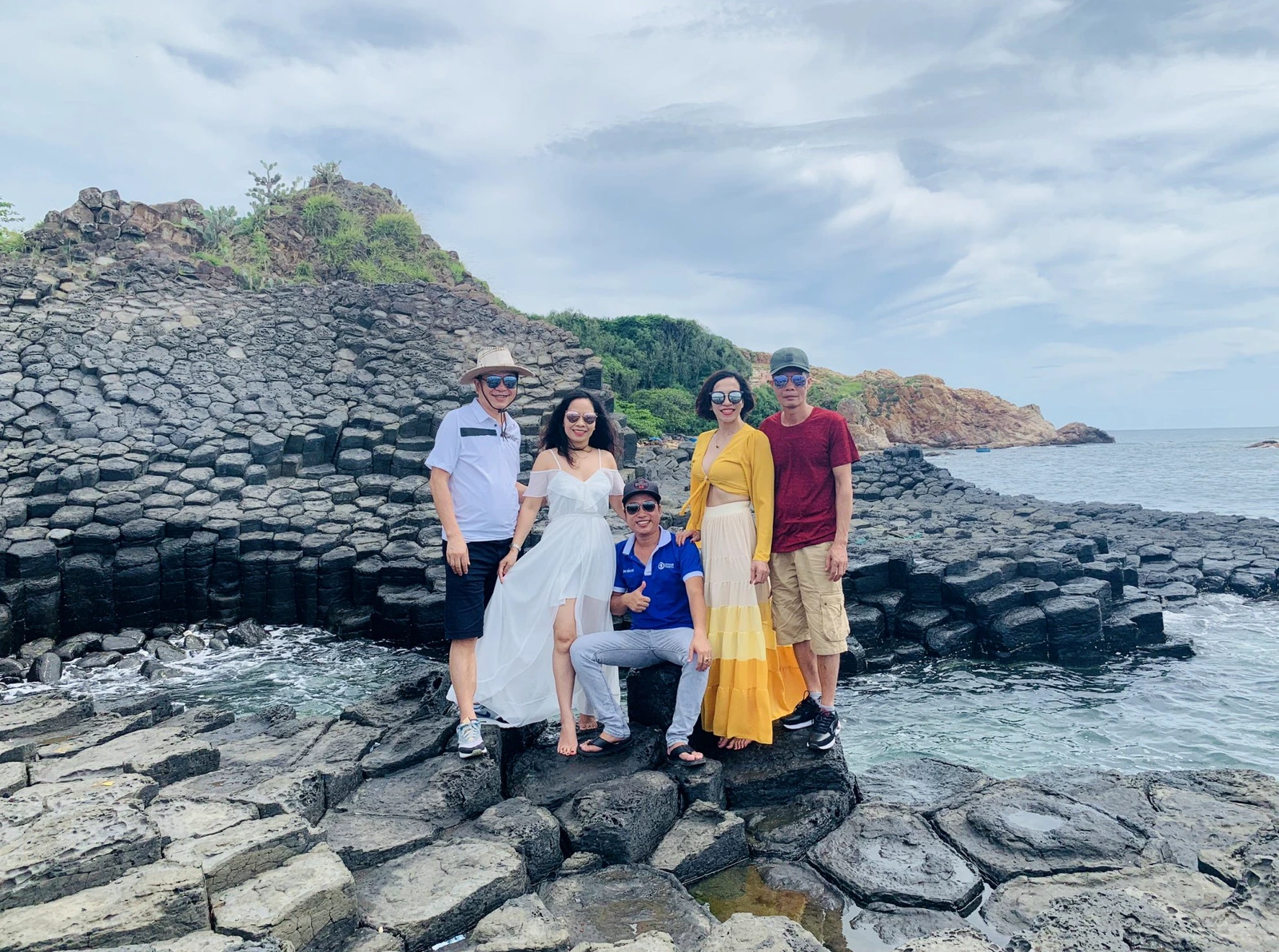
Welcoming visitors year-round, Ganh Da Dia continues to hold its status as one of the most spectacular and sought-after natural landmarks in the South Central Coast, located in An Ninh Dong Commune, Tuy An District, Phu Yen Province—with seamless travel connections from both Quy Nhon and Tuy Hoa cities. To ensure your journey exploring this millions-of-years-old geological heritage goes smoothly from start to finish, the pocket guide below covers all the practical, accurate, and up-to-date details you need.
Regarding opening hours, the site management board welcomes visitors every day of the week, including Saturdays, Sundays, and public holidays, from 7:00 AM to 6:00 PM. The ideal times of day to visit are from 7:00 AM to 9:30 AM or from 3:30 PM onward, when the sunlight is soft and glints off the hexagonal basalt columns jutting into the turquoise sea, while sparing you the intense midday heat characteristic of Central Vietnam. As for the best season, the dry months from March to August—marked by clear blue skies and calm seas—offer the most favorable weather. Admission fees at Ganh Da Dia are remarkably budget-friendly, priced at just around 20,000 VND per adult ticket with free or discounted entry for children, making this unique natural wonder accessible to all.
Getting to Ganh Da Dia has become exceptionally convenient thanks to upgraded transport infrastructure. If departing from Tuy Hoa City (Phu Yen), head north along National Highway 1A for about 30 km to Chi Thanh Town, then turn right following the signs toward An Ninh Dong Beach. For travelers staying in Quy Nhon City (Binh Dinh) who wish to combine an inter-regional cultural and historical exploration, the scenic route spans roughly 70–80 km along National Highway 1A over Cu Mong Pass or via newly opened coastal roads, offering smooth driving and breathtaking views by either car or motorbike. The best way to experience these routes to the fullest is by private tourist car or self-drive motorbike for those who enjoy road-trip adventures.
Finally, because Ganh Da Dia’s terrain consists of stacked basalt blocks with uneven surfaces that can become slippery in sea spray or high waves, visitors should wear sneakers or sturdy shoes with good grip, avoiding high heels or flip-flops that easily slip. Additionally, since the area features coastal shrines and sacred cultural spaces cherished by local fishermen (such as the Whale worship tradition), visitors are encouraged to dress respectfully and neatly, strictly follow conservation guidelines, and refrain from littering to preserve the pristine beauty of this natural heritage site.
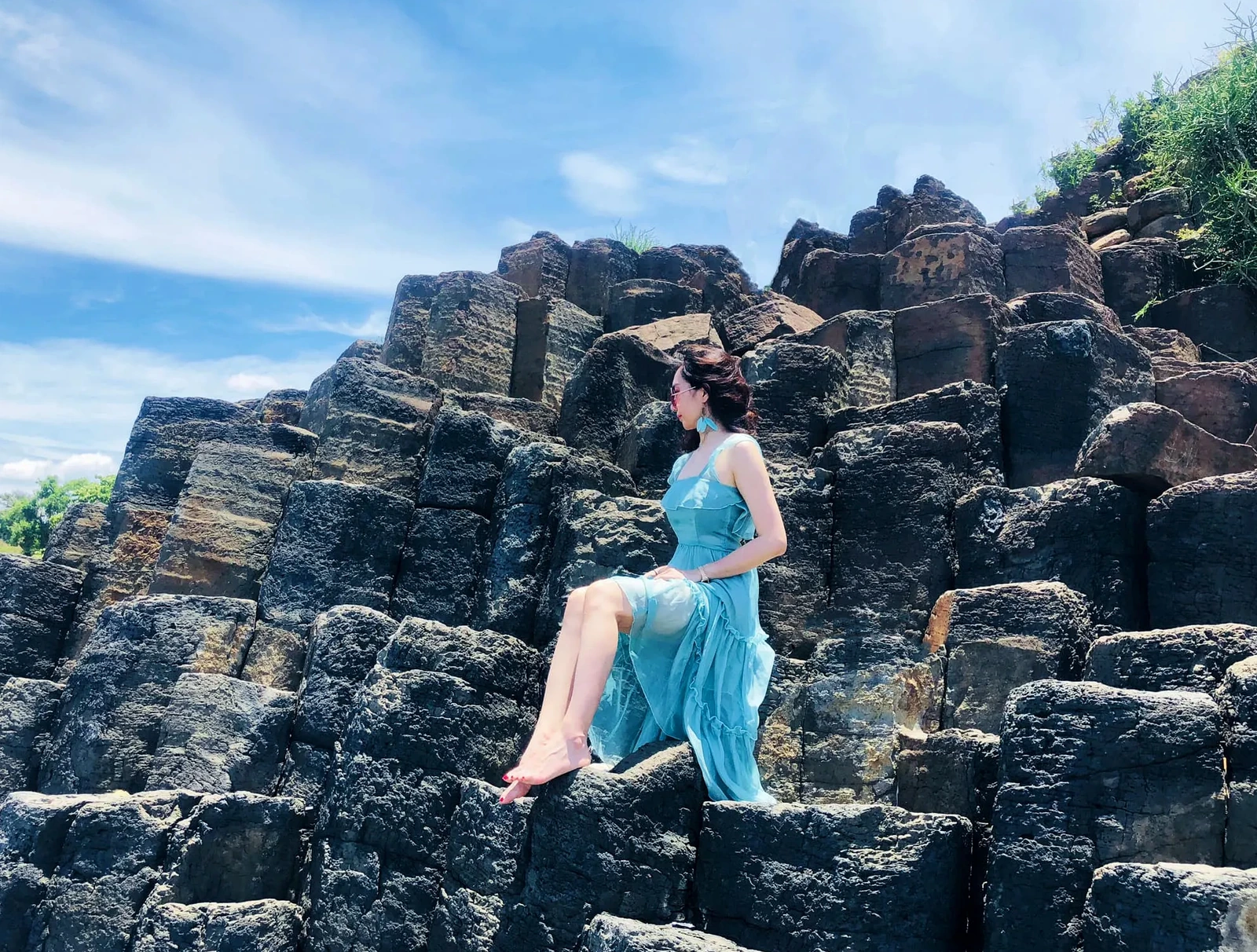
To enjoy a seamless getaway and take in the full splendor of Ganh Da Dia without worrying about arranging transportation, booking entrance tickets, or planning itineraries, travelers can choose VDS Travel’s premium all-inclusive Quy Nhon tour packages. Every itinerary is thoughtfully timed so you arrive at each photo spot when the scenery is at its most radiant, accompanied by knowledgeable local guides and top-tier hotel and dining standards.