Situated on the eastern side of the Old City of Fengshan in Zuoying District, Kaohsiung City, Lotus Pond has long stood as a quiet witness to the shifting currents of southern Taiwan’s history. In historical gazetteers, this body of water bore several names across eras—such as Lotus Lake, Banshui (Pool Water), and Zuoying Port. Its early reclamation ties to the Ming-Zheng era, when Grand Minister Chen Yonghua—distinguished military advisor of the Ming-Zheng court—launched agricultural land-reclamation policies in Zuoying. That far-sighted decision built a solid farming base while turning the area around the pond into an early Han Chinese settlement nucleus in southern Taiwan, laying the foundation for a landmark hydraulic and cultural space.
Entering the Qing dynasty, Lotus Pond’s appearance recorded important imperial milestones alongside interventions by governing officials. In the 22nd year of Kangxi (1683), after Admiral Shi Lang brought Taiwan under Qing rule, Fengshan County was formally established. By the 61st year of Kangxi (1722), Magistrate Liu Guangben built earthen embankments, raising the first earthen ramparts of the Fengshan Old City. However, the largest hydraulic project to reshape the pond area took place in the 50th year of Qianlong (1785), when Magistrate Tang Shizeng ordered Lotus Pond excavated and expanded to irrigate surrounding agricultural plains. That move secured food production and elevated the pond into a celebrated scenic landmark. During the Qing era, it was honored among the “Eight Views of Fengshan” as *Banshui Hexiang* (“Lotus Fragrance on Banshui”), reflecting a deep blend of irrigation engineering, Confucian ideals, and scholars’ prayers for civil-service examination success.
Lotus Pond’s story did not remain confined to quiet literary pursuits. During the Japanese colonial period, broader geopolitical shifts restructured the pond’s role. Because of its strategic coastal position, authorities turned Zuoying into a fortified military base. Especially during World War II, canal realignments and militarization disrupted Lotus Pond’s original natural hydrology, affecting its older Confucian cultural setting. After 1949, when the Republic of China government relocated to Taiwan, Zuoying became a major naval base. Only in the 1970s, amid strong modernization and urban growth, did Kaohsiung city authorities launch a broad effort to transform the area into an eco-cultural scenic destination.
The centerpiece marking the shift from traditional waterworks and military base toward contemporary temple aesthetics was the Dragon and Tiger Pagodas. In 1974 (63rd year of the Republic), funded and led by Zuoying Ciji Temple, construction of the Dragon and Tiger Pagodas began and finished in 1976. Opening the twin pagodas reflected in Lotus Pond’s waters reshaped Kaohsiung’s lakeside skyline and marked a harmonious blend of Confucian heritage with folk temple art. Across Ming, Qing, Japanese-era, and modern times, Lotus Pond and the Dragon and Tiger Pagodas have risen above a mere geographic spot to become a chronicle in stone and water recording Zuoying’s layered culture.
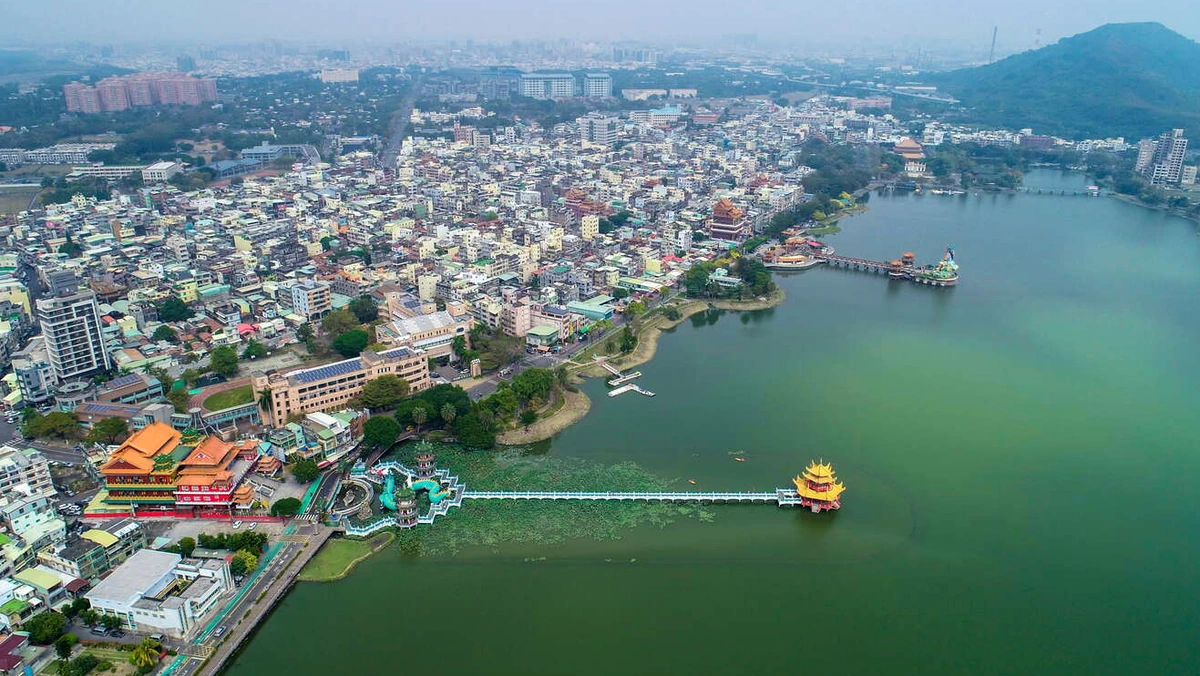
From a cultural-geography and traditional-landscape standpoint, Lotus Pond (*Lianchitan*) sits strategically in northern Kaohsiung’s plain where distinctive natural landforms converge. In traditional feng shui terms, the setting displays a classic “mountains behind, water in front” layout balanced around the Four directional emblems. East of the pond rises Banpingshan (*Ban-ping-shan*), serving as a firm Black Tortoise (*Xuanwu*) backing, while its extending ridges curve along the left side like an Azure Dragon (*Qinglong*) guardian. Westward, Turtle Mountain (*Guishan*), shaped like a turtle’s back, stands as a White Tiger (*Baihu*) flank. At the center, Lotus Pond’s broad waters act as a bright hall (*Mingtang*) in the Vermilion Bird (*Suzaku*) direction, creating a “jade belt encircling the waist” and “waters gathering at the center” associated with prosperity, vitality, and enduring spiritual energy across Zuoying.
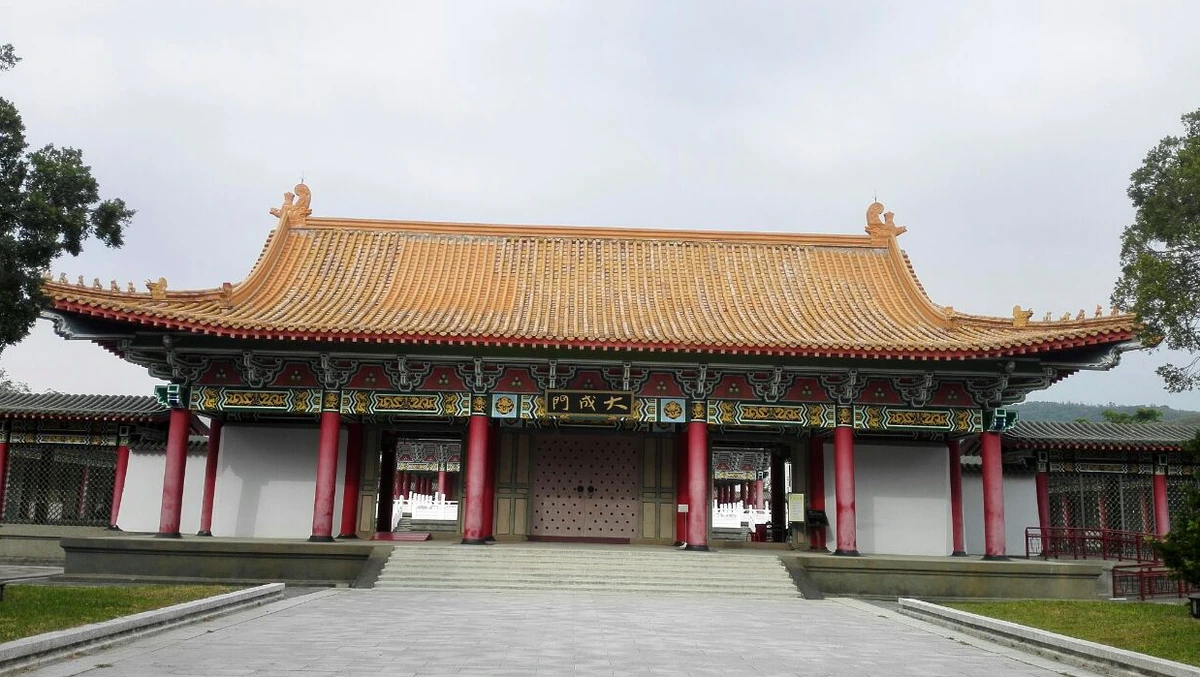
The distribution of buildings around Lotus Pond is more than a chance pairing with nature; it reflects traditional East Asian urban planning guided by “harmony between heaven and humanity” and moral edification through sacred space. Around the pond, dozens of temples and shrines form a curved cultural and religious arc hugging the shoreline. This layout carried clear social meaning: north of the pond stands Zuoying Confucius Temple—the largest Song-palace-style Confucian complex in Taiwan—representing civil governance grounded in learning, propriety, and social order.
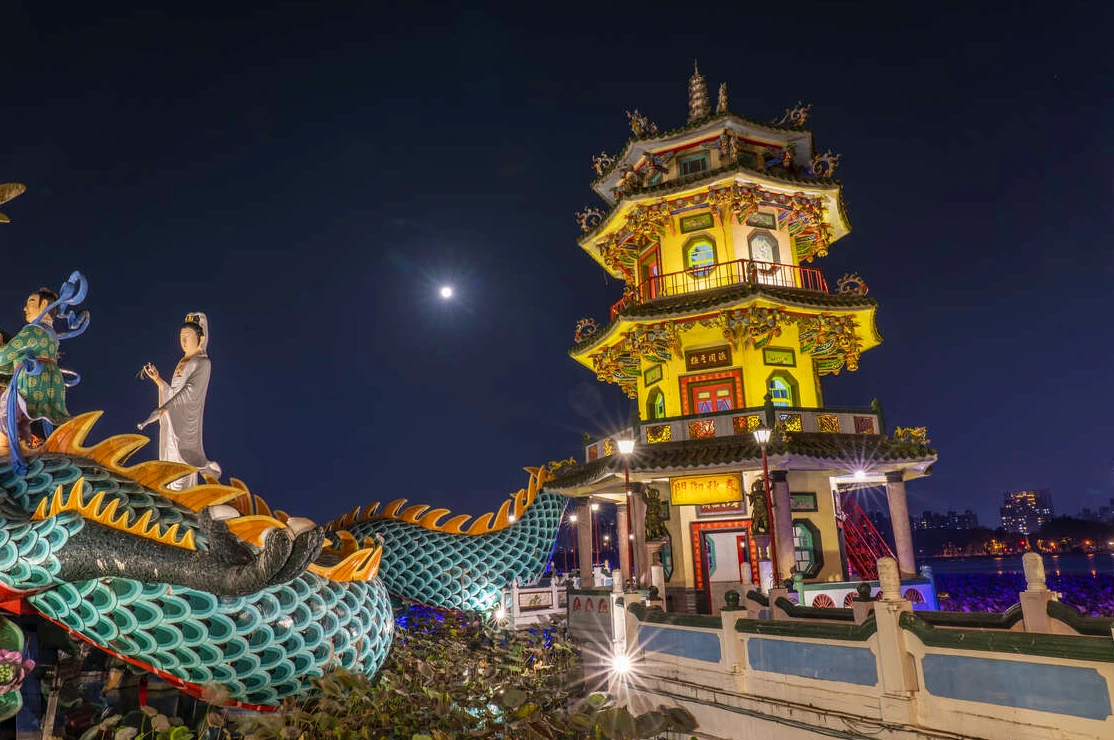
Meanwhile, the stretch from mid-pond toward the south forms a multi-deity spiritual hub anchored by Ciji Temple, the Spring and Autumn Pavilions, Wuli Pavilion, and the Dragon and Tiger Pagodas. Here worshipers honor deities guiding everyday life—such as Baosheng Dadi (healing deity), Guangsheng Dijun (symbol of loyalty and righteousness), and compassionate Guanyin Bodhisattva—reflecting the intertwined roots of Daoism and Buddhism in folk life. Beyond symbolism, Lotus Pond serves a practical “four-in-one” role: scenic recreation and communal rituals, flood retention for the Zuoying plain, agricultural irrigation water, and microclimate moderation for surrounding neighborhoods.
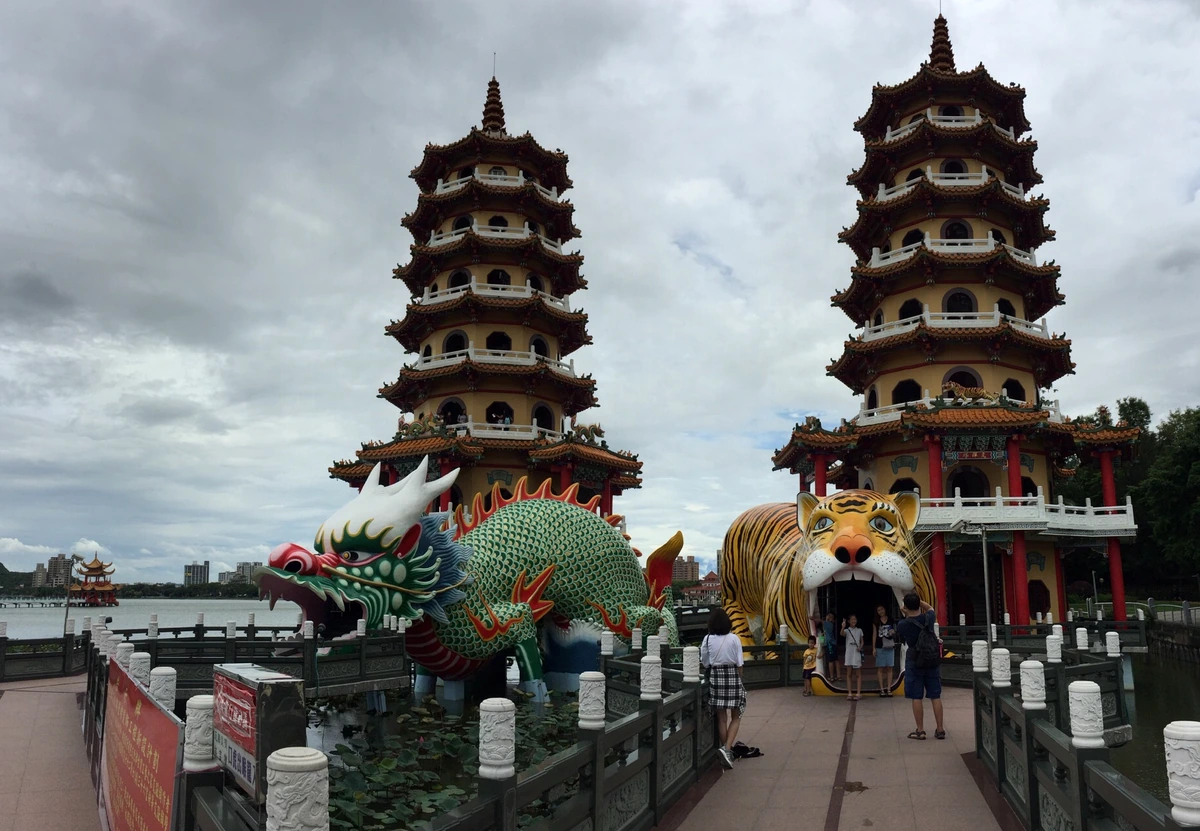
Set gracefully along Lotus Pond’s southern shore, the Dragon and Tiger Pagodas stand out as a distinctive architectural landmark extending directly over the water on deep concrete pilings. From the shore, visitors reach the twin pagodas via the Nine-Turn Bridge (*Jiuquqiao*) winding across nine bends. A zigzag bridge reflects traditional beliefs that negative forces move in straight lines, while also lengthening the approach so visitors slow down to take in shimmering water and the twin towers.
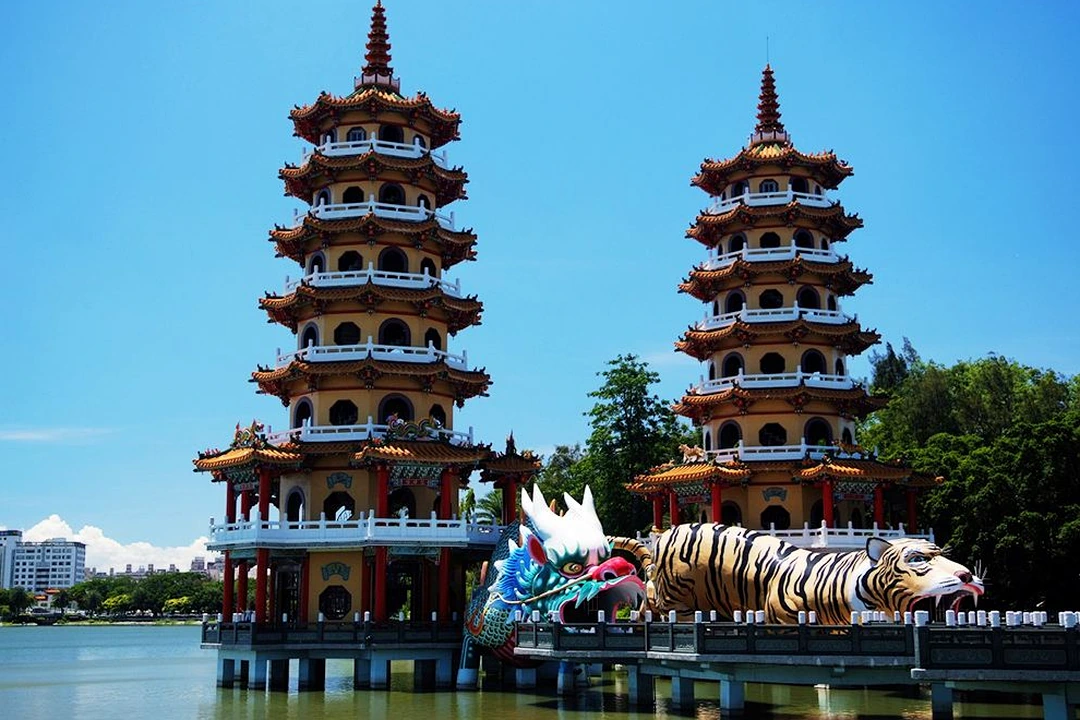
From afar, the complex comprises two stately standalone towers: Dragon Pagoda on the left and Tiger Pagoda on the right. Each rises seven stories—about 36 meters tall (roughly akin to a 12-story modern building)—on a closed octagonal plan. Structurally, they use modern reinforced concrete (RC) frames for strength, while their exteriors are clad in traditional southern Chinese temple-palace styling, blending sturdy engineering with classic folk aesthetics.
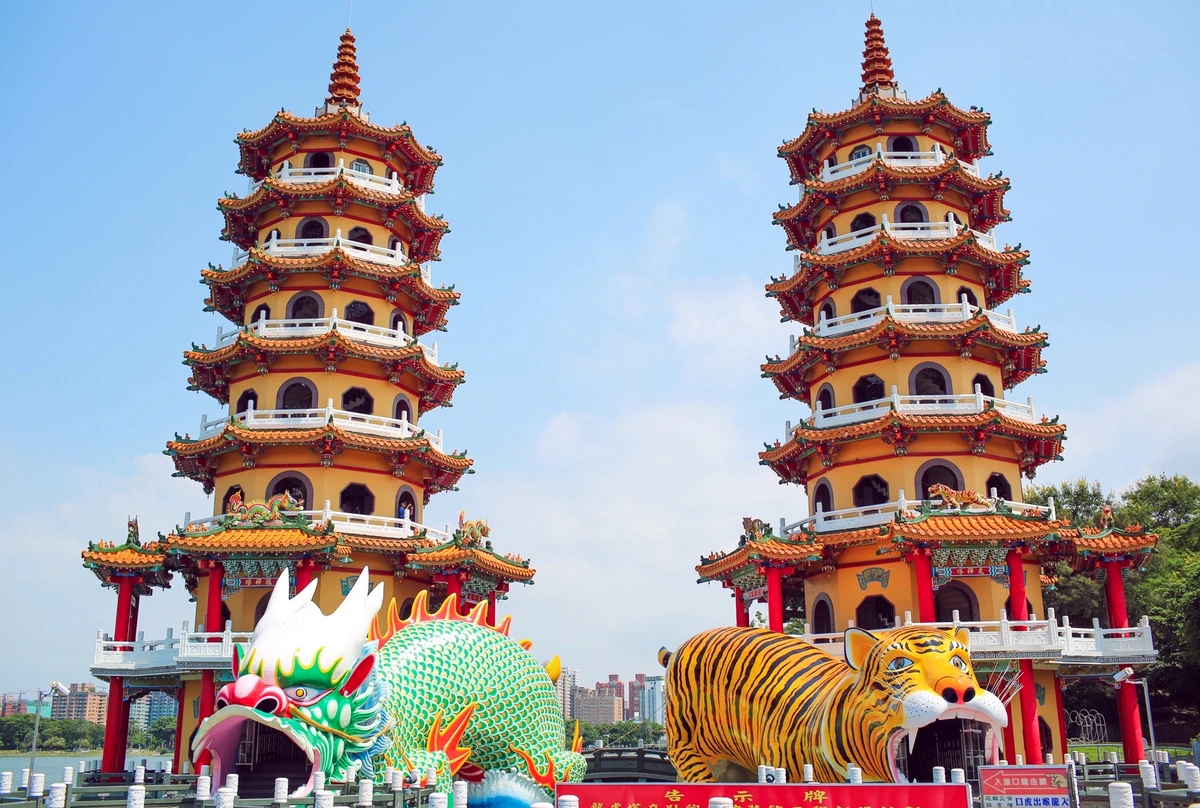
The artistic highlight of the Dragon and Tiger Pagodas is *Jiannian* (*Chian-niam*), traditional cut-and-paste porcelain and ceramic mosaic relief. Skilled folk artisans cut, ground, and fitted tens of thousands of porcelain bowl shards, ceramic pieces, and colored glazed tiles into lively panels. From sunlit dragon scales and striped tiger coats to immortals, auspicious beasts, and classic tales like the Twenty-Four Filial Exemplars, figures stand out in detailed 3D relief—showcasing patience and resourceful craft in Taiwan’s temple art.
Movement through the site follows a clear folk and feng shui rule: “Enter the dragon’s throat, exit the tiger’s mouth.” Giant cast-cement dragon and tiger sculptures at the base form the two entrances into the towers. Stepping through the dragon’s open mouth symbolizes welcoming blessings and good fortune, while climbing the octagonal levels and exiting through the tiger’s mouth signifies turning danger into safety and warding off misfortune.
Inside the towers, walls feature vivid murals carrying moral lessons. Most notable are scenes depicting underworld retribution alongside figures of the Ten Kings of Hell and celestial halls. Detailed paintings illustrating cause and effect prompt quiet reflection on good and evil before visitors reach the top levels for sweeping views over Lotus Pond.
As twilight fades over Zuoying’s waters, Lotus Pond takes on a fresh visual look through urban architectural lighting. Lighting upgrades led by the Kaohsiung City Tourism Bureau turn the lakeside into a glowing evening showcase. High-color-rendering spotlights and crisp linear fixtures trace the Dragon and Tiger Pagodas, Spring and Autumn Pavilions, and Wuli Pavilion. After dark, warm golden light picks out beams, *dougong* bracket clusters, and curved seven-story octagonal eaves, while the dragon and tiger sculptures reflect across mirror-calm water—creating the nocturnal charm of Lotus Pond in southern Taiwan.
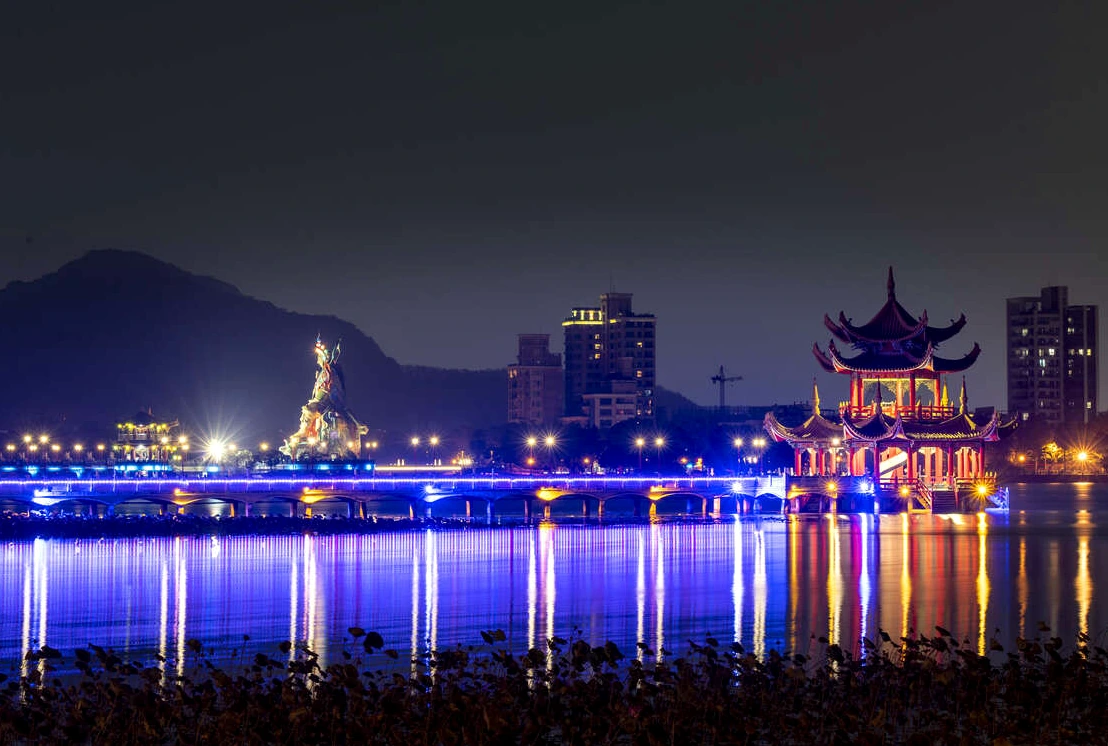
Beyond illuminated landmarks, evening walks around Lotus Pond are planned for comfort. Along kilometer-long lakeside paths, low-level bollard/path lights keep walkways safe while limiting light spill so night air stays clear. Strolling beneath shady trees, visitors catch cool lake breezes and gentle tea aromas from lakeside teahouses. Evening life around Zuoying feels distinctly local—sipping high-mountain Oolong, enjoying traditional snacks, and watching reflections ripple across the water.
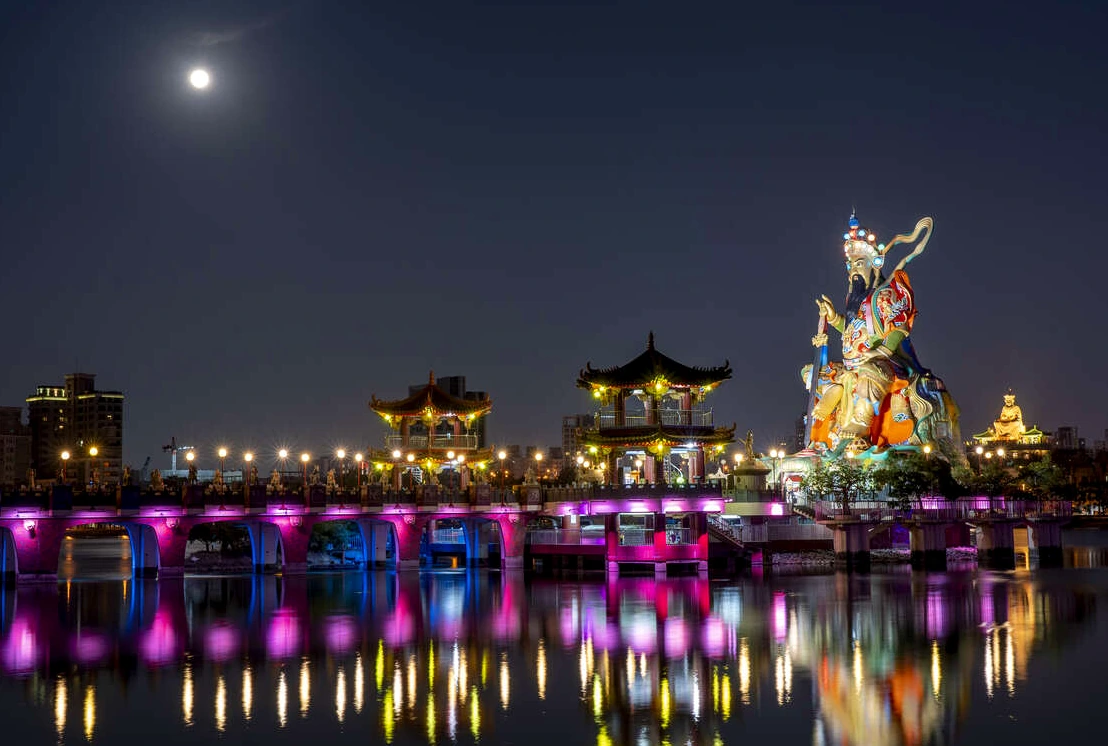
Nighttime energy peaks each autumn when the pond and surrounding temples host the Kaohsiung Zuoying Wannian Folklore Festival. Blending ancient temple rites with live performance, the festival centers on the Fire Lion welcoming procession, where folk troupes parade to booming drums. High-pole lion dance competitions set right over the water draw crowds along the shore with acrobatic leaps and lively drumbeats.
Nighttime displays at Lotus Pond reach a high point with large-scale 3D projection mapping during the festival. Historic walls, water surfaces, and pagoda tiers serve as canvases recounting Zuoying’s history, Fire Lion lore, and Daoist-Buddhist themes. Combined with surround sound, laser effects, and stage pyrotechnics, folk traditions become a multi-sensory spectacle—turning a quiet daytime religious landmark into a vibrant evening stage in modern Kaohsiung.
The food scene around Lotus Pond carries an identity shaped by Zuoying’s history. Here, Hokkien/Minnan flavors blend closely with culinary traditions brought by post-1949 mainland migrants—who shaped *juan cun* (military dependents’ villages)—alongside newer arrivals. Wandering old lanes around the pond pairs temple views with multi-generational family recipes that reflect memory, hometown roots, and Kaohsiung life.
Among long-standing family eateries near Lotus Pond is Fenyang Wonton in Zuoying, operating for over seventy years around Zuoying’s old market. Its reputation rests on handmade care: wontons are wrapped to order in paper-thin wrappers that stay tender yet chewy when cooked. The filling uses fresh hind-leg pork seasoned simply with salt, white pepper, and sesame oil to let natural meat sweetness shine, served in a clear pork-bone broth often paired with a soft-boiled egg.
Kuanlaishun snack shop preserves northern mainland—especially Shandong—pastry craft rooted in *juan cun* life. Naturally fermented dough (*lao mian*) produces pan-fried pork buns with a crisp golden base and juicy interior, alongside chive pockets (*jiucai he*) filled with chives, glass noodles, and egg. A classic morning staple here is salty soy milk (*xian doujiang*), where warm soy milk curdles gently with vinegar and is topped with chili oil, preserved radish, meat floss, and crisp *youtiao* (fried dough sticks).
Nearby, Laiyuan Noodle Shop is known for savory *zhajiang* (fermented bean-paste) dry noodles and dry wontons rich in nostalgic flavor. Fermented bean and minced pork sauce coats chewy noodles and plump wontons. Enjoying everyday heritage dishes beside Lotus Pond is more than a meal—it is a taste of cultural blending and enduring craft in Kaohsiung.
Strolling the park grounds around Lotus Pond is open 24 hours a day. For entering the Dragon and Tiger Pagodas to view interior murals and climb to upper balconies, hours are generally 08:00 AM to 05:30 PM daily. Neither site charges a mandatory admission ticket, though visitors are welcome to leave a voluntary donation in the offering box toward upkeep. Note that interior access may temporarily close during severe weather, storms, or scheduled maintenance for public safety.
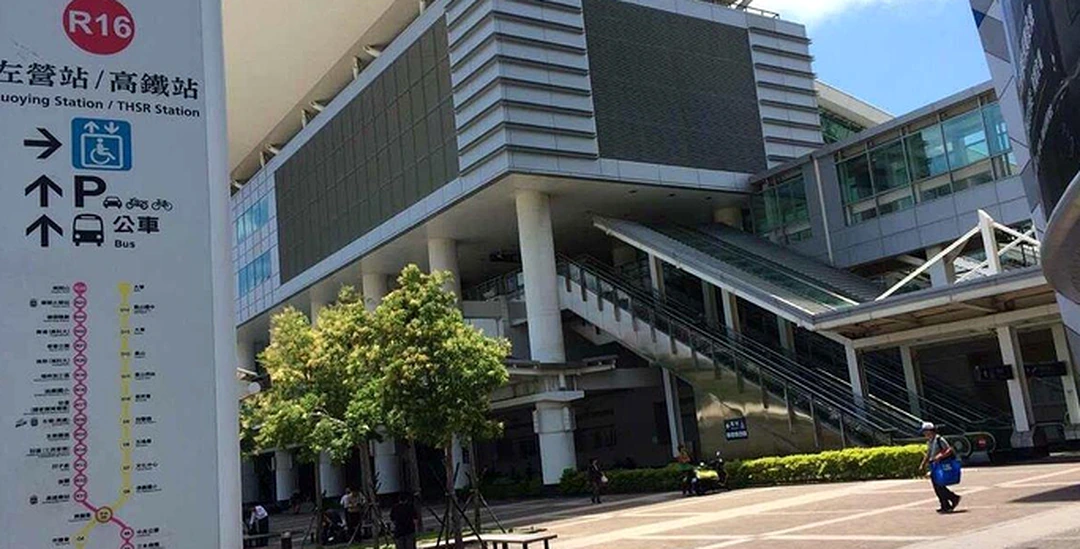
Reaching historic Zuoying and Lotus Pond is straightforward via Taiwan’s public transit network. Coming from elsewhere in Taiwan, travelers can take the Taiwan High Speed Rail (THSR) to Zuoying Station or the Taiwan Railways (TRA) to Xinzuoying Station. From the station hub, a 10-to-15-minute walk brings you to the northern entrance near Confucius Temple. Alternatively, ride Kaohsiung MRT’s Red Line to Ecological District Station (R15) or Zuoying / Native City Station (R14), then hop on Bus Red 51 or rent a YouBike 2.0 right outside the station to ride along the lakeside path in the breeze.
For a smooth photo and cultural route, local tips suggest starting early in the morning at Confucius Temple on the northern shore, then walking along the eastern lakeside path past the Spring and Autumn Pavilions and the Dragon and Tiger Pagodas while morning light is softer. Around midday, head to Zuoying Dalu or Zuoying’s Second Public Retail Market to sample local life—such as a hot bowl of wontons or savory *bawan* (meat-filled glutinous/starch dumplings). Return to the shore at dusk to catch golden sunset reflections on the water and watch evening lights illuminate the pagodas after dark.
A few practical tips help keep your visit comfortable. From May through October, Kaohsiung weather can be hot, sunny, and humid, so pack sunscreen, a wide-brimmed hat, sunglasses, and plenty of water. Inside the Dragon and Tiger Pagodas, spiral stairs are narrow and steep, so older visitors or anyone with knee/joint concerns should pace themselves carefully. Around dusk, lakeside greenery attracts mosquitoes, making insect repellent useful for evening strolls. For a well-planned trip with local guidance, you can also browse all-inclusive Taiwan tour packages tailored for cultural travelers.