Looking back into the deep history of southern mainland China, the grand canyon located in Sanguansi Township, Cili County, Zhangjiajie City, Hunan Province was hardly a bustling metropolitan hub. During the Ming and Qing dynasties, this land belonged administratively to Lingyang Town, yet it was practically regarded as an “untamed frontier” (huawai zhi di)—a remote mountainous region beyond the cultural and political reach of the central imperial court. In those days, locals referred to this bottomless gorge by a name steeped in ruggedness and peril: “Lanmian Gorge” (爛面峽), meaning the “Scar-Faced Gorge,” cleaved apart by towering limestone cliffs and dizzying chasms. Over the shifting tides of history, from a forgotten wilderness lost deep within the primeval forests, this place underwent a miraculous transformation to become a world-renowned marvel of modern architecture known as the Zhangjiajie Grand Canyon Glass Bridge (张家界大峡谷玻璃桥).
The turning point in the rebirth of Lanmian Gorge began when Zhangjiajie Grand Canyon Tourism Development Co., Ltd. decided to invest a massive sum exceeding 300 million RMB to master-plan the entire area. This bold vision was spearheaded by Mr. Chen Zhidong, Chairman of the scenic area’s board of directors, who served as the chief visionary with the ambition of seamlessly harmonizing heart-stopping thrills with public geological education. To bring the dream of spanning the void between two sheer cliff peaks to life, trust was placed in a legendary architectural figure: Israeli architect Haim Dotan. Guided by a core design philosophy of “seeking invisibility, never interfering with or disrupting nature,” Haim Dotan drew deeply upon Eastern Zen Buddhism and Laozi’s Taoist concept of “The greatest music has the faintest notes; the greatest form has no shape” (Da yin xi sheng, da xiang wu xing). The glass bridge was conceived not to flaunt human dominance, but to dissolve into the clouds, becoming a transparent walkway linking heaven and earth.
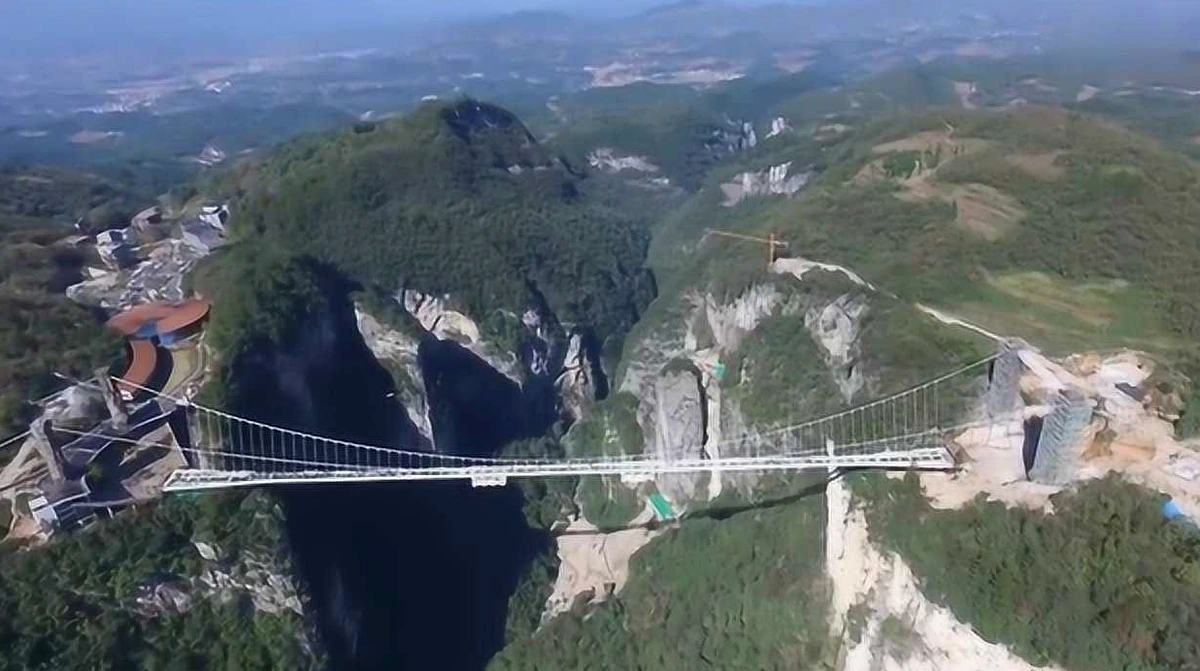
The structure’s poetic official name—”Yuntiandu” (雲天渡), or “Sky Cloud Crossing”—is a refined distillation of that philosophy, signifying a journey across the mist to extreme heights as well as a Zen-inspired spiritual crossing that carries visitors beyond fear into serenity. Construction began in 2014, overcoming countless stringent engineering challenges before entering trial operation on August 20, 2016. The opening immediately sparked a global sensation, leading to severe overcrowding after just 12 days. The management team then made a bold decision: temporarily closing the bridge for internal upgrades, overhauling operational workflows, and enhancing safety infrastructure. By the end of September that same year, Yuntiandu officially reopened equipped with facial recognition systems and Big Data technology to monitor visitor capacity in real time. Its architectural and structural brilliance later earned international acclaim when it was shortlisted as a finalist for the prestigious Structural Awards presented by the Institution of Structural Engineers (IStructE) in 2018—marking a dazzling milestone in its evolution from a rugged, untamed gorge into an iconic landmark of the modern era.
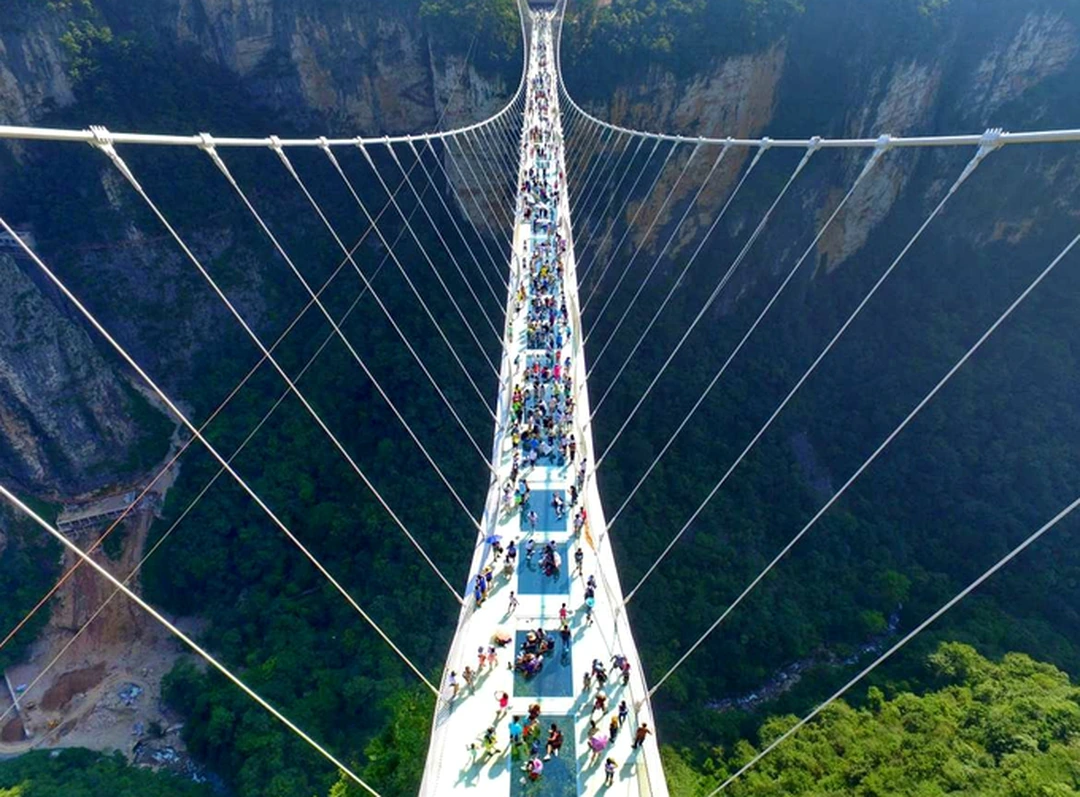
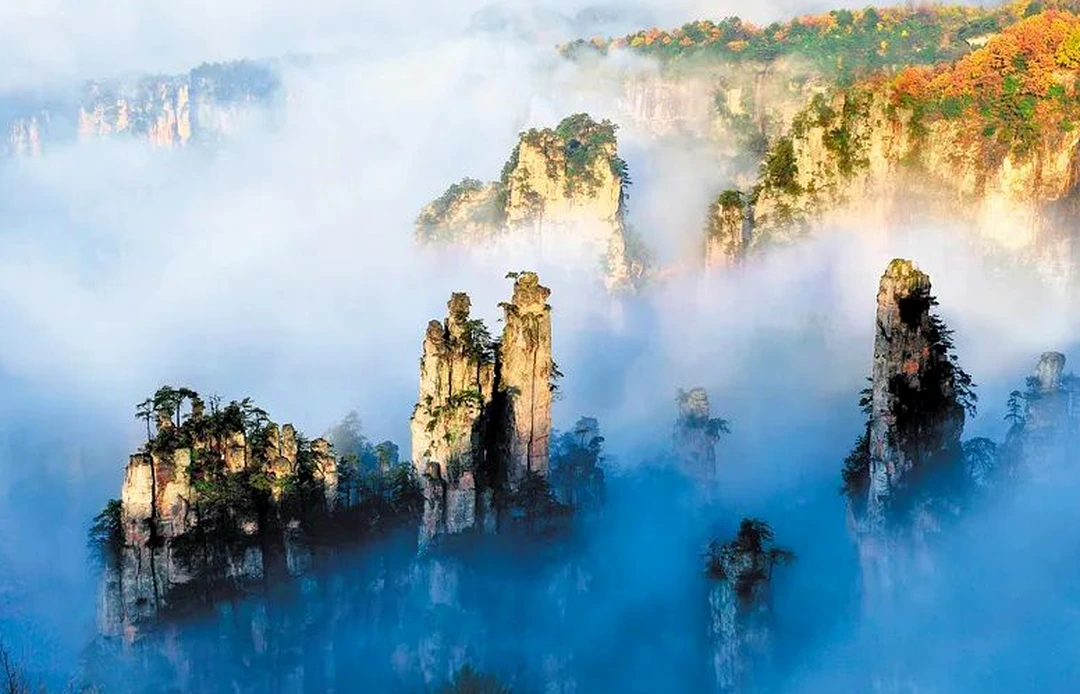
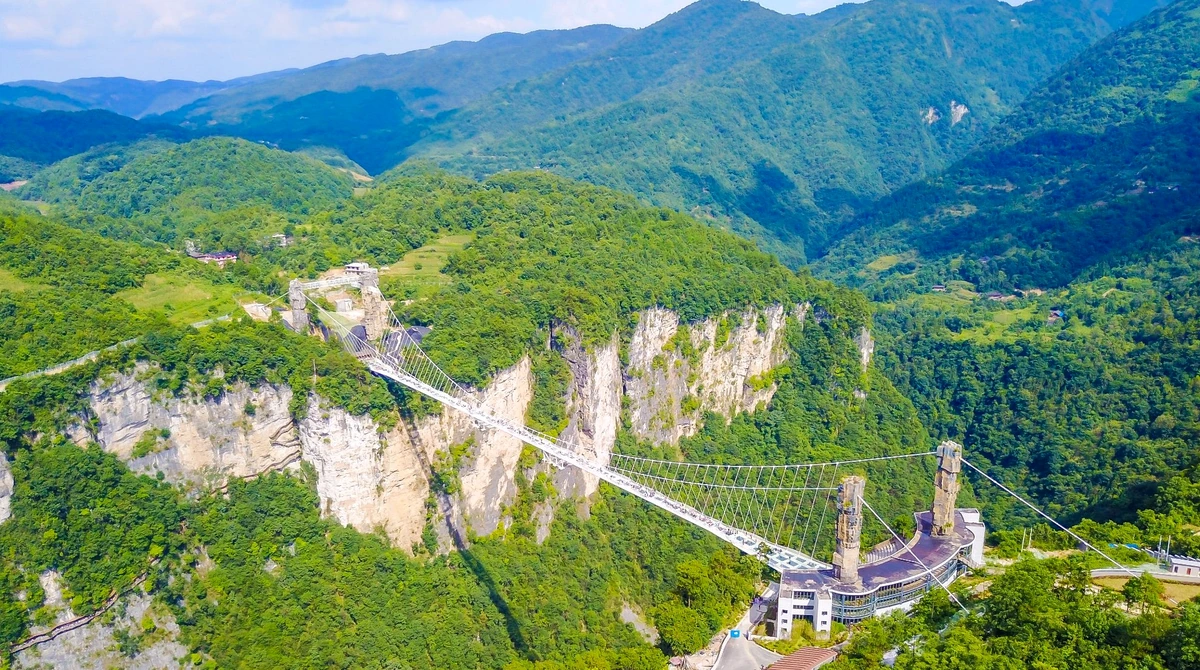
In terms of topographical planning and geological formation, the Zhangjiajie Grand Canyon Glass Bridge occupies an extraordinarily dramatic vantage point, stretching across two quartz-sandstone walls within the majestic karst terrain of Sanguansi Township, Cili County. This geological structure forms a deep gorge with a relative elevation drop of over 300 meters between the cliff edges and the canyon floor. Far below at the bottom of the abyss lies the confluence of two crystal-clear mountain streams—Luanquanxia Stream and Sicao River—flowing tranquil and steady year-round. The geological foundation supporting this monumental structure rests upon ancient quartz-sandstone and carbonate rock strata dating from the Cambrian to the Devonian periods. The combination of durable quartz sandstone and hundreds of millions of years of karst weathering has sculpted sky-piercing stone pillars and sheer, fortress-like cliffs, providing ideal natural anchor points for heavy-duty suspension cables and load-bearing bridge girders.
Beyond its rock-solid foundation, the ecological environment surrounding the glass bridge is deeply shaped by the northern mid-subtropical mountainous mixed evergreen and deciduous broad-leaved forest zone. This lush primeval vegetation is a natural sanctuary for rare ancient relict plant species, most notably the Dove Tree (Davidia involucrata, also known as the Chinese Dove Tree) and centuries-old Ginkgo trees. The narrow, deeply incised canyon topography generates a highly distinctive microclimate featuring the “Canyon Wind” phenomenon—powerful gusts racing through the gorge at constantly shifting speeds—paired with a pronounced vertical temperature gradient. In summer, the air remains refreshingly cool; moisture rising from the sheer cliffs meets colder air currents aloft, frequently condensing into rolling seas of cloud, ethereal morning mists, or brilliant solar halos encircling the glass bridge.
Through the lens of traditional Chinese feng shui, the landform of the Grand Canyon Glass Bridge is considered supremely auspicious. The Wulingyuan mountain range winds undulatingly from northwestern Hunan Province toward the south, forming an imposing and spiritually potent “Returning Dragon Gazing at Its Ancestor” formation. The entire Grand Canyon opens like the wide jaws of a giant dragon, while the sheer cliffs flanking both sides serve as protective “Azure Dragon” and “White Tiger” armrests cradling the converging vital energy (qi). Spanning directly across this strategic throat, the glass bridge forms a “Spiritual Pivot Lock,” preventing precious vital energy from dissipating outward. Deep on the canyon floor, Luanquan Stream and Sicao River meander in a graceful S-curve, perfectly embodying the “Jade Belt Encircling the Waist” configuration and the principle of winding waters gathering wealth and energy. This synthesis of modern structural planning and the philosophy of “Harmony Between Heaven and Humanity” transforms the bridge into a seamless union of human ingenuity and awe-inspiring natural scenery.
From afar, the structure resembles a delicate white silk ribbon draped across the abyss of Zhangjiajie Grand Canyon, yet stepping onto it reveals a scale that electrifies every sense. With a main span of 430 meters, a deck width of 6 meters, and suspended roughly 300 meters vertically above the canyon floor—equivalent to a 100-story skyscraper—this glass bridge has shattered numerous unprecedented world records. Its daring spatial design opens up a 360-degree panoramic vista, suspending visitors in mid-air where mist drifts beneath their feet and sheer limestone peaks soar toward the heavens.
To achieve total harmony between human engineering and natural masterpiece, Israeli chief architect Haim Dotan realized a poetic design concept dubbed “The Bridge That Disappears.” Breaking completely away from conventional suspension bridges that rely on massive reinforced concrete towers, this marvel adopts a radical “towerless bridge design” (無橋塔設計). Eliminating towering pylons at both cliff abutments keeps the architectural lines pure and minimally invasive, allowing the bridge to blend seamlessly into its surroundings and preserving the pristine skyline of the Zhangjiajie valley without interrupting the natural landscape.
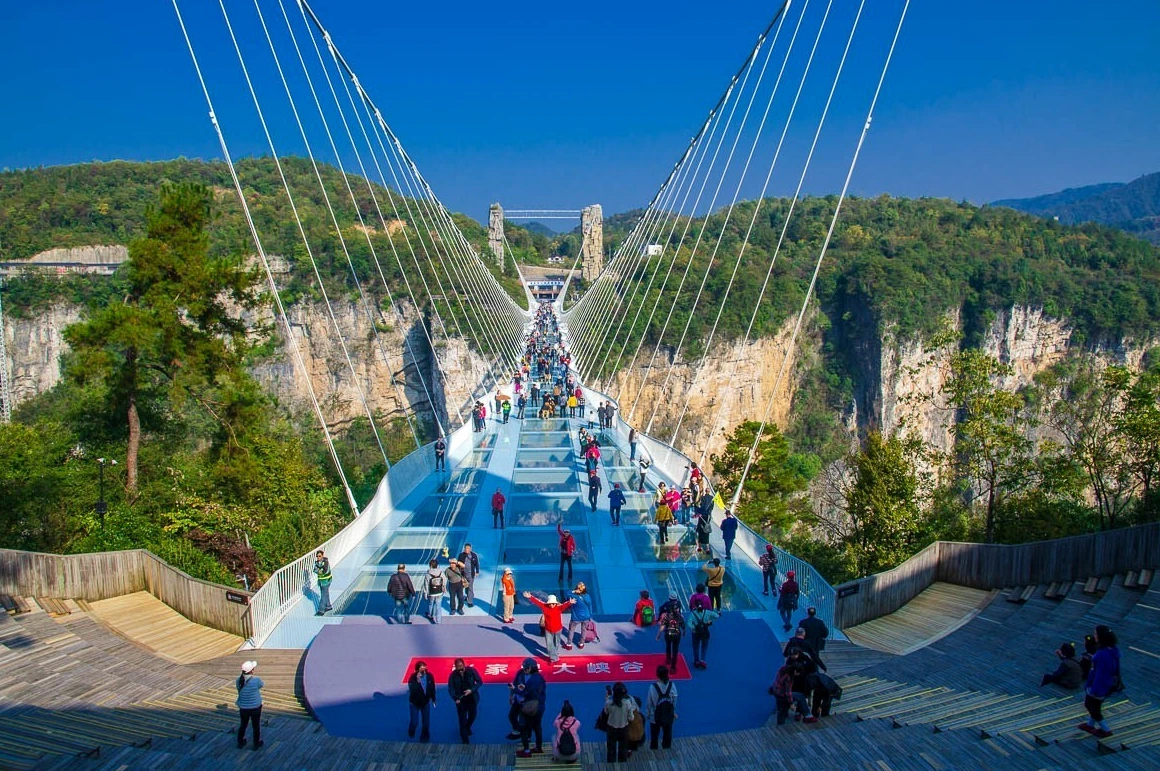
Behind this seemingly weightless elegance lies an extraordinarily complex and daring structural engineering solution. Built as a long-span spatial cable-net pedestrian suspension bridge, it features a world-first integrated stabilization system combining “wind-resistant main cables + central buckle + wind-resistant cables + gravity-ballast cables” (抗風主纜+中央扣+抗風纜+壓重索). This configuration enables the bridge to withstand fierce canyon wind gusts while maintaining optimal aerodynamic stability. Both the eastern and western cliff abutments are anchored deep into solid bedrock using massive gravity anchorages. Even the cable-installation process was an engineering feat, utilizing a “towerless aerial cableway traction system” (無支架高空索道牽引系統) that streamlined transport and assembly across treacherous terrain without damaging the delicate ecosystem below.
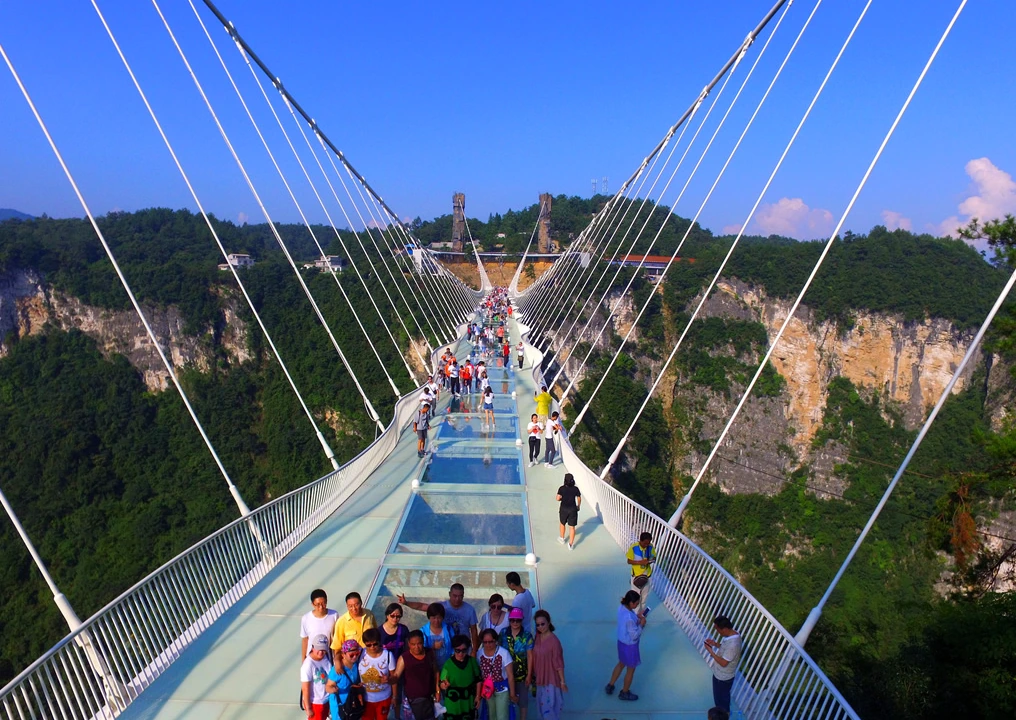
At the heart of the bridge’s breathtaking visual thrill is a walkway paved with 99 oversized panels of transparent tempered glass. Each panel is a pinnacle of industrial craftsmanship measuring 51 millimeters thick, meticulously laminated in a five-layer composite: three 15-millimeter layers of ultra-clear low-iron glass alternating with two 1.52-millimeter SentryGlas Plus (SGP) ionoplast interlayers, bonded under extreme heat and pressure. Thanks to its ultra-low iron content, the glass achieves a record light transmittance of 99%, making the deck appear virtually invisible under sunlight. Alongside optical clarity, this specialized composite offers extraordinary load-bearing capacity, impact resistance, and anti-shatter performance, ensuring absolute safety for thousands of visitors strolling simultaneously above the boundless void.
As twilight retreats from the deep valley floor, the Zhangjiajie Grand Canyon Glass Bridge sheds its raw daytime grandeur to don an enchanting cloak of light, transforming into a contemporary visual art installation set amid untamed wilderness. Designed by leading international lighting specialists, linear LED systems in cool and warm tones are discreetly concealed along both edges of the glass deck and beneath the main suspension cables. When night falls, this continuous stream of light traces a crisp, sweeping arc across the dark void, outlining the “Skyline Arc” (天际弧线) floating mid-air. The crown jewel of the nighttime experience is the pressure-sensing technology embedded inside each triple-layered glass panel. Every footstep immediately triggers luminous halos and shimmering silk-wave ripples directly beneath visitors’ soles. Paired with 3D projection mapping cast onto the 300-meter-tall cliffs on either side, this brings to life the surreal “Starry River Stroll” (星河漫步)—making visitors feel as though they are walking across the radiant Milky Way suspended in mid-air.
Beyond pure light art, nightlife at the Grand Canyon Glass Bridge elevates into a living cultural heritage showcase through the large-scale live-action outdoor spectacle titled “Zhangjiajie · Grand Canyon.” Using the dramatic limestone valley itself as a natural stage, the production is a visual epic recounting the spiritual depth of northwestern Hunan. Rooted in ancient Tujia and Miao mythology, the performance opens with the sacred melodies of the “Tima Divine Song” (梯玛神歌)—traditional chants sung by Tujia Tima shamans praying for harmony among all things. Emotional intensity builds as audiences witness the poignant Tujia “Crying Marriage” (哭嫁) bridal ritual and the eerie, mystical folklore of “Corpse Walking” (赶尸)—an ancient mountain tradition originating from Xiangxi. To convey this grandeur, directors combine projections onto a water screen spanning hundreds of square meters, synchronized drone light formations painting the night sky, and live pyrotechnic effects, creating an unforgettable sensory feast amid the mountains.
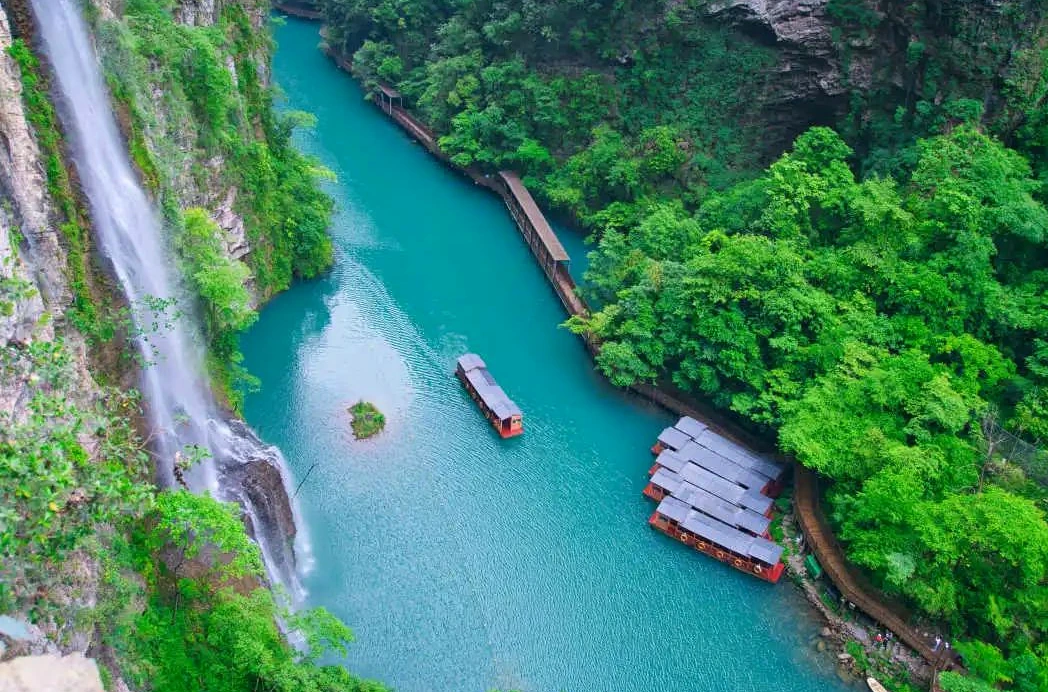
The nocturnal allure of this landmark extends vibrantly into the communal festivities at the central visitor plaza. After marveling at the bridge’s light show and the valley performance, guests are welcomed into a lively bonfire celebration featuring the Baishou Dance (摆手舞)—the traditional hand-waving dance of the Tujia people depicting farming, hunting, and daily life. Illuminated by sacred firelight and the rhythmic beat of goatskin drums, visitors can dress in intricately hand-embroidered brocade garments adorned with elaborate Miao silver jewelry. This cultural immersion deepens as guests join locals in the welcoming ritual of “Lanmen Jiu” (拦门酒)—sweet, aromatic glutinous rice wine offered at the entrance gate as a heartfelt gesture of hospitality and blessing. Blending modern architectural wonder, cutting-edge lighting technology, and intangible cultural heritage, nighttime at the Grand Canyon becomes a vivid, deeply authentic local experience.
A journey to admire the architectural masterpiece of the Zhangjiajie Grand Canyon Glass Bridge would be incomplete without exploring the unique culinary landscape at the crossroads of the Xiangxi Tujia and Miao Autonomous Prefecture and Changde. Local cuisine masterfully marries the renowned “Fragrant, Spicy, Sour, and Fresh” philosophy of Hunan cuisine with “Mountain Wilderness Flavors”—primitive forest ingredients refined by the Tujia and Miao peoples over millennia. Xiangxi dishes represent far more than bold seasoning; they preserve feudal-era history, ancestral family customs, and indigenous herbal healing traditions.
Topping the list of must-try heritage delicacies is Sanxiaguo (Three-Pot Stew), a culinary icon steeped in Ming Dynasty history. Local lore recounts that during the Jiajing reign, when Wokou pirates raided China’s southeastern coast, Xiangxi Tujia chieftains received urgent imperial orders to mobilize troops. To march on time while still honoring New Year family reunion traditions, Tujia villagers celebrated an early New Year by simmering all available ingredients together in a single large pot. Today, Sanxiaguo is elevated into a culinary art form centered around pork tripe, beef offal, pork ribs, or prized wild mountain mushrooms. Its soul lies in high-heat dry stir-frying with fresh red chilies, whole garlic cloves, and homemade Tujia broad bean paste, followed by slow simmering without adding a single drop of broth—yielding a rich, fiery, deeply savory dish infused into every bite.
Traditional smoking artistry also produces celebrated specialties such as Tujia Cured Smoked Pork (Larou) and Blood Tofu. Free-range local black pigs are salted and hung above kitchen hearths for months over slow-burning cypress branches, fresh citrus peels, and wild tea leaves, firming the meat into a translucent amber-red hue rich with natural smoky aroma. Blood Tofu, meanwhile, blends mashed white tofu with fresh pig’s blood, diced pork, and five-spice powder before being smoked and steamed. Another restorative delicacy not to be missed is Rock Ear Stewed with Free-Range Mountain Chicken. Rock ear (shier) is an ultra-rare lichen growing only in damp crevices along Zhangjiajie’s sheer quartz cliffs, harvested by daring gatherers dangling from ropes hundreds of meters above the abyss. Slow-simmered with free-range mountain chicken, it yields a clear, deeply nourishing broth prized for its medicinal properties.
Rounding out the culinary journey are rustic mountain snacks and beverages such as Haocao Baba (mugwort or kudzu root rice cakes), featuring a chewy glutinous rice exterior infused with wild herbs and a rich traditional filling. To cleanse the palate after bold, spicy dishes, diners often sip a cup of Sangzhi White Tea—once selected as an imperial tribute tea during the Ming Dynasty. Its delicate wildflower bouquet and lingering sweet aftertaste refresh the senses while leaving a lasting impression of Zhangjiajie’s rich cultural heritage.
To enjoy a safe and seamless visit to the Zhangjiajie Grand Canyon Glass Bridge, understanding operating schedules and weather safety protocols is essential. The bridge generally welcomes visitors daily from 08:00 to 17:00, with extended hours during peak summer and autumn seasons so guests can catch sunset views over the gorge. However, due to its suspended elevation high between canyon walls, management enforces strict weather-safety shutdowns. Whenever severe weather occurs—such as heavy rain, thunderstorms, gale-force winds, or dense fog reducing visibility below 50 meters—the glass bridge immediately suspends entry to guarantee absolute visitor safety.
Getting there is straightforward thanks to modern regional transport infrastructure. From major transit hubs such as Zhangjiajie Hehua International Airport (荷花国际机场) or Zhangjiajie West High-Speed Railway Station (张家界西站), dedicated shuttle buses reach the scenic area in roughly 40 to 50 minutes. Visitors driving private vehicles should note that the scenic area operates on a closed one-way loop system: standard entry begins at the West Gate and exits via the East Gate, preventing two-way congestion along narrow mountain roads.
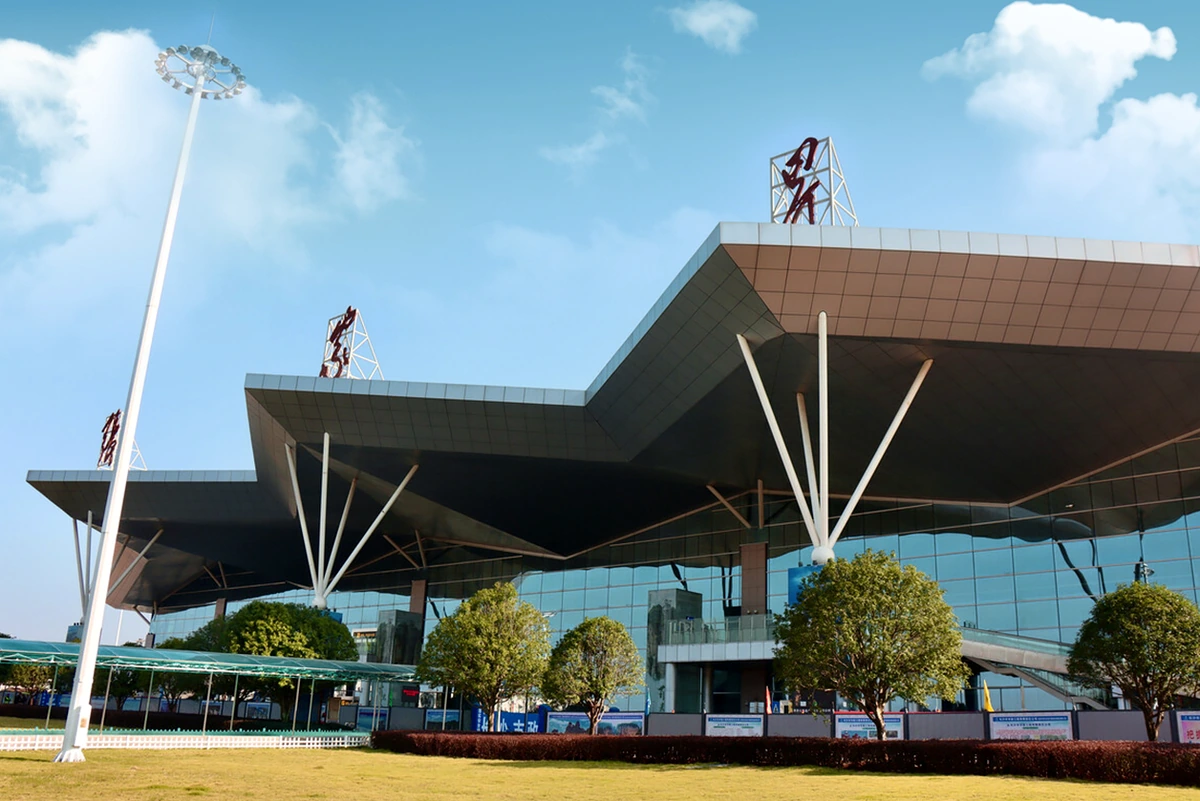
Ticketing at the scenic area is 100% digitized through online real-name reservations, meaning there are no on-site ticket counters selling walk-up tickets to individual travelers. Booking an all-inclusive panoramic combo ticket in advance—covering the Grand Canyon Scenic Area, the Glass Bridge, and either the cliffside elevator or alpine slide—is strongly recommended. The classic sightseeing route flows smoothly in sequence: starting from the Visitor Center, walking across the glass skywalk to experience mid-air suspension and view the bungee jumping platform, and then descending through the mountain cliff elevator to the canyon floor. From there, visitors stroll along wooden boardwalks beside crystal streams, pass through the dramatic “One Line Sky” (一线天) fissure, and conclude with a relaxing boat cruise out of the scenic valley.
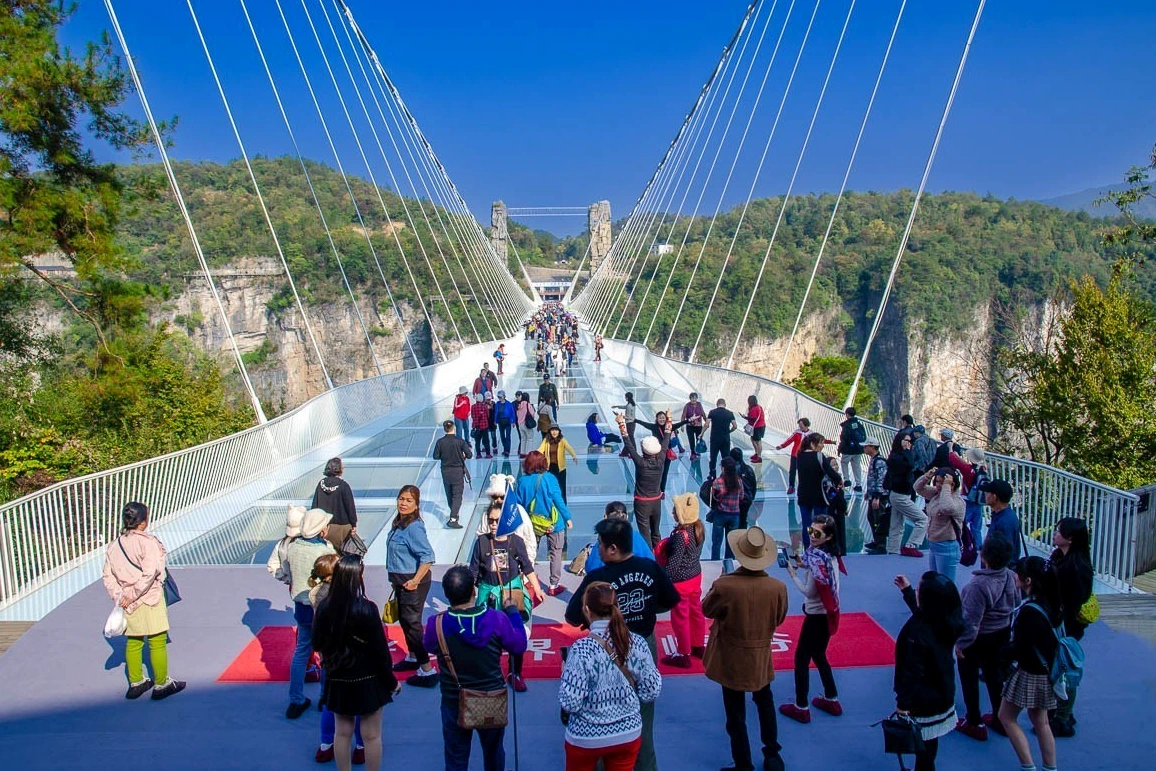
For unforgettable photographs, don’t miss the East and West viewing platforms flanking the bridge, as well as straight-down shots looking through the clear glass deck into the thousand-foot chasm below. Alongside the thrilling views come strict safety regulations: high heels, spiked shoes, and hard-soled leather shoes are strictly prohibited, and all visitors must wear the anti-slip shoe covers provided by management. Selfie sticks without safety tethers, tripods, drones, and heavy metal objects are completely banned, while smartphones and cameras must be secured with wrist straps. Additionally, travelers with heart conditions, severe high blood pressure, or acute acrophobia are strongly advised not to step onto the bridge.
Thoughtful preparation in attire, itinerary planning, and local safety compliance will turn conquering one of the world’s most famous glass bridges into a once-in-a-lifetime memory. To make sure you don’t miss a single iconic viewpoint and enjoy seamless arrangements from transportation to admission tickets, explore our all-inclusive tour packages for a smooth and unforgettable trip.