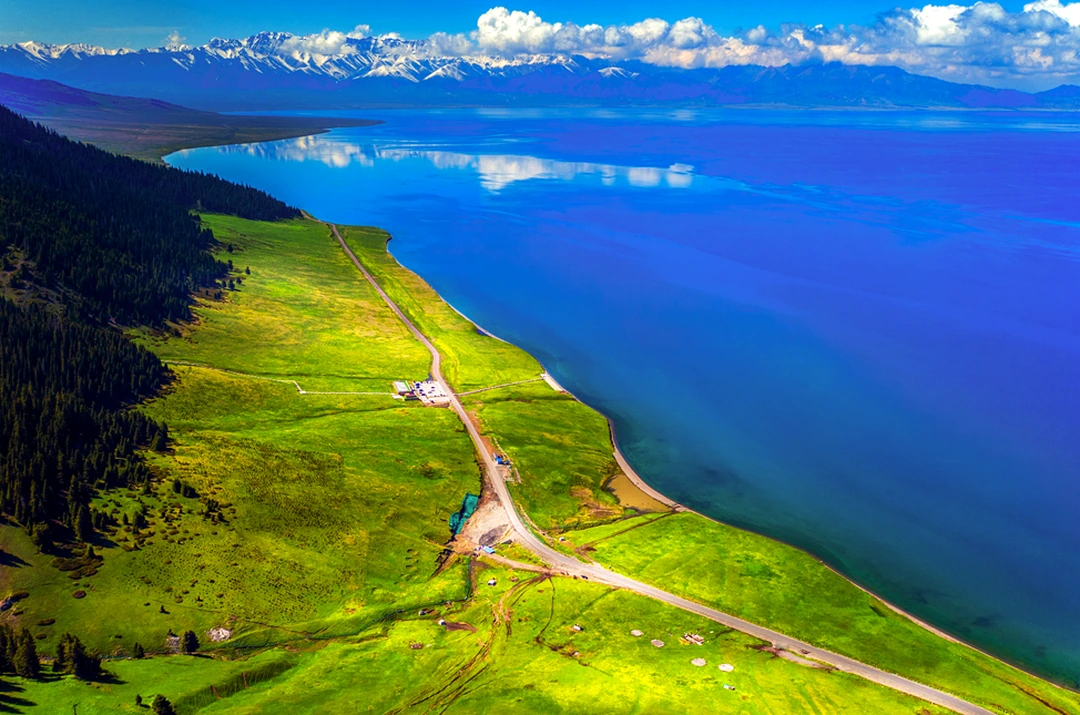
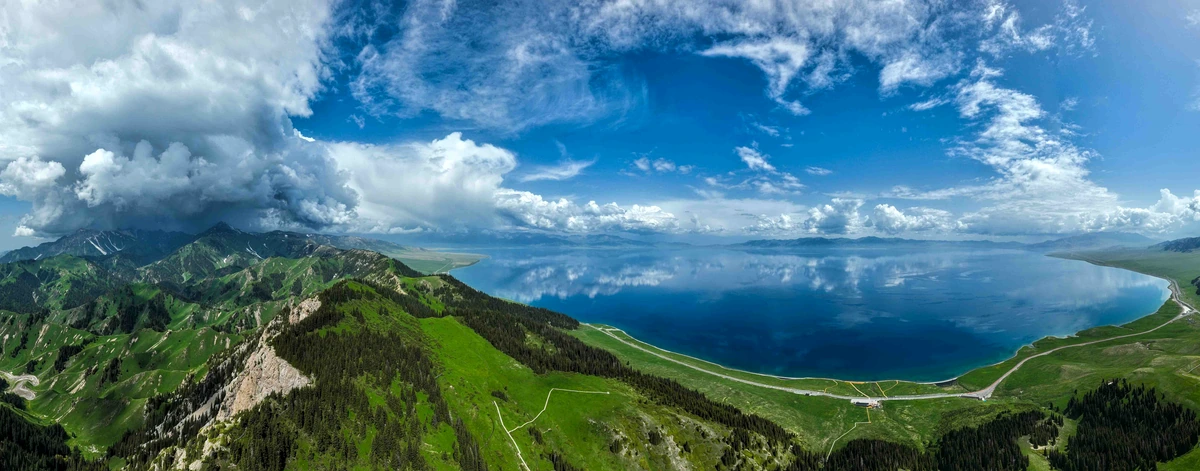
Nestled high along a western fold of the majestic Tianshan Mountains between the Borohoro and Alataw ranges, Sayram Lake gleams like a jade jewel held amid the skies of Xinjiang. In the indigenous Mongolian language, “Sairam Nuur” means “Lake on the Mountain Top,” capturing both the lake’s high elevation and its serene beauty. Tracing back through millennia, older Chinese texts recorded the site under various evocative names—such as Jinghai (Pure Sea), Xihai (Western Sea), or Sandai Haizi. Each name evokes mirror-clear waters while carrying historical associations tied to shifts across mainland dynasties, making the lake a long-standing witness along the historic Silk Road.
During the Han and Tang eras, the basin around Sayram Lake formed a strategic frontier zone within the sphere of the Wusun—a prominent nomadic confederation playing a key role in regional politics across the Western Regions. Mountain paths threading rugged gorges around the basin, including routes linking toward strategic frontier passes, carried merchants, envoys, and herds. Notably, on his arduous seventh-century journey west in search of Buddhist scriptures, Tang monk Xuanzang traversed this distant Tianshan frontier, leaving behind accounts of both the demanding mountain climate and the striking contrast of snow-dusted peaks framing still waters.
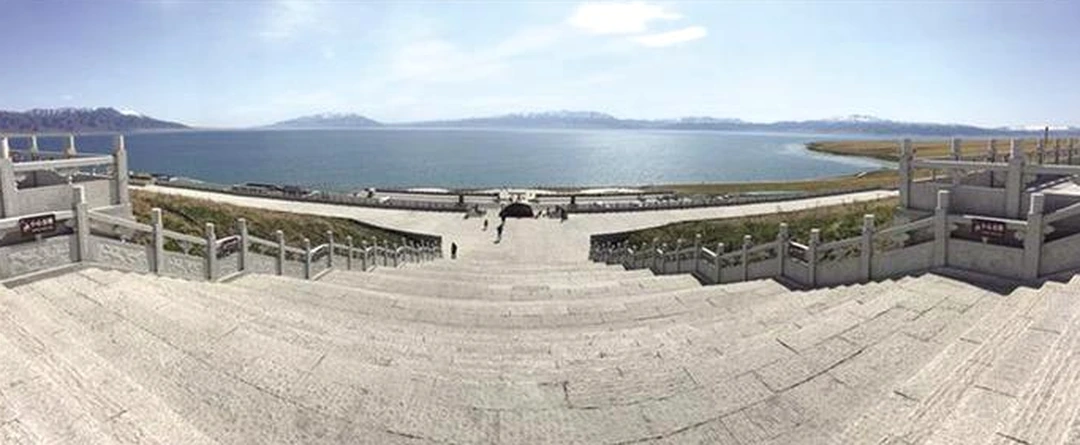
Entering the thirteenth century, Sayram Lake became linked to major campaign movements across Eurasia. In autumn 1219, as Mongol forces marched west toward Khwarazm, Genghis Khan encamped near the broad lakeshore. Across the expansive highland steppe, nomadic rites and relay stations supported long-distance communication, supplies, and troop movement along routes passing through the basin.
A few years later during the Yuan era, Daoist master Qiu Chuji (Changchun)—leader of the Quanzhen school—traveled through this region on his long journey toward the Hindu Kush at Genghis Khan’s invitation. Descriptions of Sayram Lake appear in the travel chronicle *A Journey to the West of Changchun*, noting its wide perimeter framed by towering snow peaks and clear, cold waters—helping draw wider scholarly and courtly attention to the lake over subsequent centuries.
During the Qing dynasty, under the Qianlong reign, administrative and military attention in the Western Regions expanded significantly. In the 43rd year of Qianlong (1778), Qing officials and surveyors conducted terrain mapping and measurements around Sayram Lake, incorporating the area into imperial geographic records and frontier administration along routes connecting central China with western borderlands.
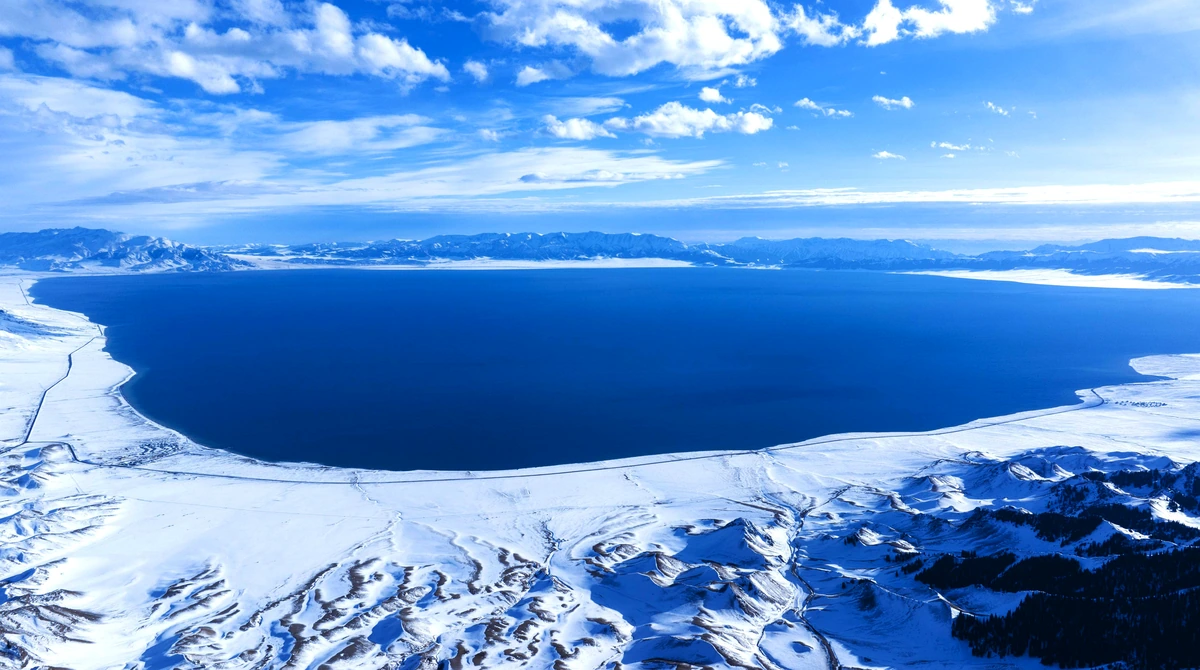
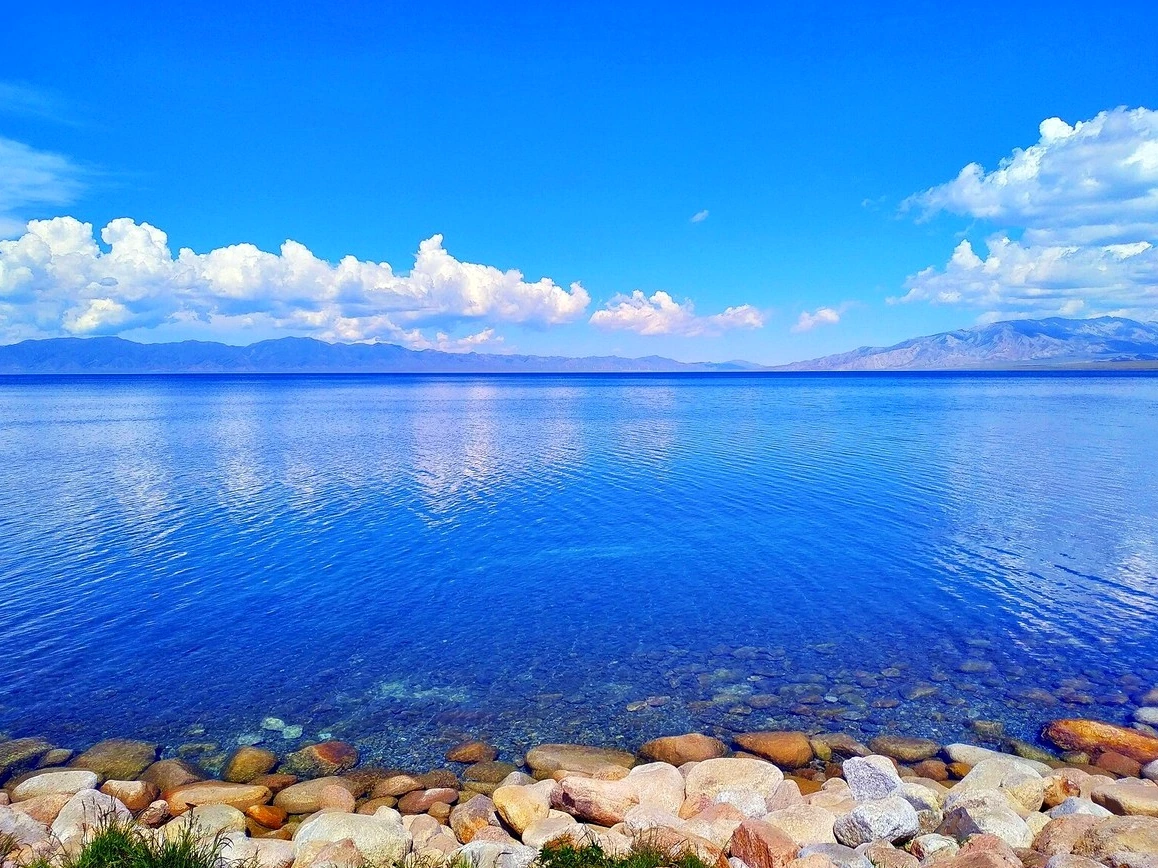
From a geological and hydrological standpoint, Sayram Lake is a notable highland basin shaped by tectonic faulting and glacial/mountain basin dynamics. Sitting at 2,073 meters above sea level, its roughly 458-square-kilometer surface holds an estimated 21 billion cubic meters of freshwater. Rather than being fed by a single large roaring river, its waters gather slowly from snowmelt and glaciers on surrounding Tianshan peaks along with precipitation. Low dissolved mineral content (under 1 gram per liter) gives the water clarity often reaching 10 to 12 meters, allowing sunlight to reflect in shades ranging from bright turquoise to deep sapphire beneath Xinjiang skies.
Viewed through traditional Eastern feng shui ideas alongside pastoral worldviews along the Silk Road, Sayram Lake’s basin forms a natural amphitheater sheltered by surrounding ridges and snow peaks. Mountain slopes ring the calm waters like a protective arc, creating a scenic contrast between towering peaks and expansive water that has long served both as a practical water stop for travelers and as a peaceful highland setting.
Combining high elevation with cold, clear water supports a varied alpine and steppe ecosystem in northwestern Xinjiang. In the cold, oxygen-rich depths, introduced whitefish (*Coregonus peled*) thrive, while surrounding meadows and rocky slopes host highland wildlife. Red deer graze near grassy shores in warmer months, Marco Polo sheep navigate steep crags, and elusive snow leopards inhabit high mountain zones—completing a rugged yet lively natural habitat.
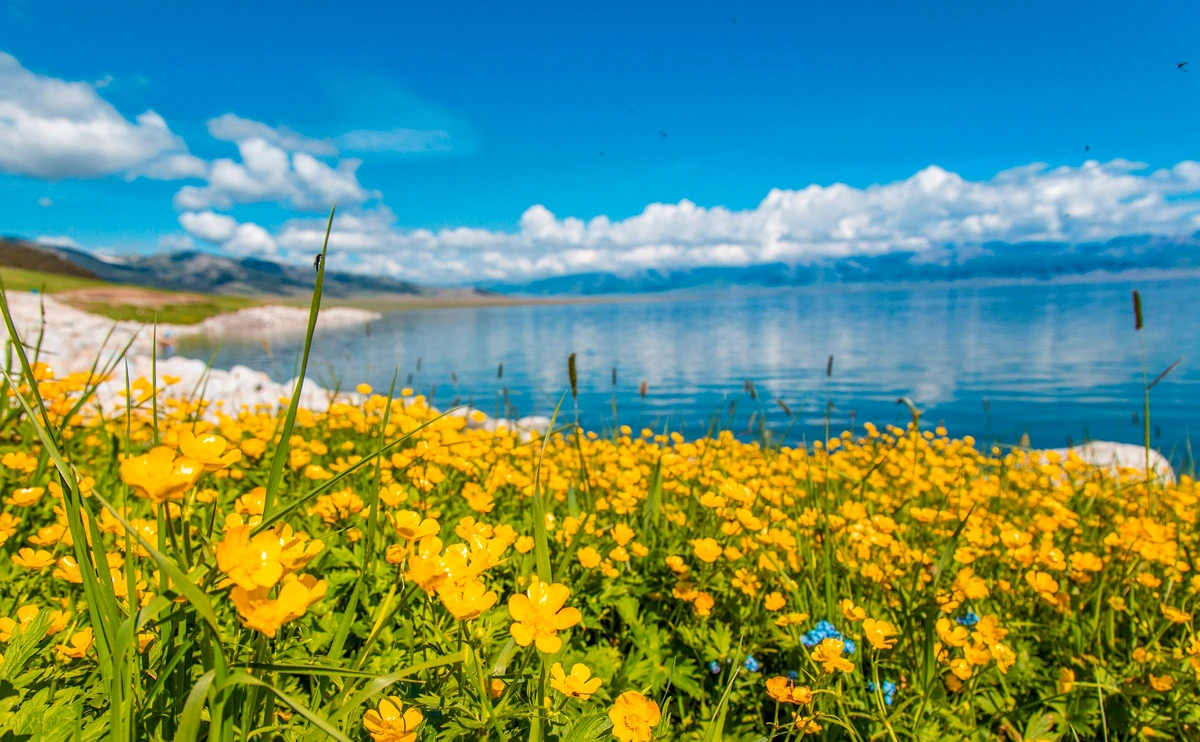
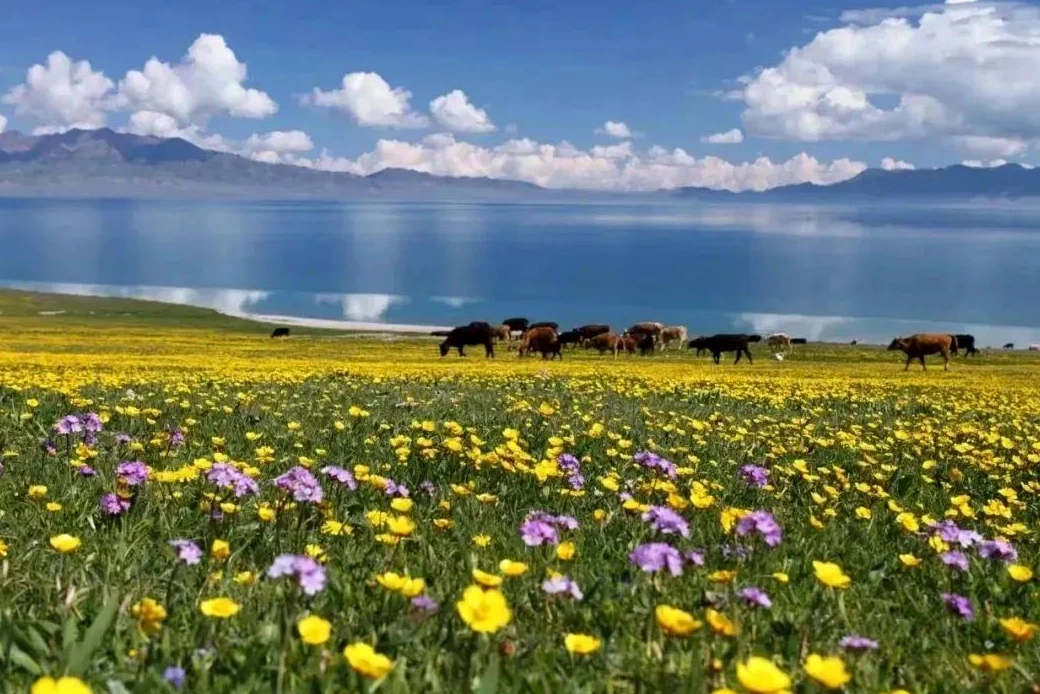
Natural scenery at Sayram Lake shows clear vertical zonation. Shifts in sun angle across deep, clear water interact with seasonal vegetation—moving from snowy peaks and dark Tianshan spruce forests down through colorful steppe wildflowers and deep blue water. Elevation, water clarity, and seasonal rhythms come together to form a cohesive highland landscape.
In overall site planning and spatial structure, the Sayram Lake basin is organized around a roughly 90-kilometer ring road linking viewpoints around the shore. Built with freeze-thaw-resistant asphalt and frost-mitigating sub-base layers to handle sub-zero Xinjiang winters, the route follows the shoreline while keeping built interventions low-profile so natural scenery remains front and center.
For pedestrian paths and sensitive alpine ground, planners use durable boardwalks anchored on helical steel piles rather than heavy poured-concrete foundations. Helical screw piles secure walkways on slopes while minimizing disturbance to sensitive high-altitude soil and permafrost layers, helping native grasses and root systems stay intact beneath boardwalks.
Kazakh pastoral heritage is reflected in dry-stacked stone walls and yurt-inspired structures along the shore. Craftspeople select smooth glacial cobbles and stones shaped over time, fitting them together through weight and friction without mortar—giving structures a rustic look well suited to breezy highland weather and nomadic traditions.
Visitor areas around Sayram Lake are arranged across ten main stops—including Moon Bay, Shumutou, and Keledongzhou. Visitor buildings are kept low (no more than two stories) in warm wood tones and natural stone hues so they blend with the landscape and preserve unobstructed views toward the snow peaks and waters often poetically called the “last tear of the Atlantic.”
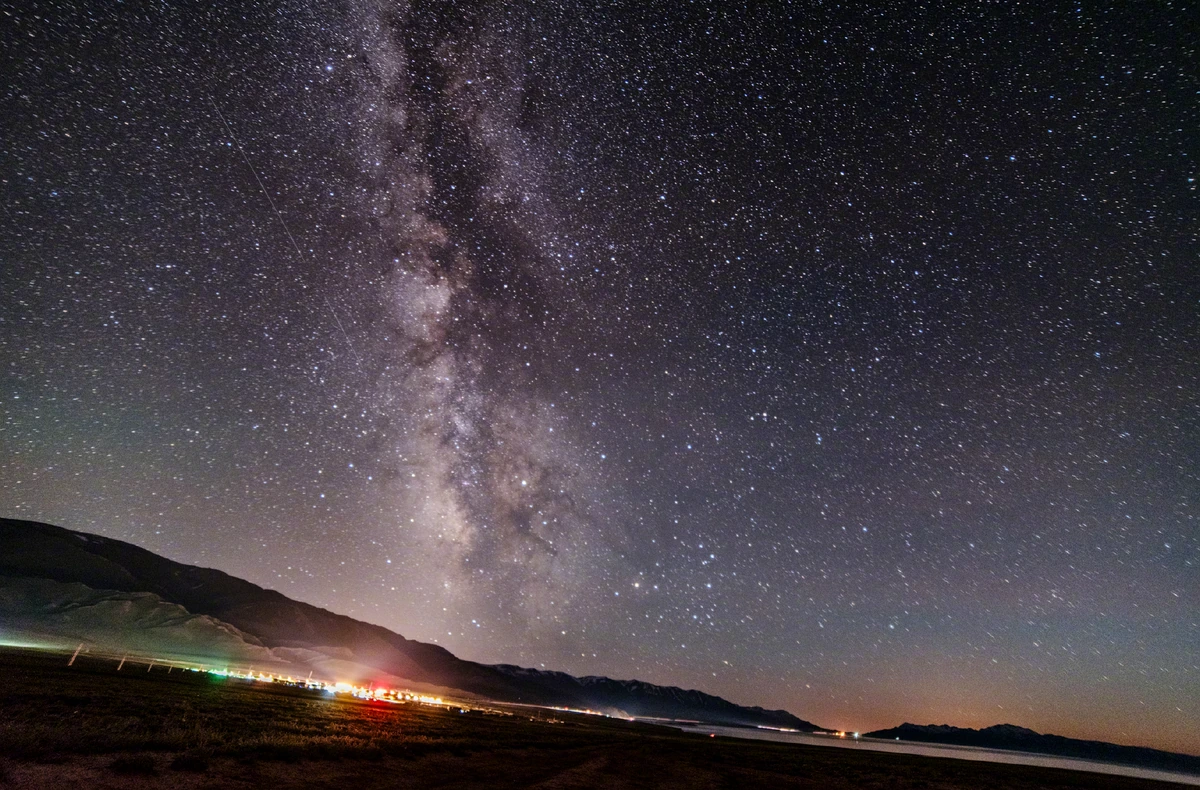
After sunset fades from high peaks, lighting around Sayram Lake—particularly near Shumutou—follows dark-sky-friendly principles aligned with International Dark-Sky Association (IDA) practices. Shielded cut-off fixtures and low-mounted warm LEDs (under 3000K) limit upward light spill and protect nocturnal wildlife across northern Xinjiang, letting visitors gaze up at clear night skies and star reflections over calm water.
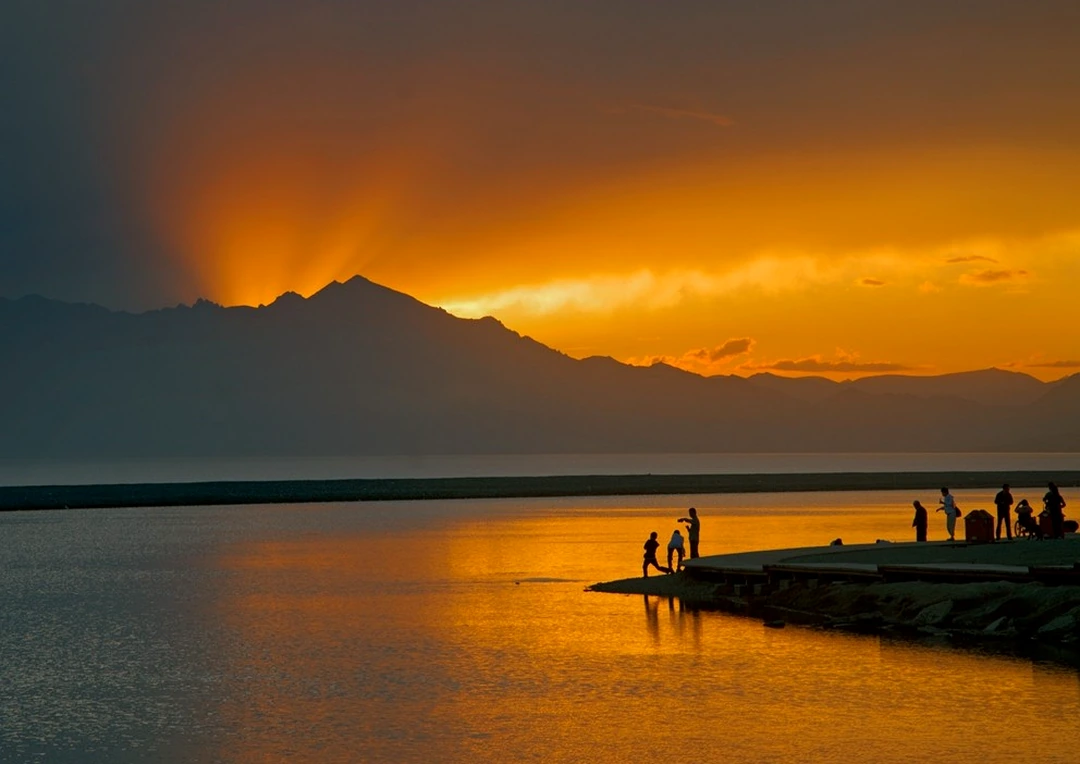
Evening cultural programming near the historic Dianjiangtai area features outdoor performances such as *Love of Sayram Lake*, drawing on regional legends and pastoral heritage alongside projections and music. Traditional horsehead fiddle (*Morin Khuur*) melodies and *Khöömei* throat singing resonate across the highland air, evoking Silk Road history and nomadic traditions.
Following evening shows, visitors can browse the Xihai Starry Night Market, built with lightweight yurt-inspired frames and translucent panels glowing warmly after dark. Stalls offer northwestern specialties—including charcoal-roasted lamb, savory milk tea, baked naan bread, and local whitefish prepared in traditional styles.
Blending low-impact night skies, cultural performances, and local food gives Sayram Lake a calm, memorable evening character distinct from busy cities—where mountain air, starlight, and pastoral traditions come together.
Cuisine around Sayram Lake reflects high-altitude adaptation and pastoral life. Above 2,000 meters, cold, clean waters support highland whitefish (*Coregonus peled*), prized for firm flesh and delicate sweetness. Locals often steam the fish lightly with ginger and scallions to highlight clean flavor, or braise it with chili for a warmer dish suited to cool Tianshan breezes.
Kazakh nomadic traditions also shape local dining, centered on *Beshbarmak* (“five fingers,” traditionally eaten by hand). Using fat-tailed sheep raised on Bortala pastures, tender simmered mutton is served over hand-rolled noodles with rich, savory broth—offering a hearty taste of grassland hospitality.
Warm *Baursak* fried dough puffs and savory milk tea (*xian naicha*) complete a classic pastoral snack. Crisp, golden *Baursak* pairs naturally with salted milk tea brewed from compressed tea, highland milk, and a pinch of salt—comforting inside a yurt when mountain winds pick up.
Fire-roasted dishes—such as whole roasted lamb or meats cooked over fruitwood embers and tandoor-style ovens—add rich smokiness and crisp skin over tender meat, making evening meals around Sayram Lake especially memorable.
Timing your trip makes a big difference at Sayram Lake. Late May to mid-June brings melting snow and blooming wildflowers along meadows beside deep blue water, while July and August offer cooler escape from inland summer heat. Advance real-name ticket reservations via official mini-programs or online channels are required, and booking 3 to 5 days ahead is smart during peak periods.
Getting there is straightforward via Ürümqi with flights or high-speed trains toward Bortala or Yining, followed by driving or a private car along the 90-kilometer lakeside road. Driving around the shore with meadows on one side and snow-dusted Tianshan peaks across the water is a highlight of visiting the lake.
At over 2,000 meters elevation, temperatures can drop sharply—even dipping below 5°C at night in summer—so pack 3-in-1 windproof/waterproof layers, fleece, and warm clothing. Strong UV rays and glare off water and snow also call for UV sunglasses and high-SPF sunscreen.
When visiting Kazakh yurts, avoid stepping on the threshold—regarded in local tradition as a boundary of respect—accept tea or items politely with both hands, and follow Leave No Trace habits by keeping litter out of the basin and staying off fragile wildflower patches. For a smoothly arranged trip covering logistics and routes, browse all-inclusive tour packages to explore northern Xinjiang with ease.