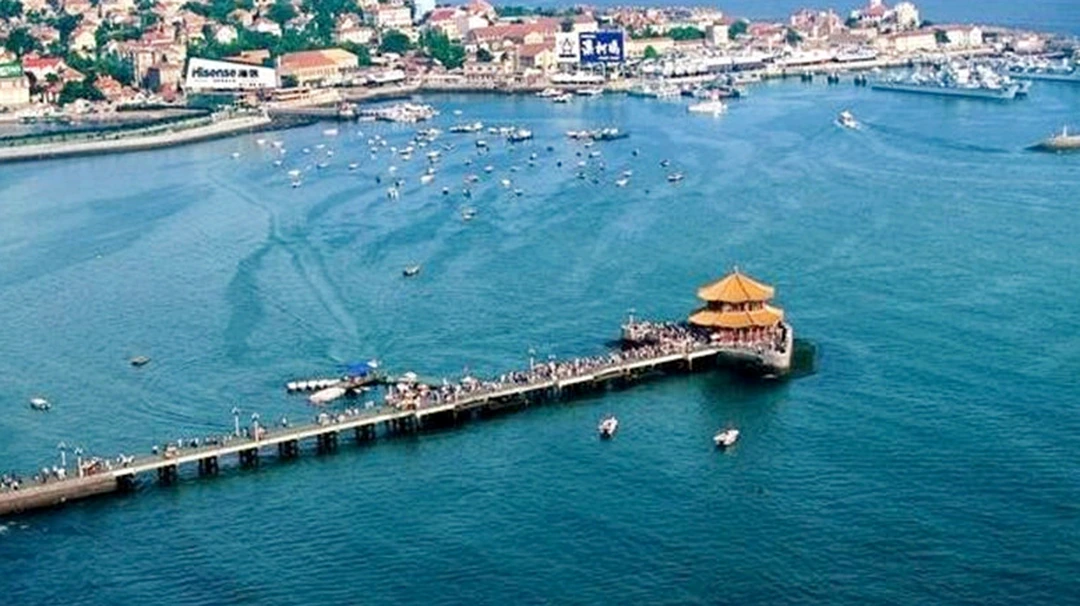
Qingdao—the picturesque port city nestled along Jiaozhou Bay—captivates visitors not only with its azure waters and vintage European architecture, but also with the condensed historical resonance found at Zhanqiao Pier. Seen from afar, the long pier stretches out into the open sea like a jade comb parting the turquoise waves, carrying the memories of more than a century of vicissitudes. The origins of this iconic landmark date back to September of the 18th year of Emperor Guangxu’s reign (1892) during the Qing Dynasty. At that time, facing mounting threats of invasion from Western imperial powers, Regional Commander Zhang Gaoyuan led the Huai Army to garrison the Qingdaokou area. To serve military purposes and transport supplies for the troops, construction was hastily initiated on an iron-clad wooden pier, respectfully referred to by locals as “Zhang Gong Zhanqiao” (General Zhang’s Pier) or “Qianhai Zhanqiao” (Front Sea Pier). The emergence of this rudimentary iron-and-wood bridge marked a monumental historical milestone, signaling Qingdao’s dramatic transformation from a small, secluded fishing village into a major modern port metropolis.
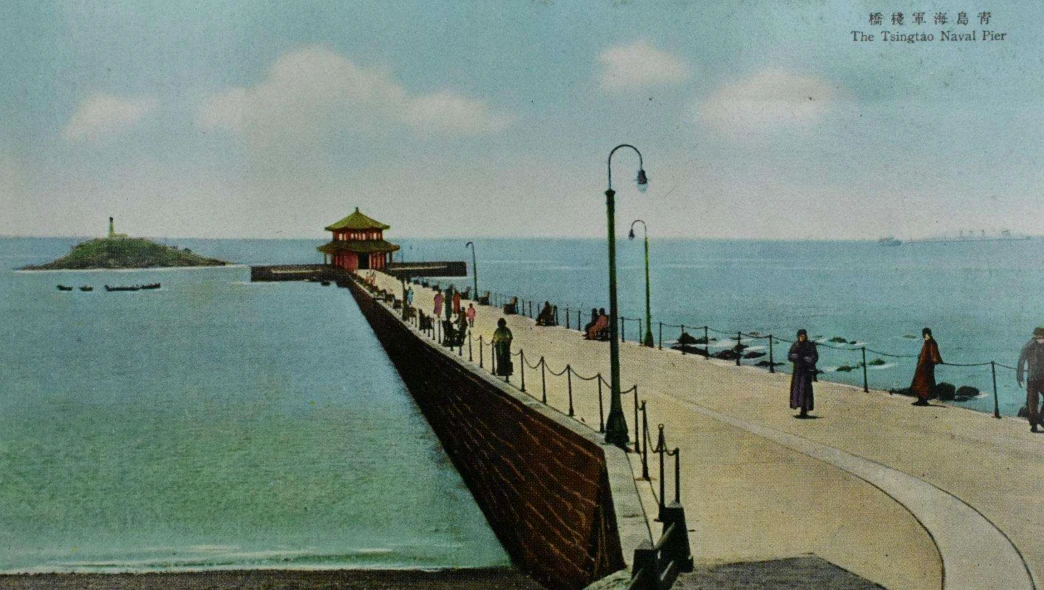
The geopolitical upheavals of the late 19th and early 20th centuries turned Zhanqiao Pier into an immortal witness to a turbulent era in the history of the Shandong region. Entering the German colonial period (1897–1914), Western authorities recognized the strategic importance of this location and carried out a comprehensive overhaul of the pier. The original rudimentary wood-and-iron structure was replaced with a sturdy reinforced concrete system, while a dedicated railway track was installed to facilitate the loading and unloading of cargo and military hardware. Throughout this era, the bridge bore the German name Landungsbrücke (also known as the Naval Pier). Soon after, the outbreak of World War I led to the first Japanese occupation (1914–1922), continuing to turn the site into a focal point of conflict and a witness to power struggles on the international diplomatic chessboard.
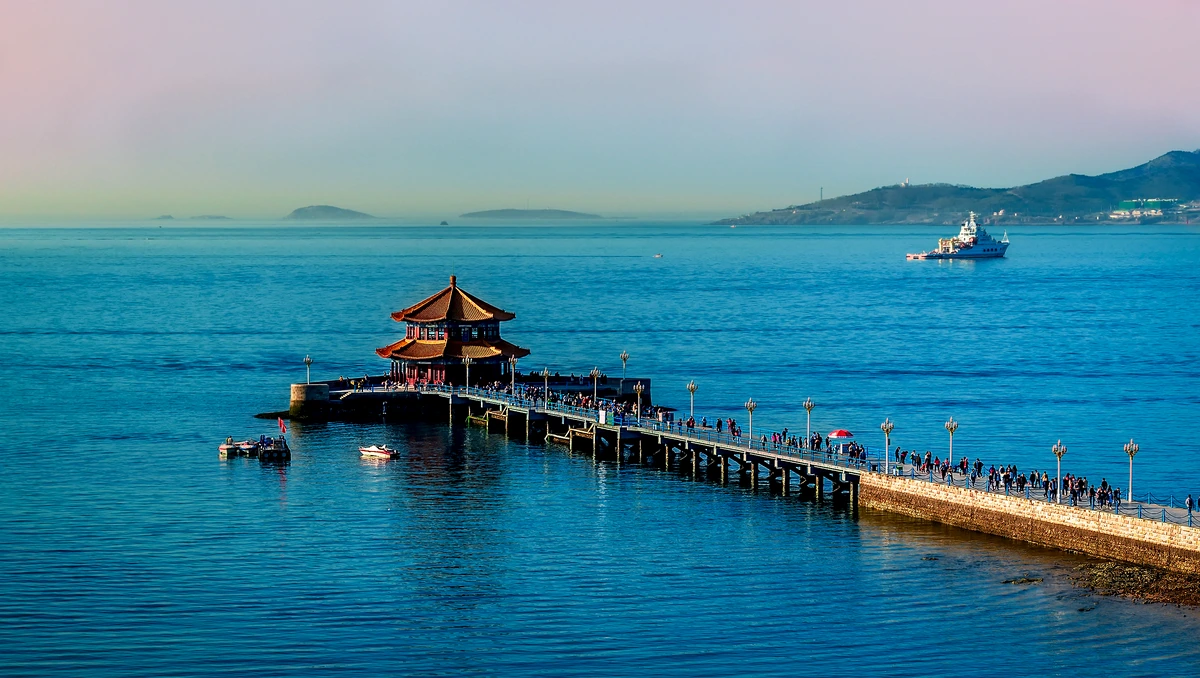
It was not until the Republic of China era (1922–1938) that Zhanqiao Pier truly assumed the pinnacle of aesthetic and architectural form seen today. In 1931, under the leadership of Mayor Shen Honglie, a major restoration project of unprecedented scale was approved with a total budget of 250,000 silver dollars—an enormous sum at the time. The entire bridge structure was completely upgraded with modern reinforced concrete, extending its length and enhancing its wave-breaking capabilities. Most notably, at the southernmost tip of the pier reaching into the sea, builders erected Huilan Pavilion—a magnificent two-story octagonal structure steeped in traditional Chinese imperial palace style. Adorned with golden glazed roof tiles, vermilion-and-gilt pillars, and proudly upturned eaves, Huilan Pavilion served not only as a vantage point for watching crashing waves, but also as a symbol of the revival of national cultural identity at the heart of a port city heavily marked by colonial influence.
Having weathered devastating years of war and shifting historical tides, Zhanqiao Pier stands tall as an enduring symbol through time. In the modern republican era, local authorities launched large-scale renovation and conservation initiatives, most notably the restoration campaigns in 1984 and 2000 to reinforce its foundations against the corrosive power of saltwater while preserving its historical artistic integrity. Today, every stone slab and balustrade on the pier is far more than mere construction material; they are living pages of history chronicling the journey from the final feudal dynasty, through years of colonial rule, to the brilliant rise of modern Qingdao. Zhanqiao serves as the vital bridge connecting a sacred past with a bright future in the Northeast Asian maritime region.
Viewed from the perspective of geo-culture and maritime feng shui planning, Zhanqiao Pier is more than a military port structure or scenic viewpoint; it profoundly embodies the architectural philosophy of “mountains and waters intertwined, city and scenery united” inherent in Eastern spatial design. Situated directly along the spiritual and seaward axis on the eastern side of Jiaozhou Bay, the structure thrusts straight out into the open sea like an unsheathed sword guarding the harbor entrance, or a colossal jade Ruyi scepter sculpted jointly by nature and human hands. Ancient geomancy masters regarded this terrain as a formation that “locks the maritime frontier, channels water, and gathers auspicious energy”—serving simultaneously as a steadfast anchor securing Shandong’s coastal border and as an open sea lane welcoming prosperous maritime energy from the surging ocean into the heart of Qingdao. The harmony between the pier’s graceful elongated lines and the depth of the bay creates an exquisite yin-yang equilibrium, where Little Qingdao Island (Xiao Qingdao) in the distance acts as a protective front screen mountain, and expansive Jiaozhou Bay functions as a bright hall gathering water.
The topographical layout and marine engineering behind Zhanqiao Pier demonstrate a profound command of microclimates and the complex hydrology of the Bohai and Yellow Seas. The pier’s seaward orientation was meticulously calculated to minimize drag and destructive impact from ferocious southerly waves during typhoon season, while leveraging natural terrain to shelter against biting northwesterly monsoons blowing fiercely from the Eurasian continent during frigid winter months. Thanks to fluid mechanics design and sturdy foundation anchoring into the seabed cobblestones, the pier has stood resilient against saltwater corrosion and wave pressure across generations of change. Every stride along the deck allows visitors to feel the rhythmic interplay between man-made engineering and the pulse of the tides, completely dissolving the boundary between classical military architecture and the natural coastal landscape.
Beyond its engineering stature and feng shui layout, the signature scenery of Zhanqiao Pier transforms magically with the seasonal ecological cycle. Every year, as the first cold winds sweep down from the freezing Siberian steppes, from November through April of the following year, the pier becomes a peaceful sanctuary for tens of thousands of migratory black-headed gulls (Larus ridibundus) escaping the winter chill. The sight of gulls wheeling across the sky and banking past the tiled eaves of Huilan Pavilion creates an urban ecological ballet unmatched anywhere else in the world. Within this setting, visitors are effortlessly enchanted by the sublime fusion of four iconic colors immortalized in Qingdao poetry: “red tiles, green trees, blue sea, and azure sky.” The dignified red of historic architecture blends with the lush greenery of coastal foliage, resting against the deep emerald-blue sea and standing out beneath a turquoise coastal sky, composing a landscape both majestic and deeply poetic.
Seen from above, Zhanqiao Pier resembles a stone ribbon linking past and present, uniting the mainland with the boundless deep, creating a unique visual corridor that draws the eye all the way to the horizon. Surrounding landscape planning prioritizes not only visual aesthetics but also the holistic preservation of biodiversity and habitats for coastal marine life. This resonance between traditional feng shui artistry, marine spatial planning wisdom, and northern migratory bird ecology has elevated Zhanqiao into an enduring icon—a living testament to the philosophy of harmonious coexistence between humanity, the city, and the vast ocean.
Within the broader spatial planning of Qingdao’s coastline, Zhanqiao Pier rises as a proud hyphen between solid land and the expansive ocean. The pier’s approach stretches 440 meters straight out into Jiaozhou Bay, with a deck width of exactly 10 meters, forming a sturdy and expansive promenade over the waves. To withstand marine storms and relentless saltwater corrosion over decades, the entire substructure is reinforced with densely cast reinforced concrete columns, paired with a breakwater foundation built from massive boulders capable of dissipating wave impact forces. The deck surface is intricately engineered with a smooth asphalt base integrated with meticulously dressed natural granite slabs—both enhancing slip resistance for pedestrians and exuding a dignified, stately beauty that harmonizes with the deep blue of the ocean.
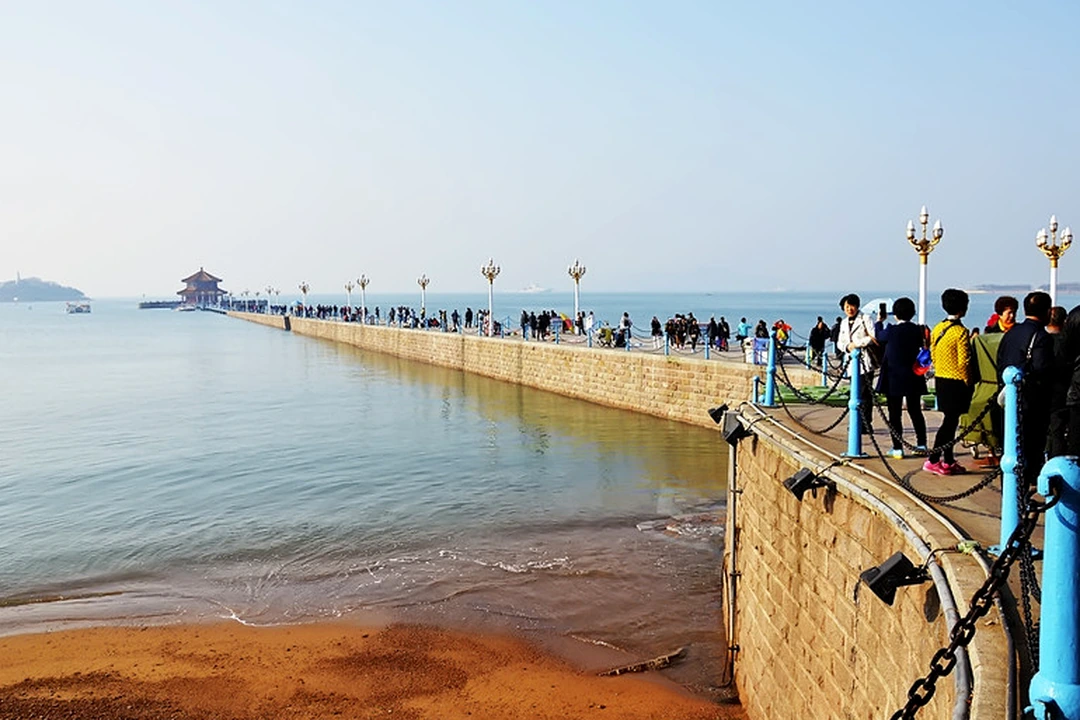
The visual anchor and architectural heart of the entire complex is Huilan Pavilion—the sea-viewing tower standing majestically at the southern end of the pier. The pavilion’s foundation is cast in a perfect circle approximately 12 meters in diameter, rising above the sea with a total floor area of nearly 340 square meters. From afar, this two-story pagoda-like pavilion, standing roughly 11 meters tall, resembles a stone lotus flower floating serenely amidst endless rolling waves. Precise hydrological mechanics calculations enable this structure weighing hundreds of tons to endure tidal uplift forces as well as coastal gale winds, making Huilan Pavilion a masterpiece that perfectly balances modern structural engineering with artistic appreciation.
Delving deeper into its architectural craftsmanship, Huilan Pavilion stands as a vivid testament to the pinnacle of traditional East Asian design. The pavilion’s exterior load-bearing frame was handcrafted by master artisans following classical imperial timber architecture methods, reflecting a profound mastery of spatial proportion. Its most visually striking feature is the unique double-eaved pyramidal octagonal roof structure. The entire roof is clad in brilliant yellow glazed tiles that shimmer in the sunlight like a royal crown set upon the ocean. Directly beneath the eaves, intricate dougong bracket sets and load-bearing beams are delicately carved according to strict Qing Dynasty “official-style” (guanshi) standards, serving both to distribute roof loads and to create undulating contours that showcase regal elegance.
What gives Zhanqiao its singular artistic value goes beyond imperial standards, lying in the ingenious integration of local maritime culture into its decorative details. On the window frames and crossbeams of Huilan Pavilion, rather than the conventional dragon-and-cloud or lotus motifs typical of inland architecture, historical carvers skillfully adapted the designs into lively reliefs of marine creatures such as fish, shrimp, crabs, and sea snails. This synthesis of sturdy Western reinforced concrete infrastructure with authentic Qing official-style hand carving and everyday marine motifs creates an extraordinary East-West cultural fusion. It stands as a one-of-a-kind emblem of architectural artistry, leaving an indelible mark on the region’s coastal cultural heritage.
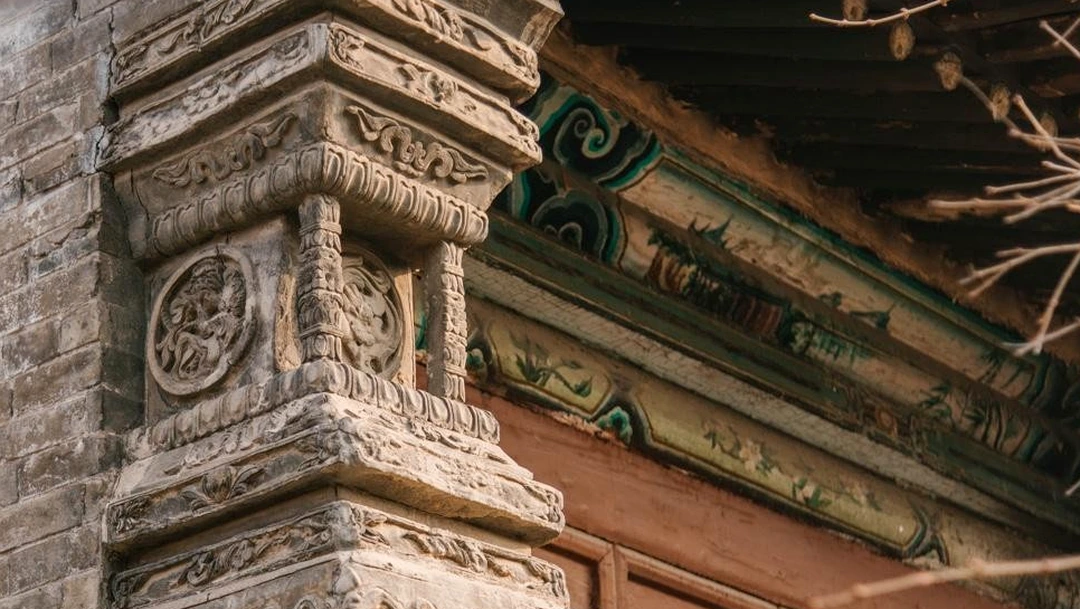
As twilight descends over Jiaozhou Bay, Zhanqiao Pier sheds its quiet daytime demeanor as a historical monument and dons an enchanting cloak of light, transforming the entire structure into a luminous ribbon extending straight into the nocturnal sea. The lighting design here follows the refined optical philosophy of “seeing the light without seeing the fixture,” where light sources are cleverly concealed to let the architectural lines take center stage. Along the length of the pier, vintage-style cast-iron streetlamps cast a warm golden glow, tracing a crisp, unwavering boundary piercing through the misty ocean night. The soft illumination preserves the authentic texture of the granite while fully capturing the solemn, weathered majesty of a maritime outpost that has endured centuries of history.
The dazzling visual centerpiece of the nighttime lighting scheme is Huilan Pavilion at the far tip of the pier. This two-tiered octagonal structure is highlighted by recessed floor uplights and wall washers tucked deep within the roof crevices. When darkness falls, golden beams reflect brilliantly off the glazed tiles, accentuating the mysterious vermilion hue of the supporting columns. The interplay between artificial light and the shimmering ocean waves around it vividly brings to life the classical aesthetic praised by ancients in the couplet “A long rainbow stretches afar, flying pavilions turn back the waves.” Viewed from the shores of Qingdao Bay, Huilan Pavilion glows like an artistic lighthouse standing tall at the boundless frontier between sky and water.
Beyond its tranquil visual allure, the area around Zhanqiao Pier at night also serves as a hub for culturally rich live performances. During major celebrations such as the Qingdao International Beer Festival, the adjacent coastal plaza transforms into a vibrant open-air stage pulsing with nightlife. Here, visitors can enjoy spirited performances of Jiaozhou Yangge—a traditional Shandong folk dance characterized by graceful movements and red silk ribbons fluttering in the sea breeze. Accompanying the dances are the rolling sea chanteys of coastal fishermen, a national intangible cultural heritage passed down through generations, ringing out proudly like the echo of deep ocean swells.
The uniqueness of nightlife around Zhanqiao Pier also lies in the intersection of tradition and modern performance technology. Through the application of advanced 3D holographic projection, architectural walls and coastal night mist become ethereal backdrops recreating Qingdao’s layered history. Dynamic visuals ranging from steamships of the German colonial era to simple scenes of daily life in the ancient fishing village come alive in multidimensional light. Visitors can stroll along breathing in the salty Qingdao sea breeze while sipping a crisp, freshly brewed draft beer to the blend of folk melodies and modern soundscapes, immersing themselves in an enchanting cultural and artistic space in the heart of the coastal metropolis.
Exploring Zhanqiao Pier would remain incomplete if a traveler’s memory map lacked the bold, briny flavors of Jiaodong’s culinary heritage. As one of the cradles that shaped Lu cuisine—the foremost of China’s Four Great Culinary Traditions—Qingdao detains visitors not only with refreshing sea breezes, but also with seafood preparation techniques that revere pristine freshness. Located right beside the surf of Zhanqiao, the dining scene here is a wonderful crossroads between refined imperial-influenced gastronomy and down-to-earth street-food vitality, where the story of the ocean is told through every sense.
Topping the local culinary guide is steamed clams in their own natural broth, known locally as Yuanzhi Gali (Original-Juice Clams). Qingdao locals have a proud saying celebrating the simple pleasure of “eating clams and drinking fresh draft beer.” Plump clams harvested from the pure waters of Hongdao are placed into the pot without adding a single drop of water or complicated seasonings. Under high heat, the shells pop open naturally, releasing a sweet, pure broth brimming with the raw essence of the sea. Paired with a sip of unpasteurized draft beer poured fresh from the original brewery on Dengzhou Road—birthplace of the legendary Tsingtao Beer in the early 20th century—the crisp, mild hop bitterness melds with the rich sweetness of the clam meat for an unforgettable burst of flavor.
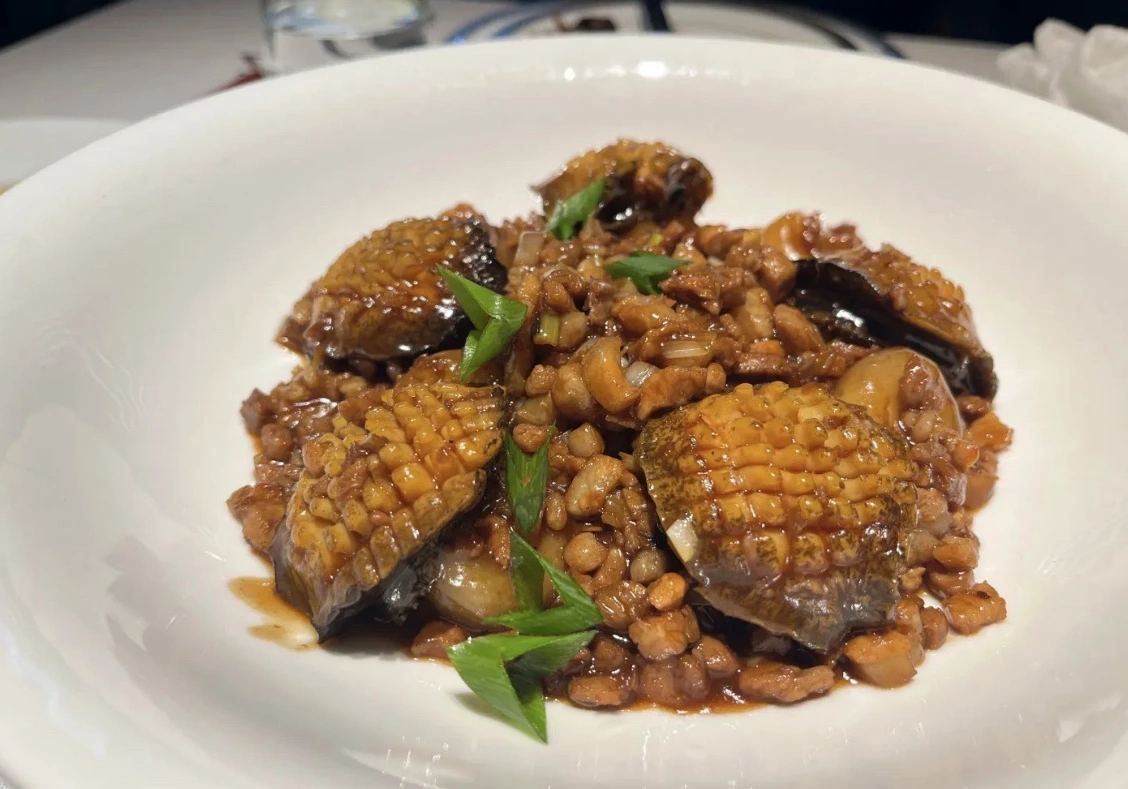
Occupying a more luxurious and refined tier of Lu cuisine is Braised Sea Cucumber with Scallions (Congshao Haishen)—a dish hailed as the pinnacle of Shandong delicacies. The waters surrounding the Changdao archipelago have long been renowned for premium black-spined sea cucumbers prized for their high nutritional value and ideal tender-crisp texture. Qingdao chefs employ a meticulous scallion-oil infusion technique, frying specialty Shandong green onions until fragrant and golden brown. After thorough preparation, the sea cucumber is braised in rich chicken stock and scallion oil, absorbing a glossy, velvety sauce that is deeply savory without ever feeling heavy. Each tender, springy bite infused with the sweet aroma of caramelized scallions reflects the ancient culinary philosophy emphasizing balance and nourishment.
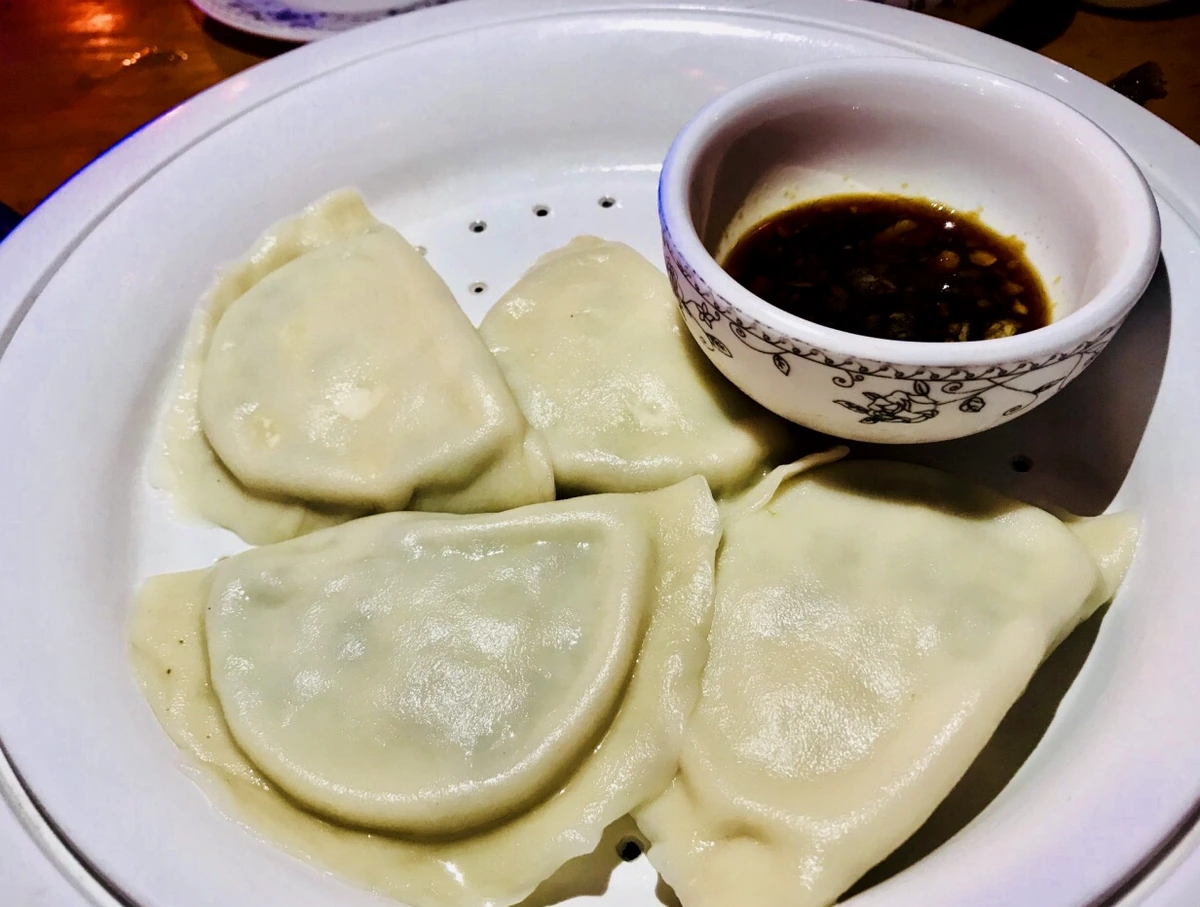
Alongside elaborate banquets, Qingdao’s folk intangible cultural heritage is preserved intact in every Spanish Mackerel Dumpling (Bayu Shuijiao). More than just a delicate dish, it symbolizes the seafaring way of life along the Jiaodong coast. Freshly caught Spanish mackerel is deboned, finely minced, and hand-whipped together with minced pork belly and finely chopped fresh chives. The marriage of sweet ocean fish, rich pork fat, and the aromatic punch of chives yields an extraordinarily juicy filling. Hand-rolled dumpling wrappers are boiled just until translucent, cradling the generous stuffing inside. Biting into a piping-hot dumpling and tasting the burst of sweet, savory broth on the tongue is a culinary experience that wins over everyone who visits Zhanqiao.
The symphony of flavors around Zhanqiao Pier carries on deep into the night as street corners light up with colorful local specialties: plates of fiery stir-fried sea snails, bowls of golden steamed sea urchin custard as rich as butter, and charcoal-grilled squid skewers dusted with chili powder and Sichuan peppercorns. Sitting at a wooden seaside table, listening to waves lap against the historic stone pier while enjoying fresh seafood alongside a frosty mug of beer, visitors truly grasp the soul of Qingdao—a port city both timeless and youthful, where family culinary traditions have become enduring intangible heritage.
Experiencing the timeless beauty of Zhanqiao Pier requires no rigid schedule, as the entire pier stretching into Jiaozhou Bay remains open to the sea breeze 24 hours a day. However, if you wish to step inside the heritage interior of Huilan Pavilion to view its historical exhibits and admire panoramic ocean views through its hexagonal windows, take note of its fixed visiting hours from 08:30 to 17:30 daily. Admission inside the pavilion is remarkably modest, ranging from just 5 to 10 RMB per ticket, though during peak travel seasons and public holidays, local authorities enforce online real-name reservations via the official mini-program of the Qingdao Municipal Bureau of Culture and Tourism. Booking ahead not only secures your entry slot but also ensures a smooth visit without queues at the checkpoint.
Commanding a prime spot right in the center of the city’s southern coastline, Zhanqiao Pier is effortlessly accessible via Qingdao’s modern, integrated public transit network. The quickest and most convenient option for travelers is taking Metro Line 2 or Line 3 to Qingdao Railway Station. Exiting this historic European-style terminal, a leisurely 300-meter walk southward brings the open ocean and the historic stone pier directly into view. Local experts and residents strongly advise against driving private cars or taking ride-hailing vehicles into the immediate area, as the street grid surrounding the heritage axis of Zhongshan Road consists largely of narrow, one-way historic lanes with heavy traffic and extremely scarce parking. Opting for public transit saves both time and money while immersing you in the relaxed, orderly rhythm of the seaside city.
When it comes to clothing and packing, Zhanqiao Pier’s exposed position jutting straight out into the sea means it experiences brisk, powerful ocean winds year-round. Even on warm summer days when the mainland feels balmy, cool, moisture-laden breezes sweeping across the 440-meter deck can bring a sudden chill, making a lightweight, breathable windbreaker an essential item in your daypack. When winter arrives on the Shandong Peninsula, plunging temperatures combined with sea spray can coat the stone steps and railings in a thin layer of frost or black ice, requiring visitors to bundle up in insulated down jackets, wool scarves, gloves, and—above all—high-traction, non-slip footwear to ensure safe footing at every step.
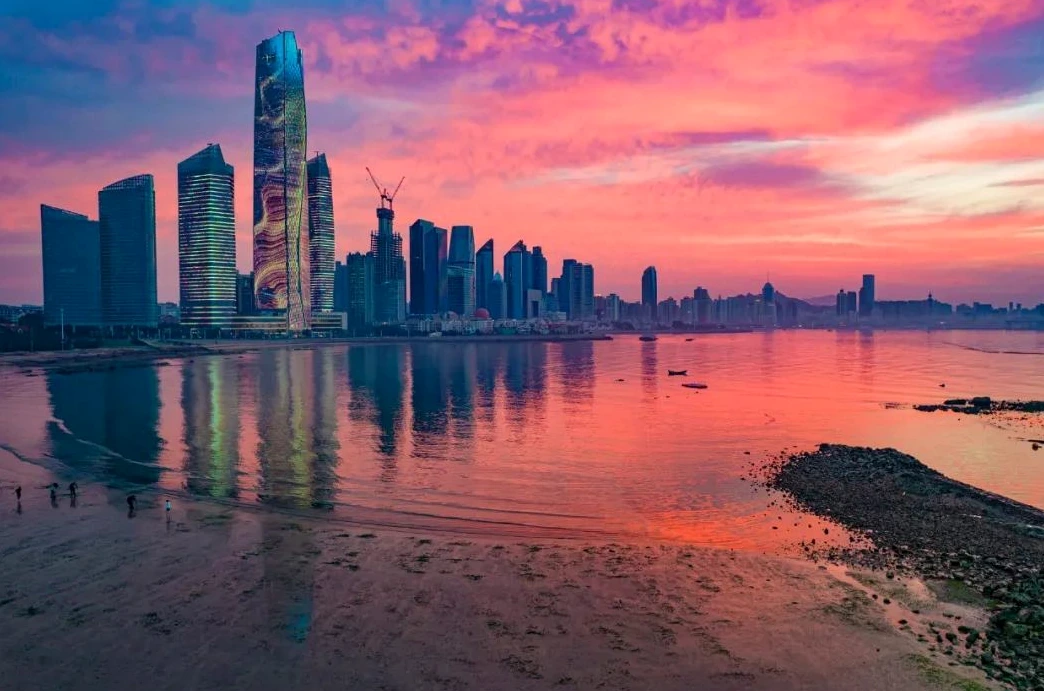
The finest times of day to capture Zhanqiao’s most transcendent moments are just as dawn breaks or when sunset falls. Early morning hours between 06:00 and 07:30 possess a soul-stirring, pristine stillness; before tour groups arrive, the air is filled only with the gentle lapping of waves against the stone pilings and thousands of seagulls wheeling through the shimmering morning mist. Conversely, dusk drapes Huilan Pavilion in a magnificent mantle of gold as the crimson sun sinks slowly behind distant mountain silhouettes, casting vibrant orange-and-rose reflections across the tranquil bay. It is during this golden hour that photographers can capture the most romantic heartbeat of remarkable Qingdao.
To fully experience the breathtaking beauty of this century-old pier alongside the historic architectural landmarks around Jiaozhou Bay without worrying about transit logistics or complicated ticket reservations, explore our all-inclusive tour package specially curated for discovering Shandong.