A journey across space and time leads back to the mid-nineteenth century, when traditional markets—known locally as *souks* (Arabic: سوق *Sūq*)—began taking shape along the shores of Dubai Creek (*Khor Dubai*). The origins of today’s bustling trading port were shaped by tidal marshlands along the Persian Gulf. Deira, meaning “home” or “homeland” in local parlance, sits on the eastern bank of the creek, while nearby Al Sabkha originally denoted saline tidal flats shaped by shifting tides. Amid this coastal terrain, settlement by the Al Maktoum family of the Bani Yas confederation in the mid-nineteenth century laid early foundations for maritime trade, drawing wooden sailing vessels from across regional waters.
Dubai’s commercial history reached a strategic turning point in 1894, when ruler Sheikh Maktoum bin Butti Al Maktoum introduced free-trade and low/no-duty policies. That forward-looking move encouraged trade and drew experienced merchants from across the Persian Gulf and the Indian subcontinent. With low trade barriers, Deira grew into an active trading hub where spices from the East and precious metals and goods from other regions converged—laying early groundwork for what would become the Spice Souk and Gold Souk.
During the 1940s and 1950s, amid shifting global currency and gold regulations, Dubai became a prominent regional hub for gold trade linking bullion markets with strong demand from South Asia. Quiet nights along Khor Dubai saw active loading and unloading aboard traditional wooden dhows, recorded in British Political Agency dispatches and archives of the era as Dubai cemented its role in regional gold commerce.
To modernize port capacity and support growing trade, from 1959 to 1961 Sheikh Rashid bin Saeed Al Maktoum (who ruled from 1958 to 1990) oversaw major dredging of Dubai Creek. Deepening and widening the channel allowed larger vessels to enter more easily, helping shape the modern souk landscape: the Spice Souk as a hub for aromatic spices and goods across the Indian Ocean, and the Gold Souk as a major center for gold and jewelry trade.
By the 1970s, alongside oil revenues and the founding of the United Arab Emirates (UAE), traditional market structures underwent major upgrades. Earlier palm-frond and mud-brick shelters gave way to sturdier masonry and concrete buildings finished with classic Arabian motifs—blending heritage character with growing economic energy that helped earn Dubai its nickname as the “City of Gold,” with Deira’s Gold Souk and Spice Souk standing as lasting symbols of its trading spirit.
From an urban-geography and traditional landscape standpoint, the Gold Souk and Spice Souk sit along a natural bend on the eastern bank of Dubai Creek in Deira, where the waterway curves between Deira and Bur Dubai. Calm water along the sheltered bend offered a practical natural anchorage for incoming boats, allowing goods arriving by sea to transfer easily to nearby market lanes.
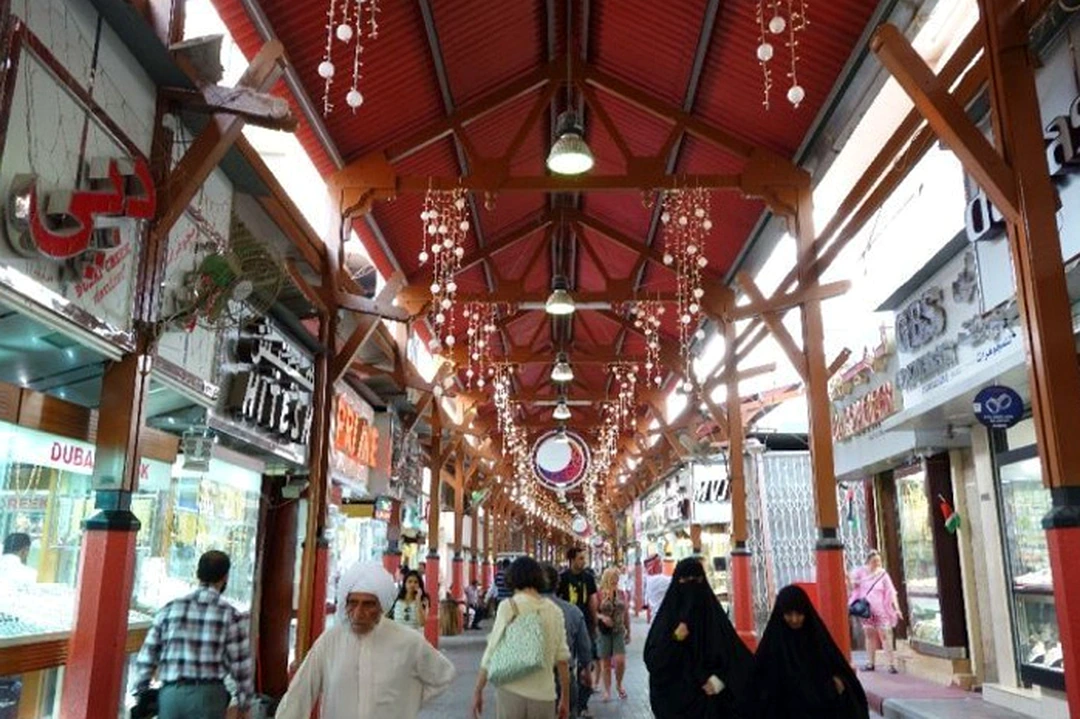
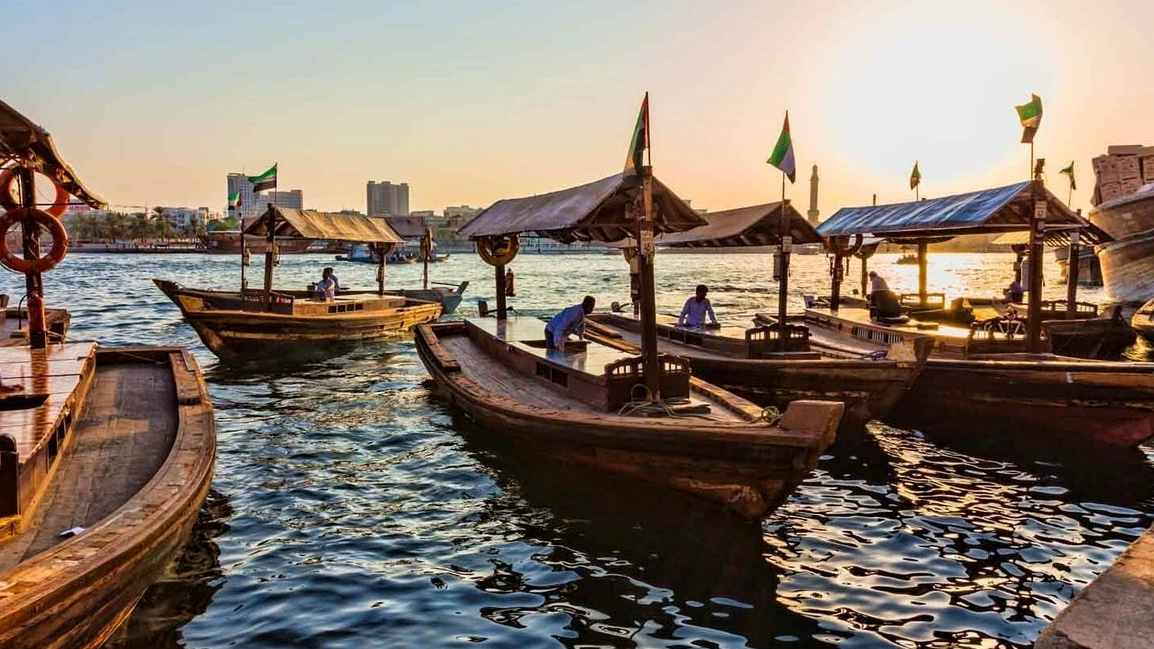
The souks’ layout links waterfront landings directly to inland market lanes. Historically, Gulf wooden dhows sailing from Oman, India, and Persia timed seasonal winds—using northwestern winds in winter to enter the creek and southwestern winds in summer to head back out—unloading spices, dried goods, and valuables near old creek landings and Abra stations that connected water transport with bustling lanes linking Asia, Africa, and Europe.
Site planning in the Gold Souk and Spice Souk also reflects practical climate adaptation in a hot desert environment where summer temperatures often top 45°C. Narrow alleys (*sikkah*), roughly 2 to 4 meters wide, flanked by multi-story walls cast shade across lanes for much of the day and encourage natural air movement between open creek air and shaded walkways.
A hallmark of traditional Gulf passive cooling seen in historic architecture is the wind tower, or *barjeel*. Rising above older buildings, *barjeel* towers catch cooler breezes aloft and channel air downward into lower spaces while venting warm air—a clever traditional technique suited to arid coastal climates.
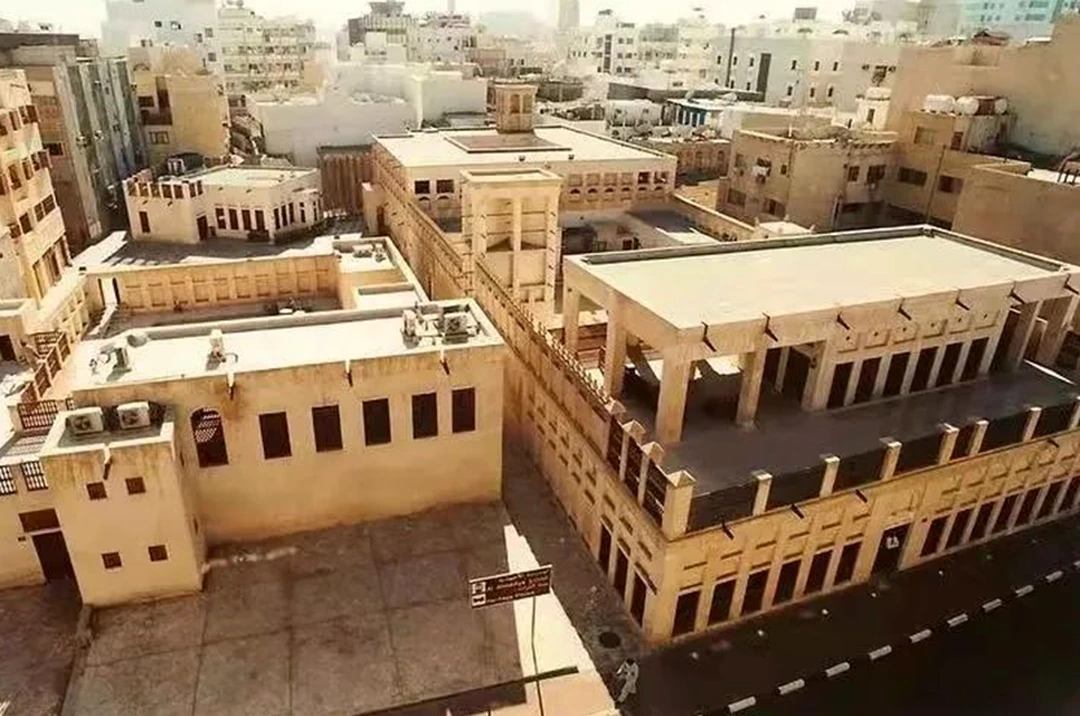
In the heart of Deira along Dubai Creek, building materials and upgrades in the Gold Souk and Spice Souk reflect adaptation to coastal desert conditions. Early structures used coral stone, *sarooj* lime-and-ash mortar, and imported mangrove poles, later transitioning to masonry and reinforced concrete with salt-resistant light-toned plaster renders, while shaded canopies and wind/sun screens over narrow lanes help keep walkways comfortable for shoppers.
Decorative craft here showcases traditional Islamic and regional motifs. Storefronts feature dark teak or hardwood paneling carved with geometric patterns, floral symmetry, and Arabic calligraphy wishing prosperity and blessing. Heavy timber doors studded with brass bosses and framed by horseshoe or pointed arches lend classic character to the market lanes.
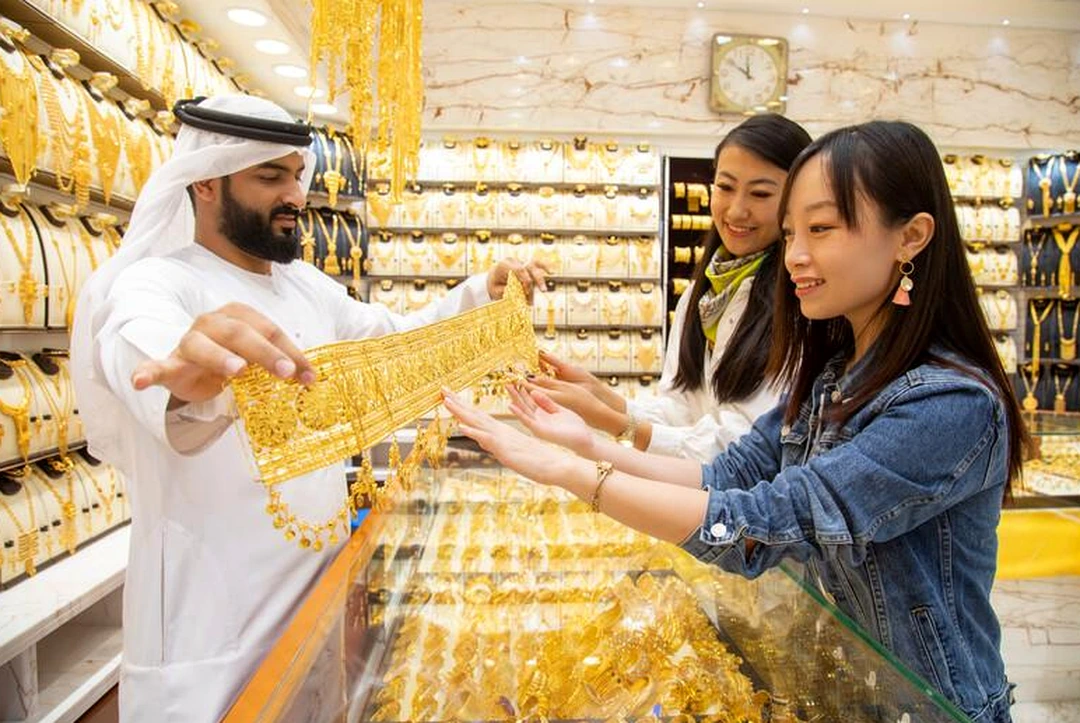
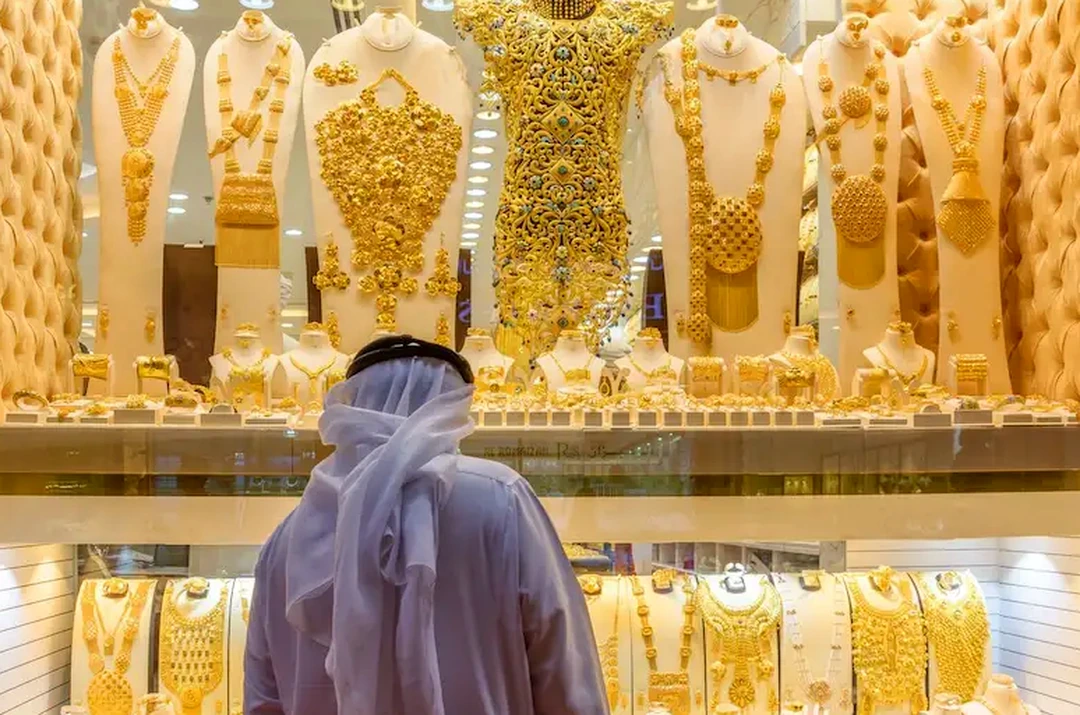
In scale and layout, the Gold Souk centers around Sikkat Al Khail and dense pedestrian lanes lined with more than 300 retail and wholesale gold and jewelry shops. Displays of 18K, 21K, 22K, and 24K gold alongside diamonds and gemstones give the market its glittering character from morning through evening.
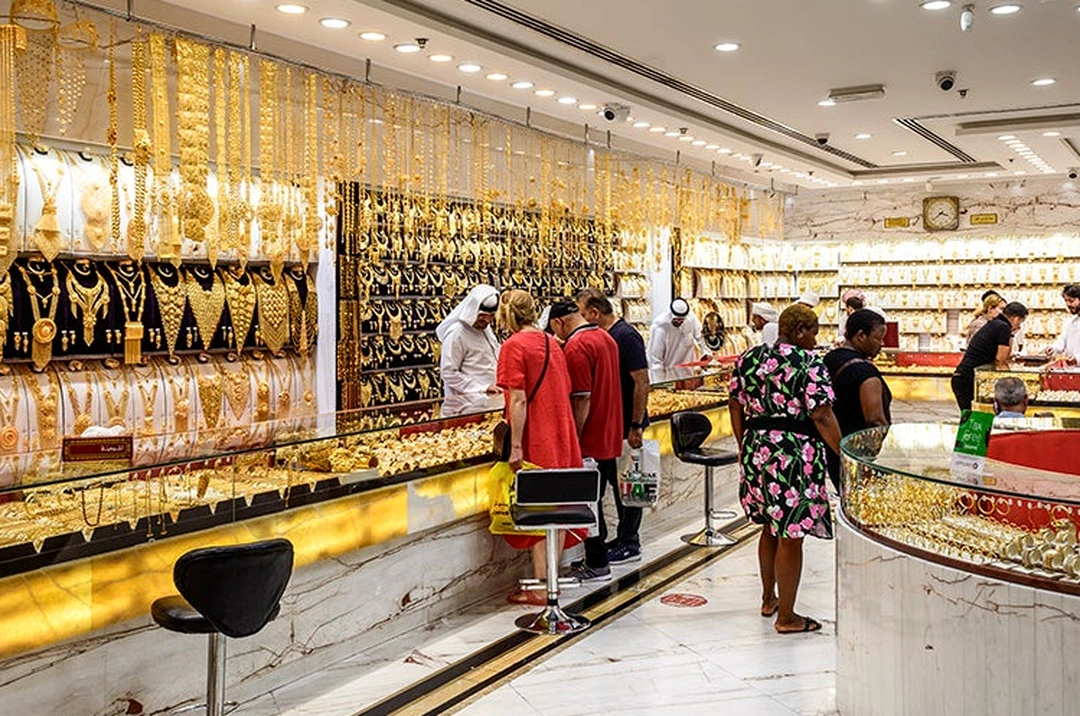
Just north of the Gold Souk and close to Deira’s dhow wharves lies the Spice Souk, arranged in intersecting lanes toward the creek. In contrast to gleaming gold displays, the Spice Souk fills the air with rich scents of dried herbs, saffron, frankincense, and spices piled in woven sacks—making the pair of markets a lively sensory landmark in Dubai.
As sunset dips behind Dubai Creek, Deira’s souks shift into an atmospheric evening scene. Inside the Gold Souk, bright jewelry display lights and warm spotlights bounce off gold and gemstones, turning covered walkways into a sparkling lane of gold and light.
Balance comes next door in the Spice Souk, where warm evening lamps glow beneath timber eaves and canvas awnings. Soft light picks out earthy tones of golden saffron, crimson sumac, green cardamom, and cinnamon bark in burlap sacks, evoking longtime sea-trade ties across the Gulf and Indian Ocean.
Between 7:00 PM and 10:00 PM, evening activity around the Deira souks reaches a lively peak. Friendly shop banter, music from nearby cafés, the creak of dhow lines by the water, and voices of visitors from around the world come together in an authentic evening market atmosphere.
Stepping beneath the shaded lanes of the Spice Souk—long tied to spice trade links between the Middle East and South Asia—immerses visitors in aromatic traditions rooted in Gulf hospitality and everyday culinary craft along Dubai Creek.
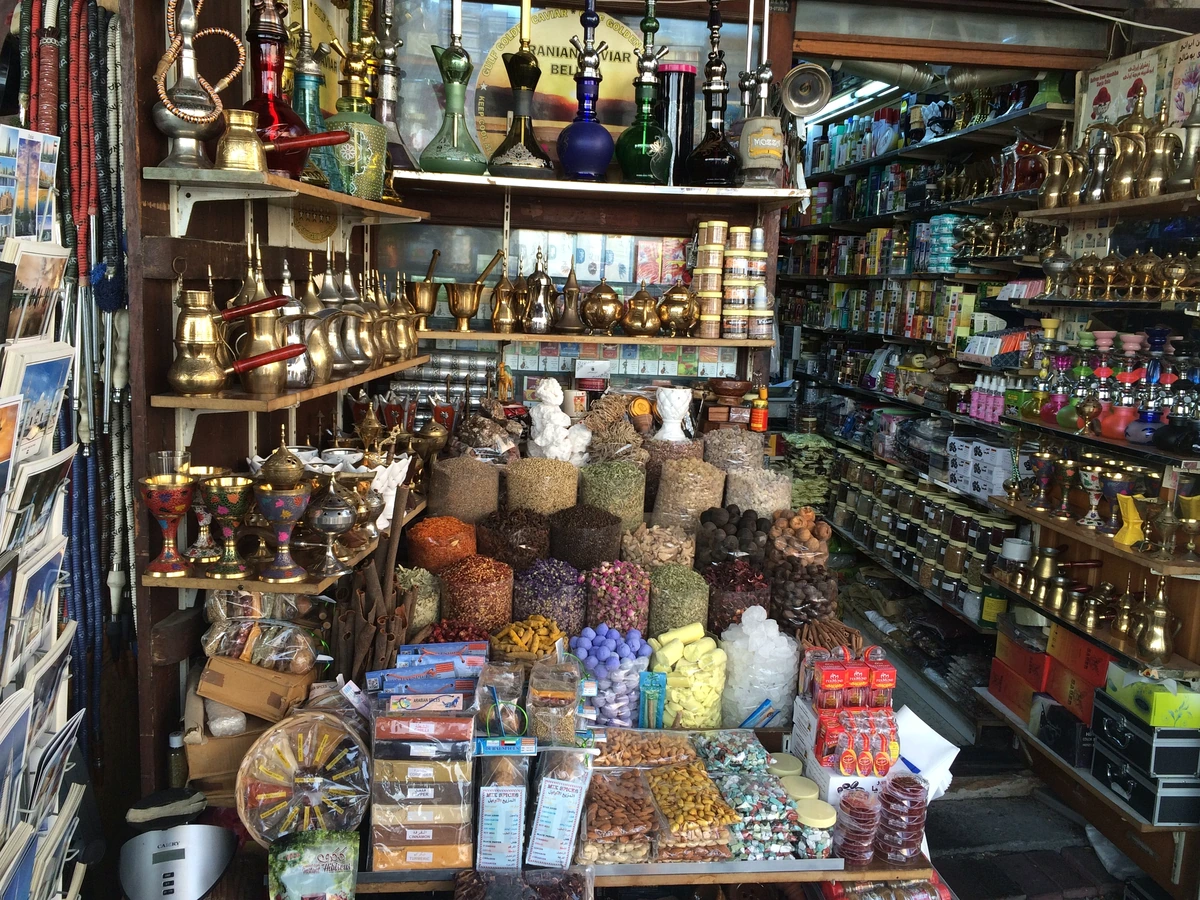
Saffron (*za’faran*) is a prized staple in wooden boxes and tins, sourced from regions such as Iran and Afghanistan and used to tint and perfume *gahwa* (Arabic coffee) as well as rice dishes like *mandi* and *kabsa*. Beside it sit resins of frankincense (*luban*), notably from Dhofar in Oman, burned over charcoal for fragrant *bakhoor* incense used in Gulf hospitality and welcoming traditions.
Spice blends known as *baharat* vary from family to family, typically combining black pepper, paprika, cinnamon, cloves, cardamom, coriander, and cumin to season roasted meats and spiced rice dishes like *machboos* with warm, aromatic depth.
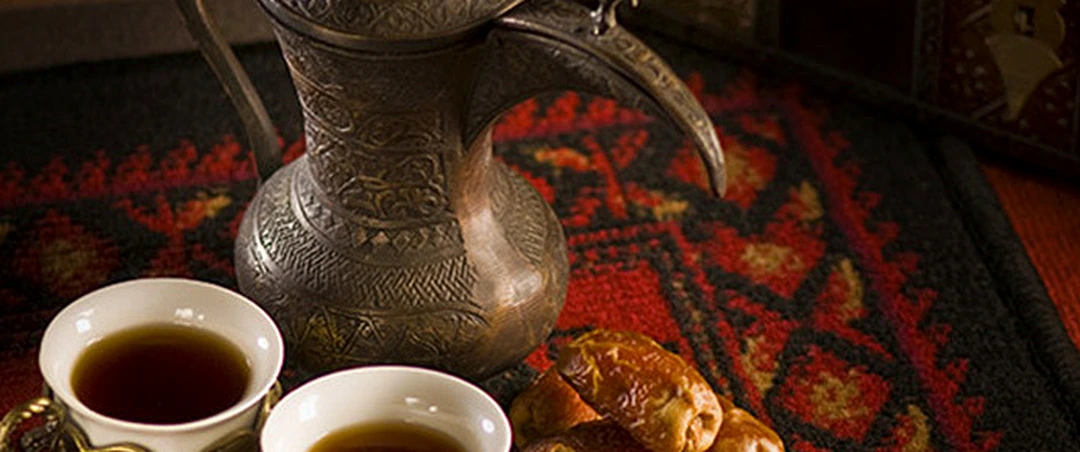
Sipping light, cardamom-scented *gahwa* coffee alongside sweet dates—such as Medjool dates—is a classic local treat near the souks. Nearby Persian and Gulf eateries also serve charcoal-grilled skewers (*koobideh* or *joojeh*), crisp flatbreads, fresh herbs, and savory dishes that round out a visit to historic Deira.
Visiting the Gold Souk and Spice Souk requires no admission ticket or advance reservation, as both are open public market districts in Deira. Shops generally open daily from around 10:00 AM to 10:00 PM Saturday through Thursday, while on Fridays—during Jumu’ah prayers—many stalls open later in the afternoon (around 4:00 PM). Late afternoon to early evening (around 5:00 PM to 8:00 PM) is a comfortable window as daylight softens, lanterns glow, and desert heat eases.
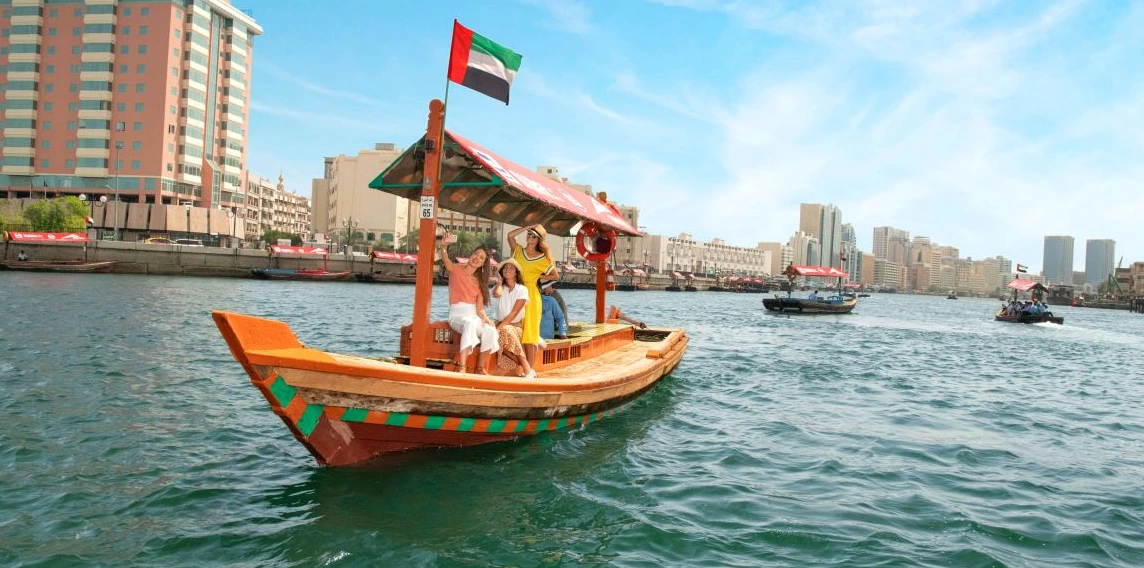
Getting there is easy via Dubai Metro’s Green Line to Al Ras Station (or nearby stations) followed by a short walk. For a classic crossing, ride a traditional wooden *abra* boat across Dubai Creek between Bur Dubai and Deira for a small fare (typically 1 AED per ride), offering a glimpse of how creek crossings long linked the two sides of town.
A practical walking route starts near Dubai Creek landings into the fragrant lanes of the Spice Souk, continues south into the Gold Souk—where visitors can spot *Najmat Taiba*, a large gold ring listed in Guinness World Records—and finishes with *gahwa* coffee or grilled meats at a nearby eatery.
Because Deira is a lively traditional neighborhood with strong Islamic customs, dress modestly covering shoulders and knees out of cultural respect. Always ask politely before photographing people or shopkeepers—a friendly “Mumkin surah?” (“May I take a photo?”) goes a long way—and avoid taking photos without permission.
When shopping for gold and jewelry in Dubai, check official purity hallmarks (such as 24K, 22K, or 18K) and ask for a formal receipt. For spices, souvenirs, or jewelry making charges, polite, friendly bargaining is common—keep negotiation upbeat and respectful as part of the market experience.
Wandering Deira’s souks offers an atmospheric look at Dubai’s trading roots alongside the modern city. To pair historic souks with city highlights and smooth logistics, browse all-inclusive Dubai – Abu Dhabi tour packages.