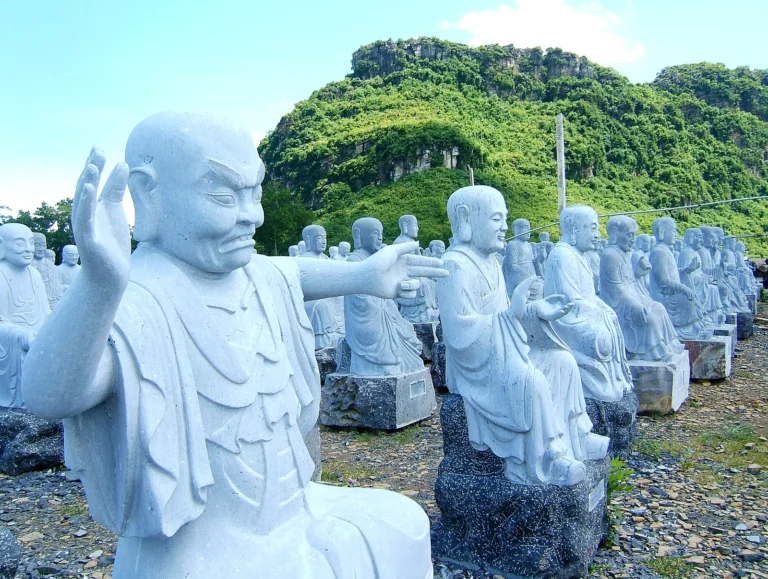
Nestled within the core zone of the Trang An Scenic Landscape Complex—Vietnam’s first UNESCO-recognized mixed World Heritage site—Hoa Lu Ancient Capital (Truong Yen Commune, Hoa Lu District, Ninh Binh Province) is far more than a mere geographic coordinate; it is a “living museum” preserving the very soul of the nation. Located about 100 km south of Hanoi, this land was blessed by nature with an auspicious feng shui setting, where towering limestone mountains act as sturdy natural ramparts sheltering the first capital of Vietnam’s centralized feudal state. The seamless blend of human architecture and majestic geological landscapes created an impregnable citadel, standing as a testament to the strategic vision of the monarchs of that era.
The history of Hoa Lu is woven into a turbulent yet heroic 42-year span, from 968 to 1010. It was here that Emperor Dinh Tien Hoang, after quelling the Anarchy of the Twelve Warlords, chose to establish his capital, ushering in an era of independence and autonomy for the nation of Dai Co Viet. Continuing that legacy, the Early Le Dynasty and the early years of the Ly Dynasty further enriched the land, transforming it into a vital political, cultural, and religious center. The very name “Hoa Lu” carries a beautiful legend tied to the childhood of young Dinh Bo Linh, who staged mock battles using reed flags across fields of pure white reeds. This image is not merely an anecdote, but an enduring symbol of rising from humble, earthly beginnings to build a mighty and sovereign nation.
Geologically and culturally, Hoa Lu represents a harmonious union between the untamed beauty of the mountains and the refined artistry of traditional architecture. The temples dedicated to King Dinh and King Le were constructed in the traditional “inner I, outer square” (nội công ngoại quốc) layout, featuring masterful wood and stone carvings that reflect the aesthetic sensibility and spirit of ancient Vietnamese artisans. Notably, oral traditions surrounding Kim Giao wood—a precious timber known to change color upon contact with poison—have been passed down through generations of locals as evidence of the sophistication of ancient royal court life. Recognized by cultural authorities and reputable press alike, Hoa Lu stands not simply as a tourist attraction, but as a sacred historical landmark for those journeying back to the roots of the Vietnamese nation.
Today, upon setting foot in Hoa Lu, visitors experience not only the solemn grandeur of the Ngo Mon Citadel Gate and the quiet dignity of archaeological relics, but also immerse themselves in the serene, sacred atmosphere of a land renowned for producing great heroes. Its picturesque landscape of dramatic mountains and tranquil waters is more than poetic inspiration; it is a profound lesson in the ancient art of statecraft and site selection. Combining World Heritage value with timeless natural beauty, Hoa Lu Ancient Capital remains an eternal symbol where past and present converge, inviting culture lovers to reflect upon and take pride in a golden chapter of Vietnamese history.
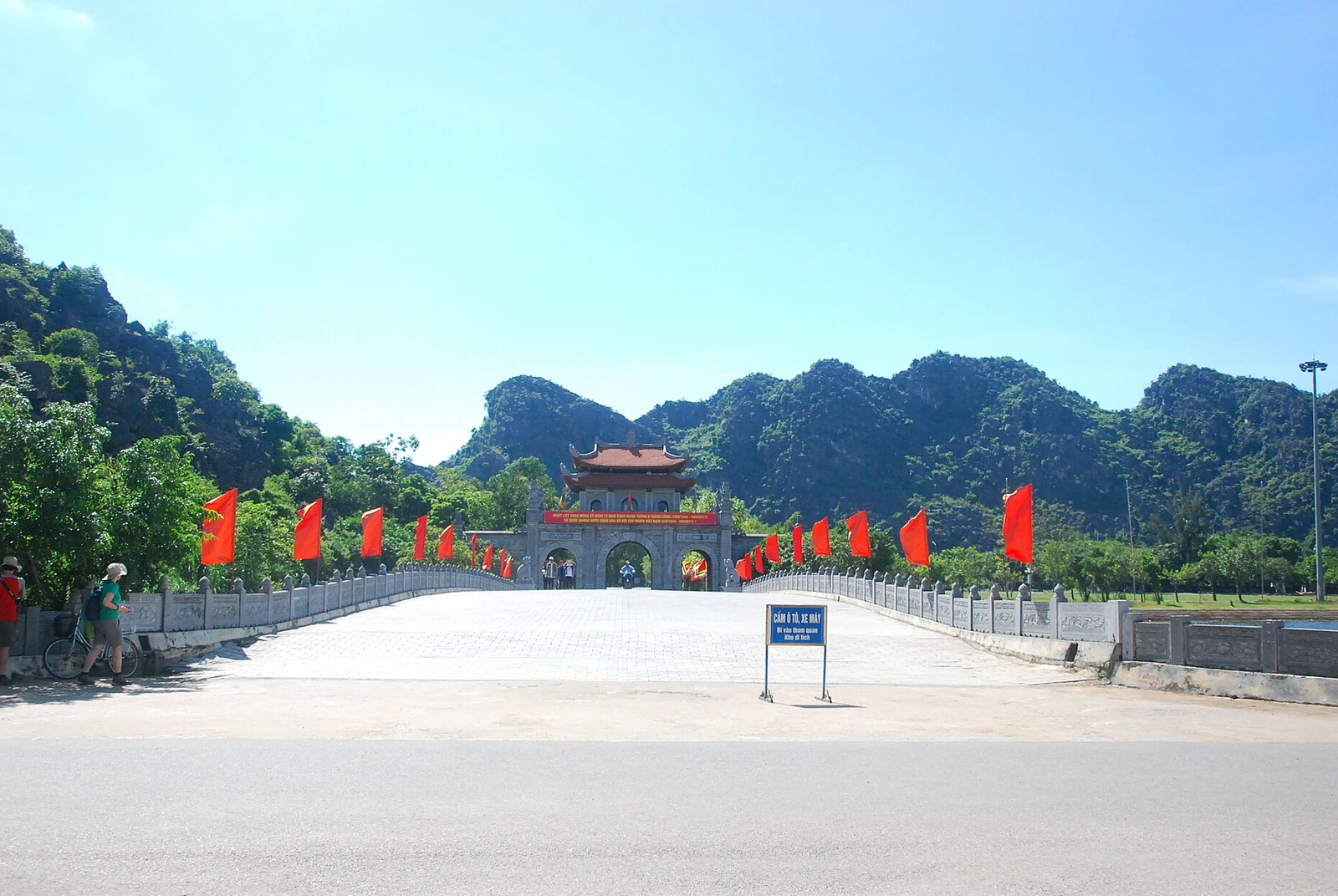
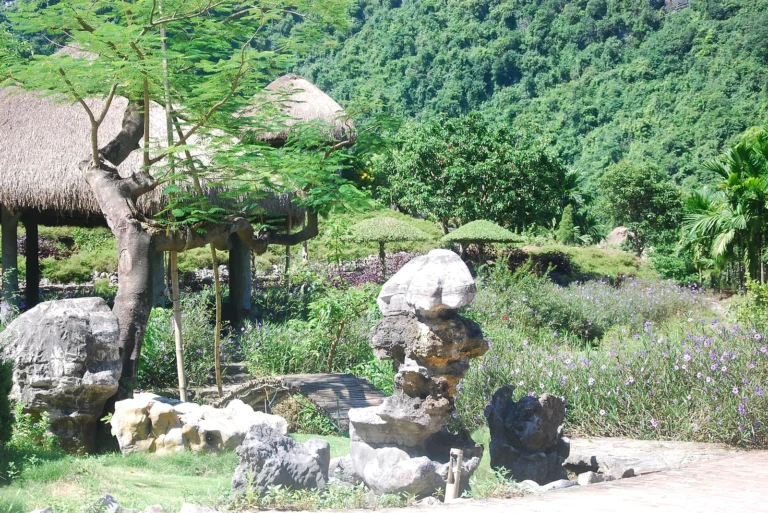
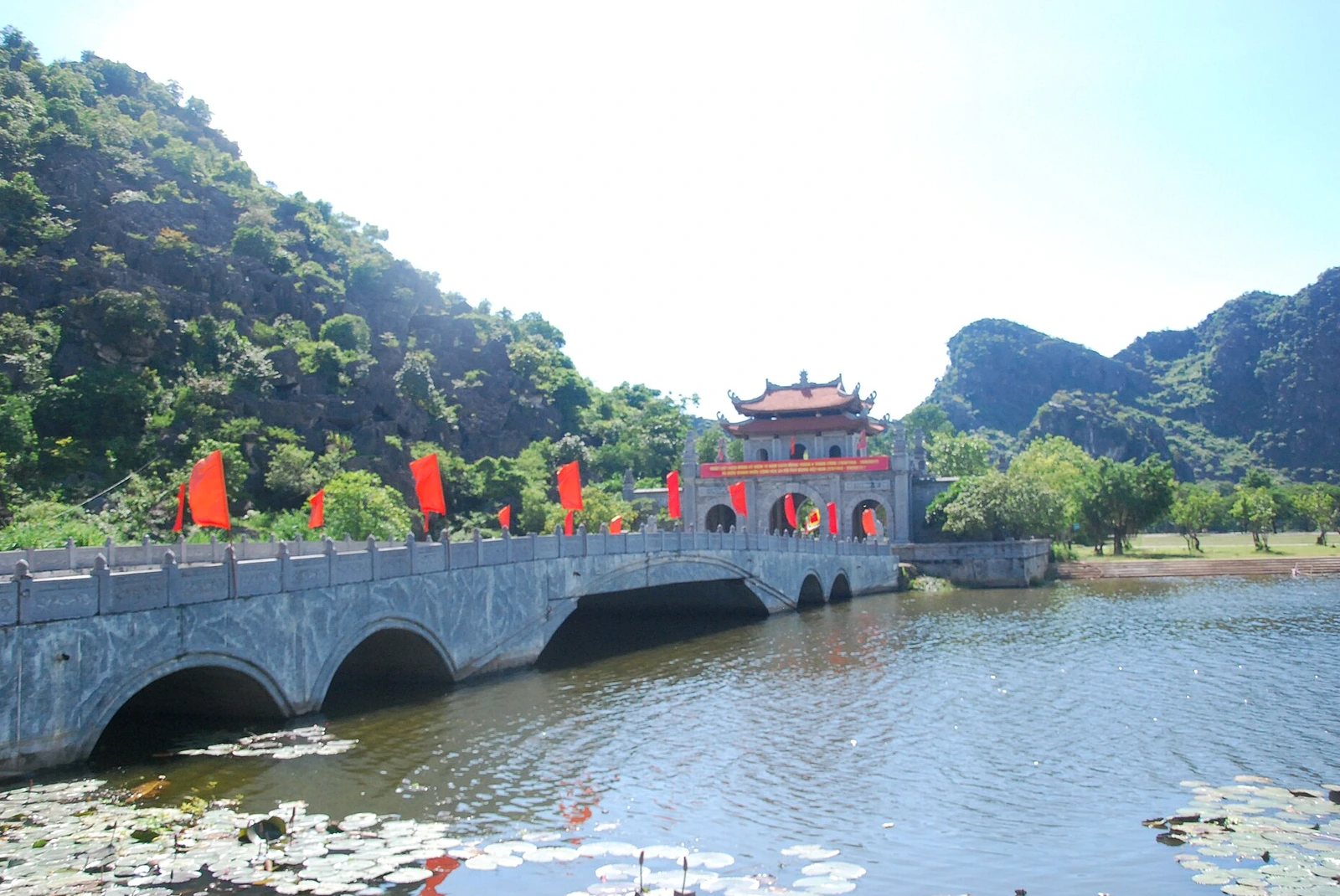
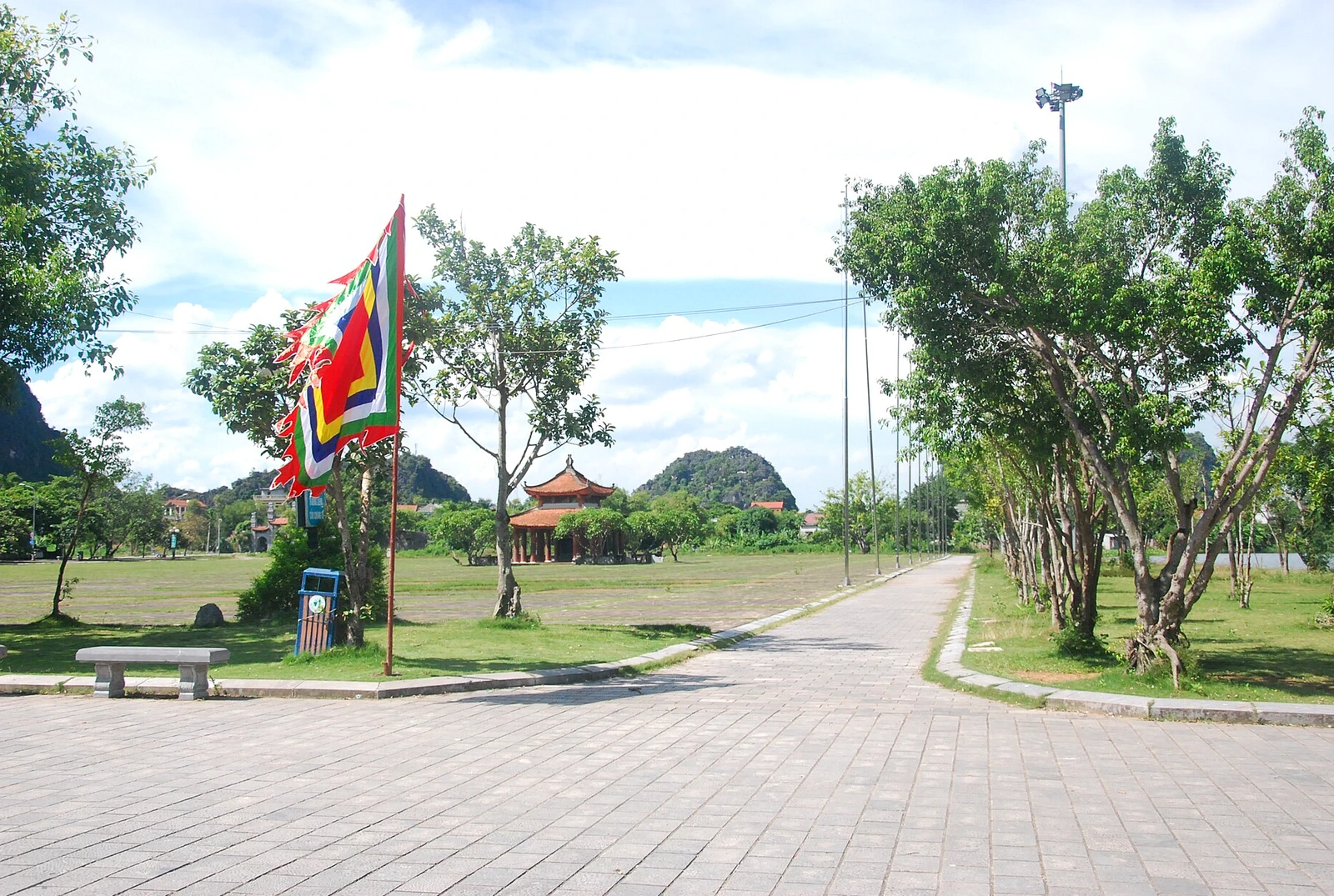
Hoa Lu Ancient Capital is not only a vivid page of history, but also an architectural masterpiece gracefully set by nature amidst rolling limestone mountain ranges. Upon arrival, visitors are immediately awestruck by its commanding “backing onto mountains, facing water” setting. The terrain here is likened to an impregnable natural fortress, where sheer cliffs encircle ancient temples and shrines, fostering an atmosphere that is tranquil, sacred, and deeply poetic. The architecture at Hoa Lu is a seamless marriage between the skilled hands of ancient craftsmen and the grandeur of nature, where every stone and wooden beam breathes the spirit of Vietnam’s first centralized feudal era.
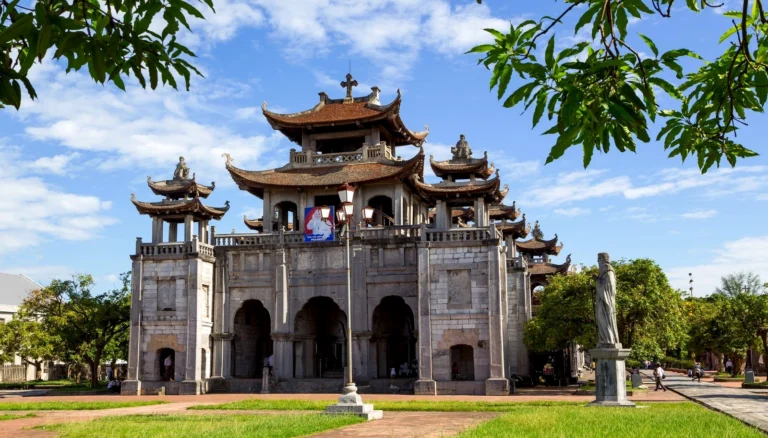
The most prominent architectural highlights are the Temple of King Dinh Tien Hoang and the Temple of King Le Dai Hanh. Both temples were built in the distinctive “inner I, outer square” architectural style, topped with sweeping, moss-covered tiled roofs that evoke the quiet beauty of passing centuries. The craftsmanship on display here reaches master-level refinement. On glossy black ironwood pillars, ancient artisans delicately carved dragons, phoenixes, floral motifs, and vivid historical legends. Moreover, the stone bas-reliefs are far more than structural elements—they are prized sculptural works showcasing the pinnacle of ancient Vietnamese aesthetic thought. The interplay between the vibrant red and gilded lacquerware inside the sanctuaries and the solemn gray of the surrounding limestone cliffs creates a striking visual composition.
To capture million-view-worthy shots at Hoa Lu Ancient Capital, photographers and travel vloggers typically favor three classic vantage points. The first is the Citadel Gate (Ngo Mon) area. Serving as an emblem of majesty, its weathered stone arches cast crisp reflections onto the calm lake below. The ideal time to shoot here is early morning (between 7:00 AM and 8:30 AM), when soft dawn sunlight filters through the tree canopy, casting shimmering streaks across the aged stone and giving photos remarkable depth and contrast. The second spot is the courtyard of King Dinh’s Temple, shaded year-round by ancient trees. Shooting from a low angle looking upward allows you to capture the sweeping curved roofs framed against a deep blue sky and towering limestone peaks in the distance.
Finally, do not miss the photo spot bordering Tuyet Tinh Coc (Am Tien Cave). Here, natural scenery reaches its most breathtaking peak, featuring an emerald-green lake ringed by sheer vertical cliffs. Sunset (around 4:30 PM to 5:30 PM) bathes the landscape in warm golden-orange hues that reflect off the water, creating an ethereal scene straight out of a historical period film. Standing amid this setting, visitors feel both humble before nature’s grandeur and deeply connected to the harmony between heroic history and the eternal beauty of Ninh Binh. Every camera angle at Hoa Lu is more than just a photograph; it tells the story of a golden age when architecture and nature united to forge an immortal heritage.
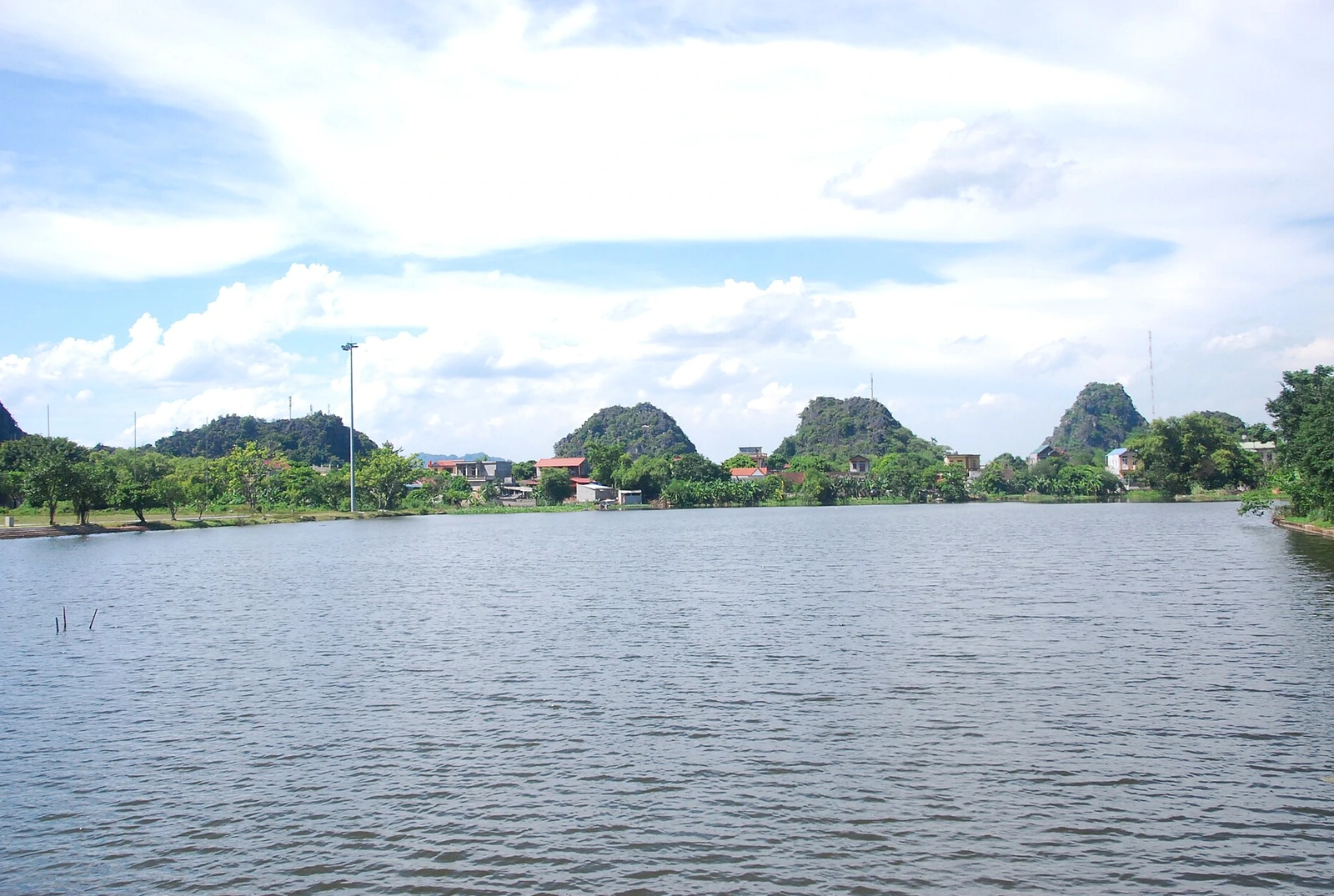
Stepping into Hoa Lu Ancient Capital, travelers do more than visit a historical monument—they embark on a journey back in time, where every boulder and ancient tree seems to whisper heroic epics of the nation. The very first experience that captivates visitors is standing in the heart of a basin valley encircled by sheer limestone peaks rising like steadfast natural walls. When the late afternoon sun casts long shadows across the sweeping temple roofs, bathing patches of moss in a warm golden glow, you will feel an extraordinary stillness—a peaceful grounding of the soul rarely found amid the rush of modern life.
For adventurous spirits, climbing to the summit of Ma Yen Mountain—where the tomb of King Dinh Tien Hoang rests—is a rewarding challenge. Ascending hundreds of steep stone steps, each upward stride expands your panoramic view, unveiling the breathtaking mountain-and-water landscape of the ancient capital. Looking down from the peak, the former citadel unfolds like a painted scroll, with crimson tiled roofs peeking through lush green canopies and golden rice paddies stretching along the winding Sao Khe River in the distance. Standing atop the ridge, breathing in the cool breeze blowing in from Trang An, you immediately understand why Vietnam’s forefathers chose this site as their capital—for its unmatched union of strategic defense and awe-inspiring natural beauty.
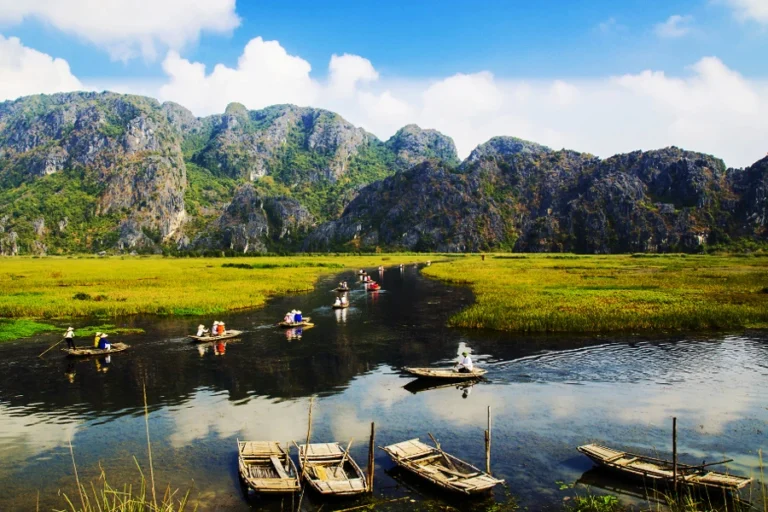
After paying respects at the temples of the two kings, taking a scenic boat ride at nearby Tuyet Tinh Coc or Trang An provides the perfect complement to your itinerary. Seated in a small sampan gliding gently over crystal-clear water that mirrors the surrounding peaks, you feel transported into a world completely detached from everyday life. The rhythmic splash of oars, birdsong echoing off cliff walls, and profound silence compose a mesmerizing natural symphony. It is a moment to let go of all worries and let the crisp air and pristine beauty of nature refresh your spirit.
Local culture in Hoa Lu extends well beyond ancient monuments, infusing every bite of its renowned regional cuisine. Do not leave without tasting crispy, golden-brown burnt rice (cơm cháy) served with rich mountain goat sauce—a heavenly pairing of crunchy fragrant glutinous rice and tender, flavorful meat from goats raised naturally on the rocky limestone hills. These rustic dishes are more than local specialties; they embody the diligence and culinary creativity of local residents, carrying the authentic essence of the ancient capital. Sitting at a modest roadside eatery, sipping a hot cup of green tea while listening to locals recount tales of the nation’s founding era, your journey becomes complete and deeply enriching. Hoa Lu, therefore, is not just a pin on a tourist map, but a heartfelt experience where history and the present intertwine, leaving every traveler with unforgettable memories.
To make your journey to Hoa Lu Ancient Capital as smooth and fulfilling as possible, it helps to keep up-to-date visitor regulations and practical travel tips in mind. Hoa Lu Ancient Capital is open to visitors every day of the week, including weekends and public holidays, with fixed operating hours from 7:00 AM to 5:00 PM. Knowing this schedule makes it easy to plan your itinerary, especially when combining Hoa Lu with nearby attractions such as Tuyet Tinh Coc or the Trang An Eco-Tourism Complex.
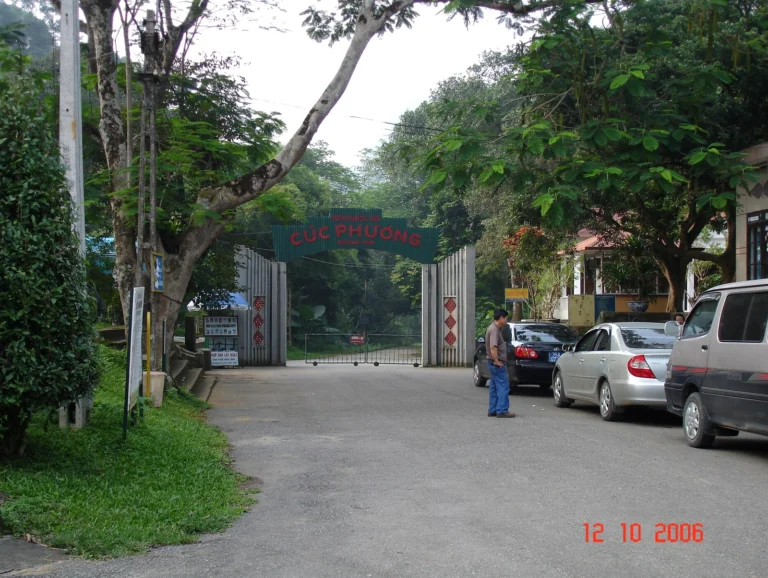
Regarding admission costs, the current entrance fee posted at the main gate is 20,000 VND per adult. Children and eligible priority groups under the Relic Management Board’s regulations may qualify for discounted or free entry, so be sure to bring valid identification or a student ID to present when needed. In addition to entrance tickets, parking fees at the designated central parking lot are 20,000 VND for motorbikes and around 30,000 to 50,000 VND for cars, depending on vehicle size. As these are officially listed rates, visitors should park in clearly marked designated lots to ensure vehicle safety and avoid unnecessary extra charges.
For transportation and routes, the 11 km drive from Ninh Binh city center is straightforward and scenic. If traveling by motorbike or private car, simply search for “Hoa Lu Ancient Capital” on Google Maps to follow the best routes and bypass any roadwork. The most popular options run along Trang An Road or Provincial Road DT491, offering sweeping views of the region’s signature limestone karsts along the way. For travelers departing from Hanoi, taking the Phap Van – Cau Gie – Ninh Binh Expressway cuts travel time down to roughly 1 hour and 30 minutes, making Hoa Lu ideal for a day trip.
Because Hoa Lu Ancient Capital is a major historical and spiritual sanctuary, observing the dress code should be a top priority. Visitors should wear respectful, modest attire, avoiding overly short or revealing clothing when entering the temples of King Dinh and King Le to offer incense. Furthermore, since the site features numerous stone staircases and extensive pathways, wearing sneakers or flat shoes with good traction is strongly recommended over high heels to ensure comfort and safety while exploring on foot.
Finally, the best time to visit Hoa Lu Ancient Capital is in spring, from the first to the third lunar month each year. During this season, Ninh Binh enjoys cool, pleasant weather ideal for outdoor sightseeing. It also coincides with the Truong Yen Festival—one of the region’s largest traditional festivals, recreating the heroic spirit of the ancient capital through vibrant cultural performances and folk games. If you prefer smaller crowds, late autumn (September to October) is another wonderful window, offering crisp, dry weather and poetic seasonal scenery.
To enjoy a seamless getaway and take in the full splendor of Hoa Lu Ancient Capital without worrying about transportation, ticket bookings, or itinerary planning, travelers can opt for VDS Travel’s premium all-inclusive Ninh Binh tour packages. Every itinerary is thoughtfully timed so you arrive at photo spots when the scenery shines brightest, accompanied by knowledgeable local guides and top-tier hotel and dining standards.