Nestled within the core zone of the Trang An Landscape Complex – a UNESCO World Cultural and Natural Heritage Site – Am Tien Cave (also affectionately known by the poetic moniker “Tuyet Tinh Coc,” or Valley of Love) is like a serene, contemplative note amidst the majestic symphony of Ninh Binh’s mountains and forests. Located in Truong Yen Commune, Hoa Lu District, this is not merely an ordinary tourist destination, but an iconic geographical landmark where sheer limestone cliffs formed over millions of years have inadvertently carved out an isolated valley, completely removed from the hustle and bustle of the outside world. Geographically, Am Tien Cave boasts a rare feng shui layout: “leaning against the mountain, facing the water,” with the emerald-green Ao Giai Lake tucked neatly into the heart of the valley and encircled by towering limestone ranges, creating a mysterious and tranquil natural fortress.
The name “Am Tien” (Fairy Hermitage) originally stems from an ancient pagoda nestled deep inside the cave, which preserves the spiritual footprints of Zen Master Nguyen Minh Khong – the eminent National Preceptor of the Ly Dynasty, who dedicated his life to gathering medicinal herbs to save the people and spreading Buddhism in the ancient capital. Meanwhile, the moniker “Tuyet Tinh Coc” is a modern cultural creation born from the impressions of travelers and young visitors captivated by its ethereal, tranquil beauty—as though stepping straight out of the pages of a classic wuxia (martial arts) novel. The intersection of a name steeped in traditional spirituality and a cinematic nickname has created an irresistible allure, transforming the site into a crossroads of history and popular culture.
The history of Am Tien Cave does not simply end with Buddhist chants and prayers; it is equally intertwined with the heroic and tragic chapters of the Dinh Dynasty. Under the reign of King Dinh Tien Hoang, this valley was chosen as an execution ground for those guilty of severe crimes, as well as a place where tigers and leopards were kept to punish offenders, lending the area an atmosphere of solemnity and austerity. The remaining relics, alongside a series of bas-reliefs recreated along the walkway, vividly depict the life of the first emperor of Dai Co Viet—from the early days of nation-building and quelling the Rebellion of the 12 Warlords to his quiet moments of reflection devoted to Buddhism. It is this combination of distinctive karst geology and layers of historical sediment that has led heritage management agencies and researchers to highly value Am Tien Cave as a living museum, where geological and humanistic values merge into one.
Viewed from above, Am Tien Cave emerges as a flawless piece of a picturesque landscape painting. Silvery-gray limestone cliffs, ancient trees rooting themselves into rocky crevices, and the mirror-still surface of the lake reflecting passing clouds all come together to form a serene sanctuary where time seems to stand still. More than just a trendy check-in spot, Am Tien Cave stands as a testament to the endurance of heritage, where every boulder and every branch tells a story of the interplay between magnificent nature and human craftsmanship across millennia. For travelers seeking stillness, this is an ideal stop to contemplate our roots and the enduring cultural values that form the soul of the thousand-year-old ancient capital of Hoa Lu.
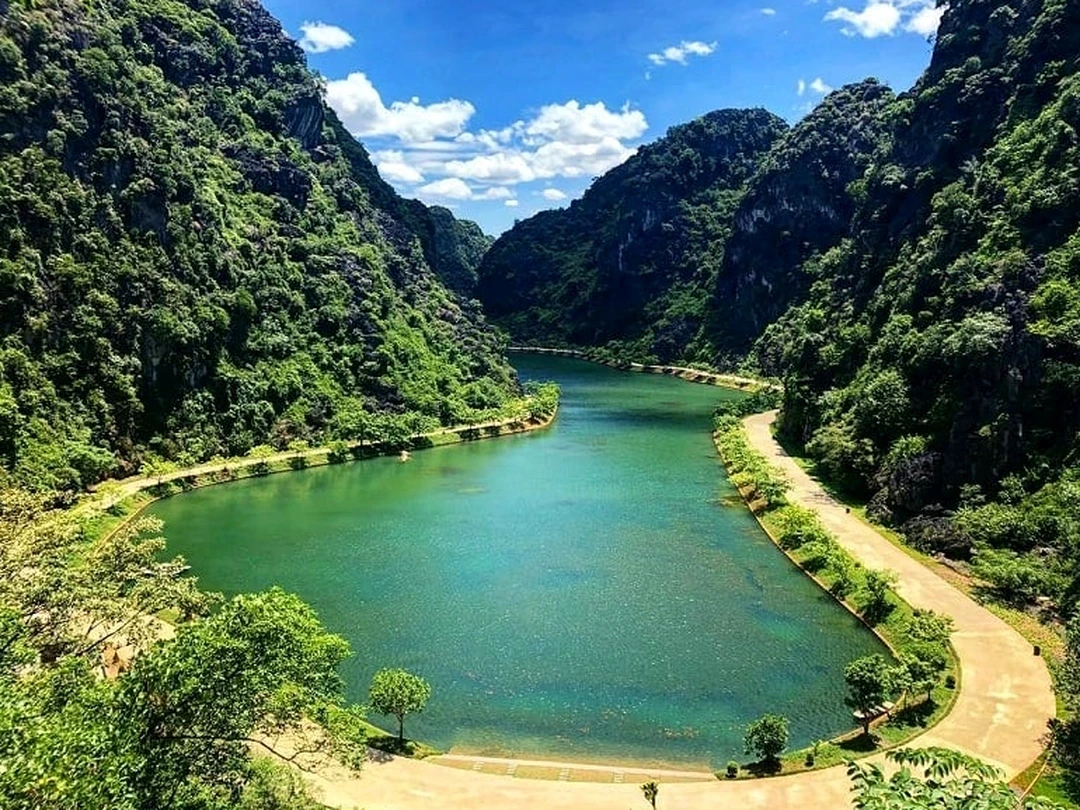
Am Tien Cave, often likened to the “Tuyet Tinh Coc” of Ninh Binh’s heritage region, unfolds before visitors as an enchanting masterpiece of natural scenery. Completely enclosed by towering limestone cliffs rising like impenetrable ramparts built over eons, it forms a secluded valley wholly cut off from the noisy world beyond. At the heart of the valley lies a vast natural freshwater lake named Ao Giai. Its waters remain glassy and calm year-round in a deep shade of jade green, so clear and profound that they distinctly reflect every drifting cloud in the sky alongside the rugged, dramatic mountain peaks. The harmony between the emerald water, the ancient gray of the limestone, and the lush greenery along the shoreline creates a sublime, contemplative panorama—at once untamed and mysterious, yet imbued with a romantic aura straight out of a historical martial arts film.
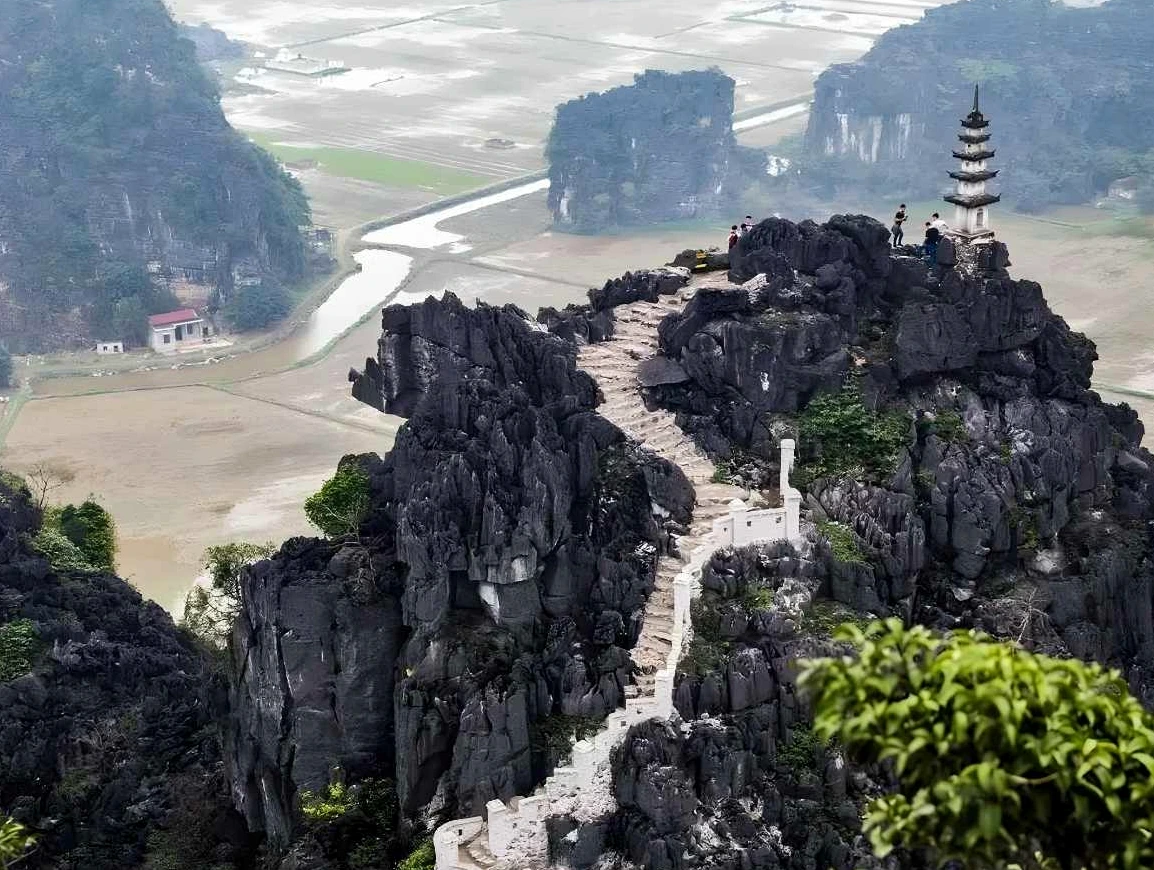
Stepping through the moss-covered stone gate—the portal opening into the valley’s mystical realm—visitors feel as though they have wandered into another dimension where time stands still. The architecture here is a harmonious blend of profound spiritual heritage and intricate human sculpture. Perched precariously halfway up the sheer rock face is the ancient Am Tien Pagoda, closely tied to the years Zen Master Nguyen Minh Khong spent in spiritual practice. To reach the pagoda, visitors must conquer more than two hundred stone steps winding along the mountainside. From this vantage point, gazing out into the distance, the entire Am Tien valley comes into full view, with a perfect arc of mountains cradling the tranquil lake. Along the pathway skirting the foot of the mountain, meticulously carved bas-reliefs vividly recount the glorious history of the Dinh Dynasty, from the early days of unifying the nation under reed banners to triumphant military feats, adding cultural depth and solemnity to the scenic landscape.
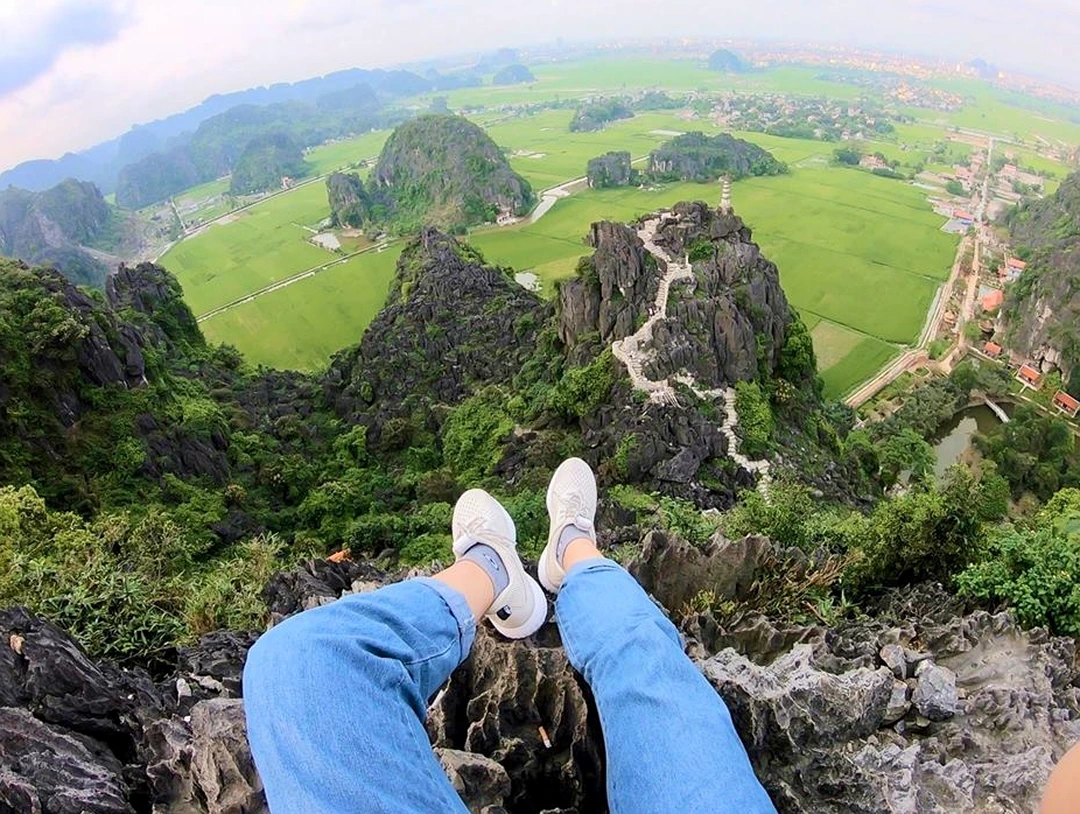
To capture the most prized moments when visiting Tuyet Tinh Coc in Ninh Binh, travel enthusiasts and professional photographers cannot afford to miss two classic “million-view” vantage points. The first is the lakeside walkway framed by the ancient-style stone archway, which creates ideal spatial depth against a backdrop of towering limestone cliffs and vibrant green waters. The second is the balcony of Am Tien Pagoda high above, where a top-down angle encompasses the entire crescent-shaped lake and the winding footpath hugging the water’s edge. As for ideal lighting, the golden hours most sought after by photographers are early morning (from 7:30 AM to 9:00 AM), when the rising sun sends warm rays piercing through the thin mist still lingering over the lake, or late afternoon (from 4:00 PM to 5:30 PM), when the setting sun bathes the limestone cliffs in gold, casting an ethereal, shimmering, and deeply moving tranquility over the valley.
The moment you pass through the ancient stone gate, the very first sensation that washes over you is awe at entering a space completely isolated from the outside world. Gone are the car horns and urban dust; all that remains is the quietude of the mountains and forests and the jade-green hue of Ao Giai Lake. The real experience here goes far beyond snapping viral photos—it is a journey into cultural depth and breathtaking nature. For active travelers, climbing the 205 stone steps leading up to Am Tien Pagoda is a rewarding challenge. Though your legs may feel a little tired, standing at the summit and taking in the panoramic view of the valley—like a giant basin ringed by sheer limestone walls—makes all fatigue melt away. It is a moment when you keenly feel how small humanity is before the grandeur of nature, accompanied by an extraordinarily peaceful sense of release.
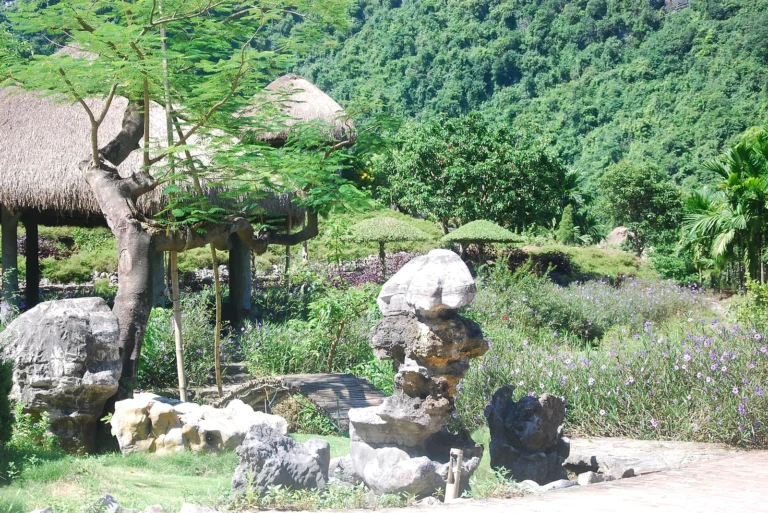
The spiritual highlights at Am Tien Pagoda and the Shrine of Saint Nguyen offer rare moments of quiet introspection. Amidst the solemn fragrance of incense smoke, the resonant tolling of the temple bell echoing off the stone cliffs creates a sacred atmosphere that helps visitors restore inner balance. Many choose to stroll leisurely around the lake, watching schools of fish glide beneath the crystal-clear water, or rest beneath the canopy of ancient trees to listen to the wind whispering through rocky crevices. It is in these moments that “Tuyet Tinh Coc” truly reveals its dreamlike, serene beauty straight from the pages of a wuxia novel, where time appears to pause.
Beyond the scenery, the local culture in Truong Yen Commune is an indispensable piece of the journey. After taking in the sights and paying respects at the temples, visitors often stop by local eateries lining the road to the heritage site to savor the renowned specialties of the Ancient Capital. Nothing beats crispy scorched rice (com chay) served with rich, savory goat sauce, or Ninh Binh mountain goat prepared in a variety of ways, such as lime-cured goat salad (tai chanh), stir-fried goat, or ginger-steamed goat. The delicate sweetness of the mountain goat meat, blended with the distinctive aromas of wild forest herbs, makes for an unforgettable culinary experience. Warm, down-to-earth locals are always happy to share stories about the history of Hoa Lu, the life of Zen Master Nguyen Minh Khong, and the legends tied to the surrounding cliffs.
Visiting Am Tien Cave is not simply a sightseeing trip, but a meaningful connection between humanity, history, and nature. The fusion of rugged limestone peaks, serene waters, and warm local culinary traditions creates an undeniable appeal. Whether you are a photography enthusiast, a history buff, or simply a traveler seeking a quiet sanctuary to escape daily noise, Tuyet Tinh Coc consistently delivers raw and deeply resonant emotions. Every step taken here is a worthwhile experience, leaving lasting impressions of a land blessed with both magnificent scenery and the living breath of heroic history.
To ensure your journey to Am Tien Cave – Tuyet Tinh Coc Ninh Binh goes as smoothly and fulfilling as possible, it helps to keep the latest travel details in mind. The site is open to visitors every day of the week from 7:30 AM to 6:00 PM, giving you plenty of time to plan your sightseeing, photography, and temple visits without feeling rushed.
Regarding admission fees, the entrance ticket to Am Tien Cave is currently listed at 100,000 VND per person—a slight increase compared to previous years to fund upgrades to infrastructure, landscaping, and environmental sanitation. This standard fee applies to all visitors and includes access to all areas inside the valley, the lake, and the spiritual architectural sites.
As for transportation and routes, because the cave is located about 10 km from Ninh Binh city center and roughly 4 km from the Trang An Ecotourism Complex, traveling by motorbike or private car is the most convenient option for managing your schedule flexibly. From the city center, follow the signs toward Trang An or the Hoa Lu Ancient Capital. The road leading to the cave is wide and open, though it passes through a mountain tunnel where drivers should pay close attention and maintain a moderate speed for safety.
Notably, because Am Tien Cave is a historical complex encompassing pagodas and sacred spaces—and features terrain with steep stone steps—dressing appropriately is essential. Opt for polite, modest clothing when entering temple grounds such as Am Tien Pagoda or the Shrine of Saint Nguyen. For footwear, be sure to wear sneakers or hiking shoes with good traction and avoid high heels so you can navigate the stone stairways and rocky lakeside paths safely and comfortably.
Finally, the best time of year to visit “Tuyet Tinh Coc” is from the first to the third lunar month, when cool spring weather, fresh scenery, and early-year traditional festivals align. Alternatively, May to June is another wonderful window, allowing you to pair your cave exploration with views of Ninh Binh’s iconic golden rice fields at harvest time.
To enjoy a seamless getaway and take in the full splendor of Am Tien Cave – Tuyet Tinh Coc without worrying about transportation, entrance tickets, or itinerary planning, travelers can opt for VDS Travel’s premium all-inclusive Ninh Binh tours. Each itinerary is thoughtfully timed for check-ins when the scenery is at its most radiant, accompanied by knowledgeable local guides well-versed in regional culture and top-tier hotel and dining standards.