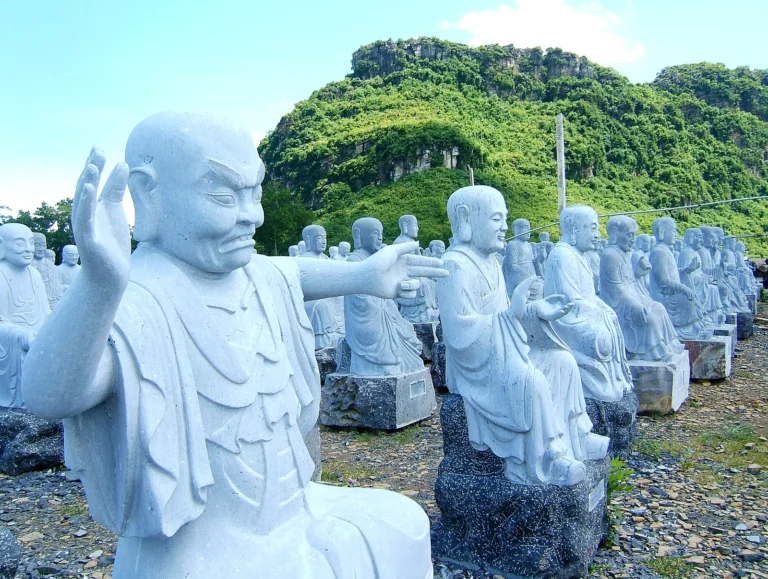
Nestled humbly yet proudly at the foot of Mua Mountain in Khe Dau Ha Hamlet, Ninh Xuan Commune, Hoa Lu District, Ninh Binh Province, Hang Mua (Mua Cave) is more than just a sightseeing destination—it is a living embodiment of earth, sky, and millennia of cultural heritage. Located in a prime spot within the core zone of the Trang An Scenic Landscape Complex, a UNESCO World Cultural and Natural Heritage Site, Hang Mua boasts an unrivaled geographical setting. Just 6 kilometers southwest of Ninh Binh City center, visitors can reach the ancient limestone range of Ngoa Long Mountain, where millions of years of flooded karst evolution have sculpted dramatic geological formations, setting the stage for an enchanting journey into the heart of a world heritage site.
The allure of Hang Mua lies not only in its picturesque scenery but also in its deeply poetic historical roots. The name “Hang Mua” (Dancing Cave) is a piece of living memory tied to the Tran Dynasty—one of the most heroic eras in Vietnam’s feudal history. According to legend, after his resounding victories repelling the Mongol invaders, King Tran Thai Tong chose the land of Hoa Lu as a place for quiet retreat, establishing Thai Vi Hermitage for spiritual practice. During his leisure hours, the King often visited the foot of this mountain to admire the serene landscape of mountains and rivers. Here, royal concubines and palace maidens would set up stages to dance and sing, performing graceful dances for the monarch. Thus, the name Hang Mua was born, becoming a lasting piece of folklore preserving the echoes of a golden age where royal power and art blended harmoniously amid the tranquil mountains of the ancient capital.
The topographical beauty of Hang Mua is further elevated by its profound feng shui significance. Ngoa Long Peak—meaning “Lying Dragon”—is regarded as the soul of the scenic complex, acting as a spiritual guardian protecting the feng shui of the thousand-year-old ancient capital of Hoa Lu. The mountain range winds majestically like a dragon coiled in rest, embracing and sheltering the sacred land. Hang Mua’s proximity to neighboring attractions such as the Tam Coc – Bich Dong tourist area (4 km away) and Trang An boat wharf (7 km away) creates a seamless heritage circuit, allowing travelers to experience nature’s full transformation from submerged caves to towering peaks brushing the clouds.
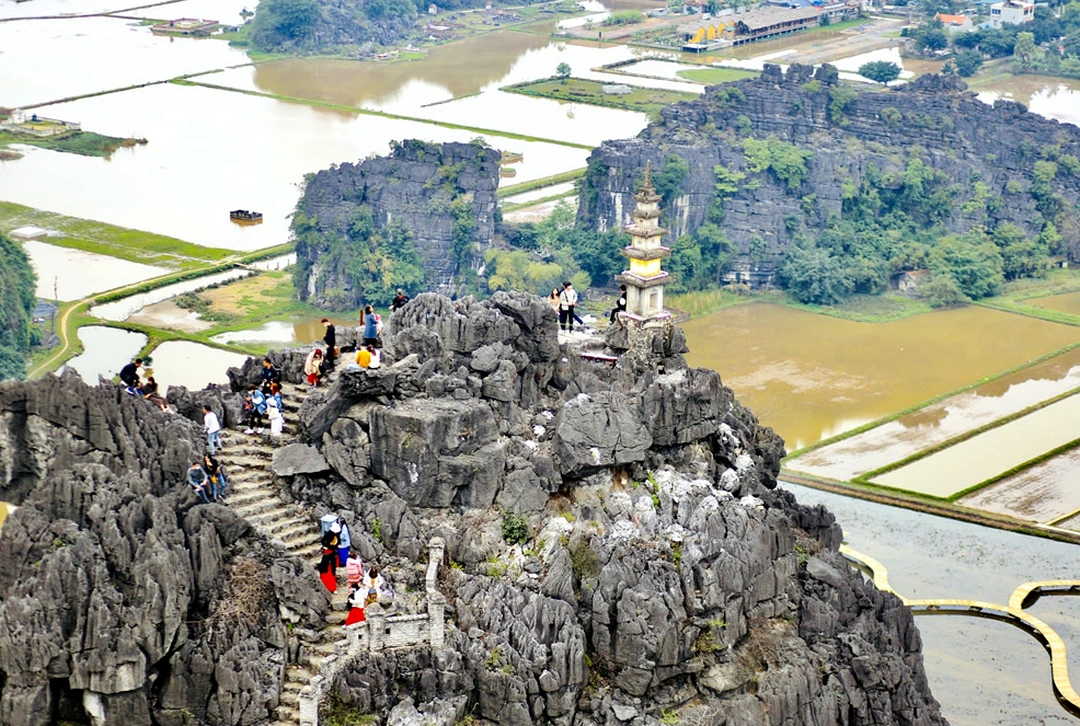
Standing atop Ngoa Long Peak and gazing out into the distance, one truly understands why this landmark is dubbed the “Miniature Great Wall of Vietnam.” Featuring 486 white stone steps winding along the mountain ridge, every step upward is an encounter with history, the enduring strength of mountain stone, and the refined aesthetic sensibility of the Tran Dynasty expressed through intricate dragon and phoenix motifs carved along the balustrades. Hang Mua is far more than a viral photo spot; it is a symbol of national pride, where every boulder and tree tells the story of a sacred land of remarkable people, where humanity and nature have composed an endless epic in the heart of a world heritage site.
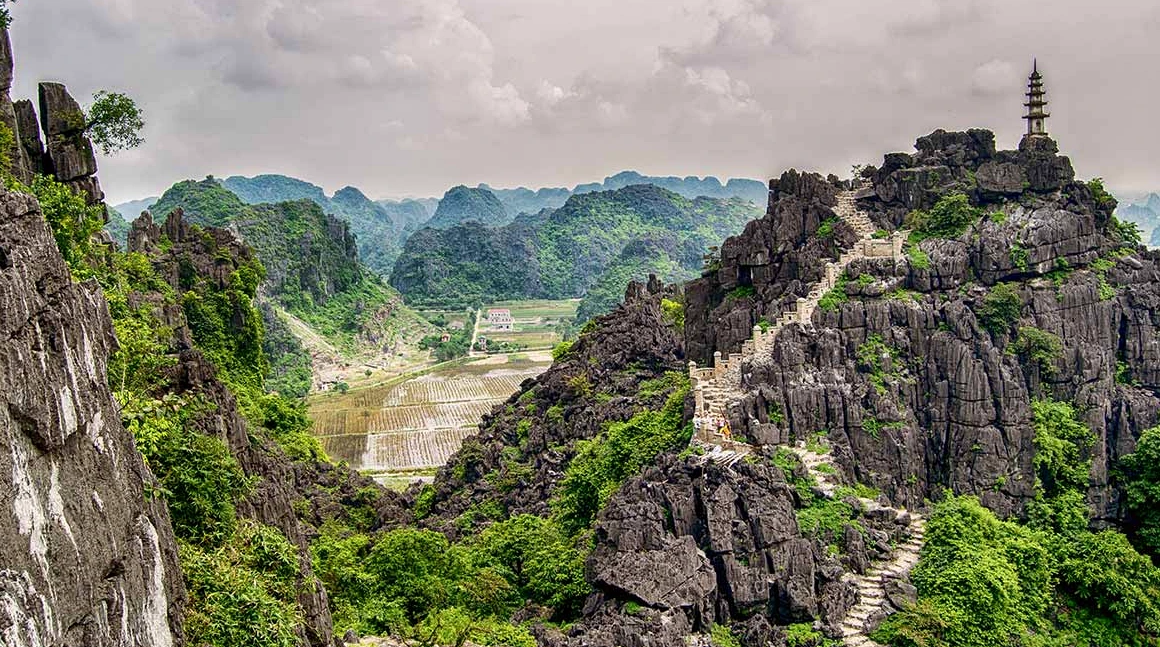
If Ninh Binh’s scenery is likened to a magnificent natural masterpiece, Hang Mua is its sharpest and most striking brushstroke, where human craftsmanship and nature unite to create an architectural marvel suspended in the sky. Dubbed the “Miniature Great Wall of Vietnam,” Hang Mua is not merely a destination, but an emotionally stirring journey of conquest. Right from the base of the mountain, visitors are captivated by the gleaming white stone staircase winding gracefully like a silk ribbon draped across the steep limestone ridge. Comprising 486 solidly built stone steps, every stride upward brings you closer to the grandeur of nature. The balustrades lining both sides of the staircase are more than safety barriers—they are intricate works of art carved with dragon and phoenix motifs bearing the unmistakable hallmark of Tran Dynasty artistry, evoking a glorious chapter of national history and lending an air of both majesty and antiquity amid the wilderness.
Once you conquer the steep stone steps, Ngoa Long Peak emerges as a well-earned reward for your perseverance. At the summit, the path splits into two branches leading to distinct spiritual and feng shui landmarks. One path guides you to a towering Buddhist-style stone stupa, where serene stillness merges with the whisper of mountain winds to create an indescribable sense of peace. The other branch leads to the summit of Ngoa Long, crowned by a colossal stone dragon statue stretching tens of meters, sinuously hugging the mountain ridge. This image of the “Lying Dragon” guarding the feng shui of the ancient capital carries deep spiritual resonance while serving as a dramatic visual centerpiece that leaves every visitor in awe of human ingenuity.
To capture million-view photographs, Hang Mua offers prized vantage points that no photographer or travel enthusiast can afford to miss. The viewpoint from the ancient stone stupa is the prime spot for a sweeping 360-degree panorama of Tam Coc Valley. Especially during the ripe rice harvest season from late May to early June, from this elevation you can marvel at a shimmering “golden sea,” bisected by the Ngo Dong River winding like a soft emerald ribbon past mysterious caves and endless paddy fields—a scene that has captivated countless international travel magazines. If you have a romantic soul, do not miss watching the sunset from the peak. When the crimson twilight bathes the ancient stone stupa, mountains, water, and sky, the entire landscape dissolves into a dreamlike realm, yielding photographs brimming with depth and emotion.
Beyond its towering peaks, Hang Mua also treats visitors at the foot of the mountain to a poetic photo spot beside a giant heart-shaped lotus pond. Particularly in summer from May to August, when the lotuses burst into full bloom, the winding wooden bridge across the pond becomes an idyllic setting for graceful portraits. Dressed in a traditional Vietnamese ao dai or historical attire, the gentle elegance of the traveler blends with pink lotus blossoms and the rugged limestone cliffs rising behind, creating an artistic contrast. Whether scaling white stone steps to touch the clouds or strolling leisurely beside the lotus pond below, Hang Mua never fails to enchant visitors through its seamless harmony of human architecture and Vietnam’s unspoiled natural beauty.
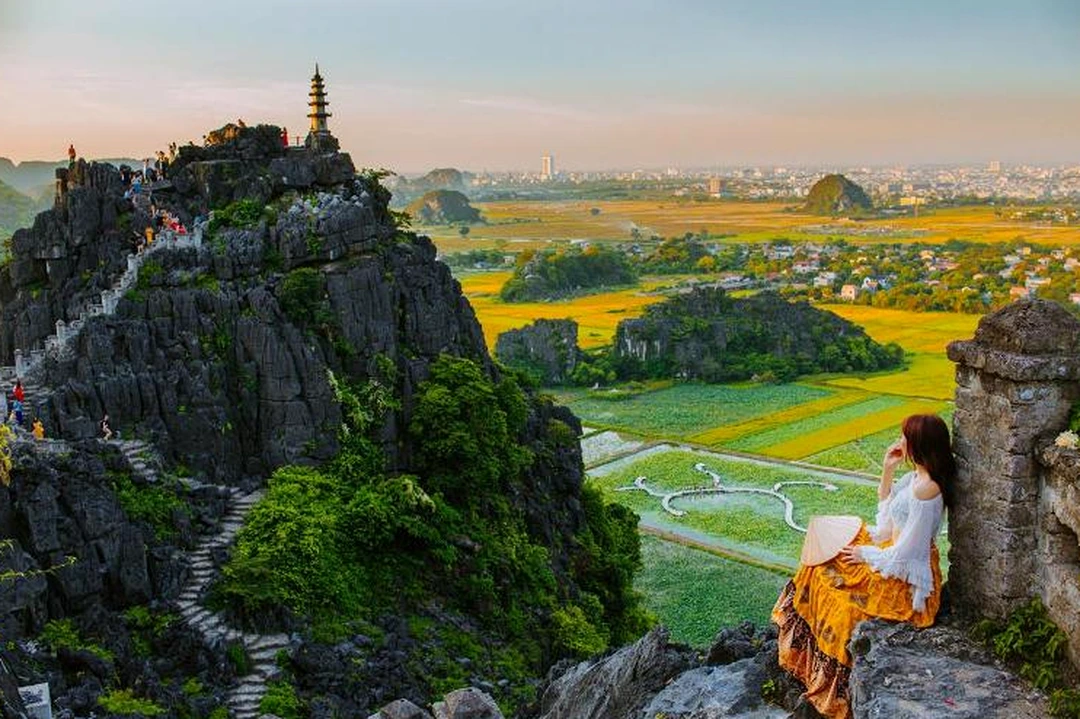
The journey to conquer Hang Mua begins right at the foot of the ancient limestone mountain, where travelers face an exhilarating yet rewarding challenge: climbing the zigzagging stone staircase that hugs the mountain’s spine. Featuring 486 sturdy white stone steps modeled after a “Miniature Great Wall,” the ascent demands stamina and a touch of patience from every climber. Flanking the path, jagged limestone formations shaped by millions of years of flooded karst geology alongside finely carved Tran Dynasty dragon and phoenix reliefs evoke an atmosphere that is both timeless and imposing. On average, it takes visitors between 25 and 45 minutes to complete the climb. The sensation of conquering each steep step, catching your breath amid untamed, majestic scenery, is richly rewarded the moment you set foot on the windswept summit of Ngoa Long Mountain.
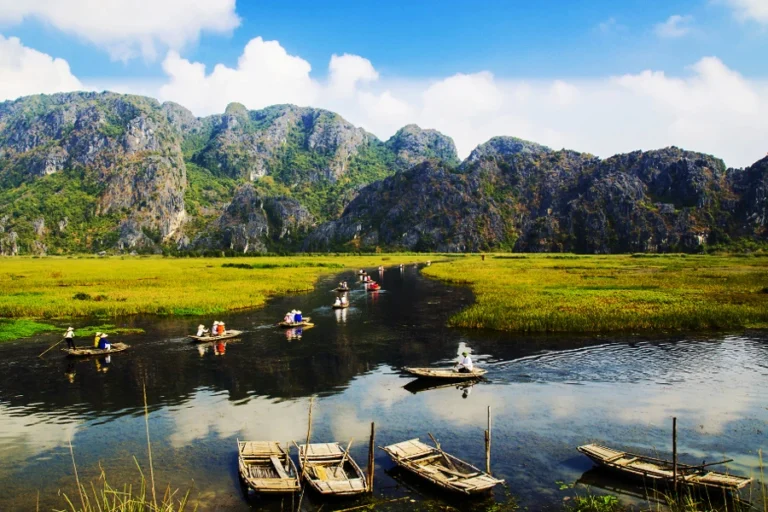
Standing at the highest point of Hang Mua delivers an overwhelming rush of awe. Welcoming brisk breezes sweeping up from the valley and taking in a boundless 360-degree panorama, the entire majestic landscape of Ninh Binh unfolds before your eyes. From this height, Tam Coc Valley appears like a breathtaking natural painting, with the Ngo Dong River meandering like a deep-green silk ribbon weaving through mystical caves and framing vast stretches of rice paddies. Looking down below, wooden rowboats ferrying tourists glide quietly across the water like tiny, peaceful specks. Visiting during the golden harvest season in late May and early June reveals a dazzling sea of ripe yellow rice blanketing the horizon, stirring the heart and inspiring unforgettable, picture-perfect snapshots.
After exerting your energy conquering the peak and soaking in the sky-high views, your body is sure to crave replenishment through the rich, distinctive local cuisine of the ancient capital. Nothing beats savoring renowned specialties such as Ninh Binh mountain goat—free-range goats raised on limestone slopes, prepared into tantalizing dishes like refreshing lime-cured goat salad (de tai chanh) or aromatic charcoal-grilled goat steaks, prized for their firm texture and natural sweetness. No meal is complete without Ninh Binh crispy scorched rice (com chay), golden and crunchy, dipped generously into rich, savory goat sauce or heart-and-kidney stir-fry gravy. To round out this unforgettable culinary journey, diners can also sample crunchy limestone mountain snails steamed with warming ginger and lemongrass, or Nho Quan ant-egg sticky rice infused with the rich, nutty flavors of the mountains and forests—leaving a lasting, flavorful impression of your Hang Mua adventure.
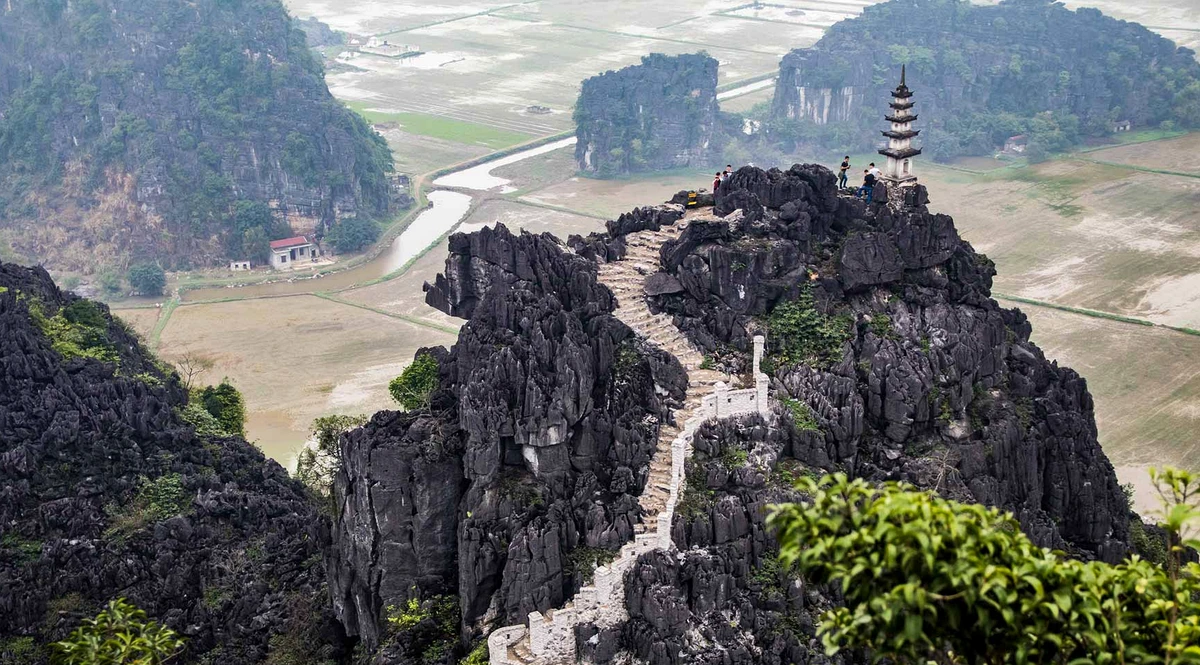
To ensure your journey conquering the “Miniature Great Wall” at Hang Mua is as seamless and memorable as possible, it helps to know the latest visitor regulations and practical tips from seasoned travelers. Currently, the Hang Mua tourist area charges a listed admission fee of 150,000 VND per adult, while children under 1 meter tall enter completely free of charge. The scenic site welcomes visitors daily from 6:00 AM to 7:00 PM, giving travelers plenty of flexibility to plan their day trip.
The ideal time to visit Hang Mua depends largely on the experience you are seeking. If you want to witness the shimmering golden hues of ripe rice fields stretching across Tam Coc Valley, plan your visit between late May and early June. During this window, Ninh Binh’s landscape reaches its peak vibrancy, with the Ngo Dong River winding like a soft ribbon through a sea of gold. Conversely, if you wish to immerse yourself in the delicate fragrance and romantic beauty of the heart-shaped lotus pond at the mountain’s base, June through August is the ideal season.
As for the best time of day to visit, a golden rule for every traveler is to avoid climbing between 10:00 AM and 3:00 PM. This is when the sun beats down most fiercely, and scaling 486 steep limestone steps under intense heat quickly drains your stamina and diminishes the sightseeing experience. Instead, prioritize the early morning window from 6:30 AM to 8:00 AM to enjoy crisp, cool air and gentle morning sunlight. If you are a photography enthusiast, the late afternoon slot from 4:00 PM to 6:00 PM is perfect for chasing dramatic crimson sunsets illuminating the ancient stone stupa, creating moody, magical, million-view shots.
Because Hang Mua’s terrain consists primarily of natural limestone with steep stairways, choosing the right footwear and attire is essential. Opt for athletic shoes or sneakers with strong grip and non-slip soles to ensure safe footing throughout your climb. While there is no strict dress code, modest and elegant outfits such as a traditional Vietnamese ao dai, historical costumes, or flowing maxi dresses harmonize beautifully with the spiritual atmosphere and dramatic backdrop for striking photos. Don’t forget to pack a bottle of water, sunscreen, and a hat to stay hydrated and protected during your ascent.
Finally, after burning plenty of energy reaching Ngoa Long Peak, don’t miss the chance to indulge in authentic local specialties right in the surrounding area. Iconic dishes such as lime-cured mountain goat, crispy scorched rice with rich goat sauce, and unique mountain snails provide the ideal finale to your excursion. With thoughtful preparation and a spirit of discovery, Hang Mua promises unforgettable memories in the heart of the Trang An World Heritage Site.
To enjoy a seamless getaway and take in the full majesty of Hang Mua without worrying about driving, waiting in ticket lines, or planning connecting routes, travelers can choose VDS Travel’s premium all-inclusive Ninh Binh tours. Each itinerary is thoughtfully crafted by our specialists to optimize photo opportunities during the day’s best golden hours, accompanied by knowledgeable local guides well-versed in the Ancient Capital’s history, top-tier dining, and comfortable private transfers.