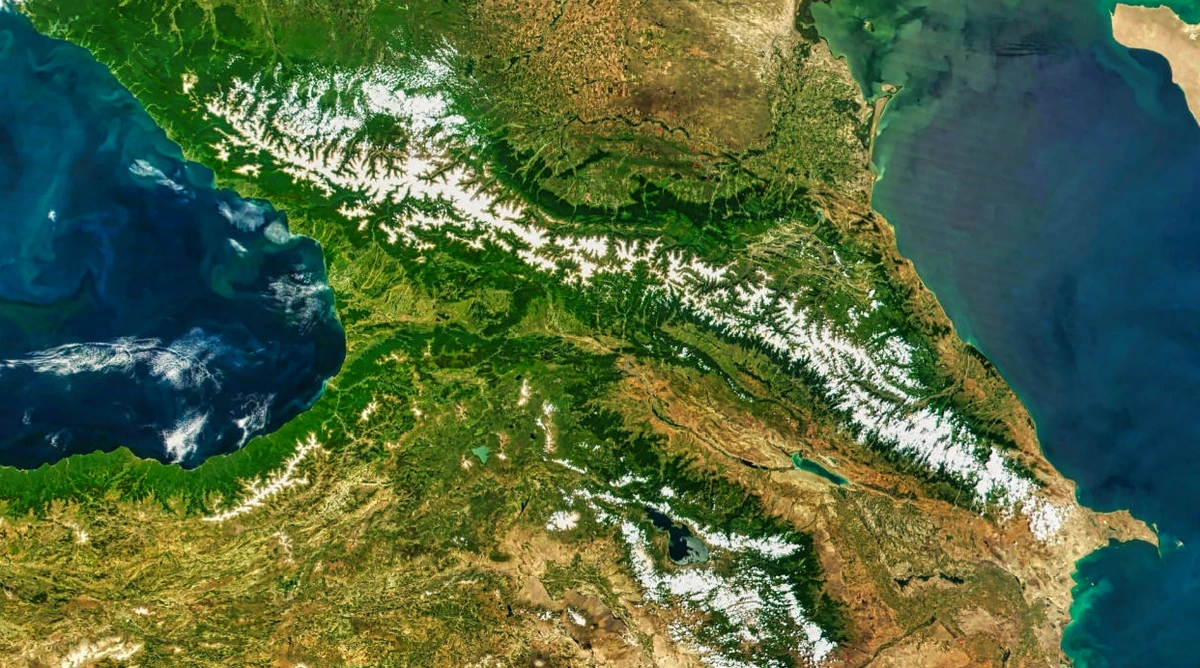
Like a natural fortress wall dividing the realms of Asia and Europe, the Caucasus mountain range rises proudly between the Black and Caspian Seas, where every inch of soil is steeped in founding myths and epic dynastic shifts. Beginning along the windswept western shores, Georgia’s history opens with the legend of the ancient Kingdom of Colchis on the Black Sea coast, immortalized in Greek mythology as the destination of Jason and the Argonauts in their quest for the Golden Fleece. During the same era, the Kingdom of Iberia in eastern Georgia gradually forged a powerful political state in the Kura River basin before making a historic decision in the fourth century: adopting Christianity as its state religion under the guidance of Saint Nino of Cappadocia, turning the land into one of humanity’s earliest Christian strongholds.
The most dazzling pinnacle in Georgian chronicles is revered by posterity as the Golden Age, spanning from the eleventh to the thirteenth century. This renaissance was ushered in through the statecraft of King David IV, celebrated by history as David the Builder. With his resounding victory at Didgori in 1121—a battle hailed as the “Miraculous Victory”—he swept away foreign forces, liberated Tbilisi, and transformed the capital into the flourishing center of the entire Caucasus region. That legacy soared to even greater heights under the reign of Queen Tamar, the formidable monarch who expanded the realm from the Black Sea to the Caspian Sea, patronized the immortal epic poem “The Knight in the Panther’s Skin” by poet Shota Rustaveli, and laid the foundations for architectural masterpieces carved deep into mountain rock, such as the Vardzia cave monastery complex and Gergeti Trinity Church perched beneath snow-capped Mount Kazbegi.
Sloping gently southeastward toward the Caspian Sea, the land of Azerbaijan absorbed cultural currents from a distinct yet equally magnificent origin. This territory directly inherited the legacy of ancient Caucasian Albania, a state that existed from the first century BCE until the eighth century CE. It served as a unique crossroads where Zoroastrianism—revering sacred eternal flames fed day and night by underground natural gas reserves—coexisted alongside early Christianity, leaving enduring marks through the weathered ruins of the Ateshgah Fire Temple that has stood resilient through the passage of time.
The turning point that shaped Azerbaijan’s urban and cultural identity occurred in the fifteenth century, when the Shirvanshah dynasty relocated its capital to the Absheron Peninsula, sculpting the historic heart of Baku. The Palace of the Shirvanshahs complex and the enigmatic Maiden Tower rising within the Old City of Icherisheher became supreme icons of sandstone craftsmanship and Eastern Islamic geometry. Entering the sixteenth century, the deep influence of Persia’s Safavid dynasty not only solidified the prominence of Shia Islam but also draped Baku in a refined cultural tapestry, turning the seaport into a vital transit hub along the legendary Silk Road.
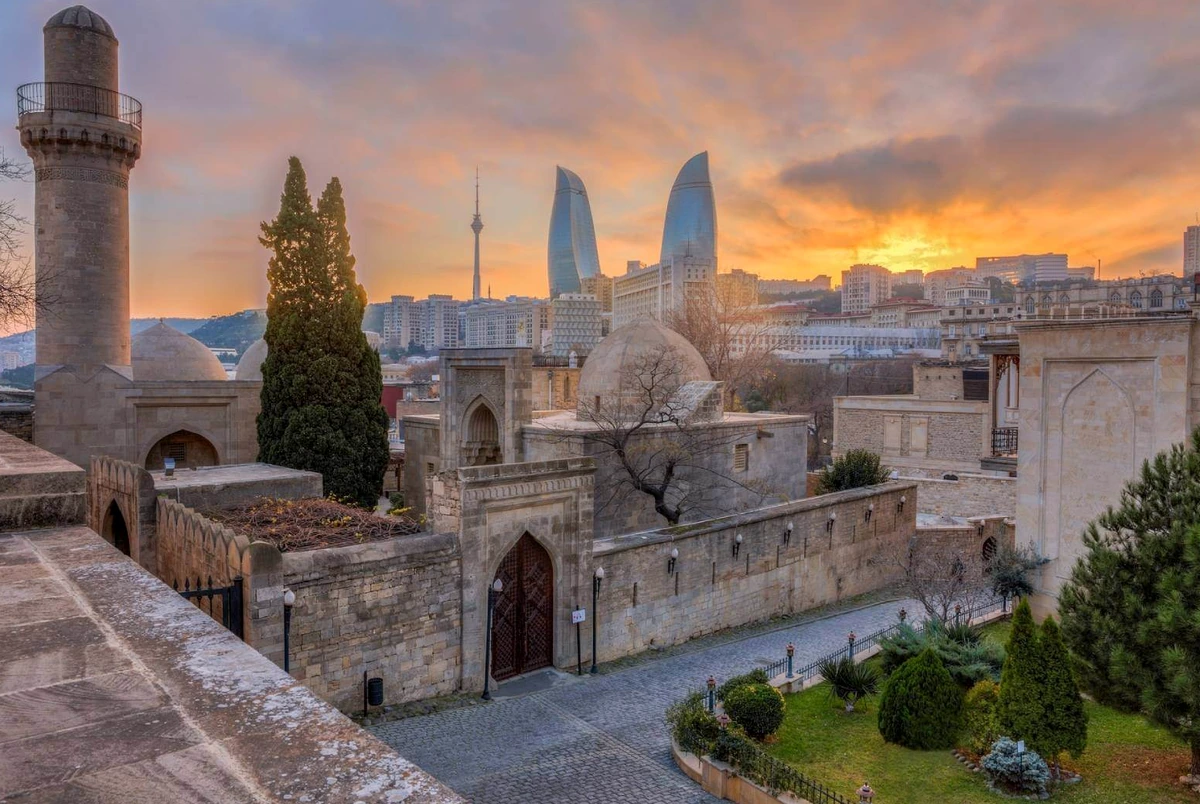
Closing out the medieval era, the Caucasus entered a period of fierce collision among three mighty empires: the Ottoman Empire, Safavid Persia, and the Russian Empire. Once territorial struggles subsided, mineral wealth opened an astonishing new chapter for the eastern Caspian shore. The oil boom of the second half of the nineteenth century rapidly transformed Baku from a quiet ancient town into the global petroleum capital, accounting for more than half of the world’s total oil production at the time. Massive capital inflows from prominent industrialist families such as the Nobels and the Rothschilds ushered in a wave of Western Gothic, Baroque, and Art Nouveau architecture, creating a multifaceted Baku where Islamic palaces cast their reflections beside grand boulevards evoking Belle Époque Paris. Between these East–West poles, the journey from historic Tbilisi—with its intricately carved wooden balconies and Abanotubani sulfur baths—to the fire towers of Baku is a voyage back in time through humanity’s deepest layers of cultural sediment.
Stretching like a towering natural rampart between the continents of Asia and Europe, the macro-topography of the Caucasus is an arena of intense tectonic collision, giving rise to two contrasting landscape extremes that remain intimately bound in geographic harmony. Originating along the northern slopes of the Greater Caucasus range, Georgia’s Kazbegi region stands like a natural citadel guarding the vital route across Jvari Pass. The sacred anchor of the entire region is Mount Mkinvartsveri, a dormant stratovolcano reaching 5,054 meters above sea level, revered in folklore as the mythical rooftop preserving the legend of Amirani chained to its icy cliffs. Beneath this crown of perpetual snow, the geomorphology stratifies distinctly from sub-alpine belts of ancient maple and oak forests to boundless alpine meadows, opening windswept corridors for glaciers like Gergeti to deposit mineral-rich alluvium down into the rushing Tergi River valley.
Indigenous spatial planning and settlement engineering in Kazbegi reflect absolute adaptation to rugged terrain. The Georgian Military Road winds along sheer granite cliffs and threads through the perilous Darial Gorge, testifying to extraordinary feats of roadbuilding from antiquity through the defensive expansions of the Tsarist era. Here, the Gergeti Trinity Monastery complex (Tsminda Sameba) was erected in the fourteenth century atop a mountain ridge at an elevation of 2,170 meters, embodying a classic geomantic posture backed by mountains and overlooking water. This solitary dark slate sanctuary amid the clouds serves not only as a spiritual beacon of the Georgian Orthodox Church, but also as a strategic military watchtower, drawing sacred energy from Mount Mkinvartsveri while commanding a panoramic view over the entire Stepantsminda basin nestled in the valley floor below.
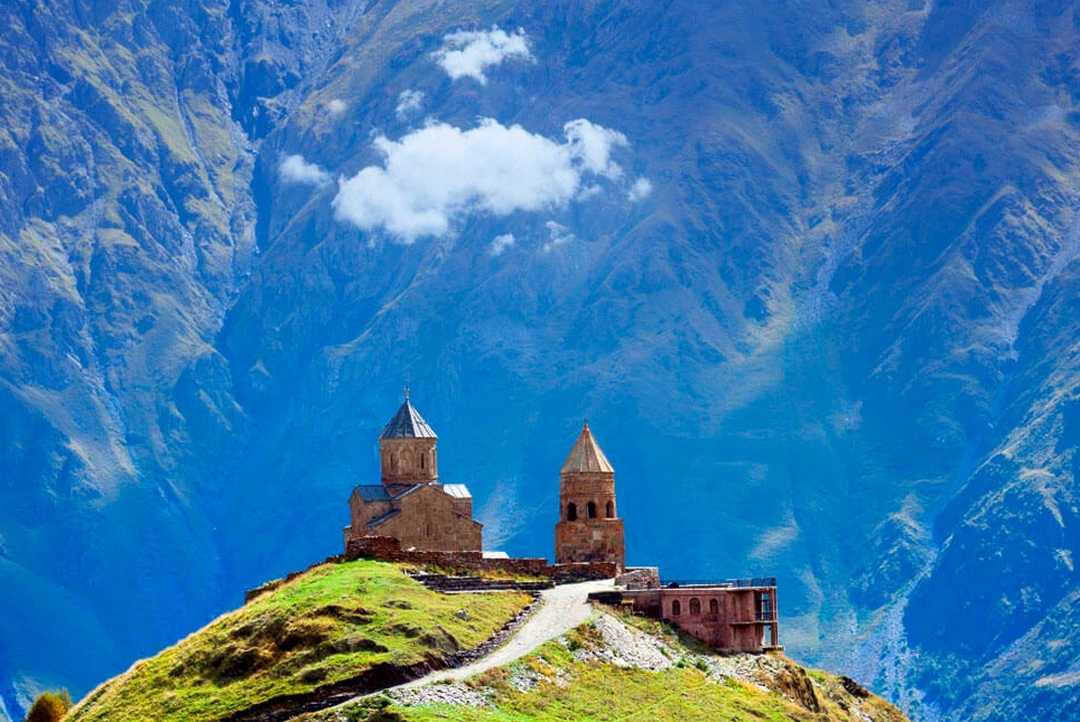
Descending further downstream, the landscape axis transitions gently through the Tbilisi basin, where the Mtkvari (Kura River) carves through limestone gorges before sweeping toward Azerbaijan’s semi-arid Absheron coast. In stark contrast to the frozen high-altitude realm of Kazbegi, metropolitan Baku rises on a peninsula jutting deep into the Caspian Sea, characterized by a distinctive depression topography with many districts lying up to 28 meters below ocean sea level. This land bears the unmistakable imprint of Fire and Water in elemental harmony, where subterranean pockets of natural gas and surface oil seeps fed the eternal flames of the Ateshgah temple since the days of Zoroastrian worshippers, mingling with briny humidity and the famous gale-force winds sweeping off Baku Bay.
Baku’s urban layout is a seamless synthesis of natural geomorphology and pinnacle medieval fortification engineering from the Shirvanshah dynasty. The walled Old City of Icherisheher is arranged in a gentle fan-shaped cascade down a limestone hillside right to the water’s edge—simultaneously channeling sea breezes to cool its microclimate during arid semi-desert summers and forming a formidable shield against maritime assaults. The nearly thirty-meter-tall Maiden Tower (Qiz Qalasi), paired with double defensive walls of glowing golden sandstone, exemplifies some of the sturdiest seismic-resistant masonry in the region. The dramatic contrast between the icy peaks of Kazbegi and the fiery semi-desert sedimentary shores of the Caspian Sea defines the singular geographic identity of the Caucasus, fostering a fertile cradle for civilizations interacting across millennia.
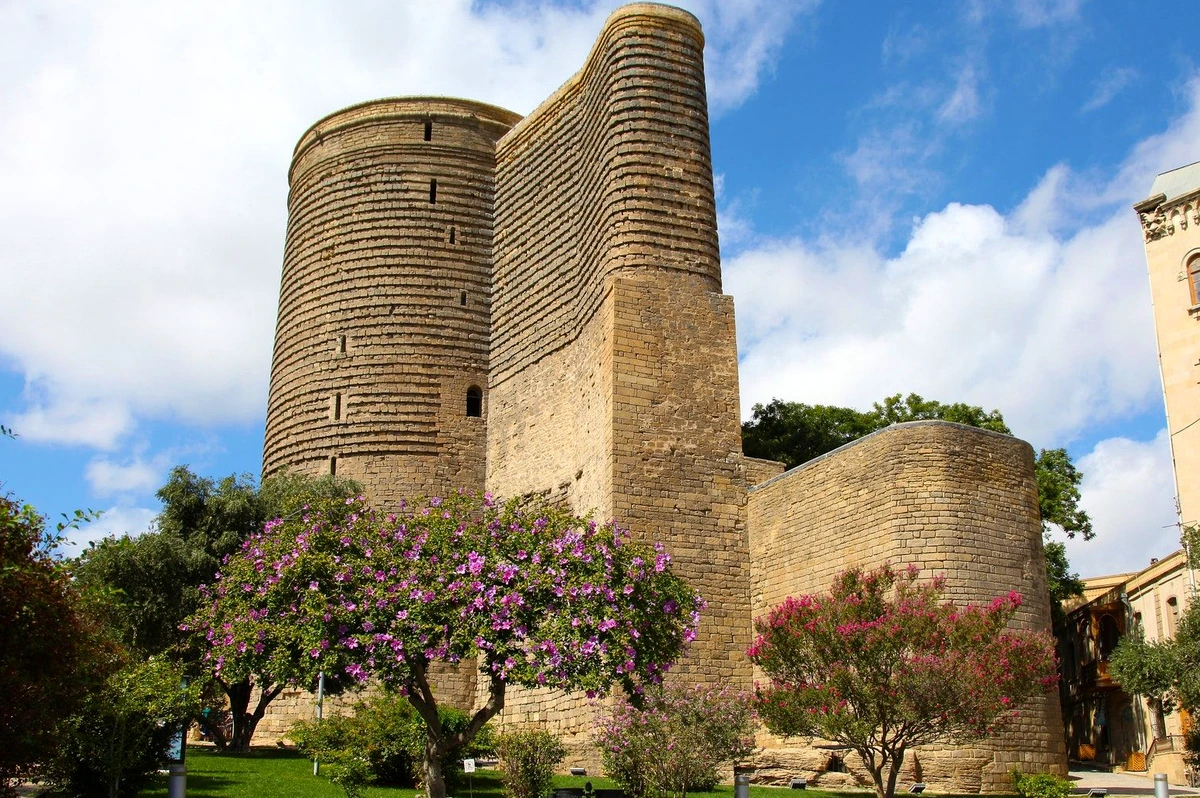
The architectural landscape of the Caucasus is a visual epic carved into mountain stone and curved along Caspian waves, where the austerity of medieval Christian asceticism and refined Persian Islamic artistry meet audacious futuristic curves. In Georgia, the precipitous terrain of the Greater Caucasus acts as a natural mold, giving birth to a unique school of cross-domed ecclesiastical architecture. Epitomizing this design philosophy is Gergeti Trinity Church, standing proudly at over 2,100 meters above sea level right beneath the perpetually snow-draped peak of Mount Kazbek. Built in the fourteenth century, the complex comprises the central domed Church of the Holy Virgin, a separate three-story bell tower, and ancillary council chambers.
The masonry mastery of Georgian artisans shines through in their technique of fitting monolithic gray tuff and sandstone blocks without elaborate mortar; each stone was dressed along its edges with astonishing precision to withstand fierce blizzards and highland earthquakes. Spatially, the floor plan of Gergeti Trinity strictly adheres to a modified Byzantine inscribed-cross layout, in which four massive stone piers support a soaring octagonal drum crowned by the slender conical dome characteristic of the Caucasus region. Stone carving reaches virtuoso refinement with stylized vine scrolls, the Borjgali cross—an ancient Georgian symbol of eternity and the sun—and delicate bas-reliefs of deer and falcons chiseled around narrow slit windows, transforming the sacred shrine into an inseparable organic extension of its emerald rocky hilltop.
Heading eastward across sun-drenched plains to the shores of Baku Bay in Azerbaijan, the spatial language shifts dramatically from austere mountain stone to the regal splendor of ancient Islamic dynasties inside the walled citadel of Icherisheher. Encircled by stout twelfth-century walls of warm golden limestone, the centerpiece of this heritage ensemble is the Palace of the Shirvanshahs—a fifteenth-century architectural masterpiece from the golden era of the Shirvanshah dynasty. The overall layout of the complex is divided into three terraced courtyards stepping down a gentle slope, creating a tightly organized labyrinth of functional zones. The two-story main palace houses more than fifty opulent chambers, linking seamlessly to the octagonal Divankhana pavilion with its resplendent muqarnas portal, where courtiers held audiences and deliberated affairs of state.
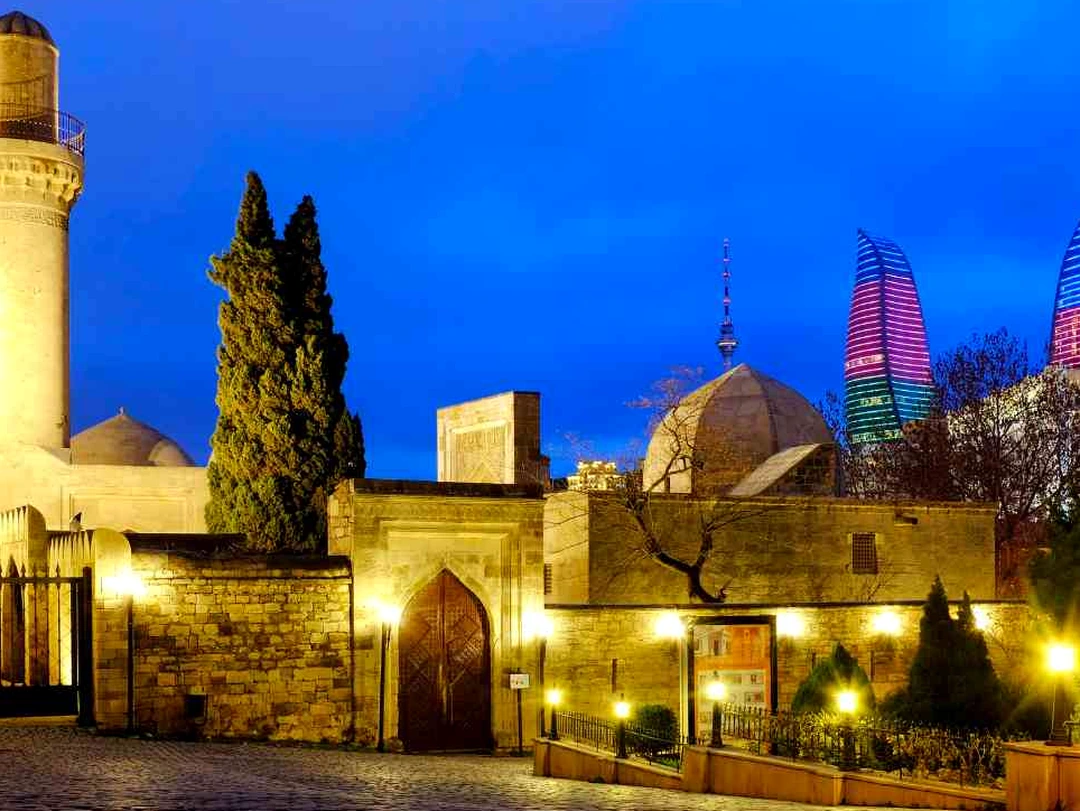
Shirvanshah craftsmanship in Absheron limestone reaches its zenith across walls richly carved with arabesque motifs interwoven with Kufic scriptural calligraphy, alongside the royal family mausoleum and the subterranean Murad Gate bathhouse, whose hemispherical domes feature ingenious light wells that maintain optimal indoor temperatures through blistering summers. This spatial composition achieves an ideal equilibrium of stillness: shaded courtyards separate enclosed chambers through pointed archways, evoking the depth of Eastern geomantic philosophy and pre-modern cosmology.
Baku’s most iconic visual juxtaposition erupts the moment one’s gaze leaves the ramparts of Icherisheher to encounter the Heydar Aliyev Center—an extraordinary work of deconstructivist architecture penned by the legendary architect Zaha Hadid. Spanning an immense floor area of over 57,000 square meters, the building defies every conventional geometric assumption by completely abandoning straight lines, right angles, and dividing columns. Its continuous undulating exterior skin forms waves of pristine white glass-fiber-reinforced concrete that rise organically from the terraced plaza and billow skyward like a silk ribbon fluttering in the Caspian sea breeze. Inside, fluid three-dimensional spaces interconnect a museum, a thousand-seat auditorium, and contemporary art galleries, symbolizing the unbroken flow of history surging from millennial heritage toward a boundless future.
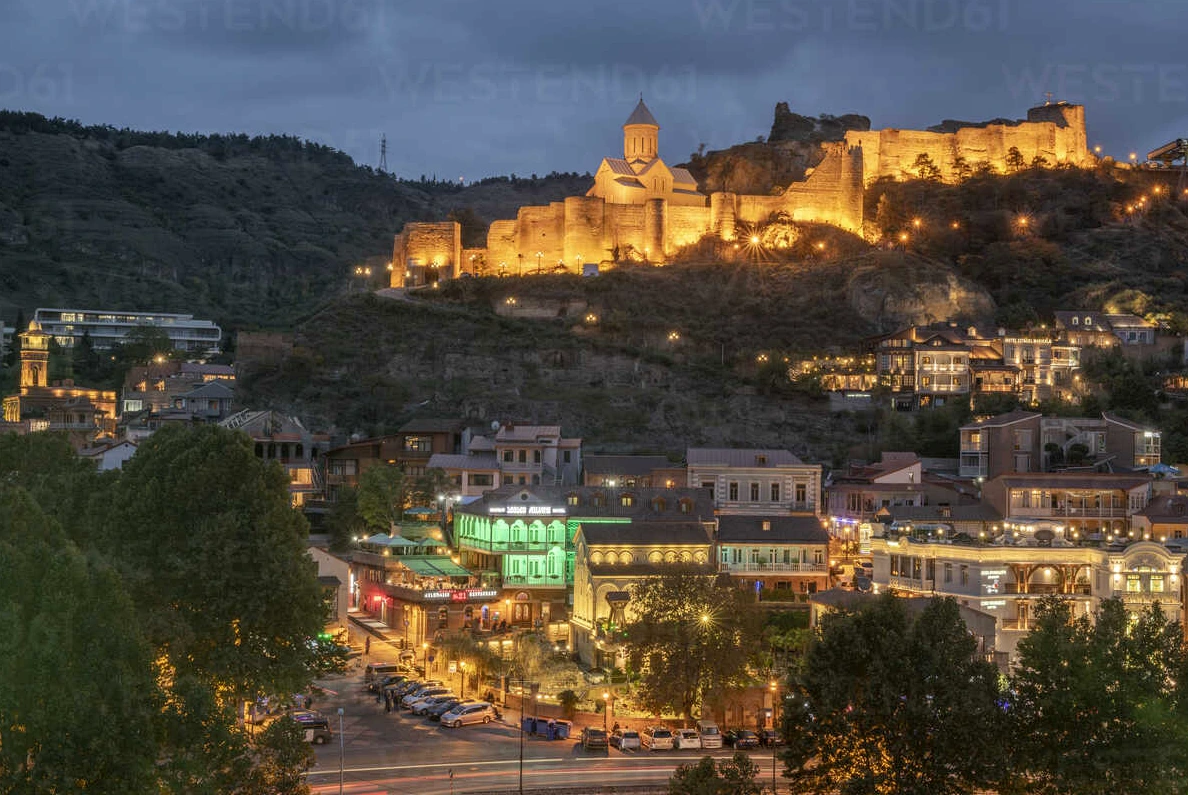
As twilight descends over the Kura River valley, the capital city of Tbilisi drapes itself in a mystical cloak woven from tens of thousands of warm golden lights. Artistic illumination washes across the fourth-century Narikala Fortress, casting dramatic shadows over intricately carved wooden balconies clinging to the Sololaki cliffs and the historic Kala district. Nightlife in the Georgian capital does not rush to the frenetic tempo of modern metropolises, but instead settles into an age-old cultural ritual: the grand Supra feast. Beneath century-old exposed brick vaults of subterranean wine cellars storing amber wines fermented in clay Qvevri vessels according to an eight-thousand-year-old Georgian tradition, the Supra begins as darkness blankets the cobblestone alleys.
The immutable soul of every Supra evening is the Tamada, the toastmaster respectfully entrusted by the table to guide the spirit of the gathering. Far more than simply raising a glass, the Tamada leads guests on a philosophical and spiritual journey through eloquent toasts honoring motherhood, the sacred spirit of the Caucasus Mountains, faith, and peace among humanity. By time-honored custom, no one takes a sip of wine until the Tamada finishes speaking and drains the traditional kantsi drinking horn. Paired with the rich flavors of molten cheese-filled khachapuri bread, charcoal-sizzled mtsvadi skewers, and herb-fragrant khinkali soup dumplings, Tbilisi’s night reaches its crescendo when Georgia’s unique polyphonic singing fills the room. Unaccompanied, earthy three-part harmonies echo off the stone walls, transforming every dining hall into a sacred sanctuary of vocal artistry and camaraderie.
Following the steppe eastward, nightfall in Baku—Azerbaijan’s radiant capital on the Caspian shore—unveils an entirely different audiovisual symphony. Celebrated as the Land of Eternal Fire, Baku showcases cutting-edge contemporary lighting artistry through the trio of Flame Towers soaring 182 meters atop a hillside. Across more than ten thousand square meters of glass facade, millions of smart LEDs ripple in unison, transforming the three skyscrapers into colossal blazing torches before morphing into the waving colors of the national flag in the night breeze. Their electric luminescence shimmers across Baku Bay, creating a breathtaking dialogue with the weathered sandstone ramparts of the twelfth-century Shirvanshah fortress of Icherisheher.
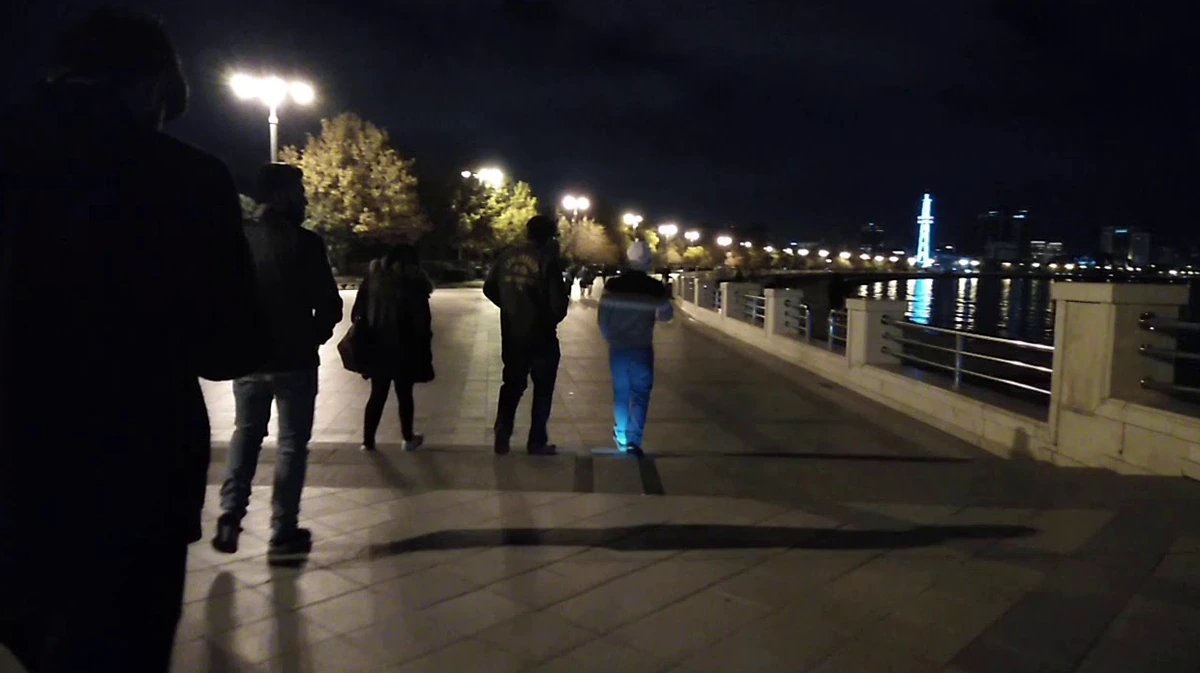
Rather than flocking to noisy venues, Baku locals savor the evening at an unhurried pace along the seaside promenade of Dənizkənarı Milli Park, stretching over three kilometers along the breezy Caspian waterfront. The most refined pastime here is tea culture in traditional chaykhanas tucked beneath shading pines and tamarisk trees. Azerbaijanis enjoy robust black tea infused with wild thyme, served in slender, waisted pear-shaped glasses called armudu. The gentle astringency of hot tea pairs exquisitely with a bite of sweet murabba fruit preserves made from green walnuts, ripe figs, or white cherries, sparking unhurried conversations on literature and life beneath the coastal moonlight.
The pinnacle of Baku’s evening cultural experience crystallizes inside the temple of traditional Mugham music, an internationally acclaimed UNESCO Intangible Cultural Heritage. At the International Mugham Center right along the edge of Baku Bay, architecture stylized after the silhouette of the ancient Tar lute sets the stage for transcendent performances. Played by master virtuosos, the classic trio of instruments—the eleven-stringed plucked Tar, the fish-skin-resonator bowed Kamancha spike fiddle, and the Daf frame drum—weaves mesmerizing melodies. Half-classical, half-folk improvisational vocals rich in microtonal ornamentations transport listeners into the mystical inner world of the ancient Near East, seamlessly uniting the essence of a Caucasus night between dazzling urban lights and enduring traditional soul.
The Caucasus landmass harbors a distinctive fusion of flavors at the crossroads where the mystical East meets the ancient West. In Georgia, culinary culture transcends mere sustenance and is elevated into a sacred social ceremony through the Supra feast, where the Tamada guides conversation over brimming glasses of full-bodied wine. Tracing back eight millennia, archaeological discoveries in the Shulaveri region prove that Georgia is the earliest birthplace of human winemaking. This UNESCO-listed intangible cultural heritage centers on fermenting wine in Qvevri—giant egg-shaped clay amphorae lined with beeswax and buried deep underground in cool earth. Crushed grape juice fermented together with skins, seeds, and stems bubbles beneath the soil for months, maturing into an amber-hued wine marked by firm tannins and the mineral vitality of the Caucasus mountains.
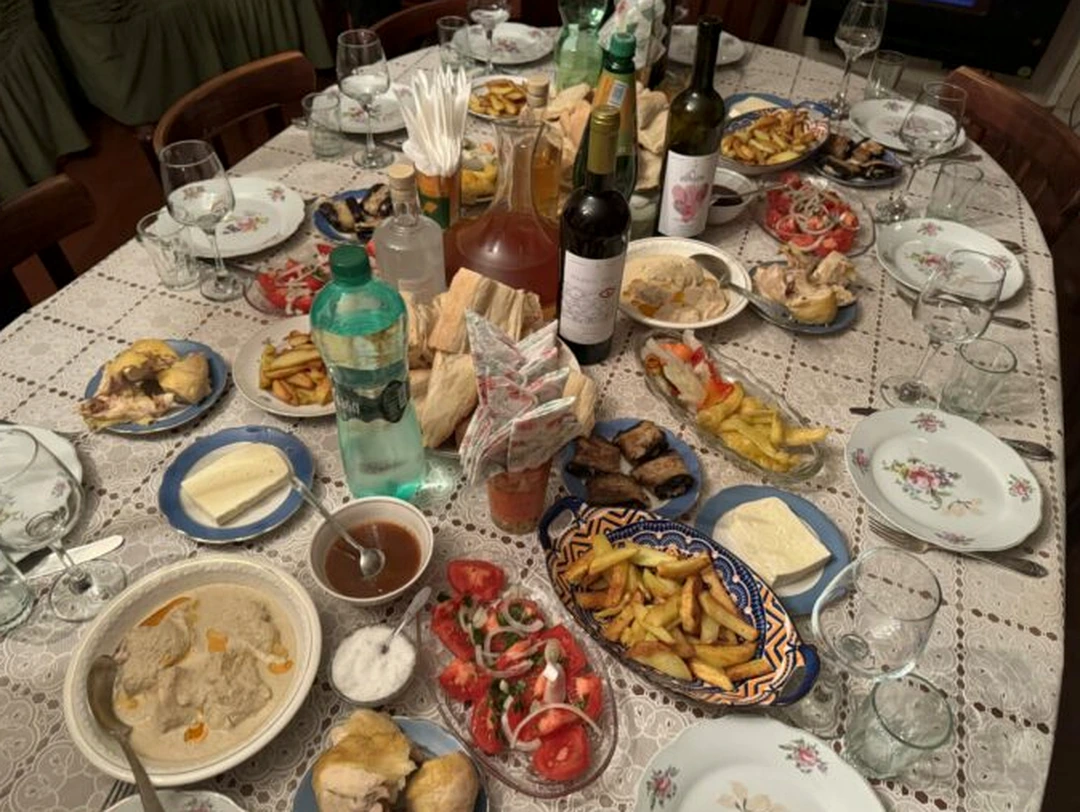
Accompanying the flowing wine are dishes that have become spiritual icons of Georgian identity. Khachapuri cheese bread—especially the coastal Adjaruli variety from Adjara—is shaped like a proud boat brimming with molten, creamy Sulguni cheese, crowned with a golden egg yolk and a pat of butter symbolizing the sun setting over the Black Sea. Meanwhile, Khinkali dumplings offer a delightful culinary ritual requiring practiced technique: intricately pleated dough parcels resembling hydrangea blossoms lock inside a juicy spiced meat filling infused with cilantro and pungent black pepper. Diners carefully bite a small opening, slurp out the rich, savory broth first, and then eat the tender wrapper, leaving the thick top dough knot on the plate as a tally of their appetite. Completing the table with vibrant elegance is Pkhali—colorful appetizers crafted from finely minced beetroot or spinach blended with creamy ground walnut paste, pungent garlic, and ruby-red pomegranate seeds sparkling like jewels.
Crossing the border into Azerbaijan, the culinary canvas immediately shifts toward the regal aromas of the Eastern Islamic world, where open flames and fragrant Caspian herbs command the palate. The crowning glory of Azerbaijani gastronomy is Shah Plov—revered as the pilaf of kings. Fragrant long-grain rice tinted golden with precious saffron threads is slow-cooked alongside tender lamb, sweet chestnuts, dried apricots, and tangy black plums, all encased inside a crisp, buttery flatbread crust baked to golden perfection in a clay oven. When the crust is sliced open like an unfolding crown, aromatic steam carrying a thousand years of Silk Road heritage instantly awakens every sense. Azerbaijani kebabs also achieve master-class perfection, from Lyulya Kebab—minced lamb seasoned with tart sumac and grilled over glowing embers—to succulent skewers of fresh sturgeon fillets caught straight from Baku Bay.
This gastronomic journey concludes on a sweet, lingering note in traditional tea culture, where slender waisted Armudu glasses keep black tea piping hot at the base without burning the drinker’s fingertips. Amid wafting notes of cardamom and star anise, Azerbaijanis sip tea alongside festive pastries inextricably tied to the Novruz spring equinox. Crescent-shaped Shekerbura pastries feature delicate crimped crusts patterned like seashells, concealing a fragrant filling of ground almonds and sugar; meanwhile, diamond-cut Pakhlava symbolizes the stars of the night sky, layering dozens of tissue-thin pastry sheets with rich crushed walnuts steeped in glossy honey to leave an unforgettable aftertaste of a fabled land.

To fully appreciate the striking contrast between the windswept shores of the Caspian Bay and the towering snow-clad peaks of the Greater Caucasus, mastering local transit logistics, seasonal rhythms, and cultural etiquette is the decisive key to a seamless journey. The Caucasus reveals its finest colors during two shoulder seasons: May through June, when highland valleys burst into lush greenery, and September through October, when chestnut and oak forests turn brilliant shades of gold. These windows bring mild temperatures ranging from 15°C to 24°C, sparing travelers the parching summer heat on Baku’s Absheron Peninsula while minimizing the risk of sudden blizzards blocking treacherous mountain passes across northern Georgia.
The historic overland journey from Tbilisi north to the mountain town of Stepantsminda in the Kazbegi region is a classic three-hour drive along the famed Georgian Military Road. Winding roughly 160 kilometers along the Aragvi River gorge, this scenic highway passes the thirteenth-century Ananuri Fortress complex and the alpine ski resort of Gudauri before cresting its highest point at Jvari Pass—2,379 meters above sea level—and unveiling the perpetually snow-crowned volcano of Mount Kazbek. Travelers can hop aboard scheduled local minibuses known as marshrutkas departing from Tbilisi’s Didube station for a budget-friendly ride, or hire a private car with a local driver for the freedom to pause and admire the ancient Gergeti Trinity Church perched dramatically amid the clouds.
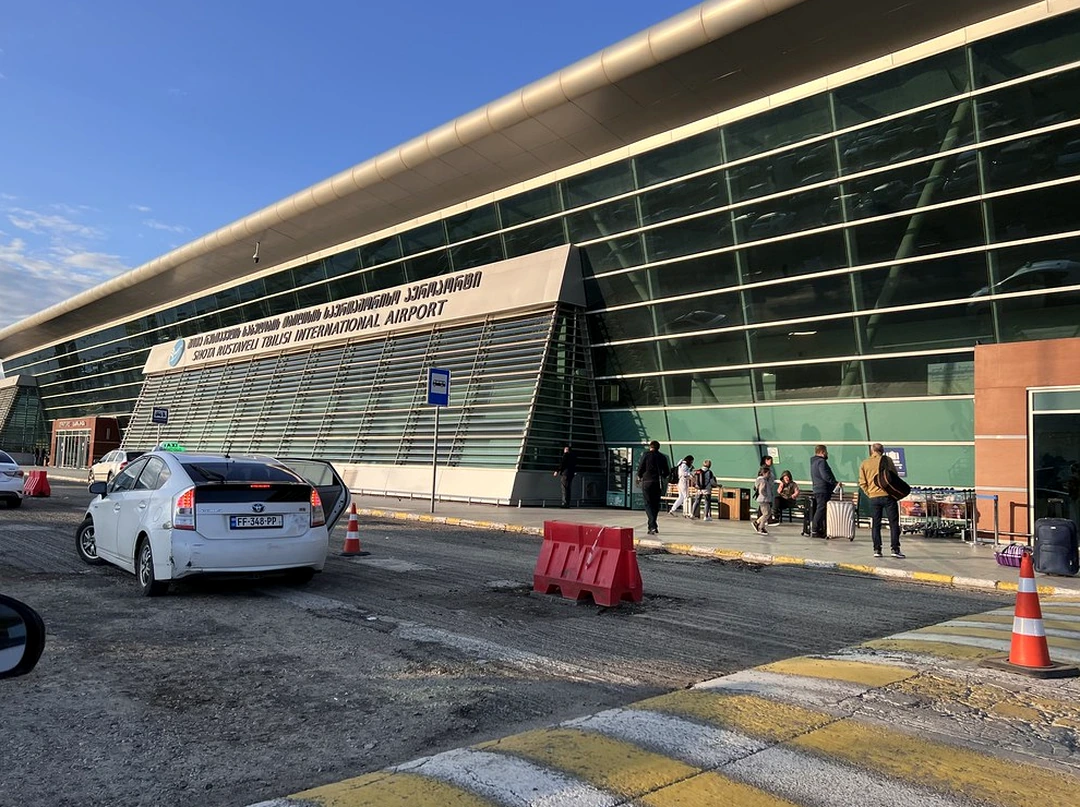
For cross-border connections between the two capitals of Tbilisi and Baku, the fastest and most convenient option is a direct flight between Shota Rustaveli International Airport and Heydar Aliyev International Airport, taking just over one hour. Travelers drawn to nostalgic slow travel—watching the landscape gradually transition from semi-arid steppe to lush mountain foothills—can opt for the overnight international sleeper train whenever overland border checkpoints are open to international tourists under bilateral regulations. Regarding entry formalities, travelers should carefully verify visa requirements based on their passport nationality. Azerbaijan operates a streamlined ASAN e-Visa portal with standard processing in roughly three business days, while Georgia offers both a flexible e-Visa system and generous visa-free entry privileges for holders of valid Schengen, US, or Japanese visas.
Financially, travelers should carry both local currencies—the Azerbaijani Manat (AZN) and the Georgian Lari (GEL)—as traditional bazaars and family-run highland eateries still strongly favor cash over international credit cards. Average travel expenses across the Caucasus are remarkably reasonable compared to Western Europe: a daily budget of $50 to $90 comfortably covers stays in charming boutique hotels as well as iconic regional delicacies, from saffron-infused Shah Plov and savory dushbara dumpling soup in Baku to molten khachapuri and juicy khinkali in Tbilisi’s wine cellars. When visiting solemn Orthodox cathedrals in Georgia or historic mosques in Azerbaijan, modest attire is essential—women should carry a headscarf to cover their hair, and all visitors should avoid shorts above the knee. To immerse yourself in this multilayered cultural tapestry without worrying about complex cross-border logistics, consider joining an expertly curated, in-depth all-inclusive Caucasus (Georgia – Azerbaijan) tour itinerary.