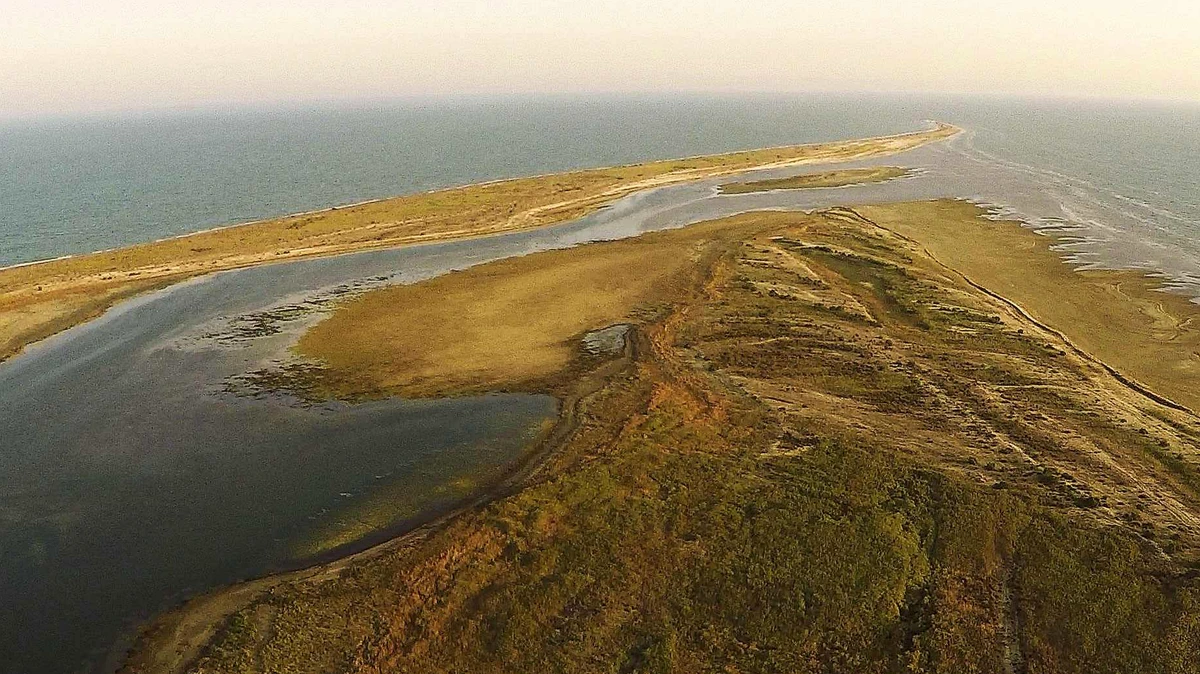
Standing proudly on a stretch of land jutting into the azure waters of the Caspian Sea, the Absheron Peninsula has been shrouded since antiquity in a mystical aura born from natural gas vents spontaneously igniting through geological fissures. This awe-inspiring natural phenomenon gave rise to Azerbaijan’s immortal moniker—the Land of Eternal Fire—while transforming the region into a sacred cradle of ancient Zoroastrianism long before the wave of Islam swept across the Caucasus region. Amid this untamed landscape of windblown sand and subterranean flames, the walled city of Icherisheher—also known as the Inner City of Baku—rose as a formidable stone fortress, bearing witness to the rise and fall of dynasties and the pulse of trans-Eurasian trade.
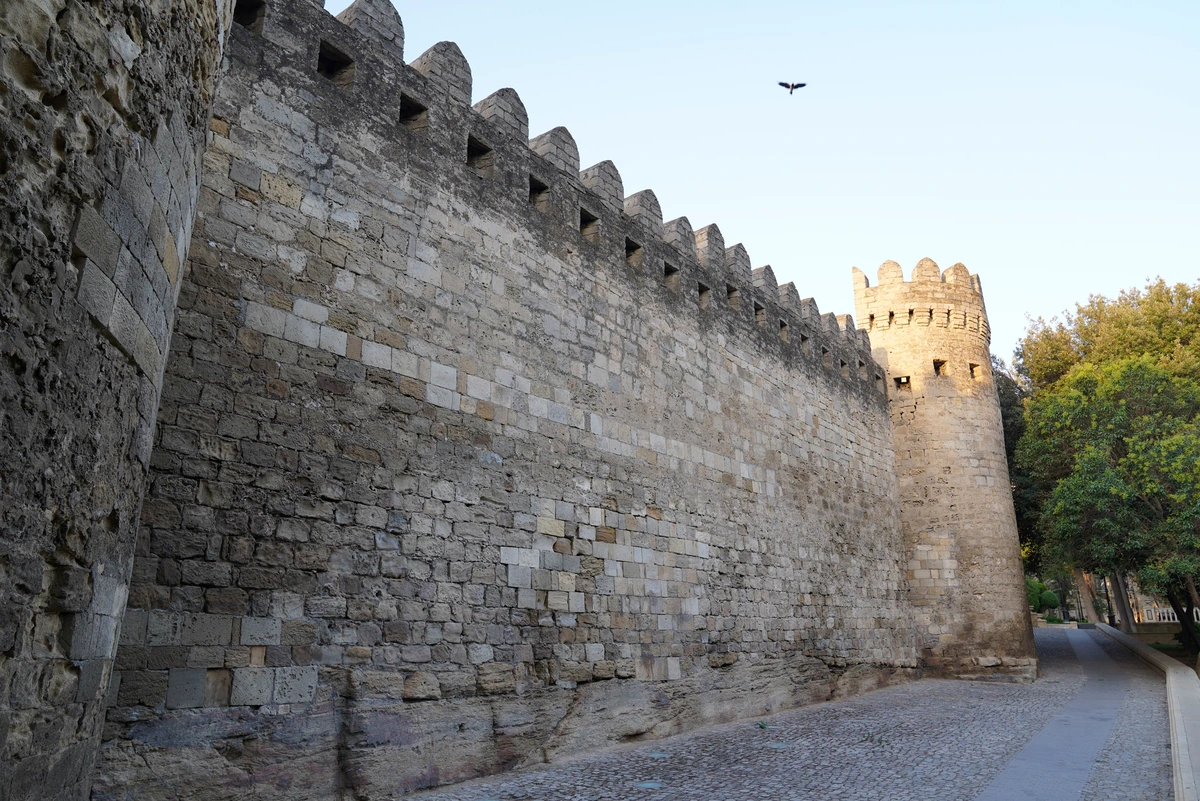
The turning point that shaped Icherisheher’s historical destiny began in the twelfth century, when a devastating earthquake reduced Shamakhi, the former capital of the Shirvanshah dynasty, to ruins. Faced with natural catastrophe, Shirvanshah Akhsitan I made the strategic decision to relocate the capital to Baku, capitalizing on its prime position along the Caspian coast—ideal both for maritime commerce and for defense against raids by the Rus and northern nomadic tribes. From that moment on, Icherisheher entered a period of brilliant transformation, encircled by double-walled fortifications punctuated by towering semicircular bastions, turning a modest port settlement into the premier political, military, and cultural hub on the western shore of the Caspian Sea.
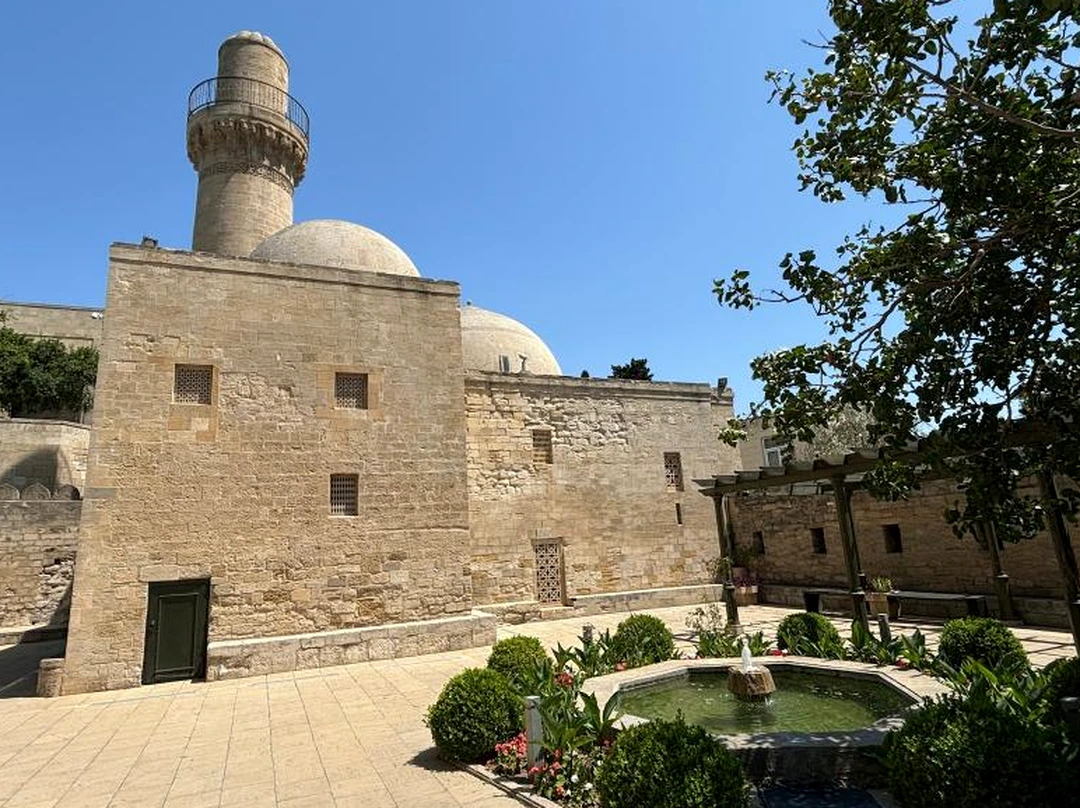
The Old City’s golden age reached its zenith in the fifteenth century under the reigns of Shirvanshah Khalilullah I and his successor, Farrukh Yasar. Under the patronage of these enlightened rulers, the magnificent Palace of the Shirvanshahs was gradually completed in intricately carved sandstone, encompassing the main residential palace, the stately Divankhana pavilion, the sacred royal mausoleum, and the Shah Mosque crowned by its soaring minaret. Alongside the Maiden Tower—an enigmatic cylindrical architectural masterpiece dating back to the twelfth century or even deeper into pre-Islamic antiquity—Icherisheher became an impregnable stone labyrinth preserving the intellectual brilliance and prosperity of an independent dynasty that endured for nearly a millennium.
Yet the currents of history continually tested the resilience of the ancient stone citadel. Entering the sixteenth century, the meteoric rise of the Persian Safavid Empire under the banner of Shah Ismail I crushed the Shirvanshah dynasty in bloody, decisive battles. Farrukh Yasar fell in combat, Baku came under Persian rule, and the city subsequently became a fiercely contested battleground between two mighty empires: the Safavids and the Ottomans. Through successive changes of power, Icherisheher endured as a singular cultural oasis where Silk Road merchants paused at caravanserais such as Multani and Bukhara to trade silk, spices, woven carpets, and crude petroleum.
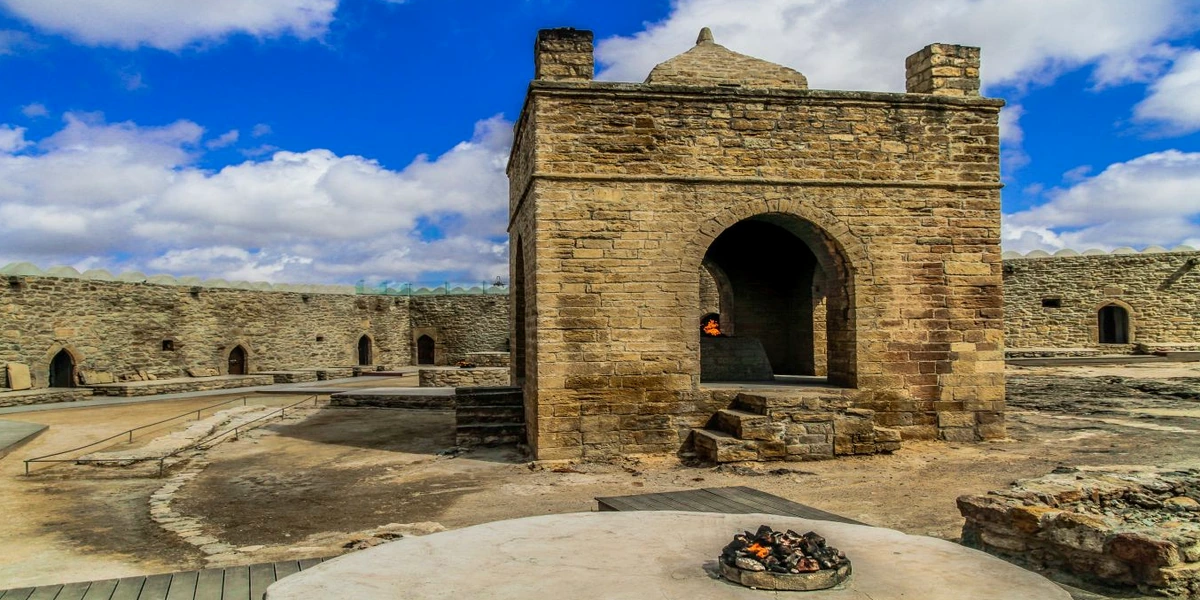
Parallel to the spiritual currents of Icherisheher, in the suburb of Surakhani not far from the Old City center, the Ateshgah Fire Temple experienced a major revival during the seventeenth and eighteenth centuries. Harnessing the ceaseless flow of natural gas seeping from the earth, Hindu, Sikh, and Parsi Zoroastrian merchants and ascetic pilgrims from northwestern India funded the construction of a pentagonal temple complex centered around a four-arched chahar taq sanctuary. Inscriptions carved in ancient Sanskrit, Gurmukhi, and Persian across the stone walls of the monastic cells stand as compelling testament to a remarkable spiritual convergence between Persian fire worship and Eastern philosophies of liberation. Today, the ensemble of Icherisheher and the Ateshgah Temple stands as an enduring monument—recognized as a UNESCO World Heritage Site—encapsulating an epic saga of earth, stone, and sacred flame across the ages.
Occupying a strategic chokepoint along the western coast of the Caspian Sea, Icherisheher was built by its founders on a limestone hill sloping gently toward Baku Bay at the geographic tip of the Absheron Peninsula. In classical Near Eastern geomancy and defensive warfare, this site combined rugged natural terrain with the protective embrace of the sea. The very name Baku derives from the Old Persian term “Bad-kube,” meaning “City of Pounding Winds,” a vivid reflection of its distinctive microclimate where the frigid northern Khazri gales sweeping down from the Russian steppes collide with the warm southern Gilavar breezes rising from the Caspian basin. The seaward-sloping hillside not only ensured rapid rainwater drainage during seasonal storms, but also served as a natural military watchtower allowing sentries to monitor approaching vessels from far out at sea.
Covering a compact area of roughly 22 hectares, the walled inner city of Icherisheher is a masterwork of microclimatic adaptation and medieval military urbanism engineered under the Shirvanshah monarchs. To counteract violent gusts exceeding 140 kilometers per hour alongside the scorching sun of Absheron’s semi-arid climate, ancient military engineers eschewed a rigid grid layout in favor of an organic, zigzagging labyrinth of lanes. Winding alleyways barely two to three meters wide with abrupt right-angle turns disrupt the aerodynamics of fierce winds, keeping street-level living spaces cool in summer and sheltered in winter. At the same time, this maze functioned as a deadly trap for invaders: once enemy cavalry or infantry breached the city gates, their ranks were immediately fragmented, disoriented, and exposed to concealed arrow slits lining the upper stories of private residences.
Construction techniques in Icherisheher reached a pinnacle of craftsmanship through the masterful use of local coquina shelly limestone quarried from the Absheron plateau. Soft and porous when freshly extracted from the earth, this stone allowed artisans to chisel and carve intricate arabesque foliage motifs with ease, yet it rapidly calcified and hardened like steel upon prolonged exposure to the air and salty sea spray of the Caspian. Its warm honey-gold hue defines the Old City’s unmistakable visual identity, glowing brilliantly at sunset while absorbing heat slowly to keep interior chambers thermally stable. Rather than conventional load-bearing mortar, builders relied on a resilient blend of slaked lime mixed with volcanic ash, fine sand, and egg whites—producing an extraordinarily flexible bond capable of withstanding dozens of major earthquakes over more than a thousand years.
Venturing further northeast across the arid Surakhani plain, the geological landscape opens into another mystical dimension at the Ateshgah Fire Temple. The site sits directly atop a deep geological fault line where natural pockets of hydrocarbon gas seep continuously through limestone fissures, igniting spontaneously upon contact with atmospheric oxygen without human intervention. Laid out as an enclosed pentagon surrounding a central courtyard, Ateshgah mirrors the floor plan of an Eastern caravanserai with 24 monastic cells framing an open four-pillared altar pavilion at its heart. The interplay between the deep sapphire expanse of the Caspian Sea, the mellow gold of the Old City’s limestone, and crimson flames erupting from fractured earth composes a dramatic geological and cultural tableau, establishing the Absheron Peninsula as an eternal meeting ground of earth, wind, water, and fire.
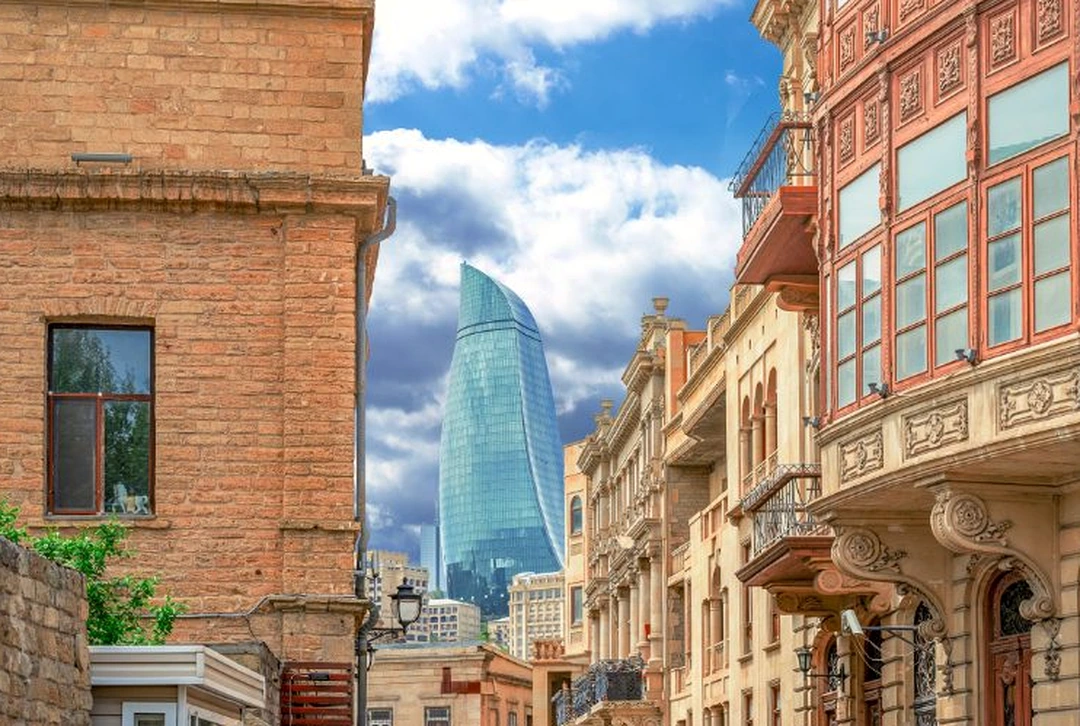
Stepping beneath the imposing stone arch of the Shamakhy Gate into the heart of Icherisheher, travelers are immediately enveloped by a captivating spatial matrix where honey-toned Absheron limestone recounts a millennia-long dialogue with Caspian sea winds. The Old City’s urban fabric is a triumph of medieval microclimatic engineering: serpentine alleyways not only served to break the momentum of invading cavalry charges, but also acted as a natural windbreak tempering the biting Khazri gales blowing off the sea. Dense clusters of two- and three-story residences—crowned with intricately carved wooden balconies jutting overhead—cast continuous ribbons of shade across a modest yet vibrant network of pedestrian lanes.
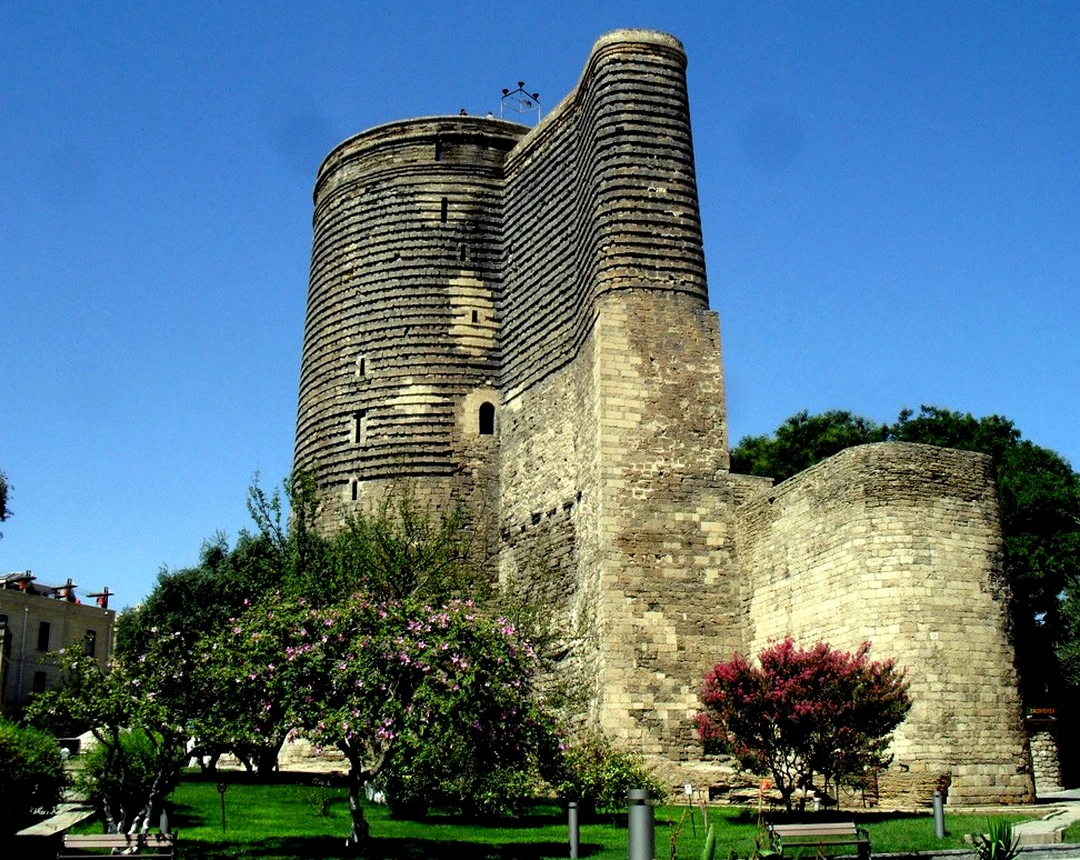
At the proud focal point of the ensemble, the Maiden Tower (Qız Qalası) rises like a monumental abstract sculpture that defies conventional geometry. Standing 29.5 meters tall, this mysterious cylindrical structure boasts walls of astonishing thickness—measuring 5 meters at the base and tapering gradually to 4 meters at the crown. With origins tracing back to the seventh or sixth century BCE, the multi-story edifice is joined to a massive buttress wall extending eastward, creating an asymmetrical silhouette unique in the world. Behind its rugged limestone exterior lies a precisely stratified interior of eight stories connected by a spiral staircase hollowed directly into the wall thickness, capable of sheltering hundreds of people alongside a 21-meter-deep well tapping pure groundwater. The alignment of its embrasures and summit with the rising sun at the equinoxes points to a dual origin as an ancient astronomical observatory and primordial fire sanctuary before its conversion into an impregnable coastal watchtower.
If the Maiden Tower embodies enigmatic strength, the Palace of the Shirvanshahs—crowning the highest point of Icherisheher’s limestone hill—represents the supreme realization of the fifteenth-century Shirvan-Absheron architectural school. Designed across three terraced courtyards, the complex cleanly separates ceremonial court functions, sacred worship, and royal domestic quarters. Its crowning jewel is the Divankhana, an octagonal open pavilion framed by slender colonnades and a richly sculpted stone dome. Here, stone masonry reaches virtuoso heights through the famed shabaka latticework technique: court artisans carved local limestone slabs into flawless geometric traceries interwoven with arabesque flora and flowing Kufic calligraphy. Under the intense coastal sunlight, these pierced shabaka screens act as optical filters, diffusing harsh glare into shimmering patterns of light and shadow that lend massive stone architecture the weightless grace of embroidered silk.
The architectural sophistication of this era is equally evident in its mastery of thermal and hydraulic engineering, exemplified by the royal bathhouse built half-underground to retain warmth year-round and heated via an intricate network of glazed ceramic flues. This same devotion to symmetry and harmony with nature finds symbolic resonance at the Ateshgah Fire Temple on the Absheron Peninsula. Constructed in a closed pentagonal plan with ascetic cells surrounding a spacious central courtyard, Ateshgah centers on its open four-arched Chahar Taq altar. Hollow stone pillars built into the structure functioned as natural gas conduits channeling underground vapors upward to feed lotus-shaped braziers blazing beneath the open sky. Masterful stone carving paired with deep geological intuition elevated these monuments into architectural triumphs where raw earth and living fire unite in an eternal ode to Azerbaijan.
As dusk settles over the darkening waters of the Caspian Sea, Baku undergoes a breathtaking metamorphosis from a bustling oil-and-gas capital into a grand open-air stage of visual art. Carefully choreographed lighting merges two contrasting eras into an enchanting synthesis. Along the base of the twelfth-century Shirvanshah limestone ramparts, recessed uplighting washes the sedimentary stone in warm amber tones, accentuating every chisel mark left by medieval stonemasons. Rising in dramatic counterpoint against this timeless solemnity is the futuristic silhouette of the trio of Flame Towers soaring 182 meters above the city ridge. More than ten thousand high-output LED fixtures embedded across their glass facades ignite in unison, simulating roaring waves of blue and crimson fire before shifting into the flowing national flag of Azerbaijan rippling in the sea breeze. This visual dialogue between the millennium-old Maiden Tower and digital flames is far more than modern pyrotechnics—it is a vivid affirmation of an unbroken identity rooted in fire worship from ancient Zoroastrianism to the contemporary era.
Winding deeper along the cobblestone alleys of Icherisheher, nighttime unfolds at an unhurried pace, worlds apart from the brightly lit Caspian boulevard beyond the walls. Historic Silk Road waystations—such as the fifteenth-century Multani Caravanserai and Bukhara Caravanserai—have been thoughtfully repurposed into atmospheric cultural dining spaces. Inside tranquil stone-paved courtyards beneath graceful Eastern pointed arches, locals and travelers gather around tables centered on steaming brass samovars. Fine Azerbaijani black tea is poured into signature pear-shaped Armudu crystal glasses, whose pinched waists retain heat at the base while their flared rims cool each sip to the ideal temperature. An evening tea ritual in Baku is incomplete without traditional Murabba preserves—crafted from tender green walnuts cured in lime water, fragrant rose petals, or sweet white cherries—savored between sips so the brisk astringency of the tea melds seamlessly with the delicate floral sweetness of Caucasian fruit.
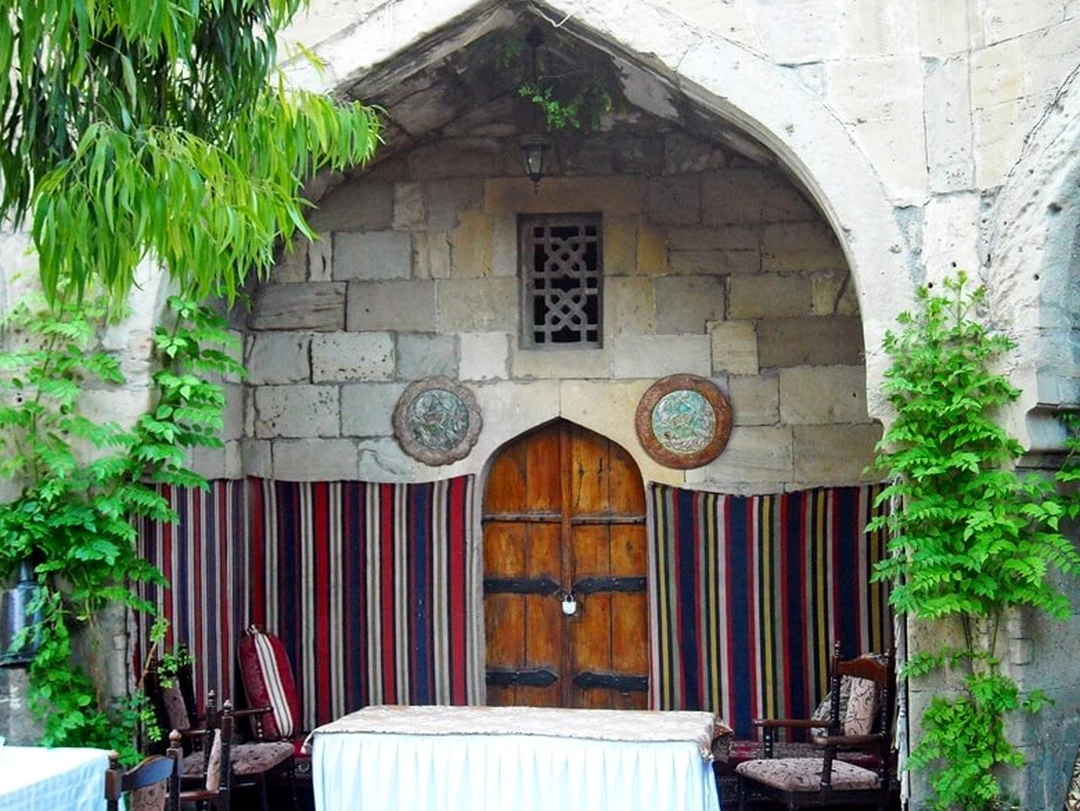
The rich aromas of royal Azerbaijani cuisine soon awaken the senses inside centuries-old townhouses converted into traditional restaurants. Foremost among them is Shah Plov—celebrated as the “King of Caucasian Feasts”—presented inside a crisp, saffron-gold pastry crust shaped like a royal crown. As the chef slices open the crust with a sharp blade, fragrant steam perfumed with long-grain basmati rice, clarified lamb butter, roasted chestnuts, tart dried plums, and golden raisins fills the vaulted stone room. Alongside it, skewers of herb-flecked minced lamb Lula Kebab sizzle fresh off glowing charcoal, served with blistered Lavash flatbread and jewel-red pomegranate seeds for a feast steeped in steppe and ancient Persian culinary heritage.
Baku’s night deepens into pure enchantment as traditional melodies drift from intimate teahouses and vaulted subterranean jazz clubs. The soulful, melancholic resonance of the figure-eight-bodied Tar lute—carved from aged mulberry wood—intertwines with the plaintive cry of the three-stringed Kamancha spike fiddle and the crisp rhythmic pulse of the Gaval frame drum. This is the living home of Mugham, Azerbaijan’s classical modal music tradition rooted in complex improvisation and profound spiritual philosophy. Within these very Old City walls, traditional Mugham fused with Western jazz harmonies to birth the legendary Mugham Jazz movement pioneered by virtuoso Vagif Mustafazadeh—ensuring that nights in the Land of Fire linger not merely as dazzling spectacle, but as an unforgettable echo of timeless artistry.
Nestled peacefully at a historic crossroads of ancient Silk Road caravans, Baku’s cuisine is far more than culinary craft—it is a living chronicle of cultural synthesis uniting royal Persian gastronomy, Turkic steppe traditions, and the rich bounty of the Caspian Sea. Down the twisting stone lanes of Icherisheher, woodsmoke from oak charcoal mingles with the heady fragrance of saffron, fresh dill, and wild Absheron herbs, creating an intoxicating culinary atmosphere where every heirloom recipe reflects genuine hospitality and coastal refinement.
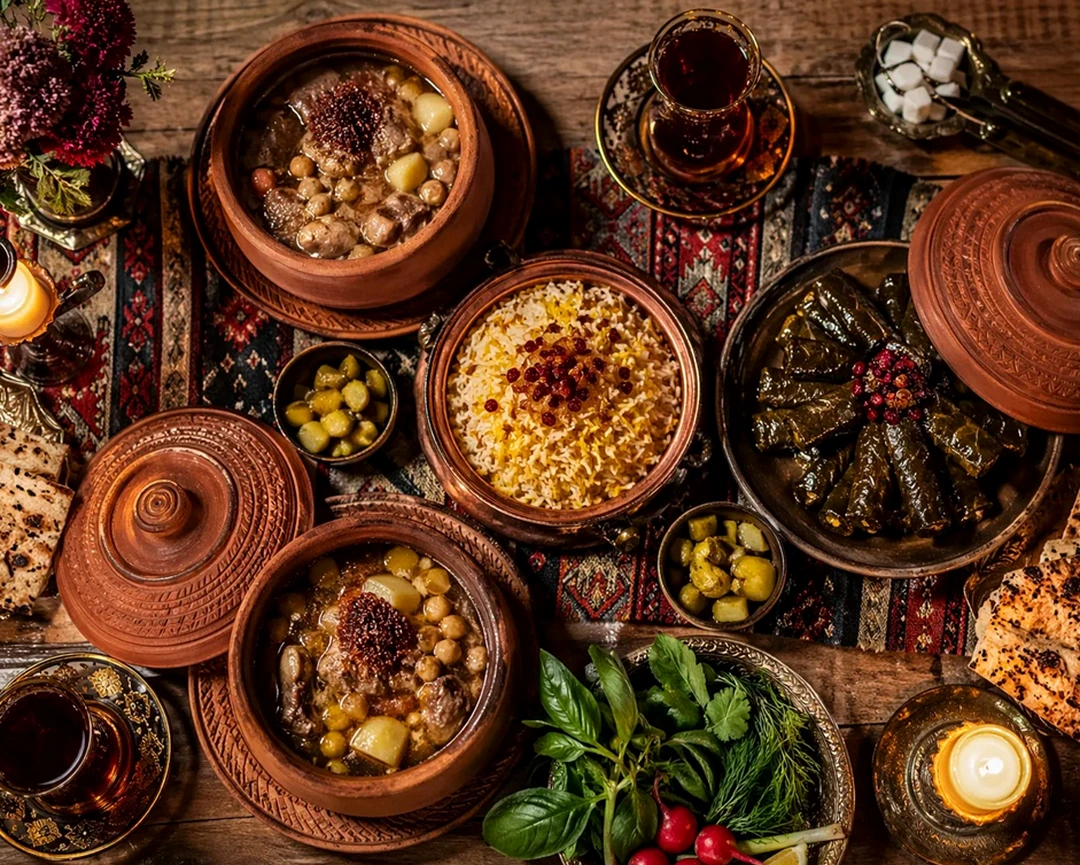
At the pinnacle of the Azerbaijani banquet stands Shah Plov, the revered “King of Pilafs,” historically reserved for grand celebrations in the courts of the Shirvanshah monarchs. This culinary masterpiece layers long-grain basmati rice infused with hand-harvested saffron threads from the Absheron Peninsula alongside tender braised lamb, nutty roasted chestnuts, tangy dried plums, and sweet Sultana raisins. All of these ingredients are sealed inside a paper-thin flatbread casing known as gazmak, generously brushed with melted butter and baked slowly in a clay oven until golden-brown and crisp. Brought to the table, the crust is ceremonially sliced from the crown downward like an opening flower, releasing billows of aromatic steam scented with butter, saffron, and royal spices across the historic dining room.
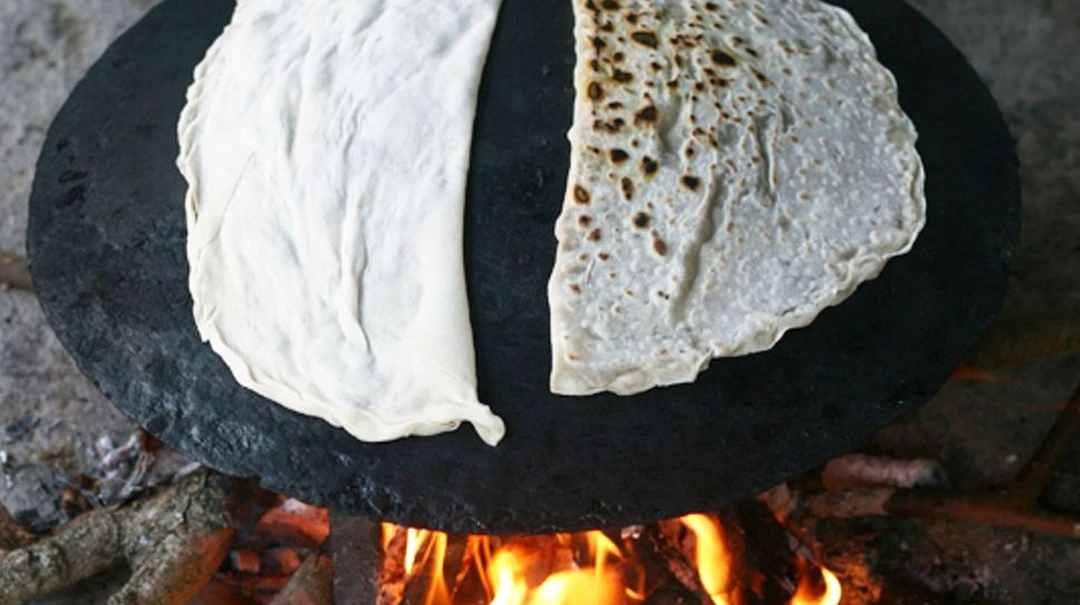
In delightful contrast to the regal grandeur of Shah Plov, Qutab flatbreads tell the rustic, irresistible story of everyday Azerbaijani life. Over convex cast-iron saj griddles glowing above hot coals, cooks roll dough to silk-thin translucency, fold it neatly around savory or sweet fillings, and blister each turnover dry in moments without oil. Fillings range from finely minced lamb and onion or creamy butter-mashed pumpkin to vibrant blends of wild greens including cilantro, scallions, spinach, and tart sorrel. The instant each puffed flatbread comes off the saj, it is brushed with glossy melted unsalted butter and dusted generously with ruby-red ground sumac, leaving a bright, tangy finish on the palate with every bite.
No exploration of Baku’s gastronomy would be complete without celebrating the prized seafood of the Caspian Sea, above all its celebrated sturgeon. Freshly caught sturgeon boasts firm, snow-white flesh naturally rich and marbled like a prime fillet steak. Thick, uniform cubes are marinated simply with coarse sea salt, crushed shallots, and fresh dill before being threaded onto metal skewers and grilled over glowing embers until the natural oils sizzle and caramelize. Grilled sturgeon reaches perfection when paired with Narsharab—a velvety reduction crafted from wild Goychay pomegranate juice—whose bright sweet-tart acidity balances the richness of the fish in effortless harmony.
A culinary journey through Baku concludes gracefully at a traditional Chaykhana teahouse tucked beneath the ancient fortress walls. Here, tea drinking is a unhurried ritual: strong black tea brewed in a gleaming brass samovar is poured into slender, pear-shaped Armudu glasses designed to keep the lower half piping hot while cooling the rim for comfortable sipping. Locals never stir sugar directly into the glass; instead, they dip a lump of saffron-infused rock sugar or savor spoonfuls of homemade Murabba jam made from young green walnuts, damask rose petals, or sweet white cherries, allowing the deep tannins of the tea and the delicate sweetness of the preserves to linger long after the final cup.
To experience the quiet pulse of ancient Icherisheher and stand before the sacred eternal flames of Ateshgah at their finest, understanding Baku’s seasonal weather and local transit options is the key to a seamless journey. Azerbaijan’s climate is heavily shaped by Caspian sea winds—most famously the brisk northern Khazri and the warm, dry southern Gilavar. Consequently, the ideal seasons to wander its limestone alleys are spring from April to June, when mild temperatures bring blossoms across the city, and golden autumn from September to October, when gentle sunshine bathes the thousand-year-old walls of the Shirvanshahs.
Your journey begins upon arrival at Heydar Aliyev International Airport, located roughly 25 kilometers from the city center. The Aero Express shuttle bus operates around the clock every 30 minutes, linking the airport directly to 28 May Central Station Square for a convenient and budget-friendly transfer. Ride-hailing apps such as Bolt and Uber are also widely used across Baku, making it effortless to ride straight to the Gosha Gala Gapisi double gates without haggling over fares. Once inside the roughly 21-hectare heritage core of Icherisheher, motor vehicles give way entirely to pedestrian exploration along medieval stone arches, granite steps, and traditional carpet-weaving workshops.
To reach the Absheron Peninsula suburb of Surakhani—where the Ateshgah Fire Temple stands about 30 kilometers outside the city center—travelers can ride the Baku Metro Red Line to Koroglu Station and transfer directly to public bus route 184, which stops right outside the temple entrance. The entire public transit network runs seamlessly on the reloadable BakiKart smart card, allowing effortless tap-and-go travel across metro and bus lines. For those prioritizing speed and flexibility, a 30- to 40-minute taxi ride from the Maiden Tower sweeps past historic oil fields that once reshaped global energy history before arriving at the sanctuary of eternal flames.
Regarding visiting hours, while the open-air streets and squares of Icherisheher remain freely accessible 24/7—allowing visitors to admire the atmospheric night illumination along the fortress walls—key monuments inside such as the Maiden Tower (Qız Qalası) and the Palace of the Shirvanshahs welcome guests daily from 10:00 AM to 6:00 PM. Admission tickets typically range from 10 to 15 Azerbaijani Manat (AZN) per monument. The Ateshgah Fire Temple maintains matching hours from 10:00 AM to 6:00 PM with an entry fee of around 9 to 10 AZN, granting access to the sanctuary courtyard, Sanskrit-inscribed monastic chambers, and life-size tableaux depicting the ascetic practices of historic fire-worshipping pilgrims.
One simple yet invaluable tip when exploring Baku is to wear soft-soled shoes with reliable traction, as centuries of footsteps have polished the Old City’s cobblestones to a slick sheen that can become slippery in sudden coastal gusts. Be sure to pause at a cozy street-side teahouse for a glass of robust black tea served in a pear-shaped Armudu glass alongside white cherry preserves and walnut Murabba. At lunchtime, treat yourself to quintessential local flavors—from herb-filled Qutab griddle pancakes and saffron-scented Shah Plov glistening with lamb butter to a steaming bowl of Dushbara soup brimming with dozens of meticulously pinched miniature dumplings. For travelers captivated by this rare synthesis of Zoroastrian heritage and classical Islamic architecture, joining an all-inclusive Caucasus tour package (Georgia & Azerbaijan) unlocks a seamless, deeply enriching journey through this legendary land of fire.