Wedged between the rugged gorges of the Kura River valley—where the natural terrain twists like a silk ribbon cinched across the throat of the South Caucasus—capital city Tbilisi entered human chronicles through a legend steeped in mythology yet closely tied to fascinating geology. In the fifth century, King Vakhtang I Gorgasali of the ancient Kingdom of Iberia rode out hunting through the dense, untamed forests along the banks of the Mtkvari River. Legend has it that when the king’s mighty falcon swooped down to strike a pheasant, both birds plunged into a steaming mineral spring and were cooked in the intense geothermal heat rising from the earth. Astonished by the relentless gush of warm, sulfur-rich thermal waters, the enlightened monarch immediately ordered the valley cleared, relocated the royal capital from ancient Mtskheta to this spot, and named the new settlement Tbilisi—derived from the Old Georgian root “tbili” in the Kartvelian language family, meaning simply “warmth.” This historic relocation was driven not merely by the allure of healing mineral springs, but by visionary military foresight that recognized a strategic stronghold commanding the entire trade artery linking the Black Sea with the Caspian Sea.
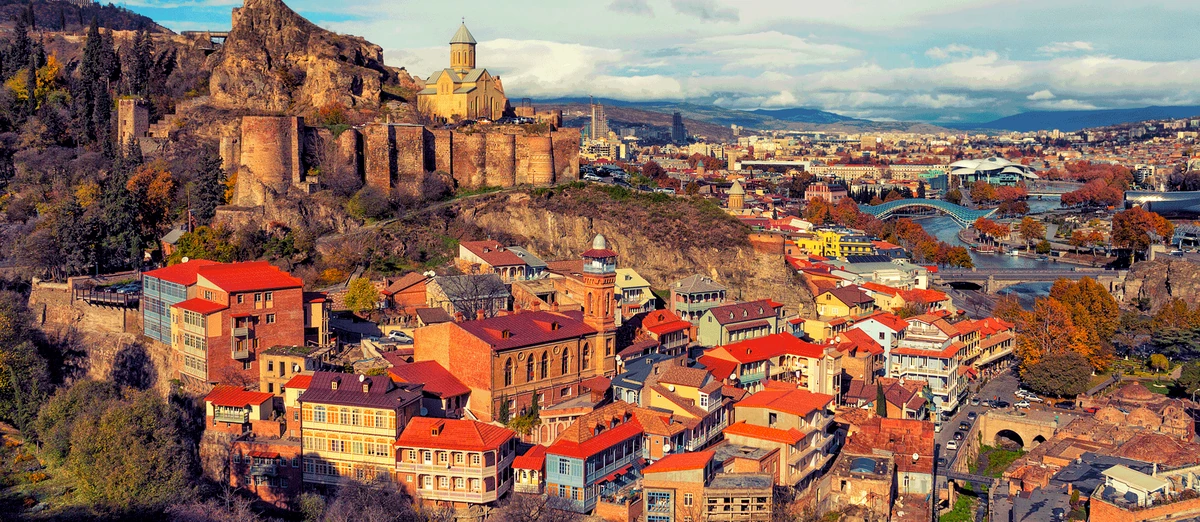
Standing guard over the fledgling seed of the newly founded capital was the imposing Narikala Citadel, crowned atop the steep Sololaki Ridge. The fortress’s precursor emerged in the fourth century under the name Shuris-tsikhe, meaning “Invidious Fortress” in the local tongue—an epithet that vividly captured a stronghold so impregnable it provoked envy and covetousness in every invading army that ever set foot in the region. First laid down by the Sasanian Persians, Narikala was swiftly reinforced by King Vakhtang Gorgasali and his successor, King Dachi, into an impenetrable shield. Divided into two distinct walled tiers, the rugged stone ramparts wound across jagged granite slopes—serving simultaneously as a garrison guarding the narrow gorge gateway and as the seat of the royal palace and sacred sanctuary, transforming the entire ancient settlement below into a self-contained bastion against steppe incursions.
Across dozens of tumultuous centuries, this land became the epicenter of some of the fiercest geopolitical clashes on the Eurasian continent. In the seventh century, Arab Islamic armies swept across the Caucasus Mountains, turning Tbilisi into the capital of the prosperous Emirate of Tbilisi for four centuries and leaving behind distinctive fired-brick vaulting techniques alongside Eastern public bathhouse culture. Not until the twelfth century, under the grand renaissance banner of King David IV—revered as David the Builder—was Tbilisi liberated, ushering in Georgia’s most radiant Golden Age under Queen Tamar. Yet that prosperity was soon brutally tested by the destructive hooves of the Mongol Empire in the thirteenth century. It was the Mongols who renamed the citadel Narin Qala, meaning “Little Fortress”—a name that endured and evolved into Narikala down to the present day—before the savage raids of warlord Timur carved even deeper scars across its layers of heritage.
The ultimate tragedy struck in the late eighteenth century, when Agha Mohammad Khan of Persia’s Qajar dynasty marched tens of thousands of troops to raze the city following the bloody Battle of Krtsanisi. The entire Old Town, with its ornate wooden residences, was reduced to ashes, ancient churches were desecrated, and much of Narikala Fortress was heavily battered by artillery sieges. Even so, its thousand-year-old rubble-stone foundations and the subterranean sulfur hot springs at the bottom of the gorge endured resiliently as an indomitable symbol of Georgian vitality. The forced yet miraculous fusion of Eastern Orthodox traditions, Persian Islamic aesthetics, Arab heritage, and Turkish flair did not cancel one another out; rather, they coalesced into an unprecedented cultural tapestry, turning Tbilisi Old Town into a living open-air museum where every moss-draped stone holds a fragment of glorious dynasties long past.
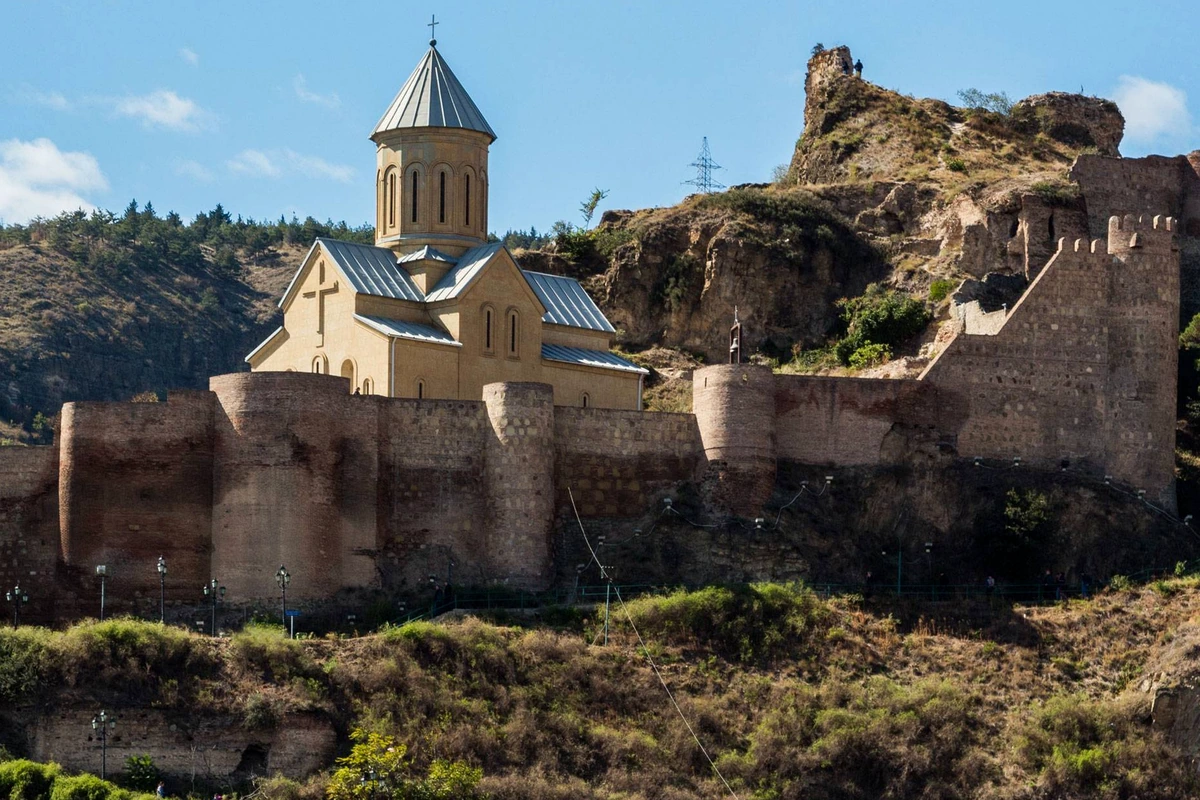
Situated at a rugged crossroads of the Lesser Caucasus, Tbilisi boasts a dramatic geomorphological structure carved by the tectonic valley of the Mtkvari—also known in classical Western texts as the Kura River. Nestled between the eastern flanks of the sprawling Trialeti Range and the verdant Saguramo Mountains, the city sits inside an enclosed natural basin that nonetheless opens onto the vital trade corridor connecting the Black Sea and the Caspian Sea. Viewed through the lens of military geography and Eastern geomancy, Tbilisi’s setting achieves a rare perfection of mountain-backed, water-embraced harmony: firmly anchored against the limestone screen of Sololaki Ridge while drawing vibrant energy from the winding Mtkvari rushing through deep gorges. This distinctive topography not only established a formidable natural bulwark against raiding cavalry from the northern steppes, but also generated a mild microclimate shielding the valley from scorching dry winds off the Iranian Plateau and biting cold blasts from the Greater Caucasus.
Tbilisi’s spatial layout is a masterclass in adapting to sharply terraced terrain, where every architectural structure leans into natural gradients to soar into open air. Commanding the entire spatial composition is the Sololaki slope, where Narikala Fortress rises like an eternal sentinel weathered by millennia. Founded under the Sasanian Persian Empire around the fourth century as Shuris-tsikhe, the stronghold was built by embedding rough-hewn stone foundations directly into the monolithic sandstone and shale veins of the cliffside. Lime mortar compacted with volcanic ash paired with the thin red fired bricks characteristic of the Caucasus region produced resilient defensive walls—flexible enough to withstand frequent seismic tremors while blending seamlessly into the raw hues of the rock face. From Narikala, ancient curtain walls zigzag along the fissures of the Tsavkisistskali Gorge, marking a clear boundary between the impregnable upper citadel and the lower residential quarters below.
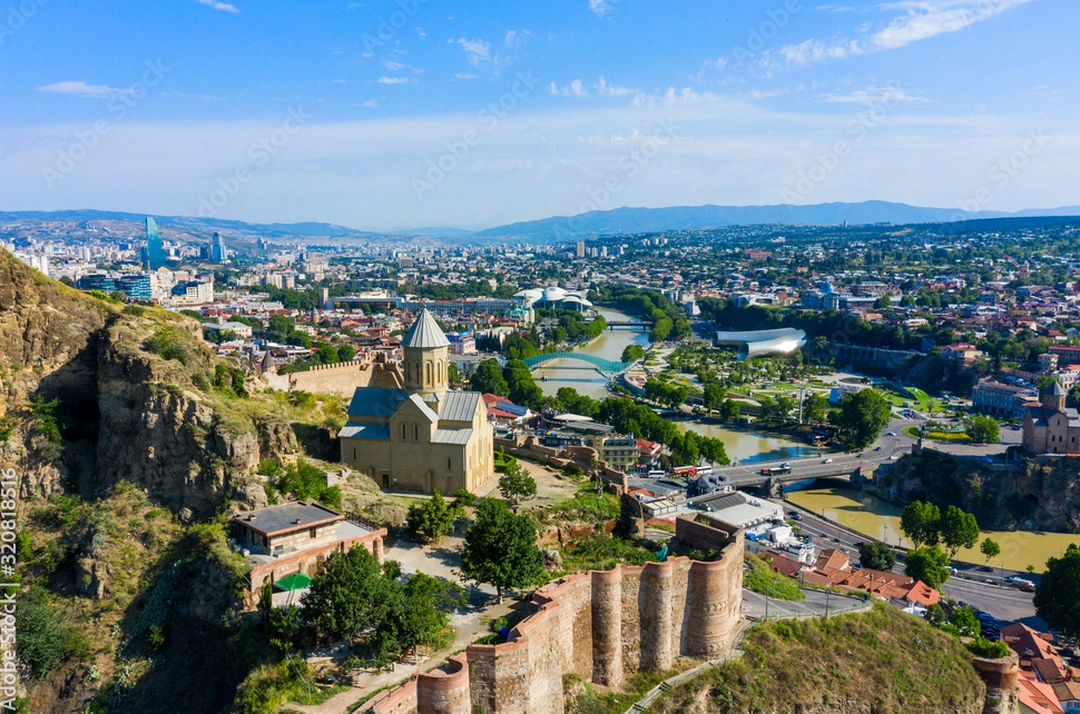
At the foot of the ramparts, the Old Town landscape cascades in dramatic stepped tiers down toward the Abanotubani basin. The decisive factor behind continuous human settlement here is the subterranean network of natural sulfur geothermal springs, where mineral-rich waters bubble forth perpetually at temperatures between 40°C and 50°C. Ancient hydraulic engineering channeled these underground streams into a cluster of semi-subterranean brick-domed bathhouses modeled after traditional Persian architecture, complete with oculus skylights crowning each dome to admit natural daylight and vent steam pressure. This symbiosis between mineral-dense hydrothermal geology and unadorned brick-vault construction transformed the quarter into the cradle of local wellness civilization. Directly across the gorge, the sheer Metekhi Cliff rises like a natural fortress wall above the water, creating a theatrical contrast between the swirling depths of the Mtkvari and traditional wooden houses perched precariously along the cliff edge.
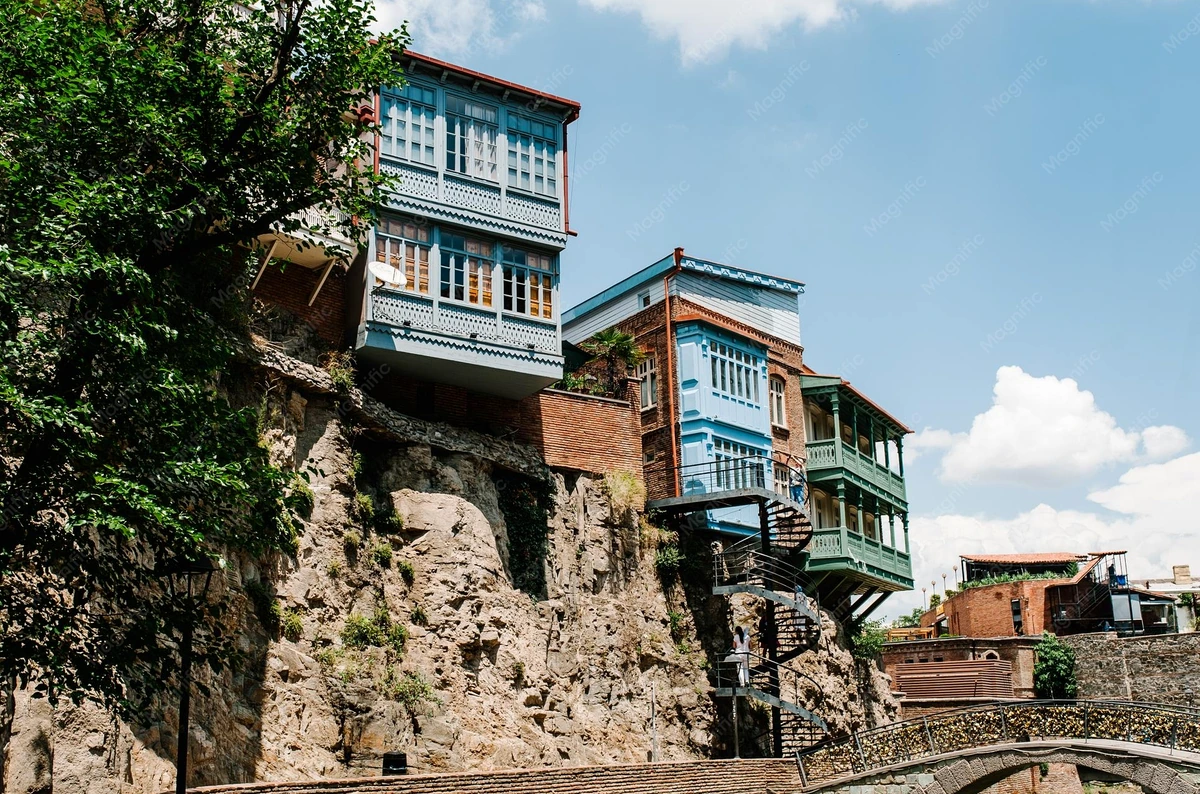
Tbilisi’s overall cityscape unfolds like a colossal open-air amphitheater, guiding the observer’s gaze seamlessly across successive spatial tiers. Historic residences adorned with intricately fretworked wooden balconies—known as shushabandi—cantilever boldly off steep rock faces like eagles’ nests clinging to stratified cliffs. The continuity of time registers vividly in the visual rhythm of the scenery: from the somber ash-gray slate of Narikala and the weathered brick of ancient Abanotubani, the eye is immediately drawn to the undulating steel-and-glass canopy of the Bridge of Peace. Spanning 150 meters across the Mtkvari, this contemporary footbridge never disrupts the natural order of the terrain; instead, it flows like a luminous silk ribbon linking a thousand years of history atop Sololaki with modern civic life in Rike Park, completing a one-of-a-kind Caucasian landscape painting.
The spatial fabric of Tbilisi Old Town is a grand visual symphony in which the steep topography of the Kura River gorge compelled human ingenuity to invent a remarkably tiered urban form. Clinging to the sheer rocky slopes of Mount Mtatsminda, centuries-old houses step down one atop another in a natural cascade, creating an intricate yet effortlessly harmonious perspective. Punctuating dark fired-brick facades are traditional wooden balconies—locally called aivani—projecting gracefully into space. Masterful fretwork carving reaches supreme refinement through geometric patterns and stylized floral motifs blending Persian aesthetics with Western Baroque sensibilities, finished in weathered coats of turquoise, ivory, or ochre that turn every winding alley into an open-air gallery of wood sculpture.
Lowering one’s gaze toward the geothermal basin below, the Abanotubani district reveals an architectural realm in striking contrast to the airy wooden fretwork above. Here, hemispherical fired-brick domes emerge directly from the earth, evoking the celebrated public bathhouses of the Safavid Empire. Entire networks of sulfurous thermal soaking pools are sunk deep underground to harness natural geothermal heat and maintain steady water temperatures between 40°C and 50°C. At the apex of each rounded brick dome sits a small circular lantern vent, allowing tendrils of steam to curl skyward while shafts of sunlight pierce straight down into turquoise-tiled pools. Standing out amid the earthy raw brick ensemble is the Orbeliani Bathhouse, whose dazzling blue Majolica-tiled facade faithfully echoes the grand iwan portals of Central Asian mosques, lending an opulent, enigmatic focal point.
Crowning the granite ridge above and commanding the entire valley sits Narikala Fortress, the supreme emblem of Caucasian defensive fortification. The citadel’s massive scale represents a multi-layered historical palimpsest, where rough-hewn fourth-century Sasanian stonework merges with sturdy gray-brick curtain walls from the Bagratid dynasty and fortified watchtowers added under Mongol rule. In places, the ramparts exceed three meters in thickness, bound together with lime mortar as hard as tempered steel and zigzagging along natural rock ledges to neutralize ancient siege engines. Looking down from the fortress walls, this ancient defensive ring forms a rugged stone frame cradling red-tiled rooftops and the languidly winding river below.
Standing in direct visual dialogue with the time-worn gravitas of Narikala’s stone walls is the Bridge of Peace—a bold manifesto of contemporary deconstructivist design poised right over the Kura River. Designed by renowned Italian architect Michele De Lucchi, this 156-meter pedestrian bridge features an undulating canopy resembling a luminous ribbon draped lightly across the water. Its structure pairs a complex curved tubular steel frame with thousands of individually cut trapezoidal glass panels. The transparency of the glass envelope grants pedestrians uninterrupted panoramic views of the historic cityscape, embodying a daring yet respectful synthesis of futuristic material engineering and millennia-old heritage.
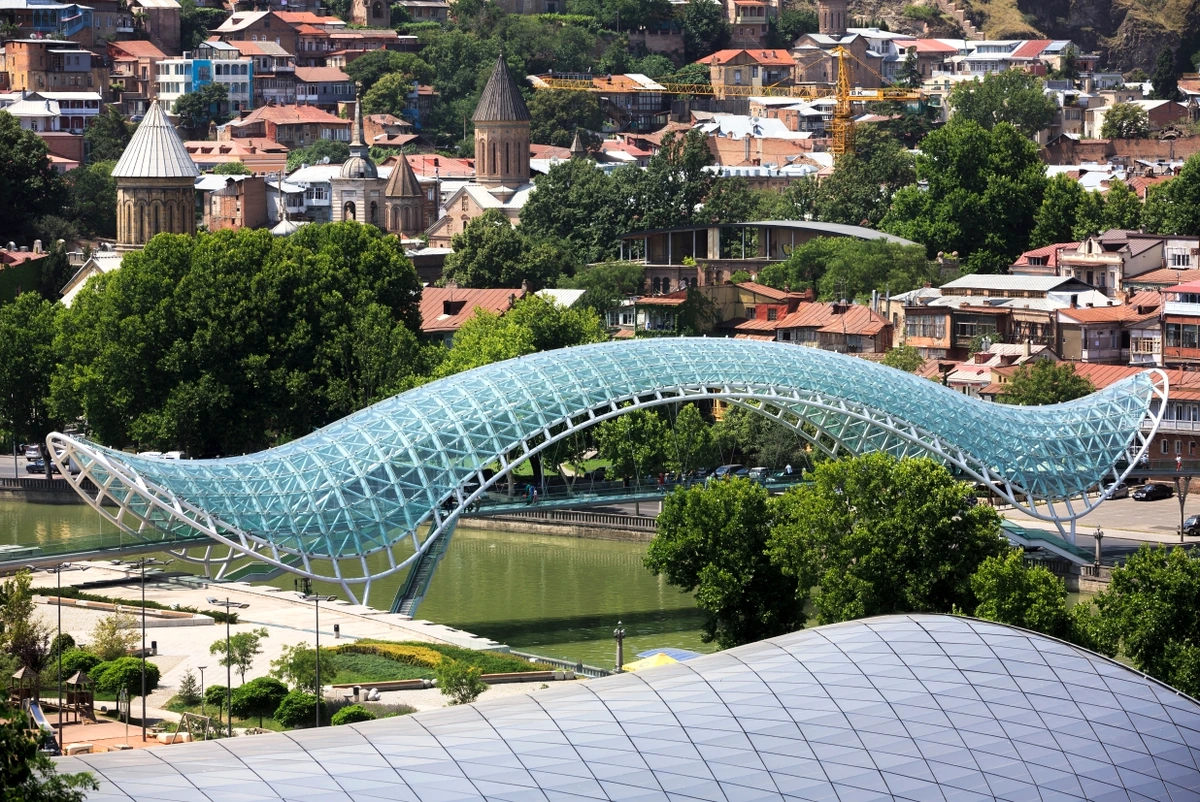
The bridge’s precision mechanical craftsmanship is elevated even further by a sophisticated interactive lighting installation created by French lighting designer Philippe Martinaud. As dusk falls, thousands of high-tech LED fixtures concealed within the steel trusses awaken in unison, programmed to pulse in Morse code. These rhythmic light sequences spell out the chemical elements of Mendeleev’s periodic table that compose the human body, conveying a deeply humanist message of universal connection and peace. The visual interplay between weathered Persian sulfur-bath domes and Narikala’s craggy stone ramparts on one side, and a cutting-edge ribbon of light-refracting steel and glass on the other, transforms central Tbilisi into a living architectural museum where past and future proudly elevate one another rather than collide.
When twilight fades behind the Mtatsminda hills, Tbilisi does not sink into silence; instead, it steps into an enchanting dance of light where a thousand years of history and contemporary energy converse vividly across the waters of the Kura River. High atop the Sololaki Ridge, ancient Narikala Fortress—a historical witness first raised in the fourth century under the Sasanian Persian Empire as Shuris-tsikhe—glows resplendently under high-output architectural floodlighting. Its sturdy sandstone ramparts, which once weathered the fire and smoke of sieges from Mongol armies to Safavid Persians, cast stately, solemn reflections across the swirling Mtkvari below. The golden warmth of illuminated stone shimmers on the river surface, mingling with wisps of steam rising from the subterranean vents of the Abanotubani sulfur baths to compose a natural live-action tableau no artificial stage could ever replicate.
Directly across from the medieval citadel’s quiet majesty unfolds a dazzling technological spectacle on the Bridge of Peace, the undulating steel-and-glass masterpiece conceived by Italian architect Michele De Lucchi and French lighting virtuoso Philippe Martinaud. Stretching 156 meters across the river, the bridge integrates more than 1,200 smart LED fixtures and tens of thousands of light-emitting diodes. Each night, the entire glass canopy transforms into an animated celestial chart, pulsing through intricate algorithms to transmit Morse-code messages celebrating life, peace, and the periodic elements that make up human existence. Streams of aquamarine and silvery-white light ripple endlessly across the curved glass, illuminating the dark waters of the Kura in a breathtaking visual dialogue between futuristic design and the ancient fortress towering on the cliff above.
Stepping away from the main riverfront to slip deep into the heart of the Old Town, Tbilisi after dark ushers travelers into a poetic, nostalgic realm. Beneath the warm amber glow of streetlamps filtering through plane trees, symmetrically carved wooden balconies—the hallmark local architecture blending nineteenth-century Persian and Russian influences—appear as delicate as wooden lacework. Along winding cobblestone lanes such as Shardeni Street, Erekle II Street, and Chakhrukhadze Street, nightlife unfolds with uncommon grace. Free from raucous commercial clamor, intimate wine bars and subterranean lounges tucked beneath antique brick arches welcome guests with the earthy strum of the Panduri lute and traditional Georgian polyphonic singing—a celebrated intangible cultural heritage fiercely cherished across generations.
Tbilisi’s evening experience only reaches its fullest expression through the famed Supra feast, where a toastmaster known as the Tamada guides philosophical toasts over clay pitchers of wine fermented in subterranean qvevri vessels according to an eight-thousand-year-old tradition. Amid the rich bouquet of robust Saperavi or crisp, tannic Rkatsiteli wines, platters of golden cheese-filled Adjaruli Khachapuri crowned with a velvety egg yolk and steaming baskets of Khinkali dumplings fragrant with fresh cilantro and cracked black pepper arrive in endless succession. Paired with the fierce warrior steps of the Khorumi dance or the graceful, hypnotic swirl of the Acharuli performed inside centuries-old marani wine cellars, every evening in Tbilisi becomes a living chronicle of the eternal vitality of Caucasian culture.
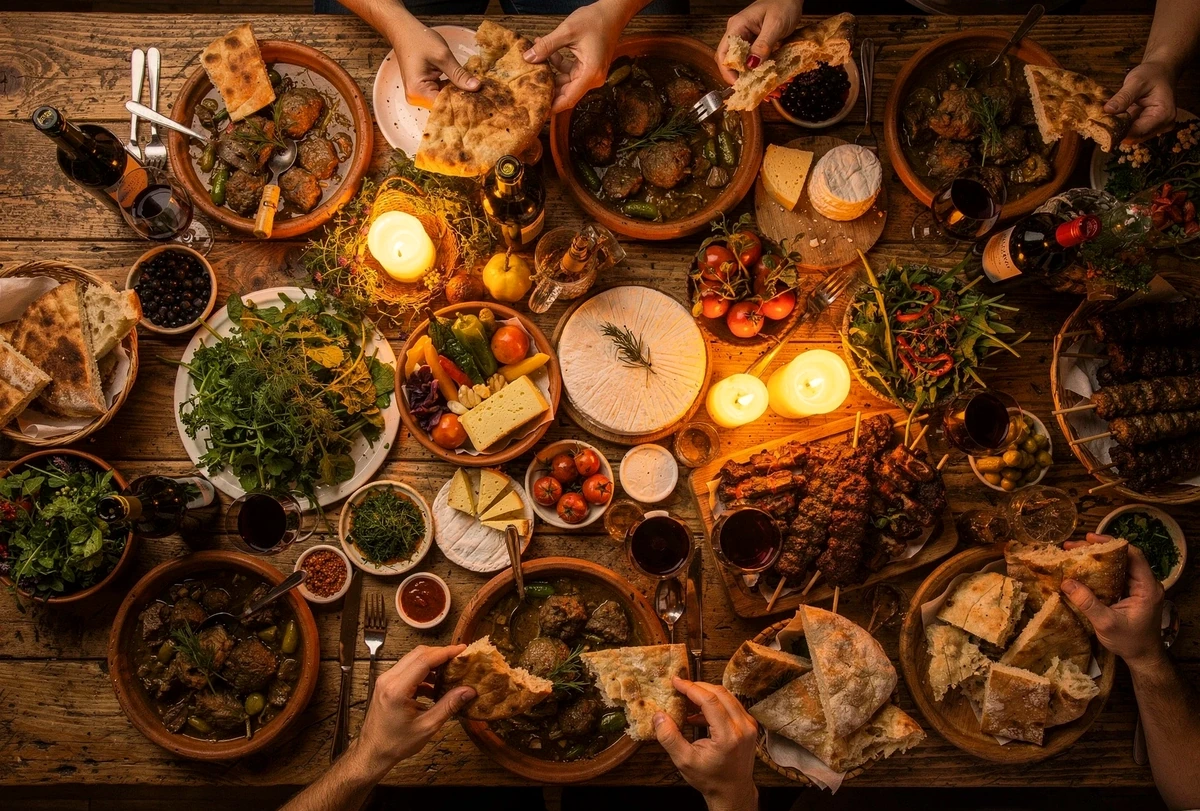
Positioned at the legendary crossroads of Silk Road caravans, Tbilisi unfolds like a chronicle told through aroma and flavor, where culinary heritage transcends mere sustenance to become a sacred cultural institution. The soul of Georgian spiritual life converges in the Supra—a traditional feast rooted in profound communal hospitality where no inch of the tablecloth is ever left bare. Within the incense-scented, candlelit ambiance of ancient brick-vaulted cellars at the base of Narikala Fortress, the Supra is orchestrated by a Tamada—an honored toastmaster chosen to deliver eloquent, philosophical toasts to friendship, homeland, ancestors, and love. Every raised glass becomes a hymn to life, turning an ordinary meal into a forum of kinship and cultural fellowship passed down across centuries.
The soul-stirring magic of every Supra stems from an illustrious winemaking heritage stretching back more than 8,000 years in archaeological record, establishing Georgia as the world’s very first cradle of viticulture. The priceless treasure defining Caucasian culinary identity is winemaking inside giant terracotta amphorae called Qvevri—a singular craft and fermentation method inscribed by UNESCO on the Representative List of the Intangible Cultural Heritage of Humanity. Rather than using Western oak barrels, Georgian vintners crush indigenous grape varieties such as Saperavi or Rkatsiteli and pour the juice, skins, stems, and seeds together into beeswax-lined Qvevri buried completely underground to maintain steady natural temperatures for months on end. This unhurried, non-interventionist maceration yields famed amber wines prized for bold tannic structure, layered astringency, and the earthy minerality of the mystical East.
Accompanying every brimming cup of wine is the iconic duo that defines Georgian gastronomy: Khachapuri and Khinkali. Found along every cobblestone lane of the Old Town, Khachapuri—most notably the coastal Adjaruli Khachapuri—enchants diners with its boat-shaped crust brimming with molten, briny Sulguni cheese, a farm-fresh egg yolk, and a pat of golden butter evoking the sun over the Black Sea. Locals tear off the crisp, clay-oven-baked bread ends by hand to swirl together the rich, velvety filling. Right alongside it, Khinkali soup dumplings demand an artful technique of their own. Hand-pleated by artisans with at least nineteen meticulous folds, each dumpling encases spiced beef minced with Caucasian herbs and a savory, piping-hot broth. Diners grasp the thick dough topknot by hand, take a careful bite to sip out the fragrant broth before eating the filling, and leave the dough knobs on the plate as a tally of dumplings enjoyed.

The flavors of Tbilisi Old Town grow even richer with herb-infused starters like Badrijani Nigvzit—chargrilled eggplant slices rolled around a garlicky walnut paste and studded with ruby-red pomegranate seeds. Strolling around Meidan Square and the winding lanes flanking the Kura River, visitors inevitably spot colorful garlands of Churchkhela hanging outside rustic wooden storefronts. Crafted by threading walnuts or almonds onto a string and dipping them repeatedly into thickened, flour-bound grape must, this chewy, nutty traditional energy sweet sustained Caucasian warriors on horseback across centuries of turbulent history.
To experience the Eurasian charm of Georgia’s capital at its finest, timing your visit is essential. May through June, when spring bursts with fresh greenery, and September through October, when crisp autumn weather coincides with the joyous Rtveli grape harvest festival across the valleys, showcase Tbilisi at its absolute peak. Daytime temperatures hover comfortably between 18°C and 25°C, while cool river breezes funneling through the Kura gorge dispel any basin heat—creating ideal conditions for leisurely walks up thousand-year-old cobblestone lanes.
A classic, well-paced itinerary begins in the early morning in the Abanotubani thermal bath quarter, where red-brick domes release wisps of sulfurous mist into the crisp air. After wandering through Leghvtakhevi Gorge to admire the natural waterfall cascading right inside the city heart, stroll across Rike Park to board the aerial cable car soaring over the Kura River. In under three minutes—costing roughly 2.5 Georgian Lari (GEL) via a convenient Metromoney transit card—the upper station atop Sololaki Ridge opens onto sweeping panoramas of mighty Narikala Fortress and the towering aluminum statue of Kartlis Deda (Mother of Georgia). From the fortress, rather than riding the cable car back down, follow the scenic stone footpath winding through the National Botanical Garden of Georgia—an ecological sanctuary evolved from seventeenth-century Bagrationi royal gardens, home to thousands of rare plant species and historic stone arch bridges spanning the babbling Tsavkisistsqali Stream.
Tbilisi’s heritage landmarks offer remarkably accommodating hours for travelers from around the world. Narikala Fortress and the Bridge of Peace remain open 24 hours a day with free admission; the undulating glass bridge is especially breathtaking after dark, illuminated by thousands of LEDs programmed to represent the chemical elements of the human body. Celebrated sulfur bathhouses such as Chreli Abano and Gulo’s Thermal Spa operate from 8:00 AM until midnight; public bath admission ranges from 10 to 20 Lari, while private Persian-style vaulted rooms adorned with intricate tilework cost between 100 and 300 Lari per hour and should be reserved several days in advance. When visiting Georgian Orthodox monasteries and cathedrals such as Metekhi Church or Sioni Cathedral, dress modestly: women should wear a headscarf and a skirt below the knee, while men should wear long trousers.
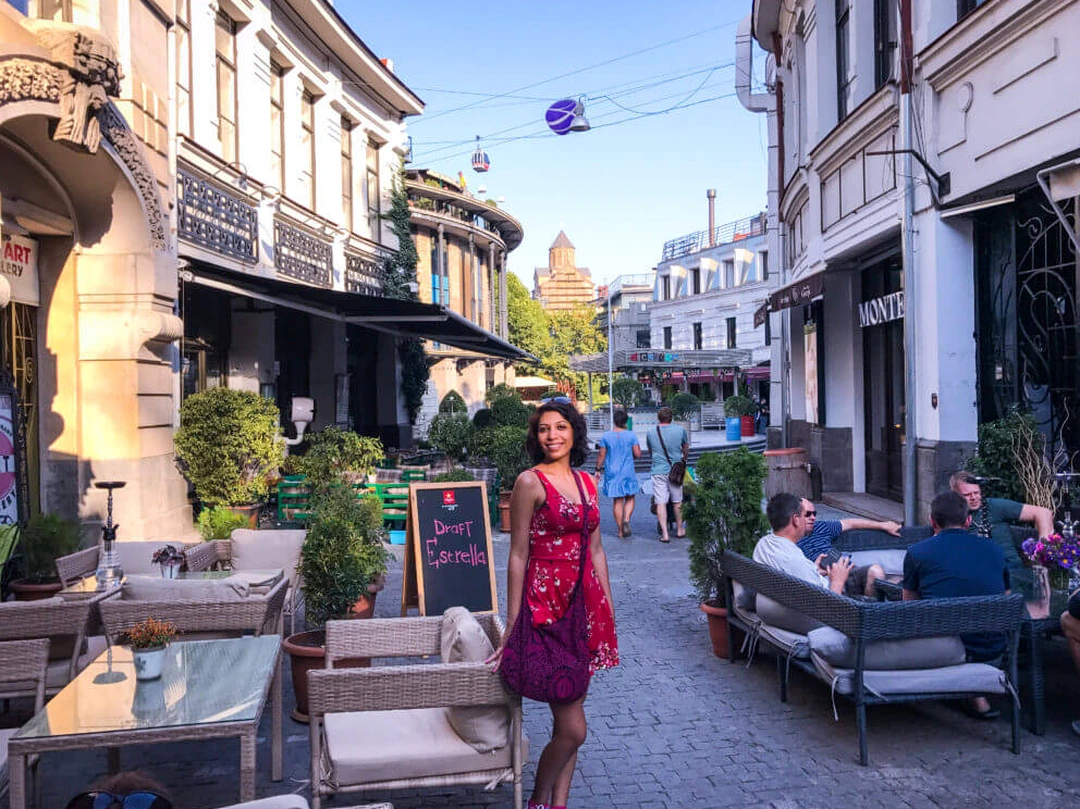
As sunset gilds the waters of the Kura River, devote your evening to soaking up the lively atmosphere along pedestrianized Shardeni Street and Chardin Lane. Once a bustling medieval artisans’ guild quarter, the neighborhood now brims with stylish sidewalk cafés, independent art galleries, and atmospheric wine cellars. It is the ideal setting to savor rich, boat-shaped Adjarian Khachapuri, bite into juicy peppered Khinkali dumplings, and sip golden-amber Saperavi or Rkatsiteli wine fermented purely in subterranean Qvevri clay vessels according to Georgia’s 8,000-year UNESCO-recognized heritage. In busy public hubs or when hailing taxis, rely on reputable ride-hailing apps or licensed transport services to ensure transparent fares and avoid street haggling.
Keeping these practical tips on local rhythm and logistics in mind will turn your journey through this fabled South Caucasus capital into a poetic blend of layered history and vibrant modern living. To ensure you never miss a single heritage highlight while enjoying seamless accommodations and authentic regional dining in complete comfort and safety, consider joining an all-inclusive Caucasus (Georgia – Azerbaijan) tour package thoughtfully curated by seasoned destination specialists.