Before Western expeditionary sails cut through the waves into the foggy bay, the coastline curving around the San Francisco strait was the ancestral homeland of the Ohlone people, specifically the Ramaytush branch. Across millennia of quiet continuity, the Ramaytush maintained a pure harmony with the ocean, relying on abundant halibut and shellfish as well as ancient oak groves stretching from the hillsides down to the water’s edge. Nature in that era kept its untamed grandeur, where Pacific currents surged through a narrow gap wedged between sheer sandstone cliffs, cloaked in year-round fog that concealed the entrance to one of the safest inland bays on the North American continent.
That primeval order officially turned toward a turbulent historical chapter in 1776, when Spanish explorer Juan Bautista de Anza led an expedition to chart the Alta California coast. Deeply aware of the coastal headland’s strategic military value, Juan Bautista de Anza ordered the establishment of the fortified Presidio of San Francisco alongside a nearby mission settlement. Beneath the flag of the Spanish Empire and later the Republic of Mexico, this military outpost became a vital link guarding the entire maritime gateway, laying the foundational stones for a global military and trading port city over the centuries that followed.
By the summer of 1846, the region’s geographical narrative gained a deeply symbolic cultural landmark tied to explorer and topographical officer John C. Frémont. Standing atop a windswept ridge overlooking the deep-water strait opening straight onto the vast ocean, Frémont likened the sweeping vista to the fabled ancient harbor of Chrysoceras in imperial Byzantium. He chose to inscribe the name Chrysopylae—meaning Golden Gate—on the military map, holding fast to the belief that this waterway would soon become a wide-open gilded portal linking prosperous maritime trade between the interior of the new continent and the storied realms of the East.
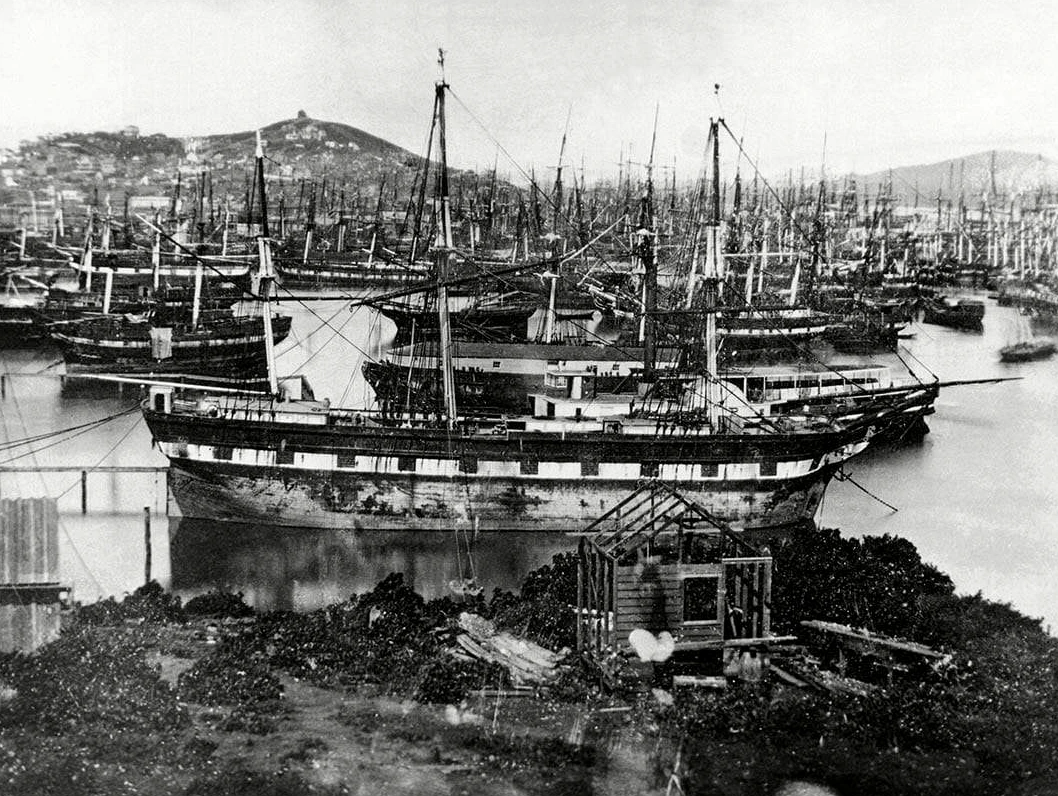
John C. Frémont’s foresight quickly became reality just two years later, when the California Gold Rush erupted with full force in 1848 at Sutter’s Mill. The lure of gold sparked massive waves of migration from every corner of the globe pouring toward the West Coast. From a quiet stretch of water, the Golden Gate strait filled with the masts of thousands of naval vessels and merchant ships arriving after braving the storms of Cape Horn. A sparsely populated land transformed almost overnight into one of the busiest maritime commercial and service hubs in the Pacific, driving immense demand for provisions to feed the surging gold-seeking populace.
Amid the shifting currents of the times, Fisherman’s Wharf began taking shape in the 1860s, originating with waves of Italian mariners, many hailing from seasoned coastal regions such as Genoa and the island of Sicily. They brought with them the craft of Dungeness crab harvesting, cod net fishing, and traditional wooden felucca sailboats painted in vibrant Mediterranean hues. Once a raw waterfront landing, it soon grew into a bustling fish market filled with the rich aroma of family-recipe Cioppino seafood stew cooked right aboard boats from the day’s fresh catch, carving out an unmistakable culinary identity.
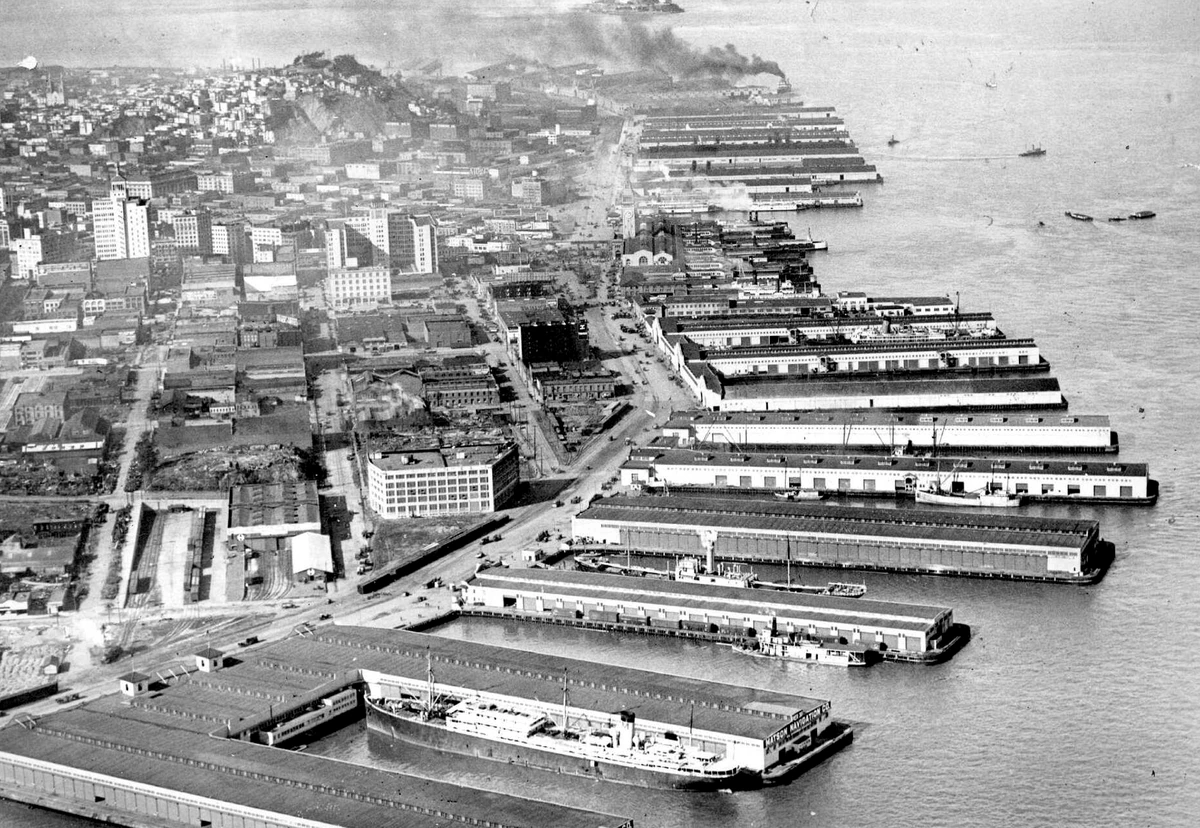
Over decades of commercial port infrastructure shifts and evolving modern shipping routes, the wharf district gradually moved beyond purely cargo transfer into an era of heritage revitalization. Notably in 1978, Pier 39—formerly a dilapidated industrial timber freight pier—was thoughtfully planned and restored into an open-air cultural, dining, and historic preservation space. The blend of bold Gold Rush seafaring memories and contemporary urban life has made the entire shoreline linking the Golden Gate Bridge and Fisherman’s Wharf a living testament to the resilience and open spirit of San Francisco Bay across centuries of change.
Viewed through the lens of geographic feng shui and natural topography, the Golden Gate strait occupies a rare chokepoint on the North American coast, where the surging waters of the Pacific Ocean meet the calmer expanse of San Francisco Bay. Geomorphologically, this natural throat stretches roughly three miles long and barely one mile wide, yet its channel plunges to depths reaching 370 feet—more than 110 meters below the surface. This sudden constriction combined with the massive volume of water exchanged on every tide turns the passage into one of the strongest tidal currents and undercurrents on Earth. In traditional geographical lore, the setting carries the sheltered, water-gathering character of a deep bay, yet it also forms a formidable natural divide separating the San Francisco peninsula from the hills of Marin County, posing a daunting engineering challenge for early urban planners.
Overcoming rugged terrain and ferocious currents made the construction of this trans-bay suspension bridge an epic feat of civil engineering. Most remarkable was locating and building the south tower pier more than 335 meters offshore right in the path of heavy swells. Engineers had to construct a massive concrete cofferdam engineered to withstand extreme ocean pressures so divers could blast submerged bedrock and pour hundreds of thousands of tons of concrete underwater to form a solid foundation. Rising from two towering steel legs, the main suspension cables—each spun from more than 27,500 individual steel wires—were drawn continuously across the strait and anchored into tens of thousands of tons of reinforced concrete anchorages on either shore, allowing the structure to flex safely against roaring gale winds and seismic tremors from the nearby San Andreas Fault.
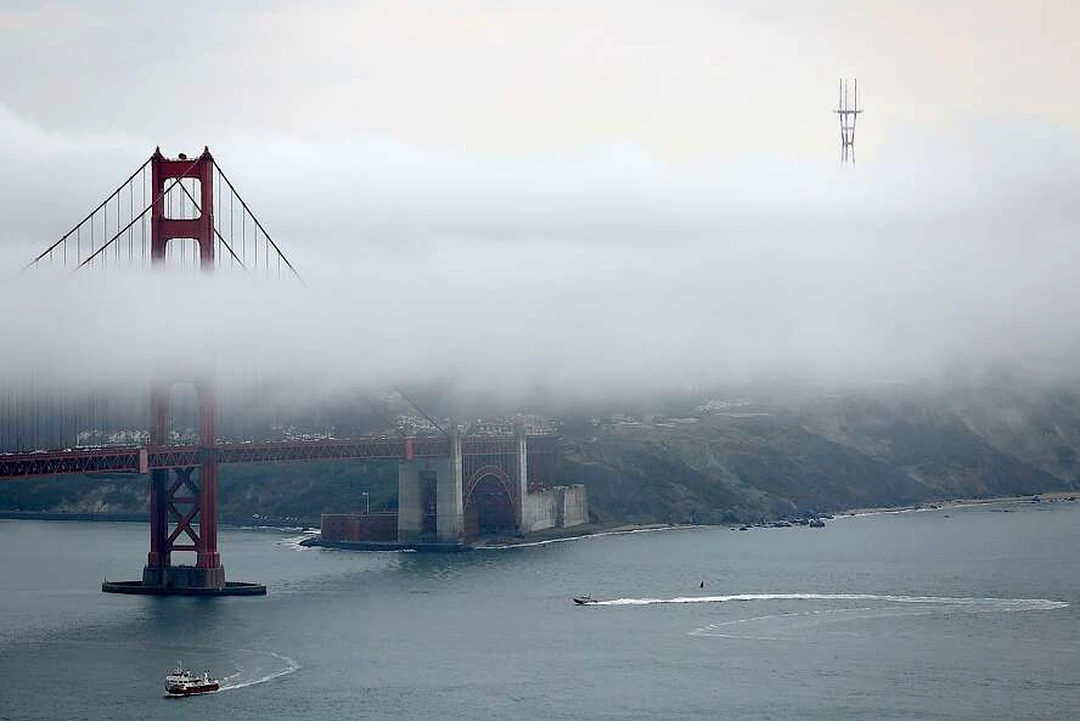
Alongside its extraordinary engineering, the scenery here is intimately bound to a signature meteorological phenomenon known as the Marine Layer. This effect arises from the sharp thermodynamic contrast between the frigid California Current flowing down the west coast and warm, dry inland air building up over the Central Valley. As warm air rises, a natural pull draws low coastal cloud banks through the narrow strait, turning the water into a drifting river of fog that envelops the bridge. The bridge’s striking International Orange coat was chosen not merely for artistic contrast against blue waters and green hills, but as a calibrated optical solution that reflects light effectively for maximum visibility and maritime safety when fog rolls in.
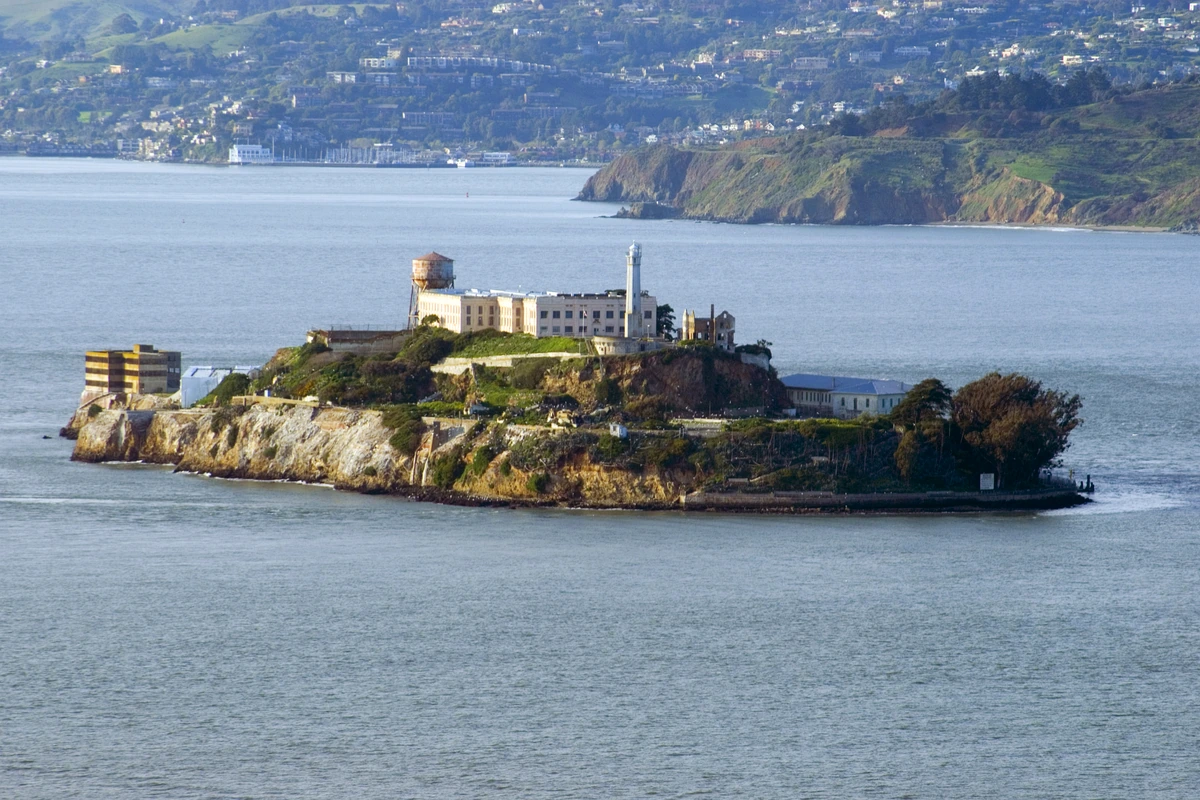
Following the southern slope southeastward, the topography eases toward calmer cove waters, opening onto historic Fisherman’s Wharf and the Pier 39 cluster with rustic timber piers reaching out over the bay. From a spatial planning perspective, this waterfront axis creates a striking visual counterweight to Alcatraz Island standing firm amid swirling currents. This stark 22-acre sandstone outcrop sits about 1.25 miles offshore, ringed by chilly cross-currents and brisk winds, acting like a natural screen buffering heavy swells coming through the harbor mouth toward the fishing docks. The interplay of raw cliffs, solitary prison island, historic wharves, and steel span rising through shifting mist forms a coastal landscape that is at once grand, harsh, and rich in American West memory.
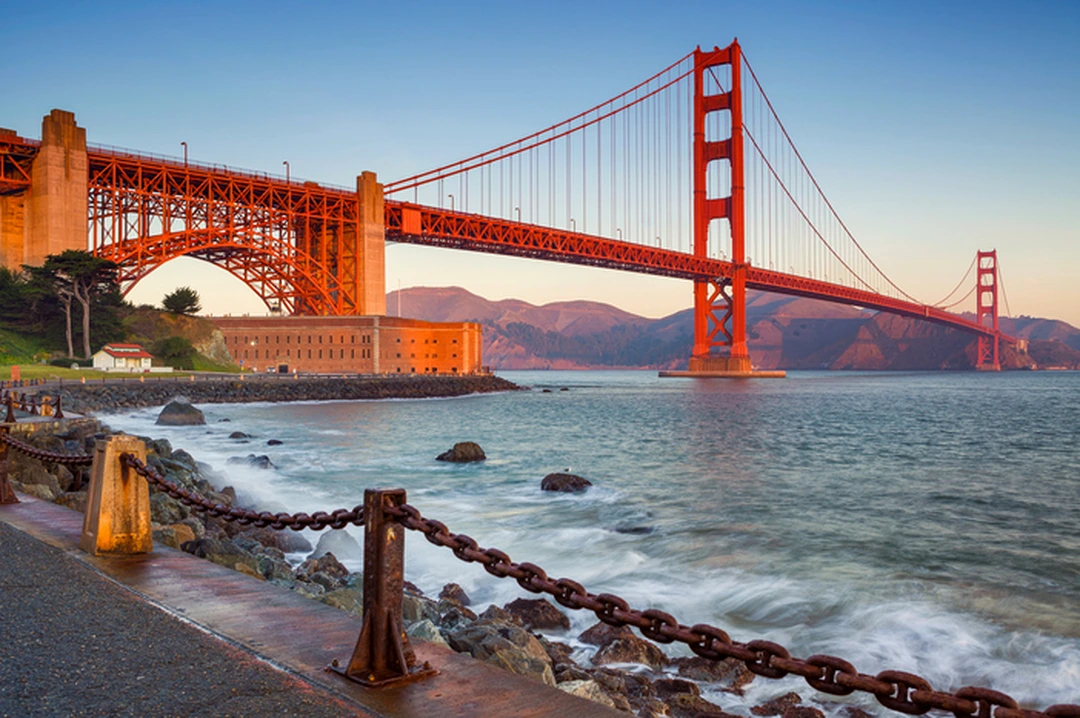
Standing guard where the San Francisco peninsula meets Marin County, the Golden Gate Bridge emerges as a splendid mechanical anthem of the 1930s Art Deco movement. Spanning 8,981 feet—just over 2,737 meters—across the treacherous strait, the structure is anchored by twin steel towers rising 746 feet above choppy bay waters. Unlike the stark industrial steel trusses of its era, consulting architect Irving Morrow infused the massive metal frame with refined aesthetic character through stepped setbacks inspired by ancient ziggurats, creating shifting rhythms of light and shadow beneath Pacific sea mist. Every load-bearing joint across the span was fastened securely with roughly 1.2 million red-hot steel rivets driven by hand by riveter crews braving whipping ocean winds—a testament to the craftsmanship and fabrication skill of the mechanical age.
One of the enduring visual hallmarks placing this masterpiece on the global architectural map is its signature International Orange finish. Initially, the U.S. Navy strongly pushed to paint the bridge in alternating yellow and black stripes for air and sea visibility, while Bethlehem Steel applied a temporary red lead primer for rust protection during ocean transit. However, Irving Morrow recognized a natural harmony between this warm earthy orange and the deep blues of the bay alongside the rolling greens of the Marin hills. International Orange was not only a visual choice complementing Art Deco lines, but was also formulated with specialized optical properties to maintain dispersion clarity so ocean-going ships could spot the steel span through dense year-round fog.
Tracing the shoreline northeast along the peninsula, Fisherman’s Wharf—centered around the Pier 39 complex—draws visitors into a waterfront architectural setting rich with early-twentieth-century nostalgia. Built across a 45-acre footprint on foundations of thousands of recycled Douglas fir pilings salvaged from older waterways, the complex reflects forward-looking sustainable reuse. Its layout is organized into layered harbor streets with two-level weathered wood arcades, where shops, small boatworks, and traditional kitchens sit side by side. Salt-bleached pine planks, rusted iron winches, and the creak of floorboards beneath passing footsteps bring back the lively rhythm of a Mediterranean immigrant fishing village inside a modern industrial city.
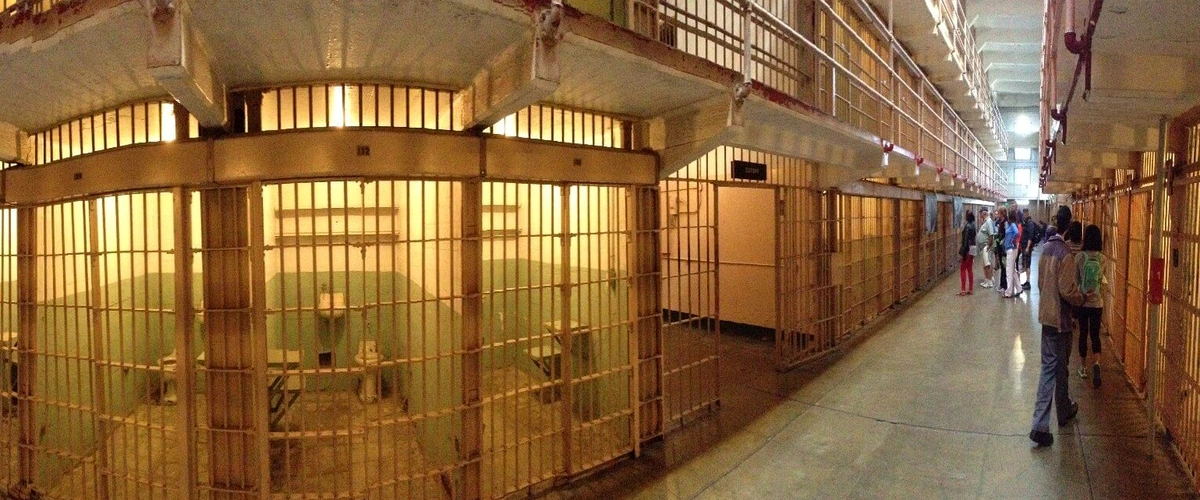
Looking out from the wharf’s water edge across the bay, the stone fortress of Alcatraz rises as a brooding architectural contrast to the lively timber piers. The Rock is a rare convergence of nineteenth-century Civil War military remnants and fortified detention architecture carrying the stark spirit of later Brutalism. Heavy stone and dark brick walls interlace with raw reinforced concrete blocks, dense iron bars, and tightly stacked cellblocks. That enclosed, austere layout was built specifically to maximize human isolation against harsh elements—a quiet chronicle in stone, cold iron, and open ocean across turbulent centuries.
As dusk settles along the boundary between the Pacific and the narrow strait, the Golden Gate Bridge begins an enchanting transformation into a luminous stage. Unlike the cool white lighting of newer landmarks, its night presence is shaped by high-pressure sodium lamps casting a warm amber glow across International Orange steel. Engineers positioned high-output floodlights along the nearly meter-thick main suspension cables, aiming beams from the tower bases up to 227 meters above sea level. On nights when dense advection fog drifts through the strait, optical scattering turns Art Deco girders and taut cables into glowing filaments suspended in mid-air. That visual interplay not only defines the boundary between dark bay water and night sky, but creates a dramatic chiaroscuro where lighting engineering meets sweeping coastal nature.
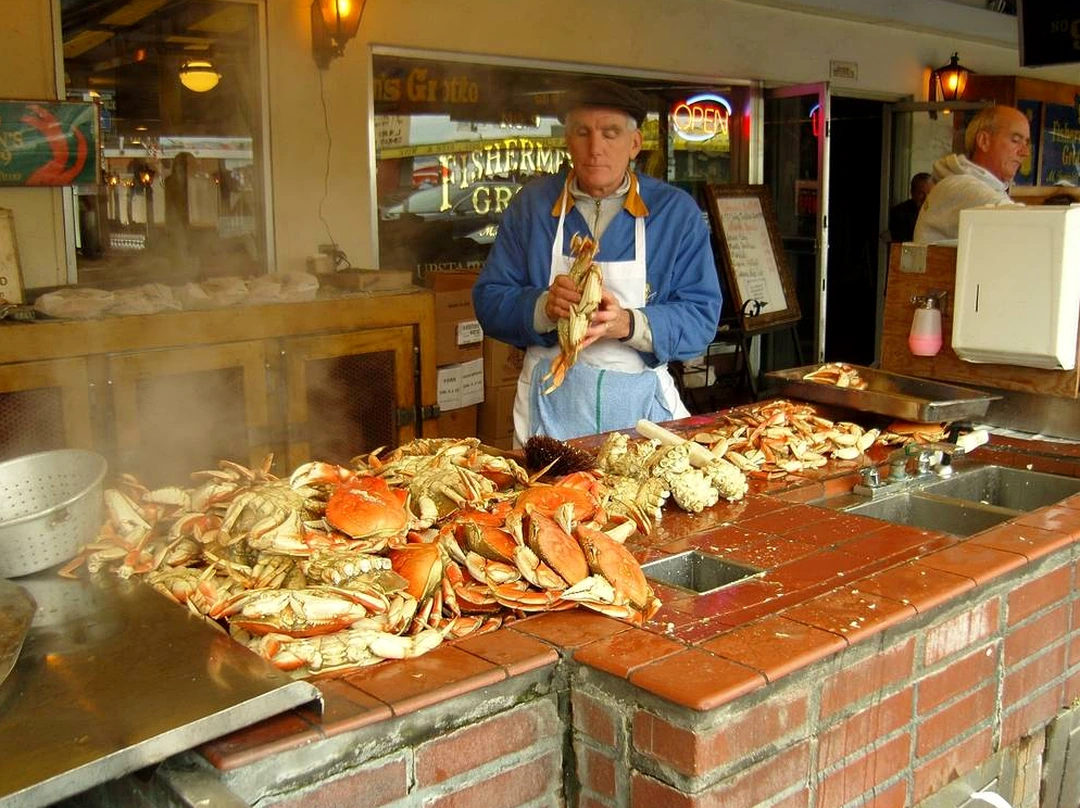
Stepping away from the quiet majesty of the wind-swept span, night life at Fisherman’s Wharf pulses with a very different energy, where a continuous wildlife spectacle unfolds at Pier 39. Since the historic Loma Prieta earthquake, this wooden pier has become home to a colony of California sea lions (scientific name Zalophus californianus). Loud barking, slapping flippers, and squabbles over spots on floating docks among hundreds of sea lions create a one-of-a-kind natural chorus that rises above waves lapping the pilings. Around this natural arena, steaming copper cauldrons boiling Dungeness crab right along the sidewalk fill the air with savory notes. Salty sea air mingles with the tangy aroma of crusty sourdough loaves baked from nineteenth-century wild starter at the famed Boudin bakery, turning an evening stroll into a feast for both ears and nose.
San Francisco Bay after dark also carries a deeper, quieter register when looking toward rocky Alcatraz Island. Night tours at the historic prison are designed to heighten sensory awareness, bringing visitors close to the feeling of total isolation surrounded by open water. When cellblock iron doors clang shut in the dark, a sharp contrast sets in: inside lies cold confinement that once held notorious inmates such as Al Capone, while outside sweeps the steady beam of the Golden Gate lighthouse alongside glittering towers across the bay. Barely more than a nautical mile separates them, yet that short stretch marks a vast divide between captivity and freedom, turning city lights across the water into a psychologically haunting sight in the stillness of night.
The bay’s evening tableau rounds out along The Embarcadero waterfront boulevard, where vintage yellow streetcars of the F Market & Wharves line continue running steadily along historic tracks. Crisp breezes off the Marin Headlands cut through wool coats, drawing walkers into cozy wine bars for a glass of Napa Valley red or coastal craft brews. Public lighting artistry paired with local flavors and coastal wildlife gives nightfall here an uncommon cultural depth—raw and wide-open toward the sea, yet romantic and refined in every pulse of West Coast life.
The salty tang of the Pacific and blue haze drifting across San Francisco Bay have long shaped a rugged yet refined food culture at Fisherman’s Wharf. Along cobblestone Jefferson Street and time-worn wooden piers, dining here is more than a showcase of fresh catch—it is a chronicle of Mediterranean fishermen who sailed toward promised shores during the mid-nineteenth-century California Gold Rush. Amid clanging streetcar bells and wheeling seagulls, rich scents rising from giant steaming copper pots along the sidewalk invite every culinary traveler to tune in.
Holding pride of place on the West Coast culinary map is Dungeness crab—scientific name Metacarcinus magister—a prized catch of cold Pacific continental shelf waters. Since the late 1800s, small wooden felucca boats worked by Italian fishermen pushed through offshore fog to bring in heavy-shelled crab with firm claws. At open-air stalls lining the wharf, Dungeness crab is lifted straight from holding tanks into bubbling saltwater right before diners’ eyes. Sweet, white, firm meat paired with rich crab butter and deep ocean salinity needs no heavy seasoning—just melted sweet butter and a squeeze of juicy San Joaquin lemon.
If Dungeness crab speaks to nature’s generosity, Cioppino seafood stew embodies compassion and mutual support among seafarers. Tracing its roots to Genoese or Ligurian “ciuppin”—meaning to chop or gather together—the dish emerged as cash-strapped fishermen returned from stormy days at sea. Anyone coming back empty-handed would carry an empty pot down the boats, with crewmates sharing a bit of their daily haul: a few shrimp, a handful of clams, squid rings, or part of a crab. In the hands of traditional North Beach cooks, the seafood simmers in a rich red broth of ripe tomatoes, bold red wine, fragrant sautéed garlic, and fresh oregano and thyme. Digging into a piping-hot bowl of Cioppino and spooning tangy, savory broth soaked into crisp-sweet seafood on a breezy bay day is an experience inseparable from the soul of the bay.
Exploring San Francisco’s flavors would miss a centerpiece without famous sourdough bread tied to the legacy of the Boudin bakery founded in 1849. While gold seekers dug into the earth chasing fortune, French baker Isidore Boudin’s family found a lasting treasure in the bay’s damp coastal air itself. Blending traditional French fermentation methods with a one-of-a-kind local environment, they isolated the wild microorganism later named by science as Lactobacillus sanfranciscensis. Together with wild yeast, this culture yields a clean tang, a thick crisp amber-brown crust, and a chewy open-crumbed interior. The classic highlight is creamy clam chowder ladled into a hollowed-out sourdough round, where the crust absorbs sweet clam and dairy richness in a combination beloved across generations.
Exploring this Pacific coast landmark calls for tuning into the distinct transit rhythm of the City by the Bay. Rather than driving a personal car through steep winding streets and facing notoriously steep parking rates around Jefferson Avenue or Pier 39, riding the historic F-Market & Wharves streetcars is a scenic and practical way to connect with waterfront heritage. This vintage streetcar line brings together mid-twentieth-century cars from cities around the world, cruising smoothly along The Embarcadero between the bustling financial district and historic wharves. For those who love active movement, cycling along the bay through Crissy Field, crossing the Golden Gate Bridge’s west path, and coasting down into artsy Sausalito before returning by ferry is a quintessential outing.
The Golden Gate Bridge’s east walkway opens free to pedestrians from dawn until dusk, giving visitors an easy chance to touch monumental steelwork and hear ocean wind hum through massive cables. Meanwhile, longtime seafood stands at Fisherman’s Wharf and the renowned Boudin Bakery run from early morning well into the night, serving up hollowed sourdough bowls brimming with hot clam chowder. Reaching out across the bay to historic Alcatraz prison, however, requires planning ahead. All island tickets and in-depth audio tours must be booked sixty to ninety days in advance exclusively through Alcatraz City Cruises, as international visitors fill crossings from Pier 33 months ahead.
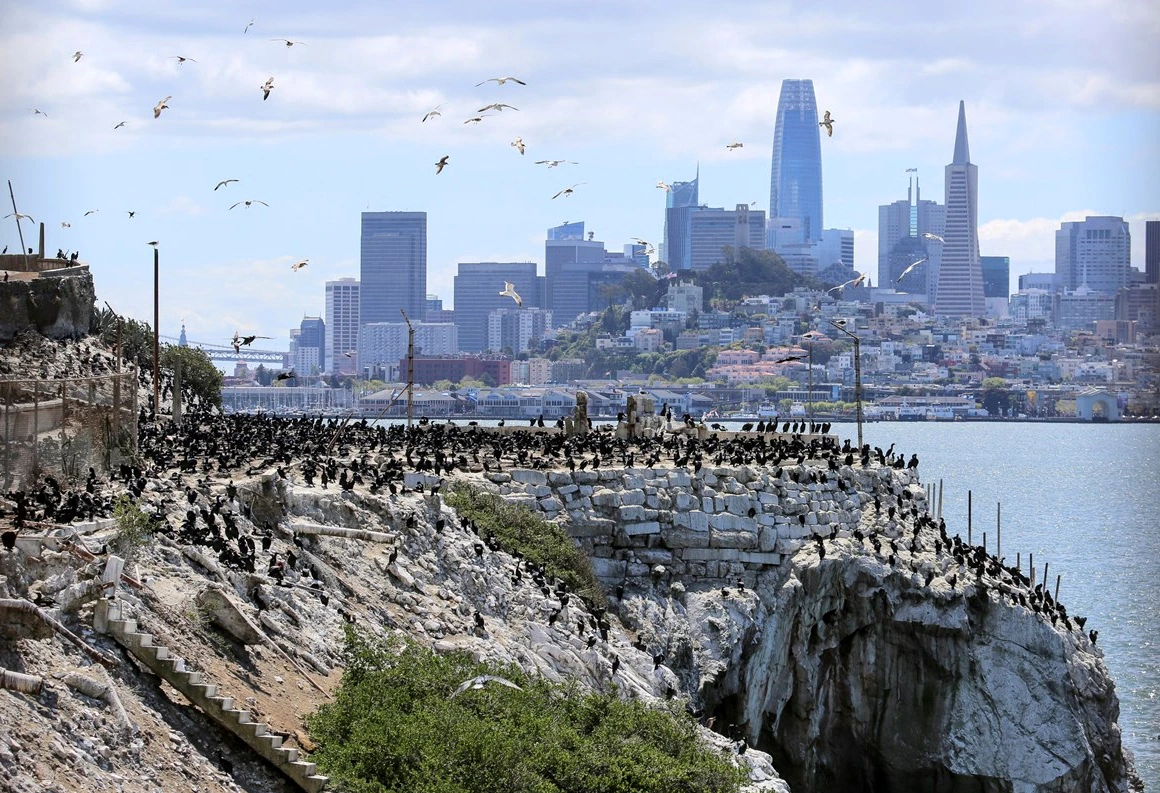
Beyond getting around, caring for coastal scenery and native wildlife is a baseline standard for anyone visiting San Francisco Bay. Stepping onto mossy Alcatraz Island—once home to infamous inmates—visitors must strictly follow leave-no-trace habits and respect nesting colonies of migratory seabirds along sheer limestone cliffs. Around the Pier 39 docks, where hundreds of California sea lions haul out onto wooden floats, local rules strictly forbid feeding or disturbing the animals in order to protect the bay’s natural balance.
The prime moment to capture the surreal beauty of the Golden Gate Bridge is at first light, as signature dense fog gradually lifts under early morning sunbeams. In that shifting light, the International Orange towers stand proud in vivid contrast against deep blue water and lingering mist, creating a visual scene cherished by generations of photographers. To take in the full sweep of history and regional flavors from the scenic West Coast across to vibrant East Coast cities without worrying about itinerary logistics or transit bookings, joining an all-inclusive East-West USA tour package offers a smooth way to step into the American dream.