Resting quietly along the west bank of the legendary Nile River, opposite ancient Thebes—which the ancient Egyptians called *Waset* (“Scepter City”) or *Nu-Amon* (the sacred domain of the sun god Amun-Ra)—the Valley of the Kings stands as an enduring testament to ancient Egyptian beliefs surrounding death and rebirth. If the east bank where dawn breaks represented the realm of the living, with the temple complexes of Karnak and Luxor alive with offerings and incense, then the west bank where the sun sets stood as the domain of the eternal and afterlife. Across the New Kingdom dynasties—spanning roughly from the Eighteenth to the Twentieth Dynasty, around 1550 to 1069 BCE—this arid desert wadi was known as *Ta-set-neferu* / *Ta-sekhet-ma’at* (“Great Field of the Pharaohs” or “Field of Truth”), serving not merely as a royal necropolis, but as a sacred theological landscape where rulers sought eternal protection among the gods.
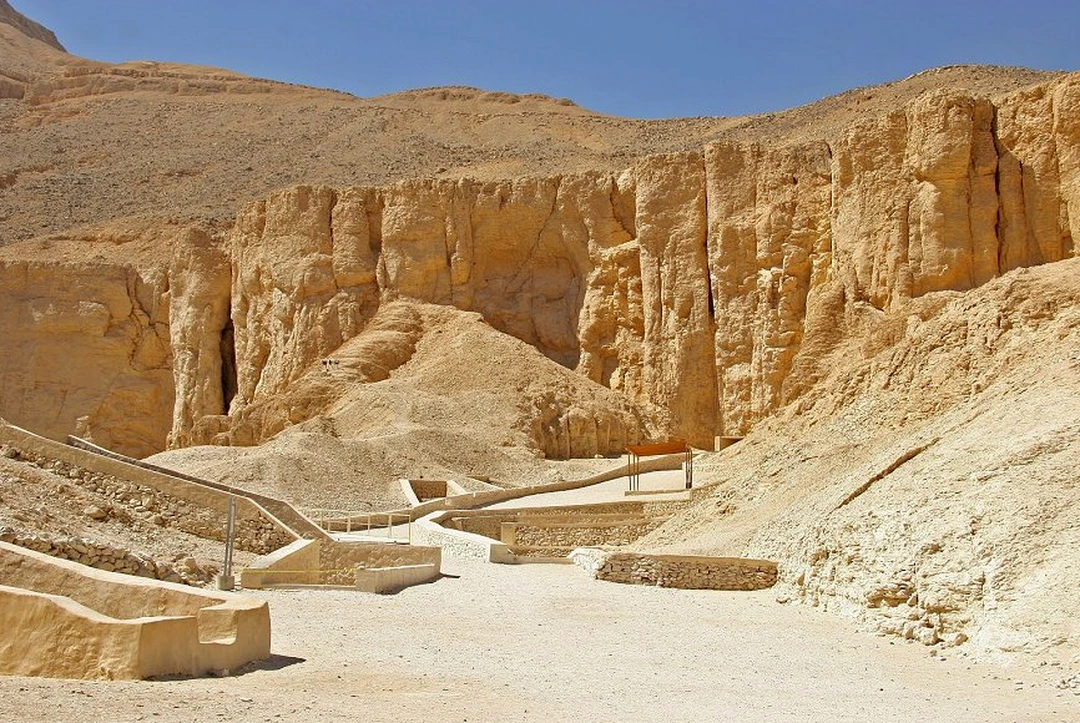
The origins of this royal burial ground are closely tied to a major political turning point in Egyptian history. Following the struggles that drove out Hyksos rule under Theban rulers such as Seqenenre Tao, Kamose, and New Kingdom founder Ahmose I, a reunified Egypt entered a new era of power and wealth. Aware that conspicuous pyramids of earlier eras had attracted grave robbers, Theban rulers turned toward rock-cut subterranean tombs. This shift took shape around 1500 BCE under Pharaoh Thutmose I; his high official and architect Ineni famously recorded supervising the excavation of the royal tomb in the secluded limestone valley so that “no one saw it, no one heard it.”
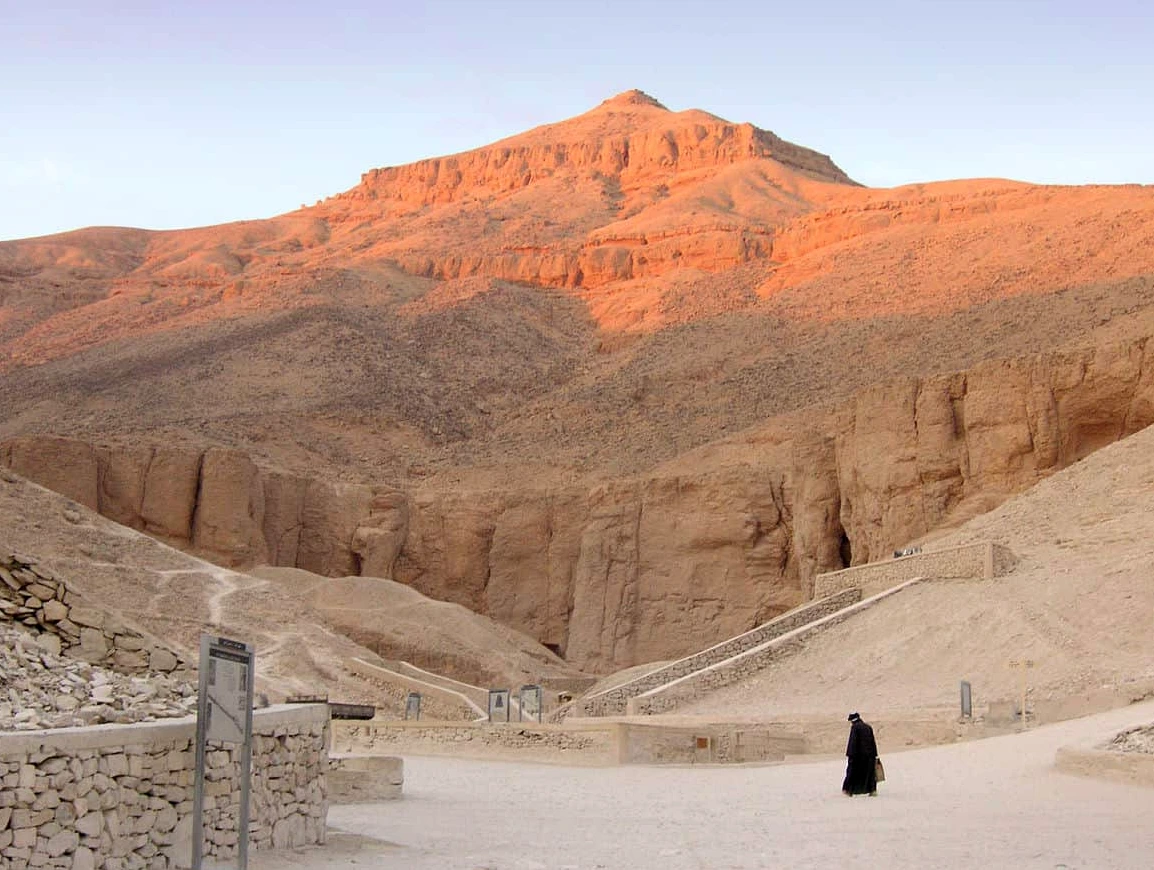
The valley’s natural setting forms a secluded desert basin divided into the East Valley—home to most of the royal tombs open to visitors—and the more remote West Valley (often called the Valley of the Monkeys), where rulers such as Amenhotep III (WV22) were buried. Surrounded by pale, sun-baked Eocene limestone cliffs, the valley is anchored by the natural pyramid-like peak of al-Qurn, which ancient Egyptians viewed as a protective mountain form rising above the royal tombs without requiring a built pyramid above ground.
Over roughly five centuries, this desert valley received the burials of New Kingdom pharaohs across shifting dynastic fortunes—from Eighteenth Dynasty rulers including Hatshepsut, Thutmose III, Amenhotep III, and Horemheb, through Nineteenth Dynasty builders like Seti I and Ramesses II, and into the economic strains and turmoil of the late Twentieth Dynasty under Ramesses III, Ramesses IX, and Ramesses XI. Despite security measures and hidden entrances, most royal tombs were plundered in antiquity during periods of instability.
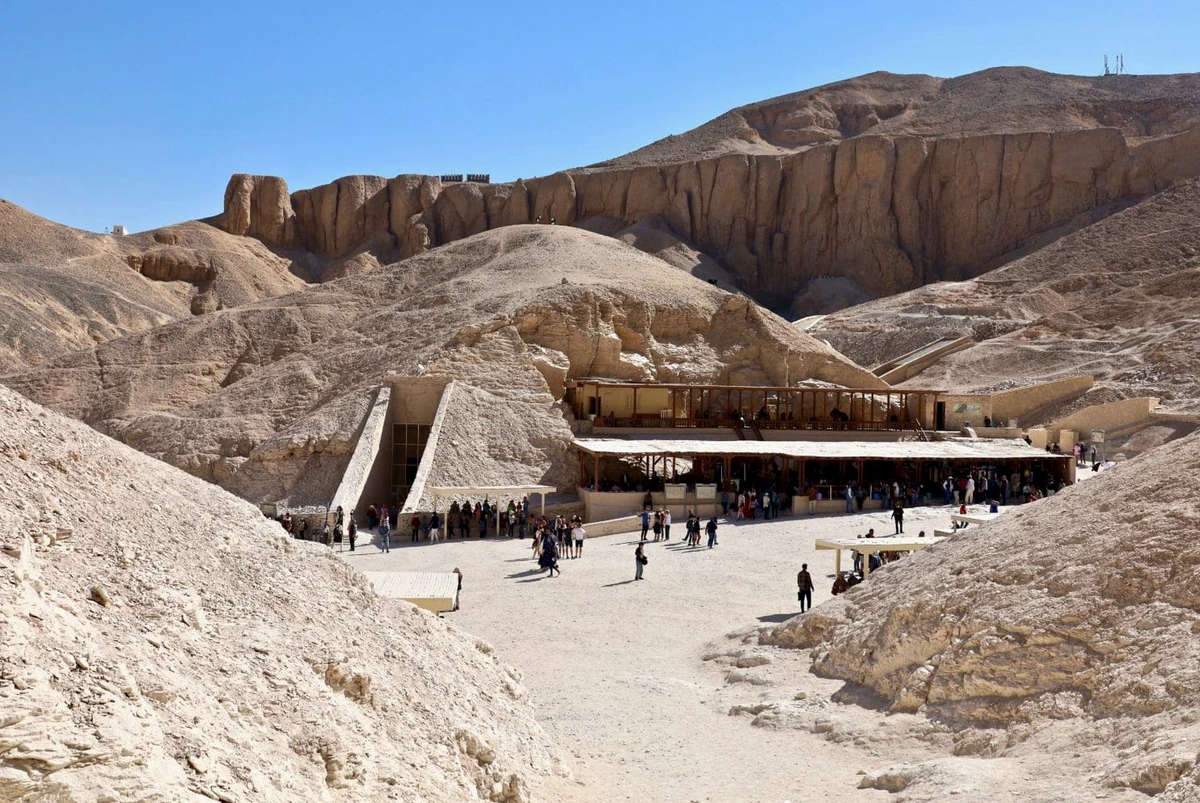
History preserved one famous exception: tomb KV62 of boy king Tutankhamun. Dying young following the turbulent Amarna period, he was buried in a relatively compact tomb that later became covered beneath debris and workmen’s huts associated with the tomb of Ramesses VI. When Howard Carter and Lord Carnarvon discovered the largely intact tomb in 1922, it offered an unprecedented window into New Kingdom royal burial equipment and cemented the Valley of the Kings as an iconic symbol of ancient Egyptian archaeology.
In ancient Egyptian spiritual geography, the contrast between life and the afterlife mirrored the daily arc of the sun god Ra. While the east bank of Waset held temples of the living world—such as Karnak and Luxor—facing the rising sun, the west bank aligned with the setting sun and passage into eternity. Tucked beneath the arid Theban hills, the Valley of the Kings was chosen for its remoteness and natural shelter, giving pharaohs a secluded subterranean setting for their journey into the afterlife and union with Osiris.
A defining natural feature shaping the valley’s setting is the peak of al-Qurn (Arabic for “the horn”), a prominent limestone summit rising above the desert with a steep, pyramid-like silhouette. Under Thutmose I in the Eighteenth Dynasty, royal architect Ineni embraced this secluded valley setting—allowing the natural mountain peak above to echo the symbolic protection of a pyramid while keeping royal burials concealed within rocky wadis rather than exposed in monumental masonry.
Topographically, the site splits into the East Valley—containing the vast majority of known royal tombs, including KV62—and the quieter West Valley (Wadi al-Qurud), featuring a smaller number of tombs such as that of Amenhotep III. Builders worked within Eocene limestone beds, excavating descending corridors, stairs, and chambers deep into the rock strata.
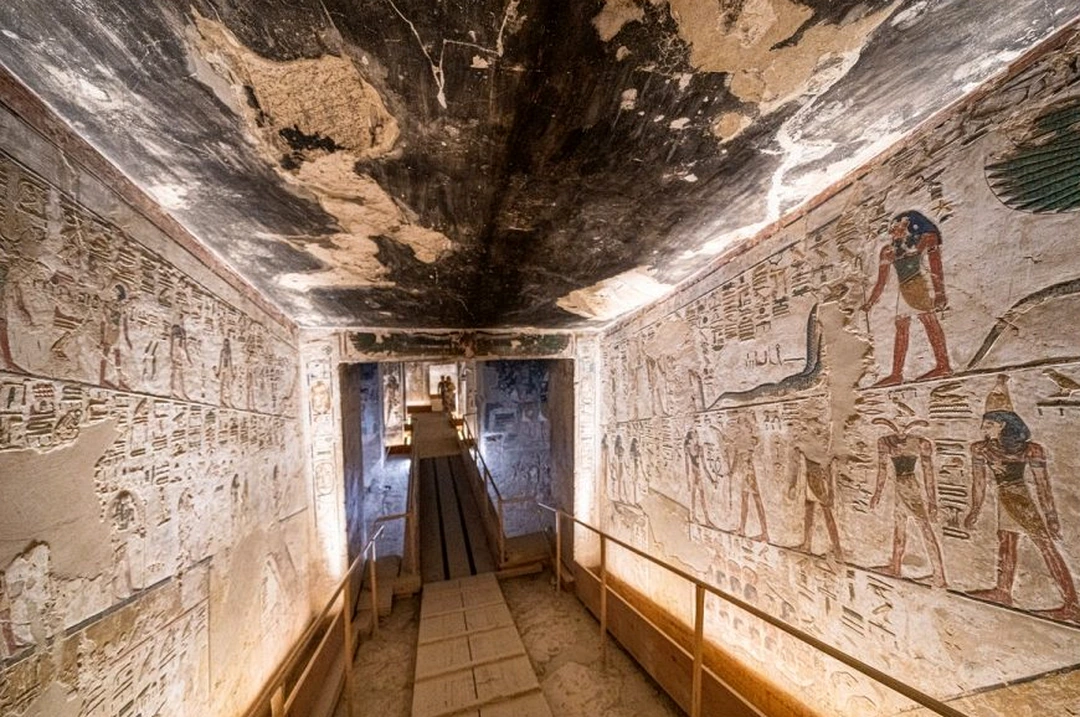
Carving and decorating these rock-cut tombs relied on skilled craftsmen from the nearby artisan village of Deir el-Medina. Workers used hard stone pounders (such as dolerite), copper chisels, and wooden mallets to cut passages in dim underground air, illuminating their work with simple wicks and oil/fat lamps that minimized heavy soot. Once rooms were shaped, plasterers smoothed uneven limestone with gypsum plaster (*gesso*) and whitewash so artists could sketch in red ochre, correct in black, carve reliefs or paint scenes, and inscribe funerary texts such as the *Amduat* to guide the ruler through the night underworld.
Beneath the pyramid-like peak of al-Qurn in the Theban hills, the Valley of the Kings marked a major departure from earlier monumental tomb structures. Excavated as subterranean rock-cut tombs (*hypogea*) into solid Eocene limestone, the tombs relied on deep rock cover for protection and concealment rather than towering above-ground stone superstructures.
Tomb plans evolved noticeably across dynasties: Eighteenth Dynasty tombs—such as those of Thutmose III and Amenhotep II—often featured bent or right-angled axes, whereas Nineteenth and Twentieth Dynasty tombs—such as those of Seti I and Ramesses VI—increasingly adopted straighter, descending axes. A typical royal plan combined entrance stairs and corridors, a vertical shaft or well chamber, pillared halls, side chambers, and a burial chamber housing the stone sarcophagus.
By contrast, Tutankhamun’s tomb (KV62) is compact—roughly 110 square meters (around 1,180 square feet) across four main spaces: an entry staircase and corridor, an antechamber, a small annex, the painted burial chamber, and a treasury guarded by an Anubis shrine. Its small scale held an extraordinary concentration of over 5,000 objects, including nested shrines and coffins, funerary furnishings, and the famous gold death mask inlaid with lapis lazuli and colored glass/stones.
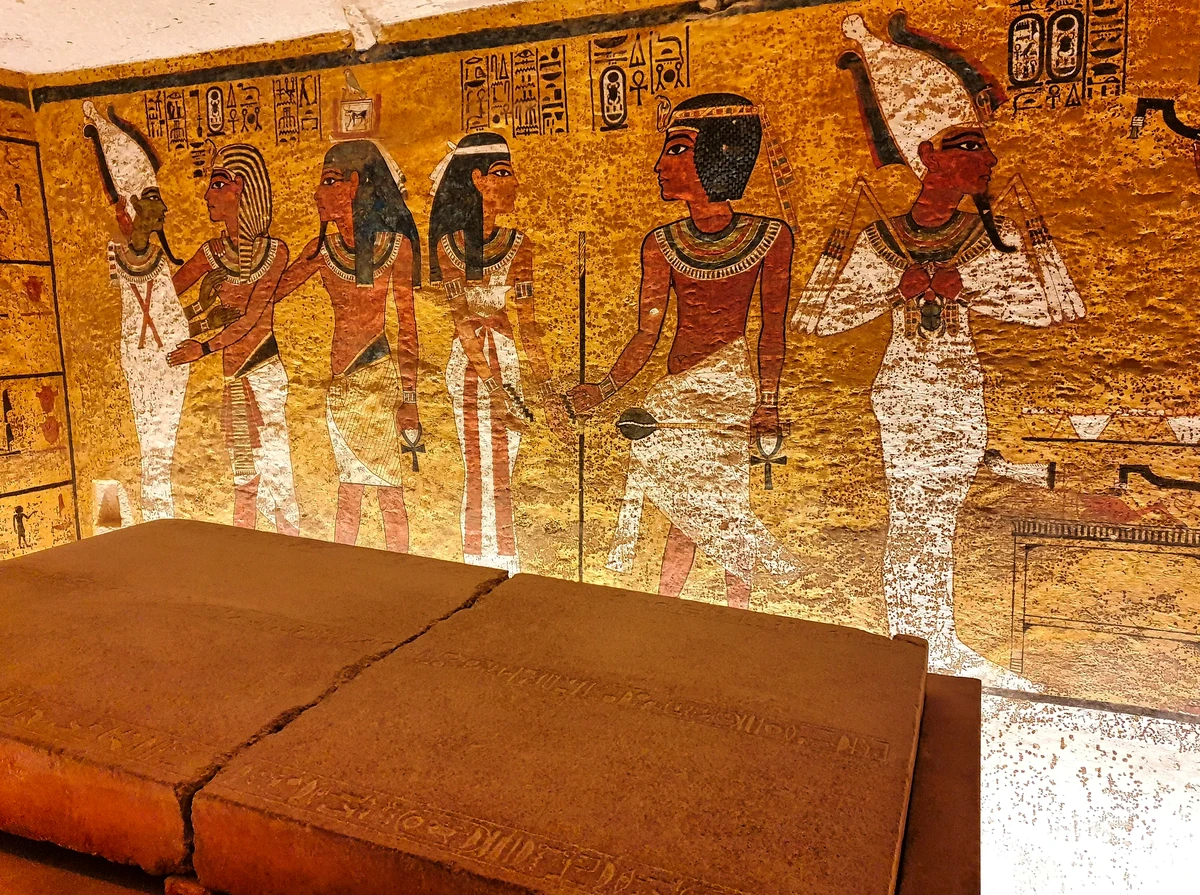
Wall decoration inside royal tombs showcased Deir el-Medina artisans working on smoothed, white-plastered limestone. Scenes from the *Amduat*, *Book of Gates*, and *Book of Caverns* traced the sun god’s nocturnal journey, while KV62’s painted burial chamber—highlighted by scenes such as the Opening of the Mouth ritual—preserves rich mineral pigments on a warm golden-ochre ground.
As evening settles behind al-Qurn and desert air cools across the west bank, the Valley of the Kings grows quiet and dramatic, contrasting with the lively riverfront and temples across the Nile in Luxor.
While underground tombs close to regular visitors by late afternoon to help maintain stable microclimates, evening illumination around nearby sites—such as Sound and Light shows at Karnak Temple or illuminated temple courts in Luxor—adds nighttime atmosphere across the Theban landscape.
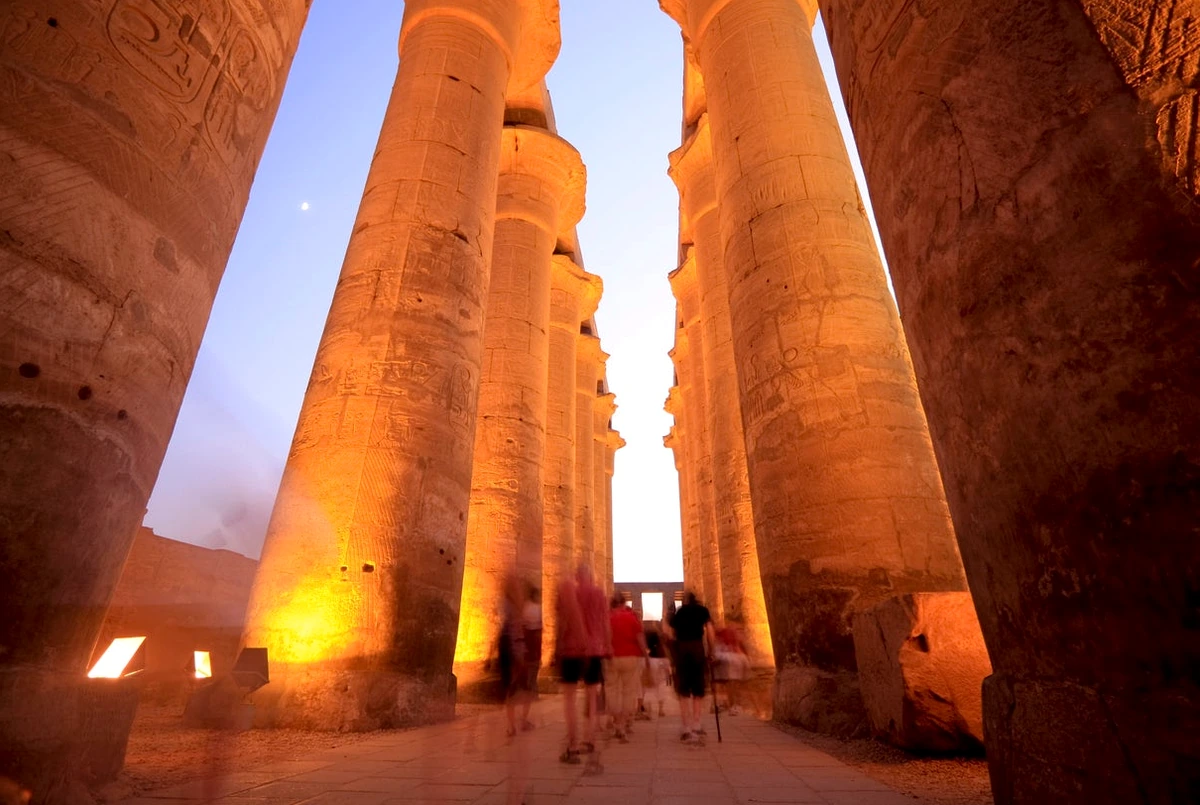
Inside open tombs, low-heat modern lighting helps visitors read painted figures and hieroglyphs while limiting heat and damage to fragile ancient pigments.
Across Luxor and nearby west-bank villages like al-Qurna, evenings often wind down with refreshing *karkadeh* (hibiscus tea), mint tea (*shai bi na’na’*), or local music and hospitality along the Nile.
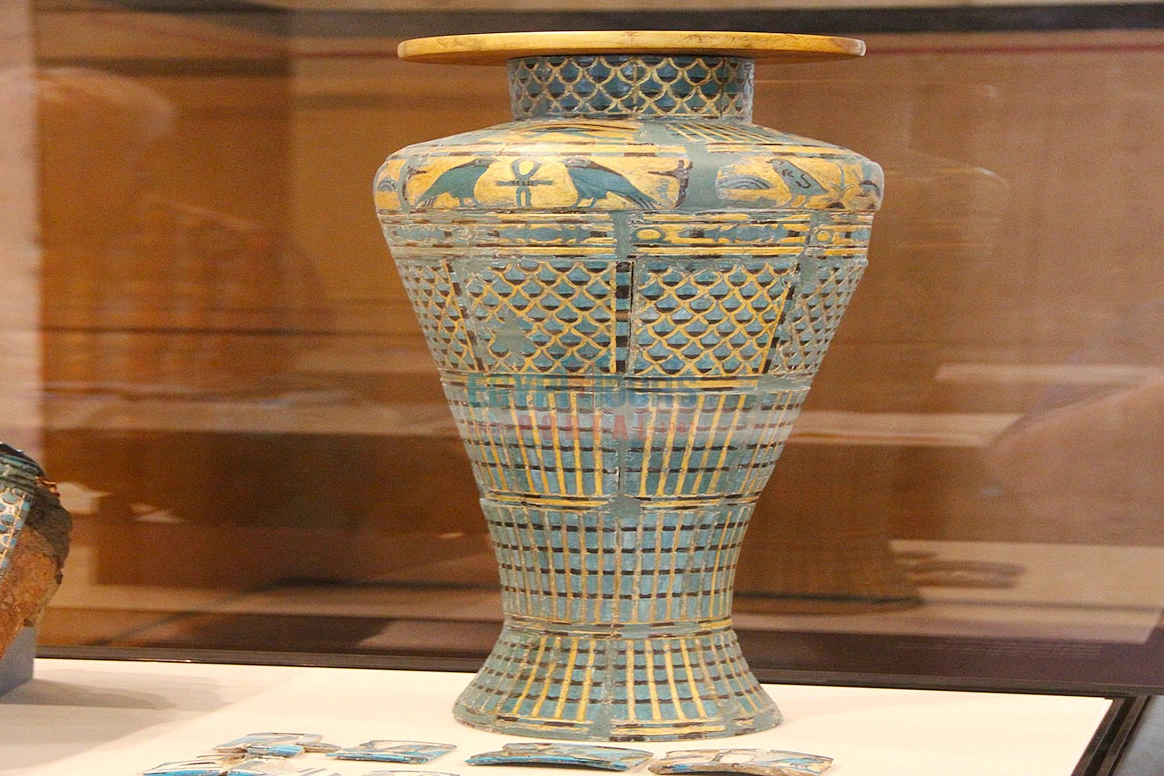
Archaeological finds from Thebes—including ancient jars, grains, fruits, and provisions—reflect long-standing Nile Valley staples like wheat, legumes, herbs, and flatbreads that continue to shape Upper Egyptian cooking today.
*Eish shamsi* (“sun bread”)—a traditional Upper Egyptian sourdough flatbread proofed in round baskets before baking—offers a rustic, tangy bread paired with stews, dips, and everyday meals around Luxor.
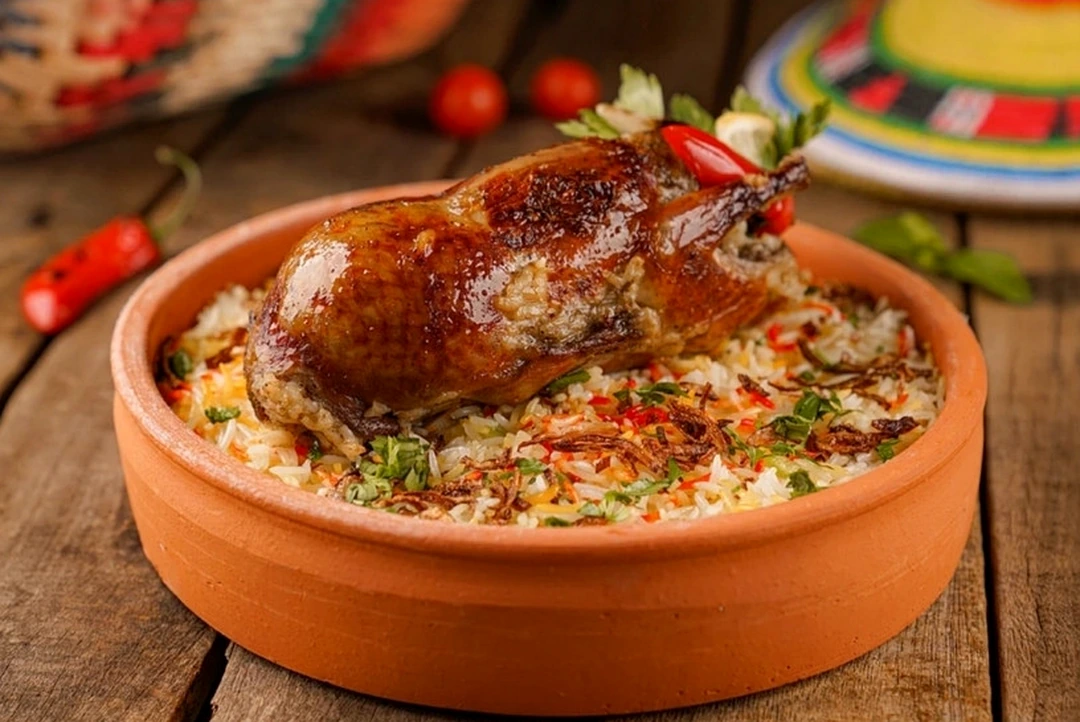
*Hamam mahshi*—stuffed pigeon roasted or baked until crisp and tender, typically filled with seasoned rice or cracked grain (*freekeh*)—is a classic Egyptian specialty served with rice and savory sides.
Clay-pot stews (*tagen*) with meat and okra (*bamya*) or vegetables, alongside *ful medames* (slow-cooked fava beans with olive oil, lemon, and cumin), bring hearty comfort after a warm day in the valley.
Chilled *karkadeh* (hibiscus drink) and sweet mint tea, paired with flaky *feteer meshaltet* (layered pastry) or savory snacks, provide welcome refreshment in Upper Egypt’s dry climate.
The Valley of the Kings generally opens early in the morning (around 6:00 AM) and closes in late afternoon (around 5:00 PM); arriving early (between 6:00 AM and 8:00 AM) helps beat desert heat and midday crowds in narrow corridors.
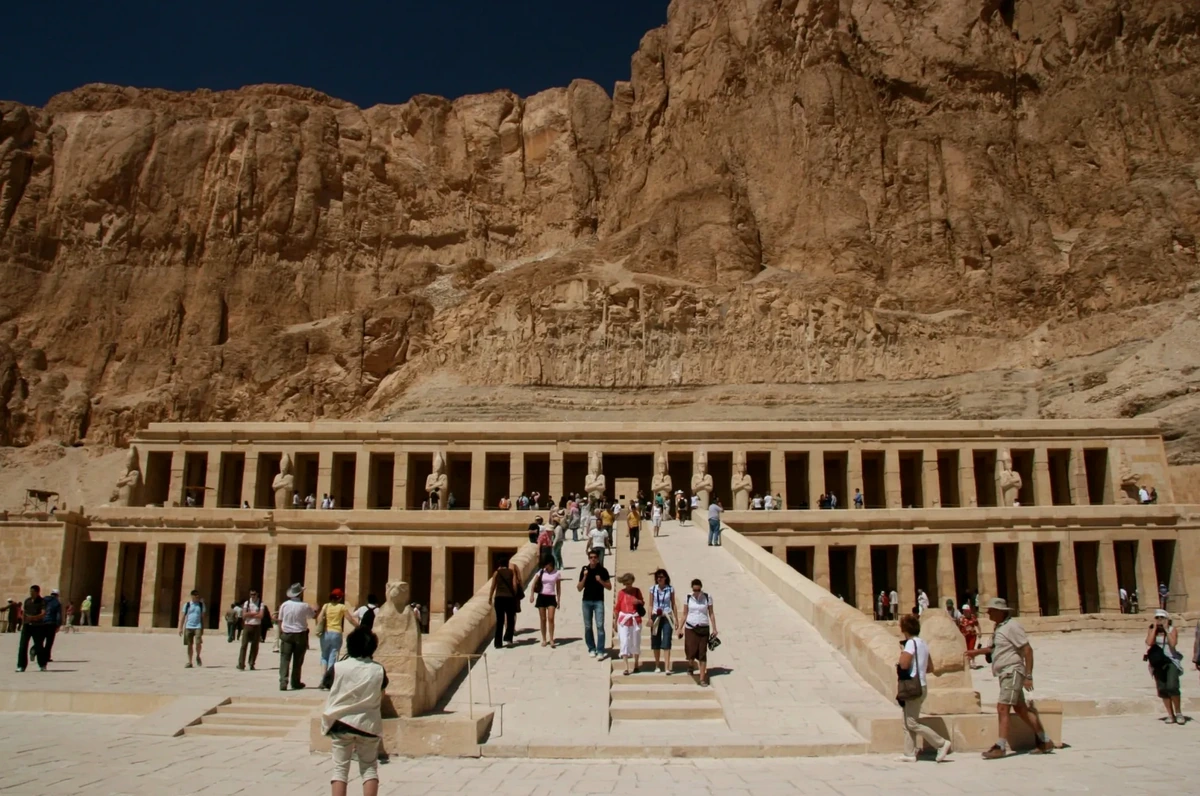
Reaching the valley from Luxor is easy by public ferry across the Nile followed by a taxi or shuttle ride (roughly 10 km through fields and desert approach), or by private car/tour transfer across the Nile bridge.
Standard tickets typically cover entry to a rotating selection of tombs (often three tombs), while separate add-on tickets are required for specific tombs such as Tutankhamun (KV62), Seti I (KV17), or Ramesses V & VI (KV9); a small electric shuttle (“Taf-Taf”) can take visitors from the visitor center to the tomb area.
Wear breathable cotton/linen clothing and sturdy walking shoes for sloped paths, carry plenty of water, sun protection, and a hat (no food/drink inside tombs), and never touch painted walls or use camera flash.
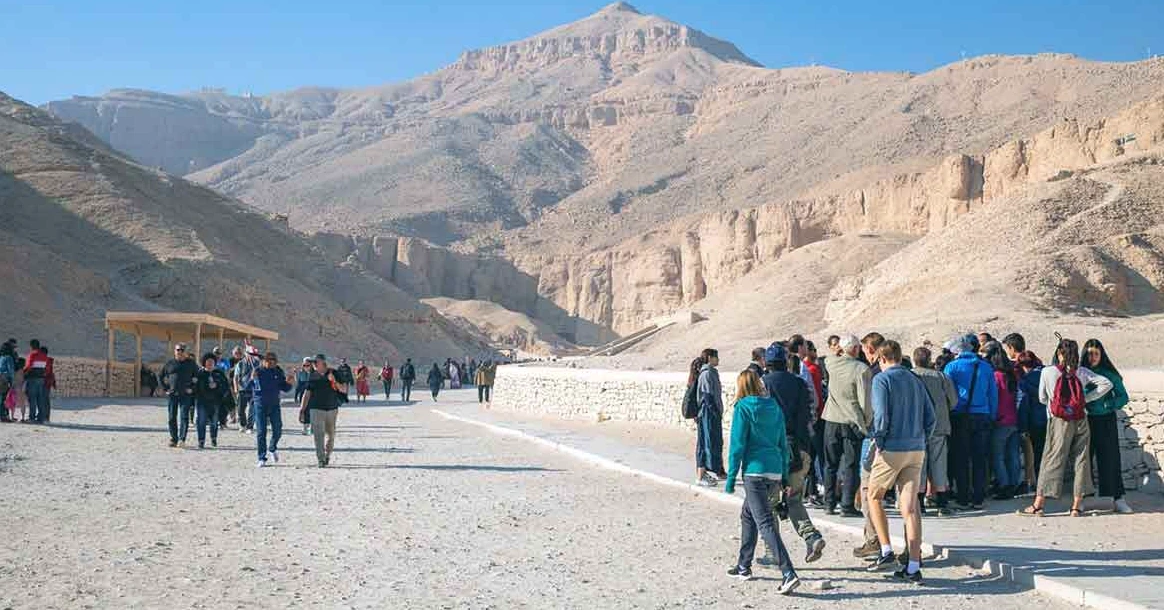
Cooling off with *karkadeh* tea, *aish baladi* bread, and *ful medames* after exploring the tombs rounds out a Luxor day. To explore Luxor alongside Nile cruises, Aswan, and Cairo, browse all-inclusive Egypt tour packages.