Before steel and reflective glass rose to pierce the clouds at 828 meters, Dubai was an arid desert stretch along the Dubai Creek, where nomadic tribes lived closely bound to the salty breath of the Arabian Gulf. For centuries, the economic lifeblood of this entire coastal region depended on natural pearl diving and traditional fishing. Brave divers sailed aboard simple wooden dhows for months at a time, facing sandstorms, sharks, and deep waters in exchange for lustrous pearls sold to Western nobility and South Asian merchants. However, the arrival of cultured pearls from Japan in the 1930s dealt a devastating blow that collapsed the Gulf’s traditional livelihood and plunged the land into an unprecedented survival crisis.
Standing on the brink of decline, the resilience of the Al Maktoum dynasty—which has led Dubai since the early nineteenth century—began charting an entirely new course. The true historical turning point came when commercial oil was discovered at the offshore Fateh oil field in the late 1960s under Ruler Sheikh Rashid bin Saeed Al Maktoum. Rather than resting comfortably on a finite natural windfall like many neighboring states, Sheikh Rashid grasped a profound truth: oil would eventually run out, and only sustainable infrastructure and an open mindset could sustain future generations. That strategic vision laid the first foundation stones for a remarkable transformation: using oil revenues to build the deep-water Jebel Ali port, develop aviation trade networks, and turn Dubai into a free-trade international transshipment hub ready for the post-fossil-fuel era.
Entering the early twenty-first century, the torch of reform and modernization was carried forward in full under Sheikh Mohammed bin Rashid Al Maktoum, Vice President and Prime Minister of the United Arab Emirates (UAE) and Ruler of Dubai. Driven by the mindset of a visionary reformer, he looked beyond trade and services to execute a rapid grand shift: propelling Dubai straight into a knowledge economy, global finance, and world-class tourism. The idea of a supertall tower without precedent in human history was born from this bold ambition. Initially known as the Burj Dubai project and positioned as the centerpiece of the two-square-kilometer Downtown Dubai district, it was designed to act as a giant magnet drawing international financial institutions, investment capital, and global talent into the heart of the desert.
Yet turning the skyscraping dream into reality was never a smooth path. As the tower rose day by day, the global financial crisis struck in the late 2000s, freezing credit systems and severely shaking the Gulf real estate market. In that critical moment threatening both construction progress and national pride, brotherly solidarity among the emirates of the federation shone brightly. Abu Dhabi—the wealthy capital emirate with abundant financial reserves, led by the late UAE President Sheikh Khalifa bin Zayed Al Nahyan—generously stepped in with tens of billions of dollars in strategic economic support, helping Dubai weather the financial storm and bring the monumental project across the finish line on schedule.
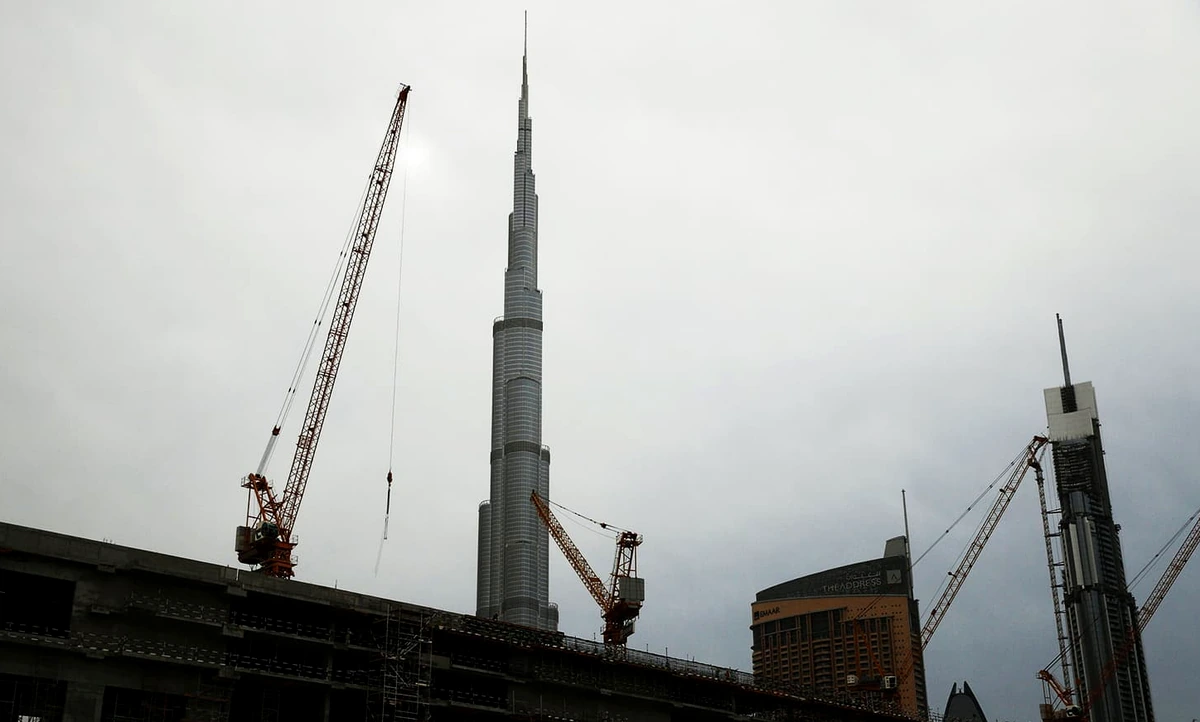
At the grand inauguration ceremony on January 4, the world witnessed a deeply moving gesture of brotherhood steeped in Arab culture. Before thousands of international guests, Sheikh Mohammed bin Rashid Al Maktoum unexpectedly announced the renaming of the tower from Burj Dubai to Burj Khalifa to honor and pay tribute to his elder brother, the late President Sheikh Khalifa bin Zayed Al Nahyan. The name Burj Khalifa is far more than the title of the world’s tallest building; it stands as a sacred symbol of strong federal brotherhood, the continuity of wise leadership, and powerful proof of an extraordinary revival—a people who once dived for pearls beneath the sea now proudly reaching the highest clouds of the modern knowledge economy.
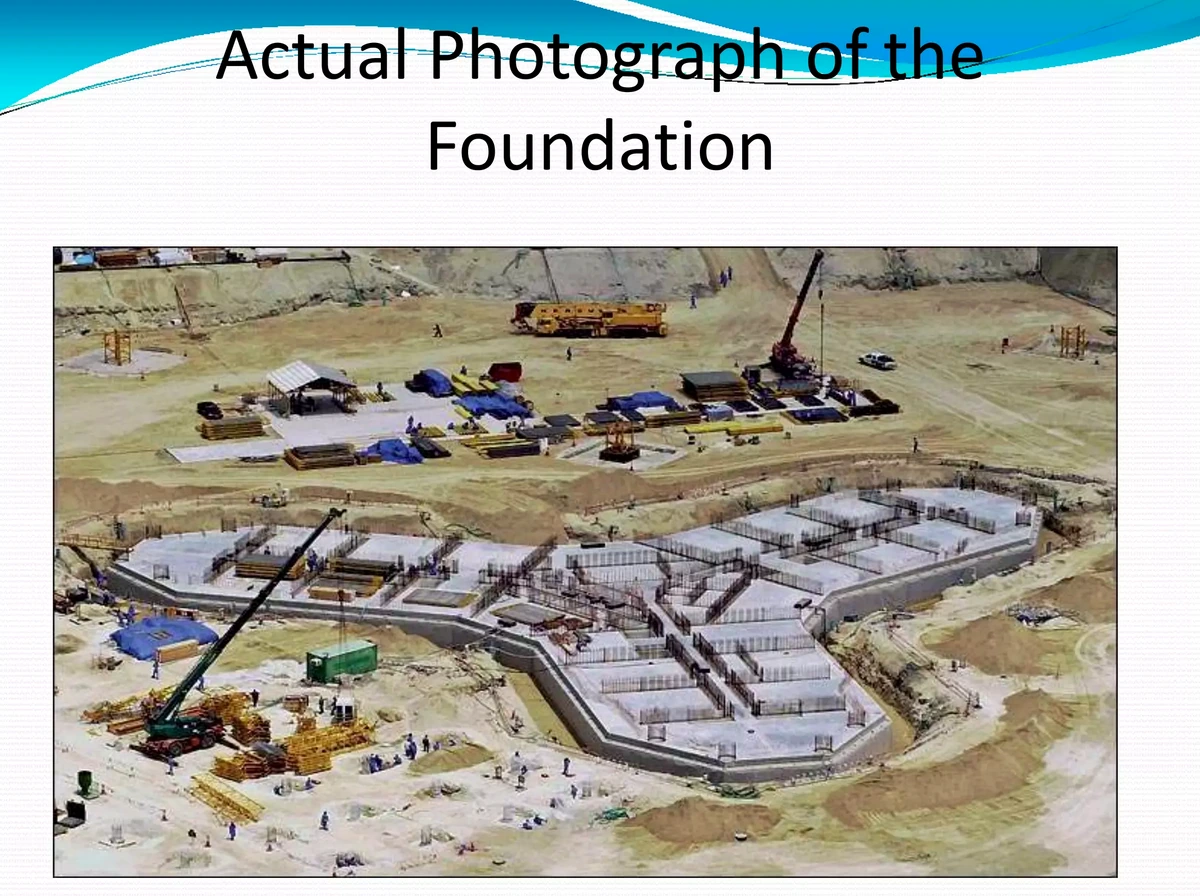
Rising proudly at the heart of Downtown Dubai, this megastructure stands on ancient coastal sedimentary geology where once lay only a barren wilderness bordering the Persian Gulf. Under an epoch-defining master plan, the area was designated to become the “center of now,” a crossroads connecting Eastern and Western economic and cultural spaces. However, erecting an 828-meter skyscraper on loose desert terrain posed formidable natural and engineering challenges. Instead of solid granite bedrock like in New York or Hong Kong, the ground here is a complex mix of weak limestone, gypsum, and marine sand saturated with highly saline groundwater. To master these challenging ground conditions, geotechnical engineers created an underground feat: a massive 3.7-meter-thick reinforced concrete raft foundation anchored to 192 bored piles, each 1.5 meters in diameter and drilled more than 50 meters deep into the sedimentary rock stratum. Containing over 45,000 cubic meters of concrete, the giant foundation integrates a sophisticated cathodic protection system to eliminate severe corrosion from desert mineral salts, forming a rock-solid base built to last a millennium.
Even so, the harshest challenge for a structure in the Middle East lies not beneath the ground, but high in the windy skies. Year-round, the Arabian desert generates fierce Shamal winds accompanied by swirling sandstorms, turning heights above half a kilometer into an aerodynamic “danger zone.” To counter immense wind forces capable of toppling any rigid structure, architects and structural engineers conducted more than 40 wind tunnel tests at specialized laboratories in Canada. Rather than relying on conventional mechanical resistance, the tower applies an architectural philosophy of yielding and dissipating force: curving and breaking up wind energy. Its morphological inspiration came from the organic structure of the native desert spider flower, Hymenocallis, taking a Y-shaped floor plan with three radiating wings that form a rigid central core resistant to torsional sway.
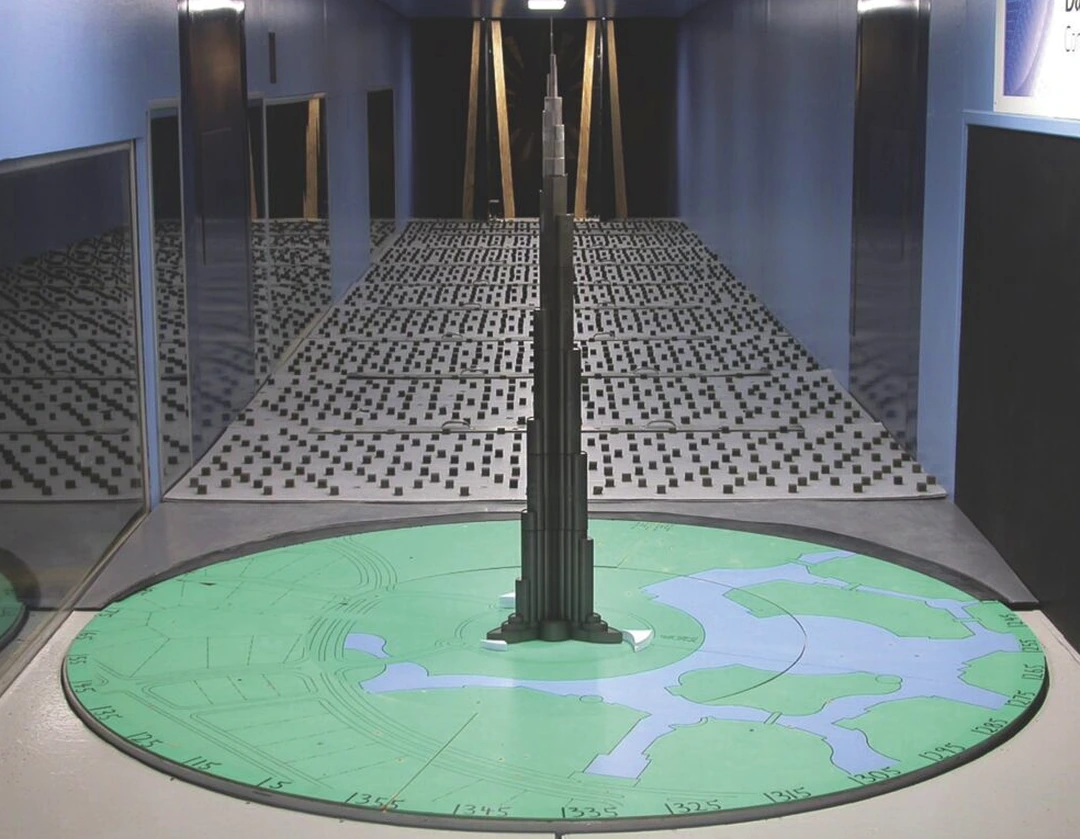
The brilliance of the tower’s wind-pressure relief lies in its spiral stepped setbacks. Along its vertical height, 26 setbacks are arranged asymmetrically around the tower body. When roaring desert winds sweep past at peak speeds, continuous shifts in the building’s shape and cross-sectional profile prevent vortex shedding from synchronizing into harmonic oscillation. Engineers poetically call this “confusing the wind,” breaking extreme pressure currents into harmless vortices that glide along the reflective glass facade and keep the spire steady right in the eye of the storm.
Harmonizing with the soaring superstructure is a refined landscape spread across the tower’s base, evoking a lush paradise oasis amid scorching sand. The artificial Burj Khalifa Lake, spanning up to 12 hectares, embraces the tower, acting as a natural thermal moderator while reflecting its proud silhouette in deep blue water. Notably, to sustain abundant native greenery around the base without depleting scarce groundwater, an advanced closed-loop condensation recovery system was integrated directly into the building’s cooling network. Hot, humid desert air meeting the indoor cooling system condenses into pure fresh water equivalent to the volume of nearly twenty Olympic-sized swimming pools each year. This reclaimed water is collected through dedicated piping to irrigate the surrounding parklands, completing a thoughtful, self-contained ecological cycle that showcases the peak harmony between human ingenuity and natural laws.
Admiring the Burj Khalifa up close or across the Persian Gulf horizon, architecture enthusiasts immediately recognize a design language steeped in desert aesthetics yet representing the pinnacle of modern engineering. Behind this historic blueprint is master architect Adrian Smith of Skidmore, Owings & Merrill (SOM). Instead of choosing the rigid rectangular blocks common in Western cities, Adrian Smith found the tower’s soul in Hymenocallis, the native desert spider lily known for its resilience and graceful three-petaled symmetry. That organic geometry translated precisely into a Y-shaped structural plan with a central core reinforced by three wings, creating a revolutionary buttressed core system in global structural engineering.
In scale, this cloud-piercing masterpiece reaches an absolute height of 828 meters across 163 occupied floors, requiring a total investment budget of USD 1.5 billion to complete. As it climbs higher, the three wings step back through 26 setbacks arranged in a counter-clockwise spiral. This stepped design not only recalls the mystical ziggurats of ancient Mesopotamia, but also serves as a brilliant aerodynamic solution that breaks up and disperses fierce desert winds above half a mile high, nearly eliminating dangerous resonant vortex oscillations that could sway the building.
To support a massive structure weighing up to half a million tons on porous coastal sand and brittle limestone, geotechnical engineers built a 3.7-meter-thick reinforced concrete raft foundation monolithically tied to 192 bored piles driven more than 50 meters into firm geological layers. The project used over 330,000 cubic meters of high-performance concrete specially formulated to withstand extreme compression and corrosion from saline groundwater. Remarkably, pumping hundreds of thousands of tons of concrete to a world-record height on Level 156 had to be carried out at night, with ice added to the mix to lower temperatures and prevent premature setting under the scorching Gulf heat.
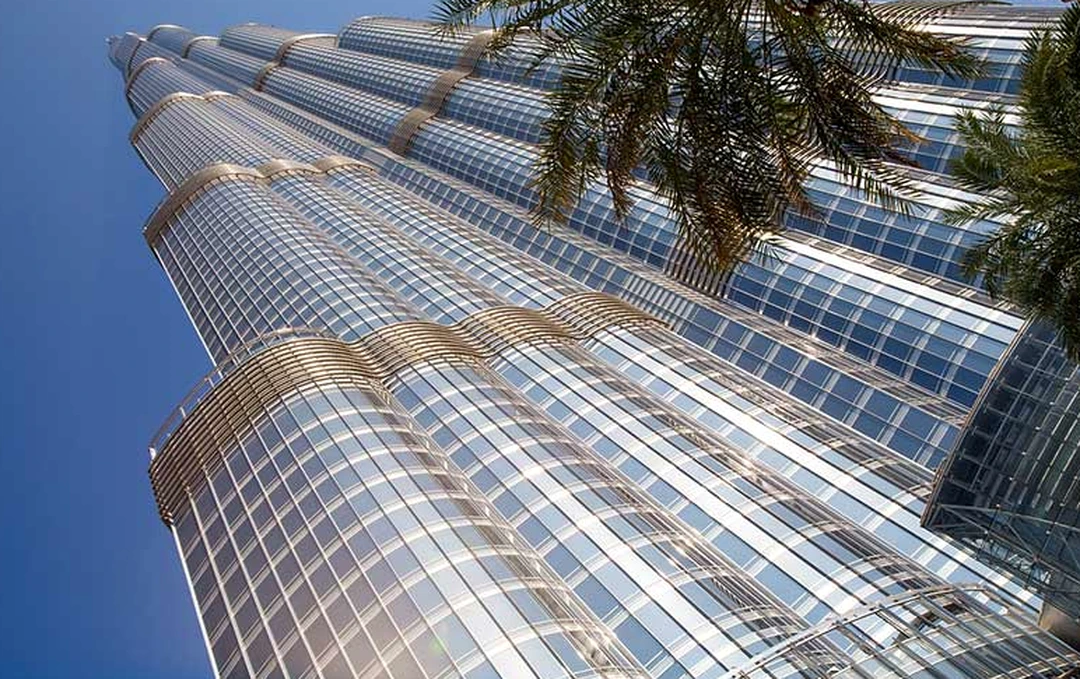
The Burj Khalifa’s exterior resembles a luminous silk ribbon across the desert thanks to master-level facade craftsmanship. Its cladding system comprises more than 26,000 tempered reflective glass panels coated with a ultra-thin silver layer, paired with embossed aluminum and stainless-steel spandrel panels. This optical shield reflects harsh solar radiation and ultraviolet rays, keeping the interior microclimate comfortable while creating ever-shifting visual effects: sparkling silver under bright desert dawn and shifting to a proud deep blue as dusk settles over the Arabian Gulf.
As crimson sunset light fades behind the Arabian desert dunes and night falls over the Persian Gulf, Downtown Dubai enters a completely different dimension where the line between modern engineering and visual illusion dissolves. At the heart of this nighttime spectacle is the Burj Khalifa, an architectural landmark that not only holds the record for physical height but also transforms dramatically into a giant visual canvas in the sky. The entire eastern facade of the tower, clad in hundreds of thousands of square meters of reflective glass and aluminum alloy, turns into the tallest and largest integrated LED display on Earth. An intricate web of fiber-optic cables and tens of thousands of tiny semiconductor light points are carefully programmed to create captivating dynamic imagery—from flowing Arabic calligraphy and vibrant national flags to mesmerizing contemporary animations—turning a sleek skyscraper into a glowing spirit in the desert night.
Right at the foot of the towering landmark, spread across the more than 12-hectare surface of the man-made Burj Lake, is the stage for The Dubai Fountain, one of the world’s grandest choreographed hydraulic water performances. Created by the creative minds behind the legendary fountain in Las Vegas, it stretches across an arc of more than 275 meters and features ultra-high-pressure nozzles capable of launching tens of thousands of liters of water simultaneously more than 150 meters into the air—roughly the height of a 50-story building. Alongside these towering plumes of water are more than 6,600 multi-colored lights and dozens of high-output color projectors, turning each eruption into a sparkling veil of mist and light bright enough to be seen from more than 30 kilometers offshore.
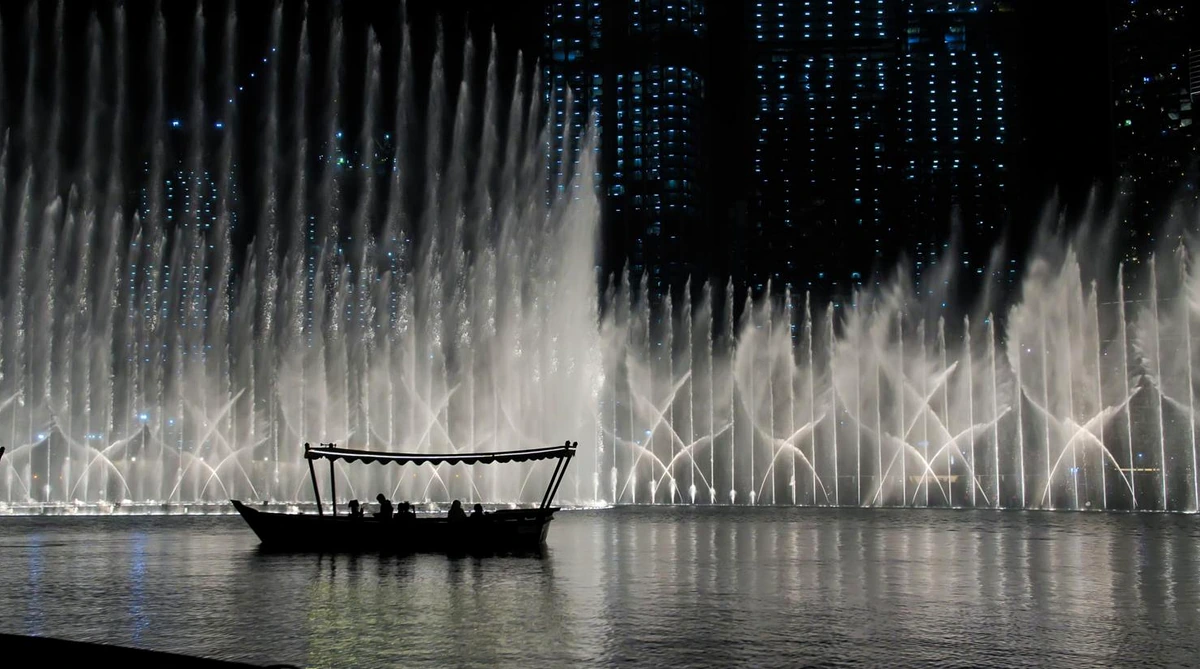
Nighttime rhythm in this open-air setting is shaped by a seamless interplay of sound and motion. Every thirty minutes, the calm of the lake stirs to melodies echoing through a high-end surround sound system. Waves rise gently at times and surge dramatically at others to the cadence of traditional Arabic epics—evoking tales of early Bedouin nomads—before flowing smoothly into classical Western fusions or timeless arias. The synchronized dance between white-capped water sprays below and moving LED light patterns across the Burj Khalifa above creates a wordless grand ballet where light, water, and music unite in an anthem celebrating humanity’s drive to conquer nature.
Framing the lake is a lively, refined cultural and leisure scene for visitors arriving from around the globe. Travelers can opt for a gentle ride aboard traditional wooden Abra boats drifting across the calm lake water, feeling cool mist on their skin while gazing up at the sheer vertical wall of the tower stretching toward the stars. Along the stone lakeside promenade and the balconies of upscale restaurants, Arabian nights are elevated with cups of cardamom-scented Gahwa coffee served alongside sweet, syrupy dates, while wisps of Bakhoor incense drift softly on the cool breeze. Together, they form a rich multi-sensory evening where modern luxury nestles gracefully beside deep-rooted Middle Eastern traditions.
Beneath the towering silhouette of the 828-meter spire, Downtown Dubai does more than showcase sleek modern materials; it also preserves the cultural depth of a land born from white sand and Persian Gulf waves. Traditional Emirati cuisine here reflects resilient survival instincts and Bedouin nomadic life blended with bustling maritime trade along the Maritime Silk Road. Amid one of the world’s most cosmopolitan urban landscapes, the aromas of sun-dried black lime, cardamom, saffron, and cinnamon quietly weave through kitchens, creating a culinary journey that feels both ancient and alive with contemporary energy.
Holding pride of place at local feasts is Machboos, or Al Machboos, the signature spiced rice dish representing centuries of cultural exchange between the Arabian Peninsula and the Indian subcontinent. Cooked with long-grain basmati rice and tender lamb or free-range chicken, the soul of Machboos lies in Bzar, a traditional spice blend of cumin, cardamom, cloves, coriander, and saffron. What gives the dish its unmistakable character are dried black limes (loomi), pierced and simmered directly in the broth to release a bright tang paired with a rich smoky note. Having absorbed the savory stock, the grains turn light, fluffy, and golden, cradling meat so tender it melts on the tongue—a reminder of festive gatherings around desert campfires.
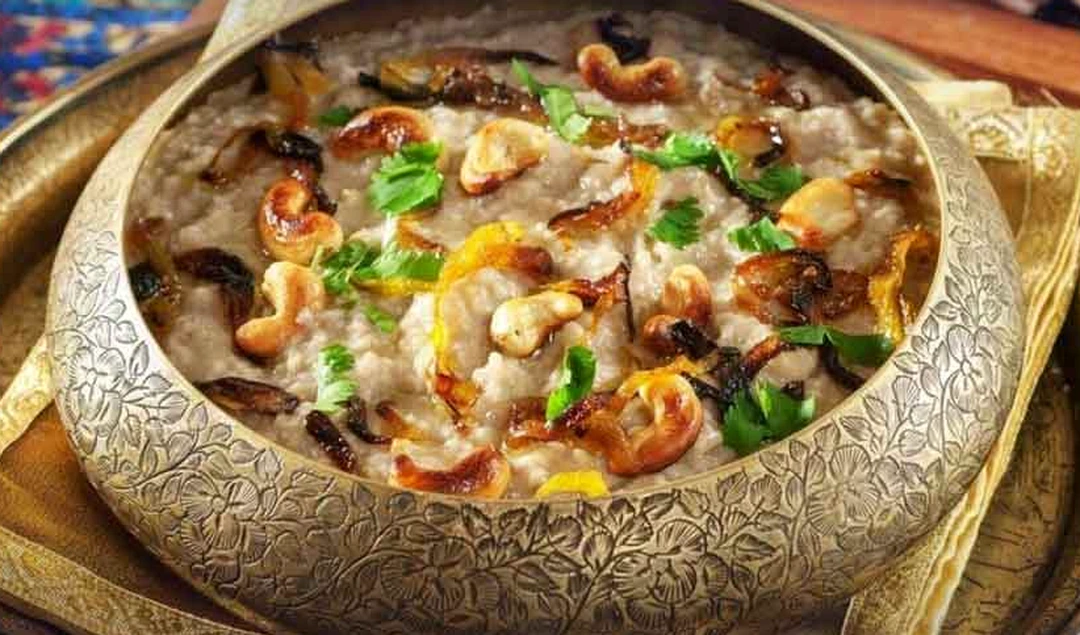
If Machboos is a celebration of trade spices, Harees is an ancient symbol of patience and pure hospitality. Recorded in Middle Eastern culinary texts as early as the tenth century, such as the classic cookbook Kitab al-Tabikh, Harees demands meticulous preparation. Whole wheat is soaked overnight and slow-cooked with lamb or beef in deep earthenware pots nestled over smoldering embers for hours. Once the meat and wheat soften into a uniform texture, cooks use a large wooden paddle called a midrab to beat the mixture continuously until it reaches a velvety consistency. Before serving, a drizzle of warm, herb-infused clarified butter (samn) is poured over the top, yielding a rich, comforting dish closely tied to Ramadan and traditional wedding celebrations.
Rounding out this rustic flavor harmony is the sweet touch of Luqaimat, an iconic pastry central to local hospitality. Leavened dough seasoned with a hint of saffron and cardamom is deftly shaped into small spheres and gently fried in hot oil until the outside turns crisp and amber while the inside stays cloud-soft. Fresh from the oil, the dumplings are generously drizzled with glossy dark date syrup (dibbs) and sprinkled with toasted sesame seeds. Enjoying warm Luqaimat alongside cardamom-rich Gahwa coffee is one of the warmest welcomes desert hosts offer travelers from afar.
Today, inside the refined dining spaces of the Armani Hotel or the At.mosphere restaurant perched high on the tower’s breezy levels, these family recipes reach new heights through a fine-dining lens. In the hands of acclaimed chefs, desert culinary principles are reimagined with sous-vide precision, camel-milk foams, or surprising pairings of spiced Machboos rice with Wagyu beef and black truffle. This seamless blend of rugged Bedouin heritage and haute cuisine turns the base of the skyscraper into a one-of-a-kind culinary destination where every flavor carries a thousand-year story reaching for the stars.
Reaching the 828-meter summit in the Arabian desert calls for thoughtful itinerary planning to savor every awe-inspiring moment of this contemporary architectural wonder. Official entrances to the Burj Khalifa observation decks are located on the Lower Ground level of the bustling Dubai Mall. Horizon viewing is divided into two distinct experiences: the standard At The Top decks on Levels 124 and 125 offer 360-degree panoramic views from 456 meters, while At The Top SKY grants access to Level 148 at a remarkable 555 meters with a premium lounge serving traditional Arabic date tea. Because visitor numbers per time slot are strictly managed for safety and comfort, booking tickets online at least several weeks ahead through official channels is key to avoiding long queues and sold-out peak slots.
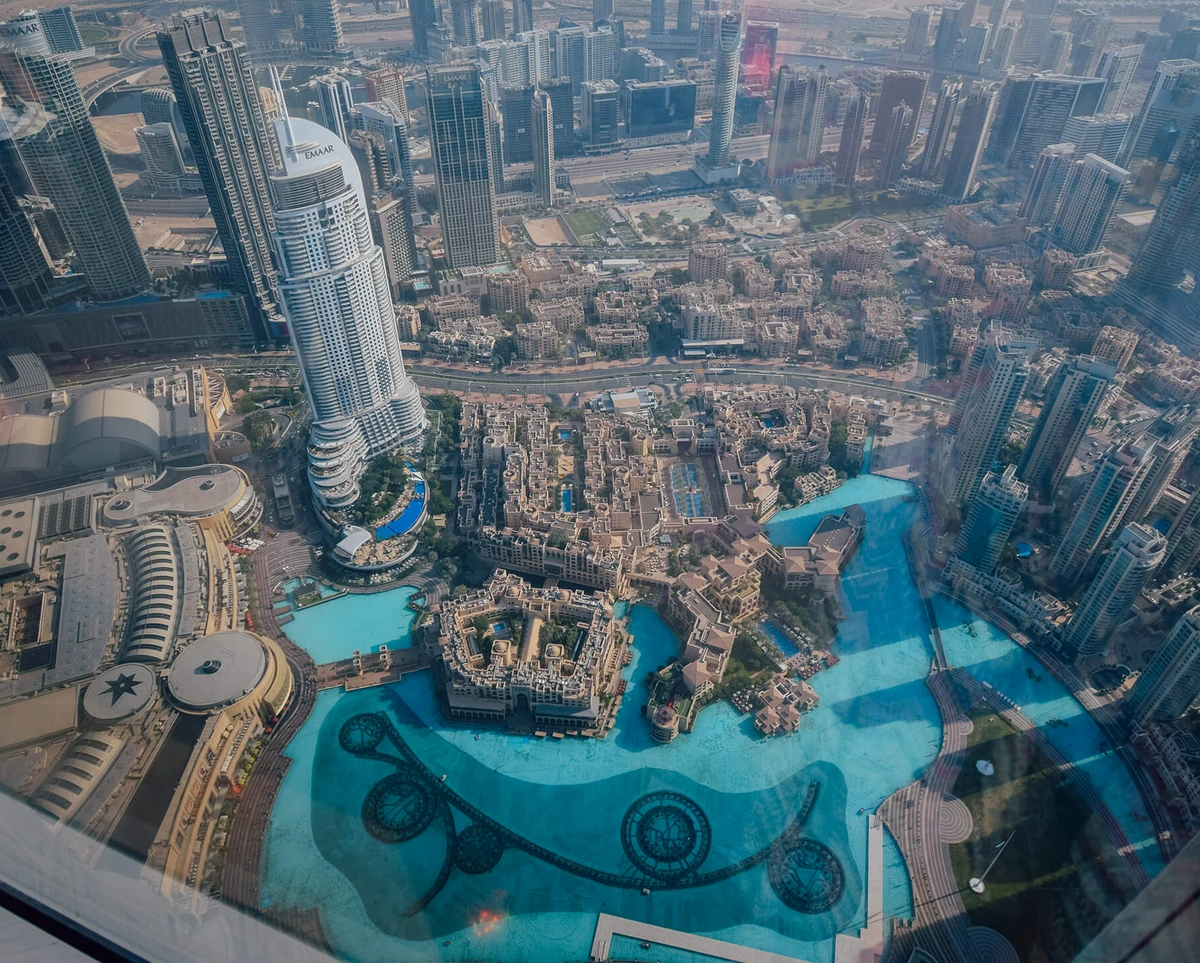
Sunset—typically falling between 4:30 PM and 6:30 PM—is widely hailed as the most dazzling golden hour to stand atop the Burj Khalifa. As the sun sinks toward the turquoise waters of the Persian Gulf, bronze and deep violet twilight hues wash across the vast Rub’ al Khali desert sands before Downtown Dubai below lights up in a sea of glowing city lights. This magical shift between raw natural scenery and high-tech urbanity creates an unforgettable visual spectacle. Ticket prices vary clearly by time slot and elevation: standard daytime admission is the most budget-friendly, while sunset slots and VIP tickets to Level 148 or The Lounge on Levels 152, 153, and 154 cost more in line with elevated privileges such as specialty coffee and canapés in the clouds.
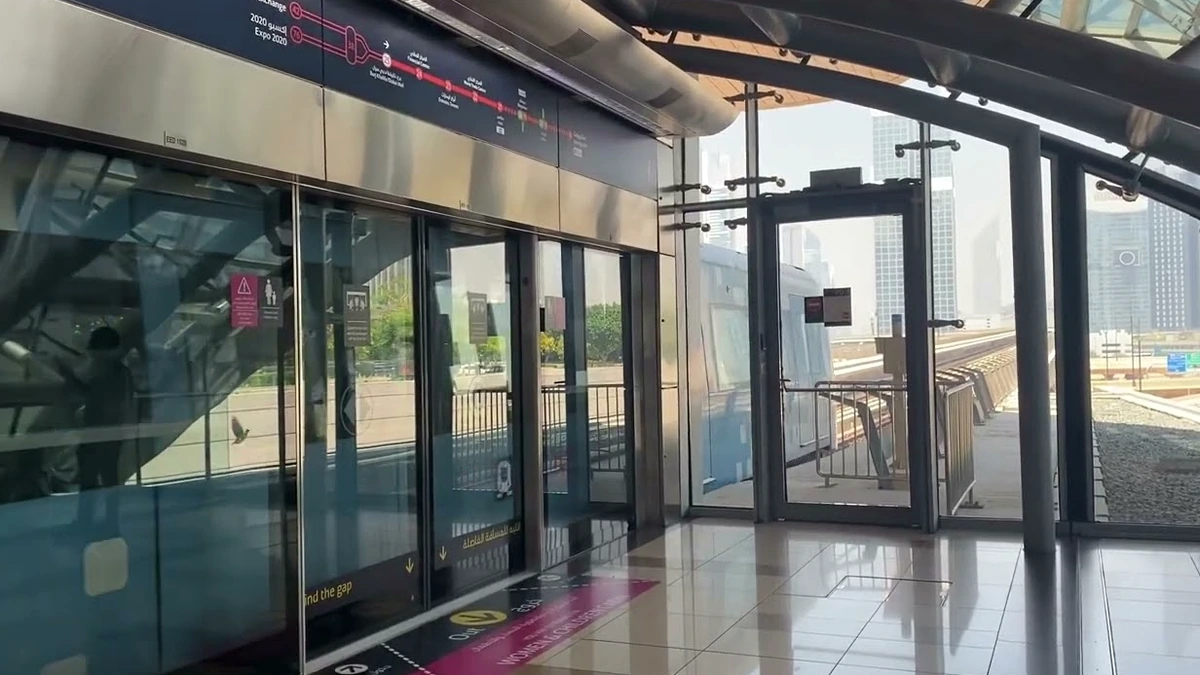
Dubai’s modern public transit network makes reaching the tower straightforward for travelers. The fastest and most economical option is the driverless Dubai Metro Red Line, stopping at the Burj Khalifa/Dubai Mall station. From the station, an enclosed, air-conditioned glass walkway called the Metro Link Bridge—measuring 828 meters in length—leads directly into the shopping complex, shielding visitors from harsh outdoor desert heat. For those preferring privacy and flexibility, traditional taxis and ride-hailing apps operate around the clock, taking passengers right to the main entrance of Armani Hotel Dubai or the dedicated observation deck drop-off area.
Beyond scheduling, respecting local cultural norms of the Muslim world is something every international visitor should keep in mind when visiting this iconic landmark. The Burj Khalifa observation areas and adjacent public spaces observe a modest, respectful dress code. Visitors are advised to wear attire that covers the shoulders and extends past the knees, avoiding tank tops, overly high-slit skirts, or sheer clothing out of respect for local customs. Security screening at the entrance follows strict international aviation-grade standards, so bulky luggage, large professional tripods, and outside food or drinks must be checked at the complimentary baggage counter before boarding the double-deck high-speed elevators traveling at ten meters per second.
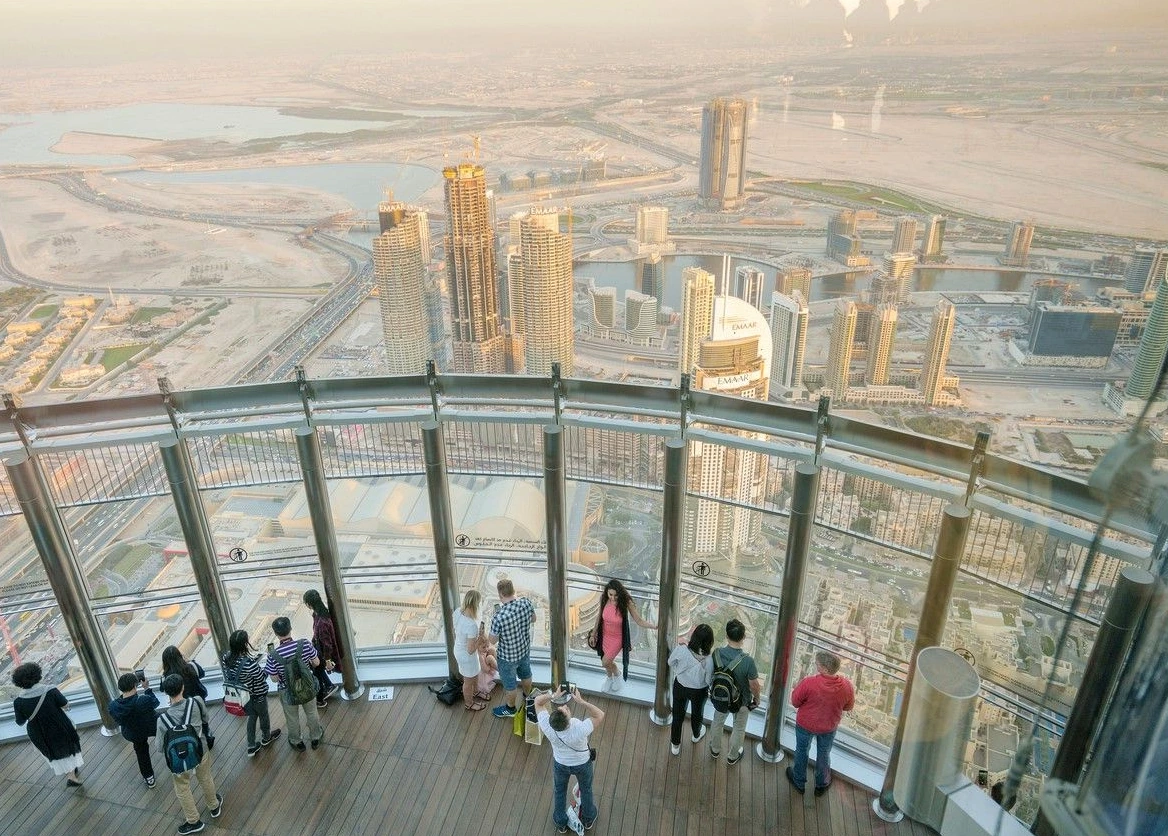
To round out a full day of sightseeing, bring a light shawl or jacket, as temperatures hundreds of meters above ground are noticeably cooler than the warm desert air below, especially with brisk breezes on outdoor viewing terraces. After descending from the clouds, lingering along the artificial lake promenade to watch The Dubai Fountain’s dramatic sound-and-light choreography makes a fitting finale to a memorable excursion. For travelers looking to streamline transportation, accommodation, and top attraction tickets without worrying about complex logistics, booking a thoughtfully curated all-inclusive Dubai – Abu Dhabi tour package offers a relaxed, seamless way to explore the land of records.