Stretching along a luminous waterway in the heart of Chuo Ward, prosperous Osaka safeguards a stirring and poignant historical legacy known as Dotonbori Shopping Street (道顿堀). Looking back to the Edo period (1603–1867) under the rule of the Tokugawa Shogunate, Osaka was rapidly emerging as the foremost commercial hub of the Kansai region. The origins of this vital canal are tied to the strategic vision of an extraordinary local merchant named Yasui Doton (安井道卜). In 1612, recognizing that fragmented natural waterways were hampering economic trade, Yasui Doton poured his entire personal fortune and devotion into excavating a major artificial canal designed to link the Uji and Kizu rivers—opening a direct maritime freight artery connecting the bustling city center with neighboring commercial ports.
However, while the canal was still under construction, the turbulent political storms of a divided Japan struck. In 1615, the Summer Siege of Osaka (大阪夏之阵) erupted fiercely between loyalists of the Toyotomi clan and the allied forces of the Tokugawa Shogunate. Standing firm in his loyalty to the Toyotomi clan, Yasui Doton fought valiantly and fell on the blood-soaked battlefield. Although its visionary founder perished, the strategic and civic value of his canal project endured. Once the smoke of war cleared, the Tokugawa Shogunate granted permission for Doton’s relatives to carry his grand undertaking to completion. To honor the devotion and pioneering spirit of the fallen merchant, the nearly three-kilometer artificial waterway and the districts flanking its banks were named “Dotonbori”—an eternal union of “Doton” and “Hori/Bori” (堀, meaning moat or canal).
Entering the Genroku era (1688–1704)—the radiant zenith of Edo-period Chonin townspeople culture—Dotonbori underwent a dramatic transformation from a utilitarian freight canal into Japan’s premier entertainment and theatrical district. Along the southern bank of the canal, a dense row of grand wooden theaters sprang up, turning the waterfront into a mecca for classical performing arts. Prestigious Kabuki stages and traditional Bunraku puppet theaters converged here, drawing writers, merchants, and everyday citizens who thronged the glowing lantern-lit streets through the night. In those golden days, the canal banks echoed with the lilting plucks of the shamisen, refined theatrical chants, and the rhythmic splash of oars from festive pleasure boats gliding past the glittering cityscape.
National modernization during the Meiji (1868–1912) and Taisho (1912–1926) eras infused fresh modern vitality into the Dotonbori waterfront. Traditional playhouses gradually made room for—or adapted alongside—newly introduced Western entertainment forms, including early cinemas, musical variety theaters, and modern concert halls. Yet the darkest tragedy of modern history befell the district during World War II, when devastating Allied firebombing raids reduced nearly all of its historic wooden architecture to ashes, turning Osaka’s most opulent cultural heart into smoldering ruins within a few nights.
Even so, the unyielding resilience and innate optimism of Osaka’s citizens sparked a miraculous revival of Dotonbori during Japan’s postwar economic boom from the 1960s through the 1980s. Rising from wartime rubble, the district flourished around its signature local culinary philosophy known as Kuidaore (食い倒れ)—a celebrated gastronomic ethos encouraging people to indulge in fine food until they “eat themselves into ruin” without a single regret. Colossal kinetic billboards and multicolored neon signs lit up the night sky, casting shimmering reflections across the historic waterway. Stepping into the twenty-first century, through coordinated urban planning by the Osaka Municipal Government and the Dotonbori Shopping Street Promotion Association, both banks evolved into the sleek Tonbori River Walk promenade, where centuries of history blend seamlessly with cutting-edge digital illumination to create western Japan’s enduring icon of vibrant tourism.
Located in the heart of Osaka’s Chūō-ku district, Dotonbori occupies an exceptionally auspicious geomantic setting at the center of what has long been celebrated as Japan’s “Water Capital.” Viewed through traditional East Asian spatial philosophy, the district absorbs abundant vitality from the Yodo River delta emptying into Osaka Bay, forming an ideal water-gathering, breeze-welcoming configuration prized for commerce. The Dotonbori Canal winds like a protective Azure Dragon silk ribbon, channeling prosperous water energy along its southern bank—where the most bustling shopping promenade took shape. This open waterfront corridor not only moderates the microclimate amid dense urban development, dispelling the stifling heat of concrete high-rises, but also turns the district into a dynamic energy nexus symbolizing the relentless entrepreneurial spirit of Osaka merchants across centuries.
Dotonbori’s landscape design represents an exemplary synthesis of historic waterway topography and thoughtful urban engineering. The main scenic axis stretches along the southern bank of the Dotonbori Canal, extending from Nipponbashi Bridge in the east to Dotonboribashi Bridge in the west. Along this land-and-water threshold, urban planners created the sunken Tombori Riverwalk right at water level, breaking up the enclosed canyon feel of conventional city streets. Beneath historic bridges linking the north and south banks, the calm surface of the canal mirrors thousands of vivid illuminated signs in mesmerizing layered reflections—acting like a giant liquid mirror that doubles the architectural spectacle and creates an urban waterfront rich in both ecological breathing room and unmistakable Kansai flair.
Beyond its distinctive waterfront setting, Dotonbori sits at a golden crossroads of regional transit, serving as the linchpin connecting the Kyoto–Osaka–Kobe tourism triangle. This prime location enables travelers from everywhere to reach the district effortlessly via state-of-the-art multimodal infrastructure. Visitors departing Tokyo need only about two and a half hours aboard the Tokaido or Sanyo Shinkansen bullet train to Shin-Osaka Station, followed by a seamless fifteen-minute transfer on the Midosuji Subway Line straight to bustling Namba Station next door. For international arrivals, geographic distance practically vanishes aboard the Nankai Rapi:t limited express train from Kansai International Airport, whisking passengers directly into central Namba in just thirty-four minutes.
From its core along the canal banks, urban pathways radiate outward like a fan, making Dotonbori the hub linking Osaka’s famed cultural and culinary landmarks. The tranquil waterway serves as the departure point for Tombori River Cruise boats gliding beneath historic bridges, offering a rare, unhurried vantage point on the architecture of this storied merchant city. From the canal promenade, travelers can stroll just minutes away to immerse themselves in the lively market bustle of Kuromon Ichiba Seafood Market, or head south to admire iconic Tsutenkaku Tower rising above the nostalgic Shinsekai neighborhood—anchoring Dotonbori as the timeless, beating heart of Kansai.

From an urban planning perspective, Dotonbori’s spatial layout follows a distinctive centripetal design anchored by the Dotonbori-gawa waterway as its natural spine dividing and uniting Osaka’s bustling north and south banks. Pedestrian circulation converges at Ebisubashi Bridge, an arched crossing acting as the vital hinge connecting famed Dotonbori Avenue with the covered shopping paradise of Shinsaibashisuji. Beneath the bridge, the Tombori River Walk revitalization project transformed formerly steep concrete embankments into a level, wood-and-flagstone riverside boardwalk, creating a dramatic two-tiered public realm. Visitors can stroll leisurely right beside the calm water on the lower level while towering multi-story commercial facades buzz with energy directly overhead—forging a rare organic bond between waterway and high-rise streetscape.
Dotonbori’s exterior architectural identity represents the exuberant zenith of three-dimensional visual advertising, erasing the boundary between building facades and monumental street sculpture. Commanding the skyline is the culinary landmark Kani Doraku, crowned by a colossal mechanized snow crab stretching over eight meters across, fitted with intricate articulated joints that keep its claws and eyestalks waving rhythmically day and night since first debuting in the mid-twentieth century. Just steps away, the facade of Kinryu Ramen astonishes passersby with a giant 3D green dragon bursting through concrete upper walls, its sculpted head and tail projecting boldly into public space. This theatrical, larger-than-life ornamentation springs from the playful, open-minded aesthetic of Kansai’s merchant class, turning every building into one of East Asia’s most vivid open-air stages.
Dotonbori’s scale of investment and modern engineering brilliance shine brightly through world-famous landmarks. Foremost among them is the sixth-generation Glico Running Man billboard on the canal’s north bank—a digital marvel powered by over 140,000 smart LED lights spanning a metal frame rising more than twenty meters high. Beyond preserving the classic image of the triumphant runner crossing the finish line, this ultra-high-resolution screen continuously cycles through backdrops celebrating Japan’s four seasons and iconic national landmarks. Equally remarkable is the Don Quijote Dotonbori flagship store, home to the 77-meter Ebisu Tower Ferris wheel—the world’s first oval Ferris wheel integrated directly onto the facade of a multi-story commercial building, rotating thirty-two gondolas smoothly to offer sweeping panoramas across the Seto plain.
Alongside its dazzling above-ground icons, subterranean transit and public amenities meet the exacting standards of a global metropolis. Comprehensive urban accessibility upgrades have transformed Dotonbori into a seamless barrier-free pedestrian zone equipped with gentle ramps, exterior elevators, and tactile paving leading directly from underground Namba subway stations to the riverside promenade. Floating piers along the canal serving Tombori River Cruise sightseeing boats feature modern pneumatic shock-absorbing mooring technology, ensuring safe boarding even during tidal fluctuations. This tight synergy between private investment in cutting-edge digital displays and public funding for sustainable civic infrastructure defines an energetic cityscape embodying Osaka’s prosperous spirit.
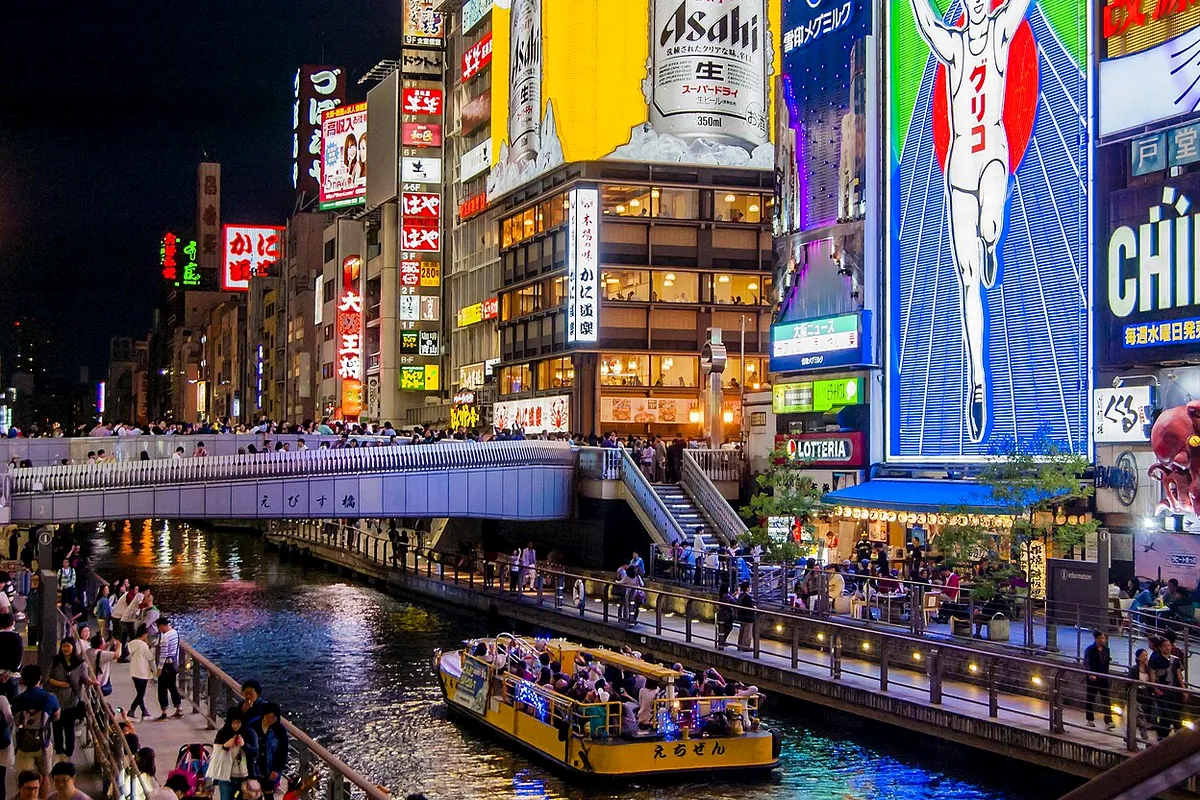
As twilight descends over the Minami district, giving way to the golden evening hours between 5:00 PM and 9:00 PM daily, the entire corridor along the Dotonbori-gawa undergoes a breathtaking visual metamorphosis. Tens of thousands of square meters of classic neon signs and massive full-color LED screens ignite in unison, transforming a canal that once carried merchant barges into the most dazzling open-air light theater in Japan. The tranquil surface of the waterway acts as a colossal mirror reflecting kaleidoscopic ribbons of color, elevating commercial signage into mesmerizing urban installation art. Osaka’s night economy surges to life at this hour, drawing tens of thousands of travelers to both banks to witness a spectacle at once futuristic and deeply nostalgic.
Dotonbori after dark evokes an unmistakable aesthetic reminiscent of classic cyberpunk cityscapes, where ultra-modern display screens weave densely through historic architectural corners. The juxtaposition of kinetic three-dimensional mechanical signs—such as the giant Kani Doraku crab waving its claws and the drumming Kuidaore Taro clown—beside million-color LED walls creates an exhilarating symphony of light. Gentle ripples stirred by river breezes constantly fracture and recompose the shimmering reflections, turning the canal surface into a living abstract painting in perpetual motion—an immersive environmental performance where commerce and public art become indistinguishable.
From the water, Tombori River Cruise sightseeing boats cleave smoothly through the canal, gliding between luminous banks as though drifting through a glowing labyrinth. Passengers pass beneath historic spans such as Ebisubashi and Tazaemonbashi bridges, gazing upward at neon-blazing facades from an entirely fresh perspective. The lively commentary of local guides blends with the soft lap of water against the hull, recalling the canal’s Edo-period origins under visionary merchant Yasui Doton. Once a vital commercial waterway and traditional theater hub, the canal now wears a mantle of contemporary technology, rewarding boat passengers with an unobstructed 360-degree panorama that is both relaxing and awe-inspiring.
Matching the dazzling illumination is the infectious human energy that turns Dotonbori into a never-ending street theater. During peak evening hours, pedestrian foot traffic along the Tombori River Walk can exceed 15,000 people per hour, forming an endless river of humanity. Lively cheers from street performers, modernized shamisen riffs mingling with contemporary pop beats, the sizzle of sauce-drenched takoyaki griddles, and fragrant smoke from riverside grills fill the air. Unscripted and spontaneous, the natural interplay between global visitors and Osaka’s exuberant local spirit creates a multi-sensory spectacle—proving that Dotonbori shines not merely from neon bulbs, but from the unstoppable pulse of an entertainment capital that never sleeps.
In the heart of Osaka, Dotonbori is far more than a bustling commercial avenue—it is the living embodiment of Kuidaore, the classic Osaka philosophy of eating and drinking with joyful abandon until your wallet runs dry. Inheriting Edo-period Osaka’s proud title as “the Nation’s Kitchen” (Tenka no Daidokoro), this canal-side district nurtured an extraordinary street-food culture where time-honored family recipes passed down across generations turn every corner into a fragrant, colorful open-air museum of flavor.
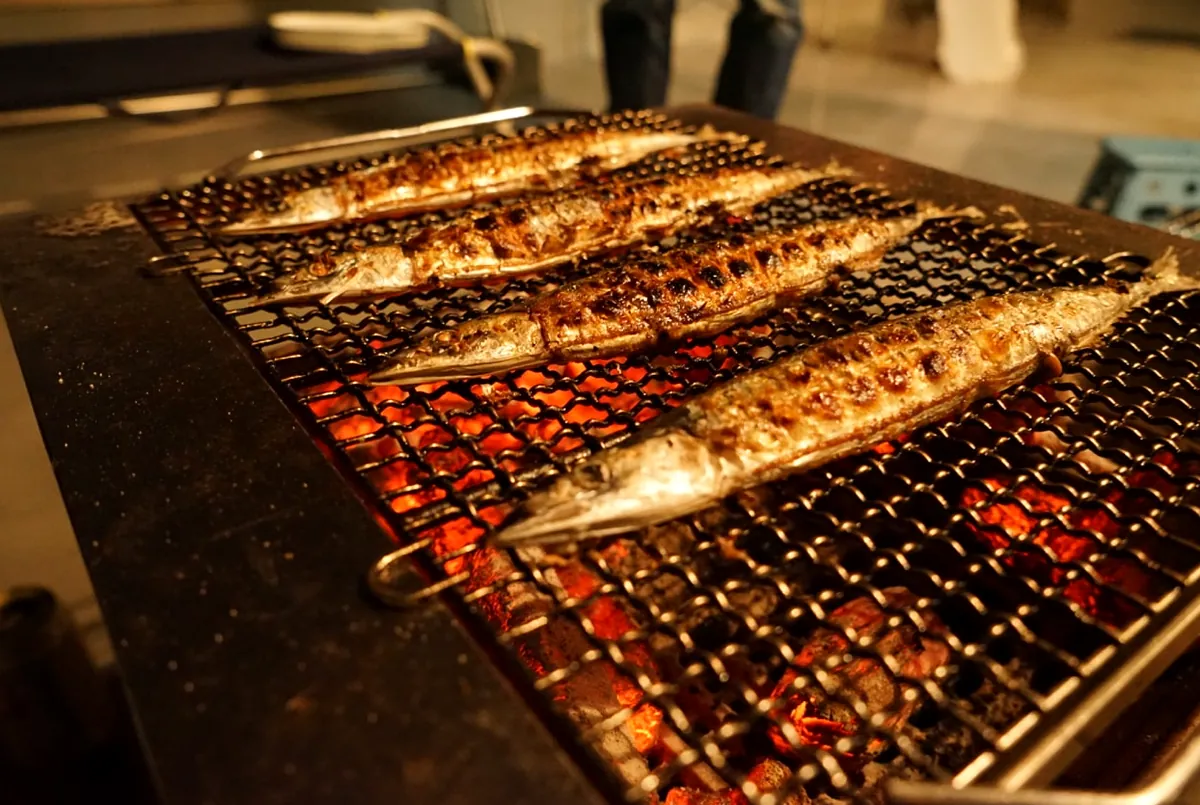
Defining Dotonbori’s culinary identity above all else is takoyaki—savory octopus balls reigning supreme over Kansai street food. Here, takoyaki craftsmanship reaches peak artistry in the hands of seasoned cooks at celebrated institutions such as Kukuru—famous for the giant mechanical octopus extending its tentacles over its storefront—and Akaoni, distinguished by its iconic red demon emblem. Silky batter enriched with delicate dashi stock brewed from bonito flakes and kombu kelp is poured generously into blazing-hot cast-iron half-sphere molds. What sets Dotonbori takoyaki apart is the generous chunk of plump, snappy fresh octopus tucked into the center of every ball. As cooks deftly twirl each sphere with twin bamboo picks, the exterior crisps to a golden brown while the interior remains molten and creamy. Finished with rich, tangy brown takoyaki sauce, creamy mayonnaise, a dusting of emerald aonori seaweed flakes, and paper-thin katsuobushi bonito shavings dancing in the rising heat, every bite is pure magic.
Alongside golden spheres of takoyaki, okonomiyaki savory Japanese pancakes express the generous, hearty spirit of Osaka home cooking. The shining standard-bearer of this dish is Mizuno, a legendary family-run institution founded in 1945 and repeatedly honored with Michelin Bib Gourmand recognition. Unlike Hiroshima’s layered style, Osaka-style okonomiyaki at Dotonbori folds finely shredded cabbage, nutritious grated yamaimo mountain yam, fresh eggs, and abundant fillings—from plump shrimp, squid, and scallops to thinly sliced pork belly—directly into the batter. Cooked slowly on thick steel teppan griddles right before diners, the pancake puffs up light and airy, perfumed with seared scallions and brushed with sweet-savory fermented fruit sauce—delivering nostalgic comfort elevated to postwar culinary mastery.
Dotonbori’s flavor profile would be incomplete without kushikatsu, crisp deep-fried skewers of meat and vegetables born among Osaka’s working class in the early twentieth century. Here, Daruma—guarded outside by the stern-faced statue of its iconic founder—stands as an essential culinary stop. Skewers of tender beef, melty cheese, crunchy lotus root, or quail eggs are dipped in smooth batter, rolled in ultra-fine panko breadcrumbs, and plunged into bubbling oil until gleaming gold. Central to kushikatsu etiquette is the communal stainless-steel tray of dark, tangy dipping sauce on each table, governed by the inviolable rule: strictly no double-dipping. Born of Japanese communal hygiene and deep respect for the purity of heirloom sauce, this ritual pairs crisp, greaseless skewers with raw cabbage leaves dipped cleanly into sweet-tart sauce to refresh the palate between bites.
When night settles in and neon ripples across the canal, steaming bowls of ramen beckon hungry travelers to Kinryu Ramen, easily spotted beneath the giant three-dimensional green dragon coiling across its roof. Distinct from lighter Tokyo-style broths, Kinryu wins devotees with a rich tonkotsu pork-and-chicken bone broth simmered for hours into a velvety, full-bodied soup free of any gaminess. Seated cross-legged on open-air tatami platforms overlooking the lively street corner, slurping springy golden noodles topped with melt-in-your-mouth chashu pork belly and unlimited help-yourself fresh crushed garlic and spicy pickled chives, travelers feel the vibrant heartbeat of a neighborhood that has nourished appetites for centuries.
Dotonbori’s atmosphere shifts dramatically throughout the day, yet the hour when the boulevard truly puts on its dazzling crown is the golden evening window from 5:00 PM to 9:00 PM. As dusk settles over the canal, thousands of neon signs blaze to life simultaneously, casting kaleidoscopic reflections across the water framing Ebisu Bridge. Visiting during these hours allows travelers to experience the illuminated cityscape at its peak splendor while joining lively crowds amid billowing steam from renowned takoyaki and okonomiyaki stalls.
Getting around is effortless thanks to Osaka’s efficient underground rail network, which links directly to the Minami entertainment district. Travelers are advised to use contactless IC smart cards—such as Kansai’s native ICOCA card or Suica—to tap smoothly through automated ticket gates without purchasing individual paper fares. The most convenient transit hub is major Namba Station—served by the Midosuji, Sennichimae, and Yotsubashi subway lines—alongside neighboring Nihombashi Station. Stepping out of Namba Station Exits 14 or 25, a leisurely stroll of just a few hundred meters brings you straight into the vibrant heart of Dotonbori.
Shopping in Dotonbori offers a bustling commercial playground ranging from all-night discount megastores like Don Quijote—crowned by its canal-side Ebisu Tower Ferris wheel—to leading drugstore and cosmetics chains such as Matsumoto Kiyoshi and Sundrug. To maximize savings, international visitors should take full advantage of Japan’s 10% consumption tax-free shopping program: simply spend 5,000 JPY or more (before tax) in a single transaction at participating stores for instant tax deduction at checkout. Be sure to carry your original physical passport bearing a valid short-term visitor entry stamp, as photocopies or digital photos are strictly rejected under Japanese customs regulations.
Alongside vibrant cultural discovery, staying alert against hidden tourist shopping traps helps protect both your budget and your itinerary. Some low-cost group tours steer visitors into isolated, closed-door duty-free outlets on the outskirts of town, pressuring guests to buy overpriced health supplements, seaweed extracts, or shark cartilage at steep markups. Taking charge of your itinerary ensures your valuable travel hours remain dedicated to authentic sightseeing and local experiences.
Overall public safety in Dotonbori remains exceptionally high, though weekend evenings and major holidays bring dense pedestrian crowds around Ebisu Bridge and along the riverside walkways, making it wise to keep wallets, phones, and bags secure. Visitors should also observe considerate local Osaka manners: avoid walking while eating to help keep streets spotless, return empty food trays and wrappers to the vendor stall where you purchased them, and keep stairways along the Tombori River Walk clear for passing foot traffic. To enjoy a seamless, culturally enriching journey through Japan with visas, accommodations, and transit thoughtfully arranged, consider booking a curated all-inclusive Japan tour package for complete peace of mind.