Rising majestically along the rugged slopes of the Drolmari mountain range in Tibet’s historic Tsang region, Tashilhunpo Monastery traces its origins to the autumn of 1447 AD, the twelfth year of the Zhengtong reign during China’s Ming Dynasty. The master who laid the very first foundation stone of this renowned sanctuary was Gendun Drup, one of the foremost disciples of Je Tsongkhapa—the great philosophical reformer of Tibetan Buddhism and founder of the Gelugpa (Yellow Hat) school. Guided by the spiritual vision of Gendun Drup, posthumously revered as the First Dalai Lama, the geomantic setting along the hillside of the Nyangchu Valley gathered the vital energies of earth and sky to establish an enduring center of Dharma learning and monastic excellence across the Tibetan plateau.
In the Tibetan language, the name “Tashilhunpo” carries profound spiritual resonance, translating roughly as “Heap of Glory” or “Auspicious Mount Sumeru Where Fortune and Merit Converge.” Linking its name directly to Mount Sumeru—the cosmic axis of the universe in Buddhist cosmology—underscored the founder’s lofty aspiration to establish an unshakable spiritual center for the entire Tsang region. In its earliest years, the monastery remained modest in scale with a handful of assembly halls and simple monastic quarters; however, thanks to strict adherence to monastic discipline and the rigorous philosophical debate tradition of the Gelugpa order, the sanctuary rapidly drew hundreds of monks from across the snow-covered plains to study the teachings.
A monumental historical turning point that transformed the monastery’s political and religious standing unfolded at the dawn of the seventeenth century, in 1600 AD. Under the Fourth Panchen Lama, Lobsang Chokyi Gyaltsen—an eminent scholar-saint of immense spiritual authority—Tashilhunpo underwent an unprecedented grand expansion. At that defining moment, the monastery was officially designated as the permanent seat of successive incarnations of the Panchen Lama, the second-highest spiritual authority in the Gelugpa lineage, who together with the Dalai Lama forms a complementary “sun and moon” spiritual leadership guiding Tibetan Buddhist faith. From that era onward, the religious authority of Tashilhunpo stood in harmonious balance with the Potala Palace in Lhasa, sustaining a stable geopolitical equilibrium for centuries.
Moving into the eighteenth and nineteenth centuries during the Qing Dynasty, Tashilhunpo entered a dazzling golden age bolstered by close ties and imperial patronage from the court in Beijing. Manchu emperors—most notably the Qianlong Emperor—bestowed deep reverence upon successive Panchen Lamas, particularly the Sixth Panchen Lama, Lobsang Palden Yeshe. The northern court granted tens of thousands of taels of silver, pure gold, and jade imperial edicts to construct magnificent gilded funerary stupas and the Dekyi Phodrang summer residence. These cordial relations not only fortified the monastery’s preeminence during regional conflicts with neighboring Gurkha forces from Nepal, but also shaped the famous “Golden Urn” lot-drawing system instituted under Qianlong to recognize reincarnations of high lamas.
Through the sweeping historical tides of the modern era across the Qinghai-Tibet Plateau, Tashilhunpo has stood steadfast like a living epic carved into mountain stone. Recognizing its peerless historical, architectural, and spiritual significance, China’s State Council officially inscribed Tashilhunpo Monastery in the very first batch of Major Historical and Cultural Sites Protected at the National Level in 1961. Its endurance affirms the monastery’s status not merely as a classic fortress of Tibetan architecture, but as the undying cultural heart of Tsang for more than half a millennium.
Located roughly 270 kilometers southwest of sacred Lhasa, Shigatse rises as the proud capital of historic Tsang, sitting at an impressive elevation of 3,840 meters above sea level. Amid the sweeping expanse of the snow-crowned plateau, Tashilhunpo Monastery was not perched atop an isolated crag like the Potala fortress; instead, it nestles gracefully along the gentle southern slope of sacred Mount Drolmari—revered as the Auspicious Peak associated with the Bodhisattva Tara. This placement embodies the highest ideals of Tibetan geomancy, forming an auspicious “mountain-backed, water-facing” configuration brimming with vitality and serene majesty.
In traditional geomantic understanding, the towering Drolmari ridge behind acts like a protective throne shielding the entire monastic complex from biting northern winds sweeping off the snowy plains. Its south-facing slope allows grand assembly halls, monastic dormitories, and golden stupas to bask in warm, energizing highland sunlight beneath crystal-clear skies year-round. Looking upward from the base of the hill, hundreds of gleaming gilded roofs and deep ochre-red walls blend seamlessly with the gray granite veins of the sacred mountain, giving the impression that the monastery was not built by human hands, but grew organically out of the living bedrock over a thousand years.
Framing Shigatse’s valley floor is the fertile confluence of the silt-rich Yarlung Tsangpo River and the gentle Nyang Chu River. This lush alluvial valley creates a rare green agricultural oasis amidst Tibet’s rugged terrain, contrasting dramatically with the stark, jagged granite peaks encircling it. Gazing out from the monastery courtyards, visitors take in a breathtaking panorama of high-altitude barley fields stretching into the distance beneath drifting white clouds and jagged snow-capped peaks—evoking a profound sense of stillness and boundless space.
In terms of human geography and overland exploration, Tashilhunpo occupies an indispensable strategic position along Tibet’s heritage route. It serves as the vital gateway connecting the Lhasa–Gyantse cultural triangle before travelers venture deeper into the Himalayas toward Everest Base Camp (EBC) at 5,200 meters. Shigatse’s elevation of 3,840 meters provides an ideal physiological acclimatization stage, helping the body adjust gradually to thinner oxygen levels before ascending higher into the Roof of the World.
Reaching this architectural masterpiece today has been made remarkably smooth by modern infrastructure. The Lhasa–Shigatse High-Speed Railway slices dramatically through the Yarlung Tsangpo River gorge, carrying passengers past emerald river bends framed by sheer cliffs. Running alongside the rail line, the smooth G4218 expressway traces an epic overland route guiding travelers from central Lhasa into the timeless sanctuary of the Panchen Lamas.
Resting along the gentle slopes of sacred Mount Nyima on the northern edge of Shigatse, Tashilhunpo Monastery spans a monumental architectural footprint covering 150,000 square meters. Viewed from afar, the complex resembles a fortified ancient city where tiers of crimson, pure white, and ochre-gold walls climb step by step up the rugged granite hillside. Its entire spatial layout follows the sacred mandala principles of Tibetan Tantric Buddhism, establishing clear spatial thresholds between the mundane world and the sacred realm. A central ceremonial axis guides pilgrims across expansive flagstone courtyards, seamlessly linking monastic colleges, residential quarters, and some of the most awe-inspiring worship halls on the Tibetan Plateau.
Standing majestically on the western flank of the complex is the Maitreya Chapel, known in Tibetan as Jamkhang. This towering sanctuary rises 30 meters high with thick stone walls and five tiers of gilded eaves gleaming brilliantly beneath the highland sun. Stepping past heavy woven curtains into the solemn interior, every visitor gazes upward in awe at the colossal seated statue of Maitreya, the Future Buddha, enthroned in the lotus posture. Reaching a record height of 26.2 meters, it stands as the largest indoor gilded bronze statue of Maitreya Buddha on Earth. Constructing this monumental icon required more than one hundred tons of pure red copper and hundreds of kilograms of fine gold leaf. Supreme local goldsmithing artistry shines through thousands of sparkling diamonds, deep-sea pearls, amber pieces, and rare agates hand-inlaid into the folds of his robes, radiating serene compassion amidst hundreds of eternally flickering butter lamps.
Along the gentle eastern slope stands the complex of funerary stupas housing the preserved bodies and sacred relics of successive Panchen Lamas. Among these imposing reliquary monuments, the memorial stupa of the Tenth Panchen Lama, Tashi Namgyal, stands as a supreme triumph of modern religious craftsmanship. The entire stupa is sheathed in over 600 kilograms of pure solid gold and encrusted with tens of thousands of multicolored gemstones including jade, red coral, lapis lazuli, and premier turquoise. Intricate repoussé motifs of the Eight Auspicious Symbols, guardian deities, and undulating lotus bands encircling its base showcase the pinnacle of traditional Tibetan art and master goldsmithing.
Serving as the spiritual heartbeat coordinating monastic life across the sanctuary is the Coqen Hall, or Great Assembly Hall. This vast, atmospheric ceremonial chamber is supported by dozens of massive ancient cypress pillars darkened by time, each wrapped carefully in handwoven wool carpets bearing intricate dragon-and-cloud motifs. Adorning all four walls of the hall is an extraordinary collection of original fifteenth-century murals and thangka paintings. Painted exclusively with finely ground natural mineral pigments mixed with plant resins and gold dust, these depictions of mandalas, tutelary deities, and lineage masters retain their vivid brilliance after centuries of wear—standing as living proof of classic artistic mastery and rigorous preservation across generations.
As twilight fades across the rocky ridges of the Yarlung Tsangpo Valley, Shigatse—the historic capital of Tsang—eschews flashy neon signs and artificial mega-shows common in modern tourist cities. At roughly 3,840 meters above sea level, Tashilhunpo Monastery rises like a spiritual mountain citadel poised along the delicate boundary between sunset glow and highland night. Unlike large-scale commercial live productions staged elsewhere, nighttime at the sacred seat of the Panchen Lamas firmly rejects theatrical effects and high-wattage floodlighting. That solemn stillness is not an absence of nocturnal beauty, but an unbroken preservation principle upheld for nearly six centuries since Master Gendun Drup first laid the monastery’s foundations in 1447.
The most authentic, awe-inspiring spectacle around Tashilhunpo belongs to the cosmos itself in harmony with classical Tibetan architecture. The thin, dry, crystal-clear air at extreme altitude unveils an extraordinary celestial dome where the luminous Milky Way arches directly above sacred Mount Drolma. Beneath a sky ablaze with stars, the sole natural illumination gracing the gilded monastery roofs is silvery moonlight and highland starlight. Monumental structures built of sturdy granite and finished in traditional white limewash contrast dramatically against deep ochre-red and cinnabar assembly walls—creating a solemn, mystical tableau no mechanical stage lighting could ever replicate.
In place of modern floodlights, Tashilhunpo’s nocturnal soul radiates from thousands of yak-butter lamps burning steadily inside its grand chapels. Melted golden yak butter releases a rich, comforting aroma mingling with fragrant juniper incense, casting a warm, flickering glow over priceless thangkas and sacred icons. Inside the hushed depths of the Maitreya Chapel (Jampa Chenmo)—commissioned in 1914 by the Ninth Panchen Lama, Chökyi Nyima—dancing candlelight illuminates the 26-meter gilded bronze statue of Maitreya Buddha. Gentle flames shimmering across the Buddha’s compassionate countenance guide the mind beyond worldly distractions into the profound stillness of Tantric Buddhist philosophy.
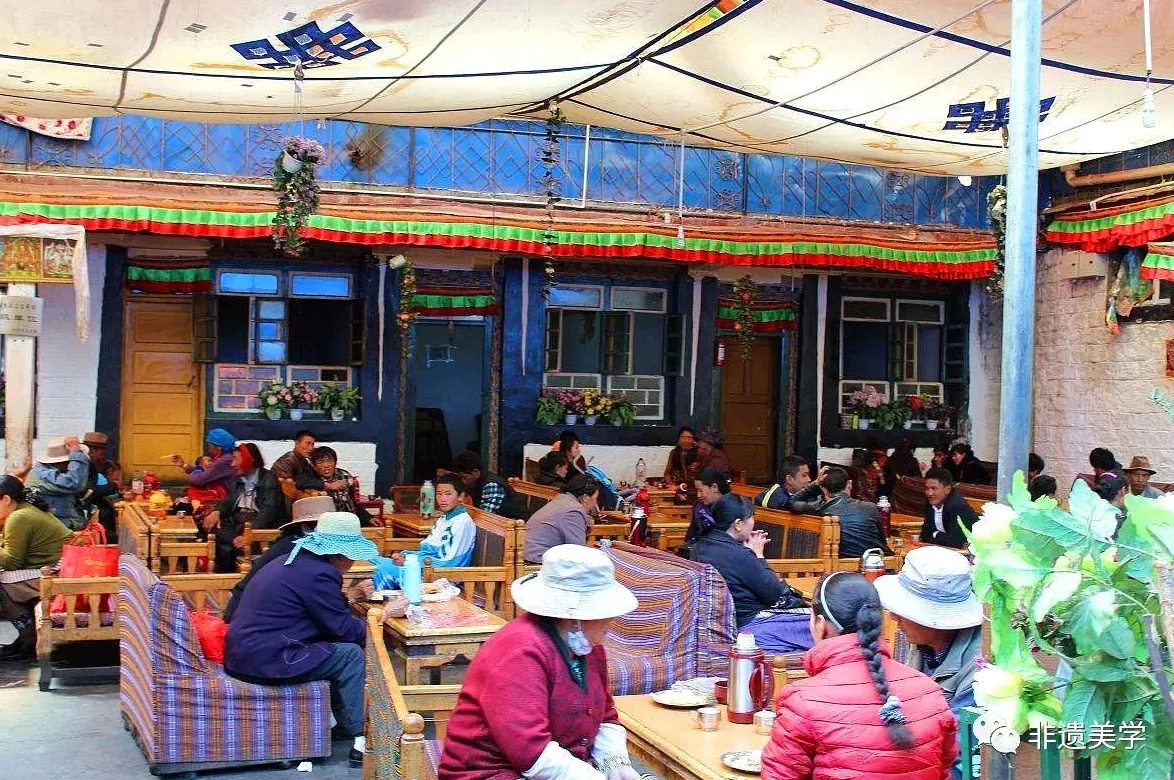
Mirroring the monastery’s quietude, evening life in the surrounding neighborhood unfolds at an unhurried, restorative pace—offering travelers a vital period of rest and physiological acclimatization to thinner air before continuing toward the Himalayas or Mount Everest. Along narrow cobblestone lanes at the foot of Mount Nyiser, traditional sweet tea houses provide warm, welcoming refuges against the crisp night air. Inside, beside stoves fueled by glowing dried yak dung, locals and travelers pass around steaming cups of Tibetan sweet milk tea, hearty bowls of *thukpa* noodle soup, and savory plates of yak-meat *momo* dumplings. Soft murmurs of local conversation blend with the delicate chime of wind bells hanging from temple eaves, weaving an authentic nocturnal atmosphere that preserves the timeless sanctity of Shigatse.
Stepping down from the weathered stone steps and juniper-scented courtyards of Tashilhunpo Monastery, travelers enter the traditional culinary world of Tsang, where Shigatse’s old quarter hugs the base of Mount Drolma with whitewashed houses and colorful embroidered door curtains. Highland cuisine here relies not on elaborate culinary theatrics or complex spices, but on a resilient philosophy of sustenance reflecting humanity’s intimate bond with the snow-covered plateau. Every heirloom dish and beverage in Shigatse embodies Vajrayana wellness wisdom—delivering dense, warming energy to counter biting cold and thin mountain air while expressing the genuine hospitality of a sacred land.
The signature beverage woven into every breath of daily life around the monastery is Tibetan butter tea, known locally as *Po Cha* (or *Bala Cha*). Its soul begins with compressed bricks of dark tea transported along the historic Ancient Tea Horse Road, boiled thoroughly over a hearth into a strong, astringent concentrate. The hot tea is poured into a tall traditional wooden churn along with generous chunks of golden yak butter and a pinch of mineral salt harvested from natural Tibetan salt lakes, then plunged vigorously until tea, butter, and salt emulsify into a smooth, velvety liquid topped with golden froth. Taking a steaming sip in Shigatse’s brisk breeze, the brisk astringency of dark tea balances the richness of yak butter, leaving a warm, savory finish that quickly eases altitude headaches and soothes lips parched by dry highland air.
Accompanying butter tea is *Tsampa*, the foundational staple that has sustained generations of monks and villagers through countless snowy winters. This wholesome food is crafted entirely from highland *qingke* barley harvested from fertile terraced fields along the Yarlung Tsangpo Valley. Plump barley grains are washed, roasted crisp in hot sand inside wide cast-iron pans, sifted clean, and stone-milled by hand into a nutty, aromatic flour. Enjoying *Tsampa* invites a mindful tactile ritual: scoop roasted barley flour into a rustic birchwood bowl, pour in a splash of steaming butter tea, add a pinch of dried cheese curds, and deftly rotate the bowl with four fingers while kneading until the mixture forms a pliable dough—shaping bite-sized morsels in your palm. The earthy sweetness of toasted barley melds seamlessly with savory butter tea to create a deeply satisfying, nutrient-dense staple also tossed skyward as an auspicious blessing during sacred ceremonies.
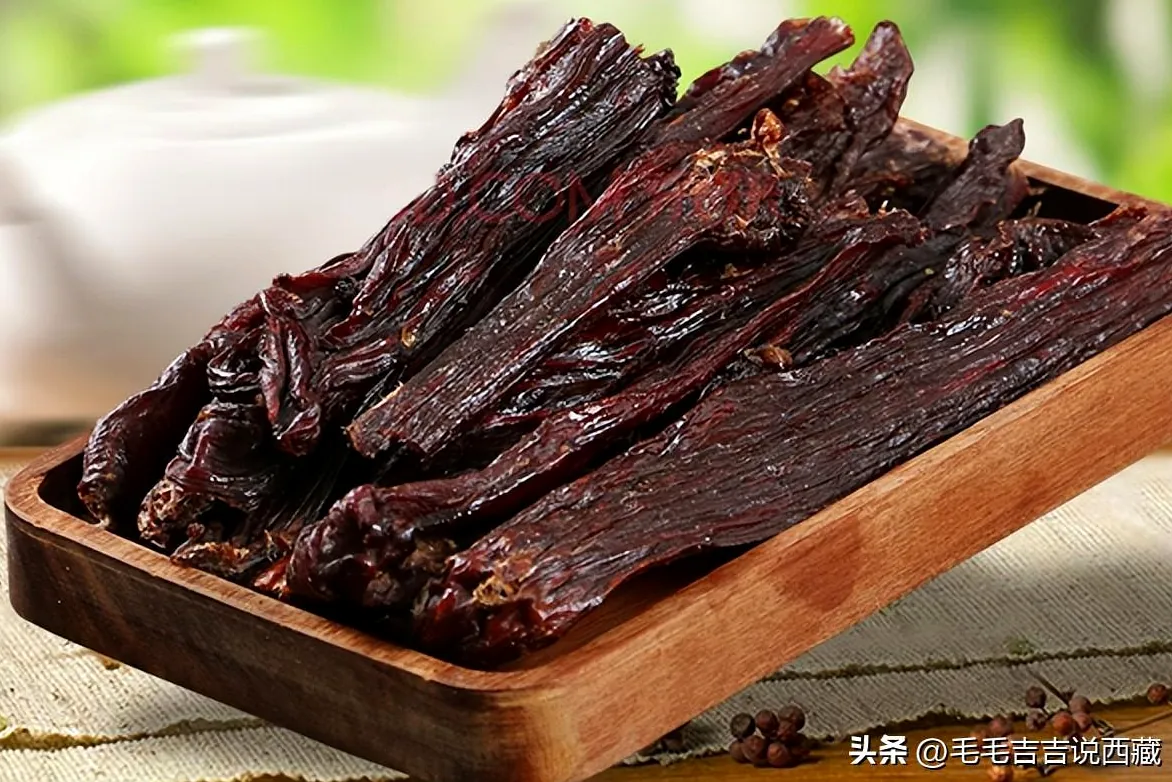
On Shigatse’s culinary map, the most prized source of protein comes from the yak—resilient mountain cattle grazing freely on wild alpine pastures above 4,000 meters. Nourished by pure glacial meltwater and rare medicinal herbs growing on rocky slopes, Tibetan yak meat boasts a deep crimson color, firm lean texture, minimal fat, and high concentrations of iron and minerals. On sub-zero days, traditional family eateries near the monastery gates fill with fragrant steam rising from bubbling yak-meat hot pots, simmered in a rich broth of beef bones, white radish, and gentle highland tonic herbs. Equally unmissable is air-dried yak jerky: strips of meat cured naturally through long winters in dry mountain winds and intense sunshine, shaved into thin slices with a pocket knife and chewed slowly to savor concentrated sweetness and wild herbal aroma.
A Tsang feast reaches true completion with a cup of warming *qingke* barley wine (*chang*), an artisanal fermented brew with gentle alcohol content and a clean aroma reminiscent of harvest straw. Cooked barley grains are fermented with traditional herbal yeast inside sealed earthenware jars for several days until transforming into a pale golden elixir offering a delicate balance of natural sweetness and light tang. Following age-old hospitality customs, hosts invite guests to perform a traditional toast: dip the ring finger of your right hand into the cup and flick three drops skyward in gratitude to Heaven, Earth, and Ancestors before taking three small sips accompanied by auspicious blessings and draining the cup—letting the gentle warmth dispel the chill of the frontier.
To reach sacred Tashilhunpo rising proudly in central Shigatse—the historic capital of Tsang—travelers typically journey from Lhasa aboard the Lhasa–Shigatse Railway or follow the scenic Friendship Highway winding over Gambala Pass past turquoise Yamdrok Lake. The monastery generally welcomes visitors daily from 9:00 AM to around 6:00 PM; some chapels may close briefly around midday for monastic meals, while late afternoon offers the best opportunity to witness lively philosophical debates echoing across cypress-shaded stone courtyards. At 3,840 meters above sea level, Shigatse sits nearly two hundred meters higher than Lhasa, making proper acclimatization to thin air your top priority before exploring the monastery’s sprawling 150,000-square-meter grounds.
Preventing Acute Mountain Sickness (AMS) requires calm pacing and strict physical discipline. Upon arriving in Tsang, avoid strenuous exertion, brisk walking, or rushing up the steep granite stairways leading to upper assembly halls. A time-tested rule shared by veteran Tibetan guides is to skip hot showers on your first night in Shigatse, as high water temperatures dilate blood vessels, accelerate oxygen consumption, and can trigger severe altitude headaches. Carrying a portable personal oxygen canister, drinking plenty of warm water, sipping energizing salted butter tea (*Po Cha*), and taking *Rhodiola rosea* supplements prior to departure help your body establish steady equilibrium on the high plateau.
Administratively, Shigatse falls under special border and travel regulations, meaning international visitors cannot travel independently and must join an itinerary arranged through a licensed travel agency. Alongside a valid Chinese Tourist Visa (L Visa), visiting Tashilhunpo requires two essential permits: the Tibet Travel Permit (TTP, issued by the Tourism Bureau of the Tibet Autonomous Region) and the Aliens’ Travel Permit (issued upon arrival by the Shigatse Public Security Bureau). These documents are checked strictly at highway checkpoints along National Highway G318 and upon entering the city, requiring your tour operator to process exact passport details weeks before departure.
Stepping through the monastery’s gilded entrance gates, deep respect for Gelugpa monastic etiquette should guide every gesture. Pilgrims and visitors must strictly follow the clockwise circumambulation route (*Kora*) along perimeter walls hugging the Drolmari slope and past gleaming bronze prayer wheels—aligning with cosmic order and the turning of the Wheel of Dharma. Religious regulations strictly prohibit photography and filming inside sacred chapels, including the Great Maitreya Chapel housing the world’s largest indoor gilded bronze Maitreya statue and the jeweled funerary stupas of the Panchen Lamas. When crossing thick wooden chapel thresholds, never step directly on the raised doorsill; always remove hats and sunglasses, maintain quiet reverence, and dress modestly covering shoulders and knees.
Alongside spiritual mindfulness, travelers should remain alert against commercialized tourist traps—particularly cut-rate itineraries that funnel visitors into outlets selling counterfeit Nagqu caterpillar fungus (*Cordyceps*), low-grade saffron, or synthetic Dzi beads and feng shui stones at inflated prices. A pilgrimage to this sacred Buddhist heartland is truly fulfilling only when led by knowledgeable cultural guides committed to transparent, shopping-free standards. To realize your dream of exploring the majestic religious heritage of the Panchen Lamas safely, thoughtfully, and in depth, explore details of a specialized all-inclusive China tour package crafted for discovering the Roof of the World.