Nestled along the southwestern frontier of Yunnan Province, Tengchong has been celebrated since antiquity as a dramatic sacred land where the Earth’s crust stirs continuously, sending endless geothermal waters surging up from profound depths. Tengchong Rehai (Hot Sea) Scenic Area—often hailed as the premier onsen sanctuary of southern China—is far more than a natural geological marvel; it is a deeply layered cultural landscape where tectonic history intertwines with centuries of turbulent frontier heritage along the borderlands with Myanmar.
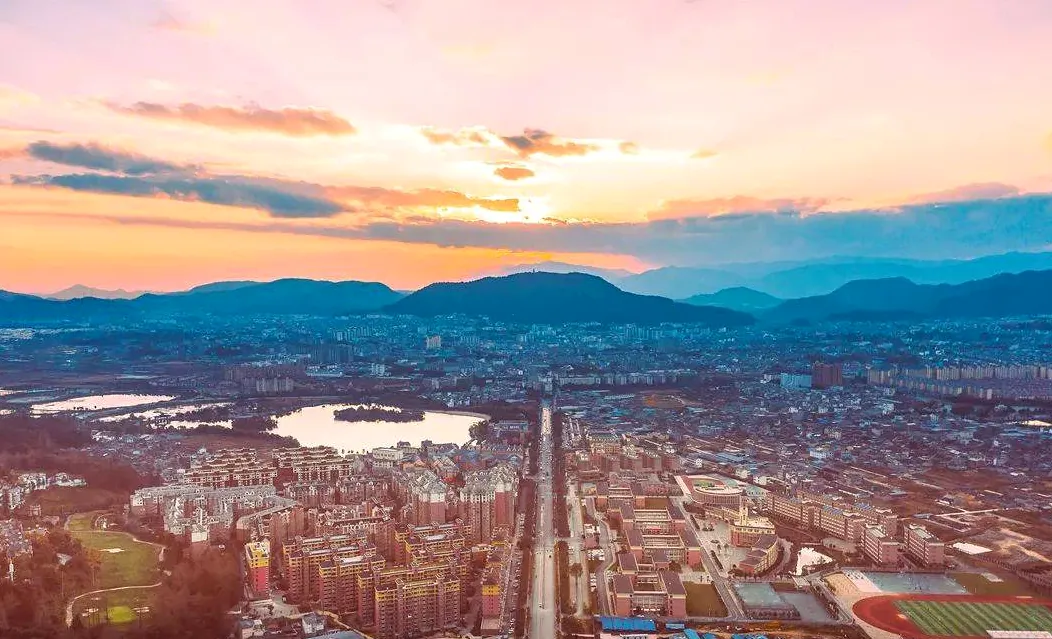
An aerial panoramic view reveals a striking portrait of contemporary urban planning woven seamlessly into Tengchong’s expansive natural setting. Below spreads an orderly modern town with neat residential buildings, a spacious school complex with a vibrant athletic track, and a broad artificial lake acting like a giant mirror reflecting sky and clouds. In the distance, layered mountain ranges cradling the valley basin fade into a warm golden sunset, capturing a harmonious balance between modern civic life and the stately stillness of surrounding peaks.
Tracing history back to the Ming Dynasty, the renown of these geothermal springs was vividly and accurately recorded by the celebrated scholar and geographer Xu Xiake. In 1639—the twelfth year of the Chongzhen reign—his legendary travels across Southwest China brought him to Rehai Valley. In his classic *”Xu Xiake’s Travel Diaries,”* he devoted vivid passages to describing dense plumes of steam billowing out of deep mountain gorges, the thunderous roar of boiling natural basins, and geysers of sulfurous water shooting skyward. Xu Xiake’s firsthand journals stand as the earliest authoritative historical documentation introducing this extraordinary geothermal realm into the classical canon of Chinese civilization.
Across the Ming and Qing dynasties, Tengchong served as a vital military and commercial chokepoint along the Ancient Tea Horse Road leading toward South Asia. Frontier settlers and traveling merchants quickly discovered the remarkable restorative properties of Rehai’s mineral-rich subterranean springs. During the Qing Dynasty, boiling wells and natural soaking pools were given evocative legendary names by locals—serving both to soothe weary long-distance travelers and anchoring water- and mountain-spirit traditions among the borderland’s diverse ethnic communities.
During the fiercest chapters of World War II, this geothermal valley also became a poignant witness to heroic sacrifice. In 1944, amid the Western Yunnan Campaign to reopen the vital Burma Road, Tengchong became a fierce battleground against Axis forces. Throughout those months of fire and hardship, the sulfur- and mineral-rich hot springs of Rehai served as an invaluable field convalescence sanctuary—aiding wound recovery, restoring strength, and treating skin ailments for tens of thousands of soldiers of the Chinese Expeditionary Force during the liberation of the frontier.
From Xu Xiake’s meticulous Ming-era chronicles to the wartime echoes of 1944, Tengchong Rehai Hot Springs has transcended the bounds of a mere scenic attraction. For hundreds of millennia, warm mineral steam has risen ceaselessly from fractures in the Earth’s crust—forming an invisible thread linking ancestral memory with today’s tranquil wellness sanctuary.
Positioned along the powerful tectonic suture zone where the Eurasian and Indian plates collide, Tengchong in Yunnan Province has long been regarded as one of southern China’s most dynamic living geological museums. Through traditional East Asian geomancy, the land embodies an extraordinary “wind-sheltering, energy-gathering” configuration where subterranean dragon veins have circulated abundant geothermal heat for millions of years. Intense Quaternary crustal activity sculpted a rare volcanic landscape boasting more than 80 ancient volcanic cones alongside over 90 active hot springs flowing year-round. Rehai Valley thus acts like a natural basin concentrating primeval vitality, where deep subterranean heat merges with cool mountain waters to paint an unforgettable landscape shaped by nature’s hand.
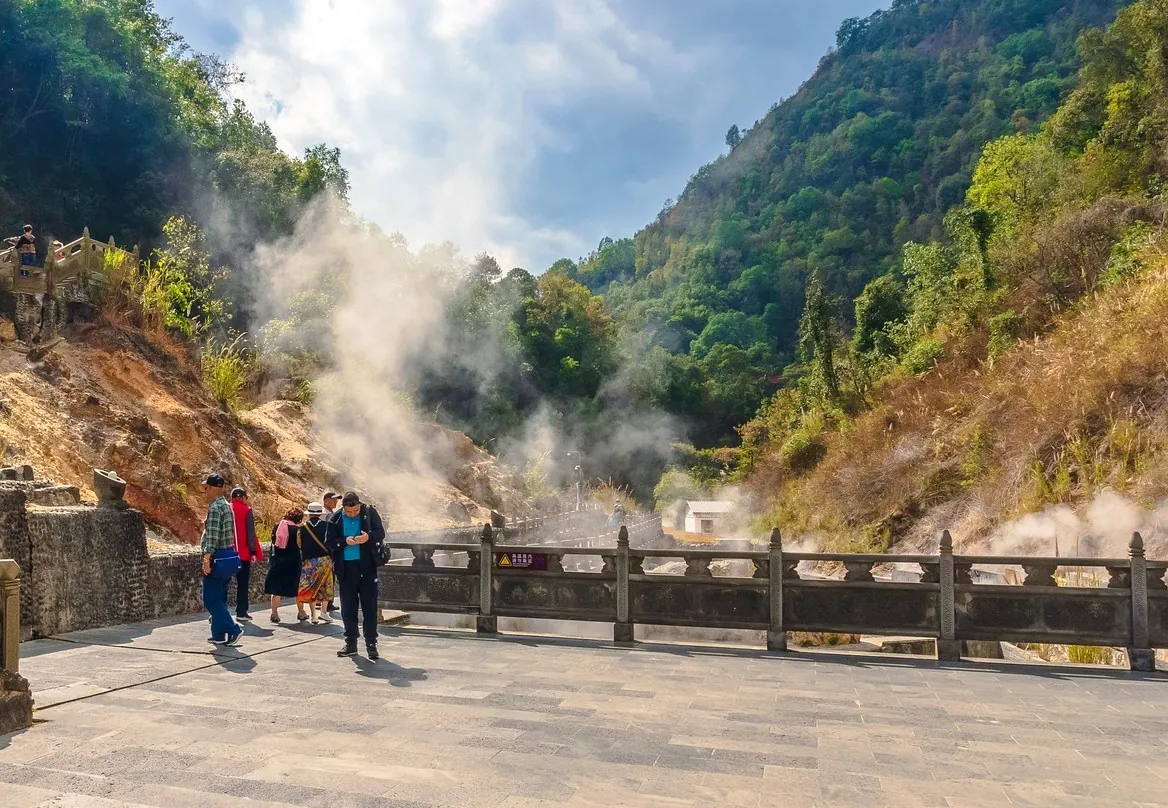
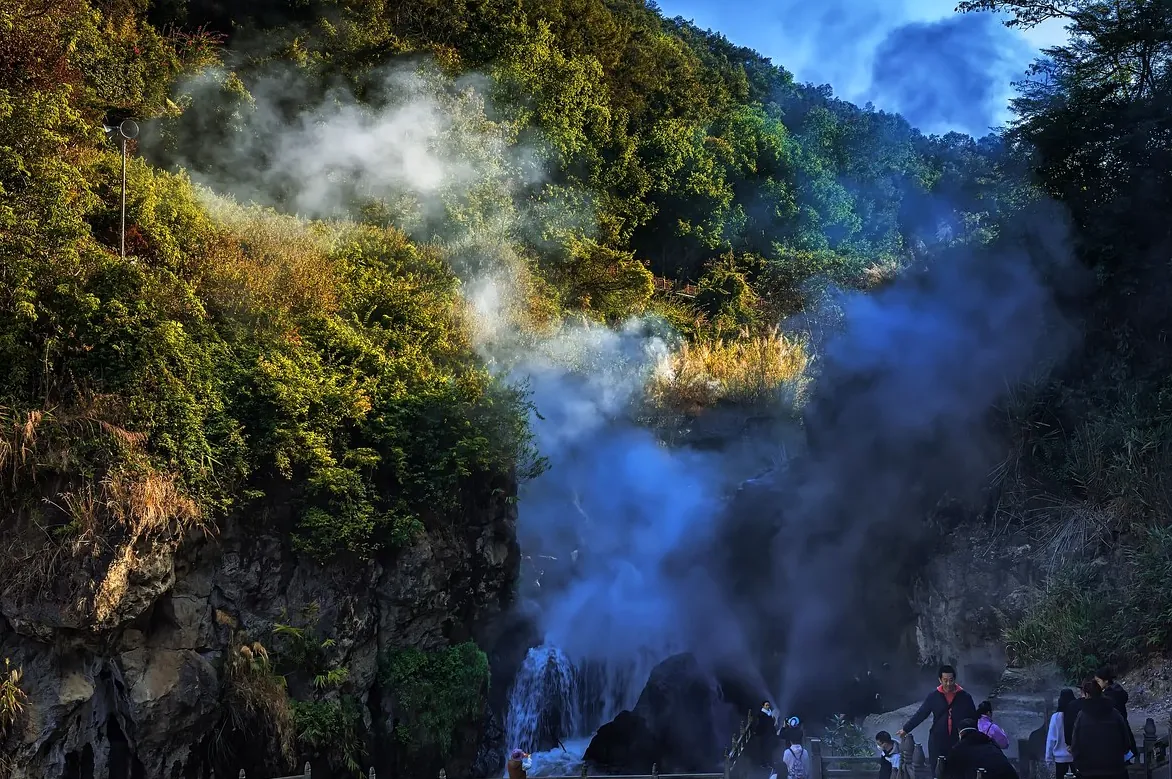
Along the gentle slopes of the geothermal valley, enchanting plumes of mineral vapor rise from millennia-old sedimentary fissures, infusing the quiet mountain air with a subtle sulfurous aroma. A gracefully winding gray-stone footpath follows the ravine floor behind finely carved stone balustrades, allowing visitors to stroll leisurely right above visible geothermal energy emerging beneath their feet. Behind drifting white steam clouds, lush green slopes rise smoothly—creating a dramatic contrast between subterranean heat and the cool serenity of surrounding forests.
Landscape planning throughout Rehai Hot Springs exemplifies harmony with nature, respecting rugged natural contours rather than imposing heavy concrete development. Visitor pavilions, stone stairways, and viewing decks are tucked thoughtfully against dark basalt cliffs, following natural geothermal vents to release underground pressure safely. The rhythmic interplay of volcanic stone, bubbling streams, and shaded groves of bamboo and ancient trees transforms a fiery thermal basin into a peaceful promenade, where rich humidity and abundant negative ions keep the air soft, moist, and comfortable rather than stifling.
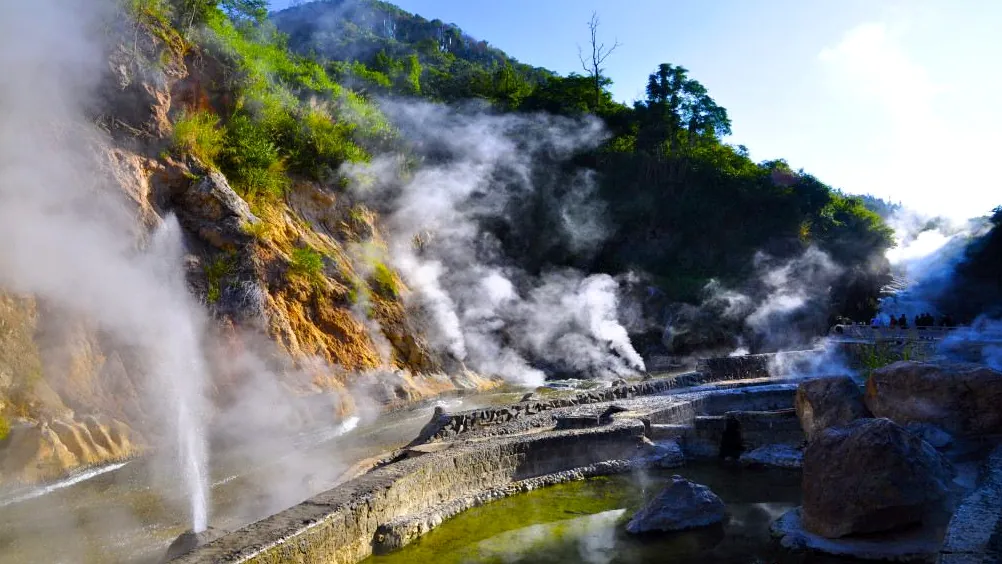
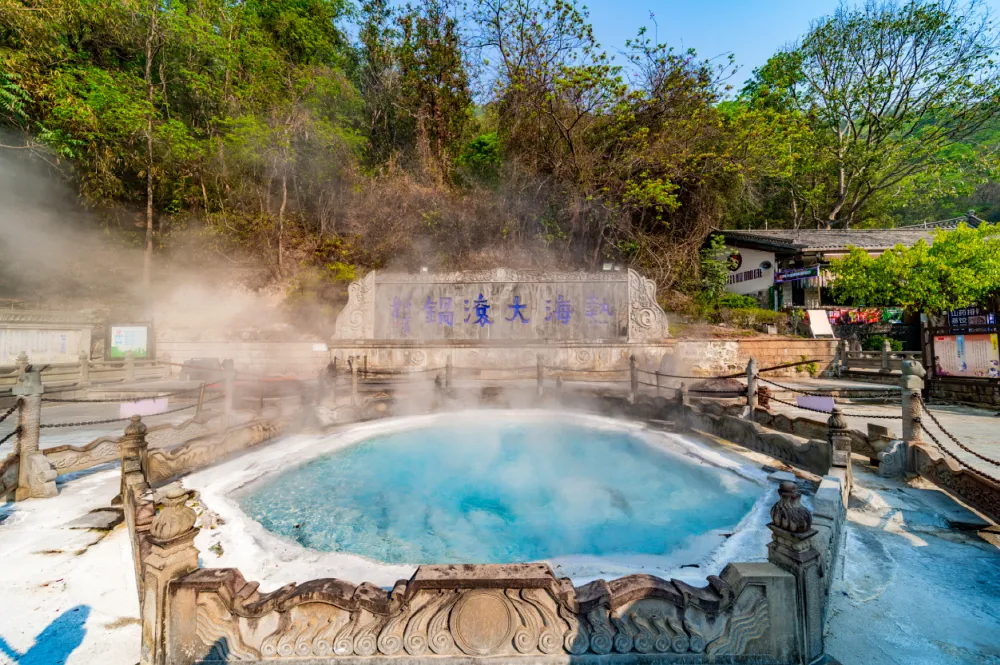
The dazzling centerpiece of the entire valley is Da Gun Guo—the Great Boiling Pot—aptly likened to a giant open-air cauldron simmering beneath heaven and earth. Measuring over 3 meters across and roughly 1.5 meters deep, this circular thermal pool boils continuously at around 97°C, churning up frothy white bubbles day and night. Framing the Great Boiling Pot is a carved bluestone parapet adorned with Bagua trigrams and cloud-dragon motifs, symbolizing yin-yang equilibrium between spring Water and subterranean magma Fire. Seen from a distance, billowing steam rises like celestial clouds mingling with hillside greenery—confirming Tengchong’s reputation as China’s foremost geothermal wonder.
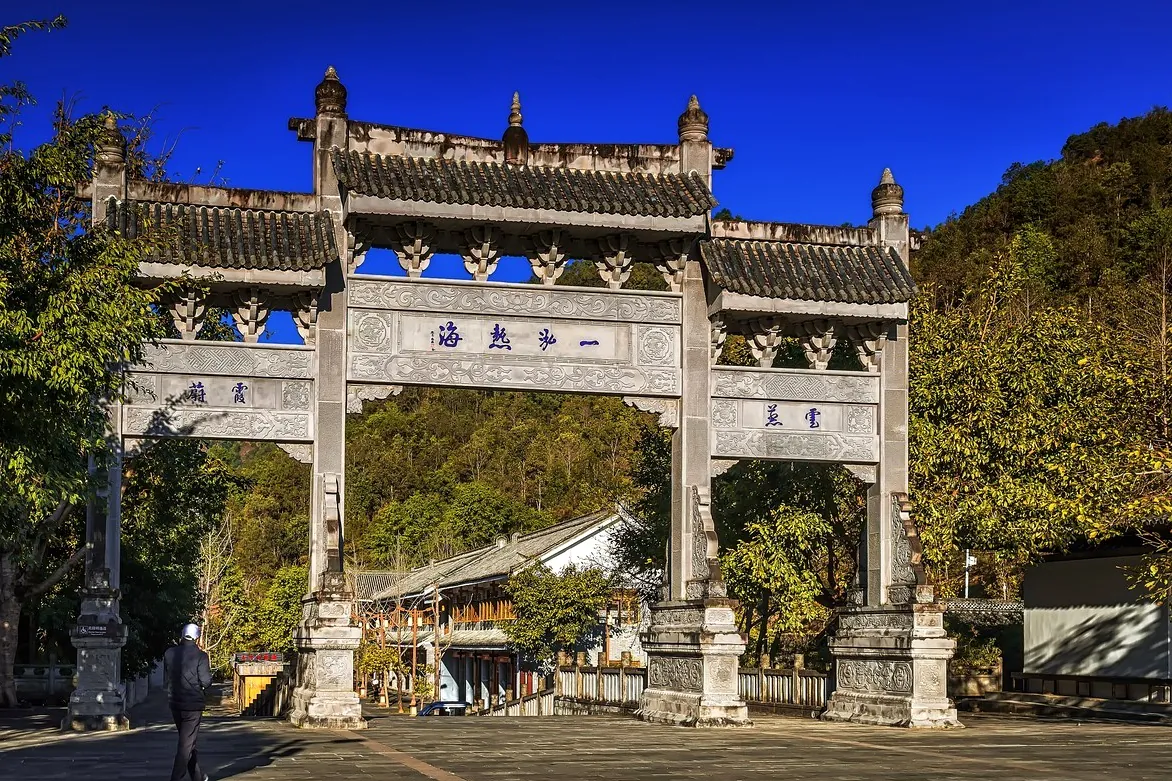
Crossing the threshold of Tengchong’s geothermal valley, travelers are immediately greeted by an imposing stone ceremonial archway crafted in classical Ming-Qing style. Rough native volcanic blocks sculpted by master masons curve upward into traditional upturned eaves accented with crisp reliefs of flame-clouds and auspicious guardian beasts. Gazing through this dignified portal, traditional pavilions appear nestled quietly amid endless old-growth woodland and drifting mineral mist—evoking a timeless Yunnan frontier landscape painting.
Rehai’s architectural DNA drew deep inspiration from neighboring Heshun Ancient Town—a prosperous Ming-era overland trading hub linking merchants along the Ancient Tea Horse Road and the Southwestern Silk Road. The overall layout of the hot-spring complex follows natural geological fault lines while honoring Five Elements harmony between water and fire. Shaded colonnades, curved yin-yang tiled roofs, and open-air courtyard compounds are oriented carefully to capture gentle rising warmth from the earth, creating a breathable, organic environment where boundaries between architecture and wilderness dissolve.
A defining hallmark of construction here is the extensive use of native volcanic stone. Quarried from a land ringed by ninety-nine volcanic cones, this porous dark-gray basalt offers exceptional heat resistance, natural slip-resistant traction, and even warmth when bathed by near-boiling mineral waters. Moss-kissed stone steps, soaking-pool embankments, and hand-carved washbasins radiate rugged, grounded permanence—their deep charcoal tones contrasting vividly with emerald pine forests and drifting white steam.
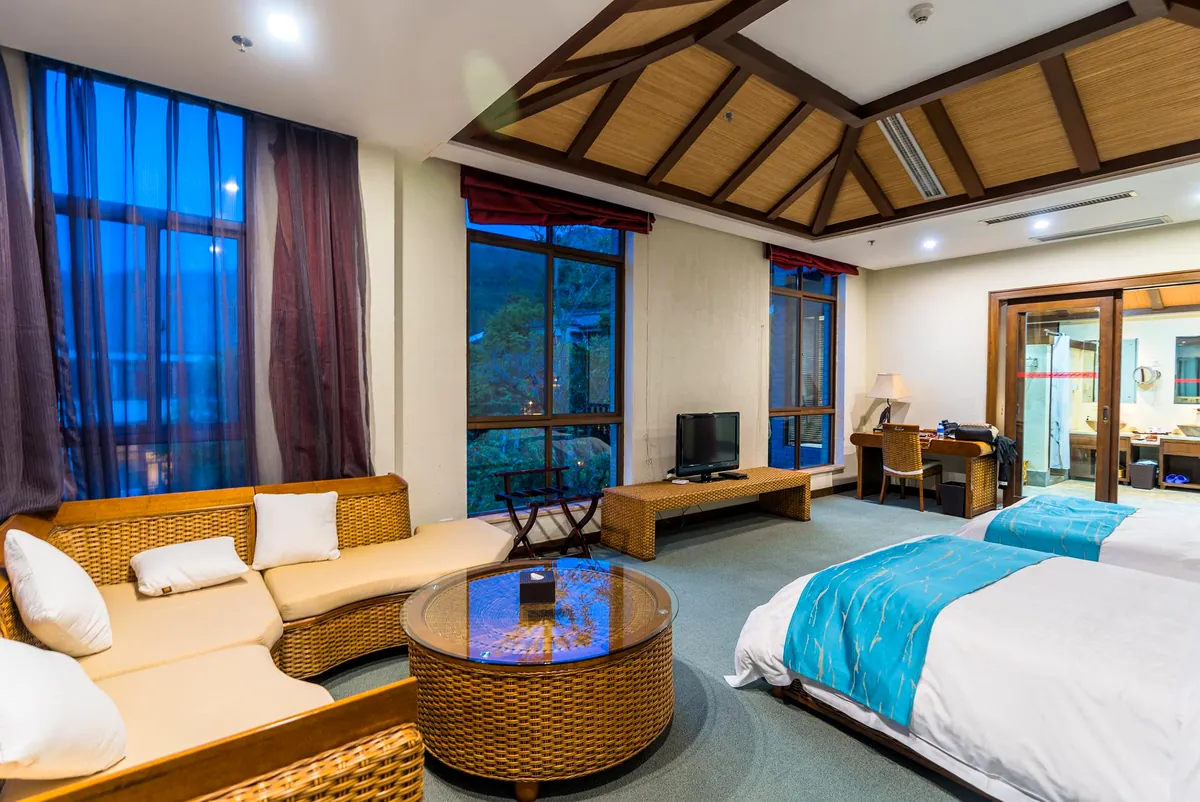
Complementing classic heritage aesthetics are contemporary luxury wellness retreats such as Rehai Hot Spring Resort and Angsana Tengchong. Designed around refined minimalism, hillside villas channel natural thermal springs into private soaking pools tucked behind bamboo screens and volcanic stone walls. Interiors favor natural timber, raw linen, and soft indirect lighting—stripping away artificial glamour to immerse guests completely in mind-body restoration accompanied by murmuring streams and drifting mineral mist.
As sunset fades behind the rugged folds of the Hengduan Mountains, Tengchong Rehai sheds its daytime bustle and drapes itself in a velvet cloak of quiet nocturnal healing. Unlike commercialized attractions favoring flashy lasers or loud concerts, lighting across this geothermal sanctuary follows Eastern minimalist aesthetics. Low-intensity warm lights tucked beneath basalt ledges, winding wooden footbridges, and dew-kissed bamboo groves serve solely to honor nature’s grandeur. As crisp western Yunnan night air drops temperatures rapidly, 90°C geothermal vapor billows upward from subterranean vents—blanketing the valley in luminous amber mist straight out of a Song-dynasty ink-wash painting.
Here, the grandest live performance requires no costumes or stage script—it is orchestrated naturally by the earth’s deep breath, sighing pines, and cool moonlight. Centered around the Great Boiling Pot, subtle warm-gold and ivory uplighting illuminates columns of sulfur- and metasilicic-acid-rich steam curling into the night sky like floating silk ribbons. Evening strollers leave urban noise far behind, immersed in a meditative soundscape where bubbling geothermal springs harmonize with mountain breezes whispering through ravine cliffs.
Nightlife in Tengchong therefore unfolds at an unhurried rhythm of deep restoration. After dark, soaking in open-air pools hewn from natural volcanic stone becomes a serene purification ritual. Beneath a star-studded Yunnan frontier sky, trace-mineral-rich thermal water envelops the body while crisp mountain air cools the skin. Occasionally, in the profound stillness of the valley, the plaintive notes of a bamboo flute or traditional leaf-playing melodies from local Achang and Dai communities along the Nujiang River drift across the night, adding heartfelt cultural resonance.
Completing this tranquil evening rhythm is a one-of-a-kind geothermal wellness snack experience. Guests relax along warm stone terraces savoring soft-centered hot-spring eggs kissed with delicate mineral aroma alongside sweet potatoes steamed directly by subterranean earth vents. Sipping ancient-tree Pu’er tea brewed with pure headwater spring water while watching mist curl around old trees under soft lantern glow reveals the true gift of stillness—a restorative encounter with elemental earth energy that washes away worldly cares.
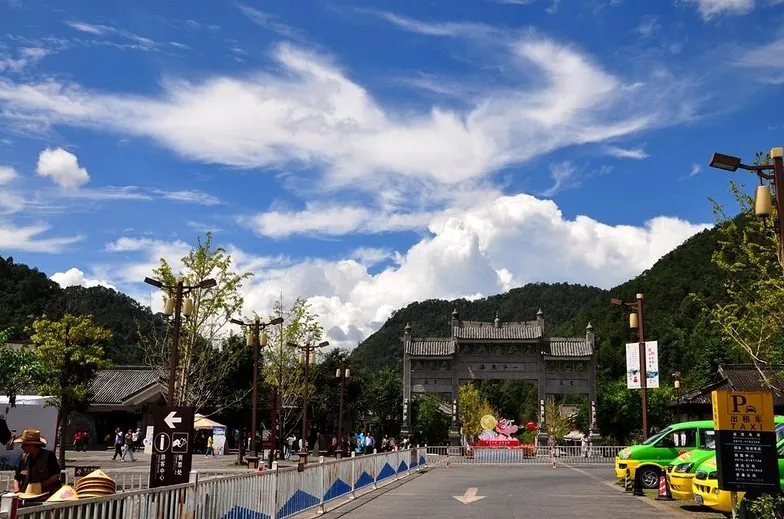
An imposing triple-arched ceremonial gate carved entirely from solid stone greets visitors arriving at the geothermal valley. Gracefully upturned eaves and intricate bracket-set carvings rise proudly against lush green slopes and drifting highland clouds, while taxi stands and arrival plazas on the right mark the lively threshold bridging Tengchong town with a misty culinary haven.
Stepping beyond that historic stone gateway enters a world where subterranean earth energy and folk culinary artistry become one. Positioned along the storied Ancient Tea Horse Road corridor, Tengchong’s gastronomy—and Rehai’s in particular—embodies traditional yin-yang dietary wellness. For generations, western Yunnan locals have harnessed thousand-degree volcanic heat to pioneer an authentic geothermal cooking tradition where pure subterranean steam replaces artificial flame.
The most iconic and beloved specialty opening Rehai’s culinary map is Hot-Spring Boiled Eggs, affectionately called “Rehai Big Eggs” by locals. Utilizing natural rock pockets around the Great Boiling Pot where water stays above 90°C year-round, woven bamboo baskets filled with free-range mountain eggs are lowered directly into bubbling mineral waters. Gentle sulfur vapor and natural trace minerals permeate the porous shells, cooking white and yolk evenly through steady conductive heat. Peeled while piping hot, the egg white reveals a silky, custard-like tenderness while the creamy yolk carries a clean, delicate mineral note free of harsh odor—delicious dipped in zesty western Yunnan chili-pepper salt.
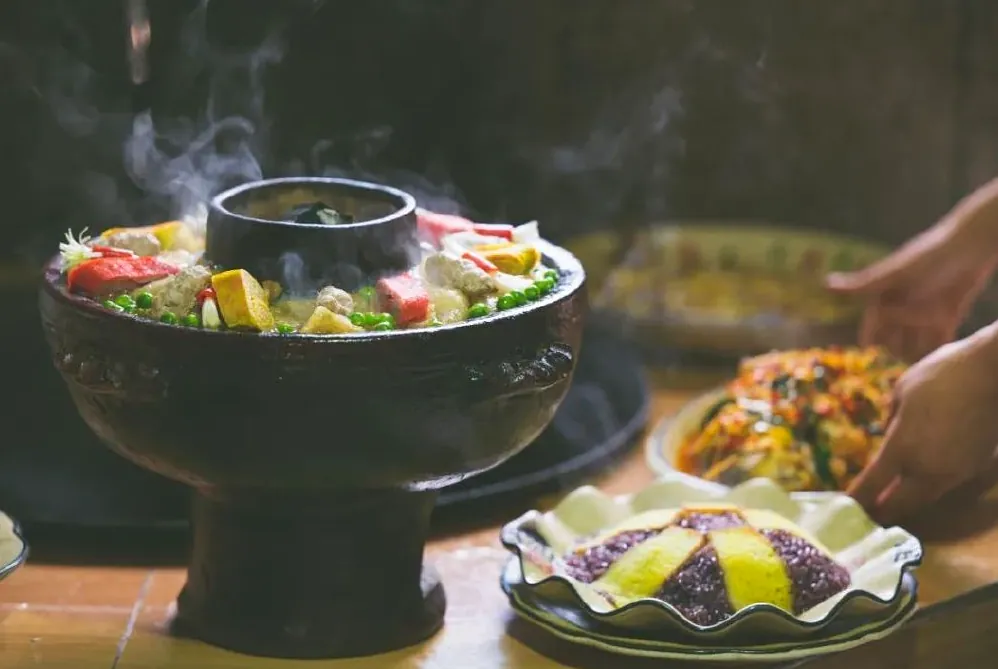
Following that wholesome snack, Tengchong’s wellness table reaches its pinnacle with Rehai Herbal Chicken Hotpot simmered in geothermal mineral water—a recipe passed down across generations. Free-range local chickens raised on rugged basalt slopes are carefully prepared and arranged in unglazed clay pots alongside prized Yunnan mountain herbs such as Radix Codonopsis, Angelica root, goji berries, and astragalus. The secret soul of the dish lies in simmering the broth for hours directly with naturally filtered geothermal spring water—yielding a crystal-clear, naturally sweet soup requiring no artificial enhancers, infusing tender chicken with restorative mountain vitality.
Alongside steaming herbal hotpot, a traditional Tengchong meal is incomplete without refreshing Golden Pea Jelly Cake (Xidoufen / Wan Dou Fen) crafted from choice yellow peas. Soaked in pure spring water, stone-ground into smooth paste, strained, and gently cooked into a jade-smooth block, Tengchong pea jelly melts effortlessly on the palate. Cut into neat squares and dressed generously with traditional rapeseed soy sauce, fragrant roasted chili oil, aged aromatic vinegar, and fresh highland herbs, its nutty creaminess balanced against bright tangy-spicy notes showcases the soulful simplicity of southern hot-spring cuisine.
After hours soaking in mineral-rich thermal waters, gathering around a steaming traditional highland feast restores energy and delights every sense. At the center of the table bubbles a dark clay chimney hotpot simmering chicken bones and fragrant wild forest mushrooms, flanked by neatly pressed squares of deep-purple black glutinous rice garnished with carved carrot blossoms and platters of crisp golden roast pork—a rich symphony of western Yunnan geothermal gastronomy.
Reaching Tengchong Rehai Valley today is remarkably straightforward thanks to modern transport links across western Yunnan. Travelers can take domestic flights landing directly at Tengchong Tuofeng Airport (TCZ), located roughly 15 kilometers from town. Alternatively, an unforgettable scenic overland route follows the Baoshan–Tengchong Expressway across the monumental Longjiang Suspension Bridge—one of Asia’s highest and grandest suspension spans soaring over a dramatic river gorge. Rehai Scenic Area welcomes sightseeing visitors daily from 8:00 AM to 6:30 PM, while dedicated thermal bathing sanctuaries and spa resorts such as Beauty Pool (Meirenchi) and Yugu Hot Springs remain open until 10:00 PM for starlit evening soaks.
The golden season to visit Tengchong falls in autumn from October through late November. Dry highland air brings warm daytime sunshine and crisp early-winter evenings that make rising geothermal steam look especially ethereal. Autumn also coincides with peak foliage at nearby Jiangdong Ancient Ginkgo Village, where more than thirty thousand centuries-old ginkgo trees blaze brilliant gold in one of Southwest China’s most breathtaking seasonal displays. When soaking in natural mineral springs, warm up gradually, drink plenty of warm water, and limit continuous immersion to twenty minutes per session to keep circulation comfortable.
For cross-border entry, international travelers visiting Tengchong need a valid Chinese individual tourist visa or accredited group tour visa cleared through international gateways such as Hekou or Kunming Airport. Because border tourism markets occasionally feature low-cost packages padded with mandatory stops at Tengchong jade outlets or unverified herbal shops, discerning travelers should prioritize transparent “No Shopping” itineraries and reputable hot-spring resorts to enjoy pure mineral springs and tranquil relaxation. To experience seamless logistics, authentic therapeutic bathing, and regional western Yunnan cuisine with complete peace of mind, explore a thoughtfully curated all-inclusive China tour package designed for effortless discovery.