Standing majestically at the southern gateway of the Central Guizhou plateau, Qingyan Ancient Town carries the memories of over six hundred years of history, marked by both turbulence and glory. Originating in the 11th year of the Hongwu reign of the Ming Dynasty (1378), this land was conceived amidst the grand “Dian-Qian-Diao-Bei” strategic campaign that shook the nation under the Ming Emperor Zhu Yuanzhang. To consolidate the southwestern frontiers after overthrowing the Yuan Dynasty, the imperial court dispatched General Fu Youde, Left Deputy General Lan Yu, and Right Deputy General Mu Ying to lead 300,000 elite troops to the south to pacify rebellions and establish garrisons for long-term defense. Initially, Qingyan was merely a strategic military outpost named “Qingyan Garrison,” later upgraded to “Qingyan Fortress,” serving as a vital bottleneck on the inter-provincial trade route connecting Sichuan, Guizhou, Guangxi, and Yunnan, acting as a military lock to control the power of local Miao and Buyi chieftains.
Through the shifting tides of dynasties, the original military appearance gradually evolved into a sturdy stronghold. By the 11th year of the Kangxi reign of the Qing Dynasty (1672), the distinguished local chieftain Ban Lin-gui utilized the abundant local limestone resources to extensively reconstruct the entire city walls and stone ramparts, transforming the site into a fortress capable of withstanding any turmoil. Entering the Qianlong and Jiaqing eras, as the Qing court aggressively implemented the “Gaitu Guiliu” policy to abolish the hereditary rule of local chieftains and place administration under imperial officials, Qingyan underwent a spectacular transformation. From a strict military defense point, it evolved into a bustling commercial hub on the famous Tea Horse Road, attracting merchants from across Southern China to store and trade tea, salt, agricultural products, and minerals.
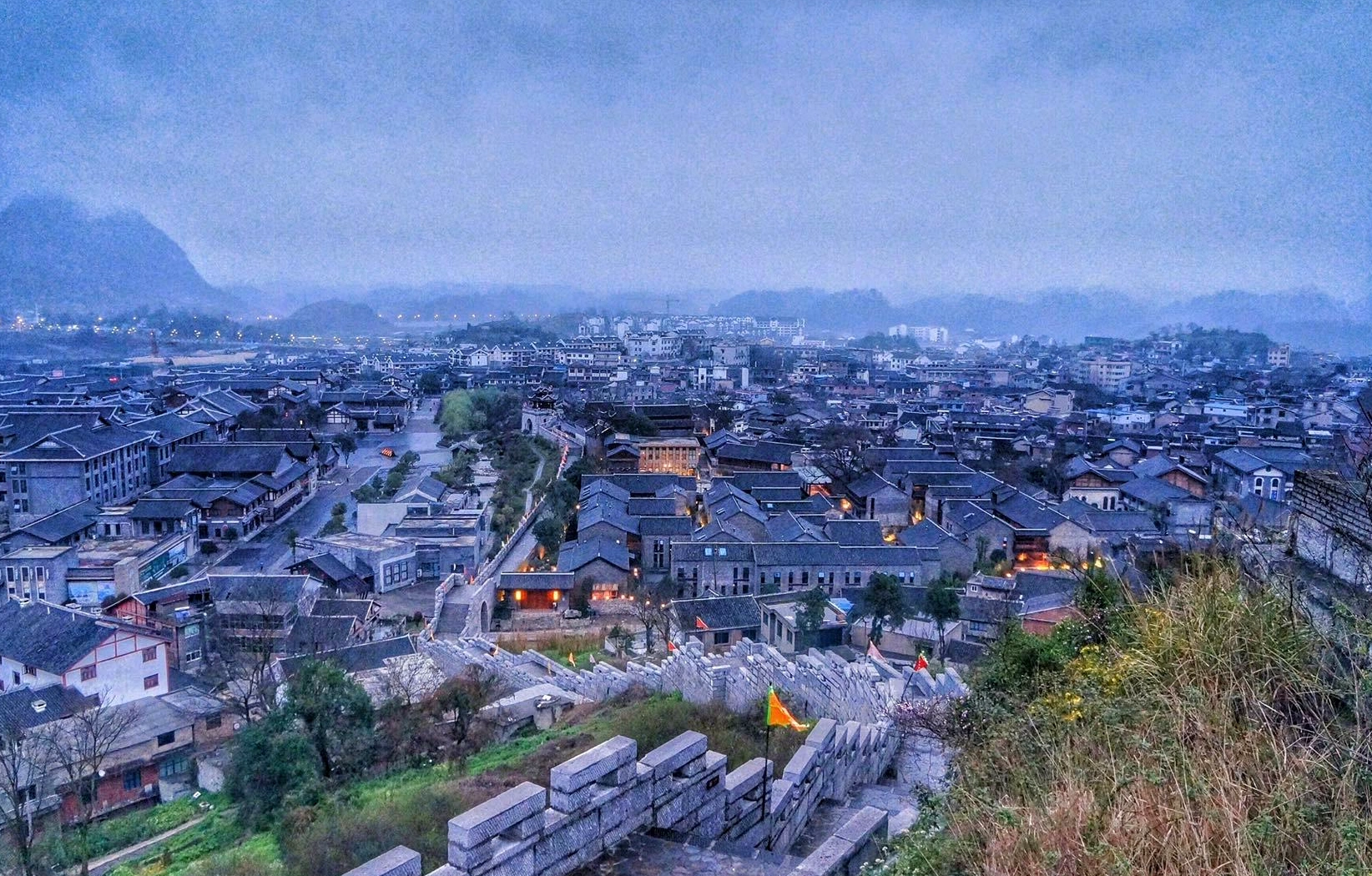
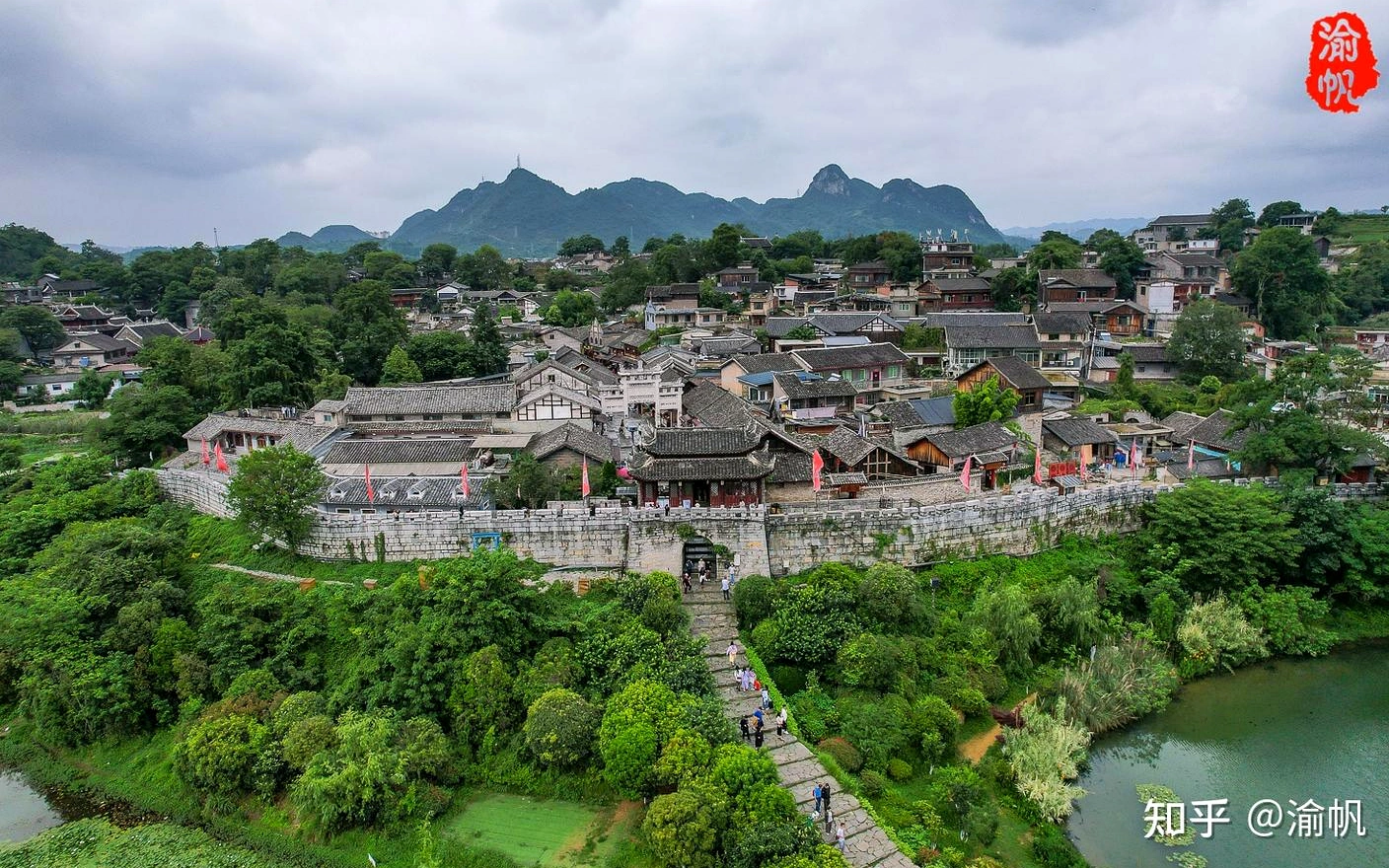
Viewed from above at twilight as the sunset fades, Qingyan appears like a classic ink wash painting tinged with legendary history. The ancient city walls and sturdy limestone steps wind along the hillside, vibrant with five-colored yellow and red command flags fluttering in the frontier wind, guiding the gaze straight toward the heart of the ancient town complex. At the foot of the walls, thousands of somber yin-yang roof tiles are laid in perfect rows, with scattered wooden window frames beginning to glow with warm light, creating a poetic contrast with the undulating limestone mountains fading into the ethereal mist of Southern Guizhou.
More than just a masterpiece of defense and commerce, Qingyan is also a land of exceptional people, marking the pinnacle of the most brilliant imperial examination achievements in the Southwest. In the 12th year of the Guangxu reign (1886), the talented scholar Zhao Yihuang from this small ancient town brilliantly passed the first rank in the Bingxu examination, officially becoming the first Zhuangyuan (top scholar) in the history of Guizhou Province. His prestigious achievement not only brought honor to the Zhao clan but also shattered the age-old prejudice about the “barren land without Confucianism” in Central Guizhou, opening a golden chapter for local scholarship. Prior to this, during the early Qing Dynasty, this stone town was also the cradle that nurtured the exquisite poetic soul of the poet Zhou Yuhuang, who left behind beautiful verses imbued with the spirit of the southern mountains and forests.
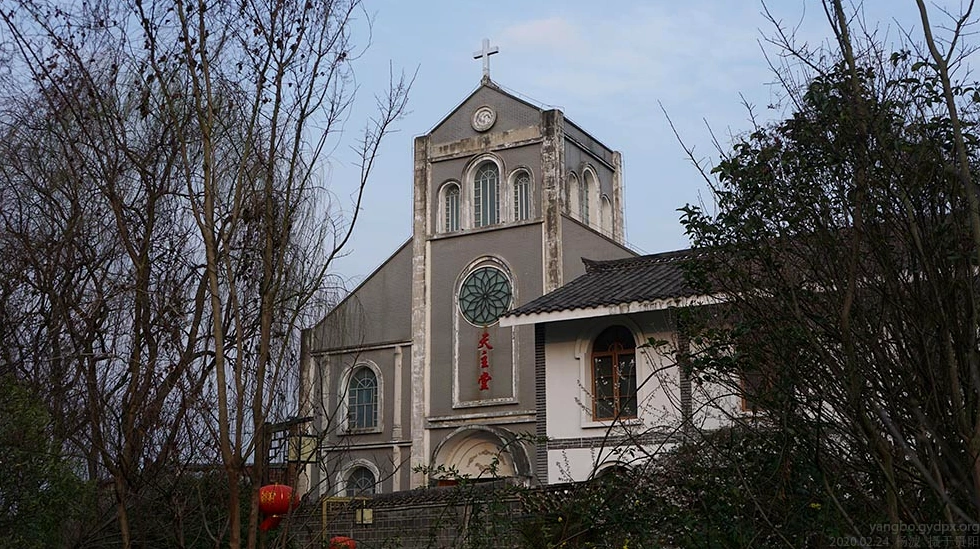
Along with its depth of notable figures, Qingyan Ancient Town has created a unique cultural phenomenon of harmonious multi-religious coexistence for centuries. Within a perimeter of just a few square miles enclosed by stone walls, Taoist temples filled with incense smoke and serene Buddhist pagodas stand adjacent to a Catholic church founded by missionaries from the Paris Foreign Missions Society (MEP) in 1856, followed by the later presence of Protestantism. The miraculous fusion of Eastern and Western ideologies on the foundation of Han, Miao, and Buyi customs has cultivated a multi-layered cultural identity for Qingyan, turning every paving stone here into a living witness to the tolerance and enduring vitality of a thousand-year-old town.
Located precisely at 26°20′ North latitude and 106°41′ East longitude within the Huaxi District, about 29 kilometers south of the urban center of Guiyang, Qingyan Ancient Town enjoys a magnificent feng shui terrain rarely seen on the geographical map of Southwest China. Situated on the rugged Karst plateau of Central Guizhou with an average elevation exceeding 1,000 meters above sea level, the ancient town sits beside ancient tectonic fault lines. It is these sharp, blue-gray limestone blocks rising straight into the sky that surround it on all sides—the very source of the name “Qingyan” (Clear Rock)—that have carved out a solid natural defensive belt. From the perspective of traditional feng shui, this terrain perfectly gathers the elements of “storing wind and collecting energy,” where the undulating mountain ranges act as the Azure Dragon and White Tiger, creating a sturdy basin that accumulates human vitality and protects the townspeople through hundreds of years of war and change.
More than just a peaceful dwelling, the geographical form of Qingyan was planned by predecessors as a life-or-death military outpost based on the strategy of “one man guarding the pass, ten thousand cannot open it.” Situated at the critical bottleneck of the vital trade route connecting the southern gateway of Central Guizhou deep into the Lingnan region of Guangxi and spreading to the Yunnan frontier, the town possesses the ability to completely control all military movements or trade across the plateau. The undulating Karst mountain terrain, which divides narrow valleys, makes this place a perfect natural fortress. Every jagged rock ridge and every gentle slope running along the city walls became natural screens to block enemies, while simultaneously providing abundant reserves of blue limestone for dynasties to build an impregnable system of fortifications.
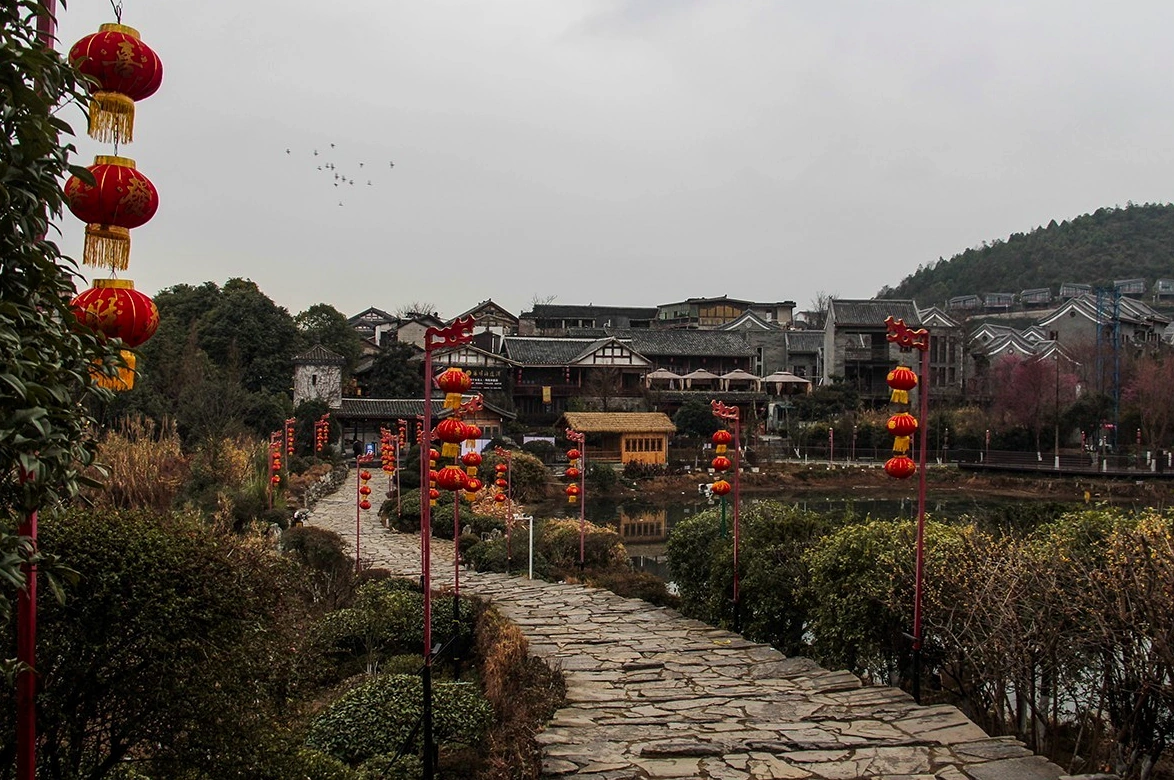
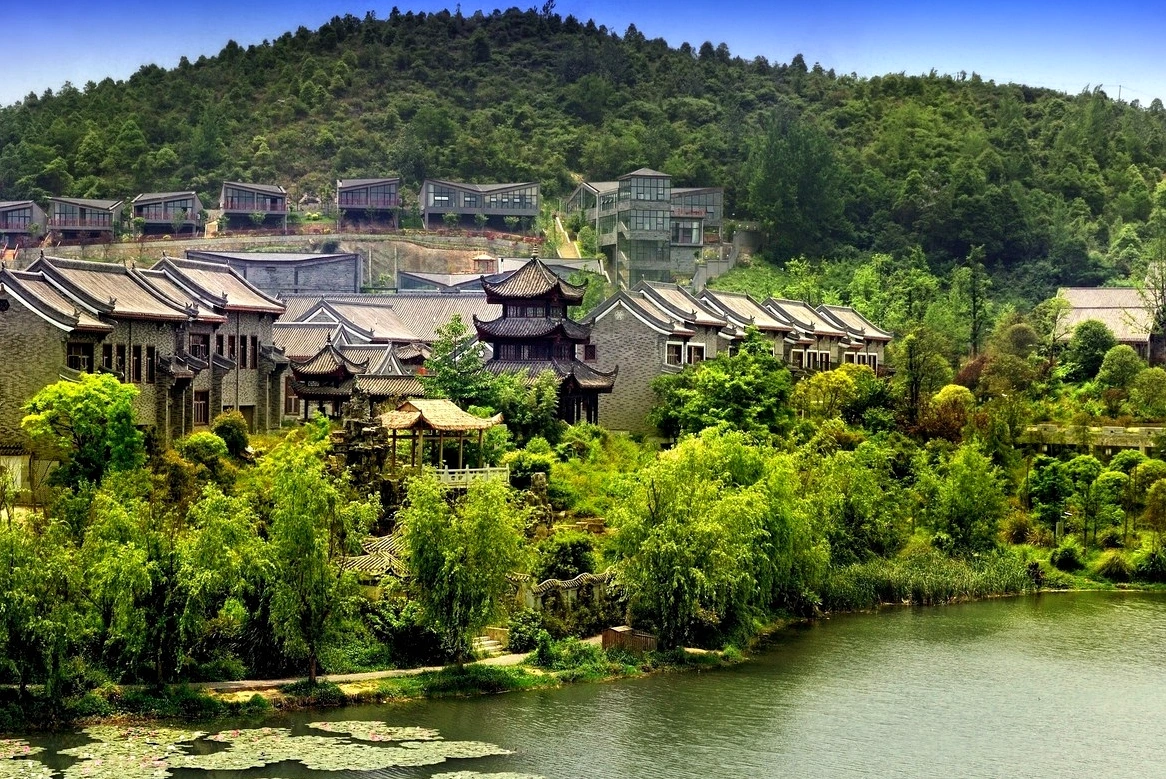
The somber, ancient charm of this stone town is wonderfully softened by the harmonious blend of human craftsmanship and picturesque natural scenery. Following the winding stone-paved path through lush, verdant gardens, rows of pillars adorned with vibrant red lanterns guide the gaze toward the traditional residential complex behind. There, dark, moss-covered tiled roofs cast gentle reflections upon the tranquil lake, while in the distance, hills blanketed in endless greenery shelter the village. Above, against the vast sky, a flock of birds soars peacefully, capturing a vivid and exquisitely serene natural landscape.
The breath of nature here is further nurtured by a mild subtropical monsoon plateau climate, providing cool temperatures year-round and dispelling the harsh heat of the continental summer. Situated within the overall ecological structure of the Huaxi region, Qingyan Ancient Town acts as a solid ecological anchor guarding the south, connecting seamlessly with the vast national forest system and the expansive waters of Lake Aha. The interplay between pure groundwater seeping beneath karst caves, evergreen vegetation covering the hillsides, and the crisp air has woven a unique micro-ecosystem. Consequently, the natural landscape here does not feel like the dry, barren gray of stone; instead, it is always brimming with vitality, fostering a heritage space that is both resilient against the elements and rich in poetic, natural beauty.
Spanning approximately 3 km², Qingyan Ancient Town stands tall like a living open-air museum, fully preserving the essence of Ming and Qing Dynasty Tunpu (屯堡) architectural styles, harmoniously intertwined with the ornate carving arts of the Jiangnan region. Distinct from purely commercial ancient towns in the delta, its spatial structure reflects a rigorous military defense philosophy combined with the principles of Feng Shui. The system of city walls, gates guarding the four cardinal directions, and the internal traffic network are planned in a strict fishbone pattern, designed both for the rapid mobilization of troops and for isolating residential clusters to deplete enemy firepower during an attack.
The material that shapes the soul of the ancient town is the local blue limestone (Qingyan) quarried from the geological strata of the Central Guizhou plateau. Through the talented hands of the garrison soldiers of the past, all foundations, walls, steps, and road surfaces were constructed using a specialized dry-stone technique known as “Dian Shi” (filling stone). The stone blocks were precisely hewn and stacked tightly together without the use of mortar, yet they formed walls sturdy enough to withstand the ravages of time. This unique dry-stone assembly technique not only effectively addressed the moisture and drainage issues characteristic of the humid high-mountain climate but also provided the ability to absorb and resist the impact of cannon fire during historical conflicts.
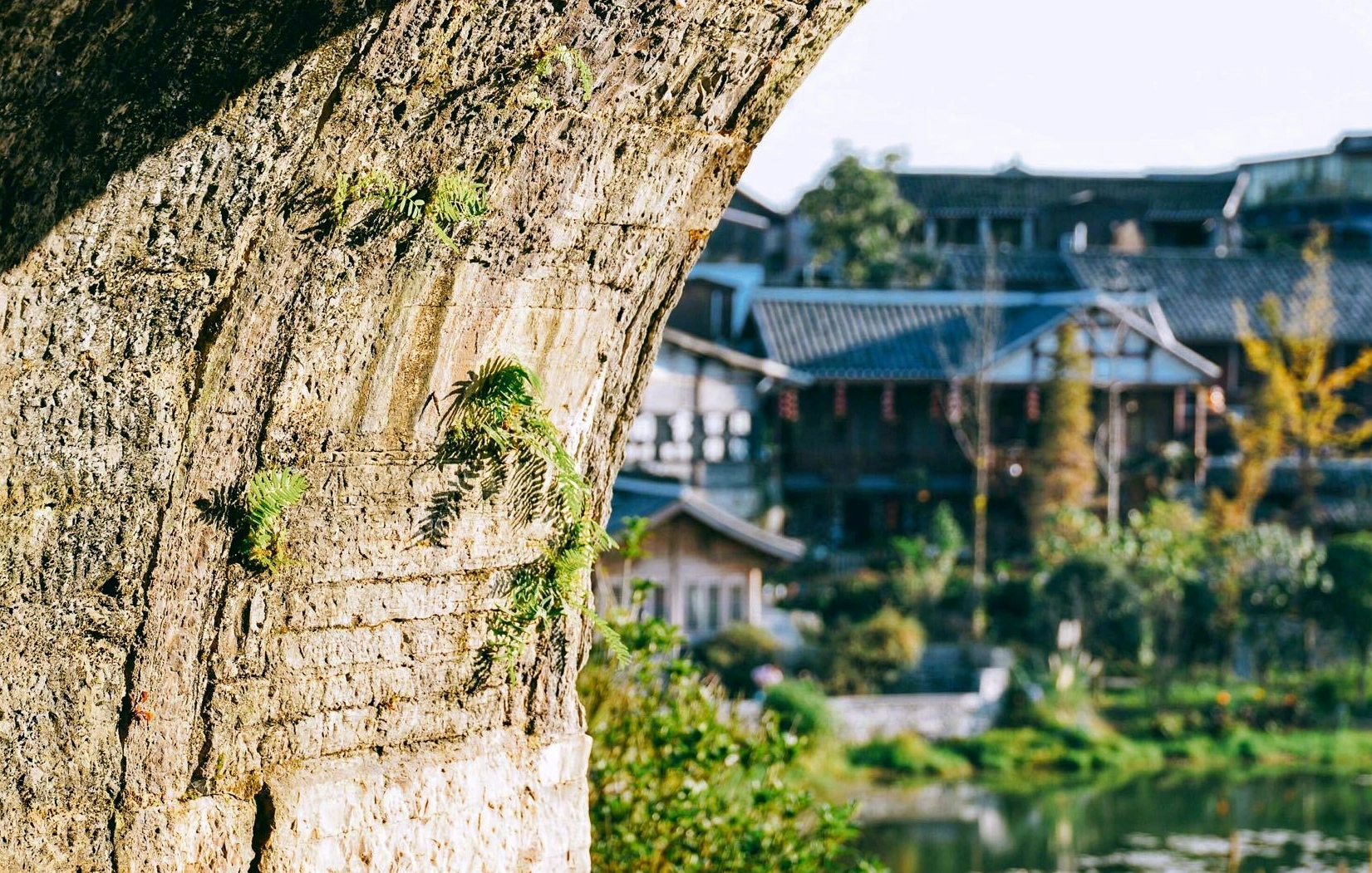
The marks of time and the breath of nature are vividly expressed on every stone of the ancient town, where ancient stone arch bridges cherish the old rhythms of water and land traffic. A close-up of the rough, weathered gray stone surface, eroded by hundreds of years of rain and sun, reveals lush green ferns taking root and stretching out, creating a beautiful contrast between the rugged military strength and the soft vitality of plants. Behind those somber stone arches, blurred in the visual depth, lies a complex of traditional houses with dark tiled roofs stretching along the calm water, opening up a peaceful, nostalgic scene of a mountain town.
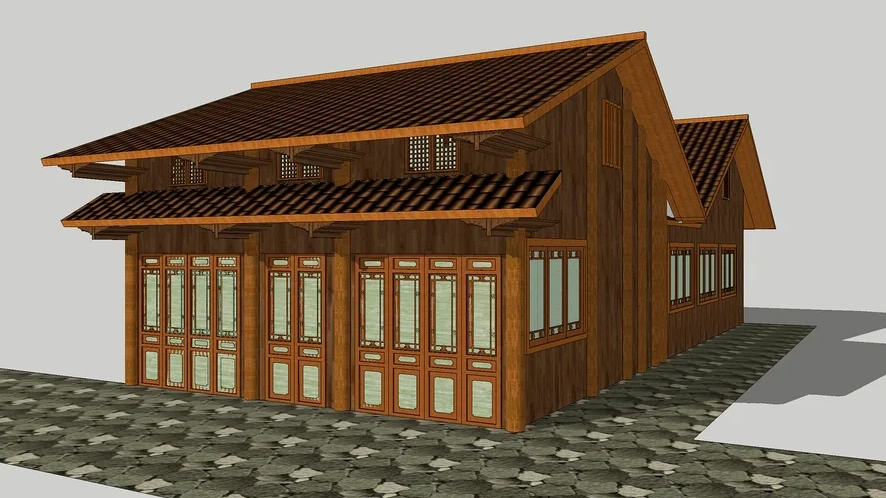
Behind the rough stone exterior lies a treasure trove of supreme artistic heritage with over 30 exemplary preserved ancient structures, including a system of 9 temples, 8 ancestral halls, 5 pavilions, 3 caves, 2 shrines, 1 palace, and 1 prestigious academy. Among them, the solemn Ciyun Temple (慈云寺), the magnificent Wanshou Palace (万寿宫), and the former residence of Zhao Yihuang – the first top scholar of Guizhou – are the most representative examples of beam-and-column carpentry. All these structures were built with sturdy “Chuandou” (穿斗式) wooden frame construction, combined with intricate openwork carvings on beams and windows featuring classic legends such as “The Eight Immortals Crossing the Sea” or “Five Blessings Arriving at the Door,” symbolizing the aspirations for peace and lasting prosperity of the frontier residents.
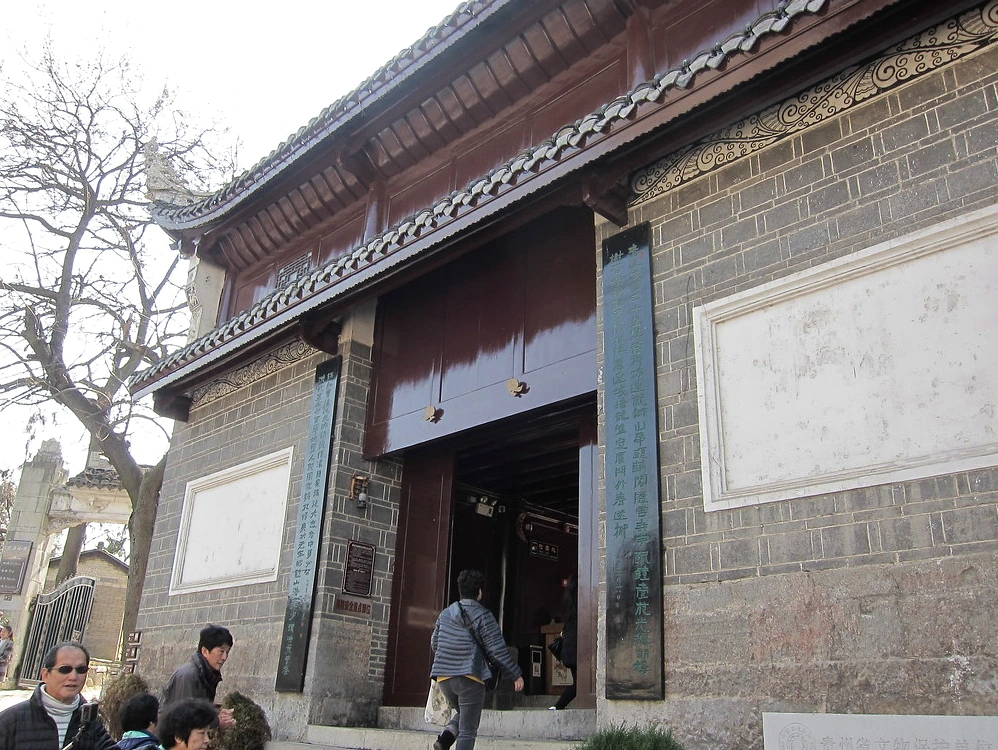
When mentioning the most iconic landscape axis in Qingyan, one cannot overlook the Back Street (Bei Jie – 背街), an ancient alley winding along the gentle slopes of the town. It is flanked by towering stone walls covered in moss, with a path paved in blue stone slabs worn smooth by the footsteps of countless generations, reflecting the sunlight like a mirror. The profound stillness and poetic angles of Bei Jie were once chosen as a classic backdrop for the film “The Missing Gun” (寻枪) by director Lu Chuan, bringing the image of Qingyan’s stone alleys to the international cinematic stage. The perfect fusion of military garrison architecture and rich folk cultural depth has helped this scenic complex be officially recognized as a National 5A-level Cultural and Tourism Heritage, cementing its unique status as an architectural wonder on the heritage map of the South.
As dusk falls over the Huaxi Valley and the sunset fades behind the undulating limestone mountains, Qingyan Ancient Town sheds its somber, majestic appearance as an early Ming Dynasty military outpost to don a remarkably magnificent look. At exactly 18:30 every day, when the city bell rings to signal the transition between day and night, thousands of crimson lanterns simultaneously light up along the two main arteries—North Avenue and South Avenue—casting a brilliant glow up to the sturdy watchtowers of the Dingyuan Gate. A modern artistic lighting system is cleverly concealed behind the gray stone walls, casting soft golden beams that follow the graceful curves of the yin-yang tiled roofs, honoring the rough yet proud carvings of the blue stone that has weathered six hundred years of history.
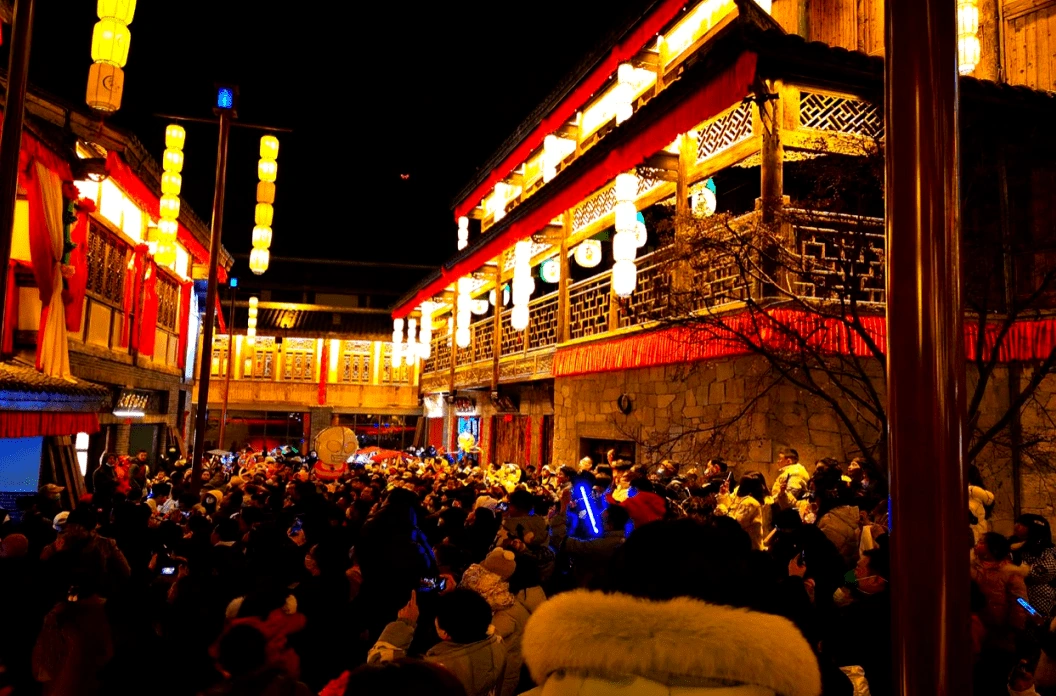
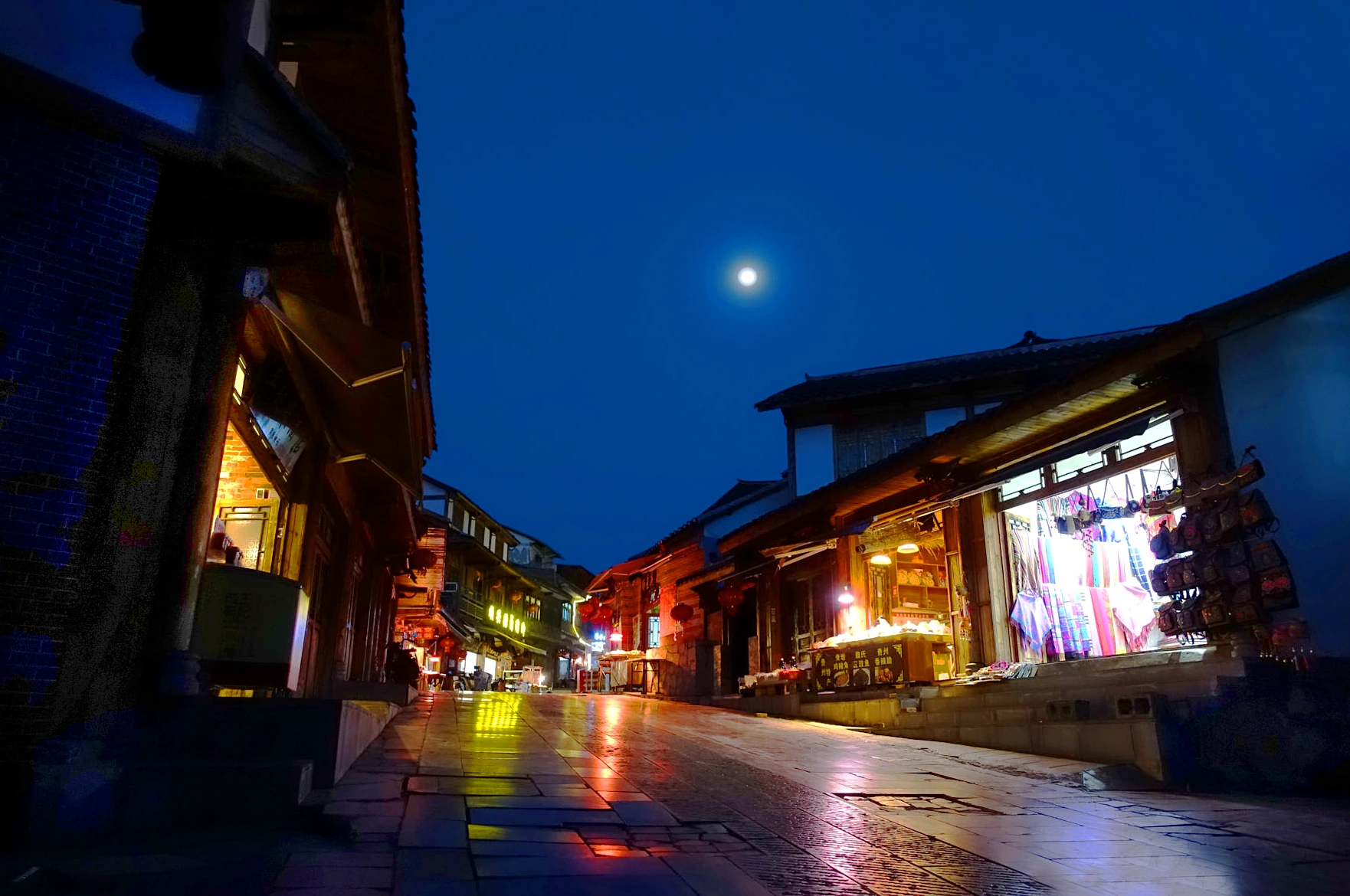
The ancient street at night opens up a magnificent and poetic natural scene, where both sides of the road are lined with traditional wooden shops emitting warm, harmonious yellow light. Against the deep blue night sky, the full moon shines with a clear light, illuminating every corner of time and casting shimmering moonlight onto the blue stone slabs that have been worn smooth over generations. The polished stone surface acts like an ancient mirror, reflecting a magical glow and creating a deep sense of nostalgia in the heart of this frontier ancient town.
Under this multi-layered canopy of light, Qingyan has become a focal point for the heritage night economy model, with the trend of costume tourism and vintage-style photography flourishing. It is not uncommon to encounter visitors gracefully dressed in flowing Hanfu, the elegant indigo-dyed brocade of Buyi girls, or the magnificent multi-layered embroidered skirts adorned with the famous silver jewelry of the Miao people. The rhythmic clinking of silver accompanies every step through the narrow gray stone alleys, blending with the gentle light from the lanterns hanging under the eaves, transforming the entire town into a vivid period film set where the boundary between reality and historical memory seems to dissolve completely.
The artistic highlight of the nightlife is the large-scale live-action light performance, taking viewers back in time to the Hongwu years when Zhu Yuanzhang’s grand army opened up the Qianzhong region. Using 3D mapping technology combined with smoke, fire, and immersive surround sound against the backdrop of the towering Dingyuan Gate, the scene of the resilient defensive battle against frontier forces is recreated with breathtaking realism. Alongside this, interactive role-playing scripts take place right within the ancient guild halls and ancestral temples, allowing visitors to step into the roles of spies, Tea Horse Road merchants, or garrison generals to personally decode the historical mysteries of this frontier outpost.
The nightlife continues until 21:00 before the town gradually sinks into a peaceful slumber, leaving behind an unforgettable aftertaste from the fragrant aroma of pots of Zhuangyuan pork trotters braised in spicy bean sauce, grilled tofu puffing up over glowing coals, and cups of fragrant glutinous rice wine offered in the solemn inns. Neither noisy nor chaotic like modern urban centers, the night in Qingyan is a beautiful harmony between contemporary visual art and the resilient cultural soul of a thousand-year-old military town.
Nestled amidst the rugged limestone peaks of the Miaoling Mountains, the culinary culture of Qingyan Ancient Town is a perfect crystallization of Guizhou’s mountain gastronomy and the philosophy of balancing yin and yang for wellness. In a climate characterized by year-round dampness and lingering valley mists, the ancestors of this region crafted flavors rich in herbs to ward off cold and expel the damp miasma of the mountains. This essence is clearly reflected in the pure, mellow acidity of traditional vinegars, intertwined with the fiery heat and smoky aroma of Qian chili—a renowned local pepper variety that is charcoal-grilled and coarsely ground, instantly awakening the senses of travelers from the moment they step into the gray stone alleys.
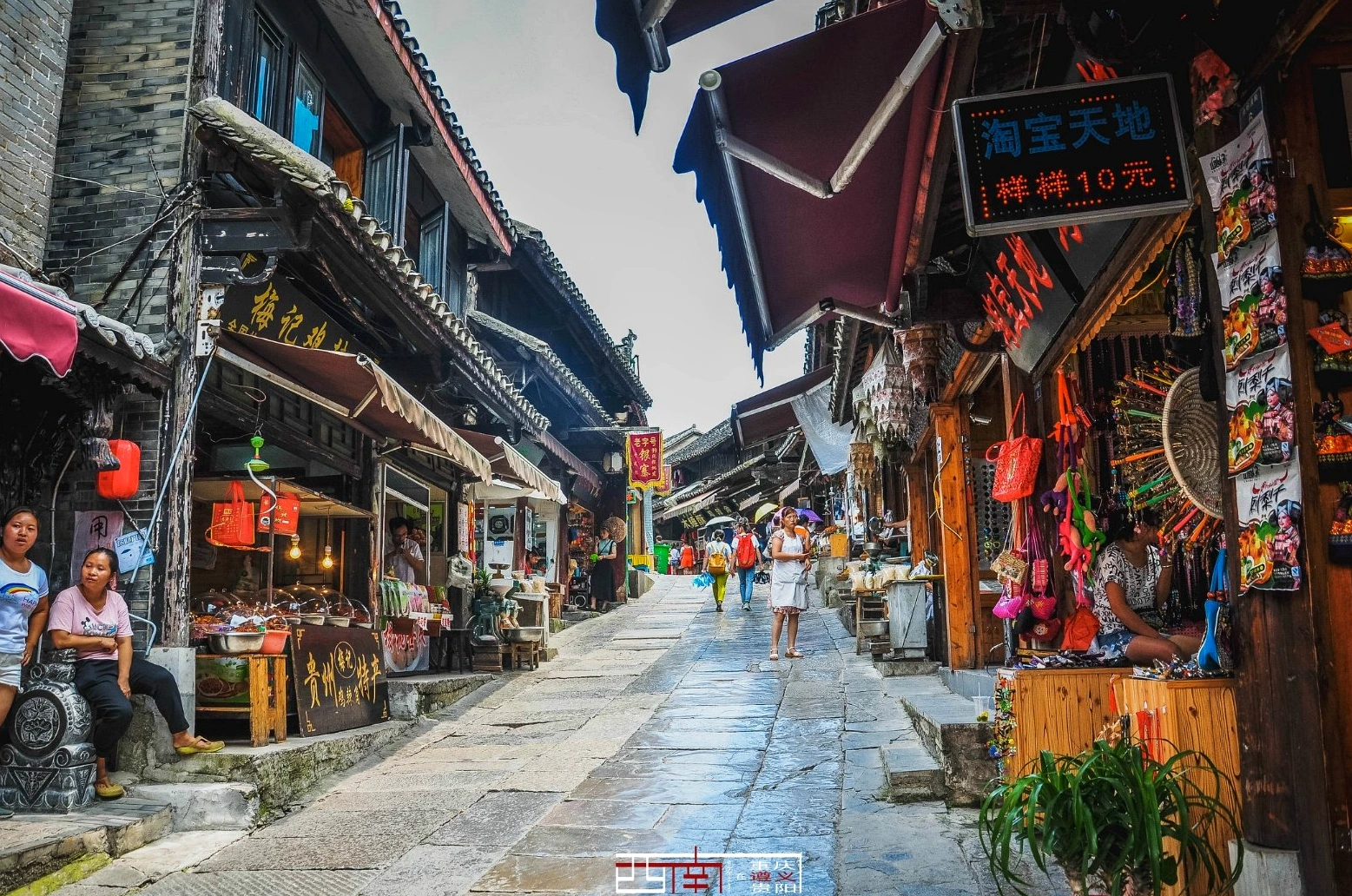
Wandering through the winding, stone-paved streets bustling with pedestrians, one easily encounters the vibrant scene of traditional food stalls tucked closely beneath moss-covered yin-yang roof tiles. Under wooden eaves adorned with weathered Chinese-character signs, shopkeepers eagerly display their specialties, from steaming wooden steamers to ceramic jars filled with secret family seasonings. The smooth, blue-stone slabs bear the footprints of travelers who pause to admire the scenery, leisurely enjoying local delicacies while finding a small stool on a porch to rest and observe the rhythm of life in this highland town.
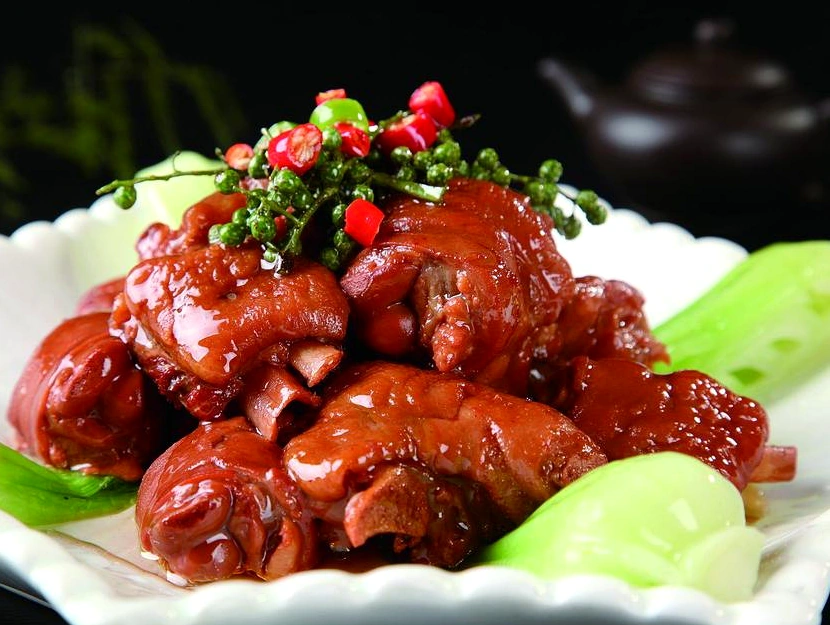
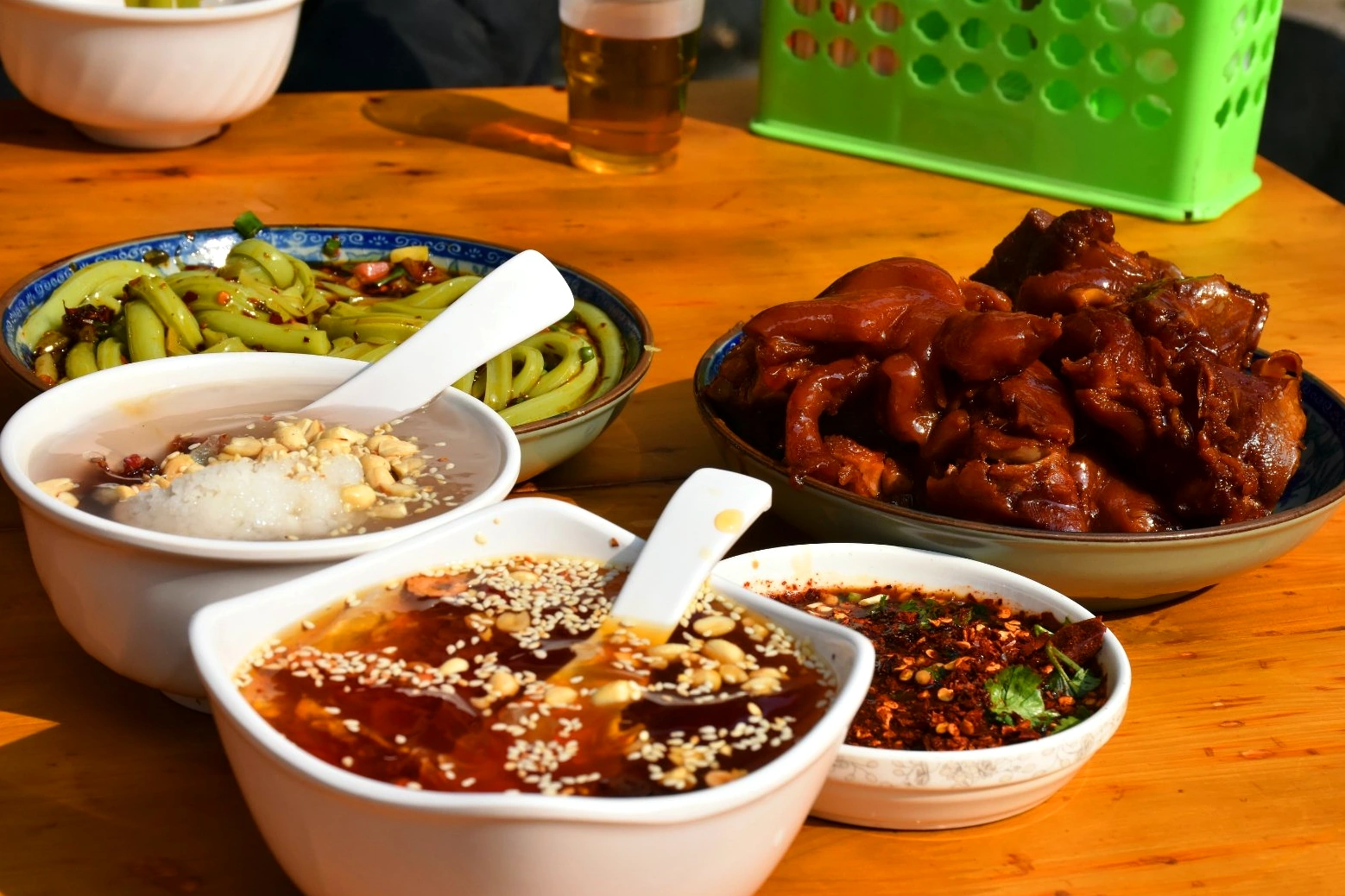
When speaking of the soul of Qingyan cuisine, the dish that must top the list is the Scholar’s Trotter, also known as Qingyan braised pig’s feet. This dish is tied to the legend of Zhao Yihuang, a scholar from this very town who achieved the highest rank in the imperial examinations during the reign of the Guangxu Emperor of the Qing Dynasty. Fresh, tender pork trotters are slow-cooked for hours in a secret broth infused with over ten rare medicinal herbs, such as amomum, cardamom, cinnamon, cloves, and licorice. The soft, fatty skin absorbs a glossy reddish-brown hue, while the meat inside becomes tender without losing its texture. It is best enjoyed dipped generously in a sauce made from charcoal-grilled Qian chili and mild rice vinegar, creating a lingering richness that is never cloying, leaving a warm, spicy glow deep in the chest.
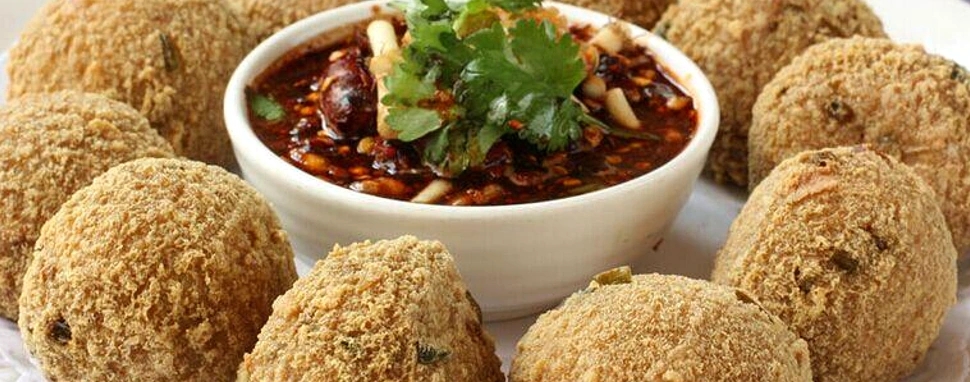
Not far from the steaming pots of trotters, the mouth-watering aroma of round fried tofu rises from sizzling pans of rapeseed oil. With skillful hands passed down through generations, the tofu maker mashes soft, silky tofu, mixes it with sea salt and wild pepper, and rolls it into egg-sized balls before dropping them into hot oil. The tofu puffs up to twice its size, creating a crispy, amber-colored outer shell while maintaining a soft, airy, honeycomb-like interior. The uniqueness of the dish lies in the accompanying sauce: one uses chopsticks to gently slit the tofu, pouring in a fragrant mixture of fresh chopped fish mint, spicy Guiyang chili powder, scallions, and fermented soy sauce, transforming a humble snack into an iconic culinary masterpiece.
Offering a delicate, sweet flavor, a bowl of Gao Ba sticky rice porridge acts as a soothing note to calm the spicy intensity on the palate. This elaborate dessert is crafted from finely ground sticky rice and lotus root powder, pressed into small wooden tubes, and steamed. Once the cake is chewy and cooked, the maker deftly taps it into a bowl of clear, viscous lotus root sugar water, garnishing it with toasted sesame seeds, crushed peanuts, and a spoonful of vibrant red rock-sugar rose jam. This elegant essence is also the origin of rose taffy—an intangible cultural heritage inherited from the Ming and Qing dynasties, handmade from malt and highland rose petals soaked in sugar. Together with the centuries-old Qingyan Shuanghua Vinegar, fermented from natural herbs, these traditional flavors have carved out a timeless culinary portrait, deeply ingrained in the cultural character of this Guizhou ancient town.
Reaching this frontier stone fortress from Vietnam has become more convenient and faster than ever, thanks to the modern transport infrastructure in southwest China. Travelers depart by road via the Huu Nghi International Border Gate, continuing to Nanning to catch the Gui-Nan High-Speed Railway (HSR). With a design speed of 350 km/h, the train cuts through the rugged karst terrain in just 2 hours and 15 minutes, arriving at Guiyang North Station. From there, the public transport network leads the way via Metro Line 3, which connects directly to Huaxi South Station in 35 minutes, or via a dedicated bus line running along the Gui-Hui Expressway (S89), taking only 35 to 40 minutes from Longdongbao International Airport (KWE).
To fully capture the soul of Qingyan, understanding the rhythm of the space at different times is key to a quality experience. The golden hour to stroll through legendary stone alleys like Bei Jie is early in the morning, from 06:30 to 08:30, when the morning mist still clings to the yin-yang tiled roofs and the blue stone slabs have not yet been awakened by the footsteps of tour groups. Another ideal time is 18:30, as sunset falls over the valley, giving way to red lanterns casting ethereal shadows on the garrison walls. Regarding entrance fees, the heritage management system applies a general admission ticket of 10 RMB for free exploration of the streets, or a 60 RMB all-inclusive pass that grants access to 8 key monuments, including ancient mansions, Taoist temples, and the original Catholic church.
After hours of wandering through the ancient stone-paved slopes, a local meal at a small eatery nestled under the fortress walls is an unmissable culinary experience. On the rustic wooden table, the centerpiece is a large bowl of braised “Zhuangyuan” (Scholar) pork knuckle, glistening with a rich mahogany hue and fragrant with secret herbs. Paired with the main dish is a plate of fresh, crisp stir-fried greens, alongside two bowls of traditional rice tofu drenched in spicy-sour sauce, topped with crunchy roasted peanuts and fragrant sesame seeds. A bowl of signature spicy chili paste and a cold beer placed next to a rustic blue plastic basket create a cozy culinary picture, deeply imbued with the life of the Qianzhong ancient town.
In terms of personal experience management, staying vigilant against commercialized travel traps is crucial. Negative commercial practices often manifest as cutting the stay in the ancient town down to a mere 30 to 45-minute “horse-riding look at flowers” tour. This limited time is then replaced by forcing travelers to sit for hours in closed presentation rooms to sell fake Buyi handcrafted silver jewelry, expensive unverified medicinal herbs like Panax notoginseng or Gastrodia elata, or counterfeit Maotai liquor. Understanding these tricks helps preserve the value of field exploration according to original standards, maintaining a natural experience without forced shopping, hidden costs, or compromised historical stops.
Spending a full half-day to a day in Qingyan will open up a space of absolute relaxation to listen to the wind blowing through the watchtowers, chat with the kind local residents, and fully grasp the unique military structure of this Guizhou plateau. To ensure your journey through this picturesque land goes smoothly with meticulous service from immigration procedures to cultural highlights, you can choose to accompany the in-depth itinerary of our Guiyang tour to record the most complete and premium heritage impressions.