Going back in the chronicles of the Mile region, the name Mile (弥勒市) originally had nothing to do with the Maitreya Bodhisattva in Mahayana Buddhism, but rather crystallized from a profound political transformation during the Yuan Dynasty. In the Zhiyuan era (至元, 13th century), the northern imperial court established the Tusi (native chieftain) system to appease indigenous tribes along the rugged southwestern frontiers. At that time, an outstanding leader of the Yi tribe (彝族) named Mile Daibu (弥勒代部) surrendered to the central court. Grateful for his submission in keeping the borders peaceful, the court named the region Mile Prefecture (弥勒州) after the chieftain’s honorable name, a designation that endured firmly through the Ming and Qing dynasties and has been passed down to the present day.
Entering the 20th century, the landscape here bore witness to a monumental transformation associated with General Zhang Chong (张冲) – a renowned anti-Japanese war hero of Yunnan. With his exceptional vision for plateau water conservancy, he directly commanded the construction of dams, giving birth to the Taiping Reservoir (太平水库) with a pristine surface area of up to 13,000 mu (equivalent to 867 hectares). This magnificent body of water not only quenched the age-old agricultural thirst of the local residents, but also laid the core feng shui and ecological foundation for a future international scenic spot.
Despite possessing this precious water source, the peninsula surrounding Taiping Lake prior to its major renovation fell into an extreme plight of “Karst rocky desertification” (喀斯特石漠化). At that time, the fertile topsoil eroded by rainwater was less than 15cm thick, the proportion of exposed bare sharp limestone rocks exceeded 60%, and the natural vegetation cover hit rock bottom at below 18%. The dry season brought desolate wind and sand, while the rainy season caused torrential soil erosion, and the barren ground could only sustain stunted corn patches with precarious yields, turning a picturesque landscape into a bleak gray stone desert.
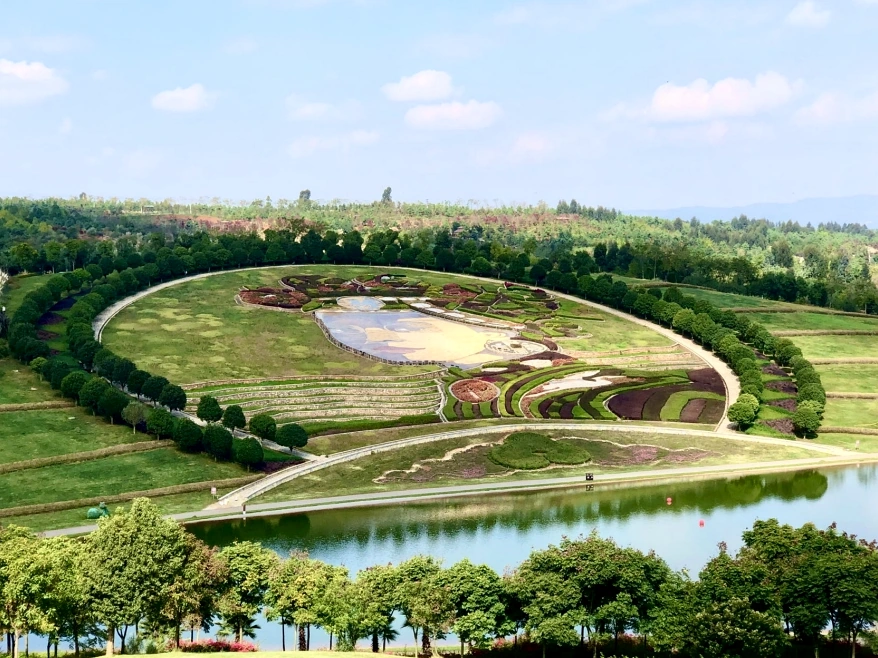
The historical turning point unfolded when Yunnan Jicheng Landscape Science and Technology Co., Ltd. (云南吉成园林科技股份有限公司) under the leadership of Chairman Sun Hu (孙 Hu) decided to devote all its efforts to a grand ecological restoration project. Joining forces with top landscape planning experts from Tsinghua University, the team of architects persevered in improving the soil and greening every hillside for nearly a decade. Notably, the famous American land art sculptor Stan Herd carved the gigantic artwork “Mother Earth” (大地之母 – Mother Earth), also known as “Princess Taiping”, recreating the resilient spirit of the Yi woman from plants and flowers, turning the barren rocky land into an immortal symbol of rebirth.
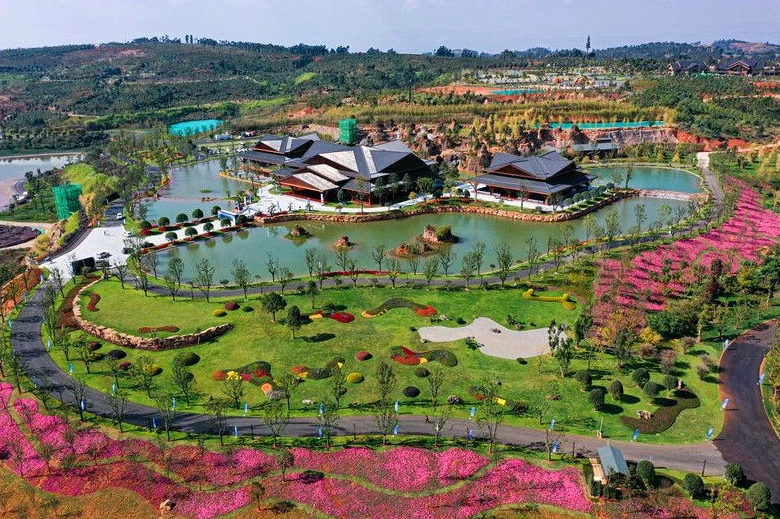
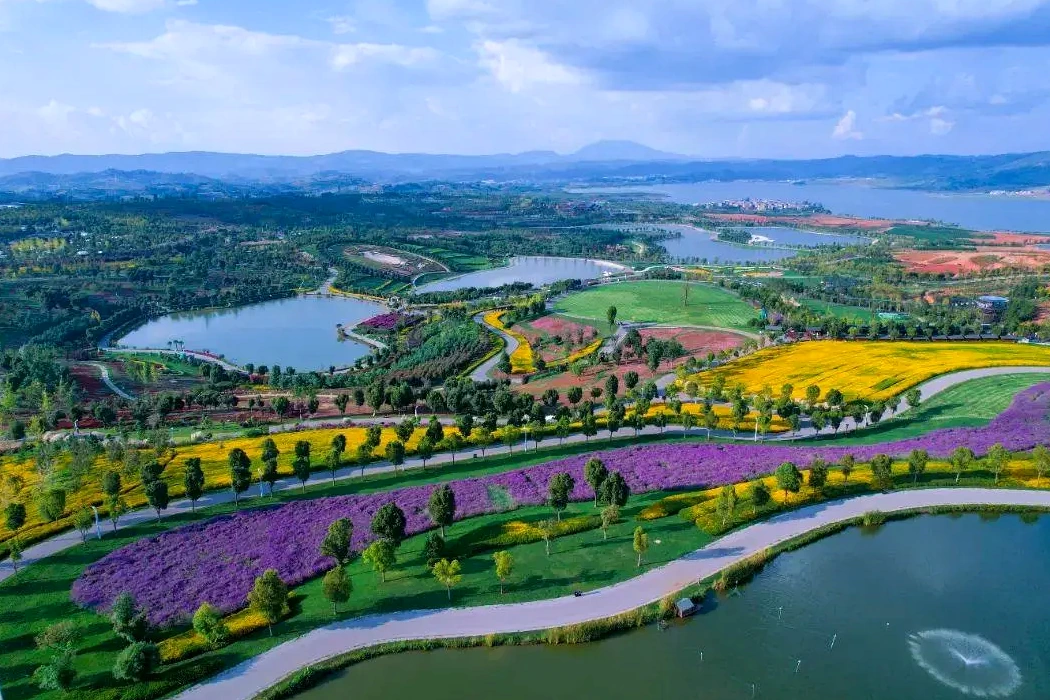
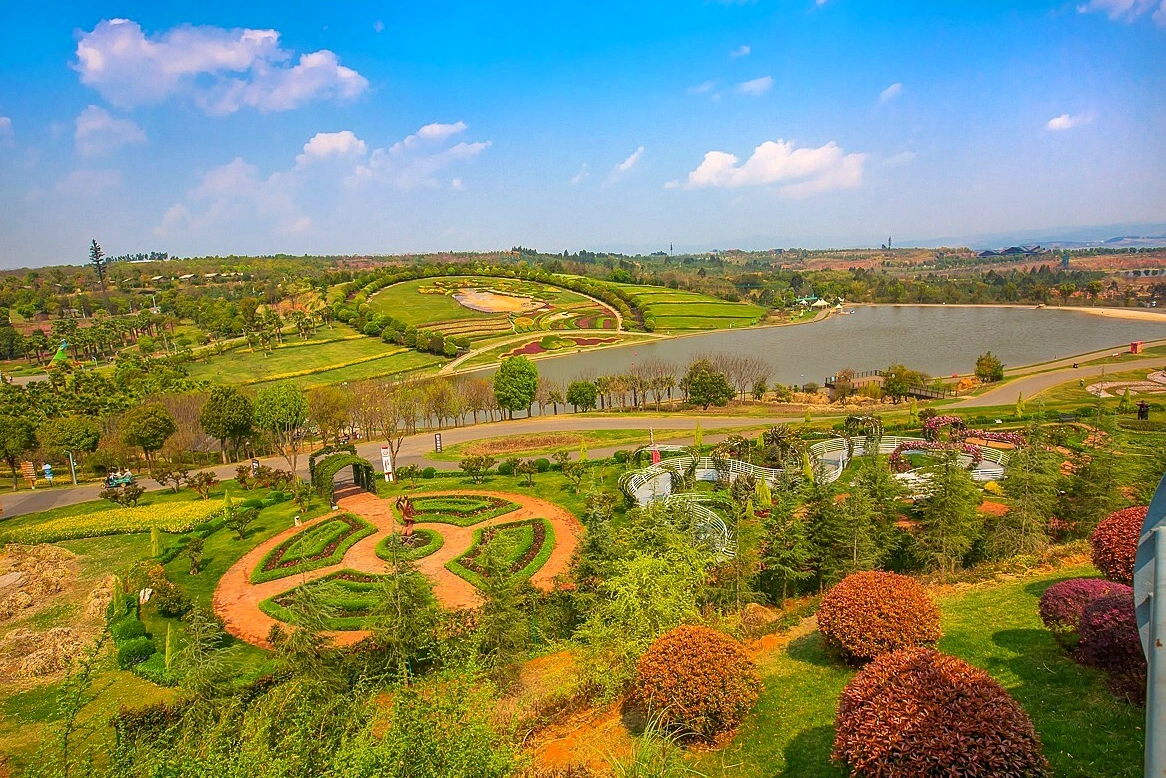
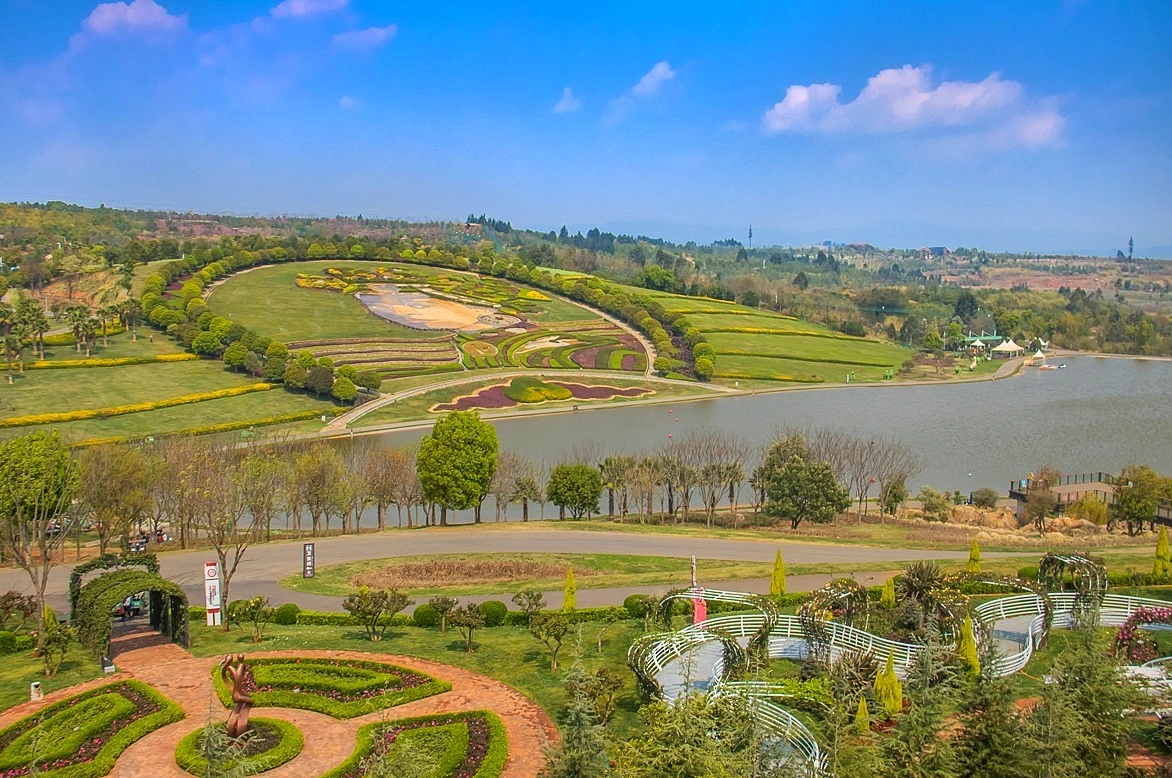
Viewed from a panoramic overhead perspective, the ecological restoration masterpiece emerges overwhelmingly like an exquisite natural landscape interwoven between nature and human ingenuity. Standing out in the center are two crystal-clear, mirror-flat jade-green lakes, surrounded by winding paths gently hugging the slopes. Lush green vegetation harmonizes with vast strips of pink and purple flower carpets blooming brilliantly, sloping gently toward the expansive waters of Taiping Lake and the rolling mountains on the distant horizon.
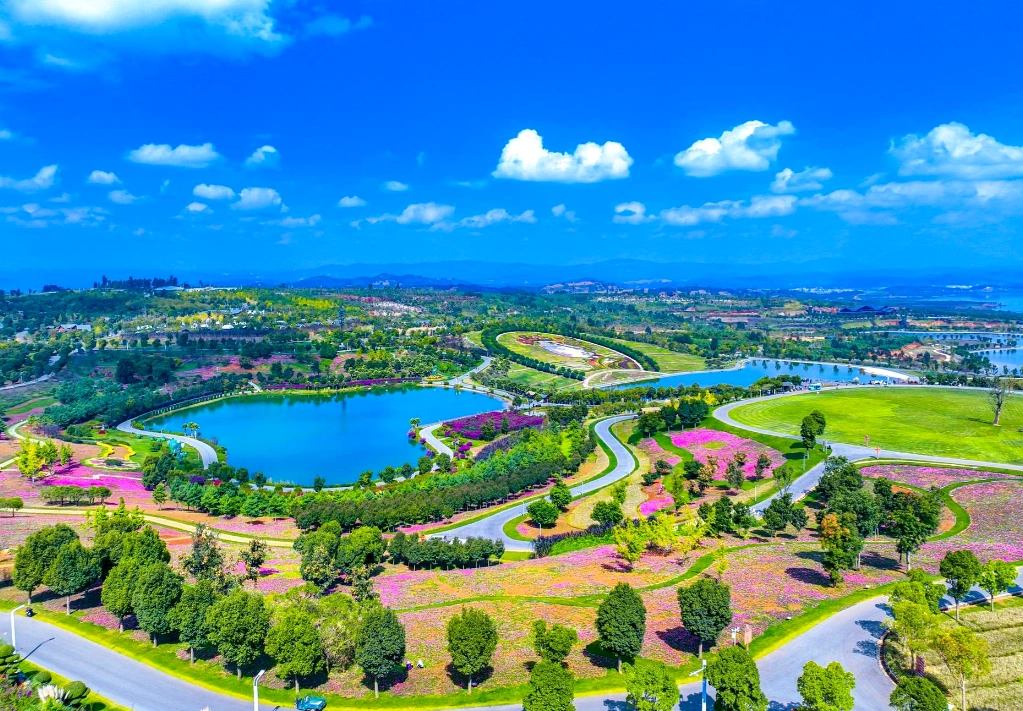
The extraordinary efforts to turn the stone desert into a paradise oasis were duly rewarded with brilliant legal milestones. After completing the first phase of construction and opening for trial runs, the entire complex was quickly recognized by the Ministry of Culture and Tourism as a National 4A-level Tourist Attraction (国家AAAA级旅游景区), while also setting the standard for a Yunnan province-level tourist resort, ushering in a radiant era for the ecological flower in the heart of Honghe Prefecture.
Located in the magnificent geomorphological transition zone of the Yunnan-Guizhou Plateau, Taiping Lake Ecological Park in Mile, located in Mile City, Honghe Hani and Yi Autonomous Prefecture, Yunnan Province, proudly boasts a rare and auspicious feng shui terrain. At an average altitude of 1,400 to 1,600 meters above sea level, the entire resort is nestled in the embrace of rolling plateau mountains, forming a perfect “storing wind and gathering qi” structure. This setting, surrounded by mountains and embraced by water, fully enjoys the privileges of a mild plateau monsoon subtropical climate, with over 2,100 hours of bright sunshine each year. The atmosphere here achieves optimal purity with high concentrations of dissolved oxygen and negative ions, maintaining a cool and pleasant temperature year-round, making this land an ideal destination for wellness and longevity tourism.
To create a picturesque landscape from an initially barren and desolate rocky land, ecological planners carried out an astonishingly large-scale terrain and hydrological renovation. More than 5 million cubic meters of fertile organic humus soil were transported from distant valleys to replenish the land, increasing the thickness of the arable soil layer from 15 centimeters of gravelly rock to a fertile 80 centimeters to 1.2 meters. The hydrological heart of the complex is the tiered artificial Taiping reservoir with a regular capacity of 1.65 million cubic meters, acting as a giant ecological regulating water bag. From the lakebed, a modern automated micro-irrigation network is routed deep underground, extending to irrigate over 1,000 hectares of sloping hills, both saving water and ensuring the lifeblood continuously circulates through every inch of soil.
Viewed from a breezy vantage point, the entire resort appears like a modern, brilliantly colorful natural masterpiece beside the expansive lake. Winding stone-paved walking paths curve gently along the hillsides, embracing lush green lawns and meticulously pruned shrubbery that follow the rhythmic curves of the terrain. The calm surface of Taiping Lake reflects the azure plateau sky, where elegant resort architecture nestled by the lakeside town can be glimpsed in the distance, painting a exquisite blend of artificial abundance and the open beauty of the rolling mountains on the horizon.
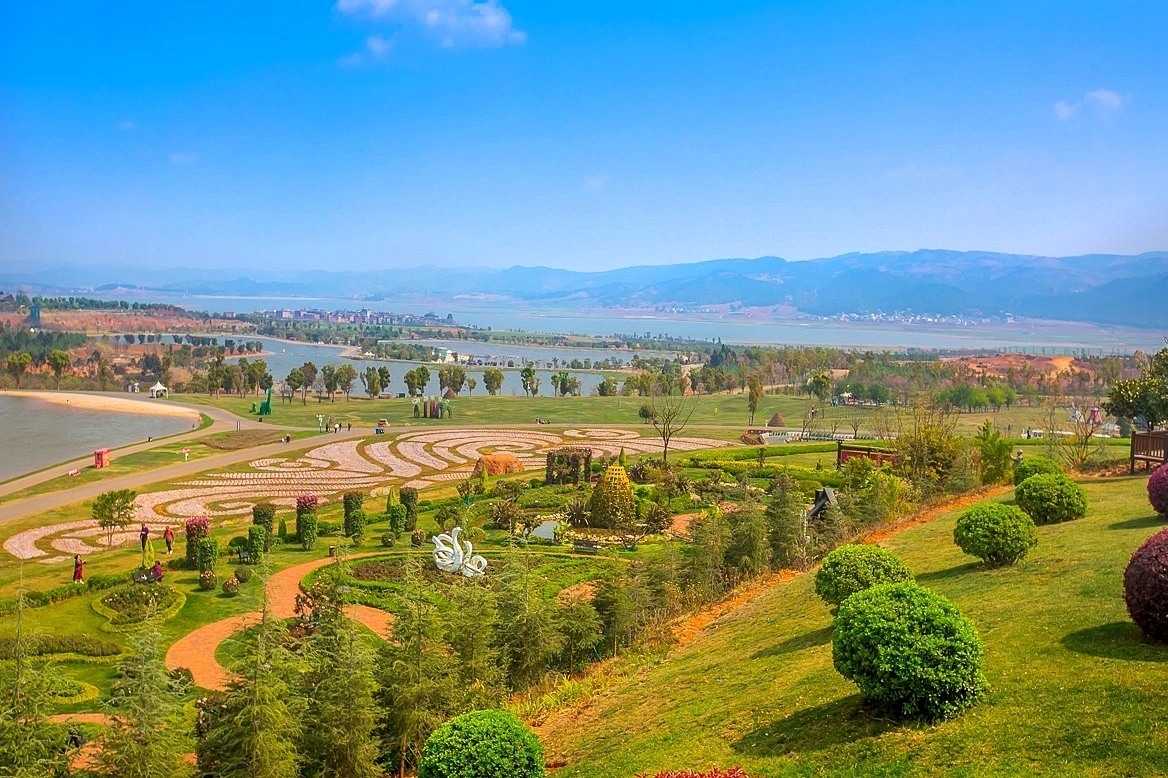
On the foundation of a remarkable ecological revival, a rich plant ecosystem has been restored with over 200,000 woody trees across 60 different families successfully transplanted and cultivated, alongside more than 3,000,000 square meters of drought-resistant native vegetation blanketing the slopes. The natural complex also serves as a sanctuary for rare ancient Chinese swamp cypresses, harmoniously combined with a magnificent desert botanical garden featuring thousands of giant cacti proudly withstanding the wind and sun. The gently rolling topography has been fully leveraged to create a Four-Season Flower Field spanning over 300 hectares, resembling a shimmering silk ribbon that transforms ceaselessly through time.
The rhythm of changing seasons on the Mile plateau is vividly portrayed through the endless blooming flowers at Taihu Lake. When the warm spring breeze arrives, the hillsides light up with the vibrant yellow of bell flowers and the pure, ethereal beauty of snow cherry blossoms blooming in unison. Come summer, the valley dons a dreamy purple cloak woven from fragrant lavender and soothing sage. As the cool autumn winds transition into winter, the entire landscape ignites with slopes draped in the proud red of buckwheat flowers, punctuated by the delicate, wind-dancing blossoms of graceful cosmos.
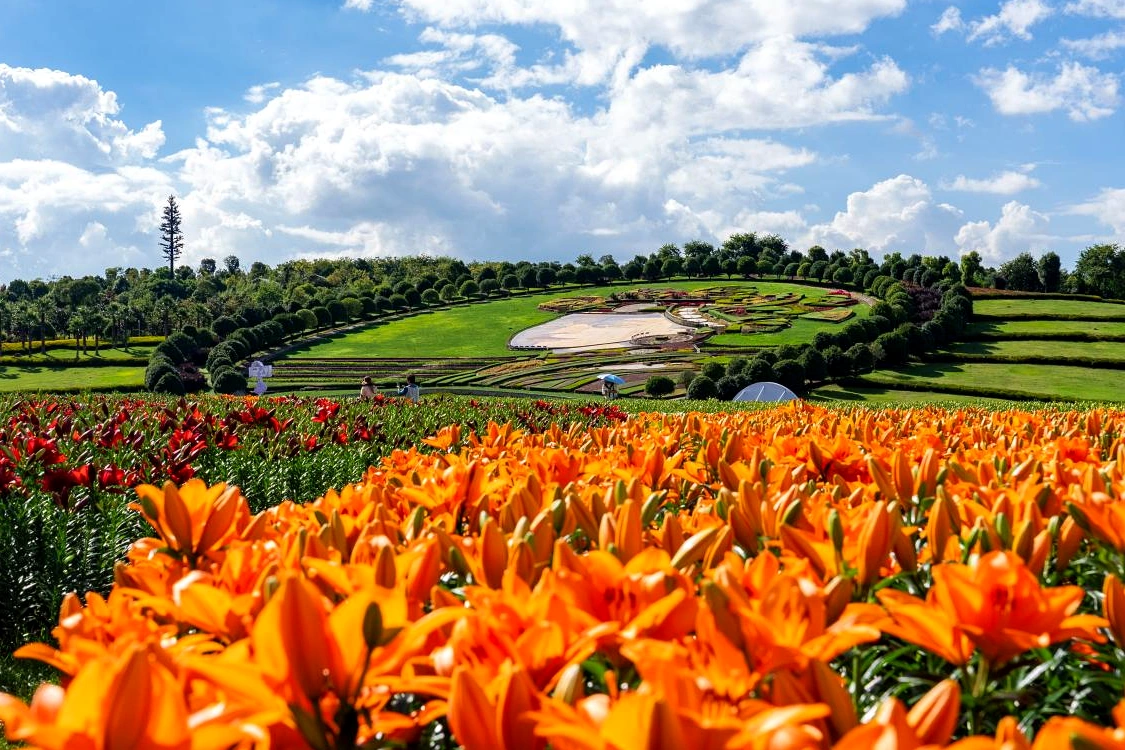
Positioned as a world-class ecological resort mega-project in southern Yunnan, the Mile Taihu Lake Eco-Park spans a total planned area of up to 42 km². The heart of the entire complex is the Taihu Lake Forest Town (太平湖森林小镇), occupying a 3 km² core space (equivalent to 300 hectares) surrounding crystal-clear waters. To realize the dream of transforming a barren semi-desertified region into a premier ecological resort paradise, enormous financial resources have been poured into the project with a planned total investment of up to 4.5 billion RMB (approximately 15.5 trillion VND). The development phase for the core forest town alone has disbursed between 1.505 billion and 2.6 billion RMB, creating a synchronized, sustainable infrastructure that seamlessly blends modern engineering techniques with the natural terrain.
Viewed from above, the panoramic view of the tourist area unfolds like a magnificent landscape painting, with the calm central lake embracing lush peninsulas and islets. Dotting the shores are clusters of buildings featuring traditional architecture with antique tiled roofs, reflecting upon the pristine waters. Encircling the lake are meticulously manicured green lawns interwoven with gently winding pathways and beds of vibrant flowers. Notably, dominating the foreground and stretching endlessly along the right wing are vast fields of pink and purple flowers, weaving a magnificent carpet that envelops the serene architectural space.
The focal point of landscape artistry in this land belongs to the earthwork masterpiece named “Mother of the Earth” (大地之母), also honored as the figure of “Princess Taihu” (太平公主). Created by renowned artist Stan Herd, the artwork graces a gentle slope covering over 50 Chinese mu, equivalent to approximately 33,000 m². Through the ingenious application of crop art and earthwork techniques, the author has transformed the sloping hillside into a breathtakingly vivid relief sculpture. The meticulous craftsmanship is showcased in the blending of the plateau’s natural red soil, crushed local basalt grey stone, white limestone, and vibrant Japanese velvet grass. Patches of multicolored lantana, marigolds, and buckwheat are precisely cultivated to portray Mother Nature with her eyes gently closed in peace, her flowing hair blending softly into the hilly terrain to form an ecological sculptural masterpiece whose hues transform with each blooming season.
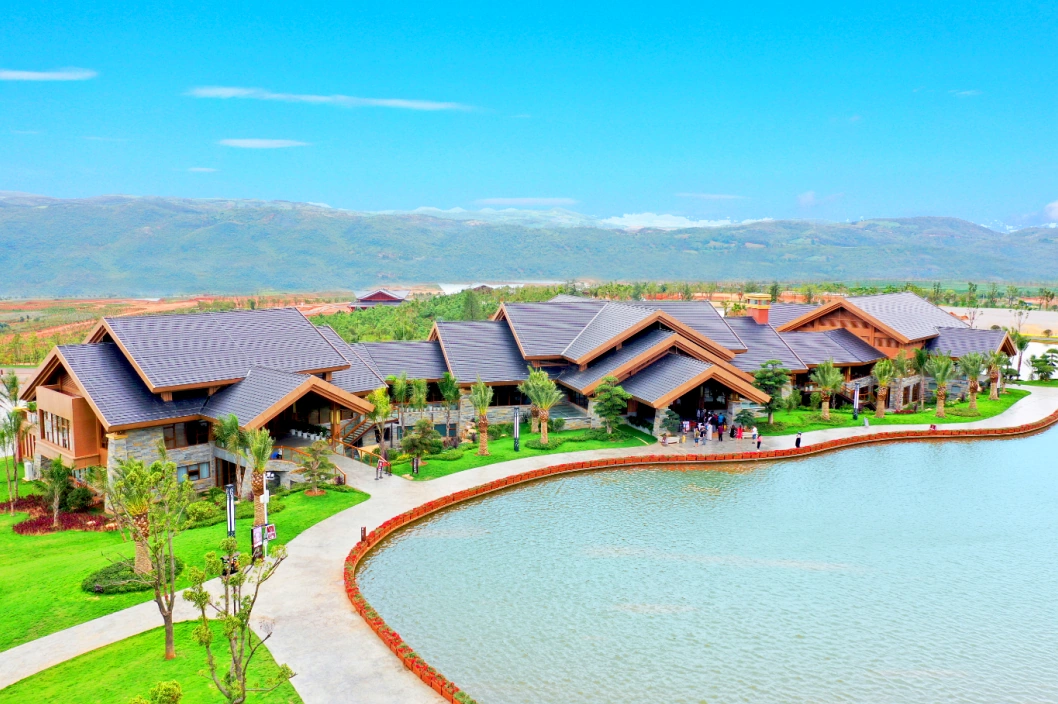
Beyond its artistic landscape highlights, the Eco-Wooden Villa Town (森林木屋小镇) complex sets a new standard for high-end retreats with over 100 detached bungalows nestled amidst vast pine forests and along the breezy lakeshore. All structures are crafted from high-quality Pinus sylvestris pine imported from Russia and Canada. The engineering team utilized sophisticated traditional mortise and tenon techniques, completely avoiding metal nails, which allows the wood structure to breathe naturally with temperature fluctuations, providing excellent sound and thermal insulation. Each villa features floor-to-ceiling glass walls offering a 360-degree panoramic view that embraces the pristine forest and lake landscape, seamlessly connecting to the water sports kayak dock and a network of winding ecological paths. Standing out in the green space is the Convention Center, designed to resemble a graceful lotus flower and built entirely with a load-bearing natural timber frame, affirming the resort’s philosophy of respecting nature and sustainable development.
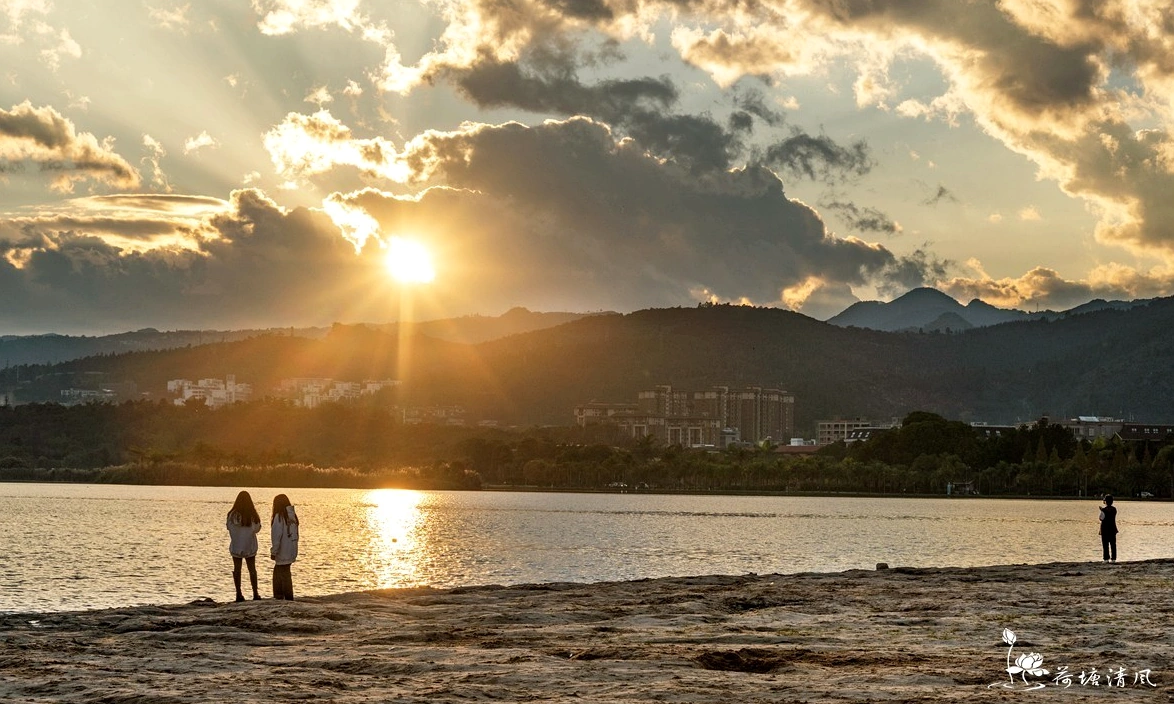
As the clock strikes between 4:30 PM and 6:30 PM each day, the Taiping Valley dons the most magnificent and mystical sunset attire in the Southern Dian plateau. The crimson glow of the evening sun gradually descends upon the blue waters of Taiping Reservoir, creating a surreal visual dialogue between sharp highlights and long, deep shadows cast across the undulating grass slopes of the “Mother Earth” land art sculpture. The silhouettes of the pine-wood villa roofs along the hillside slowly sink into the violet-blue hues of twilight, opening a poetic transition between the bustling rhythm of the day and the quiet, profound nocturnal life of this land, which is overflowing with natural energy.
Shattering the inherent stereotype of the dull silence found in traditional eco-tourism sites after closing hours, this destination has proactively created a profound night-time economy centered on high-tech visual performance art. As night falls completely, the calm, mirror-like surface of Taiping Lake instantly transforms into a massive water stage thanks to an advanced 3D Mapping and matrix lighting system. Sophisticated laser beams interwoven with water screens create vivid scenes, both recreating the resilient journey of the people of Mile in greening the red-rock desertified land and sketching a picturesque landscape, offering visitors a mesmerizing multi-sensory visual experience amidst the vast expanse of the sky and clouds.
The indigenous cultural breath of the ancient Mile community is the soul that illuminates the night festivals at the foot of the mountain. In the center of the blazing plaza, the vibrant echoes of the Sanxian and the rhythmic footsteps lead into live performances rich in folk flavor. Visitors can immerse themselves in the graceful Eight Immortals dance, praying for a bountiful harvest, or lose themselves in the famous “A-Xi Moon Dance” of the A-Xi people. The flickering sacred fire dispels the mountain chill, bonding people with the earth and sky and connecting kindred spirits around the glowing campfire. Adjacent to the festival space is an eco-night market operated under zero-plastic waste standards, where visitors can leisurely enjoy rustic local cuisine in an atmosphere that is warm, civilized, and deeply respectful of nature.
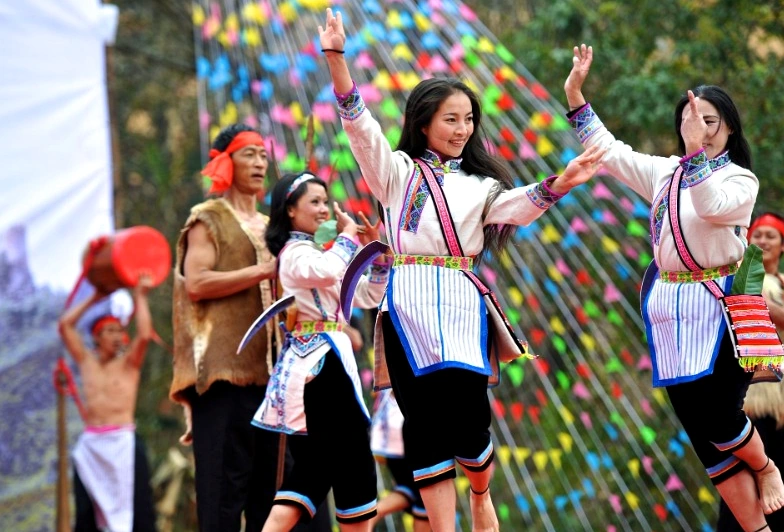
After moments of exhilaration with music and light, the night returns the valley to its original tranquility, establishing a complete healing accommodation space that meets high standards for mindfulness. Surrounded by endless pine forests and far from the hustle and bustle of the prosperous city, the accommodation area is almost completely immune to light pollution. Leaning against the rustic balcony of the imported pine villas, fragrant with the scent of natural pine resin, visitors only need to look up to capture the entire sparkling galaxy in the clear plateau sky, letting the pure mountain breeze soothe their minds and lull them into a deep sleep amidst the peaceful wilderness.
Exploring the culinary culture in Mile is a journey into the depths of southern Yunnan’s local flavors, where the essence of traditional herbs blends with the abundant produce of the limestone mountains. Topping the list of delicacies passed down for over a century is the famous Mile herbal braised chicken. Local chefs strictly select free-range hill chickens or native black-bone chicken breeds with a standard weight of 1.5 to 1.8 kg to ensure the meat retains its firmness, fine grain, and light subcutaneous fat layer. The soul of the dish lies in the traditional simmering broth, continuously boiled with over twenty renowned herbs such asamomum fruit, Western Yunnan cardamoms, licorice, cloves, cassia bark, and star anise. Once cooked to perfection, the chicken is drizzled with a shimmering amber herbal oil, keeping the skin crispy and chewy while keeping the meat inside juicy and intensely sweet. Served alongside the braised chicken is a secret dipping sauce made from the concentrated poaching liquid, evenly mixed with spicy Muxian dried chili, minced fresh garlic, finely julienned culantro, fragrant sesame oil, and a deep-flavored Yunnan aged black vinegar.
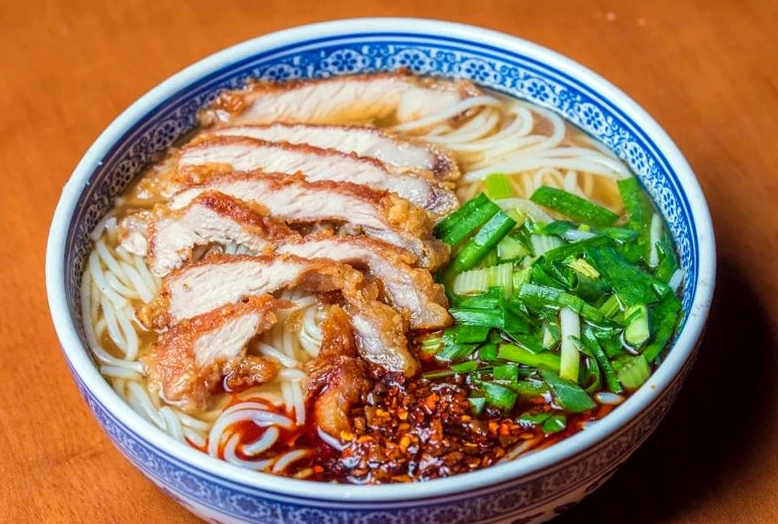
The perfect accompaniment to the braised chicken is Luxi chicken rice noodles, an elegant yet soulful highland street food breakfast. Each hand-made, springy fresh rice noodle strand is blanched until soft and submerged in a clear, bone-broth soup naturally sweetened by bone marrow and herbal roots. The steaming bowl of noodles is topped with golden shredded chicken, crispy roasted peanuts, fresh young chives, and a spoonful of vibrant red chili oil that brings a mild kick to the tip of the tongue. Priced affordably between 15 and 20 yuan per bowl, these noodles are not only a familiar breakfast staple nourishing generations of Mile locals but also a heartwarming culinary experience that traveling visitors will never forget.
Alongside free-range poultry, the local culinary heritage also leaves a strong impression with grilled goat milk cheese, also known as Mile Rubing. This delicacy is made entirely from pure fresh milk of goats leisurely grazing on limestone mountain slopes, using naturally fermented sour water for curdling and then manually pressed into firm, ivory-white cheese blocks. Rubing boasts a chewy, smooth texture and a rich fat content, very similar to the famous Mediterranean Halloumi cheese. Locals usually slice it thinly, alternate it with the renowned Xuanwei smoked ham, and steam it, or drop it into a lard-lined pan to pan-fry both sides until golden brown. When enjoyed, it is dipped in refined white granulated sugar or slightly spicy salted pepper powder to fully accentuate the melting richness on the palate.
To complete this sensory journey, a glass of shimmering Yunnan red wine from the vineyards of nearby Dongfeng town provides a thoroughly romantic crescendo. The history of this wine region is tied to the fascinating story of the rare Rose Honey grape variety, which had gone extinct in Europe after the phylloxera disaster in the late 19th century, but was fortunately brought over and planted in the Mile valley by French missionaries. The mineral-rich terroir and highland climate at an altitude of 1,400 meters, featuring abundant sunshine and a large temperature difference between day and night, have perfectly preserved this ancient genetic source, creating a wine with a deep red color, hints of wild roses, a velvety smooth tannin structure, and an unmistakable sweet aftertaste.
Viewed from above, the entire eco-resort unfolds like a breathtaking pastoral painting, where a tranquil, clear blue lake reigns at the center, surrounded by rolling hills covered in lush greenery dotted with vibrant flower beds and artistic topiary. From a close-up perspective, the spacious brick-paved walkways run alongside meticulously trimmed green hedges, leading through an archway covered in lush green vines and an elegant sculpture, standing out against the crystal-clear highland sky filled with white clouds.
Banquet tables rich in local flavors, enjoyed in the open-air ambiance of greenery and sweeping lake breezes, serve as an invisible bridge between the palate and nature. Every flavor—from the fragrant plate of braised chicken and rich cheese to the passionate sip of wine—truthfully tells the story of a gentle lifestyle, the wondrous cultural exchange between East and West, and the warm hospitality of the people in peaceful Mile.
The Mile Taiping Lake Eco-Park boasts exceptionally convenient connectivity thanks to the cutting-edge transportation infrastructure of southwestern China. From the Lao Cai International Border Gate – Hekou, the Kai-Ha G8011 expressway seamlessly connects to the G80 Guangzhou-Kunming expressway, traversing the plains of Mengzi and Kaiyuan over a total length of 220 km. The journey takes approximately 2 hours and 45 minutes to 3 hours and 15 minutes, passing through 18 majestic limestone mountain tunnels before reaching downtown Mile. From there, a smooth 11 km drive takes just another 15 minutes to reach the park’s main entrance. For travelers departing from the provincial capital of Kunming, the Nan-Kun HSR operates a high-frequency schedule of 38 trains daily from Kunming South Station to Mile Station. The smooth-riding trains take about 34 to 43 minutes with a second-class ticket price of just 34 Chinese Yuan, making access to the lakeside scenery as quick and effortless as a short suburban trip.
Regarding border immigration procedures, streamlined regional travel agreements offer highly flexible options for Vietnamese tourists. Citizens joining exploration tours within the jurisdiction of the Honghe Hani and Yi Autonomous Prefecture with a 3-year or 4-day itinerary can easily use a Border Entry-Exit Permit (中华人民共和国出入境通行证). This procedure is simplified to the maximum, requiring only a scanned copy of a chip-enabled ID card accompanied by a white-background portrait photo, with approval results received quickly within 24 to 48 hours. Meanwhile, for extended itineraries or combined Kunming routes, the Group Visa option for groups of 5 members or more is an optimal solution, saving over 60% in costs compared to individual sticker visas while ensuring that immigration control processes run smoothly and professionally.
Once inside the resort, the field guide strongly advises against simple walking tours due to the lake’s landscape radius spreading over 8 km. Booking the Hop-on Hop-off Shuttle Bus service with flexible boarding at 30 Chinese Yuan per person, or renting a self-drive family golf cart priced between 120 and 160 Chinese Yuan per hour, is essential for conserving your physical stamina. The golden hours for the most perfect scenery viewing fall between 07:30 and 09:30 in the morning, when the lingering morning mist gives way to gentle slanted sunlight showering across countless wild flowers, and from 16:30 to 18:30 at dusk, when the deep red sunset casts an angle that fully highlights the exquisite contours of the Earth Mother land art masterpiece.
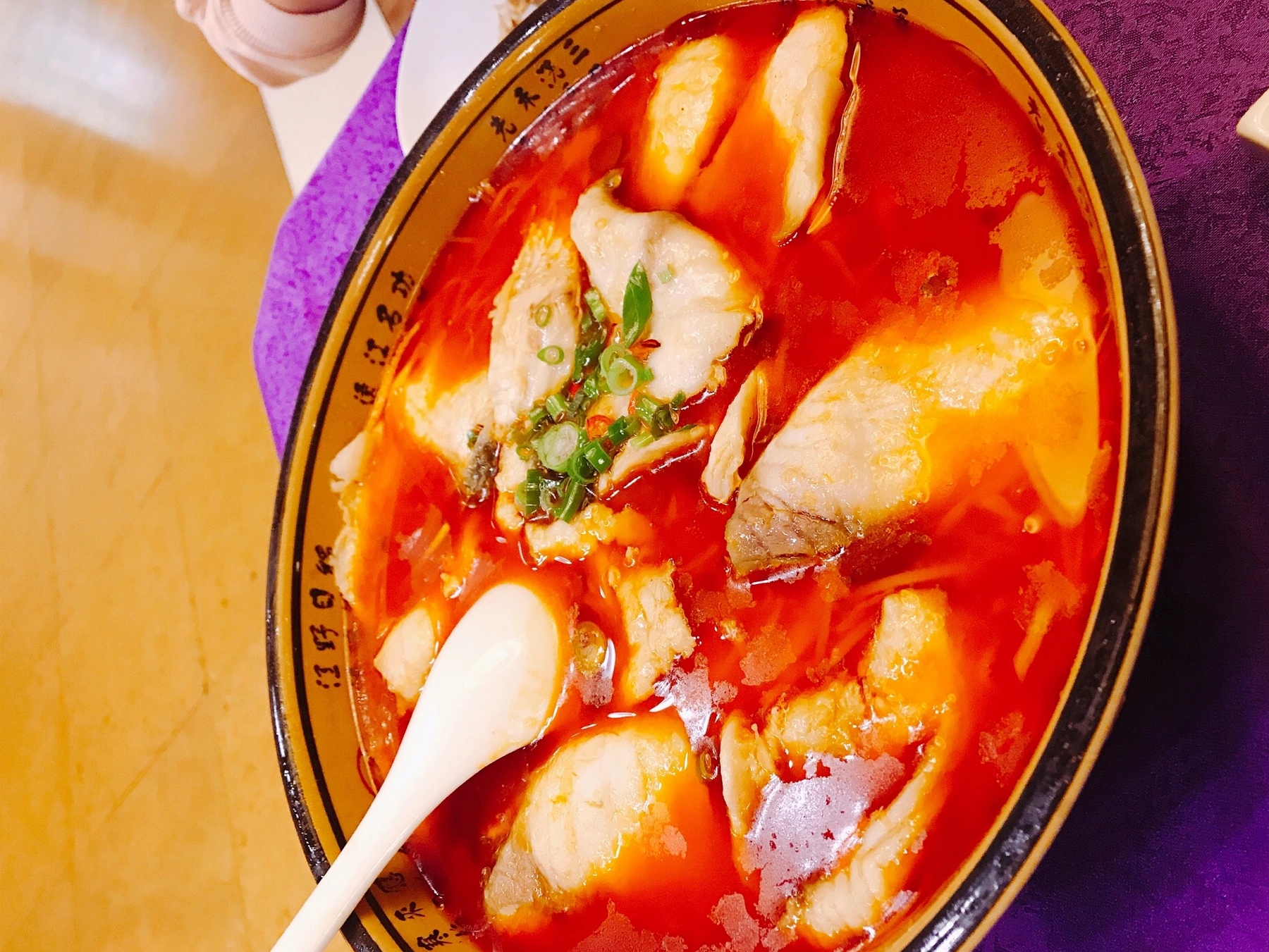
After hours of relaxing strolls amidst open nature, the warm culinary flavors of Mile will conclude your day of experiences with unforgettable traditional tastes. A close-up photo of a vibrant red bowl of signature fish soup reveals tender, snow-white fish slices soaked in a shimmering broth spiced with Yunnan’s characteristic numbing Sichuan peppercorns, topped with finely chopped scallions and fresh bird’s eye chilies that instantly stimulate the visual senses. A white spoon rests inside the bowl, ready to invite diners to savor every spoonful of piping hot soup, rich with the naturally sweet flavors of fresh lake fish blended with a passionate, tangy, and spicy kick. The bowl features a black rim and elegant Chinese character decorations, highlighting a rustic imperial aesthetic when placed on a dining table draped with formal royal purple and gold tablecloths.
Alongside enjoying the scenery and local delicacies, the most crucial insider tip for travelers is recognizing and avoiding Zero-Dollar Tour traps. 3-day 2-night or 4-day 3-night tour packages with abnormally dumped prices ranging from 2.8 to 3.5 million VND typically force visitors into 3 to 4 designated shopping stops such as silk workshops, jade centers, memory foam mattress stores, or traditional Chinese medicine pharmacies, with suffocating detention times of 90 to 120 minutes per station. Consequently, actual sightseeing time at Taiping Lake is slashed to a mere 45-minute superficial glance. Conversely, choosing a pure sightseeing tour (纯玩团 – No Shopping) priced between 5.2 and 7.9 million VND guarantees travelers luxurious 4 to 5-star standard accommodations and a full, leisurely half-day enjoying the landscape. When needing to report any forced consumption behavior, visitors can immediately contact the 12345 hotline or use the “Travel Yunnan in the Palm of Your Hand” (一机游云南) app, which is strictly monitored by local authorities. To ensure a relaxing, fulfilling, and completely worry-free journey across every step of your cultural experience, thoroughly researching and traveling with a professional all-inclusive tour package will be your ultimate passport to the peaceful waters and mountains of Mile Taiping Lake.