Nestled at the magnificent confluence of the nine branches of the Pearl River flowing into the windy South China Sea, Zhuhai holds a rich geopolitical sediment built up over thousands of years of Chinese history. In ancient times, this region was originally inhabited by the Baiyue tribes. After Qin Shi Huang unified the six states in 221 BC, this southern coastal strip was officially incorporated into the mainland administrative map, belonging to Panyu County under Nanhai Commandery. Through the ups and downs of the Eastern Jin Dynasty under the jurisdiction of Dongguan Commandery, and later transferred to Bao’an County during the Sui Dynasty, the root name of the land began to take clearest shape during the Tang Dynasty. In the second year of Zhide under Emperor Suzong of Tang (757 AD), the imperial court issued a decree to establish Xiangshan Town within Dongguan County, portraying the legendary name Xiangshan associated with fragrant grasses among the overlapping mountains. By the 22nd year of Shaoxing in the Southern Song Dynasty (1152), the land was officially upgraded to Xiangshan County, rapidly transforming into a prosperous marine economic center thanks to the flourishing of royal salt fields under the Truong Sa salt pans.
Entering the Ming and Qing Dynasties, the strategic position of the coastal strip became even more critical as it served as a military outpost and direct observation point to rein in the Portuguese presence in Macau. In the 27th year of Kangxi (1688), the Qing court established the Gongbei customs station, marking a turning point in establishing a maritime border security and trade control system. Entering the modern era, the regional administrative map witnessed a historic metamorphosis: in April 1953, Zhuhai County was officially established by separating from the former Zhongshan County, initially setting the county seat at Tangjiawan before moving the administrative center to the prosperous strip of Xiangzhou. The pinnacle of this development process took place on March 5, 1979, when the State Council approved the upgrading of Zhuhai to a prefecture-level city. Just over a year later, in August 1980, leader Deng Xiaoping personally approved the establishment of the Zhuhai Special Economic Zone, initiating a spectacular transformation from a modest experimental scale of 6.81 km² initially to expanding across the entire 1,724 km² as it is today.
This land, converging the vital energies of sea and sky, is also the cradle that nurtured great figures who changed the nation’s destiny during the period of East-West cultural exchange. Most prominent is Yung Wing (1828–1912), a native of Nambinh village, an elite son who crossed the ocean to become the first Chinese international student to graduate from America’s prestigious Yale University in 1854, and later initiated the Chinese Educational Mission movement to revitalize education. Along the same vein, Tang Shaoyi (1862–1938), hailing from the ancient town of Tangjiawan, etched his name in history as the first Prime Minister of the Cabinet of the Republic of China government in 1912. Not only home to reform-minded intellectuals, Zhuhai was also where the indomitable will of Su Zhaozheng (1885–1929) was forged—a son of Qi’ao Island and an outstanding senior leader who spearheaded the historically seismic Canton-Hong Kong strike.
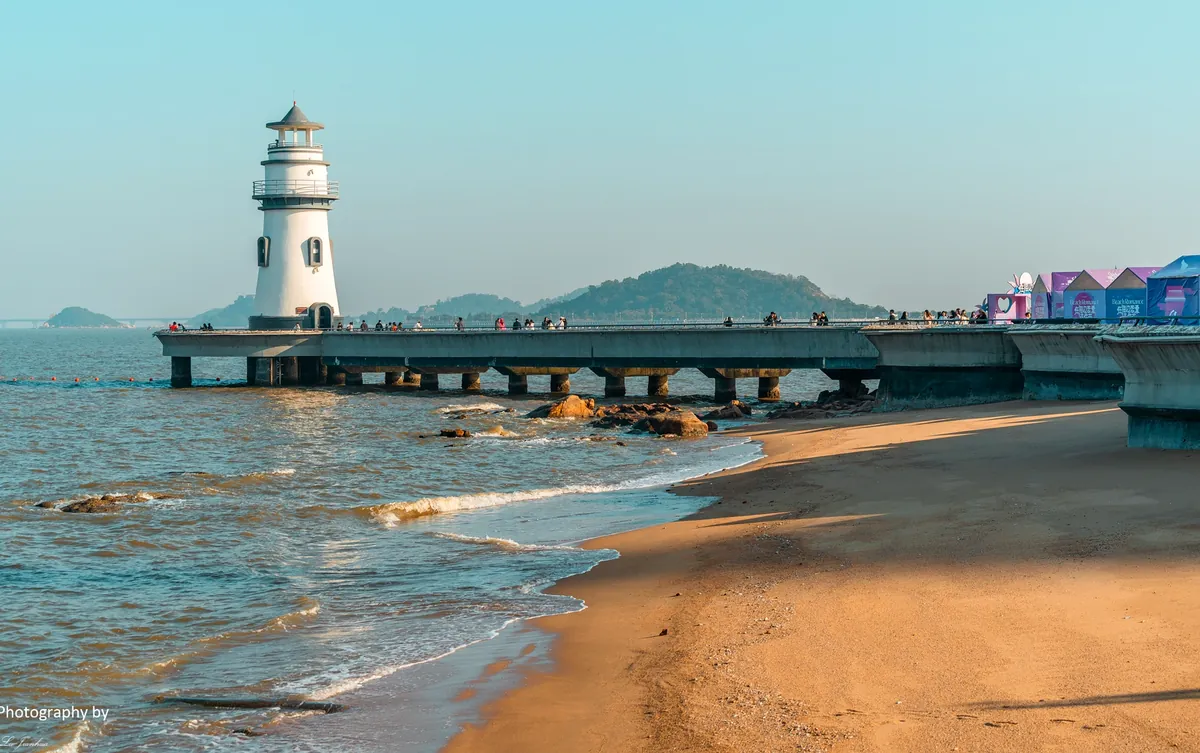
The intersection between heroic historical imprints and the contemporary vitality of Zhuhai’s coastal strip seems to be captured entirely in the tranquil moments of nature just as dawn breaks or as twilight lingers. Across the vast, calm sea surface, countless magnificent large and small granite boulders emerge from the cool water, acting like silent witnesses that have steadfastly weathered tidal waves through the centuries. Far to the left of the frame, a lush green hill slopes gently toward the waterline, highlighted by a slender telecommunications tower soaring high at the summit and a few shoreline architectural structures dotting the peaceful scene. In spectacular contrast on the far right is the modern skyline of the urban center with densely packed skyscrapers proudly reaching upward. The sky is draped with a gentle, serene layer of clouds transitioning marvelous shades from a pure azure to sweet pinkish-orange, reflecting onto the water a picture that is both ancient and pulsating with new life.
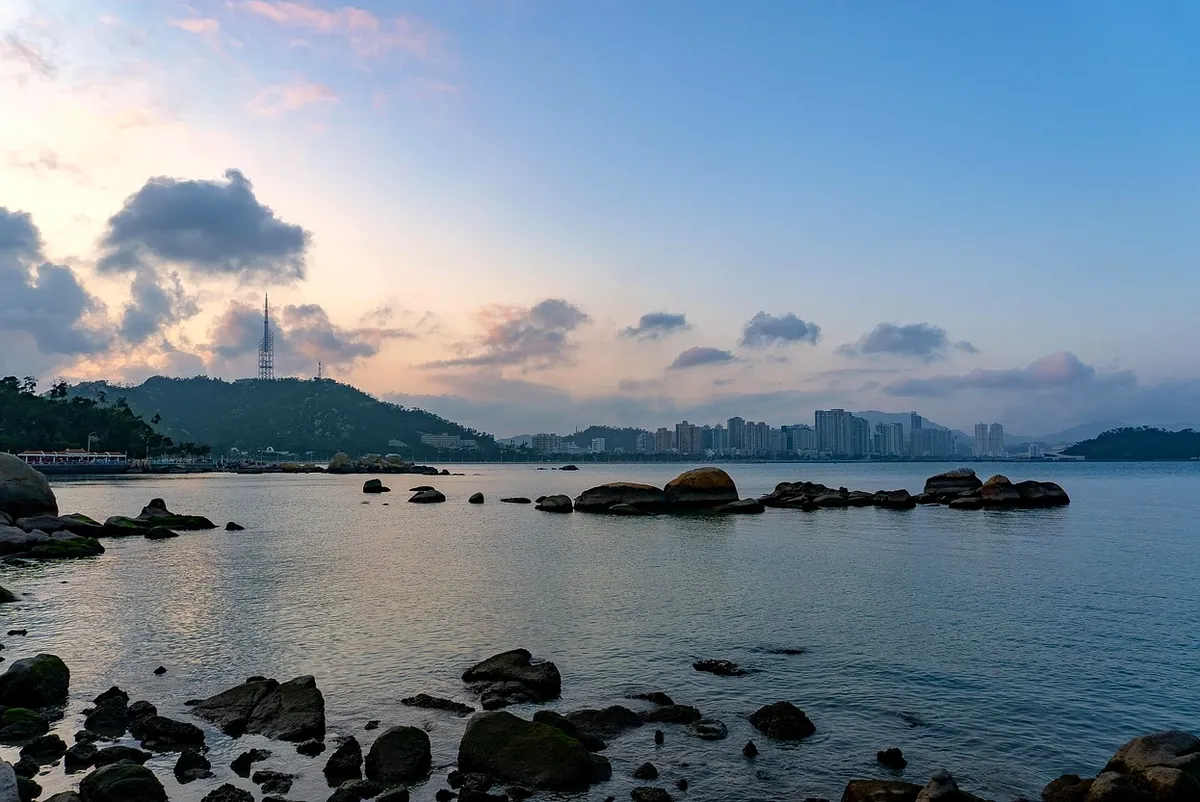
The miraculous intertwining of pristine boulders from the days of the Baiyue reclamation with the magnificent architectural lines of one of the pioneering special economic zones is the most complete explanation for Zhuhai’s allure. From a rugged coastal outpost with ancient customs stations and bay-side fishing villages, today’s city has risen to become a vibrant symbol of openness and international integration while still cherishing every ancient banyan tree and communal temple roof of its forebears. A wandering foot returning here is not merely a sightseeing journey to discover magnificent island landscapes, but also a voyage to listen to the echoes of history, where every dynasty, every wave, and every outstanding life together play an endless epic song between the southern earth and sky.
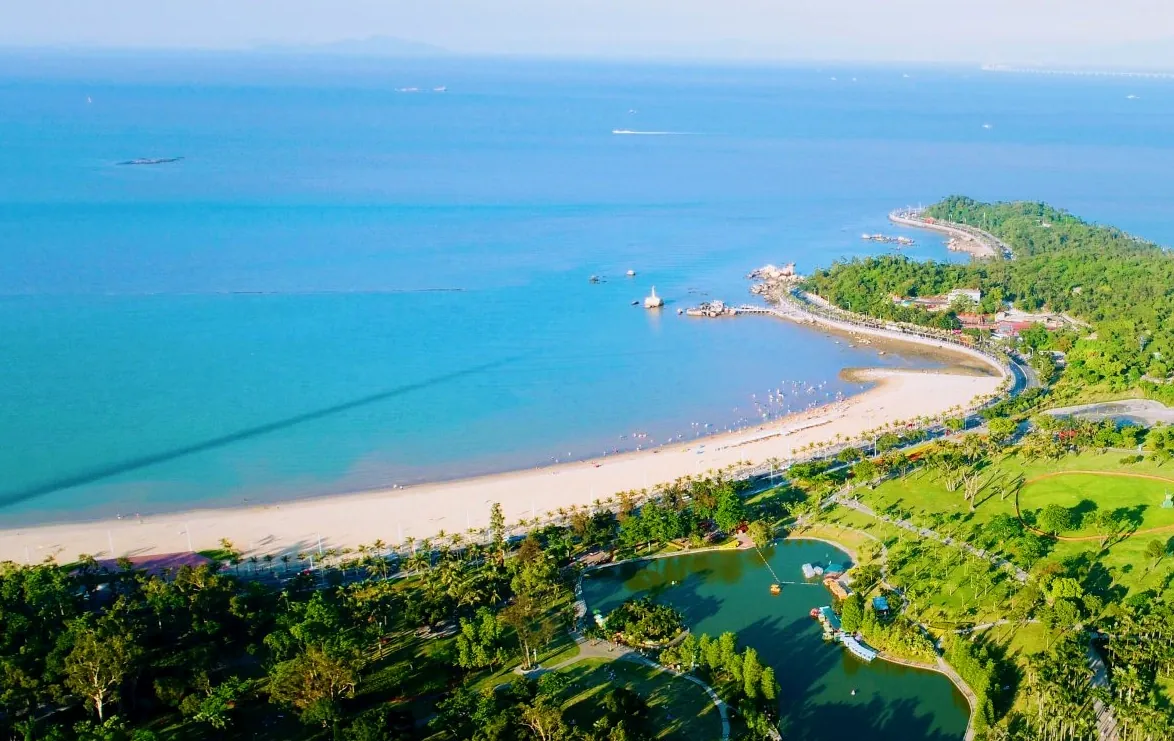
Located on the western shore of the lower Pearl River delta, Zhuhai holds one of the most strategically vital socio-economic positions on the South China coastal map. The city stretches across a land area of 1,724.32 km², directly facing the expansive waters of Lingdingyang before blending its currents into the vast South China Sea. Bordering the Macau peninsula to the south, leaning against Zhongshan’s boundary to the north, adjoining Jiangmen to the northwest, and casting its gaze across the open sea towards Hong Kong, Zhuhai resembles a jade gemstone guarding the bottleneck of bustling maritime trade. Not only possessing a jagged coastline stretching up to 690 km, this urban area is also renowned by the moniker “City of a Hundred Islands” thanks to a cluster of 146 to 262 large and small islands scattered offshore, creating a magnificent natural screen amidst endless winds and waves.
Viewed through the traditional lens of feng shui landform analysis, Zhuhai boasts an exceptionally perfect “mountain-embracing and water-encircling” structure, converging the rare prosperous energy of the Lingnan realm. The entire urban expanse takes the majestic Phoenix Mountain as a sturdy backdrop, with gentle dome-like hills rolling gradually toward the water’s edge to form the green dragon on the left and the white tiger on the right, sheltering the dragon vein of the delta region. The open ancestral hall (Ming Tang) in front stretches vastly toward the ocean, welcoming abundant tidal energy converging from eight major river estuaries of the Pearl River basin. The harmonious interweaving of the serene mountain ranges and the vibrant ocean currents not only blesses Zhuhai with a year-round mild marine subtropical microclimate, but also constitutes a solid feng shui foundation to build a model ecological city that perfectly blends pristine nature with modern civilization.
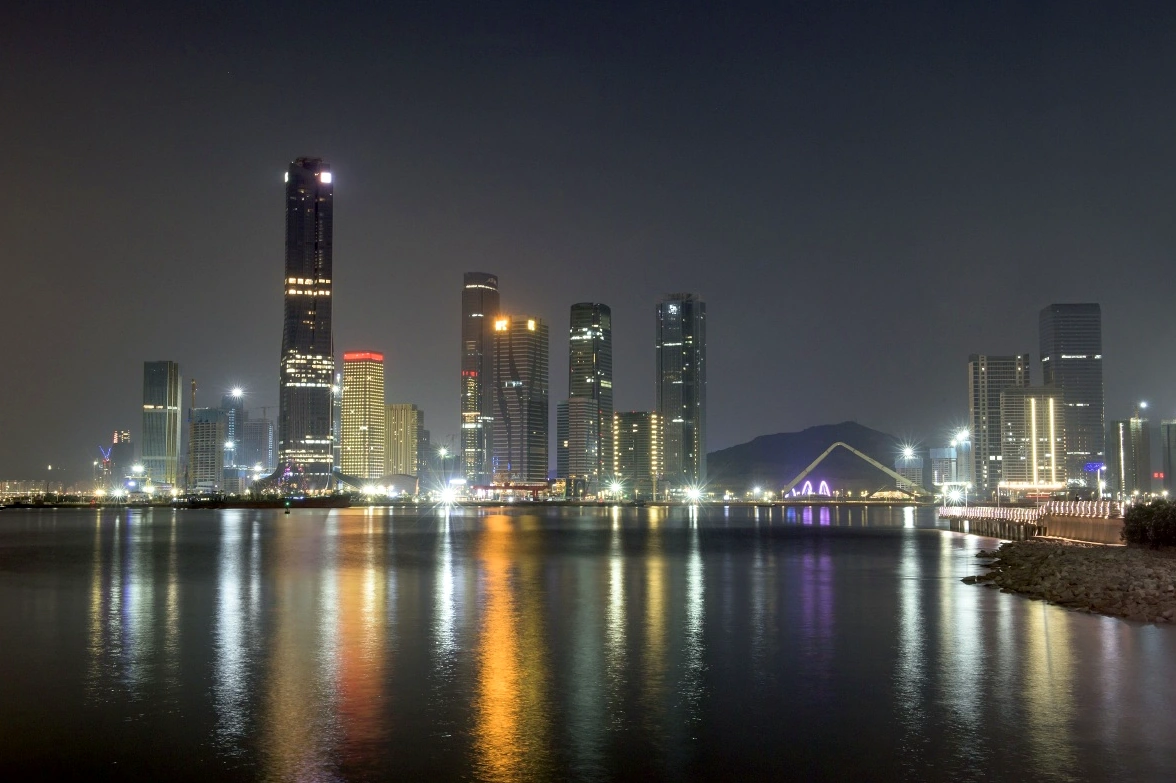
As night falls, the urban landscape fully showcases Zhuhai’s dazzling development through a magnificent panoramic picture along the water’s surface. A series of skyscrapers and futuristic architectural blocks light up with myriad shimmering lights, casting dancing reflections on the calm, mirror-flat sea surface. Far away on the horizon, where urban lights merge with the mysterious night sky, a graceful arched bridge stretches across the bay, radiating a brilliant halo, connecting bustling sub-districts and creating a proud, spectacular visual landmark for the coastal scenery here.
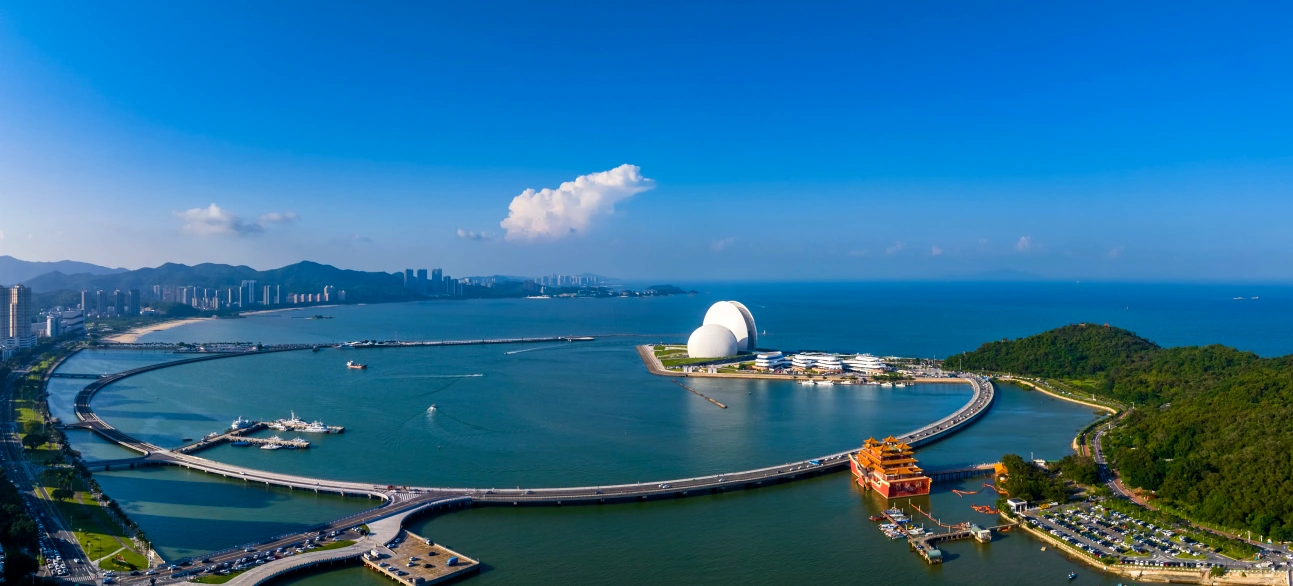
The scenic breath and life pulse of Zhuhai are organically linked through its legendary spine road named Lovers’ Avenue (Qingren Avenue), a romantic coastal route stretching up to 55 km, winding along the shoreline. The route is divided into three sections with unique planning nuances. South Lovers’ Road runs close to the bustling Gongbei Port area, offering a breathtaking direct view of the adjacent Macau peninsula, where visitors can fully admire the magnificent architectural lines of the Grand Lisboa or pierce the sky with the Macau Tower. Continuing onward, Middle Lovers’ Road embraces the azure waters of Xianglu Bay, the smooth artificial sand of Jiuzhou Beach, and leads past Yeli Island, where the Sun and Moon Shell theater complex proudly rises like two giant pearl shells amid the waves. Finally, North Lovers’ Road takes on a quiet, peaceful tone as it guides footsteps toward the Tangjiawan heritage area, the lush green Qi’ao Mangrove Nature Reserve, and the pioneering high-tech zone, concluding a stunning journey of intersection between natural landscapes and visionary urban planning.
Zhuhai emerges as a spectacular dialogic painting between the South China Sea and world-class infrastructural wonders, where spatial structure is shaped by an open, ocean-oriented planning mindset. The global shockwave highlight is the Hong Kong-Zhuhai-Macao Bridge (HZMB), the planet’s longest cross-sea mega-project spanning 55 km across the Lingdingyang Bay. Behind that century-spanning stature lies an engineering feat comprising 29.6 km of main sea bridges and a 6.7 km submerged tunnel resting at depths of up to 44 meters, seamlessly jointed with the East and West artificial islands that rise like modern architectural fortresses. This monumental work not only breaks physical limits to shorten travel time from Zhuhai to Hong Kong from four hours down to a mere forty-five minutes, but also establishes a breathtaking scenic axis directly connecting to Hengqin Island. Here, the Hengqin International Finance Center (Hengqin IFC) shoots up into the sky at a height of 339 meters, mimicking the undulating, graceful silhouette of “Nine Dragons Gathering,” symbolizing the abundant financial energy converging onto the western bank of the Pearl River Delta.
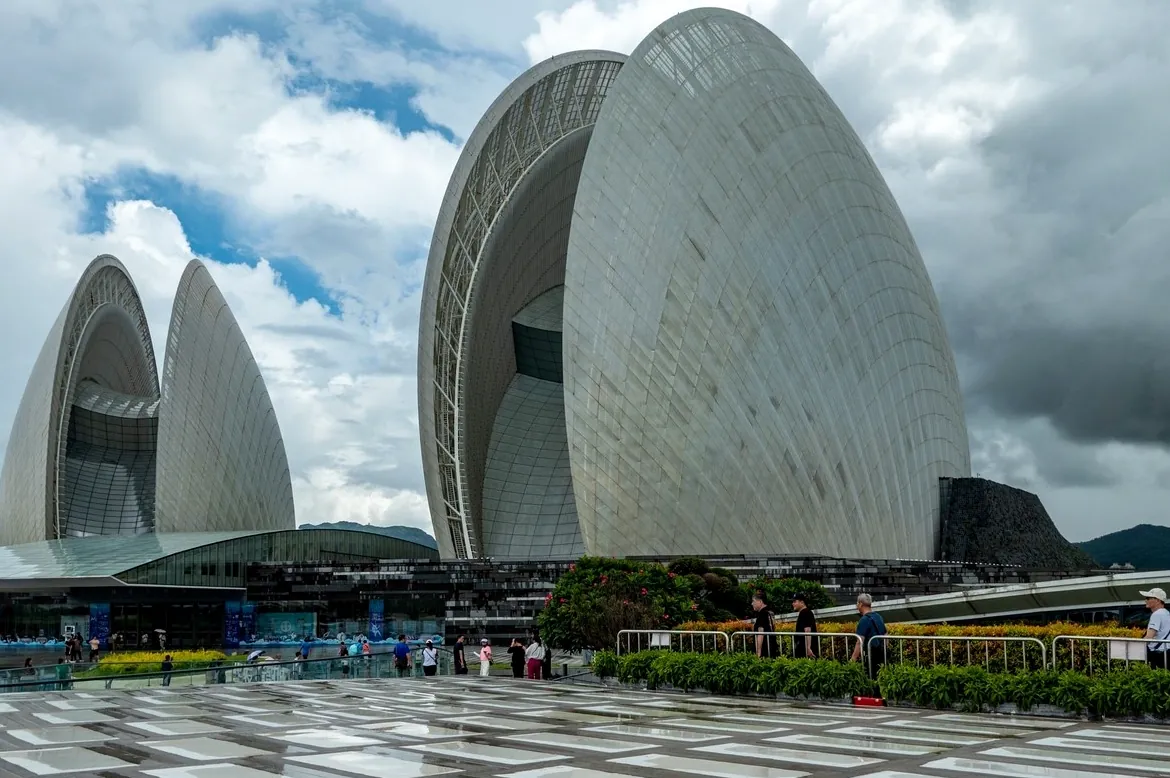
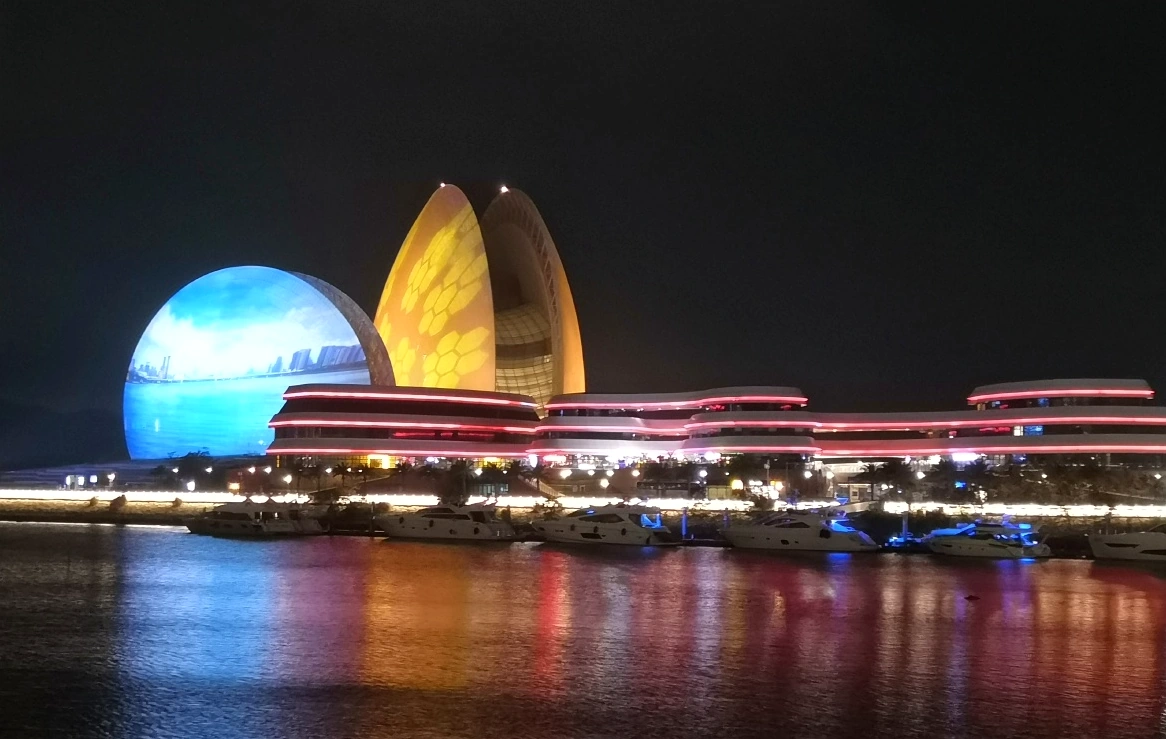
If underground steel and concrete blocks represent technological muscle, Zhuhai’s coastal urban visage carries a poetic, free-spirited quality through the language of iconic architecture. Proudly reigning over Yeli Island, the Zhuhai Grand Theater—fondly known by its poetic name “Sun and Moon Shell”—is an architectural masterpiece evoking twin pearl shells rising from the sea floor. The structure is delicately distributed between the larger Sun Shell rising 90 meters high housing a 1,550-seat concert hall, and the smaller 60-meter-high Moon Shell dedicated to a 500-seat art space. Thanks to super-span steel structure solutions combined with a translucent stone shell that glows magically at night, the project was honored with the prestigious Zhan Tianyou Civil Engineering Prize. Not far away, following the soft curve of Xianglu Bay, the Zhuhai Fisher Girl statue—sculpted from granite by the talented hands of artist Pan He—stands tall amidst wind and waves. The imagery of the graceful maiden lifting a glowing pearl is not merely a public art symbol, but has transformed into a sacred visual soul, representing marine legends and the noble character of local residents.
Contrasting yet harmonizing with this contemporary heartbeat are the deep layers of Lingnan heritage hidden within quiet ancient villages like Tangjiawan and the Huidong Ancient Village, established in 1732. This space preserves its traditional layout intact, featuring “Ho-ear wall” structures that undulate like wok handles. These walls not only serve to block the spread of fire driven by sea breezes but also embody feng shui aspirations for academic and official advancement. Each row of unplastered grey bricks showcases masterful manual construction techniques, supporting vibrant roof ridges adorned with exquisite Shiwan ceramic bas-reliefs depicting classic theatrical scenes. This historical depth is further honored by the Mai-khe Royal Stone Memorial Archway cluster, a testament to the unique East-West cultural exchange of the modern era. Bestowed by Emperor Guangxu of the Qing Dynasty upon the diplomat and merchant Chen Fang, these memorial gateways stand proudly with standard Asian three-bay, four-pillar stone mortise-and-tenon structures, yet cleverly integrate decorative friezes inspired by Western Corinthian columns—capturing the portrait of Zhuhai as a city that firmly preserves its millennium-old cultural roots while courageously embracing the essence of the times.
As dusk gradually falls over the vast expanse of the Lingding Ocean, Zhuhai sheds its daytime tranquility and elegance to don a magnificent evening gown woven from modern optical art. The entire stretch of Lovers’ Avenue, winding to embrace the Xiangzhou coastline, lights up under a synchronized smart LED lighting system, sketching a soft ribbon of light that stretches all the way to the horizon. Standing from the granite roadside railing, travelers are treated to a spectacular visual dialogue between two realms: on one side, the relaxed and peaceful coastal life of Zhuhai under gentle lighting; on the other, a cascade of luxurious, glittering golden lights reflected from the bustling entertainment complexes of Macau across the breezy waters. The sea breeze carries a hint of salt through the drooping coconut palms, blending with the sound of lapping waves and the leisurely footsteps of evening strollers, creating a splendid spatial atmosphere imbued with the distinct flavor of the Southern coast.
Right in the middle of the bay, rising proudly on the granite foundation of Yeli Island, the Zhuhai Grand Theatre—famous for its Sun and Moon Shell design—becomes the focal point of urban lighting performances. Two gigantic shell structures, one standing ninety meters tall symbolizing the sun and the other sixty meters tall representing the crescent moon, are entirely covered by multi-color exterior 3D mapping projection systems. As night completely takes over, the hazy, curved surfaces of the two shells constantly shift from the deep blue of the ocean to a mystical purple and traditional Asian crimson, casting shimmering reflections on the gently rippling water. The bridge connecting Yeli Island to the mainland buzzes with citizens taking strolls, photographers hunting for the perfect reflection angle, and street artists losing themselves in Cantonese folk tunes blending seamlessly with contemporary pop melodies.
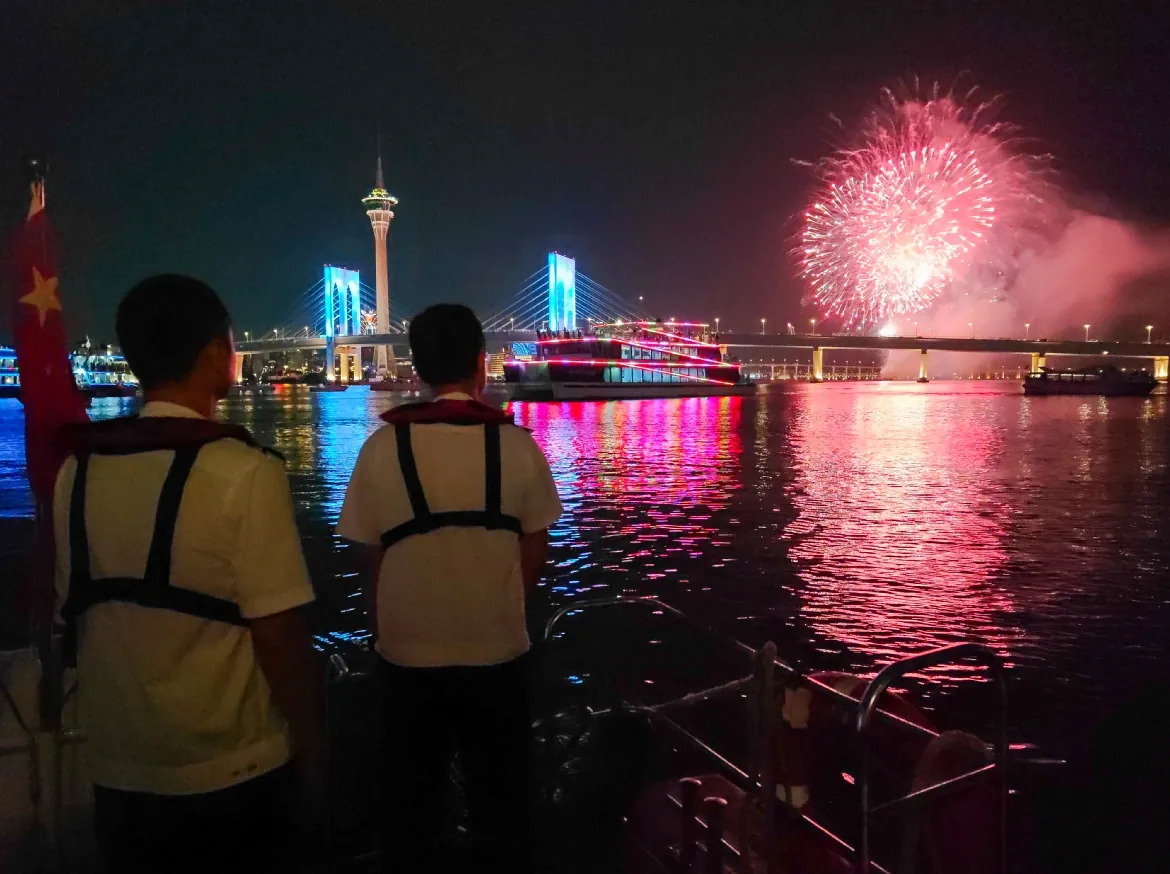
Leaving the elegant ambiance of central Xiangzhou and heading towards the southern tip, Hengqin Island opens up a world of ultimate nightlife entertainment at the Hengqin Ocean Kingdom mega-complex. The soul of its nightlife is perfectly encapsulated in the multimedia live-action grand show titled “Ocean Guardians,” taking place daily on the vast central lake. The audience is drawn into an epic saga of ocean preservation, where hundreds of drones take off simultaneously, synchronizing to the second to form giant whales, sea turtles, and glowing spaceships hovering in the sky. Laser effects sweep across the heavens, dancing fountains coordinate smoothly with fierce fire columns bursting over the water, and daring acrobatic stunts are performed on jet skis equipped with fireworks. The climax of the show is a high-altitude fireworks display that explodes brilliantly, lighting up the entire sky over Hengqin and delivering a breathtaking visual experience that far surpasses ordinary standards.
Zhuhai’s nightlife is not confined to majestic landmark structures; it is also distilled into the warm local pulse found in its famous night streets. Along Shuilian Road—locally known as the Shuilian Bar Street—the atmosphere bursts with youthful energy bearing the Greater Bay Area identity, featuring a deep cultural crossover between Lingnan and the West. Craft beer pubs brewed with local recipes nestle beside live music venues, where indie bands passionately perform free-spirited jazz, funk, and rock tunes. Adjacent to this, the Xiangzhou Bay seafood street captivates travelers with rising wisps of fragrant smoke from grilled seafood stalls topped with scallion oil, specialty grilled oysters from the shallow waters of the Pearl River Estuary, steamed Babylon snails with lemongrass, and steaming bamboo baskets of late-night dim sum. Amidst chilled glasses of beer and lively laughter lasting well into the late hours, travelers truly feel the depth of a modern, vibrant Zhuhai that still fully preserves the generous, hospitable spirit of a famous pearl trading port.
Impressionally present at the miraculous confluence between the fertile freshwater of the Pearl River system and the rich saltwater of the South China Sea, the city of Zhuhai is blessed by nature with a unique soil and aquatic ecosystem. The local culinary culture is the ultimate crystallization of the renowned Lingnan culinary school, which absolutely worships raw freshness and a nature-following culinary philosophy. The gastronomic reputation of Zhuhai has long been summed up by four iconic delicacies representing the essence of heaven and earth, gathered from river mouths, wetlands, and lush orchards.
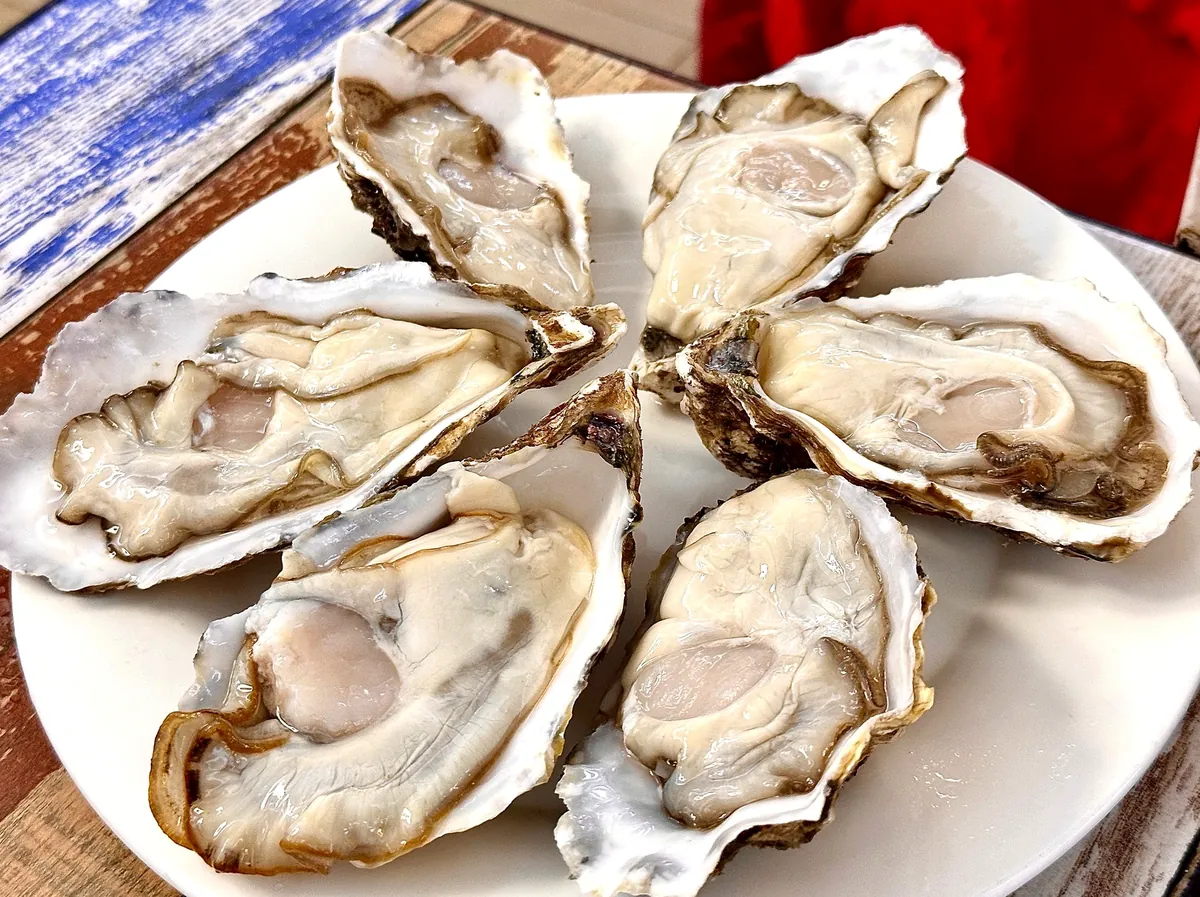
At the top of the local culinary quartet is the Hengqin oyster, a seafood nurtured in the brackish waters of the Hengqin estuary, where moderate salinity and abundant plankton thrive. Unlike common mollusks, Hengqin oysters boast exceptionally massive sizes with pearl-white flesh that is simultaneously crispy, sweet, and bursting with rich juices. Zhuhai chefs usually minimize preparation methods to preserve the authentic, briny flavor of the ocean by using double-boiling with fresh ginger and scallions, or by arousing rich aromas through charcoal-grilling over glowing embers topped with minced garlic and fragrant scallion oil.
Continuing the seafood symphony is the Doumen double-shell crab, a culinary masterpiece associated with the low-lying downstream area of Doumen District. This crab is harvested exclusively during the brief molting stage in its lifecycle, when the hard outer shell prepares to detach, revealing a tender, silk-thin inner layer that concentrates all nutrients and golden, rich, sweet-savory roe. To reach the peak of flavor, Doumen double-shell crabs must be whole-double-boiled with renowned Huadiao rice wine; the warm vapor blended with traditional alcohol not only eliminates any fishy odor but also awakens every layer of the sweet, tender, and juicy flavor in the rare, tender crab meat.
Aside from oceanic products, this land also takes pride in the Baihedong lotus root, an agricultural product growing from the thousand-year-old mineral-rich mud of the Baihedong lotus wetlands. The lotus roots here feature an unusually large and round size, thin skin, and when broken in half, they reveal a spongy, crispy structure paired with a sweet, starchy flavor. Locals often use Baihedong lotus roots to simmer until tender with pork marrow bones or stew them together with red beans, creating a clean, refreshing, and cooling soup that embodies the health-preserving philosophies of Southern cuisine. Concluding the quartet is the renowned Shatang squab, tender young birds meticulously cared for, thoroughly marinated with a traditional Lingnan five-spice recipe, and deep-fried in boiling oil. The finished dish showcases a glossy, amber-colored crispy skin, while the meat inside remains moist, fragrant, and alluringly rich.
The Zhuhai culinary picture would be incomplete without the delicate touch of tea-drinking culture and morning dim sum. In the ancient town of Tangjiawan, generations of pastry chefs have preserved over 150 years of secret techniques in kneading rustic yet intricate dim sum dishes, notably the dark green water chestnut and mugwort pastries carrying the deep green color of countryside flora with a bitter-yet-sweet aftertaste to cleanse the body, or the chewy glutinous rice cakes filled with sesame and sweet maltose. As twilight descends, food enthusiasts flock to the Jiuzhou seafood market or stroll along the breezy embankment of Xiangzhou Bay to immerse themselves in the vibrant night food scene. Amidst the sizzling sounds of pans, diners eagerly enjoy plates of freshly caught mantis shrimp straight from tanks, wok-tossed with salt and pepper until the shells are crispy, or Cantonese-style steamed groupers topped with shredded scallions and sizzling hot sesame oil, leaving an unforgettable aftertaste of a generous and refined seaside city.
Stepping foot in Zhuhai, one can easily feel the bustling pulse of a key connecting hub within the heart of the Guangdong-Hong Kong-Macao Greater Bay Area. The modern Guangzhou-Zhuhai Intercity Railway (Guangzhu ICR) operates at high density, carrying high-speed trains across the fertile delta plains, shortening travel time from Guangzhou South Station to Zhuhai Station to just 55 to 70 minutes. The terminal stop of this railway nestles peacefully right beside the Gongbei Port checkpoint, creating a seamless, coherent, and smooth passenger transit corridor along the southern coastline.
The international port system in Zhuhai serves as a vivid testimony to the remarkable infrastructure planning mindset of contemporary China. Travelers wishing to visit Macao can choose the bustling Gongbei Port with one of the mainland’s highest passenger volumes, or the smart Qingmao Port directly connected to the railway station via an enclosed pedestrian walkway. Notably, Hengqin Port applies a 24/7 “joint inspection and one-time release” clearance model, completely eliminating repetitive and cumbersome procedures. Towards the eastern shore, the magnificent Hong Kong-Zhuhai-Macao Bridge (HZMB) spanning the waters of Lingdingyang offers a spectacular experience with double-decker “Golden Buses” running regularly at 5-minute intervals, connecting three prosperous metropolises in the blink of an eye.
Alongside synchronized transportation infrastructure, flexible legal mechanisms open convenient doors for international visitors exploring Zhuhai. Most prominent is the 144-hour transit visa-free policy applied across Guangdong province for eligible passport holders transiting through major airports or via Hong Kong and Macao. For sudden trips, the Zhuhai Special Economic Zone (SEZ) Port Visa with a three-day stay can be issued directly at the Gongbei Port immigration office. Additionally, the implementation of the tiered clearance system (“First line relaxed, second line controlled”) in the Hengqin-Macao In-Depth Cooperation Zone marks a breakthrough in trade liberalization, turning this island into a magnet attracting international tourism flows.
Alongside rapid development, local tourism still harbors subtle commercial traps that independent travelers or budget tour participants easily fall into. The most common trick is the “boss or wealthy young master acknowledging a fellow townsman” drama, feigning enthusiastic hospitality before tricking buyers into purchasing low-quality jade, jadeite, or feng shui pixiu artifacts at exorbitant prices. Another variation involves disguised stops under the guise of traditional Chinese medicine research centers or medical latex mattress institutes, where visitors are lured into free pulse-checking sessions and subsequently pressured into buying herbal remedies priced by the tael at unimaginably steep costs.
To ensure your journey of discovery in this coastal city retains its authentic aesthetic and cultural values, today’s smart consumer trend prioritizes pure sightseeing and leisure itineraries (Pure Play – 纯玩团). Saying no to designated shopping stops allows travelers to dedicate all their time and budget to worthwhile experiences, from freely exploring the world-class Chimelong Ocean Kingdom in Hengqin and relaxing at international-standard hotels, to savoring exotic culinary quintessences such as legendary grilled oysters or crispy roast pigeon rich in Cantonese flavors. For a well-organized, safe excursion that optimizes every experience along this coastal strip, travelers can consider booking the all-inclusive tour package, professionally designed with transparent services.