Paddleboarding (SUP) is a growing water sport in Vietnam loved for being both fun and healthy. In this article, we introduce what SUP is, different board types, how to paddle, and SUP rental spots in Vietnam. Read on!
See also: SUP Paddleboarding in Ha Long
Introduction to SUP
A SUP board is a stand-up paddleboard—often inflatable for easy transport and storage—made from durable material that can be inflated and deflated with a pump, featuring bottom fins for tracking and steering and optional tie-downs, deck pads, traction pads, and removable fins.
SUP stands for Stand-Up Paddleboarding, a water sport where you stand on a board and use a paddle to move across lakes, rivers, or ocean waters. Modern SUP traces back to the 1940s in Waikiki, Hawaii, popularized by local surfer John Ah Choy, and grew into a global sport from the early 2000s onward.
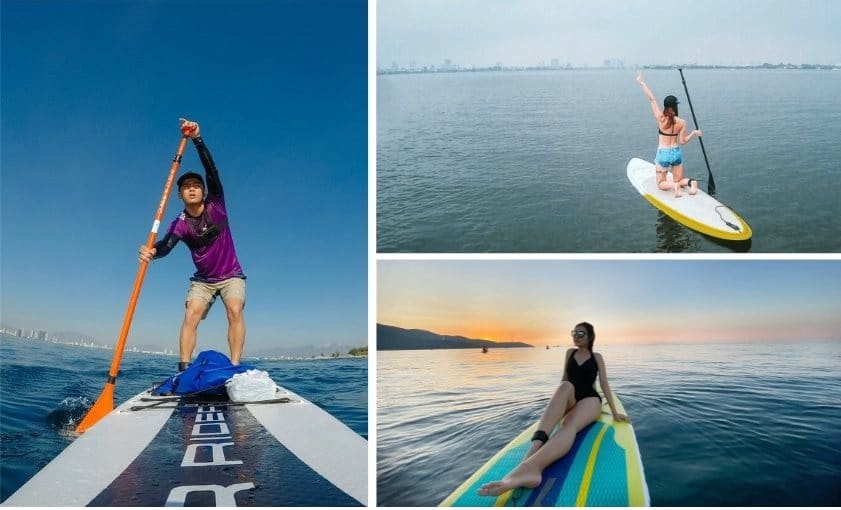
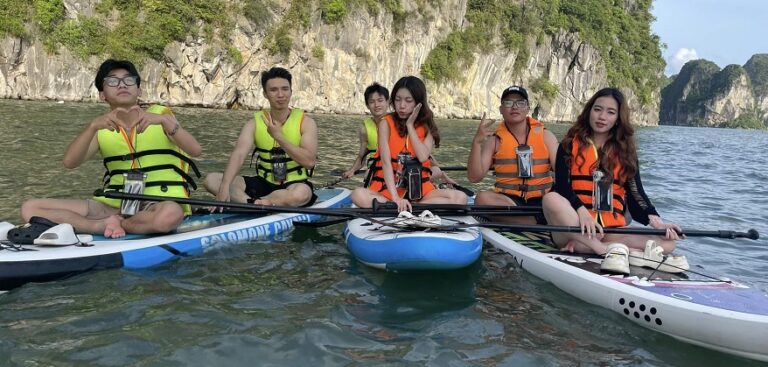
SUP boards are versatile and enjoyable for people of different ages and backgrounds—used for casual cruising, fishing, yoga, surfing, or river runs across popular destinations in Vietnam such as Ha Long, Nha Trang, and Phu Quoc.
Gear and Clothing Needed for SUP
Having the right equipment and clothing keeps your outing safe and comfortable. Key items to prepare when paddleboarding include:
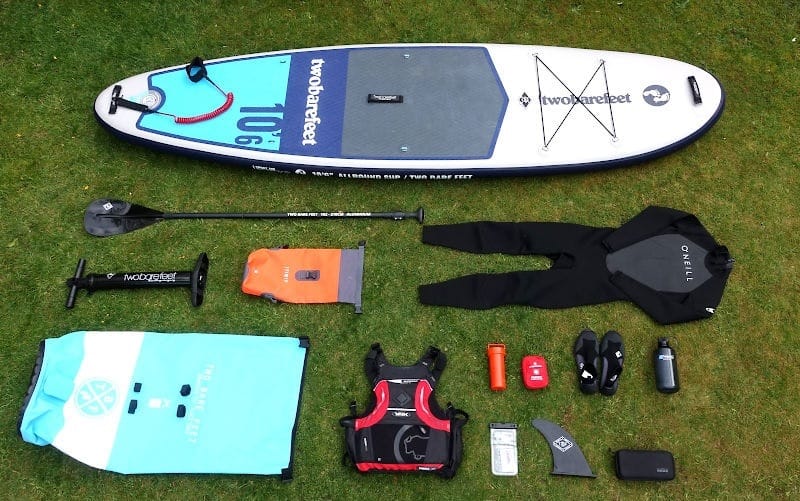
Essential gear for SUP paddleboarding
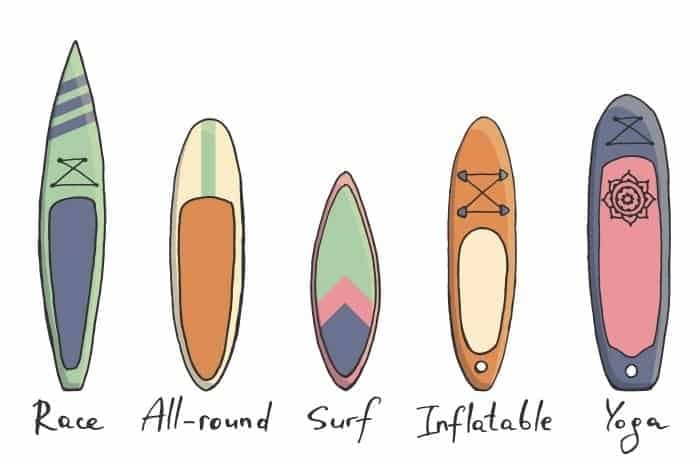
- SUP board: Your primary gear—choose a size, shape, and style suited to your goals and activity, whether inflatable, all-around, touring, yoga, surf, or fishing, renting or buying based on how often you paddle.
- Paddle: Used to propel and steer across the water—pick a length matched to your height (often roughly 20–25 cm above your height) with the angled teardrop blade facing forward and the power face pulling back.
- Personal flotation device (PFD / life vest): Essential safety gear that keeps you buoyant if you fall in—available in waist-belt and vest styles, with vests offering straightforward buoyancy and security.
- Safety whistle and light: Useful for signaling in an emergency or communicating on the water, plus a headlamp or board light if paddling around dusk or evening.
- Clothing: Wear comfortable, weather-appropriate gear—swimwear, boardshorts, or short/long UV rash guards in warm summer weather, or a wetsuit or drysuit in cold water to help prevent chills.
- Dry bag: A waterproof bag in various sizes to keep phones, cameras, wallets, and small personal items dry, secured to your board or carried conveniently.
Preparing your gear before getting on the water makes for a smoother, safer session.
How to Paddle a SUP
Paddleboarding is lively and rewarding once you have your board, paddle, life vest, and suitable attire on calm water. Basic steps include:
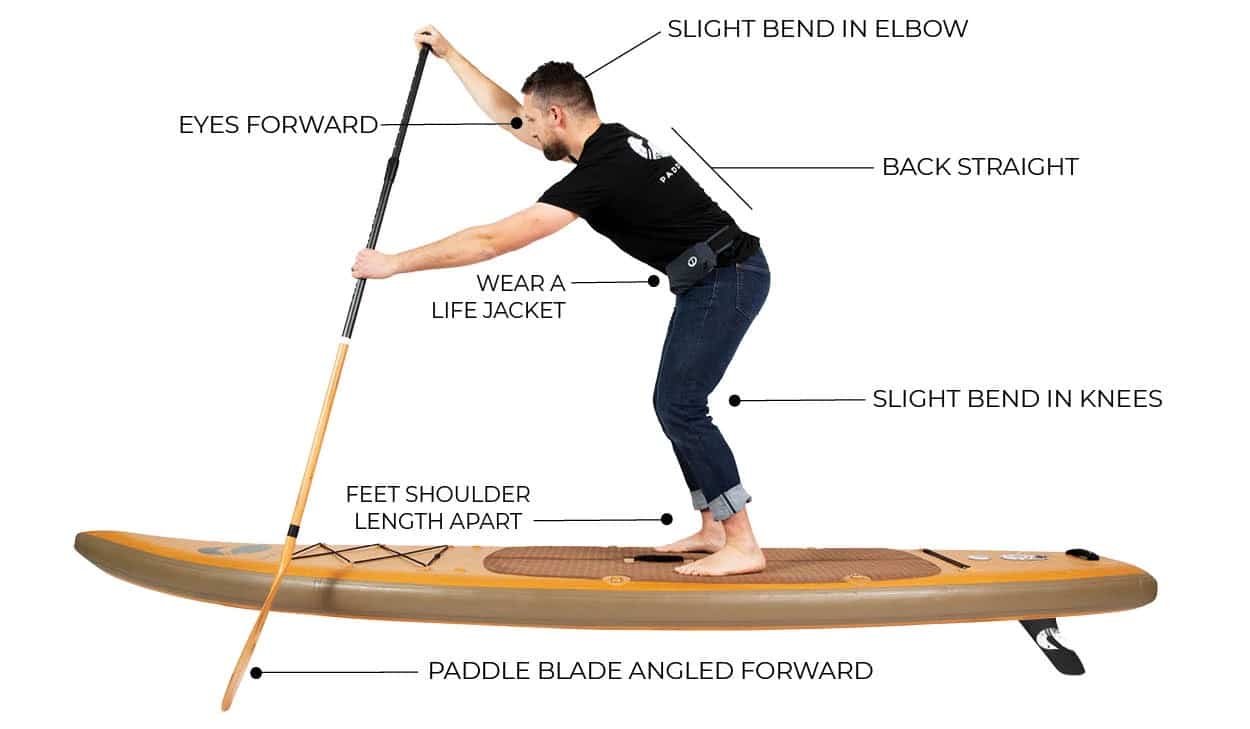
How to paddle a SUP board
- Getting on the board: Start kneeling or sitting near the center of the board around the carry handle, paddle out away from shore to find balance, then stand up gradually with feet shoulder-width apart, knees slightly bent, back straight, and eyes looking forward rather than down at your feet.
- Forward stroke: Hold the paddle with the angled blade facing forward; when paddling on the right side, your top hand grips the T-handle while your lower hand holds the shaft a comfortable distance down—reverse hand positions when switching sides. Plant the blade forward near your feet and pull back along the rail toward the tail using torso and shoulder rotation.
- Turning: To turn left, sweep or brace with the paddle on the right side while turning your body and gaze left; reverse the motion to turn right, or use sweeping strokes near the nose or tail to pivot smoothly.
- Falling safely: Falling in is normal—try to step or fall clear to the side or back rather than forward toward the board, keep hold of your paddle, stay calm in the water, use your leash to bring the board close, and climb back on from the side or tail.